How To Peel Tomatoes Microwave: Quick Easy Method
To peel tomatoes in a microwave, score the skin, heat the tomatoes in short bursts, let them rest, and then pull away the loosened skin. This method works well for one or two ripe tomatoes when you want to make sauce, salsa, soup, or a cooked dish in a U.S. home kitchen.
Microwave power varies, so use short heating times. A tomato can become hot inside before the skin looks loose. Handle it with care, because trapped steam may cause burns.
What You Need
You need only a few basic items:
- Ripe tomatoes
- A microwave-safe plate or shallow bowl
- A small sharp knife
- Tongs or a spoon
- A clean bowl
- Paper towels
- A bowl of ice water, if you want to cool the tomatoes fast
Choose tomatoes that are ripe but still firm. Very soft tomatoes may fall apart during heating. Roma tomatoes work well because they have firm flesh and fewer seeds, but most tomato types can be peeled this way.
Wash the tomatoes under cool running water. Dry them before cutting. The clean, dry surface makes the skin easier to grip after heating.
A microwave-safe glass or ceramic dish is a good choice. Do not use metal, aluminum foil, or a sealed container in the microwave.
How to Peel Tomatoes in the Microwave
Follow these steps for the most controlled result.
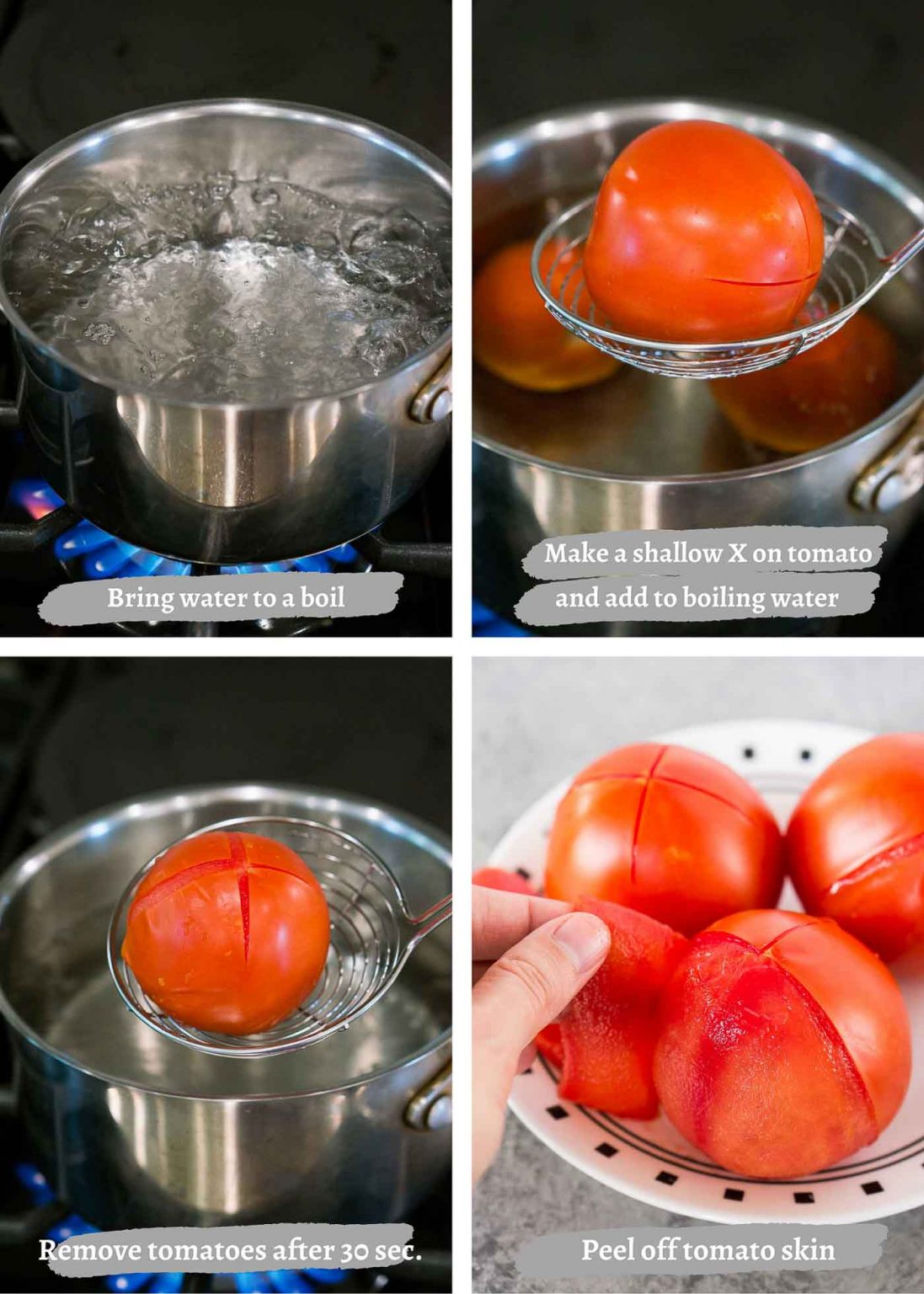
1. Cut a shallow X in each tomato
Place each tomato stem-side down on a cutting board. Use a knife to make a shallow X on the bottom.
Cut only through the skin. Do not slice deeply into the flesh. The cuts give steam a path out and help the skin split as the tomato warms.
You can also remove the core first, but this is not required. If you remove it, use a small knife and take out only the tough stem area.
2. Put the tomatoes in a microwave-safe dish
Place the tomatoes in a single layer. Leave space between them if possible.
Add 1 to 2 tablespoons of water to the dish. The water creates a little steam and helps reduce drying. It should not cover the tomatoes.
Do not cover the dish with an airtight lid. If you use a cover, choose a loose microwave-safe cover that allows steam to escape.
3. Microwave in short bursts
Microwave the tomatoes on high for 30 seconds.
Check the skin. Turn the tomatoes with tongs if one side feels much hotter. Continue heating in 15- to 20-second bursts until the skin begins to wrinkle, split, or pull away near the X.
For two medium tomatoes, the total time often falls between 45 and 90 seconds in a typical home microwave. This is only a starting range. Tomato size, starting temperature, and microwave wattage all change the result.
Stop when the skin loosens. The tomatoes do not need to become soft all the way through.
4. Let the tomatoes rest
Leave the tomatoes in the dish for 1 to 2 minutes.
This rest lets the heat spread through the fruit. It also gives trapped steam time to escape. Do not pick up a hot tomato with bare hands.
5. Cool the tomatoes
for a quick cool-down, move the tomatoes to a bowl of ice water for 1 to 2 minutes. You can also place them on a plate and wait until they are safe to touch.
Ice water stops some cooking. This helps if you want to keep the tomatoes fairly firm.
6. Pull off the skin
Start at one of the cuts in the X. Grip the loosened skin with your fingers or a small knife and peel it back.
If the skin sticks, do not force it. Heat that tomato for another 10 to 15 seconds, let it rest, and try again.
The peeled tomato may be soft near the outside. That is normal. Use it at once, or refrigerate it in a covered container.
How Long Should Tomatoes Stay in the Microwave?
The correct time depends more on the tomato and the microwave than on a fixed recipe time.
| Tomato amount | Starting time | What to do next |
|---|---|---|
| 1 small tomato | 30 seconds | Add 10- to 15-second bursts |
| 1 large tomato | 30 to 45 seconds | Turn and check the skin |
| 2 medium tomatoes | 45 to 60 seconds | Add short bursts as needed |
| 3 to 4 tomatoes | 60 to 90 seconds | Heat in a single layer and rotate |
These times assume a standard U.S. countertop microwave. Many home models use between about 700 and 1,200 watts, but the exact power may be printed inside the door or on the rating label.
A higher-wattage microwave may heat the tomatoes faster. A lower-wattage model may need more time. Use the skin as your guide rather than relying only on the clock.
Signs the tomatoes are ready
The tomatoes are ready when:
- The skin splits at the X.
- The skin looks wrinkled.
- The skin lifts when you touch it with a utensil.
- The tomato feels warm but is not collapsing.
If the skin remains tight, the tomato needs more heat. If the flesh is mushy, the tomato stayed in too long.
The microwave does not heat every part of a tomato evenly. Rotating the tomatoes and using short bursts helps prevent hot spots.
Microwave Method vs. Boiling Water
The microwave method is useful for a small batch, but boiling water is often more even for many tomatoes.
| Method | Best for | Main advantage | Main drawback |
|---|---|---|---|
| Microwave | One or two tomatoes | Fast and uses little equipment | Heating can be uneven |
| Boiling water | Several tomatoes | Loosens skins evenly | Requires a pot and more water |
| Roasting | Sauces and cooked dishes | Adds a roasted flavor | Softens and changes the tomato |
| Freezing | Large batches | Easy for later cooking | Changes the texture after thawing |
For boiling-water blanching, cut an X in the skin, place the tomatoes in boiling water for about 30 to 60 seconds, and then move them to ice water. The skin should split and peel away.
Use the microwave when speed matters and you have only a few tomatoes. Use boiling water when you need clean, even peeling for a large batch or for tomatoes that will be diced neatly.

Common Problems and How to Fix Them
The skin will not peel
The tomato may not be warm enough. Heat it for another 10 to 15 seconds. Let it rest again before trying.
A very firm or underripe tomato may also resist peeling. Such tomatoes contain less softened flesh and may need more heat.
The tomato burst
A tomato can burst when steam builds inside the skin. The shallow X helps prevent this, but it does not remove all risk.
Next time, make sure the X reaches through the skin. Use shorter heating bursts, and let the tomato rest before touching it.
Never microwave an uncut tomato for a long period. Steam needs a way out.
The tomato became watery or mushy
The tomato was heated too long. Reduce the next heating burst to 10 seconds.
If the tomato is already soft, use it in soup, pasta sauce, chili, or another cooked dish. It may not be firm enough for a fresh salad.
The skin peels in small pieces
This often happens when the tomato is not ripe enough or has heated unevenly. Turn the tomato and add a short burst of heat.
You can also peel it under cool running water. The water helps separate loose skin from the flesh.
The tomato is hot in one spot
Microwaves can create uneven heating. Stop the microwave, turn the tomato, and let it stand for a minute.
Use tongs or a spoon when moving it. Steam inside the tomato can remain hot even after the microwave stops.
Safety Tips for Microwave-Peeled Tomatoes
Use a sharp knife carefully and keep your fingers away from the blade. A dull knife can slip when cutting the skin.
Use only dishes labeled microwave-safe. Do not use foil or metal. Do not seal the tomatoes in a container while heating them.
Hot tomato juice can burn. Use oven mitts for the dish and tongs for the tomatoes. Cut into a tomato only after it has rested, especially if it looks swollen.
The U.S. Department of Agriculture advises caution with hot foods and recommends safe handling and prompt refrigeration of perishable foods. If you will not use the peeled tomatoes right away, refrigerate them in a clean, covered container. For general food safety, keep refrigerated leftovers at 40°F or below and do not leave them at room temperature for more than 2 hours, or more than 1 hour when the temperature is above 90°F.

Should You Peel Tomatoes for Sauce, Soup, or Salsa?
Peeling is most useful when tomato skin would make the finished dish tough or distracting.
For smooth tomato sauce or soup, peeled tomatoes give a more even texture. For salsa, peeling can make the mixture softer and less chewy, but many fresh salsas are fine with the skin left on.
You usually do not need to peel tomatoes for:
- Sandwiches
- Salads
- Roasted vegetables
- Tomato slices
- Quick skillet dishes
If you plan to blend the tomatoes, peeling is optional. A blender can break the skin into small pieces. A food mill can also separate skin and seeds after cooking.
The microwave method softens the outside slightly. For a crisp raw dish, use boiling-water blanching or peel the tomato with a sharp paring knife while it is cool.
Key Takeaways
- Cut a shallow X in the bottom of each tomato.
- Microwave in short bursts, starting with 30 seconds.
- Turn the tomatoes and check the skin after each burst.
- Let them rest before touching or cutting them.
- Use ice water if you want to stop further cooking.
- Never microwave a whole, uncut tomato for an extended time.
- For large batches, boiling water is usually more even.
Frequently Asked Questions
Can I microwave tomatoes without cutting them?
It is safer to cut a shallow X through the skin first. An uncut tomato can trap steam and split or burst. Even with a cut, use short heating periods and allow the tomato to rest before handling it.
Do I need to add water?
No, but 1 to 2 tablespoons of water can create gentle steam and help keep the surface from drying. Do not add enough water to cover the tomatoes.
Can I peel cherry tomatoes in the microwave?
Yes, but cherry tomatoes heat quickly. Score the skin lightly, heat them for about 15 to 20 seconds, and check them often. For a large number of cherry tomatoes, boiling water is usually easier.
Can I peel tomatoes ahead of time?
Yes. Keep peeled tomatoes in a clean, covered container in the refrigerator and use them within a few days for best quality. Discard them if they develop an off smell, mold, or an unusual texture.
Is microwaving better than boiling for peeling tomatoes?
Neither method is always better. Microwaving is quick for one or two tomatoes and uses less equipment. Boiling water gives more even results for a larger batch and is often better when you need firm, neatly peeled tomatoes.
Conclusion
Microwaving is a practical way to peel a small number of tomatoes. Score the skin, heat in short bursts, let the tomatoes rest, and peel from the split X. Keep the heat gentle so the flesh stays useful.
For sauce or soup, a slightly soft tomato is fine. For fresh dishes, use the shortest heating time possible or choose the boiling-water method instead.

Appliance Review Expert
Lucas Ramirez is a trusted voice at HomeFixGrid.com, known for his clear, practical, and creatively written guides that simplify appliance care for everyday homeowners. With a strong focus on hands-on testing and real-world problem-solving, Lucas brings expert insight into appliance reviews and troubleshooting techniques. Her work empowers readers to confidently maintain, repair, and choose the right appliances for their homes.