How To Dispose Of Air Fryer: Easy Eco-Friendly Guide
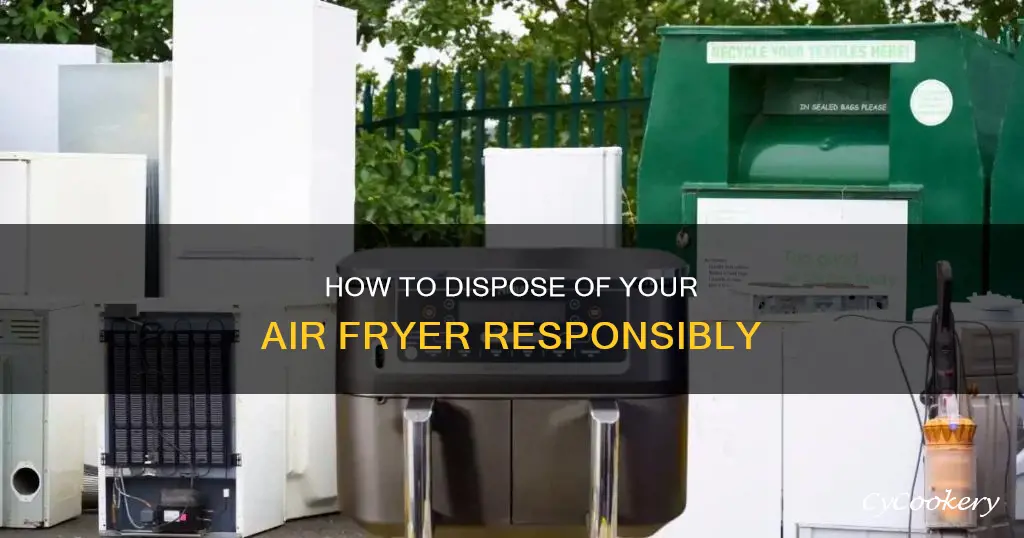
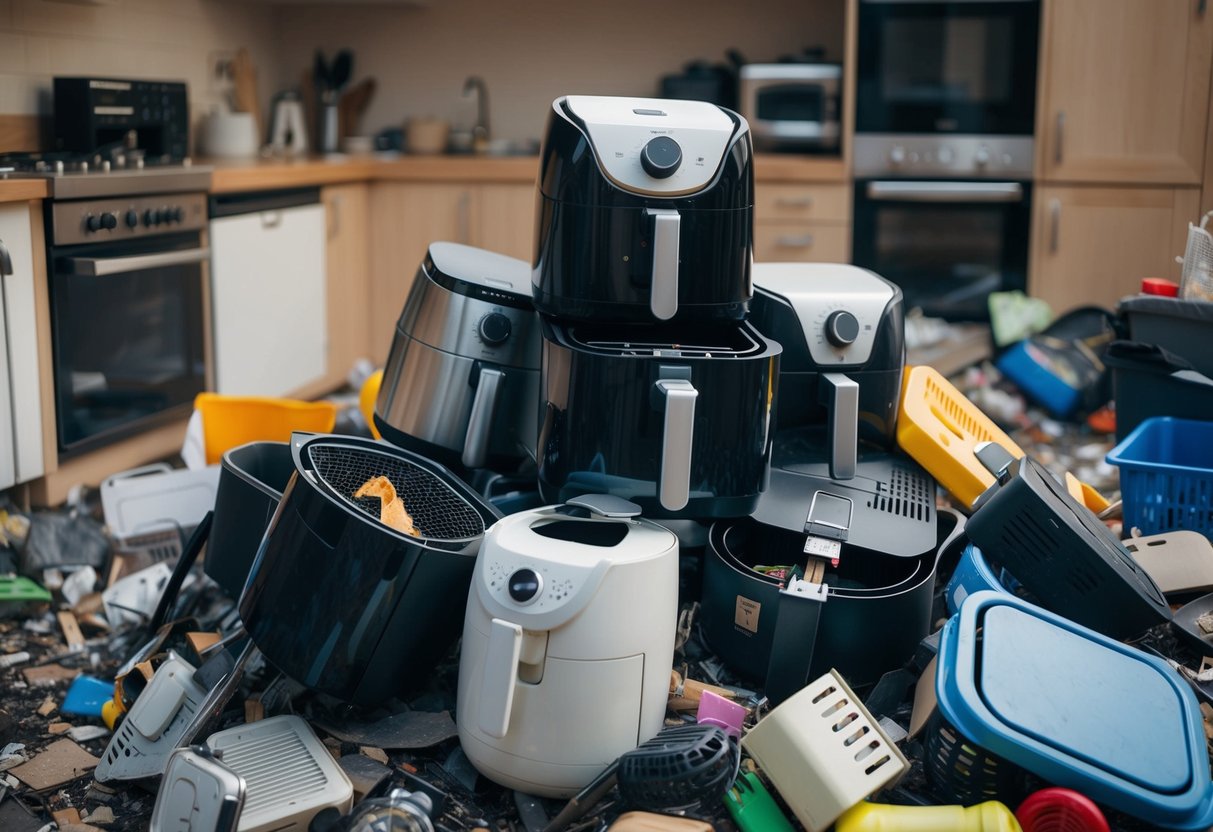
The best way to dispose of an air fryer in the USA is to reuse or donate it if it still works. If it no longer works, take it to an electronics recycling site, small-appliance recycling program, or household hazardous waste facility that accepts countertop appliances. Do not place the whole air fryer in a curbside recycling bin unless your local program specifically allows it.
Rules vary by city, county, and state. Check your local waste department before you throw away an air fryer. The metal basket and tray may have different disposal rules from the powered unit.

Decide if the Air Fryer Can Be Reused
A working air fryer should be donated, sold, or given away before it is recycled. Reuse keeps the appliance in service and avoids the need to process its metal, plastic, wiring, and electronic parts.


Before passing it on, check these points:
- The power cord has no cuts, burns, or exposed wires.
- The plug is not cracked or melted.
- The unit does not smoke or smell like burning plastic.
- The basket and tray are not badly warped.
- The heating element has no broken parts.
- The controls work as intended.
- The appliance has not been recalled.
Clean the basket, tray, and inside of the unit. Include the instruction manual if you still have it. Be honest about scratches, faults, missing parts, or unusual noise.
You can offer a working air fryer through:
- A local charity or thrift store
- A community reuse group
- A friend, neighbor, or family member
- A local online marketplace
- A household goods donation program
Check the U.S. Consumer Product Safety Commission’s recall database before donating or selling an older model. A recalled air fryer should not be given to another person. Follow the recall notice for repair, return, or disposal instructions.

Prepare the Air Fryer Before Disposal
Unplug the air fryer and let it cool completely before handling it. Remove all food, grease, and loose debris. A clean appliance is easier and safer for a recycler to inspect.
Follow these steps:
- Unplug the unit. Never work on an air fryer while it is connected to power.
- Remove the basket, pan, rack, and other loose parts.
- Wash removable parts with dish soap unless the manual gives different instructions.
- Wipe the powered base with a damp cloth. Do not pour water into vents or controls.
- Let every part dry fully.
- Keep the manual and model number. The model number may help a recycling center identify the unit.
- Do not take the appliance apart unless the recycling facility asks you to do so.
Do not cut the power cord as a routine disposal step. The cord contains copper, but cutting it can create sharp ends and may make handling less safe. A recycling center can separate the cord and other materials with the right equipment.
If the air fryer has a built-in battery, smart features, or a separate rechargeable accessory, tell the recycler. Most standard countertop air fryers do not contain a user-removable battery, but unusual models may differ.
Choose the Right Disposal Method
The correct option depends on whether the air fryer works, what materials it contains, and what services exist in your area.


| Condition | Best option | What to check |
|---|---|---|
| Works safely | Donate, sell, or give it away | Check for recalls and clean it |
| Does not work | Electronics or small-appliance recycling | Confirm that air fryers are accepted |
| Has a damaged cord or signs of fire | Ask the local waste agency for instructions | Do not donate or plug it in |
| Only the basket or tray is unwanted | Follow local metal or cookware rules | Do not assume curbside recycling accepts it |
| No recycling service is nearby | Ask the transfer station or landfill | Confirm whether it accepts small appliances |
Electronics recycling
An air fryer has electrical components, wiring, a heating element, plastic, and metal. Many recycling programs classify it as a small electric appliance or electronic waste.
Use your city or county website to search for:
- “small appliance recycling”
- “electronics recycling”
- “e-waste drop-off”
- “household hazardous waste”
- “appliance recycling”
The U.S. Environmental Protection Agency recommends using certified electronics recyclers when practical. EPA-recognized certification programs include R2 and e-Stewards. Certification does not mean every site accepts every appliance, so call first.
Ask these questions before driving there:
- Do you accept countertop air fryers?
- Is there a fee?
- Do you accept units with damaged cords?
- Must I remove the basket and tray?
- Do you accept small appliances from households only?
- Do you require proof of local residency?
Retail take-back programs
Some electronics and appliance retailers offer recycling or trade-in programs. Each program has its own accepted-item list, fees, and location rules. Search the retailer’s current recycling page or call the store before you go.
Do not assume that a store accepting televisions, computers, or large appliances also accepts air fryers.
Household hazardous waste facilities
A household hazardous waste site may accept an air fryer if it has electrical damage, melted plastic, or another safety concern. Many such sites focus on paint, chemicals, batteries, and similar materials, so acceptance is not automatic.
Call the facility and describe the problem clearly. Say if the unit:
- Smoked
- Caught fire
- Has melted parts
- Has a swollen battery
- Has a burned plug
- Has exposed wiring
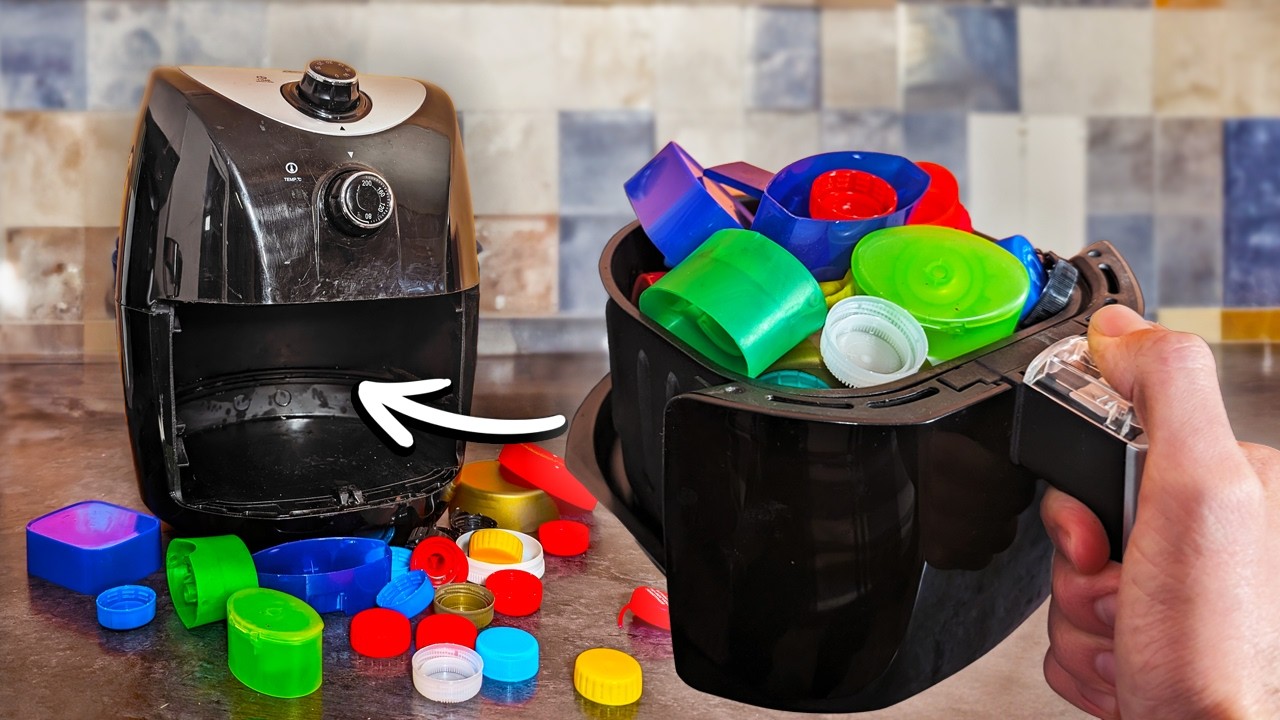
Can You Put an Air Fryer in the Trash?
You may be able to place a broken air fryer in regular trash in some U.S. communities, but local rules control. Some waste companies accept small appliances in household garbage. Others require them to go to a transfer station, bulky-item program, or recycling site.
Before using the trash:
- Check your city, county, or waste hauler’s rules.
- Confirm that small electrical appliances are allowed.
- Ask whether the air fryer must be boxed or separated from other waste.
- Follow any instructions for damaged or burned appliances.
Never put an air fryer in a recycling bin unless the local program lists it as accepted. Mixed recycling systems are designed for specific containers and materials. An appliance can jam sorting equipment or contaminate a load.
Do not place a smoking, hot, leaking, or fire-damaged appliance in a trash bin. Keep it away from flammable items and contact the local fire department or waste agency for safe handling advice.
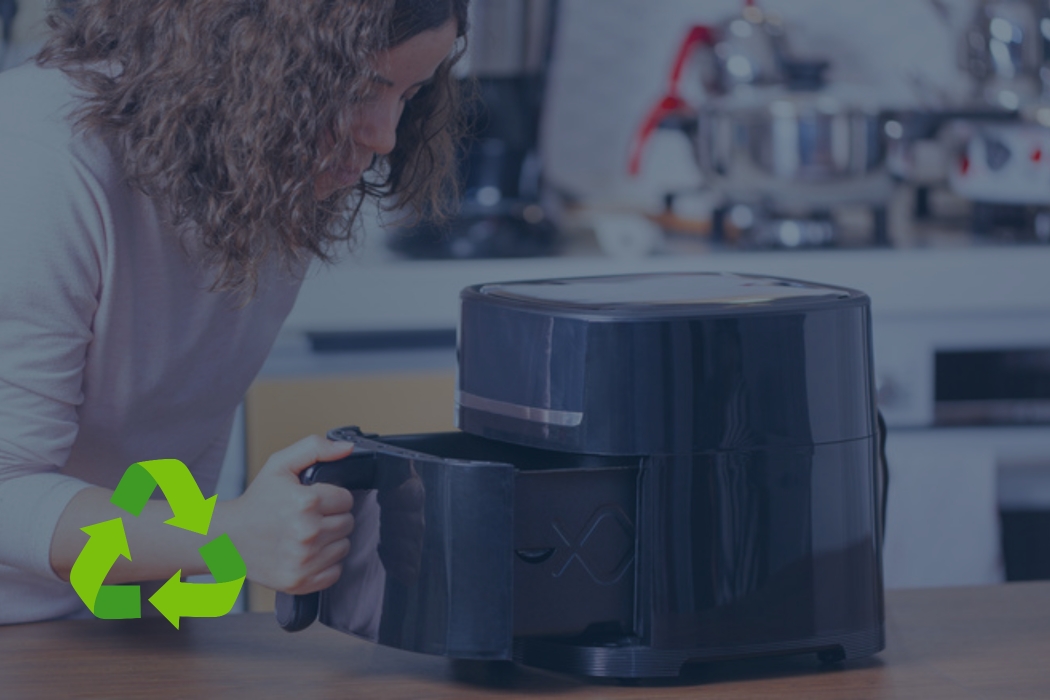
What to Do With the Basket, Tray, and Accessories
The basket and tray are often made from coated steel, aluminum, or another metal. Their recycling options depend on the coating, material, and local program.


A curbside recycling bin is usually not the right place for cookware or small appliance parts unless your local program says otherwise. Many curbside programs accept food and beverage containers but reject pots, pans, racks, and bulky metal objects.
Use this order:
- Check the marking on the part and your local recycling guide.
- Ask a scrap-metal yard whether it accepts the item.
- Take it to a household goods reuse center if it is clean and usable.
- Place it in regular trash only if local rules allow it.
Do not remove a nonstick coating by sanding, burning, or heating the basket. That can create dust or fumes and may damage the metal. Keep the part intact and let the receiving facility handle it.
If the coating is peeling badly, do not donate the basket for cooking. Ask a local recycling or waste facility whether it accepts the damaged part.
Safety Rules for a Broken or Damaged Air Fryer
A damaged air fryer needs more care than an ordinary unwanted appliance. Electrical faults can cause shock, burns, or fire.
Stop using the appliance at once if you see:
- Smoke or sparks
- A burning odor
- A hot or melted plug
- Exposed wires
- A cracked housing
- Water inside the controls
- Repeated circuit-breaker trips
- A swollen rechargeable battery
- Signs of fire or severe heat damage
Do not test the air fryer again. Do not wash the powered base. Do not repair exposed wiring with tape. Do not burn, crush, or break the appliance apart.
Place the unplugged unit in a dry area away from paper, fuel, children, and pets. If it is hot, smoking, or actively burning, leave the area and call 911. For a battery-related fire, follow local emergency guidance and do not handle the battery.
The Consumer Product Safety Commission advises consumers to stop using products that present a fire or electrical hazard and to follow recall or manufacturer instructions. A local fire department or waste authority can provide site-specific advice for a burned appliance.
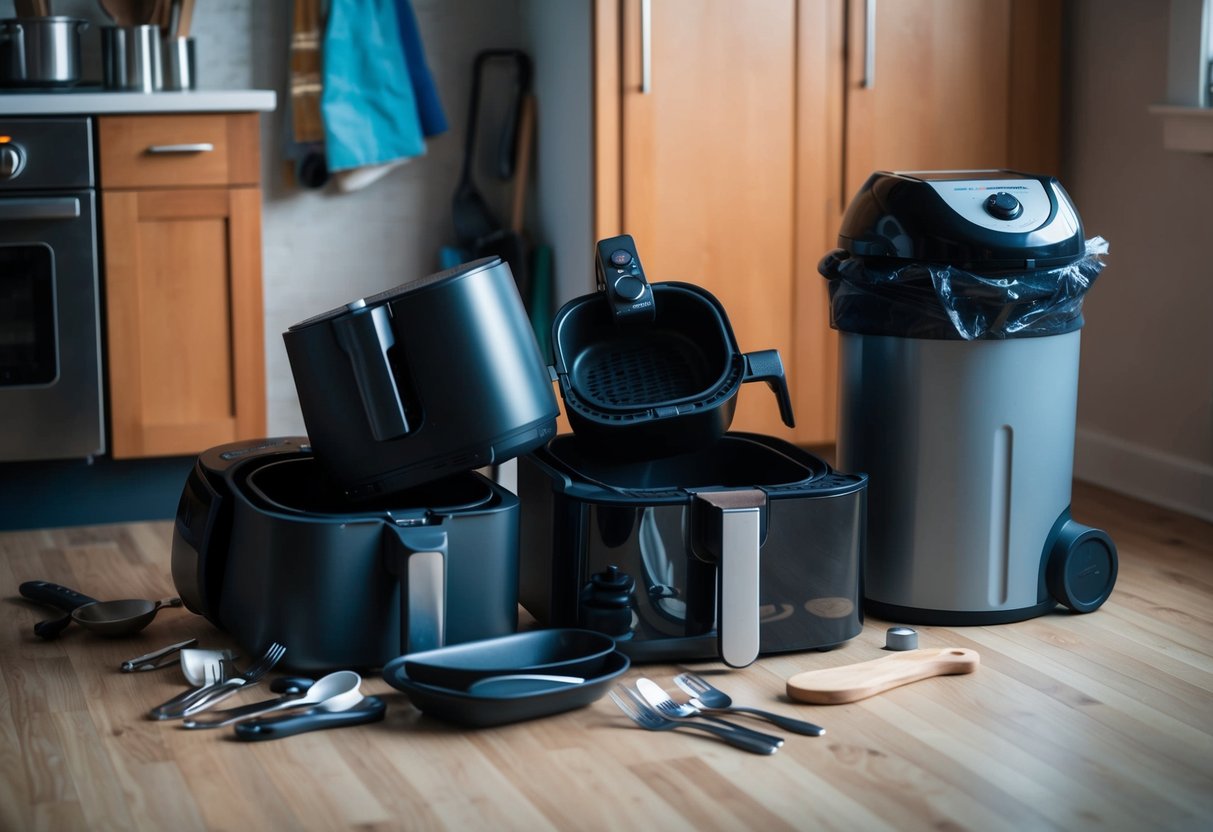
Common Air Fryer Disposal Mistakes
Avoid these mistakes when getting rid of an air fryer:
Putting the whole unit in curbside recycling
Most curbside programs are not set up for small electrical appliances. Use a designated drop-off site instead.
Donating a recalled appliance
A clean appearance does not make a recalled product safe. Check the model before giving it away.
Plugging in a broken unit “one last time”
A damaged cord, burning smell, or repeated power failure can signal an electrical fault. Testing it again adds risk without helping disposal.


Pouring water into the powered base
Water can remain inside switches, wiring, and control boards. Wipe the outside only.
Burning or melting the plastic
Burning household plastic can release harmful smoke and does not recover materials safely.
Assuming every metal part is recyclable
Metal type, coating, size, and local rules all matter. Confirm acceptance before using a metal bin or scrap yard.
Leaving the appliance beside a full recycling bin
Unscheduled drop-off can create litter and may expose workers to damaged wiring or sharp parts. Use a staffed site or an approved collection day.
A Simple Disposal Checklist
Use this checklist before you leave home:
- The air fryer is unplugged and cool.
- Food and grease have been removed.
- The basket and tray are separated if the facility requests it.
- The model number is available.
- The unit has been checked for recalls.
- The receiving site confirms that it accepts air fryers.
- Any damage has been reported to the site.
- The appliance is transported in a stable box or container.
- The unit will not move around and damage other items during transport.
For a hypothetical example, a working air fryer with a sound cord could go to a local charity after cleaning. A unit with a burned plug should instead go to a facility that accepts damaged electrical appliances. The same product category can require different handling based on its condition.

Frequently Asked Questions
Can I put an air fryer in a recycling bin?
Usually, no. Standard curbside recycling bins generally do not accept whole electrical appliances. Check your local program, then use an electronics or small-appliance recycling site if available.
Can I recycle an air fryer basket?
Sometimes. A clean metal basket may be accepted by a scrap-metal yard or local appliance program. Do not assume that curbside recycling accepts it, especially if it has a nonstick coating.
Should I remove the power cord before disposal?
No. Do not cut the cord unless a recycling facility specifically instructs you to do so. Leave the appliance intact and tell the recycler if the cord is damaged.
Can I donate an air fryer that still works but has peeling coating?
It is better not to donate cookware with badly peeling coating. Ask the manufacturer or local recycling facility about the basket and dispose of the powered unit through an approved program.
Where can I find an air fryer recycling site near me?
Start with your city or county solid-waste website. Search for electronics recycling, small-appliance recycling, household hazardous waste, or e-waste drop-off. Call the site to confirm acceptance before traveling.
Conclusion
The safest way to dispose of an air fryer in the United States is to reuse it when it works and recycle it when it does not. Confirm local rules before using the trash or recycling bin. Keep damaged units unplugged, avoid taking them apart, and report fire or battery hazards to the receiving facility.
Your next step is simple: find your city or county waste department’s appliance policy and call the listed facility before drop-off.

Appliance Review Expert
Lucas Ramirez is a trusted voice at HomeFixGrid.com, known for his clear, practical, and creatively written guides that simplify appliance care for everyday homeowners. With a strong focus on hands-on testing and real-world problem-solving, Lucas brings expert insight into appliance reviews and troubleshooting techniques. Her work empowers readers to confidently maintain, repair, and choose the right appliances for their homes.