What Are The Different Types Of Mattresses: Best Guide
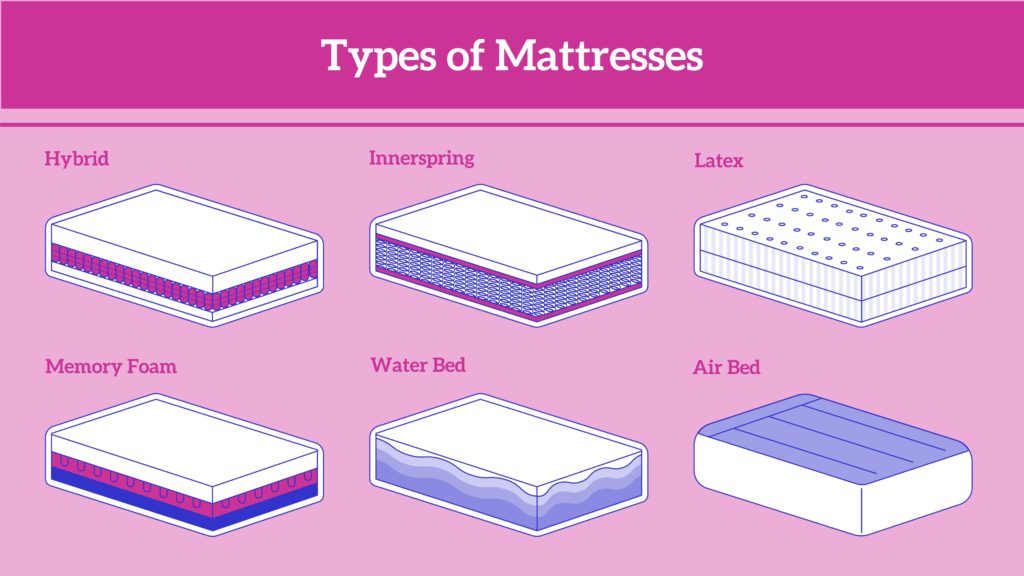
The main mattress types are innerspring, memory foam, latex, hybrid, air, water, and adjustable mattresses.
Choosing among the different types of mattresses can feel like choosing a car: each design offers a different mix of comfort, support, cooling, and durability. After comparing mattress materials, sleep positions, body weights, and common comfort problems, I found that the best choice depends less on trends and more on how you sleep each night. This guide explains what are the different types of mattresses, how each one works, and which sleepers may benefit most.
What Are the Different Types of Mattresses?
The different types of mattresses are defined by their core support system and comfort materials. The main categories include innerspring, memory foam, latex, hybrid, air, water, and adjustable mattresses.
Each type has a different feel. Some mattresses feel firm and springy, while others feel soft and slow-moving. Your sleeping position, body weight, pain concerns, temperature needs, budget, and preferred feel should guide your choice.
The most common mattress types are:
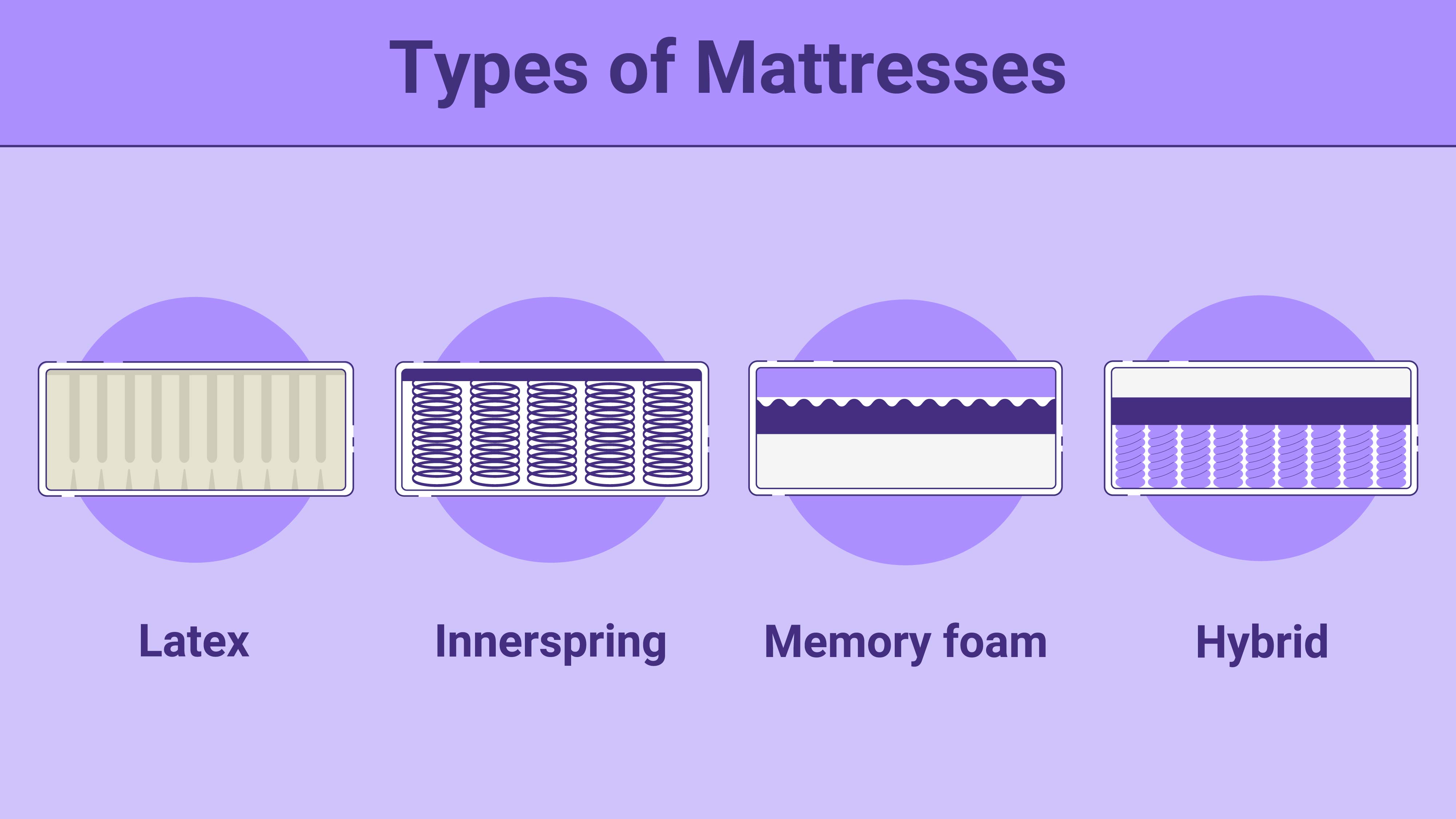
• Innerspring mattresses use metal coils for support.
• Memory foam mattresses use flexible foam that molds around the body.
• Latex mattresses use natural or synthetic latex for buoyant support.
• Hybrid mattresses combine coils with foam or latex.
• Air mattresses use adjustable air chambers.
• Waterbeds use water-filled chambers for support.
• Adjustable mattresses often use flexible materials and may pair with an adjustable base.
A mattress is more than its top layer. Its support core, comfort layers, cover, edge support, and foundation all affect how it performs.

Innerspring Mattresses
Innerspring mattresses are one of the oldest and most widely known mattress types. They use steel coils as the main support layer, with padding made from foam, fiber, cotton, or other materials above the coils.
The coil design affects the mattress feel. Older models often use connected coils, while newer models may use individually wrapped pocketed coils. Pocketed coils usually reduce motion transfer because each coil responds more independently.
Benefits of innerspring mattresses
• Strong airflow helps the mattress sleep cool.
• A springy surface makes changing positions easy.
• Firm edge support can make getting in and out of bed easier.
• Many models cost less than premium foam or latex mattresses.
• Coil support can suit people who prefer a traditional feel.
Limitations of innerspring mattresses
• Some models transfer motion across the bed.
• Low-quality coils may sag or become noisy over time.
• Thin comfort layers may feel too hard for side sleepers.
• Metal coils alone do not provide much pressure relief.
Innerspring mattresses can work well for back and stomach sleepers who prefer firm support. Side sleepers may need a thicker comfort layer to protect the shoulders and hips.
A common mistake is judging an innerspring mattress only by its coil count. A higher coil count does not always mean better quality. Coil gauge, shape, steel quality, padding, and construction matter too.
Memory Foam Mattresses
Memory foam mattresses use viscoelastic foam that softens under body heat and pressure. The foam forms a close hug around the body, which can reduce pressure on the shoulders, hips, and lower back.
Memory foam is also known for motion isolation. If your partner turns, gets out of bed, or moves during the night, you may feel less disturbance than you would on a traditional connected-coil mattress.
Benefits of memory foam mattresses
• Excellent motion isolation suits couples.
• Contouring can ease pressure on hips and shoulders.
• The material feels quiet when you move.
• It can support many side sleepers and back sleepers.
• Different foam densities create different firmness levels.
Limitations of memory foam mattresses
• Some models retain body heat.
• The close hug can make movement feel harder.
• A new mattress may have a temporary odor called off-gassing.
• Soft foam can allow heavier sleepers to sink too far.
• Weak edge support may reduce usable sleeping space.
Memory foam mattresses vary widely. Cooling covers, open-cell foam, gel infusions, and breathable designs may improve temperature control, but they cannot change the basic nature of foam. Dense foam can still feel warmer than coils or latex.
From practical mattress comparisons, one lesson stands out: do not choose memory foam by softness alone. A mattress that feels comfortable for ten minutes may allow your hips to sink too deeply after several hours. Spend enough time in your normal sleep position before deciding.

Latex Mattresses
Latex mattresses use latex foam made from natural rubber, synthetic rubber, or a blend of both. Natural latex usually comes from rubber tree sap. It has a responsive feel that gently cushions the body without creating the deep sinking sensation common with memory foam.
Latex is often described as buoyant. Instead of feeling trapped in the mattress, you tend to rest on top of it. This makes movement easier during the night.
Benefits of latex mattresses
• Latex offers a responsive and supportive feel.
• It usually sleeps cooler than dense memory foam.
• Natural latex can be durable when well made.
• It resists deep impressions better than some soft foams.
• The material can suit combination sleepers.
Limitations of latex mattresses
• Quality latex mattresses can be expensive.
• The surface may feel too springy for people who want a deep hug.
• Some people are sensitive to latex, although the material is usually covered.
• Synthetic latex may not offer the same durability as natural latex.
Latex mattresses may be a strong choice for people who want cooling, durability, and easy movement. They can also suit sleepers who prefer natural materials, but you should check whether the mattress uses certified natural latex or a synthetic blend.
Terms such as “natural,” “organic,” and “eco-friendly” can be confusing. Look for clear information about the latex type, foam layers, adhesives, cover materials, and certifications. A marketing label alone does not prove that every part of the mattress is organic.
Hybrid Mattresses
Hybrid mattresses combine a coil support core with comfort layers made from memory foam, latex, polyfoam, or other materials. This design aims to blend the airflow and bounce of an innerspring mattress with the pressure relief of foam.
Most modern hybrids use pocketed coils. The comfort layer may be two to five inches thick, although construction varies widely.
Benefits of hybrid mattresses
• Coils provide bounce and strong support.
• Foam or latex adds pressure relief.
• Air can move through the coil layer.
• Pocketed coils can limit motion transfer.
• Reinforced edges may increase the usable sleep surface.
Limitations of hybrid mattresses
• Hybrids are often heavier than other mattresses.
• They may cost more than basic innerspring models.
• Performance depends on both the coil system and comfort layers.
• Some hybrids still sleep warm if they use thick, dense foam.
Hybrid mattresses are often a balanced option for couples with different needs. For example, one partner may want pressure relief while the other prefers a responsive surface. A hybrid can provide both without feeling as slow as all-foam construction.
However, “hybrid” is not a quality grade. A mattress with a thin foam layer over low-quality coils may not perform like a premium hybrid. Check the thickness of the comfort layer, coil design, edge support, trial terms, and warranty details.

Air Mattresses
Air mattresses use one or more adjustable air chambers as the support core. Many permanent air beds let you change firmness with a remote control or mobile app. Some models allow each side of the bed to use a different firmness setting.
These mattresses are different from temporary camping or guest-bed air mattresses. A sleep-quality air bed usually has foam, fabric, or quilted layers above the air chamber for added comfort.
Benefits of air mattresses
• Firmness can be adjusted over time.
• Couples can select different settings on each side.
• Air pressure can help accommodate changing comfort needs.
• Some models offer sleep tracking and automatic adjustments.
Limitations of air mattresses
• Pumps and controls may fail or require repair.
• Some models make noise during adjustments.
• They can be costly.
• A puncture or air leak can affect support.
• The top comfort layers still determine pressure relief.
Air mattresses may help people whose comfort needs change often. They can also suit couples with very different firmness preferences. Still, adjustable firmness does not guarantee better spinal alignment. You must find a setting that keeps your body in a neutral position.
Before buying, review the warranty for the pump, air chambers, remote, and electronics. These parts may have different coverage periods.
Waterbeds
Waterbeds use a water-filled chamber as the main support system. Older waterbeds had a free-flow design, while newer versions may use baffles or fiber layers to reduce wave motion.
Waterbeds can feel smooth and pressure-relieving. They also distribute body weight across the surface. However, they require a strong frame and careful setup.
Benefits of waterbeds
• Water can provide even pressure distribution.
• Temperature controls may warm the bed.
• Some designs reduce wave motion.
• The surface can feel unique and weightless.
Limitations of waterbeds
• They are heavy and difficult to move.
• Leaks can damage flooring or nearby furniture.
• They need regular maintenance.
• Bedding and frames may be less widely available.
• Some people dislike the floating sensation.
Waterbeds are now a specialty choice rather than a mainstream option. They may appeal to people who enjoy a distinctive feel, but they are less convenient than most modern foam, latex, or hybrid mattresses.

Adjustable Mattresses and Adjustable Bases
An adjustable mattress is designed to bend or flex as an adjustable base changes position. In many cases, the mattress itself is not a separate category of material. It may be memory foam, latex, or a flexible hybrid placed on a motorized base.
An adjustable base can raise the head, lift the legs, or create a zero-gravity position. It may be useful for people who read in bed, have mobility concerns, or prefer elevated sleeping positions.
Potential benefits
• Elevating the upper body may reduce some nighttime discomfort.
• Raising the legs can feel comfortable after standing or walking all day.
• A flexible base can make getting out of bed easier.
• Couples may adjust their sides separately on split systems.
Important limitations
• An adjustable base does not fix every sleep problem.
• Not all mattresses can bend safely.
• The base adds cost and mechanical parts.
• Bedroom furniture and bed frames may need compatibility checks.
Ask the mattress maker whether the model is approved for adjustable-base use. A mattress that is too rigid may not flex well, while one with weak construction may wear unevenly.

Other Mattress Categories and Comfort Styles
Some mattress labels describe construction, while others describe a feature or comfort style. Understanding this difference makes mattress shopping much easier.
Pillow-top mattresses
A pillow-top mattress has an extra layer sewn or attached to the top. It may contain fiber, foam, latex, or a blend of materials.
Pillow tops can add cushioning for side sleepers. However, very soft pillow tops may develop body impressions sooner, especially when made with low-density foam.
Euro-top mattresses
A Euro-top uses a flush, squared-off top panel. It often looks more structured than a pillow top and may offer a firmer edge near the surface.
The label does not tell you the quality of the materials inside. Always check the actual comfort layers.
Firm mattresses
Firmness describes how hard or soft a mattress feels. It is not the same as support. A soft mattress can support a lighter person well, while a firm mattress can still allow poor spinal alignment if it does not fit the sleeper’s body.
Flippable mattresses
Flippable mattresses are designed for use on both sides. Turning the mattress may distribute wear, but not every two-sided mattress has equal comfort on each side.
Organic and natural mattresses
Natural mattresses may use latex, wool, cotton, or other plant or animal-based materials. Organic certifications can help verify specific materials and production methods, but one certification may cover only part of the product.
These labels can help narrow your search, but they should not replace checking the mattress’s support system and comfort layers.

How Mattress Types Affect Sleep Quality
The different types of mattresses affect sleep through pressure relief, spinal alignment, motion control, temperature, and ease of movement. No single material is best for every person.
A mattress that is too firm may create pressure at the shoulders and hips. A mattress that is too soft may allow the pelvis to sink and place the spine out of a neutral position. The right surface should support the body while allowing the hips and shoulders to settle comfortably.
Consider your sleeping position
• Side sleepers often need enough cushioning for the shoulders and hips.
• Back sleepers usually need balanced support and moderate contouring.
• Stomach sleepers often prefer a firmer surface to limit midsection sinkage.
• Combination sleepers may prefer a responsive mattress that allows easy movement.
Consider body weight
Body weight changes how deeply you sink into a mattress. A heavier sleeper may need stronger edge support and a more durable comfort layer. A lighter sleeper may need a softer surface to feel adequate pressure relief.
These are general guidelines, not strict rules. Personal shape, preference, and pain sensitivity matter too.
Consider temperature
If you sleep hot, look for:
• Breathable covers
• Open coil systems
• Latex or ventilated foam
• Less dense comfort layers
• Materials that allow airflow
Cooling claims should be treated carefully. A cooling cover cannot fully overcome a thick layer of heat-retaining foam.
Consider motion transfer
Couples often benefit from pocketed coils, memory foam, or latex with good motion control. A bouncy innerspring mattress may make movement easier but may also spread more motion across the bed.
How to Choose the Right Mattress Type
Choosing among the different types of mattresses becomes easier when you follow a simple process.
-
Decide how you want the mattress to feel. Choose among bouncy, floating, contouring, soft, medium, or firm sensations.
-
Match the mattress to your sleep position. Side sleepers often need more cushioning, while stomach sleepers commonly prefer stronger surface support.
-
Consider your main problem. Are you dealing with heat, pressure, motion, noise, sagging, or difficulty moving?
-
Set a realistic budget. Include the foundation, adjustable base, delivery, old-mattress removal, sheets, and possible return fees.
-
Check the trial period. A sleep trial gives your body time to adjust. Confirm the return process, pickup rules, and minimum trial period.
-
Read the warranty. Look for coverage of sagging, material defects, coils, air pumps, and other key parts.
-
Measure your room and doorway. A king mattress may fit the bed frame but fail to fit through a narrow stairway or hallway.
-
Test the mattress in your normal position. Sit, lie down, turn, and stay still for several minutes.
Online shopping can work well, but do not rely only on star ratings. A mattress can feel perfect to one person and uncomfortable to another. Reviews are most useful when they describe body weight, sleep position, temperature preference, and firmness experience.
Mattress Materials, Safety, and Certifications
Mattress safety depends on construction, materials, ventilation, and proper use. New mattresses may release a temporary odor from manufacturing chemicals. This odor usually fades with ventilation, but people with asthma, allergies, or chemical sensitivities may want to ask detailed questions before buying.
Look for clear information about:
• Foam density and type
• Fire barrier materials
• Fabric content
• Adhesives
• Latex content
• Formaldehyde and volatile organic compound testing
• Independent certifications
Certifications can address different concerns. Some test indoor emissions, some evaluate chemical content, and others verify organic farming or material sourcing. No single certification proves that a mattress is perfect or completely chemical-free.
Keep the mattress on a compatible foundation. An unsuitable base can cause sagging, reduce airflow, and potentially affect the warranty. Follow the manufacturer’s instructions for slat spacing and support.
The U.S. Consumer Product Safety Commission also provides safety guidance for sleep products. Babies and young children require special care, and adult mattresses should not be used as substitutes for approved infant sleep surfaces.
Mattress Care and Common Buying Mistakes
Even the best mattress can perform poorly if it is used on the wrong base or left in a damp room. Basic care can protect comfort and extend its useful life.
• Use a supportive, compatible foundation.
• Rotate the mattress only if the manufacturer allows it.
• Use a breathable mattress protector.
• Keep moisture away from the mattress.
• Avoid standing or jumping on the surface.
• Check for sagging and damage during the warranty period.
Common mistakes include buying only by price, choosing based on a short showroom test, and assuming “firm” means “supportive.” Another mistake is ignoring the return policy. A mattress should be evaluated over weeks, not just minutes.
When comparing the different types of mattresses, give special attention to the comfort layer thickness. A mattress may contain high-quality coils but still feel uncomfortable if its upper layers are too thin for your body.
Frequently Asked Questions About the Different Types of Mattresses
What are the most common types of mattresses?
The most common types are innerspring, memory foam, latex, hybrid, air, water, and adjustable mattresses. Innerspring and hybrid models remain popular because they offer a mix of support, airflow, and responsiveness.
Which mattress type is best for side sleepers?
Memory foam, latex, and hybrid mattresses with suitable cushioning often work well for side sleepers. The key is finding enough pressure relief for the shoulders and hips without allowing the waist to sink too far.
Which type of mattress sleeps the coolest?
Innerspring and many latex mattresses usually allow more airflow than dense memory foam. A hybrid with breathable materials may also sleep cool, but the cover, foam density, bedroom temperature, and bedding affect the final result.
Are hybrid mattresses better than memory foam mattresses?
Neither type is automatically better. Hybrid mattresses often feel cooler and more responsive, while memory foam usually offers stronger motion isolation and deeper contouring.
How long do different types of mattresses last?
Lifespan depends on material quality, body weight, use, and care. Well-made latex mattresses may last longer than basic foam or low-cost innerspring models, while many quality mattresses provide useful comfort for roughly seven to ten years.
Can a mattress help with back pain?
A suitable mattress may reduce pressure and help maintain neutral spinal alignment, but it cannot treat every cause of back pain. Persistent or severe pain should be discussed with a qualified health professional.
Should a mattress be soft or firm?
The best firmness depends on your body, sleep position, and comfort preference. A medium feel is a useful starting point for many sleepers, but the right mattress should support your spine without creating pressure points.
Conclusion
The different types of mattresses each solve a different sleep need. Innerspring models offer bounce and airflow, memory foam provides contouring and motion isolation, latex delivers responsive support, hybrids combine several benefits, and air, water, and adjustable designs offer specialized features.
The best mattress is the one that keeps your body comfortable, supports a neutral position, fits your budget, and comes with a fair return policy. Compare materials, test the feel, read the warranty, and give your body time to adjust. Use this guide to narrow your choices, then explore trusted mattress reviews and share your experience with others.

Appliance Review Expert
Lucas Ramirez is a trusted voice at HomeFixGrid.com, known for his clear, practical, and creatively written guides that simplify appliance care for everyday homeowners. With a strong focus on hands-on testing and real-world problem-solving, Lucas brings expert insight into appliance reviews and troubleshooting techniques. Her work empowers readers to confidently maintain, repair, and choose the right appliances for their homes.