What Is A Microwave Drawer: The Ultimate 2026 Kitchen Guide
A microwave drawer is a specialized appliance installed under a counter that slides out horizontally like a drawer.
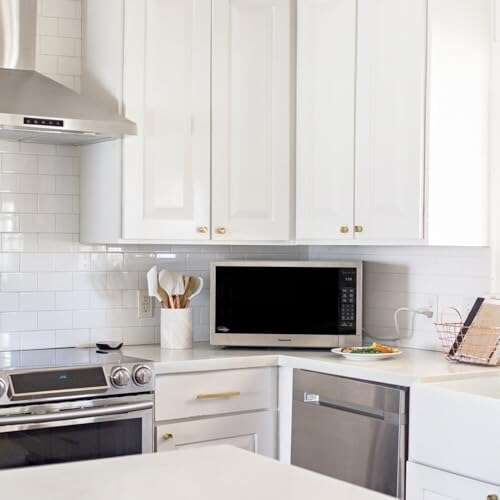
As someone who has renovated multiple kitchens, I have seen how the traditional over the range microwave can clutter a beautiful backsplash. Switching to a microwave drawer can change the flow of your cooking space and improve daily use. To understand what a microwave drawer really is, look past the sliding door. Think about safer access, cleaner lines, and how it fits into your kitchen plan. Whether you plan a high-end remodel or want to clean up sightlines, this guide covers design choices, technical details, and real-world tips I learned on job sites.

Why Consider a Microwave Drawer for Your Kitchen
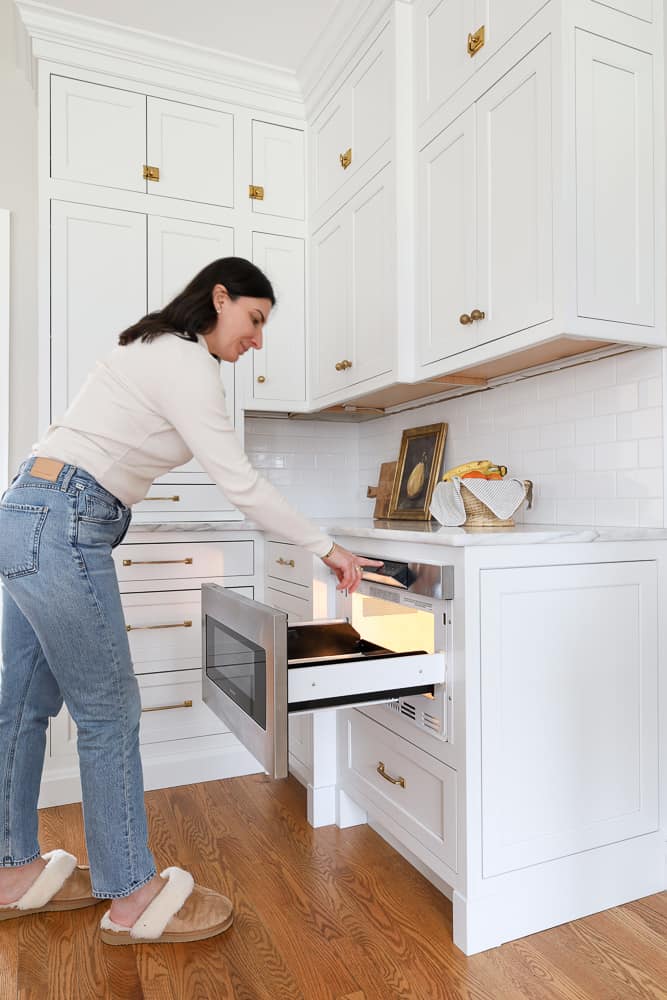
The main benefit is the location. A microwave drawer sits at hip level. That keeps you from reaching over a hot stove to pull out a steaming bowl. In my years of kitchen design, I found hip-level access reduces spills and burns. This placement works well for homes with kids or older adults. It also helps with ADA-friendly kitchen layouts because the controls sit within reach.
Another advantage is the look. A microwave drawer sits flush with cabinet faces. That creates a clean, modern feel. Your backsplash stays visible. Your countertops look less cluttered. Since the unit lives in your base cabinets, it frees up upper wall space. You can use that space for shelves, a custom hood, or a feature wall.
Technical Benefits and Features
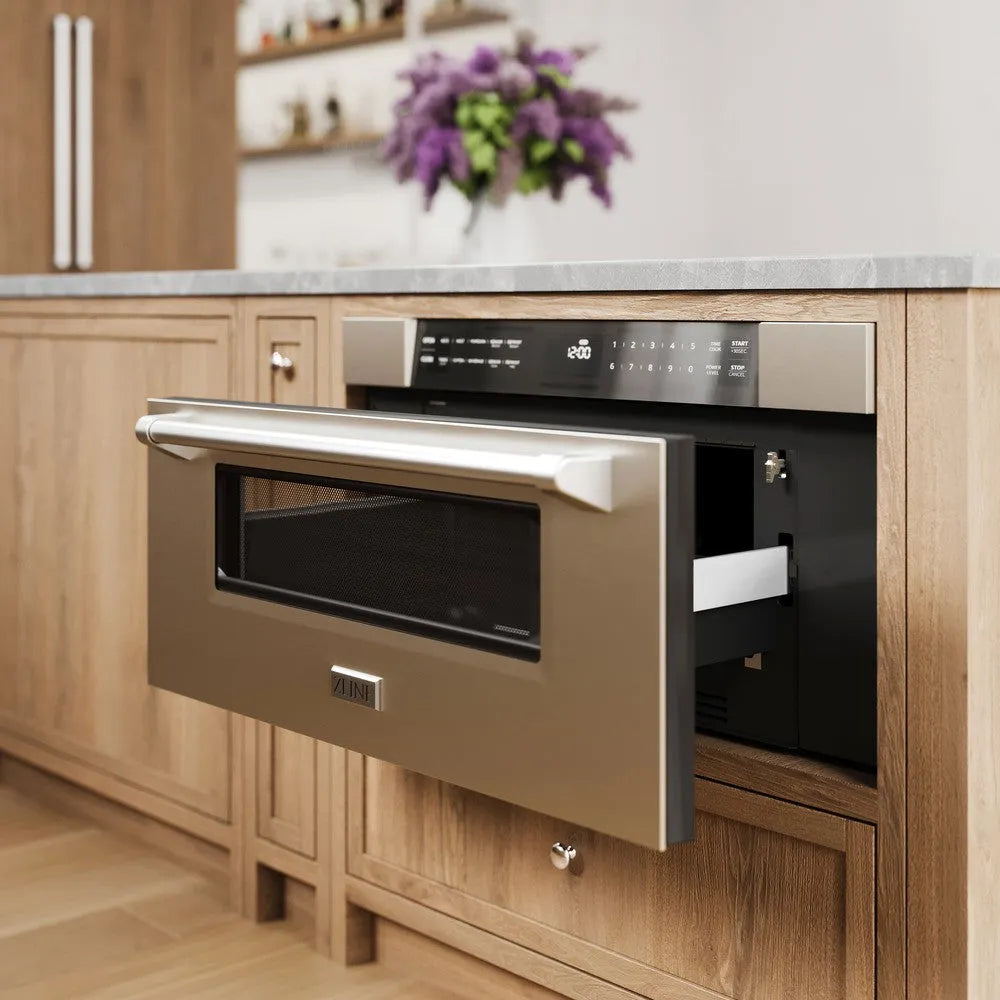
Microwave drawers work a bit differently than countertop or over-the-range models. Most of them do not use a spinning glass turntable. Instead, they use a hidden stirrer system or flat cavity to spread heat evenly. That gives more usable space. Rectangular dishes fit more easily. You can reheat a casserole without it getting stuck on the edge of a rotating plate.
Cleaning is easier, too. The floor is flat. There is no turntable ring to wash. A quick wipe with a damp cloth removes spills. Many models also have a touch open button. It is handy when your hands are full or messy. Tap the button and the drawer glides out smoothly.
Other useful features to look for are:
- Sensor cooking modes for popcorn, potatoes, and reheating.
- Child lock and safety interlocks.
- Multiple power levels and quick-start buttons.
- Flush-mount trim options for a seamless look.
- ADA-compliant control placement for accessibility.
Important Considerations Before You Buy
I am a fan, but there are trade-offs to know. First, microwave drawers usually cost more than over-the-range units. Budget for the unit and for installation. Cabinet changes may be needed. Cabinets must match the cutout width and depth of the model. Measure twice. Buy once.
Installation needs a nearby outlet inside the cabinet or behind it. On one job, a homeowner forgot to check cord length. The cord didn’t reach the outlet and the install was delayed. Read the manufacturer specifications for cord length and power needs. Some models require a dedicated 120V circuit. Others have specific ventilation rules. Once installed, the drawer is not easy to move. Pick a spot that works for your cooking flow.
Installation checklist: what to plan for
- Measure cabinet width, height, and depth against the unit’s cutout dimensions.
- Confirm the electrical outlet location and cord reach.
- Check ventilation or clearance rules in the manual.
- Decide on a flush or framed installation; verify trim kit needs.
- Arrange for professional install if you are not comfortable with cabinet mods.
Types, Sizes, and Fit: Which Microwave Drawer Is Right?
Microwave drawers come in common widths: 24 and 30 inches. Some brands offer compact 15- or 18-inch versions for tight spaces. Depth and height vary, so compare specs. Think about the dishes you use. Will you heat tall coffee mugs or large baking pans? Measure those items and compare to the interior cavity size.
Also note trim and face options. Many models are stainless steel. Others offer custom panel-ready fronts to match cabinetry. If you want a fully integrated look, choose a unit that supports custom panels and a trim kit that matches your cabinet face material.
Performance, Energy Use, and Noise
Performance is similar to a standard microwave for the same wattage. Wattage ranges from about 900W to 1200W on many models. Higher watts mean faster heating. The no-turntable design can cook items more evenly when paired with a stirrer. Noise levels vary. Some high-end units are quieter thanks to better insulation and motor design.
Energy use is mostly driven by cooking time and wattage. Use sensor settings and shorter cook times when possible. For quick tasks, microwave drawers use less energy than an oven and heat the kitchen less.
Maintenance and Care Tips
Keep the drawer seals clean. Wipe the cavity after spills. Use mild cleaner and avoid abrasive pads. Check the door rollers and tracks occasionally. Lubricate per the manual if needed. Replace filters if your model has one. These simple steps keep the glide smooth and the unit smelling fresh.

Frequently Asked Questions of what is a microwave drawer
Can I install a microwave drawer in a kitchen island?
Yes. Installing a microwave drawer in a kitchen island is a top use case. It keeps the appliance out of main prep zones. It also gives easy access from both sides if your island has seating. This setup works well for open-plan kitchens and for island entertaining.
Do microwave drawers require a special trim kit?
Most models mount flush with cabinetry and include hardware. Some kitchens need a trim kit or a custom face panel to match cabinet style. Check with the manufacturer or dealer before purchase. If you plan a custom wood front, confirm panel thickness specs first.
Is the cooking performance better than a standard microwave?
Performance is comparable when wattage is similar. The main plus is interior shape. The flat cavity fits large or rectangular dishes better. The hidden stirrer and flat floor give even heating without a rotating plate getting in the way.
How much space do I need for a microwave drawer?
Most models need a 24 or 30 inch wide base cabinet opening. Depth needs vary. Some units require extra clearance at the back for wiring. Always check the install guide. If your lower cabinet is shallow, a drawer may not fit without modification.
Are these appliances difficult to maintain?
No. They are usually easier to clean than traditional microwaves. There is no rotating glass tray to remove and wash. Wiping the flat floor and the door seal usually does the job. For stubborn stains, use a non-abrasive cleaner and a soft cloth.
Pros and Cons: Quick Summary
- Pros: Safer access, cleaner sightlines, fits large dishes, easier cleaning, supports ADA-friendly layouts.
- Cons: Higher cost, may need cabinet mods, requires planned electrical outlet, less common repair parts in some regions.
Buying Guide: Key Features to Compare
When shopping, compare these specs:
- Width and depth cutout dimensions.
- Interior cavity size and usable volume (liters or cubic feet).
- Wattage and sensor cooking functions.
- Door glide mechanism and warranty on moving parts.
- Trim kit and panel compatibility for integrated looks.
- Electrical requirements and cord length.
Conclusion
Choosing a microwave drawer blends modern convenience with a refined look. Moving the microwave from an over-the-range position to a base cabinet improves ergonomics and safety. It also opens up your backsplash and upper wall space. The units cost more up front, but they add real value to kitchen workflow and resale appeal. I recommend testing a display model at a local showroom to feel the glide and see the interior size. Once you use a drawer design, you may prefer it for life. Start planning your kitchen upgrade today and enjoy a more functional, beautiful space.

Appliance Review Expert
Lucas Ramirez is a trusted voice at HomeFixGrid.com, known for his clear, practical, and creatively written guides that simplify appliance care for everyday homeowners. With a strong focus on hands-on testing and real-world problem-solving, Lucas brings expert insight into appliance reviews and troubleshooting techniques. Her work empowers readers to confidently maintain, repair, and choose the right appliances for their homes.