
How To Identify A Fake Mattress: Easy Buying Guide
Check the law tag, brand details, seller, materials, and price to spot a fake mattress before you buy.
Buying a mattress is a major health and budget choice. Yet a fake mattress can look real, feel comfortable for a few minutes, and still contain poor foam, unsafe materials, false labels, or hidden damage. This guide explains how to identify a fake mattress with simple checks you can use in a store, online, or at home.
What Is a Fake Mattress?
A fake mattress is not always a clear copy of a famous brand. The term can describe several types of products:
• A counterfeit mattress that copies a real brand’s name, logo, or design
• A mattress with a false safety or quality certification
• A used mattress sold as new
• A rebuilt mattress with old foam, fabric, or springs
• A mattress with the wrong size, material, or model details
• A low-quality product sold with claims it cannot support
Some sellers also use stock photos and brand-like names to make a cheap mattress appear genuine. The mattress may arrive in plain plastic with no clear company address, warranty, or return policy.
Learning how to identify a fake mattress means checking the whole product, not just its cover. A neat appearance is only one small clue.

Why Fake Mattresses Are a Serious Problem
A mattress affects your sleep, posture, skin, and breathing space for many hours each night. A fake product may break down fast, sag unevenly, or release strong odors from poor materials.
There are also hygiene concerns. Used mattresses can carry stains, dust, bed bugs, mold, or body fluids. A rebuilt mattress may have a clean outer cover but old inner layers.
A fake mattress can also create financial problems. You may lose the warranty, pay return shipping, or discover that the seller has disappeared. Some counterfeit products use a real brand’s photos but provide no support from the real company.
The risk is not the same for every low-cost mattress. A budget mattress can be genuine and safe. The key issue is whether the seller tells the truth about the product, materials, age, and support.

How to Identify a Fake Mattress Before Buying
Use these steps before you pay. If a seller refuses to answer simple questions, treat that refusal as a warning.
1. Check the law tag
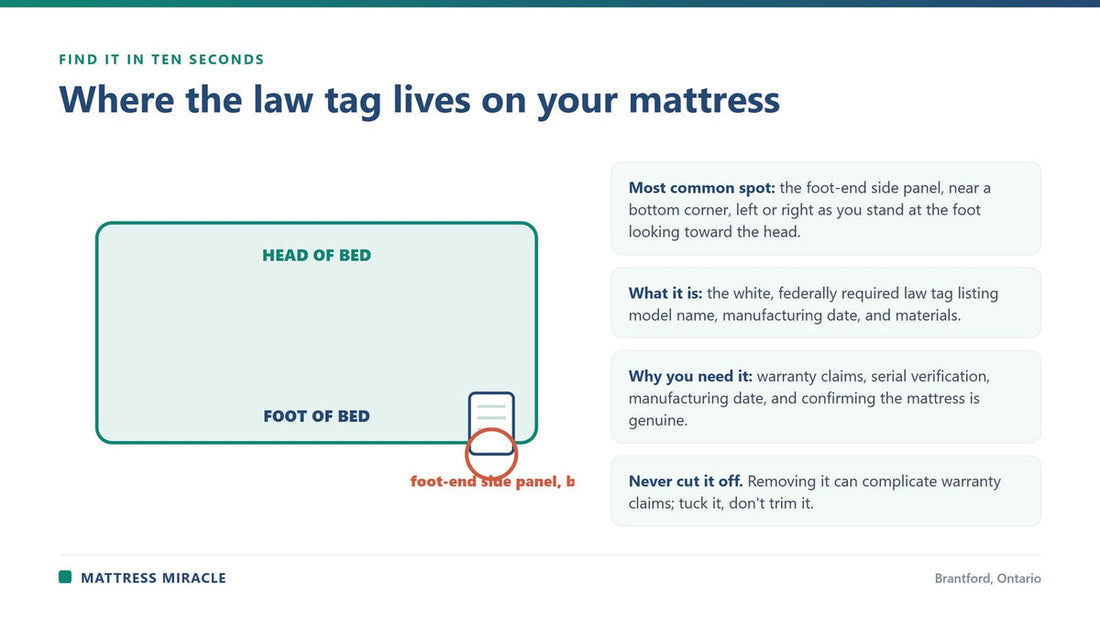
In the United States, most mattresses must carry a permanent law label. The tag often states:
• The manufacturer or importer
• The place of manufacture
• The mattress size
• The filling or padding materials
• A statement that the mattress contains new material
The tag may also include a registration number or other product details. Exact rules vary by state and product type, so use the tag as one part of your check.
A missing, loose, torn, or suspicious tag is a major warning sign. A law tag that says “all new material” does not prove the mattress is high quality. It only gives useful information about its contents and origin.
When learning how to identify a fake mattress, compare the law tag with the product listing, box, receipt, and model name. Every detail should match.
2. Compare the logo and model name
Counterfeit sellers often make small changes to a real brand’s identity. Look for:
• Spelling errors
• A logo with odd spacing
• Different colors or fonts
• A model name that does not appear on the brand’s official site
• A company name that resembles a trusted brand but is not the same
Visit the manufacturer’s official website by typing the address yourself. Do not rely only on a link sent by the seller. Search for the exact model, cover design, warranty terms, and product photos.
A real brand should be able to confirm whether the model exists. If the company cannot find the serial number or model number, stop and ask for a refund.
3. Inspect the seller
The seller matters as much as the mattress. Check whether the business provides:
• A real street address
• A working phone number
• A clear return policy
• A written warranty
• A business email linked to its own domain
• Secure payment options
Be careful with sellers who want cash, wire transfers, gift cards, or payment through a personal account. Those methods can make it hard to recover your money.
Read recent reviews from more than one site. Look for repeated complaints about used items, fake tracking numbers, poor customer service, or refused returns. A large number of reviews does not prove that a seller is honest, because reviews can be copied or manipulated.
4. Treat an extreme discount as a warning
A low price does not always mean a fake mattress. Clearance sales, floor samples, and older models can be legitimate. However, a price far below the normal market price deserves more checking.
Ask why the mattress is discounted. Find out whether it is:
• New and factory sealed
• A returned item
• A floor sample
• Refurbished
• Used
• Damaged in shipping
• Missing its original warranty
The phrase “brand new” should have a clear meaning. Get the answer in writing before you buy.
5. Check the packaging
New mattresses often arrive in strong, clean packaging with a model label, barcode, and company information. Packaging alone is not proof of authenticity, but poor packaging can reveal a problem.
Watch for:
• Several layers of dirty or loose plastic
• A box with no brand or model details
• Labels placed over older labels
• Different names on the box and mattress
• Water marks, dust, tears, or insect evidence
• A mattress that is already expanded when advertised as factory sealed
A mattress in a used plastic bag may be a return or a rebuilt product. Ask direct questions instead of guessing.
6. Inspect the stitching and cover
Run your hand over the cover and examine the seams. A genuine mattress can have small cosmetic flaws, but major problems may include:
• Crooked stitching
• Loose threads
• Uneven panels
• Broken zippers
• Mismatched fabric
• Stains or discoloration
• A strong chemical or musty smell
Do not judge safety by smell alone. Some new foams have a temporary “new mattress” odor, often called off-gassing. A lasting, harsh smell, eye irritation, or breathing trouble is a reason to leave the room and contact the seller.
7. Confirm the size and shape
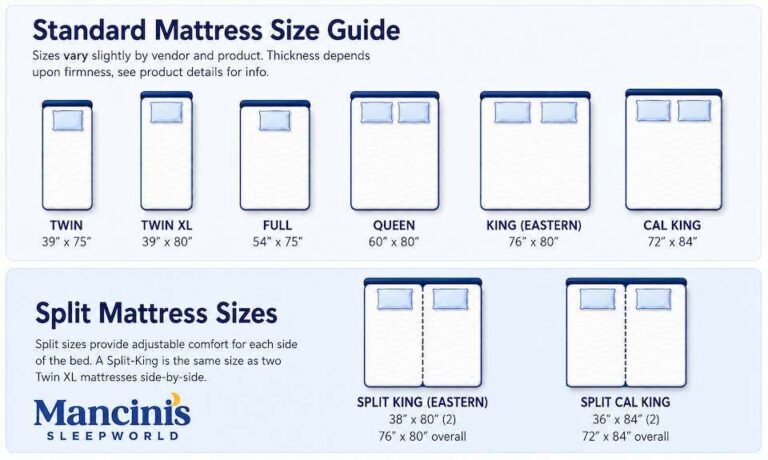
Measure the mattress with a tape measure. Common U.S. sizes include twin, twin XL, full, queen, king, and California king. A mattress that is several inches short or narrow may be mislabeled.
Also check the corners and edges. They should not look crushed, swollen, or uneven. A mattress that does not fit its stated size may be a factory mistake, a returned product, or an imitation.
8. Ask what is inside
A trustworthy seller should explain the main materials. These may include memory foam, latex, polyfoam, cotton, wool, coils, or fiber layers.
Ask:
• What is the foam density?
• Is the latex natural, synthetic, or blended?
• What type of coils are used?
• Does the mattress contain fiberglass?
• Where was it made?
• Is the cover removable and washable?
A seller does not need to reveal every trade secret. However, vague claims such as “premium sleep technology” do not tell you enough to make a safe choice.
9. Verify certifications
Certifications can help, but they are often copied by dishonest sellers. Look up the certification in the certifier’s own database when possible.
Common claims may include:
• CertiPUR-US for certain flexible polyurethane foam standards
• GREENGUARD Gold for low chemical emissions from tested products
• GOTS for qualifying organic textile products
• GOLS for qualifying organic latex products
• OEKO-TEX for tested textile components
A certification may apply to one material, not the entire mattress. For example, a foam certification does not automatically certify the cover, glue, coils, or full finished product.
This is a key part of how to identify a fake mattress: verify the certificate number, product name, and manufacturer. Do not trust a badge printed on a product page by itself.
10. Check the warranty and trial period
A real warranty should name the company responsible for repairs or replacement. It should state the length of coverage, sagging limit, exclusions, and claim process.
Read the fine print. Some warranties cover only the original buyer. Others require proof of purchase, a specific foundation, or photos of the defect.
A sleep trial is not the same as a warranty. A trial lets you return the mattress under certain conditions. A warranty usually covers manufacturing defects. If the seller promises “lifetime protection” but gives no written terms, consider that a serious warning.

How to Identify a Fake Mattress Online
Online shopping requires extra care because you cannot feel the mattress or inspect the label first. Use a simple verification process.
Review the product page
The listing should show the brand, model, size, materials, height, firmness, country of origin, warranty, and return terms. Missing details may mean the seller does not know what it is selling.
Look for photos of the actual product. Stock images, copied descriptions, and repeated photos across unrelated websites can suggest a drop-ship or counterfeit listing.
Check the web address
A fake store may use a web address that looks close to a real company. Check for extra words, odd spelling, and unusual domain endings. Type the official brand address into your browser instead of using a social media advertisement.
Read the return policy
A proper return policy should explain who pays for pickup, how long you have to return the product, and whether the mattress must be in its original packaging.
Watch for policies that mention another company name, a different country, or an unrelated product. Such errors may show that the listing was copied.
Save your evidence
Before ordering, save screenshots of:
• The product description
• The price
• The warranty
• The return policy
• The seller’s name
• Any certification claims
This evidence can help with a payment dispute or complaint. It also makes it easier to prove what the seller promised.
How to Identify a Fake Mattress After Delivery
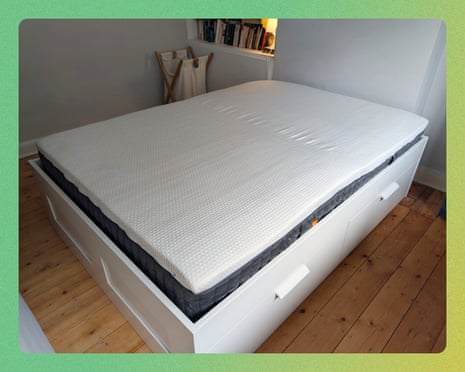
Inspect the mattress before removing tags or throwing away the packaging. Take photos and video as you open the box.
Check the following:
-
Compare the mattress with the online listing and your receipt.
-
Find the law tag and confirm the size, materials, and manufacturer.
-
Check the logo, model name, and serial number.
-
Look for stains, tears, hair, dirt, pests, or signs of prior use.
-
Smell the mattress from a safe distance.
-
Measure its length, width, and height.
-
Confirm that the warranty documents match the seller.
-
Contact the manufacturer to verify the model.
Do not sleep on the mattress if you suspect it is used, contaminated, or counterfeit. Keep the box, tag, photos, messages, and payment records.
If the seller will not help, contact your payment provider. You may also report deceptive business practices to the Federal Trade Commission, your state consumer protection office, or the appropriate product safety agency.

Common Signs of a Fake or Misrepresented Mattress
One clue may have an innocent cause. Several clues together deserve attention.
• The price is much lower than the normal price
• The seller avoids questions about age or materials
• The law tag is missing or altered
• The model cannot be found on the brand’s official site
• The serial number is absent or invalid
• The mattress has stains, hair, dust, or a musty smell
• The box and mattress show different brand names
• The seller has no clear return address
• The warranty is only a verbal promise
• The certification logo cannot be verified
• The product description uses vague words instead of facts
• The mattress is sold as new but arrives without factory packaging
A single small flaw does not prove fraud. Think of these signs as puzzle pieces. The more pieces that fit, the greater the risk.

Fake Mattress Versus Cheap Mattress
Not every inexpensive mattress is fake. Many genuine brands sell simple mattresses at a lower price by using fewer layers, basic covers, or online-only sales.
A cheap but genuine mattress usually has:
• A clear brand and model
• A readable law tag
• Honest material details
• A real warranty
• A reasonable return policy
• A traceable seller
• Verifiable certifications, if claimed
A fake mattress hides key facts. It may borrow a famous logo, use false claims, or present a used product as new.
The best approach is not to judge quality by price alone. Judge whether the seller can prove what the mattress is, where it came from, and what protection you receive after purchase.
Mistakes to Avoid When Buying a Mattress
Many shoppers focus on comfort for the first five minutes and ignore evidence of authenticity. That is an easy mistake because a soft showroom mattress can feel good even when its long-term support is poor.
Avoid these common errors:
• Buying from an unknown seller because of a countdown timer
• Assuming a famous logo proves authenticity
• Trusting a certification badge without checking it
• Removing tags before inspecting the product
• Paying with a method that offers no buyer protection
• Ignoring a strange smell or dirty packaging
• Accepting a verbal warranty
• Failing to measure the mattress
• Throwing away the box before checking the order
• Believing every online review
A practical lesson is simple: slow down when the deal feels urgent. A real mattress should still be a good deal after you verify the seller and product.
What to Do If You Bought a Fake Mattress
Act quickly. Your return window may be short, and some sellers become difficult to reach after delivery.
Follow these steps:
-
Stop using the mattress if you suspect contamination, severe odor, or unsafe materials.
-
Take clear photos of the mattress, law tag, packaging, and shipping label.
-
Save the listing, receipt, messages, and warranty details.
-
Contact the seller in writing and request a return or refund.
-
Contact the real brand if its name or logo was copied.
-
Ask your credit card company or payment service about dispute options.
-
Report fraud to consumer protection agencies when appropriate.
-
Do not donate a suspicious mattress to another person.
If the mattress has possible bed bugs or mold, keep it sealed away from other furniture. Ask a qualified pest or indoor air professional for advice. Do not cut open the mattress or attempt to clean deep internal layers yourself.
Frequently Asked Questions About How to Identify a Fake Mattress
How can I tell if a mattress is counterfeit?
Compare the logo, model name, law tag, serial number, packaging, and warranty with the brand’s official information. Contact the manufacturer directly if any detail looks wrong.
Does a law tag prove that a mattress is genuine?
No. A law tag is useful, but a dishonest seller may alter or copy one. Check the tag against the product listing and ask the manufacturer to confirm the model.
Can a fake mattress have a certification logo?
Yes. Certification logos can be copied or used outside their approved scope. Verify the certificate number and confirm that it applies to the exact product or material.
Is a strong smell proof that a mattress is fake?
No. Some new mattresses have a temporary foam odor. A strong or lasting smell, especially with eye or breathing irritation, should make you stop using the product and contact the seller.
Can a used mattress be sold as new?
A seller should not misrepresent a used or rebuilt mattress as new. Look for stains, crushed edges, loose packaging, missing tags, and signs of prior expansion or use.
What should I do if the mattress has no law tag?
Do not assume it is safe or genuine. Ask the seller for a clear explanation, keep the product unused, and contact the manufacturer or a consumer protection agency.
Is a very cheap mattress always fake?
No. A real mattress may be discounted because it is an older model, clearance item, or basic design. Still, a very low price should lead you to verify the seller, materials, warranty, and condition.
Conclusion
Knowing how to identify a fake mattress can protect your sleep, health, and money. Start with the law tag, then verify the brand, seller, model, materials, certifications, packaging, warranty, and return policy. Look at the full pattern rather than trusting one promise or one attractive price.
Take photos, save your records, and never let a countdown timer push you into a risky purchase. Use these checks before ordering and after delivery, then share your experience or explore trusted consumer resources before choosing your next mattress.

Appliance Review Expert
Lucas Ramirez is a trusted voice at HomeFixGrid.com, known for his clear, practical, and creatively written guides that simplify appliance care for everyday homeowners. With a strong focus on hands-on testing and real-world problem-solving, Lucas brings expert insight into appliance reviews and troubleshooting techniques. Her work empowers readers to confidently maintain, repair, and choose the right appliances for their homes.