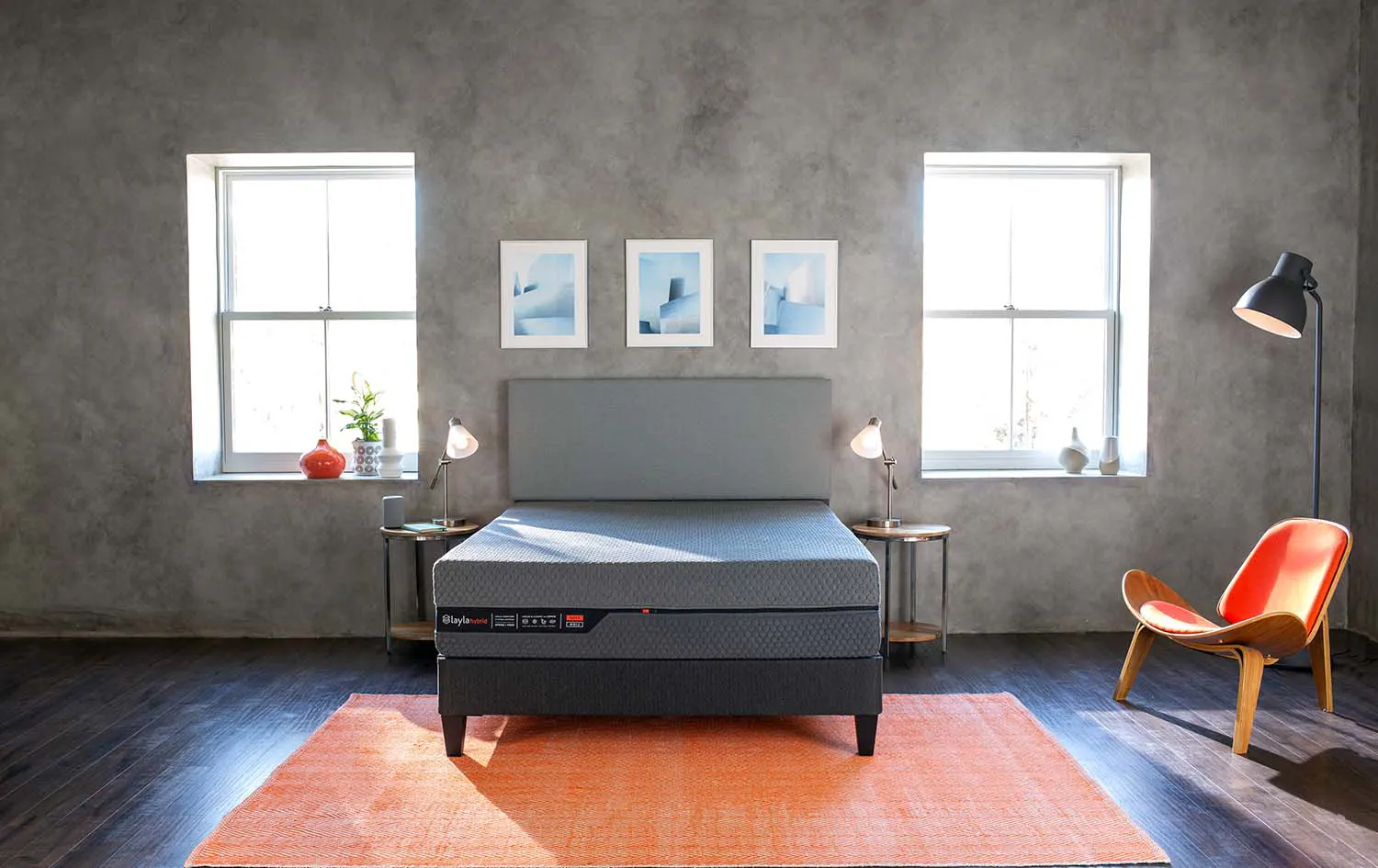
Do Modern Mattresses Need Box Springs: Best Support Guide
Most modern mattresses do not need box springs, but they do need a firm, supportive base.
The answer to “do modern mattresses need box springs” depends on the mattress type, bed frame, slat spacing, and warranty rules. Memory foam, latex, and many hybrid mattresses often work best on a platform bed or solid foundation. This guide explains how to choose the right support, avoid damage, and get better comfort from your mattress.
Do modern mattresses need box springs?
In most cases, no. Modern mattresses usually do not need traditional box springs because many are built with dense foam, pocketed coils, or layered hybrid materials. These designs need even support rather than the flexible coil system found in older box springs.
A box spring is a fabric-covered frame that traditionally contains metal or wood coils. It was designed to work with older innerspring mattresses. Today, many shoppers use the term “box spring” for any mattress foundation, but a true box spring and a modern mattress foundation are not always the same thing.
When asking, “do modern mattresses need box springs,” think about support, not the name of the base. Your mattress needs a foundation that keeps it level, prevents sagging, allows airflow, and supports the sleeper’s weight.
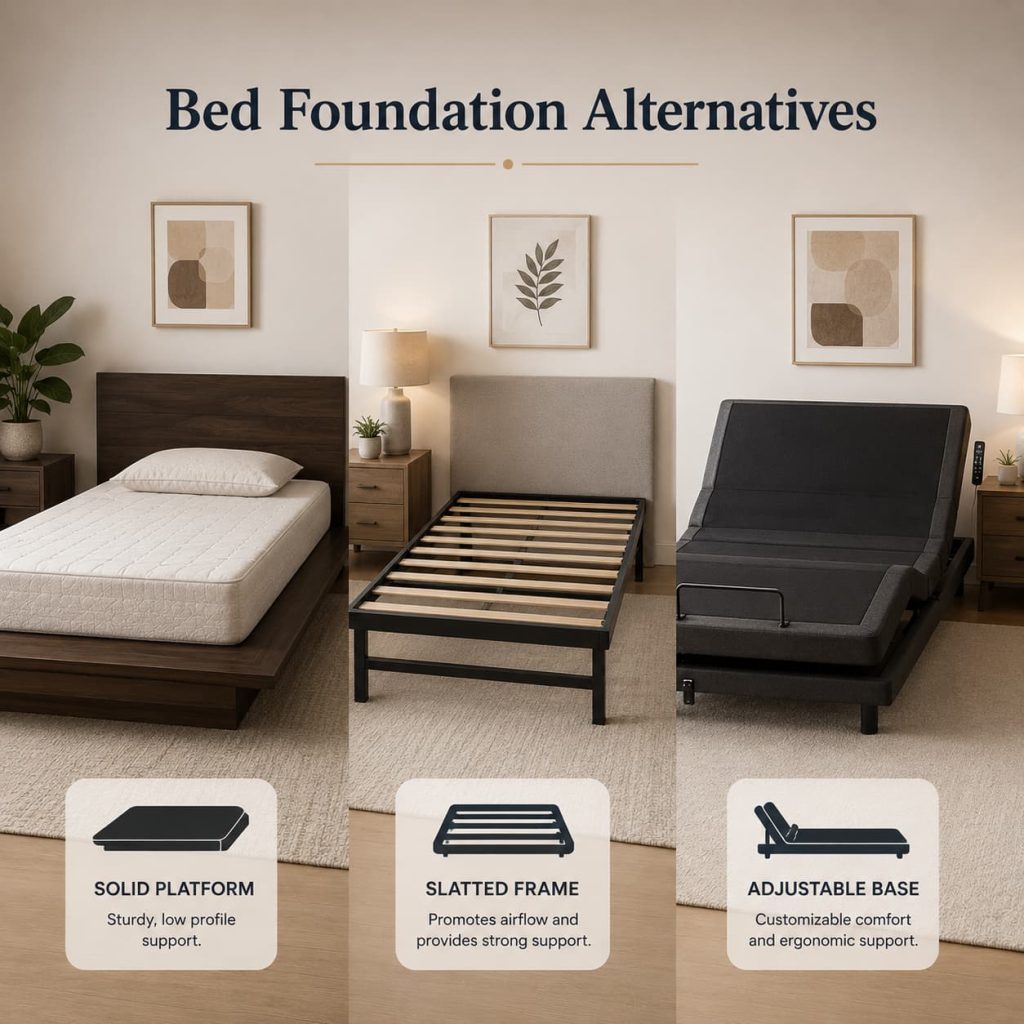
A suitable base may include:
• A platform bed with closely spaced slats
• A solid-top foundation
• A traditional box spring approved by the mattress maker
• An adjustable bed base
• A sturdy metal frame with proper center support
The best choice comes from the mattress manufacturer’s requirements. Some warranties allow a box spring, while others require a solid foundation or slatted base.

What is the difference between a box spring and a foundation?
A traditional box spring contains springs or flexible support coils inside a framed box. It can add some bounce and height. A foundation is usually more rigid and may use wood slats, a solid panel, or a strong metal structure.
This difference matters because foam and hybrid mattresses spread weight in a different way than older innerspring mattresses. A flexible base may allow a foam mattress to bend too much. Over time, that can lead to poor comfort or uneven wear.
Here is a simple comparison:
• Traditional box spring: A flexible base with internal springs, often made for classic innerspring mattresses
• Mattress foundation: A firm support base made for foam, latex, hybrid, or innerspring mattresses
• Platform bed: A bed frame with built-in slats or a solid surface
• Adjustable base: A powered foundation that raises the head or feet
• Bunkie board: A thin, firm panel placed on a frame to create a more solid surface
A common mistake is placing a modern mattress on an old box spring without checking its condition. If the springs are weak or the top bows in the center, the mattress may not receive even support.
Do modern mattresses need box springs based on mattress type?
The mattress material has a major effect on the right foundation. Asking “do modern mattresses need box springs” without knowing the mattress type can lead to the wrong setup.
Memory foam mattresses
Memory foam mattresses usually need a firm, even base. A platform bed, solid foundation, or slatted frame can work well if the slats are close enough together.
Many memory foam brands recommend slats spaced about 2 to 3 inches apart. However, the exact limit varies. Always check the product guide because some mattresses allow wider spacing, while others require a solid surface.
A weak box spring may allow the foam to dip between support points. That can create a hammock-like feel and may shorten the mattress’s useful life.
Latex mattresses
Latex mattresses are heavy and flexible. They need strong, evenly spaced support across the entire sleeping surface.
A solid foundation or sturdy platform bed is often a good choice. Slats must be strong enough to carry the mattress and sleepers without bending.
Latex also benefits from airflow. A slatted foundation can help air move beneath the mattress, as long as the slats provide enough support.
Hybrid mattresses
Hybrid mattresses combine foam comfort layers with coils. Many can sit on a platform bed, foundation, or compatible box spring.
The key issue is sagging between slats. A hybrid mattress may be heavier than a basic foam mattress, so the frame should have strong side rails and center support.
Innerspring mattresses
Traditional innerspring mattresses are the type most likely to work with a true box spring. The springs in the mattress and box spring can work together to create a familiar, slightly bouncy feel.
Still, not every new innerspring mattress requires a box spring. Many modern innerspring models are designed for platform beds or rigid foundations.
Air beds and specialty mattresses
Air beds, split mattresses, and specialty models may have special support rules. Some need a flat, solid base, while others work with adjustable frames.
For these products, follow the manufacturer’s instructions closely. Using the wrong base can affect comfort, operation, and warranty coverage.

When do modern mattresses need box springs?
There are a few cases where a modern mattress may need a box spring or a box-spring-style foundation. The mattress label and warranty terms should guide the decision.
A box spring may be suitable when:
• The mattress maker specifically approves it
• The box spring is in good condition
• The support surface is level
• The box spring matches the mattress size
• The frame provides strong center support
• The box spring does not have broken or widely spaced springs
Some innerspring mattresses feel better with a flexible box spring. The extra give can add bounce and make the bed feel less firm.
Height is another reason people choose a box spring. A low platform bed may make it hard to get in and out of bed. Adding a foundation can raise the mattress to a more comfortable height.
If your current box spring is more than a decade old, inspect it before reusing it. Look for sagging fabric, broken slats, squeaking, bowed edges, or a soft center. A worn base can make a good mattress feel defective.

When should you avoid a box spring?
A traditional box spring may be a poor choice for some foam, latex, and hybrid mattresses. The issue is usually not the word “box spring.” The issue is a lack of firm, even support.
Avoid using a box spring when:
• The mattress warranty requires a rigid foundation
• The box spring visibly sags
• The internal springs are broken
• The surface has large gaps
• The mattress bends between support points
• The base cannot support the mattress weight
• The frame lacks center support
A flexible base may also change the feel of the mattress. A medium-firm mattress can feel softer when placed on a springy base. That may help some sleepers, but it can also reduce support for the hips and lower back.
Moisture is another concern. Placing a mattress directly on the floor can limit airflow and may encourage mildew in damp rooms. A low foundation or platform frame is usually safer than floor placement.

How much support does a modern mattress need?
A modern mattress needs support across its full surface. The goal is to prevent deep dips while keeping the mattress level.
Check these parts of your bed setup:
• Slat spacing: Follow the mattress maker’s maximum gap, often between 2 and 4 inches
• Slat strength: Slats should not bend easily under normal weight
• Center support: Queen, king, and California king frames usually need center rails and legs
• Edge support: The outer frame should support the mattress perimeter
• Weight capacity: Add the weight of sleepers, pets, bedding, and the mattress
• Surface level: The base should not twist, tilt, or bow
A queen mattress placed on a frame with no center rail is a common problem. The middle may sag even when the mattress itself is still in good condition.
For heavy latex and hybrid mattresses, choose a frame with strong rails and several support legs. If the frame wobbles when you push it, it may not be ready for a new mattress.

Can you use a modern mattress on a platform bed?
Yes, most modern mattresses can be used on a platform bed. In fact, platform beds are often a practical alternative to box springs.
A platform bed may have wood slats, metal slats, or a solid deck. The surface must be strong and evenly spaced. If the gaps are too wide, add a bunkie board or another approved support panel.
Platform beds also reduce the need for extra parts. You do not need a separate box spring if the frame already provides proper support.
Before placing the mattress on the platform bed, check:
-
Measure the distance between slats.
-
Confirm that the slats are secure.
-
Look for a center rail and floor-contact legs.
-
Check the frame’s weight rating.
-
Read the mattress warranty requirements.
-
Make sure the mattress sits flat without overhanging edges.
A platform bed may also improve airflow compared with a solid surface. However, airflow depends on the design of the frame and the humidity in the room.

Can you use a box spring with a memory foam mattress?
Sometimes, but only if the box spring is firm enough and the mattress manufacturer allows it. A weak or flexible box spring can cause uneven support under memory foam.
If you are wondering, “do modern mattresses need box springs,” memory foam is one of the clearest examples of a mattress that usually does not. A rigid foundation or platform bed is often the safer choice.
If you want to reuse an existing box spring, test it first. Place a straight board across several areas and look for dips. You can also press down around the center and edges to find weak spots.
Do not place a thick sheet of plywood on top without considering ventilation. A solid board may improve support, but it can trap moisture beneath the mattress. If you use a board, follow the mattress maker’s guidance and allow the setup to breathe when possible.

How to choose the right mattress foundation
Choosing a foundation is easier when you start with the mattress warranty. The warranty often states the approved foundation type, slat spacing, and weight limits.
Use this process:
-
Identify the mattress type. Note whether it is foam, latex, hybrid, or innerspring.
-
Read the support requirements. Look for rules about slat gaps, center support, and foundation height.
-
Measure the frame. Confirm that the mattress and frame have the same dimensions.
-
Inspect the base. Replace cracked slats, bent rails, and weak legs.
-
Consider height. Add the mattress thickness and foundation height before buying.
-
Check movement needs. Choose an adjustable base if you want powered head or foot elevation.
-
Confirm the return policy. A foundation may affect comfort, so flexible return terms can help.
For most foam and latex mattresses, a rigid foundation or platform frame is a dependable choice. For traditional innerspring mattresses, a compatible box spring may provide the feel you want.

Benefits of using a box spring with a modern mattress
A box spring can still be useful in the right situation. It may raise the mattress, add bounce, and make a traditional innerspring bed feel more responsive.
Other possible benefits include:
• Easier bed access for people with limited mobility
• Extra clearance for storage
• A familiar feel under an innerspring mattress
• Compatibility with older bedroom furniture
• Less need to replace an existing bed frame
The main benefit comes from matching the base to the mattress. A box spring approved for a new innerspring mattress may work very well. The same box spring may be unsuitable for a heavy memory foam mattress.
In product testing and bedroom setup reviews, one lesson comes up again and again: people often blame the mattress for a problem caused by the frame. A sagging base can create pressure points, noise, and poor spinal support even when the mattress is new.
Common mistakes to avoid
A mattress foundation is easy to overlook, especially when you are focused on firmness and comfort. These mistakes can reduce the value of your purchase.
• Using widely spaced slats: Large gaps can allow the mattress to sag between supports.
• Skipping center support: Larger beds need a center rail and legs that reach the floor.
• Reusing a damaged box spring: Old springs and frames may not provide stable support.
• Placing the mattress directly on the floor: This can reduce airflow and make cleaning harder.
• Ignoring the warranty: An unapproved base may limit warranty protection.
• Using an undersized frame: The mattress edges can hang over and lose support.
• Blocking airflow: A damp, enclosed space may increase the risk of odors and mildew.
• Assuming all foundations feel the same: A rigid base and a springy base can change firmness and motion transfer.
One practical tip is to assemble the frame before unboxing a bed-in-a-box mattress. Once the mattress expands, moving it across a room becomes harder. A stable base helps the mattress settle evenly from the start.
Does a foundation change mattress comfort?
Yes. The foundation can change how firm, soft, bouncy, or stable the mattress feels.
A flexible box spring may make a mattress feel softer and more lively. A rigid platform usually creates a firmer and more stable feel. Neither option is automatically better for everyone.
Your body weight, sleep position, and mattress design also matter. Side sleepers may notice pressure changes more than back sleepers. Couples may prefer a rigid base because it can reduce extra movement.
If your mattress feels too soft, inspect the foundation before replacing the mattress. If it feels too firm, confirm that the base is not adding excessive rigidity. A simple foundation change may solve a comfort issue at a lower cost.
PAA-style questions about modern mattress support
Do modern mattresses need box springs for warranty coverage?
Not always. Many brands accept platform beds, slatted frames, and solid foundations instead of box springs. Read the warranty for exact rules on slat spacing, center support, and weight limits.
Can a mattress go directly on the floor?
It can, but it is not usually the best long-term setup. A floor can limit airflow, collect moisture, and make cleaning difficult, so a supportive frame or foundation is generally better.
Do modern mattresses need box springs with metal bed frames?
Only when the metal frame has enough support and the mattress maker approves the setup. Check for a center rail, floor-support legs, and slats that are close enough together.
Frequently asked questions
Do modern mattresses need box springs?
Most modern mattresses do not need traditional box springs. They need a firm, level foundation that meets the manufacturer’s support rules.
Can I use an old box spring with a new mattress?
You may be able to use it if it is strong, level, and approved for the new mattress. Replace it if it sags, squeaks, bends, or has broken internal parts.
What is the best foundation for a memory foam mattress?
A solid foundation or platform bed with closely spaced slats is usually a good choice. Follow the mattress maker’s spacing and weight requirements.
Do hybrid mattresses need a box spring?
Most hybrid mattresses can use a platform bed, rigid foundation, or compatible box spring. The base must support the mattress evenly and prevent excessive sagging.
How far apart can bed slats be?
The limit varies by mattress brand, but many mattresses require gaps of about 2 to 4 inches or less. Check the product instructions before using the frame.
Is a box spring better than a platform bed?
Neither is always better. A box spring may suit a traditional innerspring mattress, while a platform bed often suits foam, latex, and hybrid mattresses.
Can a bad foundation damage a mattress?
Yes. A weak or uneven foundation can cause sagging, discomfort, noise, and uneven wear. It may also create warranty problems if it does not meet the manufacturer’s requirements.
Conclusion
Most modern mattresses do not need traditional box springs. They do need steady, even support from a platform bed, solid foundation, approved box spring, or adjustable base.
Start by checking your mattress type, warranty, slat spacing, center support, and frame condition. A strong foundation protects your investment and helps the mattress deliver the comfort you expected.
Before buying a new mattress or bed frame, measure everything and compare the support requirements. Explore more mattress care guides, and share your foundation experience in the comments.

Appliance Review Expert
Lucas Ramirez is a trusted voice at HomeFixGrid.com, known for his clear, practical, and creatively written guides that simplify appliance care for everyday homeowners. With a strong focus on hands-on testing and real-world problem-solving, Lucas brings expert insight into appliance reviews and troubleshooting techniques. Her work empowers readers to confidently maintain, repair, and choose the right appliances for their homes.