Is Microwaving Beets Bad For You: Microwave Safety Facts
No. Microwaving beets is not bad for you when you use a microwave-safe dish, add a little water, and cook the beets until tender. A microwave does not make food radioactive. It uses nonionizing energy to heat water in the food.
For most people in the United States, microwaving is a safe and practical way to cook beets. It can also help preserve some nutrients because the cooking time is short and the beets use little water. Still, the best method depends on what you value most: speed, texture, flavor, or nutrient retention.

Are microwaved beets safe to eat?
Microwaved beets are safe when handled like any other cooked vegetable. The main risks do not come from microwave energy. They come from hot steam, uneven heating, unsafe containers, and poor food storage.


The U.S. Food and Drug Administration (FDA) explains that microwave ovens use nonionizing radiation. This energy heats food but does not make the food radioactive. Microwave ovens sold in the United States must also meet federal safety standards.
Use a microwave-safe dish
Choose a glass or ceramic dish labeled for microwave use. You can also use a microwave-safe container made for heating food.
Avoid:
- Metal dishes or foil
- Takeout containers not marked microwave-safe
- Foam containers
- Plastic wrap that touches the food
- Cracked dishes
- Containers with unknown coatings
Some plastics can soften or release unwanted compounds when heated. The safest simple choice is a microwave-safe glass dish with a loose cover.
Let steam escape
A whole beet can build up steam as it heats. That steam needs a way out. Pierce the skin several times with a fork before cooking, or cut the beet into pieces first.
If you cover the dish, leave a vent. Do not seal the container tightly. Hot steam can cause burns when the lid is removed.
Cook beets until tender
Microwaving does not remove the need for normal food safety. Wash fresh beets under running water before cutting them. Use a clean knife and cutting board.
The beet is ready when a fork slides into the center with little resistance. If the beet is still firm, continue cooking in short bursts. This helps prevent an overcooked outer layer and a hard center.

Does microwaving beets destroy nutrients?
Microwaving can reduce some nutrients, but it does not destroy all the nutrition in beets. In many cases, short microwave cooking with little water is a reasonable way to retain nutrients.
Heat, time, oxygen, and water all affect nutrient levels. Water-soluble nutrients, such as vitamin C and some B vitamins, can move into cooking water. If you throw that water away, you may lose some of those nutrients.


Microwaving often uses:
- Less water than boiling
- Less time than roasting
- Less direct heat than pan cooking
- A covered space that may limit exposure to air
That does not mean microwaving always preserves more nutrients than every other method. The result depends on the beet size, cooking time, microwave power, and amount of water.
What happens to beet nitrates?
Beets contain naturally occurring nitrates. The body can convert some dietary nitrate into nitric oxide, a compound involved in blood vessel function.
Cooking may change nitrate levels. Boiling can move some nitrate into the cooking water. Microwaving beets with a small amount of water may limit that loss, but it does not guarantee a specific nitrate level.
Beet nitrate research often uses beet juice or concentrated beet products. Results from those products may not apply directly to a normal serving of microwaved beets.
What happens to betalains?
Betalains give beets their red, purple, or yellow color. These plant pigments also have antioxidant activity in laboratory research.
Long cooking and high heat can reduce some betalains. Short cooking may cause less loss, but the exact amount varies. A microwave setting, cooking time, and beet size all matter.
The bright color may fade slightly after cooking. That change does not mean the beets are unsafe.
Does microwaving cause cancer?
There is no good evidence that properly used microwave cooking causes cancer. Microwave ovens do not make food radioactive.
Concerns about cancer often relate to heated plastic or burnt food. You can reduce those concerns by using a microwave-safe glass or ceramic dish and avoiding scorching. Do not heat food in a container that is not designed for microwave use.

How to microwave beets safely
Microwaving beets works best when you cut large beets into even pieces. Small whole beets can also work, but they need to be pierced and checked often.
What you need
- Fresh beets
- A microwave-safe dish
- 1 to 3 tablespoons of water
- A vented microwave-safe cover
- Oven mitts
- A fork or small knife
Step-by-step method
- Wash the beets. Scrub away soil under running water. Do not use soap.
- Trim the greens. Leave about 1 inch of the stem if you want to reduce bleeding while cooking.
- Cut off the root tip. This makes the beet easier to handle after cooking.
- Pierce whole beets. Make several small holes with a fork.
- Cut large beets into pieces. Aim for similar sizes so they cook at the same rate.
- Place the beets in the dish. Add a small amount of water.
- Cover the dish loosely. Use a vented lid or microwave-safe plate.
- Cook on high. Start with 5 minutes for pieces or about 8 minutes for small whole beets.
- Turn or stir the beets. This helps reduce uneven heating.
- Check for tenderness. Add 1-minute bursts until a fork slides into the center.
- Rest before opening. Let the dish sit for 2 to 3 minutes. Open it away from your face.
- Peel if desired. The skin often slips off more easily after cooking.
Cooking time varies by microwave power and beet size. A large whole beet may take 10 to 15 minutes or more. Start with less time. You can always cook it longer.
Signs that the beets are done
Cooked beets should be:
- Tender in the center
- Warm throughout
- Easy to pierce
- Not hard or crunchy
A little firmness may be useful if you plan to roast or sauté the beets afterward. For salads, most people prefer a fully tender texture.


What to do if the beets cook unevenly
If the outside is soft but the center is hard, cut the beet into smaller pieces. Arrange the pieces in a single layer and rotate the dish halfway through cooking.
If the beets dry out, add another tablespoon of water and cover the dish loosely. If they become watery, use less water next time.
Microwaving vs. boiling, steaming, and roasting beets
Microwaving is not the only good method. Each cooking method changes the beet in a different way.
| Method | Main advantage | Main drawback |
|---|---|---|
| Microwaving | Fast and uses little water | Texture can be uneven |
| Steaming | Keeps a firm texture and limits water contact | Takes longer than microwaving |
| Boiling | Simple for large batches | More nutrients and color may enter the water |
| Roasting | Deep, sweet flavor | Takes longer and uses more energy |
| Pressure cooking | Very fast for whole beets | Requires special equipment |
Microwaving
Choose the microwave when you want cooked beets quickly. It works well for a small serving, meal prep, or a last-minute side dish.
The flavor is usually milder than roasted beets. The texture may also be softer, especially if you use too much water or cook the beet too long.
Steaming
Steaming can produce a clean beet flavor and firm texture. It may be a better choice when you want beets for a salad or grain bowl.
Boiling
Boiling is useful for cooking many beets at once. However, water-soluble compounds can move into the cooking water. If you use the water in soup, you may keep more of what leaches out.
Roasting
Roasting brings out a sweeter, richer taste. It usually takes longer and may require oil or a longer period in the oven.
The practical choice is simple: microwave for speed, steam for a firm texture, boil for a large batch, and roast for the deepest flavor.

Common mistakes when microwaving beets
Most problems are easy to prevent.
Cooking a whole beet without piercing it
Steam can build inside the skin. Pierce the beet or cut it before cooking.
Sealing the container
A sealed container can trap hot steam. Use a loose cover with a vent.
Using too much water
A large amount of water can make the beets watery and may carry some water-soluble nutrients away. A few tablespoons are usually enough.


Cooking all beets for the same amount of time
A small beet and a large beet do not cook at the same speed. Size, shape, age, and microwave power all matter.
Touching the beet right away
The beet and its steam can be very hot. Use oven mitts and let it rest before peeling.
Storing cooked beets at room temperature
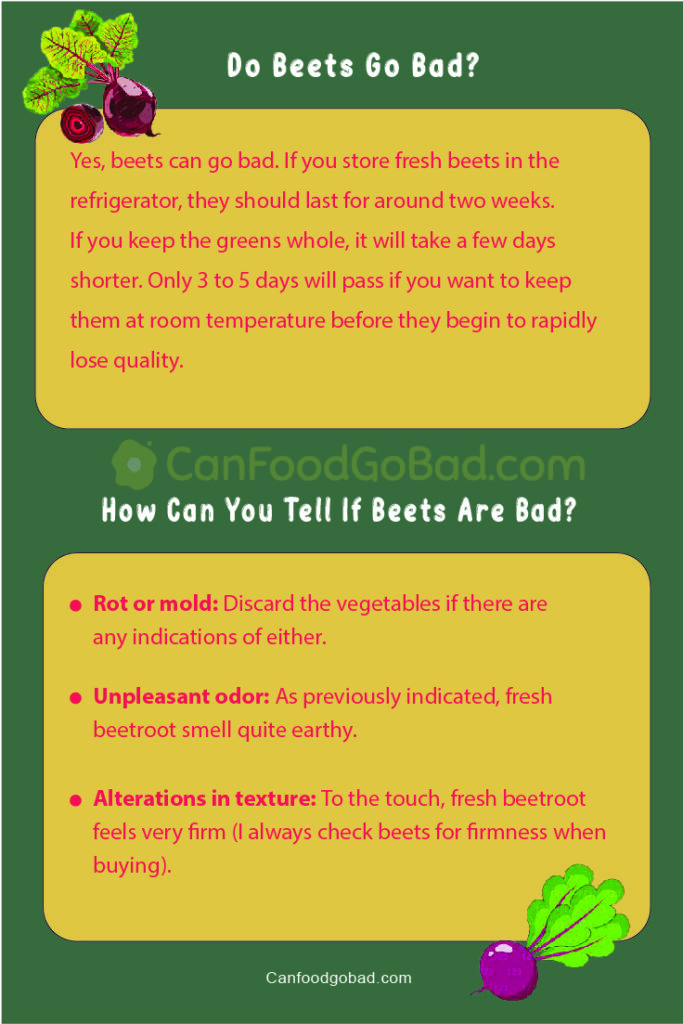
Refrigerate cooked beets within 2 hours. If the room is above 90°F, refrigerate them within 1 hour. Keep them in a covered container and use them within about 3 to 4 days.
Freezing is also an option. Freeze cooled beets in an airtight container or freezer bag. Their texture may become softer after thawing, so frozen beets work well in soups, sauces, and cooked dishes.
Are beets healthy for everyone?
Beets can fit into a healthy diet, but they are not ideal for every person in unlimited amounts.
Beets provide fiber, folate, potassium, and plant compounds. They are also naturally sweet, so portion size may matter for people who track carbohydrate intake or blood sugar.
Beet urine is usually harmless
Beets can turn urine pink or red. This is called beeturia. It is usually harmless and comes from beet pigments passing through the body.
Red urine can also have other causes. If the color continues after you stop eating beets, or if you have pain, burning, fever, or clots, contact a health professional.
Kidney stones and oxalates
Beets contain oxalates. People who have had calcium oxalate kidney stones may be advised to limit high-oxalate foods or manage portions.
Do not make a major diet change based only on a general article. Ask a doctor or registered dietitian how beets fit your kidney stone plan.
Blood pressure and medicines
Beet nitrate may support lower blood pressure in some settings. That does not make beets a treatment for high blood pressure.
If you take blood pressure medicine, nitrate medicine, or medicine that affects blood vessels, ask your clinician before using large amounts of beet juice or concentrated beet products. A normal serving of cooked beets is different from a supplement, but personal risks vary.
Food allergies
Beet allergy is uncommon but possible. Stop eating beets and seek medical help for swelling, trouble breathing, widespread hives, or other signs of a serious allergic reaction.

Key takeaways
- Microwaving beets is generally safe.
- Microwave energy does not make beets radioactive.
- Use a microwave-safe glass or ceramic dish.
- Pierce whole beets or cut them into pieces.
- Use a loose, vented cover.
- Add only a small amount of water.
- Cook until a fork slides into the center.
- Short microwave cooking may help limit nutrient loss from water and long heat exposure.
- Refrigerate cooked beets within 2 hours.
- Ask a health professional about beets if you have kidney stones, kidney disease, low blood pressure, or relevant medicines.
Frequently asked questions
Is it better to peel beets before microwaving?
Usually, no. Leaving the skin on can help the beet hold its shape and may reduce color loss. Wash the beet well first. After cooking, the skin often rubs or slips off easily.
Can you microwave canned beets?
Yes. Canned beets are already cooked, so you only need to heat them. Drain them if you want less liquid, place them in a microwave-safe dish, cover loosely, and heat in short bursts. Stir between bursts because the liquid can become very hot.
Can you microwave beets without water?
You can, but a small amount of water helps create steam and reduces drying. For beet pieces, 1 to 2 tablespoons may be enough. Whole beets may need slightly more, depending on the dish and cooking time.
Does microwaving beets increase sugar?
No. Microwaving does not add sugar to beets. Cooking can make beets taste sweeter because heat softens their texture and changes how the natural sugars are perceived.
Can you eat microwaved beet greens?
Yes. Young beet greens can be washed and cooked like other leafy greens. Older greens may be tougher. Cook them until tender, and discard any leaves that are slimy, moldy, or spoiled.
Conclusion
Microwaving beets is a safe cooking method for most people. It saves time, uses little water, and can produce tender beets without the long wait required for roasting.
For the best result, wash the beets, pierce or cut them, use a vented microwave-safe dish, and cook them in short stages. If you have kidney stones, kidney disease, low blood pressure, or concerns about medication interactions, ask a qualified health professional how much beet fits your diet.

Appliance Review Expert
Lucas Ramirez is a trusted voice at HomeFixGrid.com, known for his clear, practical, and creatively written guides that simplify appliance care for everyday homeowners. With a strong focus on hands-on testing and real-world problem-solving, Lucas brings expert insight into appliance reviews and troubleshooting techniques. Her work empowers readers to confidently maintain, repair, and choose the right appliances for their homes.