How Thick Mattress Do I Need: Find Your Ideal Size
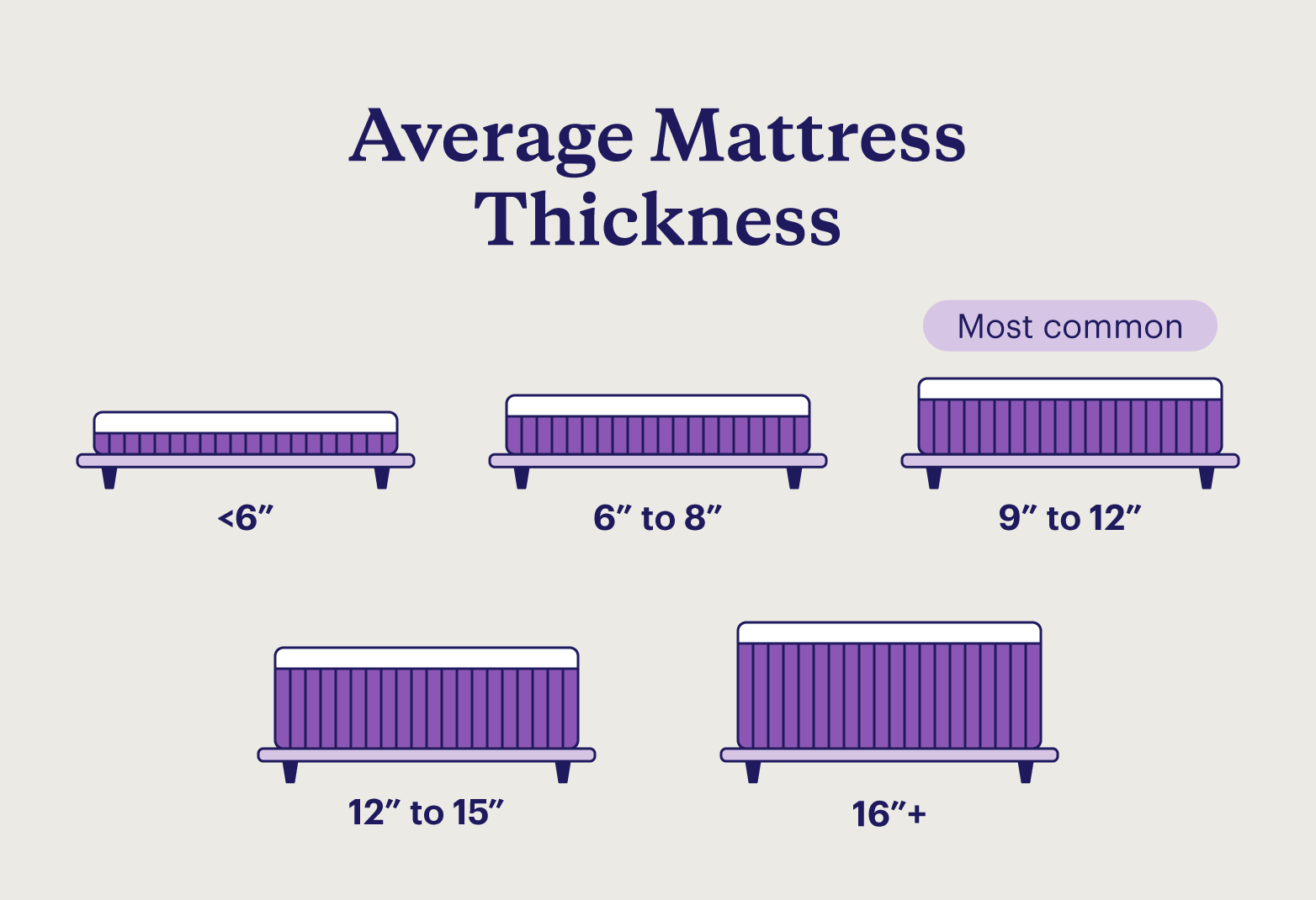
Most adults in the United States need a mattress that is 10 to 12 inches thick. This range gives enough room for a comfort layer, a support core, and good body support without making the bed too tall.
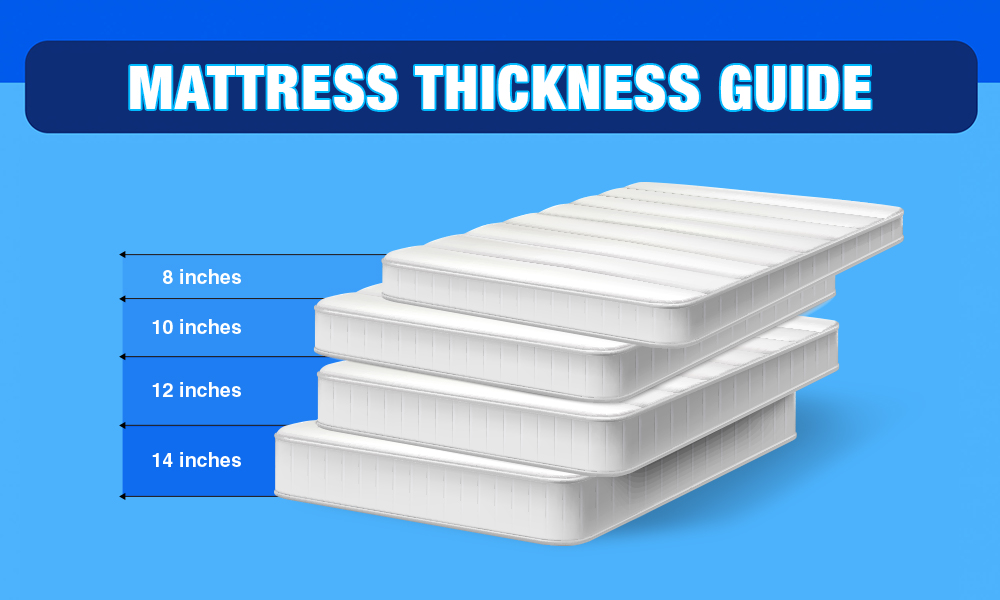
Choose a 12- to 14-inch mattress if you are heavier, sleep on your side, share the bed, or want more cushioning. An 8- to 10-inch mattress may work for children, guest rooms, lighter adults, bunk beds, or low-profile bed frames.
The right thickness depends on more than your height. Your sleeping position, body weight, mattress design, bed frame, mobility, and preferred bed height all matter.


What Mattress Thickness Means
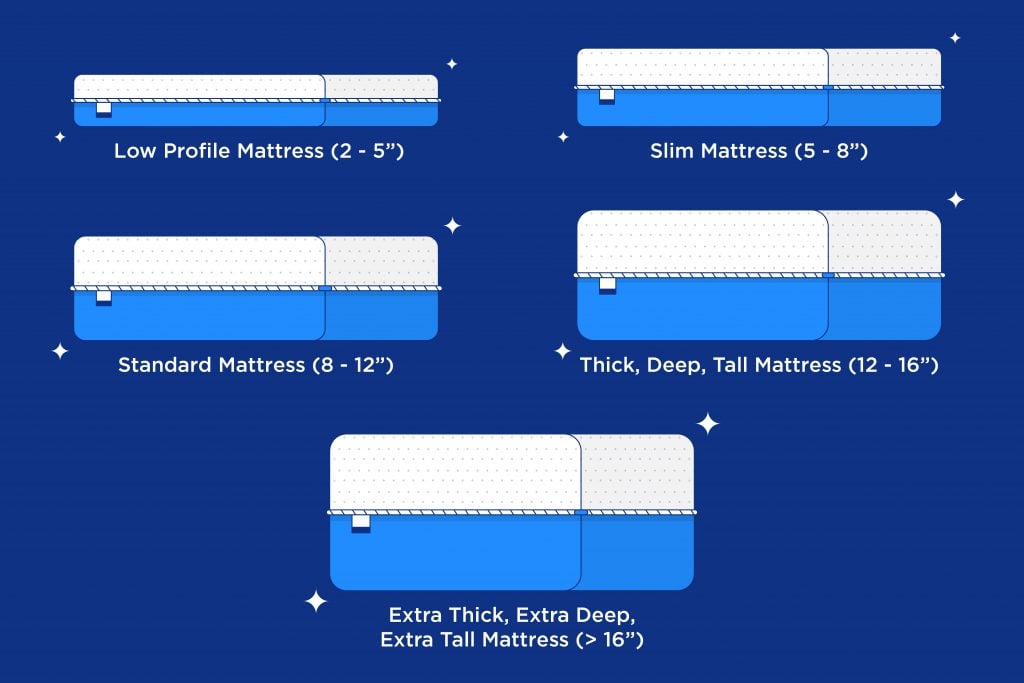
Mattress thickness is the total height of the mattress, measured from its bottom edge to its top surface. In the U.S., mattress thickness is usually listed in inches.
A thicker mattress may have more room for:
- A quilted cover
- Memory foam or latex comfort layers
- A transition layer
- Coils or other support materials
- Extra edge support
However, a thicker mattress is not always a better mattress. A well-built 10-inch mattress can support you better than a poorly made 14-inch mattress.
Thickness and firmness are different:
- Thickness is the height of the mattress.
- Firmness is how hard or soft the surface feels.
- Support is how well the mattress keeps your spine and body aligned.
A 14-inch mattress can feel firm, medium, or soft. A 10-inch mattress can also have any of these feels. Do not use thickness alone to predict comfort.
Mattress Thickness Guide by Sleeper
The table below gives a practical starting point for common sleepers. It is a guide, not a rule.
| Sleeper or use | Suggested thickness | Why |
|---|---|---|
| Children | 5–8 inches | Usually lighter and need less material |
| Teenagers | 8–10 inches | Supports growth and changing sleep needs |
| Lightweight adults under about 130 pounds | 8–10 inches | Places less stress on the support core |
| Average-weight adults | 10–12 inches | Offers a balanced comfort and support build |
| Heavier adults over about 230 pounds | 12–14 inches | Allows deeper support and reduces the risk of bottoming out |
| Side sleepers | 12–14 inches | Often provides more room for hip and shoulder cushioning |
| Back sleepers | 10–12 inches | Usually balances surface comfort and lumbar support |
| Stomach sleepers | 10–12 inches | Helps limit excessive sinking when paired with suitable firmness |
| Couples | 12–14 inches | Gives each person more usable comfort and support |
| Bunk beds or trundles | Often 6–10 inches | Must stay within the bed’s safety and clearance limits |
| Guest rooms | 8–12 inches | Depends on expected guests and available budget |
These ranges assume a standard adult mattress with a suitable support core. A 12-inch mattress made mostly of soft foam may not support a heavier sleeper as well as a firmer 10-inch mattress with stronger support.
If you are between two thickness options, choose the thicker model when you need more cushioning or support. Choose the thinner model when bed height, cost, stairs, or frame clearance matters more.

Choose Mattress Thickness by Sleeping Position
Your sleeping position affects how much cushioning your body needs.


Side sleepers
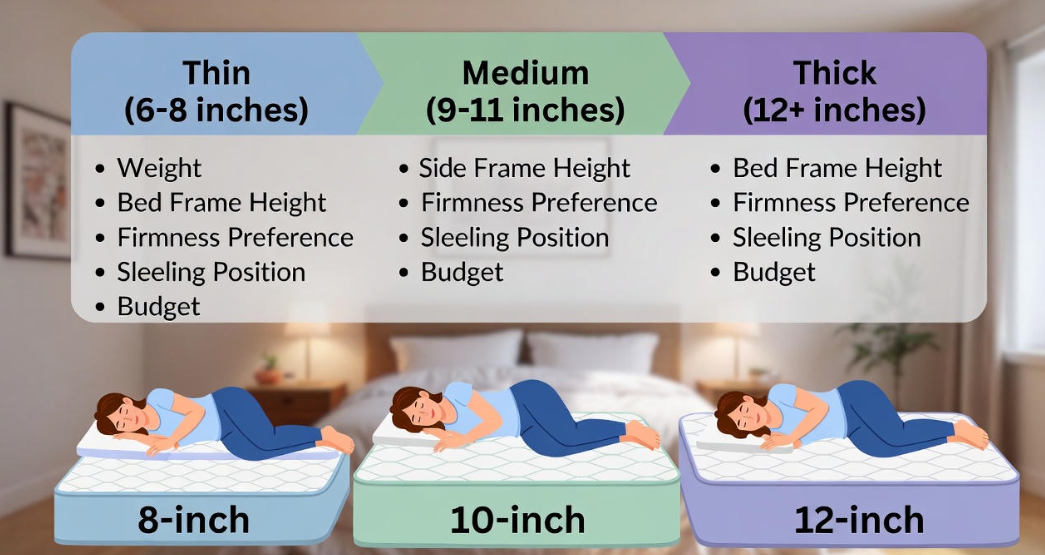
Side sleepers often do best with 12 to 14 inches, especially when the mattress has a pressure-relieving comfort layer.
Your shoulders and hips press into the mattress. If the comfort layer is too thin, these areas may feel sore or numb. A mattress that is too soft, however, may let your hips sink too far and pull your spine out of line.
Look for:
- A comfort layer thick enough to cushion the shoulders and hips
- Medium-soft to medium firmness, depending on body weight
- A support core that stops the pelvis from sinking too deeply
Thickness helps, but the foam or latex design matters more than the number of inches alone.
Back sleepers
Back sleepers commonly need 10 to 12 inches. The mattress should support the lower back while allowing the hips and shoulders to settle slightly.
A mattress that is too firm may leave a gap below the lower back. A mattress that is too soft may let the hips sink and cause the back to curve.
A medium to medium-firm feel often works well for back sleepers, but body weight changes the result. A heavier person may need a firmer surface than a lighter person using the same mattress.
Stomach sleepers
Stomach sleepers often need 10 to 12 inches with strong support. The key issue is preventing the abdomen and hips from sinking too far.
A very thick, plush mattress can feel comfortable at first but may allow poor spinal alignment. Stomach sleepers should focus on:
- A firmer comfort surface
- Strong central support
- Limited sink around the hips
- Enough cushioning to avoid pressure on the ribs and pelvis
Thickness is useful only when the extra material does not make the mattress excessively soft.
Combination sleepers
If you change positions during the night, 10 to 12 inches is a practical starting point. Choose 12 to 14 inches if you are heavier or need more cushioning for side sleeping.
Combination sleepers should also consider how quickly the mattress responds to movement. Latex and responsive foam may make it easier to change positions than slow memory foam.
Choose Mattress Thickness by Body Weight
Body weight affects how deeply you sink into a mattress. Heavier sleepers place more force on the comfort and support layers, so a thicker mattress may provide more room for proper alignment.
Lighter sleepers
Adults under about 130 pounds may be comfortable on an 8- to 10-inch mattress, if it has a suitable support core. A very firm mattress may feel harder to a lighter person because they do not sink into the comfort layers as much.


Average-weight sleepers
Adults between about 130 and 230 pounds often fit well with a 10- to 12-inch mattress. This range supports many foam, hybrid, and innerspring designs.
Heavier sleepers
Adults over about 230 pounds may prefer a 12- to 14-inch mattress, particularly when sleeping on their side or sharing the bed.
Do not assume that extra thickness solves every support problem. Check the manufacturer’s stated weight limit for the mattress and foundation. Some brands list a total capacity for two sleepers, while others list a limit per side.
When possible, look for:
- A durable support core
- Reinforced edges
- Strong coils or high-density base foam
- A stable foundation
- A sleep trial that allows returns
A thicker mattress can reduce the chance of feeling the support base, but it cannot correct a weak design.
Calculate Your Total Bed Height
Mattress thickness is only one part of bed height. The total height includes the frame, foundation, box spring, and mattress.
Use this calculation:
Total bed height = frame height + foundation height + mattress thickness
Example calculation
Suppose your setup includes:
- 14-inch bed frame
- 8-inch foundation
- 12-inch mattress
The total bed height is:
14 + 8 + 12 = 34 inches
That height may feel comfortable for one person and too high for another.
A very tall bed can make it harder to:
- Sit down and stand up
- Change sheets
- Move into the bed
- Reach the floor safely
A very low bed can make standing harder, especially for people with knee, hip, or back limitations.


A useful test is to sit on the edge of the bed. Your feet should rest flat on the floor, and your knees should be near a right angle. This is a practical fit check, not a medical rule.
Also measure the bedroom doorway, stairway, and hallway before buying. A thick mattress may bend, but a large hybrid or innerspring mattress can still be difficult to move.

Check Your Bed Frame Before Choosing a Mattress
The mattress must match the support system below it. Before buying, read the mattress warranty and foundation requirements.
Check these details:
- Whether the mattress needs a foundation or can sit on a platform
- The maximum gap between platform slats
- Whether a center support rail is required
- The weight limit for the frame and foundation
- Whether the frame is designed for the mattress type
- The maximum height allowed for a bunk bed or trundle
A mattress can sag if its support base has wide gaps or lacks center support. A thicker mattress does not prevent this problem.
Bunk beds require special care. The U.S. Consumer Product Safety Commission advises following the manufacturer’s instructions and using the correct mattress size and thickness so the guardrails remain effective. The upper bunk should not use a mattress that raises the sleeping surface too close to the guardrail.
For children and infants, follow the specific safety guidance for the bed. An adult mattress thickness recommendation does not apply to a crib. The CPSC’s crib safety guidance calls for a firm, tight-fitting crib mattress with a fitted sheet and no loose bedding.

How Thick Should Each Mattress Type Be?
Different mattress types use thickness in different ways.
Memory foam mattresses
Memory foam mattresses are often 8 to 14 inches thick. The support depends heavily on the density and thickness of the base foam.
For adults, a 10- to 12-inch memory foam mattress is often a practical starting point. Side sleepers and heavier sleepers may need more depth, but a thick layer of soft foam can increase sinking and heat retention.
Hybrid mattresses
Hybrid mattresses often measure 10 to 16 inches. They combine coils with foam, latex, or other comfort materials.
A 12- to 14-inch hybrid may suit couples, side sleepers, or people who want more cushioning. The coil system and comfort layers matter more than the total height. Ask whether the mattress has reinforced edges and whether the coils are individually wrapped or connected.
Innerspring mattresses
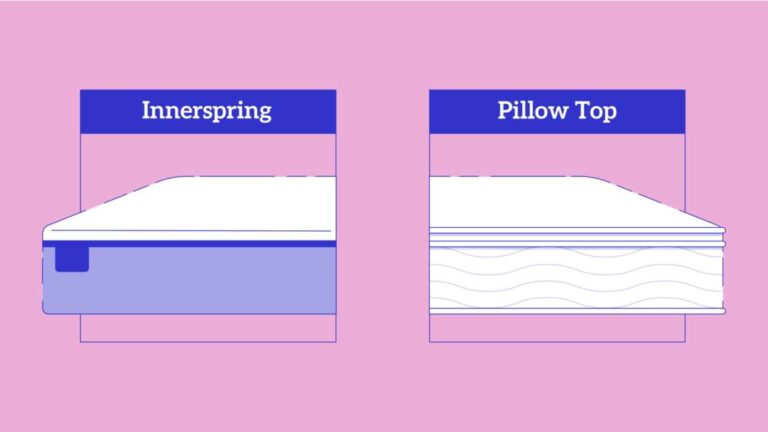
Traditional innerspring mattresses may be 8 to 12 inches thick. They can offer strong airflow and a firmer feel, but thinner models may have less cushioning for side sleepers.
If you choose an innerspring mattress, pay attention to the padding above the coils. A tall coil unit does not automatically create good pressure relief.
Latex mattresses
Latex mattresses are commonly 8 to 14 inches thick. Latex tends to feel responsive and can provide support without the deep sinking associated with some memory foam.
An 8- to 10-inch latex mattress may work for some adults, while a 10- to 12-inch design gives more room for comfort and transition layers.

Is a Thicker Mattress More Comfortable?
A thicker mattress may be more comfortable when you need more space for pressure relief, but thickness alone does not determine comfort.
Look at the mattress layers. A useful design may include:
- A surface comfort layer
- A transition layer
- A support core
- A stable bottom layer
If a mattress is thick because it has several soft layers, it may feel plush but lack support for some sleepers. If it is thick because it has a tall support core, it may feel firm and supportive but not cushion the shoulders well.
The best thickness is the smallest height that gives you:
- Comfortable pressure relief
- Neutral spinal alignment
- Stable support when you move
- Enough edge strength for sitting and sleeping
- A safe total bed height
Treat “extra thick” as a design detail, not a quality rating.

Common Mattress Thickness Mistakes
Avoid these mistakes when choosing a mattress.
Choosing by thickness alone
A 14-inch mattress is not automatically better than a 10-inch mattress. Compare the firmness, construction, support core, weight limit, and warranty terms.
Forgetting the foundation
A mattress may perform poorly on an unsuitable frame. Confirm the slat spacing and center support before you buy.
Ignoring total bed height
Adding a thick mattress to a tall frame can create a bed that is hard to use. Measure the full setup, not just the mattress.
Buying a thick mattress for a bunk bed
A thick mattress can reduce the height of the guardrail above the sleeper. Follow the bunk bed maker’s thickness limit.
Using an infant mattress as an adult guide
Infant sleep safety has different requirements. Use a firm, tight-fitting crib mattress designed for that crib.
Assuming more cushioning fixes pain
A mattress can affect comfort, but ongoing or severe back pain, numbness, or weakness needs medical advice. A thicker mattress is not a treatment for a diagnosed condition.
Quick Decision Guide
Use this short guide if you want a simple answer:
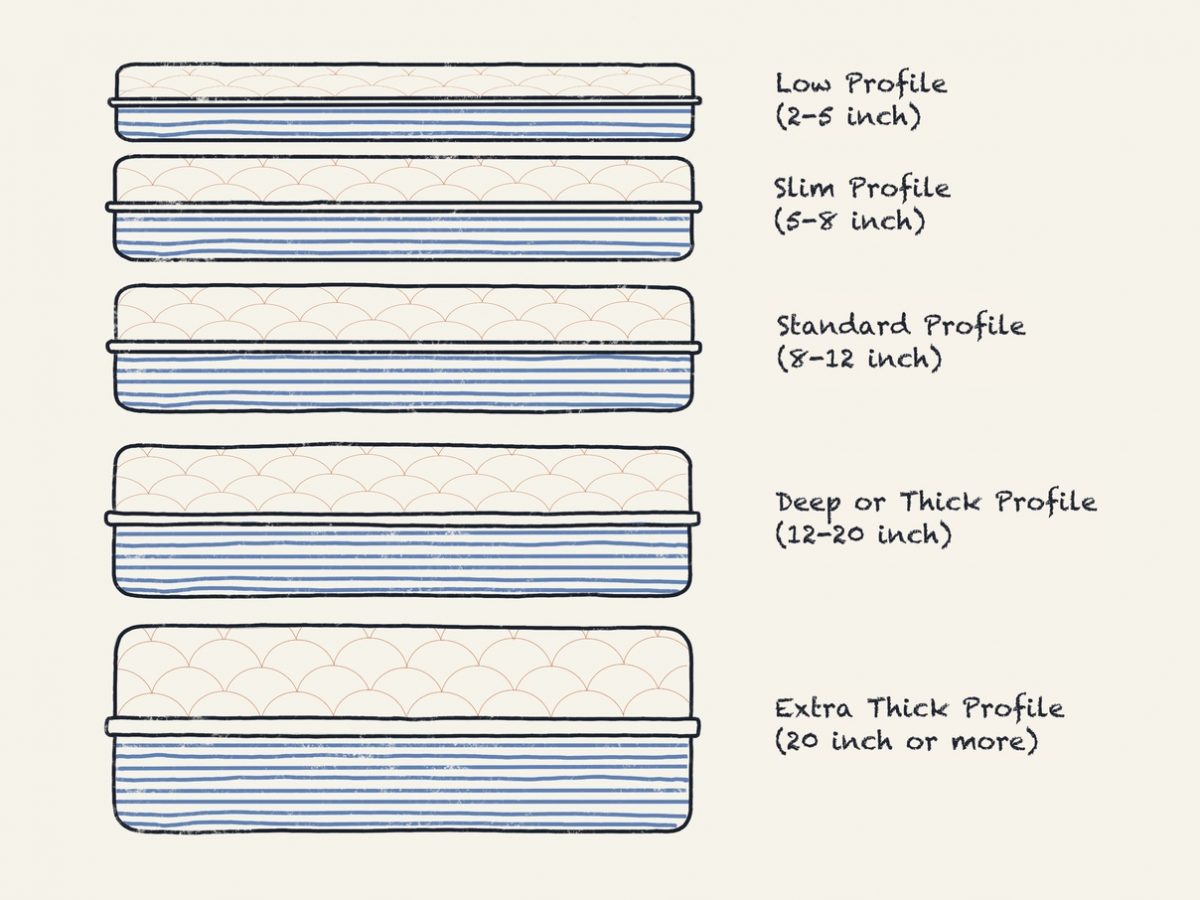
- Choose 8 to 10 inches for a child, guest bed, lightweight adult, bunk bed within its limit, or low-profile setup.
- Choose 10 to 12 inches for most adults and many back or stomach sleepers.
- Choose 12 to 14 inches for many side sleepers, heavier adults, couples, or people who want more cushioning.
- Choose 14 inches or more only when the construction, frame, and total height justify it.
Before ordering, check four things: mattress firmness, support materials, frame requirements, and total bed height.
Key Takeaways
- Most adults need a 10- to 12-inch mattress.
- Side sleepers, heavier sleepers, and many couples may prefer 12 to 14 inches.
- Children and low-profile beds may need 5 to 10 inches, depending on the product and frame.
- Thickness does not equal firmness or support.
- Always check the mattress weight limit and foundation requirements.
- For bunk beds, follow the bed manufacturer’s maximum mattress height.
- For infants, use a firm, tight-fitting crib mattress made for the crib.
FAQs
Is a 10-inch mattress thick enough for an adult?
Yes. A 10-inch mattress can be thick enough for many adults, especially lighter or average-weight back sleepers. Its materials and firmness matter more than height alone.
Is a 12-inch mattress good for side sleepers?
Often, yes. A 12-inch mattress can provide enough room for shoulder and hip cushioning while keeping the support core below. Side sleepers with higher body weight or strong pressure needs may prefer 14 inches.
Is a 14-inch mattress too thick?
Not necessarily. A 14-inch mattress may work well if your bed frame can support it and the total bed height remains safe and comfortable. It may be too tall for a bunk bed, trundle, or high platform.
How thick should a mattress be for a heavy person?
A 12- to 14-inch mattress is a reasonable starting range for many heavier adults. Check the manufacturer’s weight limit, support-core design, and firmness. A thick but soft mattress may still allow too much sinking.
Does mattress thickness affect back pain?
It can affect comfort and alignment, but thickness does not treat back pain by itself. The firmness, support, sleep position, and individual body shape also matter. Seek medical care for severe, persistent, or nerve-related symptoms.
Conclusion
For most people in the United States, a 10- to 12-inch mattress is the best starting point. Move toward 12 to 14 inches when you need more pressure relief, carry more weight, share the bed, or prefer a taller mattress.
Choose by construction, not height alone. Confirm the mattress fits your frame, stays within the bed’s safety limits, and creates a total bed height you can use with ease.

Appliance Review Expert
Lucas Ramirez is a trusted voice at HomeFixGrid.com, known for his clear, practical, and creatively written guides that simplify appliance care for everyday homeowners. With a strong focus on hands-on testing and real-world problem-solving, Lucas brings expert insight into appliance reviews and troubleshooting techniques. Her work empowers readers to confidently maintain, repair, and choose the right appliances for their homes.