How To Pick A Mattress Quiz: Find Your Best Match
For shoppers in the United States, the best way to pick a mattress is to match it to your sleep position, body weight, pain points, comfort taste, budget, and bedroom setup. This mattress quiz gives you a clear starting point. It will not replace trying a mattress, but it can help you narrow a crowded market into a few sensible choices.
A mattress should support your body without creating pressure at your shoulders, hips, or lower back. It should also keep you comfortable through the night. The “best” mattress is not the same for every sleeper, couple, or room.
How to Use This Mattress Quiz
Choose the answer that best matches your usual habits. If you share a bed, both people should take the quiz. Then compare your results before you shop.


This quiz focuses on five key factors:
- Sleep position
- Preferred firmness
- Body weight and pressure needs
- Temperature during sleep
- Motion transfer and partner needs
The quiz is a practical decision aid, not a medical test. Research does not support one universal mattress firmness for every person. A 2021 review in The Lancet found that medium-firm mattresses may help some people with chronic, nonspecific low-back pain, but individual comfort and support still matter.
Question 1: Which position do you use most?
- A. Side sleeping
- B. Back sleeping
- C. Stomach sleeping
- D. A mix of positions
Question 2: What firmness do you usually prefer?
- A. Soft and cushiony
- B. Medium or balanced
- C. Firm and stable
- D. I am not sure
Question 3: What bothers you most on your current mattress?
- A. My shoulders or hips hurt
- B. My lower back feels unsupported
- C. My hips sink too far
- D. I wake up hot
- E. I feel my partner move
- F. The mattress feels too hard or too soft
Question 4: How do you sleep?
- A. I often sleep hot
- B. I sleep at an average temperature
- C. I often feel cold
- D. I am not sure
Question 5: Do you share your bed?
- A. No
- B. Yes, and motion wakes me
- C. Yes, but motion is not a problem
- D. Sometimes
Question 6: What is your main goal?
- A. Pressure relief
- B. Spinal support
- C. Easier movement
- D. Cooler sleep
- E. Less motion transfer
- F. Lower cost
Question 7: How much can you spend?
Use the total price for the mattress size you need. Prices change often, so check the current price, delivery fee, trial terms, and return fee before you buy.
- A. Under $700
- B. $700 to $1,500
- C. $1,500 to $2,500
- D. More than $2,500

Mattress Quiz Results: What Should You Look For?
Your answers point to a mattress type and firmness range. They do not identify one perfect model. Start with the result that matches your biggest problem.
| Your main need | Usually worth trying | Watch out for |
|---|---|---|
| Shoulder and hip pressure relief | Softer foam, hybrid with a cushioned top, or medium-soft mattress | Excess sink that makes turning hard |
| Back support | Medium to medium-firm mattress with steady support | Very soft designs that let the hips dip |
| Stomach sleeping | Firm or medium-firm mattress with good surface stability | Thick, soft comfort layers |
| Combination sleeping | Medium feel with responsive foam or coils | A slow foam feel that traps movement |
| Cooler sleep | Coil hybrid, breathable latex, or a design with strong airflow | Dense foam and thick heat-retaining layers |
| Partner motion control | All-foam mattress or hybrid with strong motion isolation | Very bouncy coil systems |
| Easy movement | Latex or responsive hybrid | Deep, slow-sinking memory foam |
| Lower price | Basic foam or value hybrid | Poor return terms or weak edge support |
These are starting points, not rules. A heavier sleeper may need a firmer and more supportive design than a lighter sleeper who uses the same position. A lighter side sleeper may prefer a softer surface because they do not sink as far into the comfort layers.
If you are a side sleeper
Start with a medium-soft to medium mattress. You need enough cushioning for your shoulder and hip, but not so much that your waist bends toward the mattress.
A useful test is to lie on your side for at least 10 minutes. Your spine should look fairly straight from the side. If your shoulder feels trapped or your hip presses into the mattress, the surface may be too firm.
If you are a back sleeper
Try a medium to medium-firm mattress first. The surface should fill the curve of your lower back without allowing your pelvis to sink too far.
If the mattress feels hard under your shoulders, it may need more cushioning. If your lower back feels strained or your hips sink, look for stronger support or a firmer comfort layer.
If you are a stomach sleeper
A firm or medium-firm mattress often works better. Too much softness can allow the midsection to sink and may place the lower back in an uncomfortable position.


Look for a stable surface, strong edge support, and enough resilience to let you change position. Stomach sleepers often dislike thick pillow tops that feel plush at first but allow deep sinkage.
If you change positions
Choose a responsive mattress with a medium feel. Latex and many hybrid mattresses make movement easier than very slow memory foam.
When testing, roll from your back to your side and then to your stomach. A mattress that feels comfortable in one position may still make movement difficult in another.

How Mattress Type Changes the Result
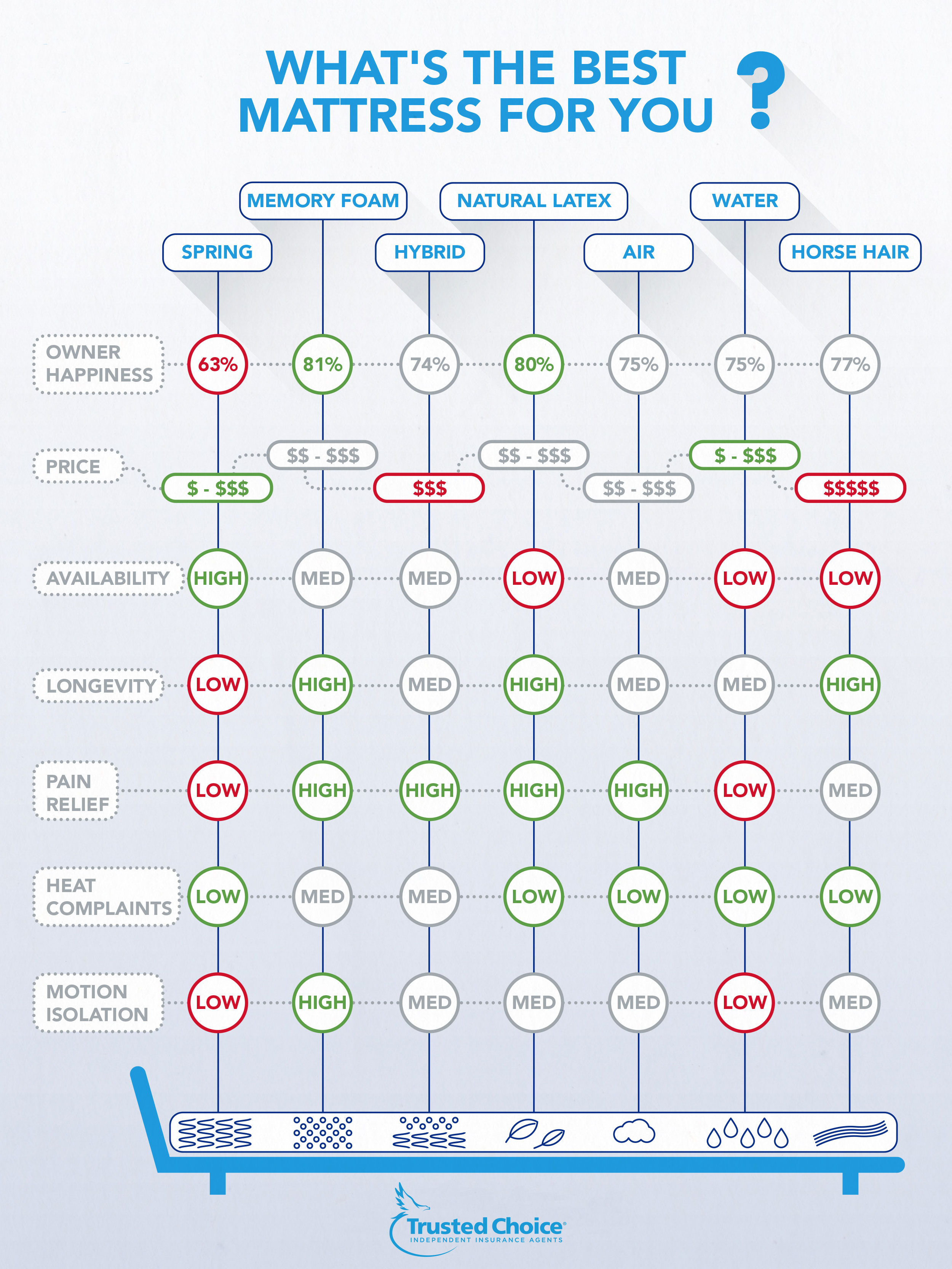
The quiz result becomes more useful when you understand the main mattress materials. Construction affects pressure relief, bounce, cooling, noise, and durability.
Memory foam
Memory foam spreads weight across the surface. It can reduce motion transfer and cushion pressure points.
Its main trade-off is movement. Some memory foam mattresses respond slowly, which may make turning or getting out of bed harder. Dense foam may also feel warmer, though cover fabric, room temperature, and mattress design affect heat.
Latex
Latex feels springy and responsive. It often makes movement easy and can provide a cooler feel than dense foam when the design allows good airflow.
Latex may not isolate motion as well as some all-foam mattresses. It can also cost more, especially when made from natural latex.
Innerspring
An innerspring mattress uses a coil support system, often with a thinner comfort layer. It usually offers good airflow and a familiar bouncy feel.
Basic innerspring models may provide less pressure relief at the shoulders and hips. Coil count alone does not prove quality. Coil design, wire thickness, foam layers, edge support, and construction all matter.
Hybrid
A hybrid mattress combines coils with foam or latex comfort layers. It can offer a balance of support, pressure relief, airflow, and bounce.
Hybrids vary widely. A hybrid with thick memory foam may feel slow and warm, while a latex hybrid may feel buoyant and responsive. Read the full layer description instead of relying on the word “hybrid.”
Pillow-top and euro-top mattresses
A pillow-top adds a thick comfort layer above the support system. It can feel soft and inviting, but it may compress sooner than a flatter design if the materials are low quality.
A soft top does not automatically mean poor support. The key question is whether the support core keeps your spine in a comfortable position.


How Body Weight Affects Mattress Choice
Body weight changes how far you sink into a mattress. This is one reason two people can test the same bed and give very different reviews.
- Lighter sleepers: May experience a firm mattress as harder because they do not compress the comfort layers as much. Softer materials may provide better pressure relief.
- Average-weight sleepers: Often have the widest range of workable choices. Sleep position and personal comfort may matter most.
- Heavier sleepers: May need stronger edge support, a durable support core, and enough firmness to prevent deep sinkage.
These are general patterns, not medical rules. Mattress companies use different firmness scales, so a “medium” mattress from one brand may feel firmer or softer than a “medium” from another.
If two people have very different body weights, consider:
- A split king with separate firmness levels
- A mattress with two customizable sides
- A medium feel with balanced pressure relief
- A separate topper only after testing the base mattress
A topper can change surface comfort, but it cannot fully correct a weak or sagging support core.

How to Pick a Mattress as a Couple
Couples should choose based on shared needs first, then solve differences with design features.
If one person sleeps on their side and the other sleeps on their back, a medium or medium-firm mattress may be a useful starting point. A responsive comfort layer can help the side sleeper move without making the mattress feel unstable for the back sleeper.
For motion control, look for:
- Dense foam near the surface
- Individually wrapped coils
- A stable but not overly bouncy feel
- Good edge support
- A wide sleep surface
Motion isolation and ease of movement often compete. A mattress that absorbs every movement may feel less lively. A highly responsive mattress may make it easier to turn but transfer more motion.
If you cannot agree on firmness, a split king or dual-firmness mattress may be more practical than choosing a compromise that neither person likes.

Mattress Shopping Checklist for U.S. Buyers
Before you place an order, check the details that a quiz cannot measure.
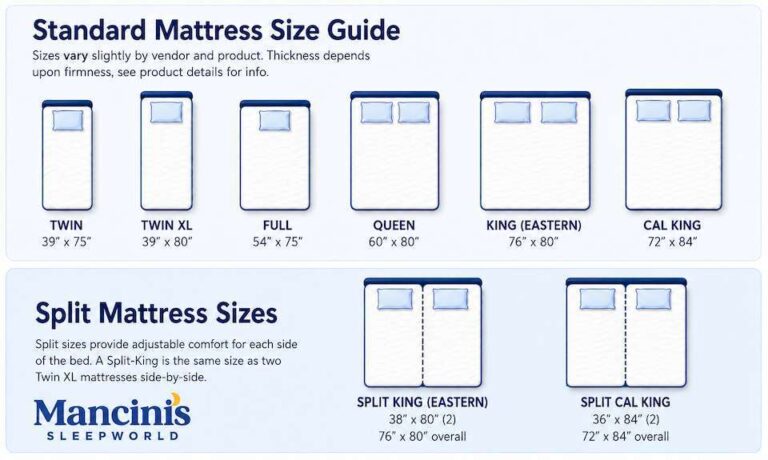
Confirm the size
Common U.S. mattress sizes include:
- Twin
- Twin XL
- Full
- Queen
- King
- California king
Measure your bed frame, doorway, stairs, and elevator before delivery. A mattress may fit the frame but still be difficult to move into the room.


Check the trial period
A trial period lets you test the mattress at home. Read the full terms. Look for:
- Required break-in time
- Minimum nights before a return
- Return shipping rules
- Pickup or disposal fees
- Refund timing
- Exchange limits
- Whether the trial applies to sale items
The term “100-night trial” does not tell you who pays for the return or how the process works.
Review the warranty
A warranty may cover manufacturing defects, but it usually does not cover every comfort change. Check the length, sagging limit, stain rules, foundation requirements, and exclusions.
Keep your receipt and follow the care instructions. A waterproof mattress protector may be required for warranty coverage.
Check the foundation
Use the support base listed by the manufacturer. A weak, uneven, or incompatible foundation can affect comfort and may affect warranty coverage.
Do not place a mattress on an old frame without checking the slat spacing and center support. Requirements vary by brand and mattress design.
Inspect the materials
Look for the full layer list, not just marketing terms. Useful details include:
- Type and thickness of foam
- Coil construction
- Latex type
- Cover materials
- Fire barrier information
- Weight limit, if stated
- Foundation requirements
Certifications can provide information about specific materials or emissions, but a certification does not prove that a mattress will feel comfortable or last for a certain number of years.

Common Mattress Quiz Mistakes
Choosing by sleep position alone
Sleep position matters, but it does not decide everything. Body weight, pain, temperature, mobility, and firmness preference can change the answer.
Treating firmness as a precise number
Firmness ratings are not fully standardized. Use them to compare mattresses within one brand, not as a universal scale across all brands.
Buying the softest mattress for pain
A soft mattress may feel comforting at first, but deep sinkage can create problems for some sleepers. Try a balanced design before choosing an extra-plush model.
Assuming expensive means durable
Price can reflect materials, construction, shipping, branding, and retail costs. It does not prove better support or longer life.
Ignoring the return policy
A mattress can feel good for five minutes and wrong after a full night. A clear return policy reduces the risk of a poor fit.
Trusting reviews without checking the reviewer
A review from a lightweight side sleeper may not predict how the mattress will feel to a heavier stomach sleeper. Use reviews to spot patterns, not to replace your own needs.
Using a mattress to treat a medical condition
A mattress may affect comfort and sleep quality, but it is not a treatment for a diagnosed condition. If pain is severe, persistent, follows an injury, or comes with weakness, numbness, fever, or loss of bladder or bowel control, seek medical care promptly.

Key Takeaways
- Use the mattress quiz to narrow your options, not to select blindly.
- Side sleepers often need more surface cushioning.
- Back and stomach sleepers often need stronger, steadier support.
- Body weight changes how firm a mattress feels.
- Couples should weigh motion control against ease of movement.
- Always check the trial, return, warranty, and foundation terms.
- Test a mattress at home long enough to notice pressure, support, heat, and movement issues.
Frequently Asked Questions
What is the best mattress for my sleeping position?
There is no single best mattress for every position. Side sleepers often start with medium-soft to medium options. Back sleepers commonly try medium to medium-firm designs. Stomach sleepers often prefer firmer, more stable surfaces. Your body weight and comfort preference can change these starting points.
Is a firm mattress better for back pain?
Not always. A very firm mattress can create pressure at the shoulders and hips, while a very soft mattress may allow excessive sinkage. Evidence suggests that medium-firm mattresses may help some people with chronic, nonspecific low-back pain, but persistent or severe pain needs medical evaluation.
How long should I test a new mattress?
Follow the brand’s trial rules. Your body may need time to adjust, and your first impression may not match your long-term comfort. Track pressure, back support, heat, motion, and sleep quality across several nights.
Should I choose foam or a hybrid mattress?
Choose foam if motion control and pressure relief matter most. Choose a hybrid if you want more bounce, airflow, edge support, or easier movement. The exact layer design matters more than the category name.
What if the quiz gives me two different mattress types?
Use your main sleep problem as the tie-breaker. For example, choose pressure relief if shoulder pain wakes you, or choose stronger support if your hips sink and your back feels strained. Then compare trial policies and test the most suitable options at home.
Can a mattress topper fix the wrong mattress?
A topper can change the surface feel. It may make a firm mattress softer, but it cannot fix poor support, sagging, or a damaged base. Use a topper only when the mattress is structurally sound and the issue is mainly surface comfort.
Conclusion: Use the Quiz as Your Starting Point
A good mattress quiz turns a broad shopping task into a short list of features. Begin with your sleep position and biggest comfort problem. Then adjust for body weight, temperature, partner movement, budget, and the mattress materials you prefer.
Before buying, confirm the current U.S. price, delivery terms, home trial, return policy, warranty, and foundation requirements. The right mattress is the one that keeps your spine comfortable, relieves pressure, and lets you sleep without constant adjustment—not simply the one with the highest rating or the most expensive materials.

Appliance Review Expert
Lucas Ramirez is a trusted voice at HomeFixGrid.com, known for his clear, practical, and creatively written guides that simplify appliance care for everyday homeowners. With a strong focus on hands-on testing and real-world problem-solving, Lucas brings expert insight into appliance reviews and troubleshooting techniques. Her work empowers readers to confidently maintain, repair, and choose the right appliances for their homes.