
What Is The Firmest Mattress You Can Buy: Firm Choices
Introduction
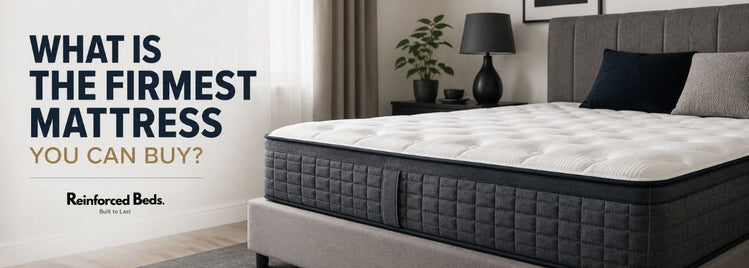
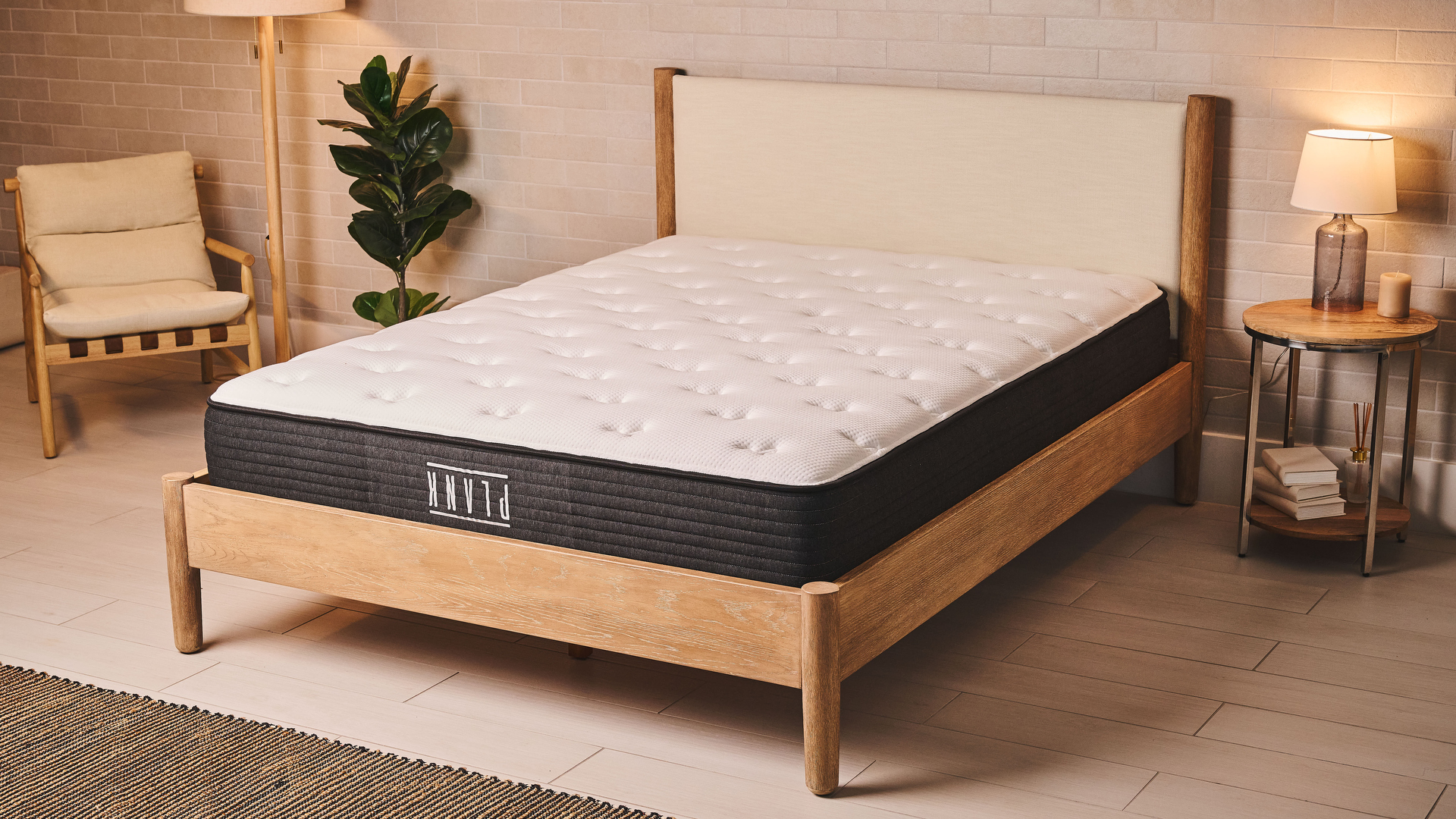
The firmest mattress you can buy in the United States is usually an ultra-firm, flippable mattress made with dense foam or a very rigid hybrid core. Among well-known U.S. options, the Plank Firm mattress from Brooklyn Bedding is often marketed as one of the firmest mattresses available. It has a firm side and an extra-firm side.
Still, there is no official “firmest mattress” title. Mattress firmness is not measured by one required U.S. standard. A bed that feels extremely hard to one person may feel only moderately firm to another because body weight, sleep position, body shape, and the bed frame all change the feel.
If you want the hardest sleep surface possible, look for:
- An extra-firm or ultra-firm rating
- A two-sided design with an extra-firm side
- Dense polyfoam, latex, or a rigid support core
- Minimal quilting and soft comfort layers
- A stable, non-flexing foundation
- A return period that lets you test the bed at home
The key trade-off is simple: the firmest mattress is not always the best mattress for your back, hips, shoulders, or sleep quality.
What Counts as a Firm Mattress?
A firm mattress allows very little sink. Your body stays closer to the surface, and you may feel more support when you sit or lie down.
Mattress firmness is different from support. Firmness describes the surface feel. Support describes how well the mattress keeps your spine in a neutral position. A soft mattress can support a light sleeper well, while a very firm mattress can create pressure points for a side sleeper.
Most brands use a firmness scale from 1 to 10:
| Rating | Common description | Surface feel |
|---|---|---|
| 1–2 | Very soft | Deep sink and plush cushioning |
| 3–4 | Soft | Noticeable contour |
| 5–6 | Medium | Balanced cushioning and support |
| 7 | Firm | Little sink |
| 8–9 | Extra-firm | Very little sink |
| 10 | Ultra-firm | Almost no cushioning |
This scale is only a guide. One company’s 9 may feel like another company’s 7. Brands use different materials, testing methods, and marketing language.
A mattress can also feel firmer or softer depending on:
- Your body weight
- Your sleeping position
- The room temperature
- The bed frame or foundation
- The mattress thickness
- The softness of the comfort layers
- Whether you sleep alone or with a partner
Firmness and support are not the same
A hard mattress may feel supportive at first because it stops your body from sinking. But if it does not match your body shape, it can push against your shoulders, ribs, hips, or knees.
A supportive mattress should keep your spine reasonably straight in your normal sleep position. This matters more than choosing the highest firmness number.
What makes a mattress feel extra firm?
The firmest mattresses usually have several features:
- A thin comfort layer
- Dense foam or firm latex
- Strong edge support
- A firm coil unit or rigid base
- Little pillow-top padding
- A stable foundation
- A flat, even sleep surface
A thick pillow top can make a firm mattress feel much softer. A flexible slatted base can also make the same mattress feel less firm.

What Is the Firmest Mattress Available in the U.S.?
For shoppers in the United States, the Plank Firm mattress is one of the clearest examples of an ultra-firm mattress. Its flippable design offers two firm surfaces, including a side intended to feel extra firm.
It is a useful option for people who:
- Prefer a hard, flat sleep surface
- Sleep mainly on their back or stomach
- Dislike sinking into foam
- Want to change between two firm feels
- Need a mattress with less contour than a typical memory foam bed
However, it may not be the right fit for every sleeper. Side sleepers and people with prominent hips or shoulders may find an ultra-firm bed uncomfortable. A hard surface can place too much pressure on those areas.
Other U.S. mattress categories that can feel very firm include:
| Mattress type | Typical firm feel | Main advantage | Main limitation |
|---|---|---|---|
| Ultra-firm all-foam | 8–9 out of 10 | Flat, solid surface | Can create pressure points |
| Firm latex | 7–9 out of 10 | Buoyant and durable feel | Can feel less cushioned |
| Firm innerspring | 7–8 out of 10 | Strong airflow and bounce | Coils may allow more motion |
| Firm hybrid | 7–8 out of 10 | Mix of cushioning and support | Comfort layers soften the feel |
| Futon or thin floor mattress | Varies widely | Very little sink | May lack pressure relief |
| Custom orthopedic mattress | Varies | Can be tailored to a need | Quality and feel differ by maker |
A firm latex mattress may feel harder when you first lie down, while a firm hybrid may feel more supportive after the coils engage. These are different sensations. “Hard” and “supportive” should not be treated as exact synonyms.
Does a floor mattress count as the firmest?
A thin futon or floor mattress can feel extremely hard because it has little padding underneath you. But it may not provide the same support, ventilation, durability, or pressure relief as a purpose-built mattress.
If you place a mattress directly on the floor, moisture can collect beneath it. This may contribute to odors or mold. Follow the manufacturer’s foundation rules, and lift or ventilate the mattress if the maker permits it.

How to Choose the Firmest Mattress for Your Body
The right firmness depends mainly on your sleep position and body weight. Use the following guide as a starting point, not a medical rule.
Back sleepers
Back sleepers often need enough firmness to prevent the pelvis from sinking too far. A firm mattress may help maintain a more level sleep posture.
An ultra-firm surface can work for some back sleepers, especially those with heavier builds. But if your lower back feels unsupported or your ribs and shoulders hurt, the mattress may be too hard.
Look for:
- Firm or extra-firm support
- A small amount of cushioning
- Stable lumbar support
- Even contact across the back
- A foundation that does not sag
Stomach sleepers
Stomach sleepers often prefer a firm mattress because a soft bed can let the midsection sink. That can create an uncomfortable curve through the lower back.
A firm mattress may be suitable if it keeps your hips close to the same level as your chest. However, an extremely hard mattress can still feel uncomfortable if it does not accommodate your chest and pelvis at all.
Side sleepers
Side sleepers usually need more cushioning than stomach sleepers. The shoulder and hip must sink enough to reduce pressure.
The firmest mattress is often a poor match for side sleeping unless the sleeper has a larger body or the mattress includes enough pressure-relieving material. A medium-firm or firm mattress with a thin comfort layer may work better than a true ultra-firm mattress.
Combination sleepers
If you change positions during the night, an ultra-firm mattress may feel good in one position and uncomfortable in another.
A firm hybrid or firm latex mattress may offer a better compromise. These beds can limit sink while providing more cushioning than a bare, rigid foam surface.
Heavier sleepers
Heavier sleepers often compress soft materials more deeply. A mattress that feels firm to a lighter person may feel medium or soft to a heavier person.
A thicker mattress with dense materials can help prevent excessive sink. Look for clear information about weight limits, construction, edge support, and foundation requirements.
Lighter sleepers
Lighter sleepers may not compress a firm mattress much at all. As a result, a mattress rated 8 or 9 may feel exceptionally hard.
If you are light in weight, consider whether you need the firmest possible surface or simply a mattress that prevents sagging. A standard firm mattress may provide better comfort.
Is the Firmest Mattress Best for Back Pain?
No. A very firm mattress is not automatically the best choice for back pain.
A randomized trial published in The Lancet compared medium-firm and firm mattresses for people with chronic, nonspecific low back pain. The study found better outcomes with medium-firm mattresses than with firm mattresses after 90 days. This does not mean every person with back pain should choose medium-firm bedding, but it does challenge the idea that harder is always better.
Back pain has many possible causes. A mattress cannot diagnose or treat those causes. Pain may also come from a poor pillow, an unsuitable sleep position, an old foundation, an injury, or a health condition.
Consider a medical professional if you have:
- Severe or worsening pain
- Numbness or weakness
- Pain after a fall or injury
- Loss of bladder or bowel control
- Fever or unexplained weight loss
- Pain that does not improve with normal care
For general comfort, test the mattress for several nights. Pay attention to whether your hips sink, whether your shoulders feel compressed, and whether you wake with more pain than usual.
Firmest Mattress Materials Compared
The material inside a mattress has a major effect on how firm it feels.
Dense polyfoam
Dense polyfoam can create a flat, hard surface. It is common in firm all-foam mattresses.
Its benefits include:
- Low bounce
- Even support
- A relatively flat feel
- Good motion isolation
Its drawbacks can include heat retention, limited pressure relief, and a “stuck” feeling if the foam is too dense or thick.
Latex
Firm latex tends to feel springy rather than hard. It pushes back quickly instead of allowing deep sink.
Latex may suit people who want:
- Firm support
- Easier movement
- More bounce
- Less deep contouring
Latex is not automatically firmer than foam. Its firmness depends on the latex type, density, thickness, and construction.
Innerspring coils
Coils can create strong support and airflow. A firm coil mattress may feel bouncy and stable rather than flat.
The comfort layers above the coils matter greatly. A thick layer of soft foam can make a firm coil unit feel plush.
Hybrid construction
A hybrid uses coils with foam or latex. It may be a good choice when you want firm support but still need some cushioning.
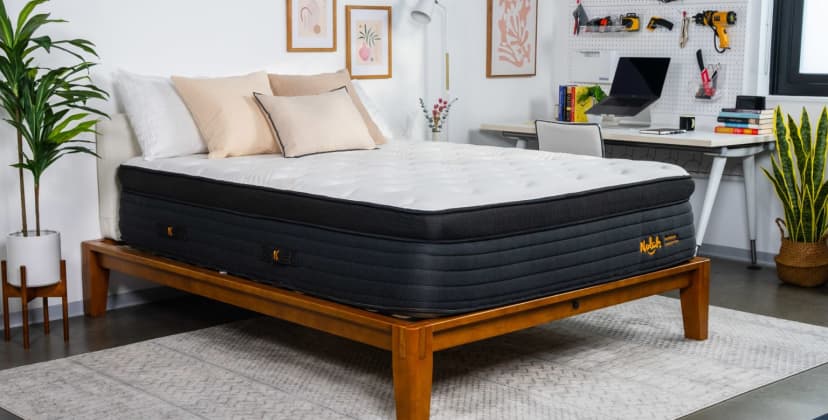
A hybrid is usually not the absolute hardest option because its comfort layers add surface softness. However, it can be more comfortable for people who find an ultra-firm all-foam mattress too harsh.
How to Make a Mattress Feel Firmer
If your current mattress feels too soft, try these steps before buying a new one.
1. Check the foundation
A weak or flexible foundation can make a mattress feel softer. Look for broken slats, wide gaps, bowed supports, or a center rail that does not reach the floor.
Use only a foundation approved by the mattress maker. A solid board may change the feel, but it can also reduce airflow or void a warranty if the manufacturer does not allow it.
2. Rotate the mattress
If the design permits rotation, turn the mattress from head to foot. This can reduce uneven wear.
Do not flip a one-sided mattress unless the manufacturer says it is flippable.
3. Remove soft bedding layers
A thick mattress topper, featherbed, or plush pad can make a firm mattress feel soft. Removing it may change the surface feel more than expected.
4. Allow time for adjustment
A new mattress may feel different after several nights. Your body also needs time to adjust to a new sleep surface.
If the bed causes sharp pain or severe discomfort, stop using it rather than forcing yourself to adapt.
5. Consider a firm topper
A firm latex topper may reduce the sensation of sinking. It will not completely change a sagging mattress, though. A topper placed over a damaged mattress usually provides only a temporary fix.

How to Test an Ultra-Firm Mattress
The best test is a home trial that allows enough time to judge comfort.
When testing the mattress:
- Use your normal pillow.
- Sleep in your usual positions.
- Test the mattress for at least several nights unless it causes clear pain.
- Check your body when you wake, not only when you first lie down.
- Look for pressure at the shoulders, hips, ribs, and knees.
- Check whether your hips sink lower than your chest.
- Confirm that the bed frame follows the warranty rules.
- Read the return, pickup, and exchange terms before buying.
A mattress may feel very firm in a showroom because you spend only a few minutes on it. Home testing gives you a better view of overnight comfort, heat, movement, and pain.
Signs the mattress is too soft
- Your hips sink noticeably
- You struggle to turn over
- Your lower back feels strained
- You feel trapped in the mattress
- The edges collapse when you sit down
- You wake with a cramped or curved posture
Signs the mattress is too firm
- Your shoulder or hip feels numb
- You wake with sore ribs or pressure points
- Your lower back does not touch the mattress
- You keep shifting to find relief
- You sleep better on another bed
- Pain increases after several nights
Common Mistakes When Buying the Firmest Mattress
Choosing by the firmness number alone
A “9 out of 10” label is not a universal measurement. Compare construction, thickness, return rules, and customer support as well.
Ignoring your sleep position
A mattress built for stomach sleeping may feel painful for a side sleeper. Your position is one of the strongest clues about how much cushioning you need.
Assuming hard means supportive
A hard surface can still sag if its core is weak. Firmness and support are related but not identical.
Using the wrong foundation
A mattress may feel soft or uneven on an unsuitable base. It may also lose warranty coverage if you ignore the foundation requirements.
Keeping a painful mattress too long
Some adjustment is normal. Sharp pain, numbness, or worsening symptoms are not signs that you must “break in” the mattress.
Buying without checking the return policy
Firmness is personal. A clear in-home trial is valuable, especially when buying online.

Key Takeaways
- The Plank Firm is one of the strongest candidates for the firmest widely available mattress in the U.S.
- There is no official nationwide test that proves one mattress is the absolute firmest.
- Extra-firm mattresses usually have little cushioning and a dense support core.
- Back and stomach sleepers are more likely to enjoy an ultra-firm surface than side sleepers.
- Medium-firm mattresses may outperform firm mattresses for some people with chronic, nonspecific low back pain.
- A firm foundation can make a mattress feel firmer, but it must follow the manufacturer’s rules.
- Always check the home trial, return fees, warranty, and foundation requirements before buying.
Frequently Asked Questions
What is the hardest mattress you can buy?
An ultra-firm flippable mattress, such as the Plank Firm, is among the hardest mainstream mattresses sold in the United States. The exact feel depends on your body weight, sleep position, and foundation.
Is a 10 out of 10 mattress truly the firmest?
Not necessarily. Firmness scales are not standardized across mattress brands. A 10 from one company may feel similar to an 8 or 9 from another.
Are firm mattresses better for stomach sleepers?
They can be. A firm mattress may limit sinking around the hips and abdomen. The best choice still depends on body shape, weight, and comfort.
Should side sleepers buy an extra-firm mattress?
Usually not as a first choice. Side sleepers often need cushioning at the shoulder and hip. A firm mattress with a softer comfort layer may be more suitable.
Can a mattress topper make a bed firmer?
A dense latex topper may make a mattress feel firmer on top. It cannot repair major sagging or replace a worn-out support core.
Conclusion
The firmest mattress you can buy in the U.S. is likely an ultra-firm, flippable model such as the Plank Firm. It is designed for people who want a flat surface with very little sink.
That does not make it the best mattress for everyone. Choose the hardest option only if it keeps your spine comfortable, does not create pressure points, and suits your usual sleep position. Before ordering, verify the current construction, trial period, return terms, and foundation requirements directly with the manufacturer.

Appliance Review Expert
Lucas Ramirez is a trusted voice at HomeFixGrid.com, known for his clear, practical, and creatively written guides that simplify appliance care for everyday homeowners. With a strong focus on hands-on testing and real-world problem-solving, Lucas brings expert insight into appliance reviews and troubleshooting techniques. Her work empowers readers to confidently maintain, repair, and choose the right appliances for their homes.