What Does Cu Ft Mean For Refrigerators: Easy Guide
If you are shopping for a refrigerator in the United States, cu ft means cubic feet. It measures the refrigerator’s interior storage volume—the amount of space available for food, drinks, and frozen items.
For example, a 20 cu ft refrigerator has about 20 cubic feet of total listed interior capacity. That number usually includes both the refrigerator compartment and the freezer, unless the manufacturer states otherwise.
A larger cu ft rating generally means more storage. However, it does not tell you the refrigerator’s outside width, depth, height, shelf layout, or exact usable space. Those details also matter when choosing a refrigerator for a U.S. kitchen.


What Does Cubic Feet Mean on a Refrigerator?
Cubic feet is a unit of volume. It describes how much three-dimensional space a refrigerator has inside.
One cubic foot equals:
- 1 foot long × 1 foot wide × 1 foot high
- 1,728 cubic inches
- About 7.48 U.S. liquid gallons
- About 28.32 liters
A refrigerator labeled 18 cu ft has a listed interior volume of about 18 cubic feet. This is not the same as saying it can hold 18 gallons of food. A cubic foot is a measure of space, not a direct count of containers or meals.
What the listed capacity includes
A refrigerator’s total capacity may include:
- The fresh-food compartment
- The freezer compartment
- Door bins
- Drawers
- Shelves and storage areas
Manufacturers often list the fresh-food and freezer capacities separately. For example:
| Refrigerator section | Capacity |
|---|---|
| Fresh-food compartment | 13.5 cu ft |
| Freezer compartment | 5.5 cu ft |
| Total capacity | 19.0 cu ft |
The freezer is part of the total. This matters because two refrigerators with the same total capacity may offer very different amounts of fresh-food storage.
Listed capacity is not empty usable space
The cubic-foot rating is a standardized volume measurement. It does not mean every part of that volume is open space that you can use without limits.
Shelves, bins, drawers, ice makers, lights, air vents, and interior walls take up room. A large ice maker can reduce the practical storage space in the freezer or door.
As a result, use cu ft to compare refrigerator capacity, but do not treat it as an exact prediction of how many grocery bags will fit inside.

How Is Refrigerator Capacity Measured?
Refrigerator capacity is measured by calculating the volume of the interior storage areas. The manufacturer or testing organization measures the compartments and reports the result in cubic feet.


For a simple rectangular space, the calculation is:
Length × width × height = cubic inches
Then convert cubic inches to cubic feet:
Cubic inches ÷ 1,728 = cubic feet
Example calculation
Suppose an empty compartment measures:
- 30 inches long
- 24 inches wide
- 36 inches high
The calculation is:
30 × 24 × 36 = 25,920 cubic inches
Then:
25,920 ÷ 1,728 = 15 cubic feet
This example shows the basic math. A real refrigerator has curved corners and irregular sections, so manufacturers measure several areas rather than treating the entire interior as one perfect box.
Total capacity versus compartment capacity
Refrigerator listings may show one of these numbers:
- Total capacity — fresh-food space plus freezer space.
- Fresh-food capacity — refrigerator space only.
- Freezer capacity — freezer space only.
- Usable capacity — a measurement adjusted for interior features or storage limits, when provided.
Always check the label or product specification sheet to see which number you are reading.
A refrigerator with 22 cu ft total capacity might have only 15 cu ft of fresh-food storage if the freezer uses 7 cu ft. That may be useful for a household that stores many frozen foods, but less useful for someone who buys mostly fresh food.

How Many Cubic Feet Should a Refrigerator Have?
Most U.S. households can start by estimating about 4 to 6 cubic feet of total refrigerator capacity per person. This is a planning range, not a strict rule.


The right size depends on how often you shop, how much food you store, and how much freezer space you need.
| Household size | Common starting range |
|---|---|
| One person | 8–12 cu ft |
| Two people | 12–18 cu ft |
| Three to four people | 18–24 cu ft |
| Five or more people | 24 cu ft or more |
These ranges include the freezer. They may not work well for every household.
You may need more space if you:
- Shop only once every week or two
- Buy large packages from warehouse clubs
- Store prepared meals
- Freeze garden produce or bulk meat
- Host guests often
- Keep many beverages cold
You may need less space if you:
- Shop several times each week
- Eat most meals away from home
- Buy little frozen food
- Live in a small apartment
- Use a separate chest or upright freezer
A simple sizing example
Imagine a household of four that shops weekly and keeps a normal amount of frozen food. A refrigerator between 18 and 24 cu ft may be a reasonable place to begin.
If that household buys bulk food and freezes meals, a refrigerator near the upper end—or a separate freezer—may work better. If it cooks fresh food daily and rarely freezes food, extra fresh-food capacity may matter more than a large freezer.
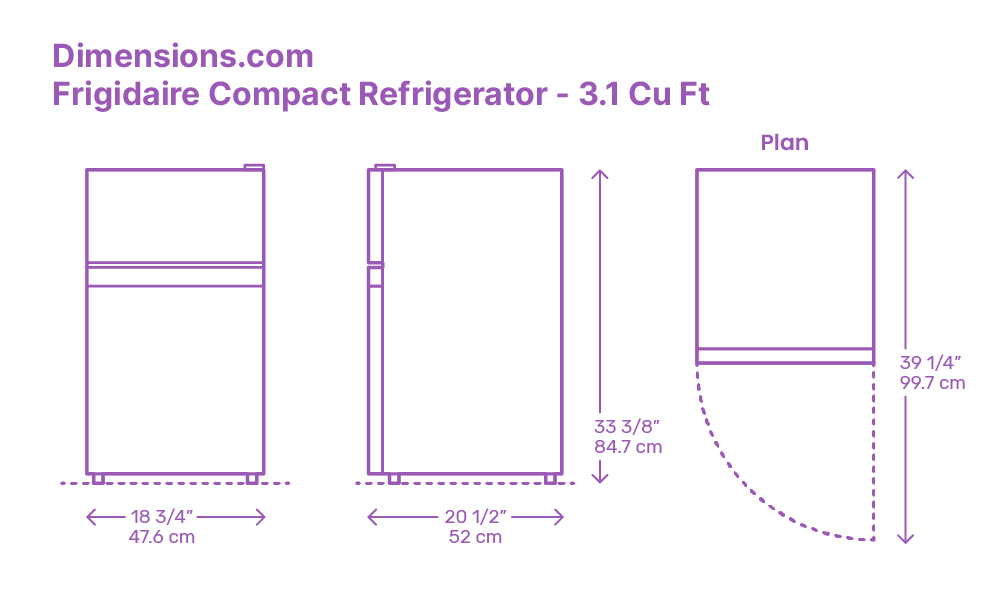
Capacity is only one part of the decision. The refrigerator must also fit the kitchen opening and allow the doors to open fully.

Does a Bigger Cu Ft Rating Mean a Bigger Refrigerator?
Usually, but not always. A higher cu ft rating often means a larger exterior refrigerator, yet design affects both interior capacity and outside dimensions.
Two refrigerators can have nearly the same capacity but different widths, heights, and depths. For example:
- One model may be wide and shallow.
- Another may be narrow and deep.
- A counter-depth model may have less front-to-back depth but similar height and width.
- A French-door model may use space differently from a top-freezer model.
Refrigerator capacity and exterior dimensions
Check these measurements before buying:
- Overall width
- Overall height
- Overall depth
- Depth with handles
- Depth with the doors open
- Door swing clearance
- Clearance beside walls or cabinets
- Space above the refrigerator
- Ventilation space required by the manufacturer
Do not measure only the old refrigerator. Measure the actual opening, including its narrowest points.
Also measure the path into the home. Doorways, hallways, stairways, and sharp turns can prevent a large refrigerator from reaching the kitchen, even when the kitchen opening is large enough.
Standard-depth versus counter-depth
A standard-depth refrigerator usually extends farther past the kitchen cabinets. It often offers more interior volume.
A counter-depth refrigerator is designed to sit closer to the front of standard kitchen counters. It may look more built in, but it often gives up some storage depth.


The term “counter-depth” is not a single exact measurement for every model. Always use the manufacturer’s dimensions for the specific refrigerator.

How Do Refrigerator Types Affect Cubic Feet?
Refrigerator layout affects how the listed capacity feels in daily use. The same total cu ft can be arranged in very different ways.
Top-freezer refrigerators
A top-freezer model places the freezer above the fresh-food compartment.
Typical advantages include:
- Efficient use of interior space
- A relatively large fresh-food section
- Wide shelves
- Often lower purchase and operating costs than larger designs
The freezer is at eye level, but the fresh-food section sits lower.
Bottom-freezer refrigerators
A bottom-freezer model places the freezer below the refrigerator section.
This design can make fresh food easier to reach. The freezer may use drawers or pull-out baskets, which can help organization but may limit the size of large boxes.
Side-by-side refrigerators
A side-by-side model places the freezer and fresh-food compartments next to each other.
This layout often provides:
- Easy access to both sections
- Narrow door swings
- Convenient eye-level storage
The vertical compartments can make it harder to store wide items, such as large pizza boxes or party trays.
French-door refrigerators
A French-door model usually has two upper refrigerator doors and a lower freezer drawer.
This layout may provide:
- Wide fresh-food shelves
- Less door-swing space
- Easy access to frequently used foods
The lower freezer can be deep. Without bins or dividers, items may be harder to find.
The best layout depends on the food you store, not just the total number printed on the label.

How Can You Compare Refrigerator Capacity Correctly?
Compare total capacity first, then compare the fresh-food and freezer capacities separately. Finally, check the dimensions and interior layout.
Use this process:
-
Find the total capacity.
Confirm whether the number includes both compartments. -
Separate fresh-food and freezer space.
Decide which section matters most for your household. -
Check the outside dimensions.
Measure the kitchen opening and delivery path. -
Review the shelf layout.
Look for adjustable shelves, drawer size, door-bin depth, and foldable shelves. -
Check the ice-maker location.
An internal or door-mounted ice maker can change usable space. -
Compare energy information.
Capacity alone does not show how much electricity a refrigerator uses. Check the yellow EnergyGuide label and the model’s current specifications. -
Read the installation requirements.
Follow the manufacturer’s required clearances and water-line instructions.
A capacity comparison is useful only when the models are measured and described in the same way.
Example comparison
| Model | Total capacity | Fresh-food space | Freezer space | Main difference |
|---|---|---|---|---|
| A | 20.0 cu ft | 14.5 cu ft | 5.5 cu ft | More room for fresh food |
| B | 20.0 cu ft | 12.5 cu ft | 7.5 cu ft | Larger freezer |
| C | 21.5 cu ft | 15.0 cu ft | 6.5 cu ft | More total space, different exterior size |
Model C is not automatically the best choice. It may be too tall or deep for the kitchen, or its shelves may not fit the reader’s usual food containers.
What Is the Difference Between Cu Ft and Usable Storage?
Cu ft is the manufacturer’s capacity rating. Usable storage is the space you can realistically use after accounting for shelves, bins, drawers, packaging, and airflow needs.
These values are related, but they are not identical.
A refrigerator may have a high cu ft rating but feel cramped if it has:
- A large ice maker
- Thick shelves
- Small door bins
- Narrow drawers
- Fixed shelf positions
- A deep freezer with poor organization
A slightly smaller refrigerator may feel easier to use if it has a better shelf arrangement.
When viewing a refrigerator in a store, bring the dimensions of items you use often. Check whether the following can fit:
- A gallon of milk
- A large bottle
- A pizza box
- A meal-prep container
- A sheet cake or party tray
- Tall condiment bottles
- Frozen food boxes
For online purchases, download the installation guide and product specification sheet. Product photos can make interior space look larger than it is.

Common Mistakes When Reading Refrigerator Capacity
The most common mistake is treating the total cu ft number as the complete buying decision. Avoid these errors:
Confusing total capacity with refrigerator-only capacity
A listing may show “22 cu ft” in a headline, while the freezer takes up 7 cu ft. Read the detailed specifications before comparing models.
Ignoring the freezer split
A household that freezes bulk food may need a different layout from a household that mostly stores fresh food. Total capacity cannot show that difference by itself.
Assuming every inch of interior space is usable
Shelves, bins, vents, and ice makers reduce practical storage. Interior design can matter more than a one- or two-cubic-foot difference.
Measuring the old appliance instead of the opening
The new refrigerator may be taller, wider, or deeper than the old one. Measure the opening and all delivery paths.
Forgetting door clearance
A refrigerator can fit in the opening but still fail in daily use if the doors hit a wall or cannot open far enough for drawers to slide out.
Confusing cubic feet with square feet
Square feet measure area. Cubic feet measure volume. A refrigerator needs a volume measurement because it has length, width, and height.
Using the wrong gallon conversion
One cubic foot equals about 7.48 U.S. liquid gallons. This is a volume comparison, not a claim that the refrigerator can hold 7.48 gallons of liquid safely or efficiently.
Frequently Asked Questions
Is 20 cu ft a good refrigerator size?
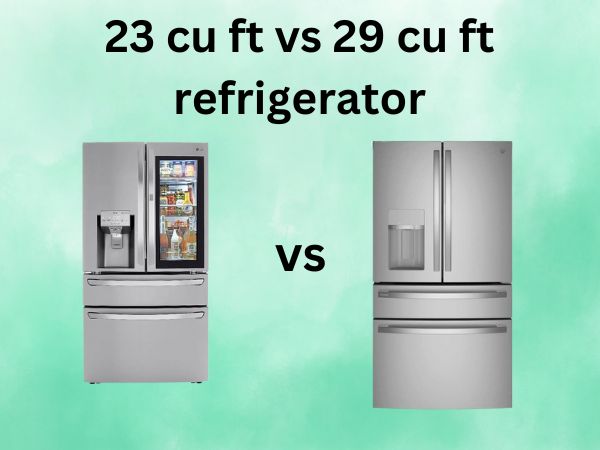
A 20 cu ft refrigerator can work well for a small to medium household, depending on shopping habits and freezer needs. Check how much of the 20 cu ft is fresh-food space and how much is freezer space.
How many cubic feet is a normal refrigerator?
Many full-size household refrigerators fall roughly between 18 and treinta?
Let's correct no weird. 18 and 30 cubic feet, though the exact range varies by style and manufacturer. Compact, apartment-size, and garage refrigerators may be much smaller. Always compare the model’s published capacity with its exterior dimensions.
Is a 25 cu ft refrigerator too big for a family of four?
Not necessarily. It may be useful for a family that buys in bulk or stores many frozen foods. It may be unnecessary for a family that shops often or has limited kitchen space.
Does freezer space count in refrigerator cubic feet?
Yes. A refrigerator’s advertised total capacity normally includes both the fresh-food and freezer compartments. The specification sheet should list the two sections separately.
How do I calculate the cubic feet of an old refrigerator?
Measure the interior length, width, and height of each major compartment in inches. Multiply the three measurements for each section, divide each result by 1,728, and add the sections together. This gives an estimate, because irregular shapes and built-in parts make exact measurement difficult.
Is counter-depth capacity always smaller?
No. Counter-depth models often have less front-to-back depth, but their width and height can offset some of that difference. Compare the published capacity and dimensions of each specific model.
Key Takeaways
- Cu ft means cubic feet, a measure of refrigerator storage volume.
- The total capacity usually includes both the fresh-food compartment and the freezer.
- One cubic foot equals 1,728 cubic inches or about 7.48 U.S. gallons.
- A larger capacity does not always mean more useful storage.
- Compare fresh-food space, freezer space, layout, exterior dimensions, and door clearance.
- Measure the kitchen opening and delivery path before buying.
- Choose capacity based on household size, shopping habits, food storage, and freezer needs.
Conclusion
For refrigerators, cu ft tells you how much interior volume the appliance has. It is a useful starting point, but it does not describe the full ownership experience.
The best choice balances total capacity with the fresh-food and freezer split, interior layout, exterior fit, door clearance, and energy use. Before purchasing, compare the manufacturer’s detailed specifications with your kitchen measurements and the foods your household stores most often.
Sources
- U.S. Department of Energy: Refrigerators and Freezers
- ENERGY STAR: Refrigerators
- National Institute of Standards and Technology: SI Units and Measurement
- U.S. Federal Trade Commission: EnergyGuide Labels

Appliance Review Expert
Lucas Ramirez is a trusted voice at HomeFixGrid.com, known for his clear, practical, and creatively written guides that simplify appliance care for everyday homeowners. With a strong focus on hands-on testing and real-world problem-solving, Lucas brings expert insight into appliance reviews and troubleshooting techniques. Her work empowers readers to confidently maintain, repair, and choose the right appliances for their homes.