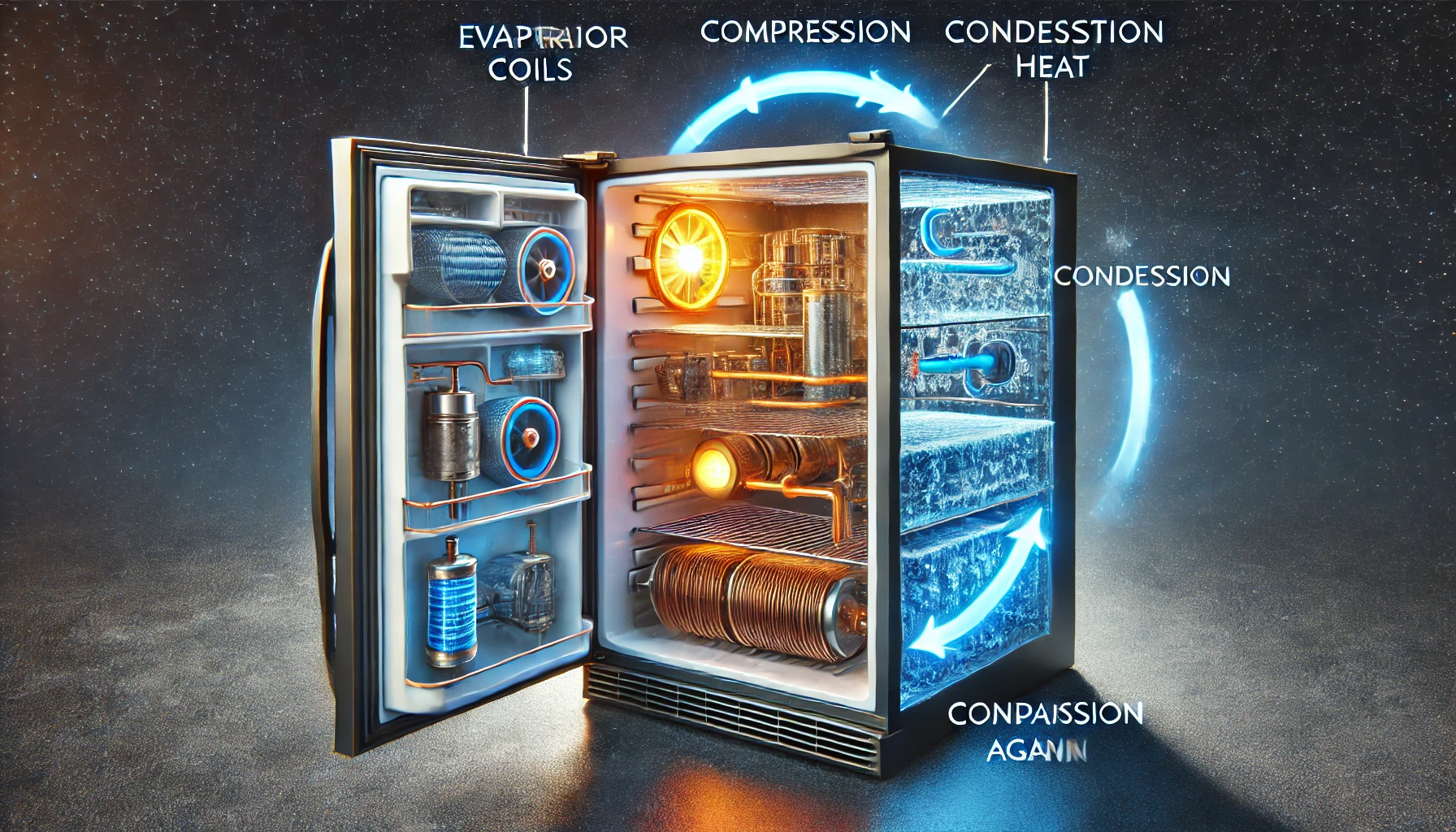
How Cold Do Fridges Get: Ideal Temperature Guide
Introduction
In the United States, a refrigerator should stay at 40°F (4°C) or below to slow the growth of harmful bacteria. Most household refrigerators work best when set near 37°F (3°C). A freezer should stay at 0°F (-18°C).
The exact temperature inside a fridge can change by shelf, load, room temperature, door use, and model. Some areas may be close to 32°F, while door shelves may be several degrees warmer. The safest way to know your fridge temperature is to use a separate appliance thermometer.
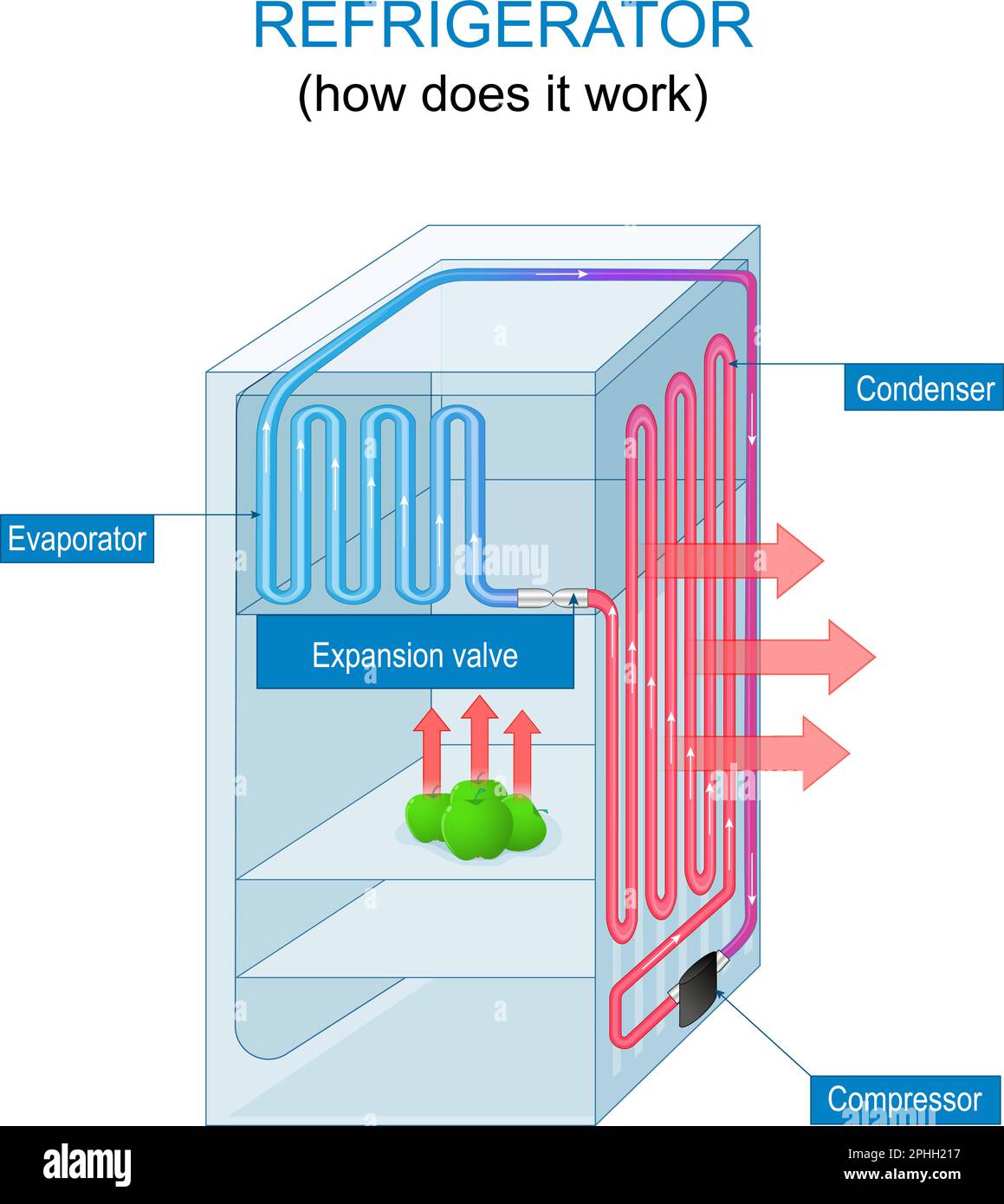
How Cold Should a Refrigerator Be?
A refrigerator should be cold enough to keep food at 40°F or below, but not so cold that fresh food freezes.


The U.S. Food and Drug Administration recommends keeping the refrigerator at or below 40°F. The U.S. Department of Agriculture also advises keeping the freezer at 0°F. These limits help reduce the time that food spends in the temperature range where bacteria can grow quickly.
A practical target for most homes is:
- Refrigerator: 37°F
- Maximum safe refrigerator temperature: 40°F
- Freezer: 0°F
- Fresh-food freezing point: About 32°F, though the exact point varies by food
A setting of 37°F gives the refrigerator a small safety margin. The temperature may rise when you open the door, add warm food, or run a defrost cycle.
What temperature is too cold?
A refrigerator is too cold for most fresh food when parts of the compartment stay near or below 32°F. At that point, water-rich foods can freeze.
Signs that a fridge is too cold include:
- Lettuce, berries, or milk freezing
- Ice forming on the back wall
- Water freezing in containers
- Soft foods becoming hard or icy
- A temperature reading below about 34°F in several areas
Some foods can freeze before the air reaches exactly 32°F because of airflow, salt, sugar, or other ingredients. For example, milk and juice usually freeze below the freezing point of pure water.
What temperature is too warm?
A refrigerator is too warm when it stays above 40°F for long periods. A brief rise during door opening is normal. A lasting rise may point to a setting, airflow, seal, or mechanical problem.
Food can look and smell normal even after spending too long at unsafe temperatures. Do not use smell alone to judge whether perishable food is safe.
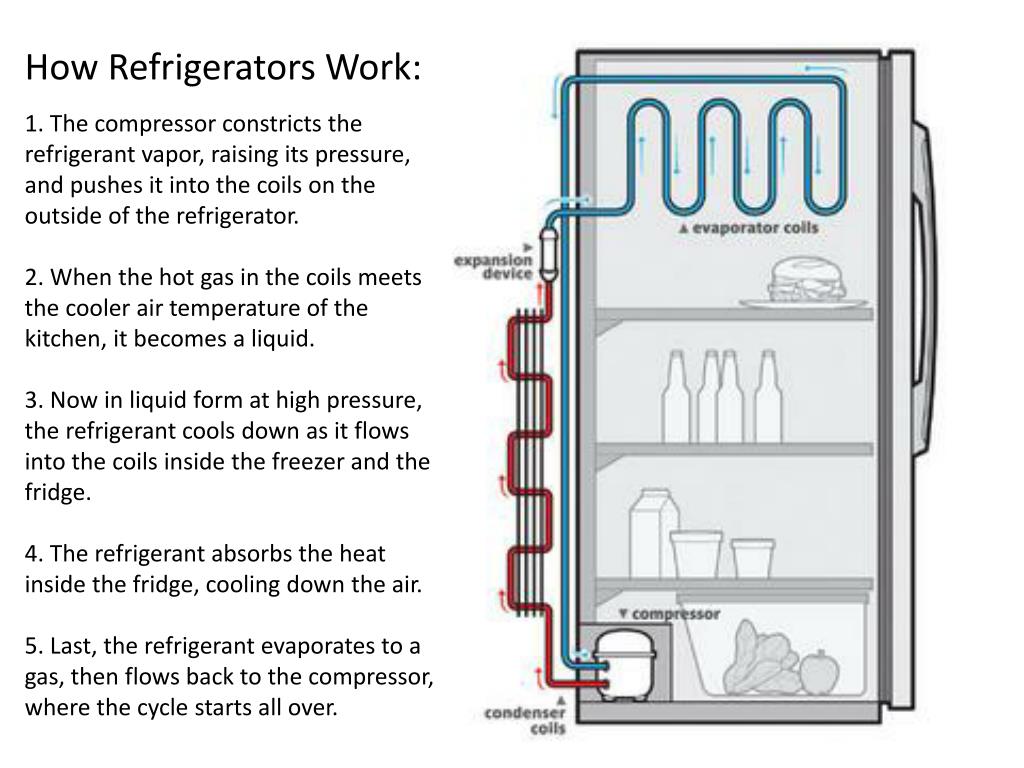
How Cold Do Different Parts of a Fridge Get?
Different parts of a refrigerator can have different temperatures. Cold air often enters near the back wall or a vent, then moves through the compartment. Door shelves usually stay warmer because the door opens often.
| Refrigerator area | Common temperature pattern | Best use |
|---|---|---|
| Back of the main compartment | Often coldest | Dairy, drinks, and items that need steady cooling |
| Middle shelves | Usually close to the set temperature | Ready-to-eat foods |
| Crisper drawers | Can be slightly different | Produce, depending on humidity settings |
| Door shelves | Usually warmest | Condiments and items less sensitive to temperature |
| Meat or deli drawer | Often colder than the main area | Meat, poultry, and deli foods if the model has this feature |
These are general patterns, not guaranteed readings. The design of the refrigerator matters. A top-freezer model, bottom-freezer model, side-by-side refrigerator, and French-door refrigerator may distribute air in different ways.


Do not store highly perishable food in the door just because the door feels cold. Keep raw meat, poultry, seafood, eggs, and leftovers in colder, more stable areas.
Why the back wall may freeze food
Cold air may blow directly onto the back wall. Food that touches that wall can freeze even when the average fridge temperature is safe.
Leave a small gap between food and the rear wall or air vents. Do not block vents with containers. Blocked airflow can create both warm and cold spots.

How to Check Your Refrigerator Temperature
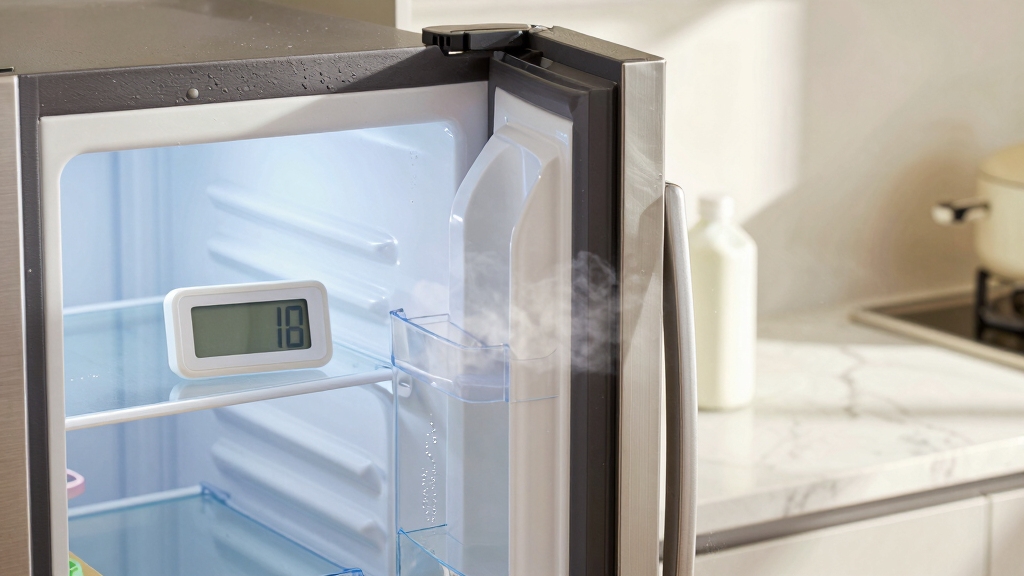
The most reliable home check uses an appliance thermometer. A refrigerator display may show the set temperature rather than the actual air temperature.
Follow these steps:
- Place an appliance thermometer in the middle of the refrigerator.
- Keep the door closed for at least 24 hours.
- Check the reading before opening the door for a long time.
- Repeat the test on another shelf if food is freezing or seems too warm.
- Adjust the control in small steps.
- Wait another 24 hours before judging the change.
For a better reading, place the thermometer in a glass of water. The water changes temperature more slowly than air, so it can better represent the temperature of food stored nearby. Do not place the thermometer against the wall, near a vent, or inside the door for the main test.
How to read the result
- 34°F to 40°F: Usually a suitable refrigerator range
- Above 40°F: Check the setting, door seal, airflow, and cooling system
- Below 32°F: Food may freeze and the refrigerator may need adjustment
- Large differences between shelves: Check vents, loading, and temperature controls
If a thermometer reads above 40°F, move perishable food to another working refrigerator or cooler while you investigate. Keep cold food at or below 40°F with ice if needed.

What Controls How Cold a Fridge Gets?
The temperature inside a refrigerator depends on more than the number on its control panel.
Temperature setting
Many refrigerator dials use numbers rather than degrees. In some models, a higher number means more cooling. In others, the control may work differently.
Check the owner’s manual before changing the setting. If the manual is not available, adjust one step at a time and measure the result after 24 hours.
Room temperature
A refrigerator may struggle in a hot kitchen, an unheated garage, or a space with poor airflow. Many standard models are designed for indoor room temperatures, not extreme heat or cold.
A very cold garage can also cause problems. In some freezer-on-top models, the refrigerator section may become too warm while the freezer control responds to the cold room. The appliance may not be rated for garage use.
Door openings
Every door opening lets cold air escape and warm air enter. Frequent openings can raise the temperature, especially in a small or nearly empty refrigerator.


Open the door only as long as needed. Let hot food cool briefly before refrigeration, but do not leave perishable food at room temperature for extended periods.
Amount of food inside
A full refrigerator often holds its temperature better than an empty one, but overfilling can block air movement. Pack food with enough space for cold air to circulate.
A nearly empty refrigerator may warm faster when the door opens. Sealed containers of water can add thermal mass, but they should not block vents or shelves.
Door gasket condition
The gasket is the flexible seal around the door. A damaged, loose, or dirty gasket can let warm air enter.
To check it:
- Close the door on a sheet of paper.
- Try to pull the paper out.
- Repeat around several points on the seal.
If the paper slides out easily in many places, clean the gasket and check whether the door is aligned. Replace a damaged gasket if cleaning does not help.
Defrost cycles
Frost-free refrigerators periodically warm parts of the cooling system to remove ice. During this cycle, the internal temperature may change slightly. A short change is normal, but food should remain at a safe temperature overall.
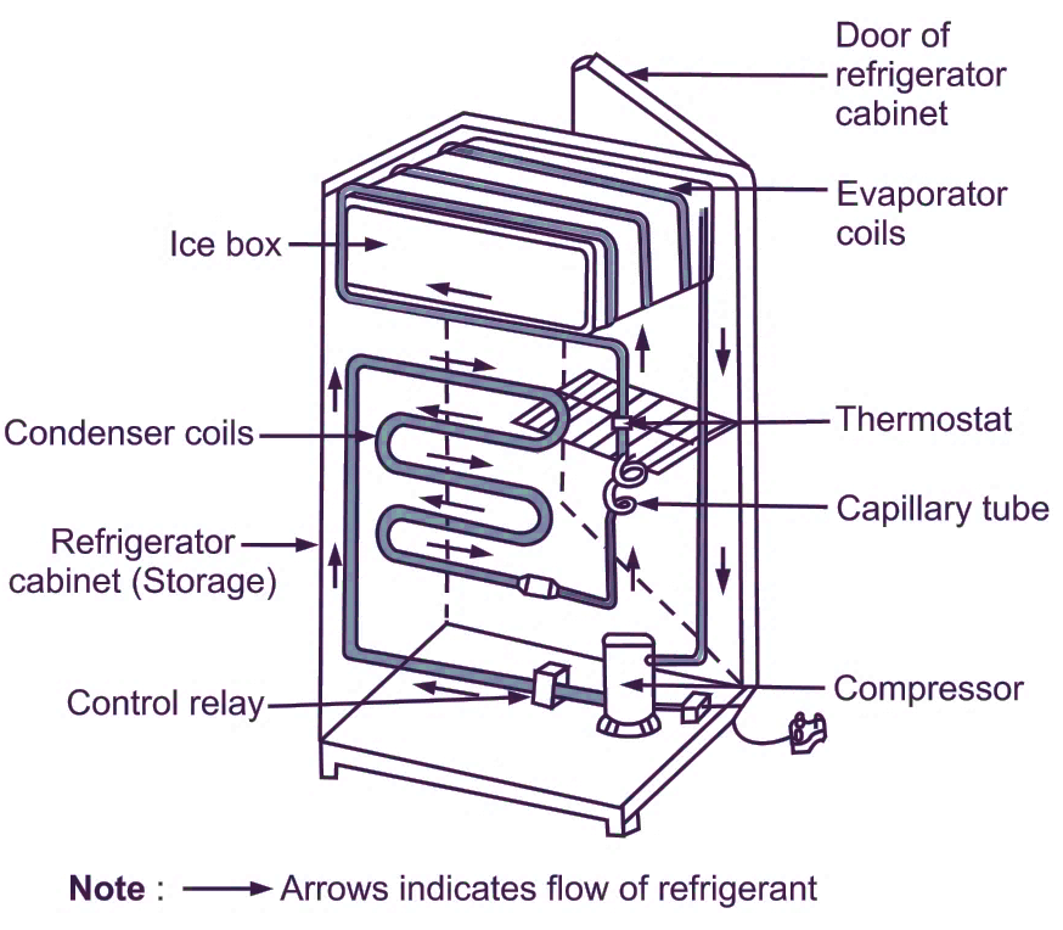
Why Is Your Refrigerator Too Warm?
A warm refrigerator can have a simple cause, but it can also signal a failing part. Check the easy and safe causes first.
1. Check the thermometer
Confirm the reading with an appliance thermometer. A built-in display may be inaccurate or may show the target setting rather than the current temperature.
2. Check the controls
Make sure someone has not changed the temperature setting. After an adjustment, wait about 24 hours for the refrigerator to stabilize.
3. Check the door
Look for:
- Food preventing the door from closing
- A torn or loose gasket
- A door that sits unevenly
- A drawer that is not fully closed
- Frost or ice stopping the seal
4. Check the vents
Do not pack food against vents. Keep containers from blocking the path between the freezer and refrigerator sections.
5. Check the condenser area
Some models have coils under the refrigerator. Others have coils at the back or use a different design. Follow the owner’s manual before cleaning.
Unplug the appliance if the manual requires it. Do not remove panels or touch electrical parts. Use a soft brush or vacuum only where the manufacturer permits.


6. Listen for unusual operation
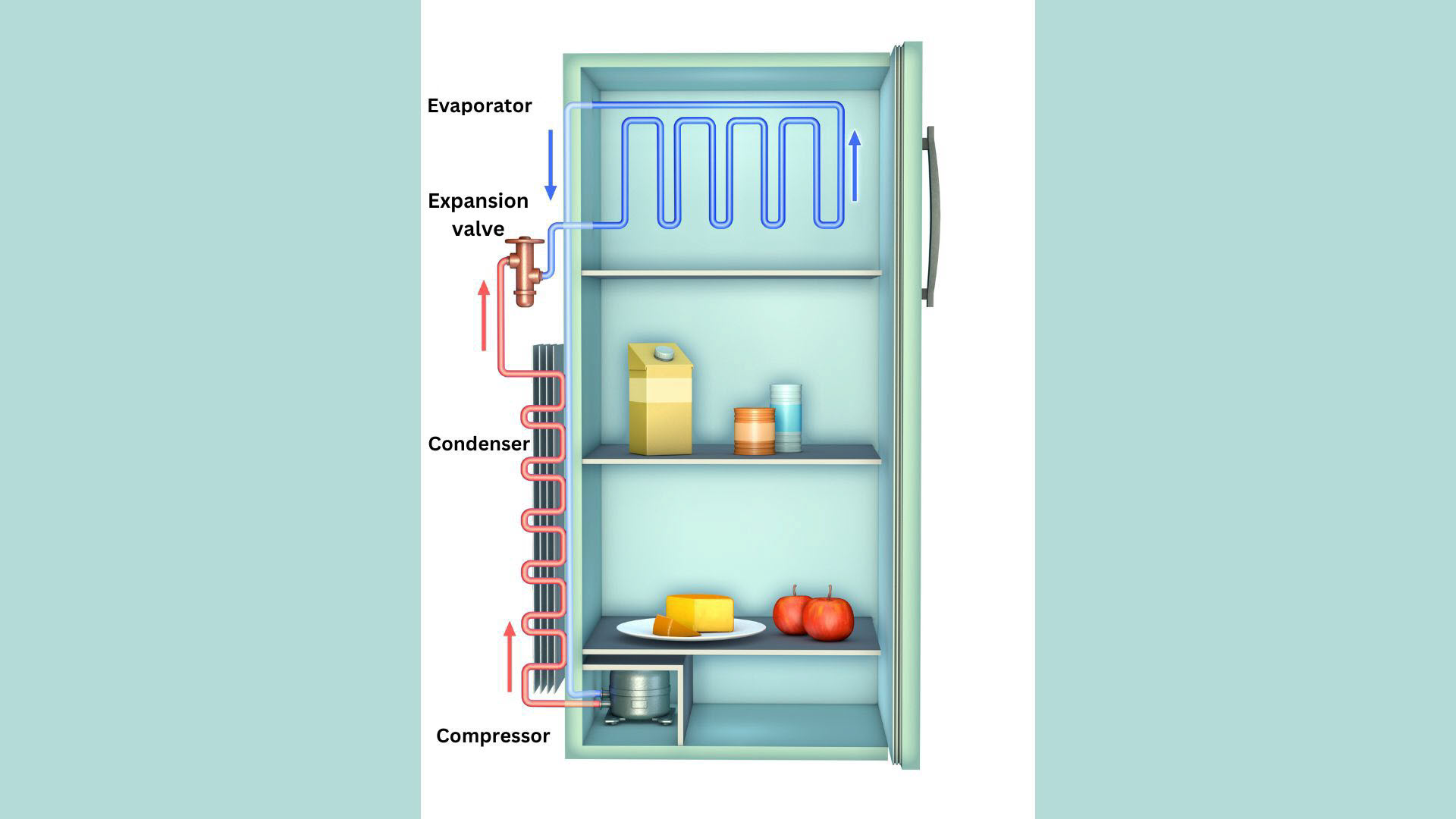
A refrigerator that runs constantly, clicks repeatedly, makes a new grinding sound, or stops cooling may need service. If the temperature remains above 40°F after basic checks, protect the food first and contact a qualified appliance technician.
Do not attempt to repair refrigerant lines, compressors, control boards, or electrical parts yourself.
Why Is Your Refrigerator Freezing Food?
Food that freezes in the refrigerator often points to a cold spot, blocked airflow, or a control problem.
Try these steps:
- Move food away from the rear wall and vents.
- Check the temperature in the middle of the compartment.
- Set the refrigerator near 37°F if the current setting is colder.
- Make sure the crisper or deli control is not set to an unusually cold position.
- Check whether the damper or air outlet is stuck open.
- Wait 24 hours and measure again.
Some refrigerators have separate controls for the freezer and fresh-food sections. Lowering the freezer temperature may not solve a refrigerator compartment problem.
If only one area freezes food, the issue may be airflow or placement. If the whole compartment is too cold, the thermostat, sensor, control board, or damper may need inspection.
Foods most likely to freeze
Foods with high water content are more likely to freeze, including:
- Leafy greens
- Fresh fruit
- Milk
- Yogurt
- Eggs
- Soft drinks
- Cooked vegetables
Freezing may change texture even when it does not make the food unsafe. Discard food if its package has burst, leaked, or become contaminated.

How Cold Should a Freezer Be?
A freezer should be kept at 0°F (-18°C). This temperature keeps food frozen and slows quality loss.
A freezer set below 0°F is not usually needed for routine home storage. A warmer freezer may still keep food hard, but food quality can decline faster and partially thawed items may become unsafe if they spend too much time above safe temperatures.
Use a freezer thermometer because the control setting may not match the actual temperature. Place it in a central area, not against the wall or near the door.
What if the freezer is at 10°F?
A reading of 10°F means the freezer is colder than the freezing point of water, but it is warmer than the recommended 0°F target. Check:
- Whether the freezer is overfilled
- Whether the door seal is working
- Whether frost blocks vents
- Whether the appliance is in a very hot room
- Whether the door has been left open
- Whether the temperature rises during a defrost cycle
Keep the door closed while checking. If food is soft, thawed, or has visible ice crystals, follow USDA guidance for deciding whether it can be refrozen or should be discarded.

Can a Refrigerator Get Below Freezing?
Yes. A refrigerator can get below 32°F in some areas, especially near an air vent or rear wall.
That does not mean the entire compartment is below freezing. Air moves in cycles, and the average temperature may be safe while one cold spot freezes food.
A refrigerator is not designed to operate as a freezer. Keeping it below freezing can damage fresh food, waste energy, and signal a control or airflow problem.
If you need to chill a drink quickly, use a freezer for a short, monitored period rather than lowering the refrigerator temperature for the whole compartment.
Is 45°F Safe for a Refrigerator?
A refrigerator that stays at 45°F is warmer than the recommended maximum of 40°F. Perishable food should not remain at that temperature for long.
If your refrigerator reaches 45°F:
- Keep the door closed.
- Check the temperature again with a thermometer.
- Move high-risk foods to another refrigerator or an ice-filled cooler.
- Check the door seal, vents, and temperature setting.
- Discard food that has been above safe temperatures for too long.
The FDA’s “danger zone” is commonly described as 40°F to 140°F, where bacteria can multiply more quickly. Time matters as much as temperature. When in doubt about a perishable food, follow USDA food safety guidance rather than relying on smell or appearance.

Common Refrigerator Temperature Mistakes
Several habits make refrigerator temperatures less stable.
Using the door shelf for perishable food
The door is usually the warmest part of the refrigerator. Store condiments, pickles, and other items that tolerate temperature changes there. Keep milk, eggs, meat, and leftovers on interior shelves.
Trusting the dial without measuring
A number on a dial is not the same as a temperature reading. Use a thermometer to confirm the result.
Packing food against vents
Blocked vents can cause uneven cooling. Leave space around vents and avoid pressing containers against the back wall.
Putting hot food straight into a crowded fridge
A large hot container can raise the temperature around nearby food. Divide leftovers into shallow containers so they cool more quickly, then refrigerate them promptly.
Leaving the door open while deciding what to eat
Long door openings allow cold air to escape. Plan what you need before opening the door.
Turning the setting to the coldest level
The coldest setting may not cool food faster in a useful way. It can freeze fresh food without fixing a failing seal, blocked vent, or weak cooling system.
Ignoring repeated temperature changes
One brief rise may be normal. Repeated readings above 40°F are not something to ignore. Protect food and arrange service if basic checks do not solve the problem.
Refrigerator Temperature Quick Reference
| Question | Practical answer |
|---|---|
| How cold should a fridge be? | At or below 40°F; about 37°F is a useful target |
| How cold should a freezer be? | 0°F |
| Can a fridge freeze food? | Yes, especially near vents or the back wall |
| Is 45°F cold enough? | It is warmer than the recommended limit for long-term food storage |
| Where is a fridge coldest? | Often near the back wall or cold-air vent |
| Where is a fridge warmest? | Usually the door shelves |
| How long should you wait after changing the setting? | About 24 hours before checking the stable result |
| What tool should you use? | A separate appliance thermometer |
Frequently Asked Questions
How cold does a mini fridge get?
Many mini fridges can cool to a food-safe temperature, but performance varies by model, room temperature, and load. Set the unit according to its manual and verify the interior with an appliance thermometer. Some compact units have a small freezer compartment that may not maintain 0°F.
How cold does a refrigerator need to be for milk?
Milk should be stored at or below 40°F. Keep it on an interior shelf rather than the door, where temperatures often change more. If milk has been kept warm for an unsafe length of time, do not rely on taste or smell to decide whether it is safe.
Does a full fridge stay colder?
A reasonably full refrigerator can hold its temperature more steadily than an empty one. However, overloading blocks airflow and can create warm areas. Keep space around vents and allow cold air to move between containers.
Should I put a thermometer in my fridge?
Yes. A separate appliance thermometer is a simple way to check the actual temperature. Put it in the center of the refrigerator and leave the door closed long enough for the reading to stabilize.
Why is my fridge cold but not cold enough?
Possible causes include a wrong setting, a weak door seal, blocked vents, a dirty condenser area, a hot room, too many door openings, or a failing cooling component. Start with the thermometer, setting, seal, and airflow. Seek appliance service if the temperature stays above 40°F.
Conclusion
A household refrigerator in the United States should stay at 40°F or below, with 37°F as a useful target for many homes. The freezer should stay at 0°F.
Because refrigerator temperatures vary by shelf and change during normal operation, a thermometer is more reliable than the control dial or display. Check the center of the fridge, keep food away from vents, limit door openings, and address any reading that remains above 40°F.
The best next step is simple: place an appliance thermometer in the middle of your refrigerator and check it after 24 hours.

Appliance Review Expert
Lucas Ramirez is a trusted voice at HomeFixGrid.com, known for his clear, practical, and creatively written guides that simplify appliance care for everyday homeowners. With a strong focus on hands-on testing and real-world problem-solving, Lucas brings expert insight into appliance reviews and troubleshooting techniques. Her work empowers readers to confidently maintain, repair, and choose the right appliances for their homes.