What Is The Widest Refrigerator: Top Models And Sizes
The widest residential refrigerators are usually 48 inches across, while commercial models and custom setups can be much wider.
When people ask what is the widest refrigerator, they are often comparing large family fridges, built-in columns, and professional-style kitchen appliances. The answer depends on whether you mean one refrigerator cabinet, a side-by-side pair, or a full refrigeration wall. This guide explains the widest options, their real dimensions, costs, benefits, and the mistakes to avoid before buying.
What is the widest refrigerator for a home?
For most homes, the widest single residential refrigerator is about 48 inches wide. These models are usually built-in or professional-style refrigerators with large stainless steel bodies, dual doors, bottom freezers, or separate freezer compartments.
A 48-inch refrigerator is much wider than the common 30-inch or 36-inch model. It can offer more fresh-food space, wider shelves, large door bins, and a more luxurious look. However, it also needs a large kitchen opening, strong flooring, and careful delivery planning.
Some manufacturers also sell 60-inch refrigeration systems. These are often made from two 30-inch columns or a refrigerator column paired with a freezer column. They may look like one wide refrigerator wall, but they are usually separate appliances installed together.
The answer to what is the widest refrigerator is therefore:
• A single home refrigerator is commonly up to 48 inches wide.
• A built-in refrigerator and freezer combination can reach 60 inches or more.
• Commercial refrigerators can be wider than 60 inches, but they are not always suitable for home kitchens.

The widest refrigerator sizes explained
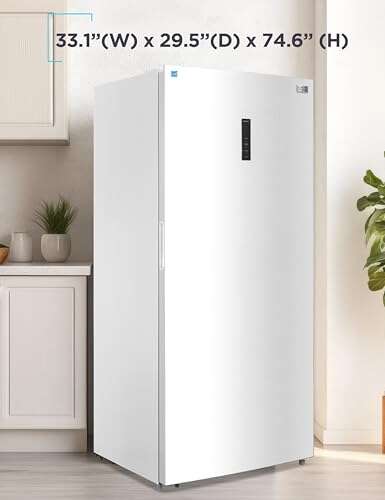
Refrigerator width is only one part of the size. You must also check height, depth, door clearance, handle clearance, and ventilation space.
30 to 33 inches wide
These refrigerators fit many older kitchens and smaller homes. They often provide enough space for one or two people.
Typical features include:
• Top-freezer or bottom-freezer layouts
• Standard-depth cabinets
• Smaller ice makers
• Lower purchase and installation costs
A 30-inch refrigerator is easy to move through most doors. It is also easier to replace when you remodel or move.
36 inches wide
A 36-inch refrigerator is one of the most popular large kitchen sizes in the United States. It offers a useful balance between storage and space.
You can find 36-inch models in several styles:
• French-door refrigerators
• Side-by-side refrigerators
• Counter-depth refrigerators
• Built-in refrigerators
• Column refrigerator and freezer units
For many families, a 36-inch refrigerator is the practical sweet spot. It gives you more room without requiring a very large kitchen.
42 inches wide
A 42-inch refrigerator is often found in luxury kitchens. These models may be built in or designed to sit nearly flush with the cabinets.
They can provide:
• Wider fresh-food shelves
• More door storage
• Stronger temperature control
• Large freezer drawers or compartments
A 42-inch refrigerator may require custom cabinets. It may also be too wide for a standard kitchen doorway.
48 inches wide
A 48-inch model is usually the widest single residential refrigerator you will see from major premium brands. It may contain one refrigerator section and one freezer section, or it may use a French-door design with wide interior storage.
These models are made for large kitchens. They can weigh several hundred pounds and may need professional delivery, door removal, and floor protection.
60 inches and wider
A refrigerator system over 48 inches wide is often a combination of separate units. For example, a 36-inch refrigerator column may sit next to a 24-inch freezer column.
This setup can be wider than a single appliance while giving you more design flexibility. You can choose all refrigerator space, all freezer space, or a mix that matches your household needs.
Examples of the widest residential refrigerator options
The market changes often, so exact model numbers and measurements can vary. Always confirm the current product specification sheet before ordering.
48-inch built-in refrigerators
Several premium appliance brands offer refrigerators around 48 inches wide. These models often include:
• Built-in installation
• Panel-ready or stainless steel finishes
• Dual compressors or separate cooling systems
• Adjustable shelves
• Interior water systems
• Soft-close storage drawers
• Advanced air filtration
A 48-inch built-in refrigerator often has a finished depth close to the cabinet line. This creates a clean look, but it may offer less usable depth than a standard-depth refrigerator.
48-inch professional-style refrigerators
Professional-style refrigerators are designed to look like restaurant equipment. They often have thicker handles, powerful cooling systems, and strong metal interiors.
Some models include a full-width refrigerator section with a bottom freezer. Others use side-by-side doors to separate fresh and frozen food.
The extra width can be useful when you store large trays, party dishes, or bulk groceries. Still, a wide refrigerator does not always mean better storage. A poorly designed interior can waste space through thick walls, narrow shelves, or large ice systems.
Two-column refrigerator systems
Column systems are among the widest residential refrigeration choices. Each column has one job.
Common combinations include:
• 30-inch refrigerator plus 30-inch freezer
• 36-inch refrigerator plus 24-inch freezer
• 36-inch refrigerator plus 36-inch freezer
• Refrigerator column plus wine storage column
This design is popular because it allows better control over food storage. A family that buys fresh food may choose a larger refrigerator column and a smaller freezer column.
Commercial refrigerators
Commercial reach-in refrigerators can be 54, 60, or 72 inches wide. Some have two or three doors and large interior shelves.
These units are usually not the best choice for a home. They may be noisy, deep, energy intensive, and difficult to fit with residential cabinets. Their appearance and temperature settings may also feel less comfortable in a family kitchen.

How wide is the widest refrigerator in practical terms?
A 48-inch refrigerator is four feet wide before you add door handles or side clearance. That is a major footprint in a kitchen.
Imagine placing a four-foot-wide bookcase between your counters. The refrigerator may occupy the same horizontal space, but it also needs room for the doors to open and for people to stand in front of it.
A wide refrigerator may need:
• 48 inches for the appliance body
• Additional side space for door swing
• Space above the unit for ventilation
• A clear path from the delivery truck
• Room for the doors to open past nearby walls
• Enough depth for handles and water connections
The manufacturer’s cutout width is not always the same as the appliance width. Some models need a small side gap, while others need wider filler panels for the doors to open correctly.
Refrigerator width versus refrigerator capacity
Width does not tell the whole story. Refrigerator capacity is measured in cubic feet, but usable storage can differ greatly between models.
A wide appliance may have more exterior width but less interior space because of:
• Thick insulation
• Large cooling systems
• Wide center dividers
• Ice makers
• Water filters
• Heavy door liners
A narrow column refrigerator may use its interior space more efficiently than a wide French-door model. Shelf shape also matters. Wide, shallow shelves may be easier to organize than deep shelves where food gets lost.
When comparing the widest refrigerator options, review both total capacity and usable shelf layout. Look for adjustable shelves, full-extension drawers, and clear space for tall bottles.

Benefits of buying the widest refrigerator
A wide refrigerator can make daily food storage easier. It is especially useful for large households, people who cook often, and families who host guests.
More space for fresh food
A wide refrigerator can hold large produce bins, meal-prep containers, milk cartons, and serving trays. This can reduce the need to stack food tightly.
Better storage for entertaining
Large platters and wide dishes often fit better in a 42-inch or 48-inch refrigerator. This is helpful during holidays, birthdays, and game-day gatherings.
A premium kitchen appearance
Built-in wide refrigerators can create a strong focal point. Panel-ready models can blend with cabinets, while stainless steel models create a professional look.
Flexible refrigerator and freezer space
Column systems let you choose how much room goes to fresh food and how much goes to frozen food. This is useful if your shopping habits do not match a standard refrigerator layout.
Easier organization
With more shelf width, food can be spread out instead of hidden behind other items. Clear visibility can help reduce forgotten food and waste.
Drawbacks of the widest refrigerator
The widest refrigerator is not automatically the best refrigerator. Large appliances bring real trade-offs.
Higher purchase price
A 48-inch built-in refrigerator can cost several thousand dollars. Premium columns and custom configurations may cost much more.
More expensive installation
Installation may involve cabinet changes, electrical work, water-line changes, and professional leveling. Panel-ready models also need custom door panels.
Difficult delivery
A wide refrigerator may not pass through a front door, hallway, elevator, or tight turn. Delivery teams may need to remove doors and use special equipment.
Greater energy use
A larger refrigerator often has more space to cool. Energy use depends on the design and efficiency rating, but size can raise operating costs.
Less kitchen space
A wide appliance takes space from counters, walkways, or nearby cabinets. In a small kitchen, this can make cooking feel crowded.
Door-swing problems
A refrigerator can fit the opening but still fail in daily use. Doors may strike a wall, block a walkway, or prevent drawers from opening fully.

How to measure for the widest refrigerator
Measure before you shop, not after the delivery truck arrives. This simple step prevents many expensive problems.
Measure the cabinet opening
Measure the width at the top, middle, and bottom of the opening. Walls and cabinets are not always perfectly straight.
Record the smallest measurement. The appliance must fit the tightest part of the opening.
Measure the height
Check the full height from the finished floor to the lowest cabinet or ceiling point. Include any trim, molding, or overhead cabinet.
Some built-in refrigerators need very little space above them. Others need a specific ventilation gap.
Measure the depth
Measure from the back wall to the front edge of the counter. Then check whether the refrigerator door and handle will extend beyond the counter.
Counter-depth models sit closer to the cabinet line. Standard-depth models usually hold more food but extend farther into the kitchen.
Check the door path
Measure every point between the delivery truck and the final location:
• Exterior doors
• Interior doors
• Hallways
• Stairways
• Turns
• Elevators
• Cabinet openings
Do not measure only the doorway. A refrigerator may pass through the door but fail at a sharp hallway turn.
Check utilities
Confirm the location of:
• Electrical outlets
• Water lines
• Shutoff valves
• Drain connections, if required
• Gas lines for nearby appliances
Use the exact installation guide for the chosen model. General measurements are helpful, but the manufacturer’s specifications control the final installation.

What to consider before buying the widest refrigerator
Start with your daily habits. Do you buy fresh food every few days, or do you stock up once a week? Do you freeze bulk food, or do you use most of your freezer space for ice cream and frozen meals?
A practical planning method is to list what you store most often:
-
Measure large items such as pizza boxes, trays, gallon containers, and drink bottles.
-
Note how much freezer space your household uses each week.
-
Decide whether you prefer wide shelves, drawers, or door storage.
-
Compare usable interior dimensions, not just cubic feet.
-
Confirm the opening and delivery route.
-
Ask about installation, removal of the old appliance, and warranty service.
One lesson from kitchen planning is easy to remember: the biggest refrigerator can become a very expensive pantry if you cannot organize it. Choose the layout that matches your food habits, not just the largest number on the specification sheet.
Energy efficiency and operating cost
Look for the yellow EnergyGuide label and the current energy certification information. These documents estimate annual electricity use and help compare similar models.
A larger refrigerator may use more electricity, but size alone does not determine efficiency. Compressor design, insulation, door seals, lighting, ice makers, and temperature controls also matter.
To lower operating costs:
• Keep the refrigerator around 37°F.
• Keep the freezer near 0°F.
• Replace damaged door seals.
• Leave air space around vents inside the cabinet.
• Do not place the refrigerator beside a hot oven if you can avoid it.
• Keep doors closed as much as possible.
• Clean accessible coils when the product instructions allow it.
A refrigerator that is too large for your needs may waste both space and energy. A well-filled refrigerator often holds temperature more steadily than an empty one, but it should never be packed so tightly that air cannot circulate.
Installation and maintenance tips
Large refrigerators should usually be installed by trained professionals. Built-in units must be level, secure, and correctly aligned with the cabinets.
Before installation, protect hardwood, tile, and finished flooring. Wide appliances are heavy, and a small movement can scratch the floor or damage trim.
After installation:
• Check that every door opens fully.
• Confirm that drawers do not hit the wall.
• Test the ice maker and water dispenser.
• Check for leaks at the water connection.
• Allow the unit to reach its target temperature before loading it fully.
• Read the cleaning and filter instructions.
Keep the condenser area clear if the model requires airflow there. Replace water filters on the schedule listed in the manual. Also inspect door gaskets from time to time; a weak seal can increase energy use and cause frost.
Common mistakes to avoid
The most common mistake is buying the widest refrigerator that fits on paper. A refrigerator also needs room to breathe, open, and receive service.
Avoid these errors:
• Measuring only the cabinet opening
• Ignoring door and handle depth
• Forgetting the delivery route
• Assuming all 48-inch models have the same dimensions
• Choosing a commercial unit for a residential kitchen without checking noise and ventilation
• Failing to plan the electrical outlet
• Overlooking panel thickness on a panel-ready model
• Skipping the manufacturer’s installation manual
Another mistake is assuming a wider model always has a larger freezer. Some wide refrigerators devote most of their space to fresh food. Check the refrigerator and freezer capacities separately.
Is a 48-inch refrigerator worth it?
A 48-inch refrigerator can be worth the cost when you have a large household, a spacious kitchen, and a real need for extra storage. It can also improve the look and function of a luxury kitchen.
It may not be worth it when your kitchen is narrow, your household is small, or you rarely store large items. In those cases, a 36-inch refrigerator may offer nearly everything you need at a lower cost.
Think of refrigerator width like shoe size. Bigger is not better if it does not fit your space or your routine. The best refrigerator gives you useful storage while leaving enough room to cook, walk, and open nearby cabinets.
Frequently Asked Questions About What Is the Widest Refrigerator
What is the widest standard refrigerator?
The widest standard freestanding refrigerator is usually about 36 inches wide. Larger 42-inch and 48-inch refrigerators are more often built-in, professional-style, or luxury models.
Is there a 60-inch refrigerator?
Yes, 60-inch residential refrigeration systems are available. They are commonly made by installing two separate columns, such as a 30-inch refrigerator beside a 30-inch freezer.
What is the widest single refrigerator for a home?
A single residential refrigerator is commonly available in widths up to about 48 inches. Exact sizes vary by brand, style, door design, and installation method.
Are wider refrigerators more energy efficient?
Not necessarily. Energy efficiency depends on insulation, compressors, seals, controls, and certification ratings, as well as size. Compare the EnergyGuide information for each model.
Will a 48-inch refrigerator fit through a normal door?
It may fit only after the refrigerator doors, handles, or the home’s entry door are removed. Measure the complete delivery path and confirm the plan with the retailer before purchase.
Is a wide refrigerator better than a column refrigerator?
A wide refrigerator offers a single appliance and a unified appearance. Column refrigerators provide more layout flexibility, but they often cost more and require more detailed installation planning.
Conclusion
The widest refrigerator for most homes is usually a 48-inch built-in or professional-style model. Wider systems can reach 60 inches or more when separate refrigerator and freezer columns are installed together, while commercial units may be wider still.
Before choosing one, compare usable storage, kitchen measurements, door clearance, energy use, installation needs, and delivery access. Measure the full path, read the exact product specifications, and select the width that supports your real shopping and cooking habits. Explore current refrigerator layouts, compare verified dimensions, and share your kitchen plans with an appliance professional before you buy.

Appliance Review Expert
Lucas Ramirez is a trusted voice at HomeFixGrid.com, known for his clear, practical, and creatively written guides that simplify appliance care for everyday homeowners. With a strong focus on hands-on testing and real-world problem-solving, Lucas brings expert insight into appliance reviews and troubleshooting techniques. Her work empowers readers to confidently maintain, repair, and choose the right appliances for their homes.