
Can You Heat A Washcloth In The Microwave: Safe Tips
Yes, you can heat a washcloth in the microwave when it is fully damp and heated in short, careful bursts.
Knowing how to heat a washcloth in the microwave safely can make daily tasks easier, from soothing sore muscles to creating a warm face cloth. The key is controlling moisture, time, and temperature. A microwave can heat water quickly, but an overheated or nearly dry cloth can burn skin or even become a fire risk. This guide explains the safest method, common mistakes, useful alternatives, and when a warm washcloth may not be suitable.

Is It Safe to Heat a Washcloth in the Microwave?
Yes, it is usually safe to heat a washcloth in the microwave if you use water and follow basic safety steps. The cloth must be wet or very damp. Never place a dry washcloth in the microwave, as dry fabric can overheat, scorch, or catch fire.
Microwaves heat water molecules. A damp washcloth holds water that turns into steam and warmth. A dry cloth has little moisture to absorb that energy, so it may heat unevenly and become dangerously hot.
The safest setup includes:
• A clean, plain cotton washcloth
• Fresh water
• A microwave-safe plate or bowl
• Short heating times
• Oven mitts or tongs for handling
The U.S. Food and Drug Administration advises using microwave-safe containers and following the appliance maker’s instructions. These steps matter because microwave ovens vary in power. A 1,200-watt oven may heat a cloth much faster than a 700-watt model.

How to Heat a Washcloth in the Microwave Safely
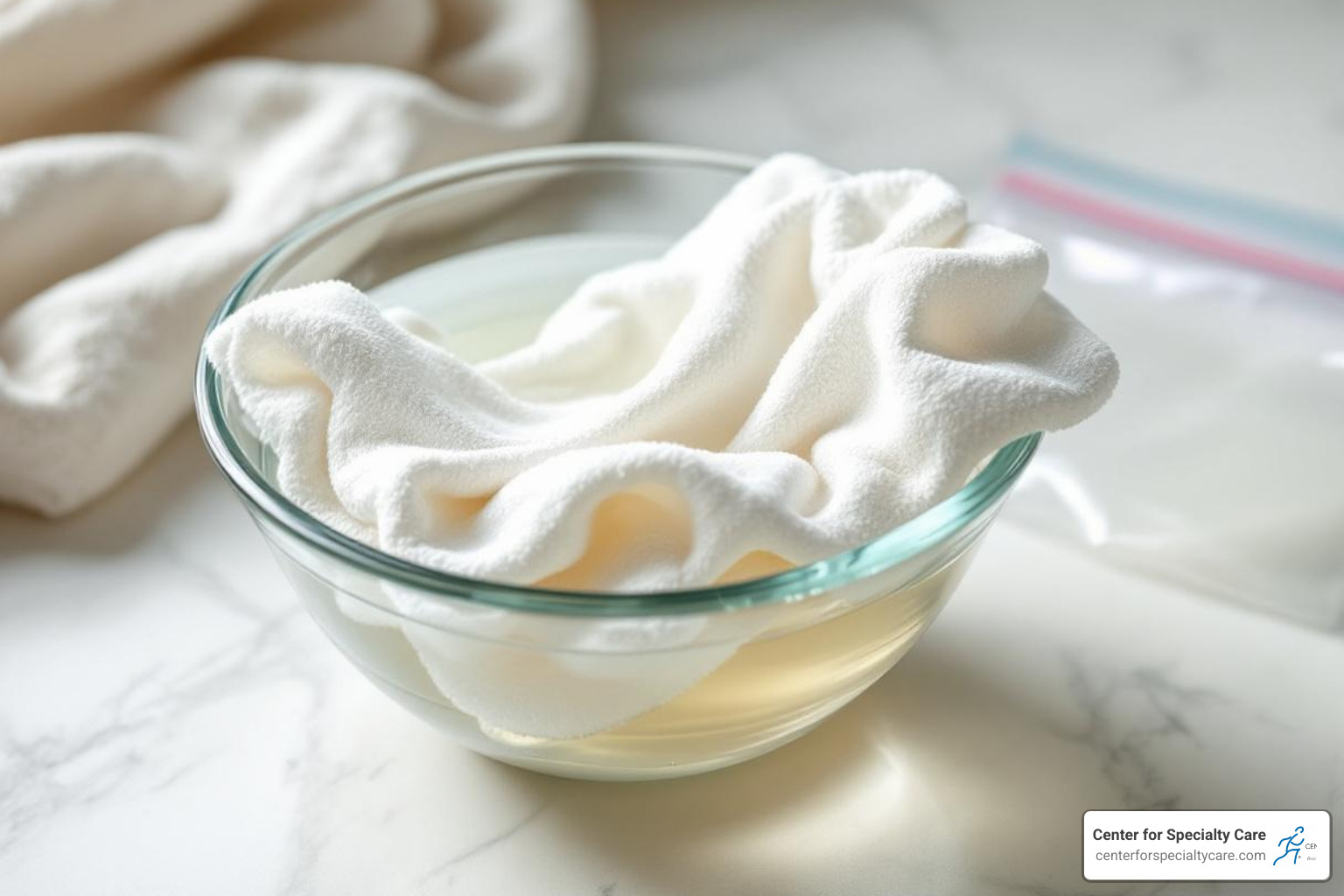
Learning how to heat a washcloth in the microwave takes only a few steps. The goal is to make the cloth warm and moist, not boiling hot.
Step 1: Choose the Right Washcloth
Use a simple cotton washcloth without metallic threads, beads, glitter, or decorative wire. Avoid cloths with loose plastic parts or synthetic decorations.
A small cotton cloth heats more evenly than a thick towel. It also cools faster, which lowers the chance of a skin burn.
Step 2: Wet the Cloth Completely
Run the washcloth under clean water. Make sure every part is wet, including the corners and folded areas.
Then wring it out until it is damp but not dripping. A dripping cloth can create hot water and steam pockets. A damp cloth gives you better control.
Step 3: Place It in a Microwave-Safe Dish
Put the damp washcloth on a microwave-safe plate or in a microwave-safe bowl. The dish catches water that may drip from the cloth.
Do not use metal plates, foil, dishes with metallic trim, or containers that are not labeled microwave-safe. If you are unsure about a dish, choose a plain glass or ceramic option.
Step 4: Heat It in Short Bursts
Start with 10 to 15 seconds on high power. Remove the cloth carefully and check the temperature.
If it needs more heat, continue in 10-second bursts. Turn or unfold the washcloth between bursts so the heat spreads more evenly.
Most small washcloths need about 20 to 40 seconds in a typical microwave. This is only a general guide. Your cloth, water level, microwave power, and starting temperature all affect the result.
Step 5: Check for Hot Spots
A microwave may create areas that are much hotter than others. Open the cloth and feel it with the back of your hand before placing it on your face or body.
Do not rely only on the outside surface. A fold may trap hot water or steam. Shake out the cloth, wait a few seconds, and test it again.
Step 6: Use It Soon
A heated washcloth loses warmth quickly. Use it soon after heating, and never leave it unattended while it is on the counter or in the microwave.
If the cloth feels too hot, let it cool. You can also unfold it to release steam faster.
How Long Should You Microwave a Washcloth?
The best heating time depends on the microwave’s wattage and the cloth’s moisture level. There is no single time that works for every kitchen.
Use this starting guide:
• 700 to 900 watts: Begin with 15 to 20 seconds.
• 1,000 to 1,200 watts: Begin with 10 to 15 seconds.
• Thick or folded cloth: Use shorter bursts and check often.
• Thin, very damp cloth: It may heat in less time.
Do not microwave a washcloth for one or two minutes without checking it. Long heating can cause very hot water, steam burns, and dry spots.
A simple test is to heat the cloth for 15 seconds, turn it, and check it. Repeat only when needed. This method is slower than setting a long timer, but it is much safer.
The cloth should feel comfortably warm, like a warm bath towel. It should not hiss, smoke, smell burnt, or feel painfully hot. If you notice smoke or a burning smell, stop the microwave at once and keep the door closed until the appliance shuts off. Do not use water on a possible microwave fire.

Can You Heat a Dry Washcloth in the Microwave?
No. You should not heat a dry washcloth in the microwave. Dry fabric can become overheated because it has little moisture to absorb microwave energy.
A dry washcloth may scorch or burn, especially if it is left in the microwave too long. The risk is higher with older cloths, cloths with oil or cleaning chemicals, and cloths that contain synthetic fibers.
If you want a warm cloth, wet it first. A fully damp washcloth is safer because the water helps control the temperature.
Also avoid placing these items in the microwave:
• Washcloths with metal fibers or metallic decorations
• Cloths treated with bleach, solvents, or cleaning products
• Cloths covered in grease or cooking oil
• Heating pads not labeled for microwave use
• Cloths wrapped tightly in plastic
• Cloths that are completely dry after a long heating cycle
Essential oils also need care. Some oils can irritate skin, stain fabric, or become very hot. Plain water is the safest option for most uses.
Best Uses for a Warm Microwave Washcloth
A warm washcloth can be useful for simple comfort and personal care. It is a low-cost option when you need gentle warmth for a short time.
Common uses include:
Facial Care
A warm washcloth can soften surface oil and loosen light debris before washing your face. Keep the cloth comfortably warm, not hot, and avoid pressing hard on the skin.
People with sensitive skin, rosacea, or eczema may find heat irritating. Test the cloth on your wrist first and stop if your skin becomes red, itchy, or painful.
Muscle Comfort
Warmth may help relax tight muscles and make mild stiffness feel better. Place the cloth over the area for a few minutes, but do not use heat over broken skin or a fresh injury unless a health professional tells you to do so.
For swelling, a cold pack may be more appropriate during the early stage of an injury. Heat is not a cure for the cause of pain, so ongoing or severe pain deserves medical advice.
Sinus and Facial Comfort
Some people use a warm washcloth across the forehead or cheeks for comfort during congestion. It may feel soothing, but it does not treat an infection or replace medical care.
Keep the cloth warm rather than hot. The skin on the face can burn easily, especially for children and older adults.
Baby Care
A warm washcloth may help with bathing or gentle cleaning. Always test the temperature on the inside of your wrist first.
Never leave a heated cloth with a baby. Infants have delicate skin and may not be able to move away from excessive heat.
Warm Compresses
A damp washcloth can serve as a short-term warm compress. It is easy to shape around a small area, but it will not stay warm as long as a properly made reusable heat pack.
Important Safety Tips and Mistakes to Avoid
The most common mistake is treating a microwave like a simple timer. Microwave heating is uneven, so time alone does not tell you whether a washcloth is safe.
Follow these safety tips:
• Stay near the microwave while the cloth heats.
• Use short heating intervals.
• Turn or unfold the cloth between intervals.
• Let the cloth rest for a few seconds before touching it.
• Test the cloth on your wrist before using it on sensitive skin.
• Use clean water and a clean cloth.
• Handle the dish with care because it may also become hot.
• Keep the cloth away from children unless an adult is supervising.
• Wash the cloth after use, especially if it touches the face or an open area.
Avoid these common errors:
• Heating a completely dry cloth
• Heating a tightly rolled cloth for a long time
• Using a cloth with metal trim
• Adding oil, alcohol, or cleaning chemicals
• Applying the cloth directly to numb skin
• Falling asleep with the cloth in place
• Using heat on a serious injury without medical guidance
A warm cloth should feel soothing, not intense. If you cannot tell whether it is too hot, wait longer and test it again. Mild warmth is safer than trying to make the cloth as hot as possible.
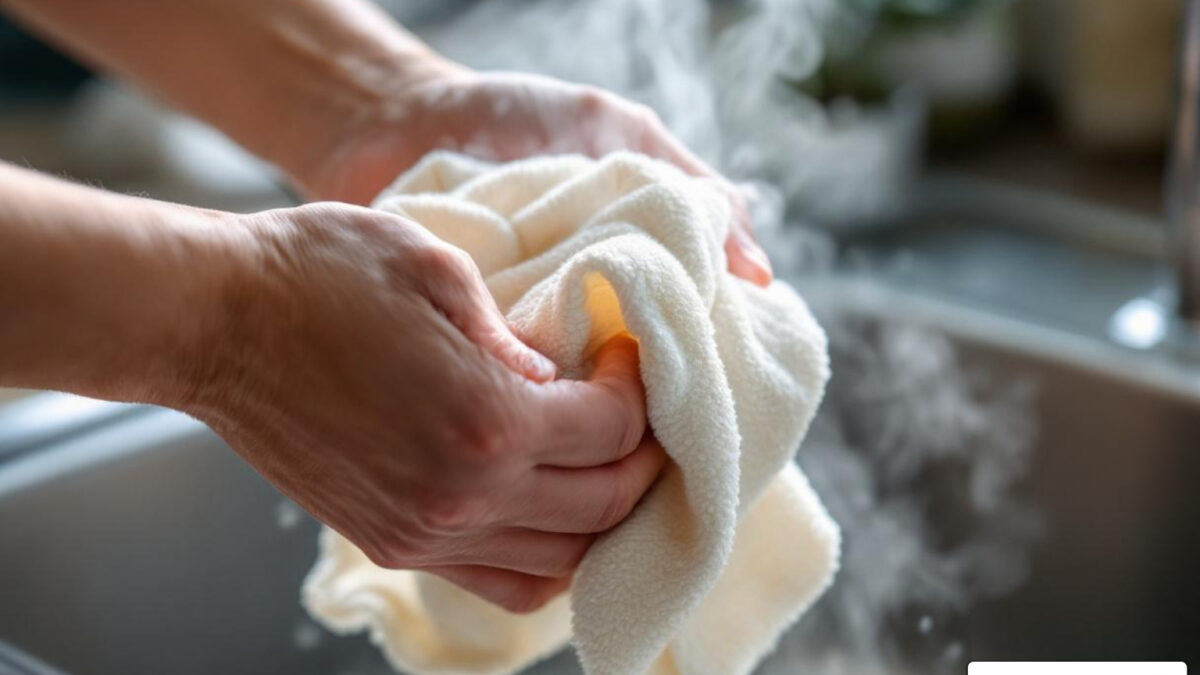
How to Use a Microwave Washcloth for a Warm Compress
If you plan to use a washcloth as a warm compress, prepare the skin and the cloth first. The area should be clean, and the cloth should be damp rather than dripping.
Follow these steps:
-
Wet the washcloth with clean water.
-
Wring it out well.
-
Place it on a microwave-safe plate.
-
Heat it for 10 to 15 seconds.
-
Unfold and turn the cloth.
-
Heat it again for 10 seconds if needed.
-
Test the temperature on your wrist.
-
Place it on the target area for a few minutes.
-
Remove it if the skin becomes red, painful, or uncomfortable.
A warm compress should not be used over an open wound unless a medical professional recommends it. Do not apply heat to skin that has poor sensation, such as skin affected by certain nerve conditions or diabetes, without medical advice.
For children, use extra caution. An adult should check the cloth and stay present during use. For older adults, the same rule applies because thin skin can burn more easily.

Microwave Washcloth vs. Other Heating Methods
Heating a washcloth in the microwave is fast, but it is not always the best method. Each option has benefits and limits.
Warm Water Method
Place the washcloth in warm water, then wring it out. This method gives you direct control over the temperature and avoids microwave hot spots.
It may be the best choice for babies, sensitive skin, or anyone who wants a gentle warm cloth. The main drawback is that the cloth may cool sooner.
Dryer Method
A clothes dryer can warm a dry washcloth evenly. Set the dryer to a short cycle and check the cloth before use.
Do not use this method for a cloth with plastic decorations or heat-sensitive materials. A dryer also uses more energy and takes longer than a microwave.
Electric Heating Pad
An electric heating pad can provide steady warmth over a larger area. It must be used according to its instructions, and you should not sleep on it unless the product is specifically designed for that use.
A heating pad is not a replacement for medical care. Check the skin often, especially during longer use.
Reusable Microwave Heat Pack
A commercial heat pack is designed for microwave heating and may hold warmth longer than a washcloth. Follow the product’s time limit exactly.
Do not assume a homemade rice sock or grain pack is risk-free. It can overheat, dry out, or develop hot spots. Commercial instructions are often more reliable, but every heat pack still needs supervision.
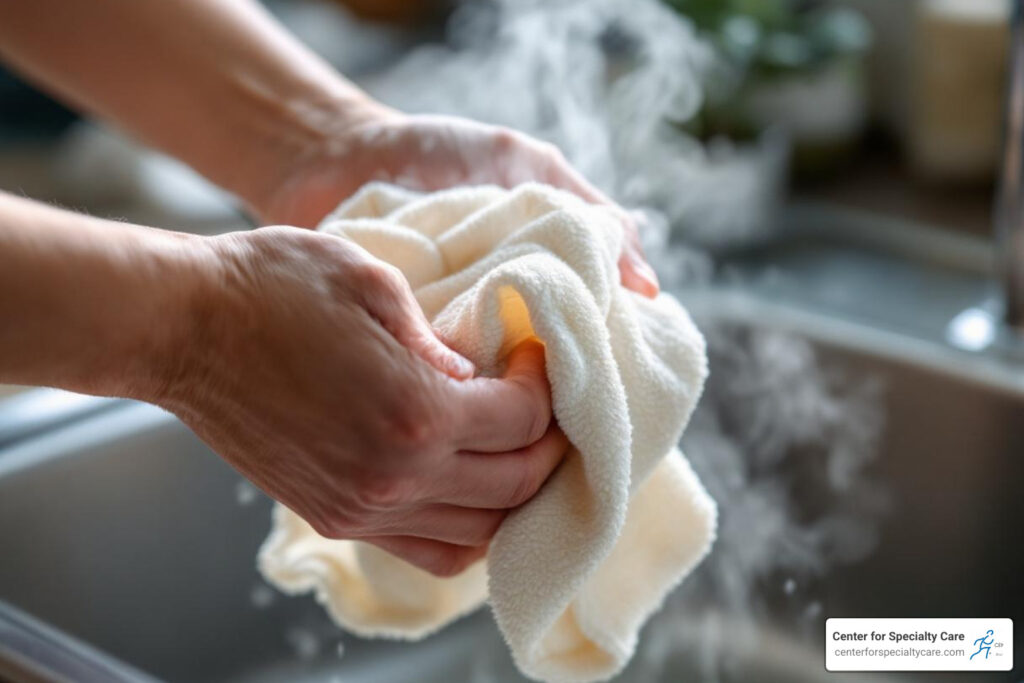
What to Do If the Washcloth Gets Too Hot
If the washcloth feels too hot, place it on a clean, dry surface and allow it to cool. Do not put it straight on your face, a child’s skin, or an area with reduced sensation.
If hot water spills onto the skin, cool the area under clean, cool running water for at least 20 minutes. Do not use ice, butter, oils, or thick creams on a fresh burn.
Seek medical care for a large burn, deep burn, blistering, severe pain, burns on the face or hands, or burns affecting a baby or older adult. When in doubt, contact a health professional.
A microwave should be unplugged only if it is safe to do so. If you see flames, keep the microwave door closed, turn it off, and call emergency services if the fire does not stop.
Practical Lessons From Real-World Use
The most useful lesson is to start colder than you think you need. A cloth that feels only mildly warm at first can become much hotter inside its folds.
Another lesson is to avoid thick rolls. A tightly rolled washcloth traps steam and makes it harder to check for hot spots. Unfolding it after each heating burst gives the heat a better path to spread.
Many people also forget that the plate can become hot. Use a dry towel or oven mitt when removing it, and keep your face away from the cloth when you first open it. A small release of steam can surprise you.
For a repeatable routine, use the same cloth, the same microwave setting, and the same starting time. This makes it easier to learn how your appliance behaves without guessing.
Frequently Asked Questions About Heating a Washcloth in the Microwave
Can you heat a washcloth in the microwave for a baby?
Yes, but use extra caution. Make the cloth damp, heat it in short bursts, and test it on your wrist before it touches the baby’s skin. Never leave a heated washcloth with a baby.
Can you microwave a wet washcloth?
Yes, a wet or damp washcloth can be microwaved when it contains plain water and has no metal parts. Wring it out first, use a microwave-safe dish, and heat it for short intervals.
How long do you microwave a washcloth?
Start with 10 to 15 seconds, then check and turn the cloth. Many washcloths need about 20 to 40 seconds total, but microwave wattage and cloth thickness can change the timing.
Can a washcloth catch fire in the microwave?
A dry washcloth can scorch or catch fire if it overheats. Keeping the cloth damp, avoiding long heating times, and staying near the microwave greatly lowers the risk.
Can you add essential oils to a microwave washcloth?
It is safer to use plain water. Essential oils may irritate skin, stain the cloth, or become very hot, so do not add them unless the product instructions clearly allow microwave heating.
Is a microwave washcloth good for a sore muscle?
A warm washcloth may provide short-term comfort for mild muscle tightness. Do not use heat on a serious injury, broken skin, or numb skin without medical advice.
Conclusion
You can heat a washcloth in the microwave safely when it is damp, free of metal, placed on a microwave-safe dish, and warmed in short bursts. Start with 10 to 15 seconds, check for hot spots, and test the temperature before using it on your skin.
Never microwave a dry cloth or leave it unattended. When you treat the washcloth as a small container of hot water rather than a simple piece of fabric, the process becomes much safer. Try these steps at home, follow your microwave’s manual, and share your own safe heating tips in the comments.

Appliance Review Expert
Lucas Ramirez is a trusted voice at HomeFixGrid.com, known for his clear, practical, and creatively written guides that simplify appliance care for everyday homeowners. With a strong focus on hands-on testing and real-world problem-solving, Lucas brings expert insight into appliance reviews and troubleshooting techniques. Her work empowers readers to confidently maintain, repair, and choose the right appliances for their homes.