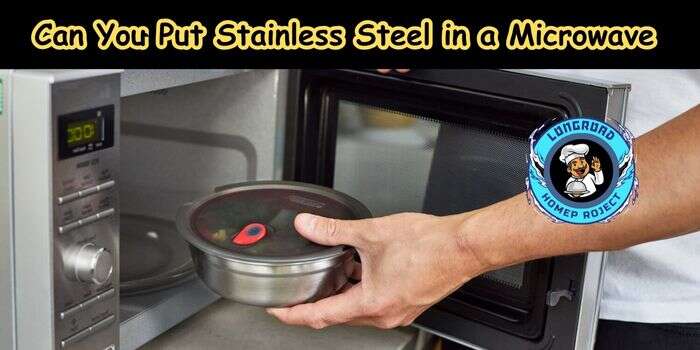
Can You Put Stainless Steel Microwave: Safe Guide
Usually, you should not put stainless steel cookware, bowls, cups, or utensils in a microwave unless the microwave and the item’s instructions clearly say it is safe. Stainless steel is metal. It can reflect microwave energy, cause sparks, damage the oven, or create a fire risk.
A stainless steel microwave oven is different. The metal inside the oven is part of the appliance’s design. Some models also allow a supplied metal rack or special browning pan. Use those parts only as the manufacturer directs.
Quick answer
- Stainless steel bowl or container: Usually no.
- Stainless steel fork, spoon, or knife: No.
- Stainless steel travel mug: Usually no.
- Manufacturer-supplied microwave rack: Yes, if the manual allows it.
- Stainless steel microwave exterior: Yes, it is normal.
- Microwave placed on a stainless steel countertop: Usually yes, if the oven is stable and its ventilation clear.
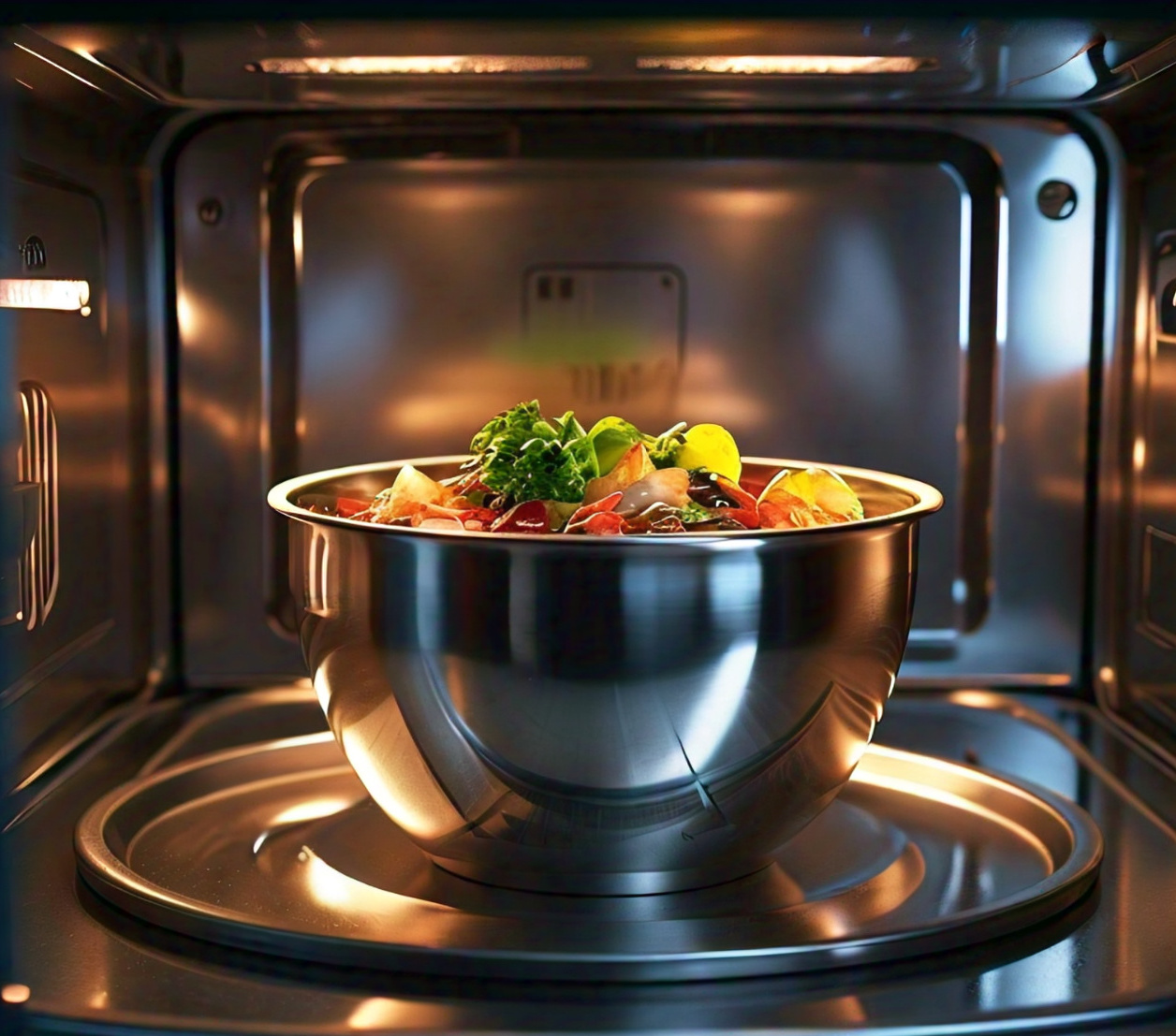
Why stainless steel can be unsafe in a microwave
Microwaves heat food by making water molecules move. Metal does not absorb microwave energy in the same way. Instead, it reflects much of that energy.
That reflection is not always dangerous by itself. The risk rises when the metal has sharp points, thin edges, dents, gaps, or contact with another metal surface. These areas can concentrate electrical charge and create an arc. An arc is the bright spark or flash you may see inside the oven.
A smooth, thick metal object may not spark every time. That does not make it safe. The result can change with the shape of the item, the amount of food nearby, the cooking time, and the microwave model.
What can happen
Putting stainless steel in a microwave may cause:
- Sparks or flashes
- A popping or buzzing sound
- Smoke or a burnt smell
- Damage to the microwave’s interior coating
- Damage to the magnetron or other parts
- A fire, especially if paper, grease, or food residue is present
- Uneven heating because the metal blocks microwave energy
The U.S. Food and Drug Administration advises following the microwave oven maker’s instructions and using containers labeled for microwave use. The U.S. Department of Agriculture also warns that metal cookware and foil can cause problems unless the oven instructions specifically permit them.

Can you microwave stainless steel containers?
Do not microwave a stainless steel container unless the container and microwave instructions specifically approve that use. In most homes, stainless steel pots, lunch boxes, mixing bowls, and food storage containers should be kept out of the microwave.
A stainless steel container can shield the food inside from microwave energy. This means the food may heat slowly or unevenly. If the container has a lid, trapped steam may also create pressure.
Some stainless steel products are sold as microwave-safe. Treat that claim carefully:
- Check the product label.
- Read the product manual or maker’s safety page.
- Check your microwave manual.
- Use the item only in the way described.
- Stop at once if you see sparks, smell burning, or hear unusual buzzing.
The words “food-safe,” “dishwasher-safe,” and “oven-safe” do not mean “microwave-safe.” They describe different tests and uses.
Common stainless steel items
| Item | Microwave guidance |
|---|---|
| Stainless steel bowl | Do not use unless both sets of instructions approve it |
| Stainless steel lunch box | Usually not microwave-safe |
| Stainless steel travel mug | Usually not microwave-safe |
| Stainless steel saucepan | Do not use |
| Stainless steel spoon or fork | Do not use |
| Stainless steel plate | Do not use unless the manufacturer clearly approves it |
| Metal rack supplied with the microwave | Use only as the manual allows |
| Stainless steel exterior on the microwave | Normal and safe as part of the appliance |

What about stainless steel utensils?
Do not put stainless steel forks, knives, spoons, or other sharp metal utensils in a microwave.
The pointed ends can concentrate electrical charge. This makes sparks more likely than with a smooth, rounded object. A utensil can also touch the oven wall, turntable, or another metal item.
Remove metal utensils before heating food. Use a microwave-safe glass, ceramic, or plastic utensil instead. Make sure the replacement is labeled for microwave use and has no metallic paint or trim.
Be especially careful with:
- Fork tines
- Knife tips
- Metal twist ties
- Staples
- Metal clips
- Metallic decorations
- Gold or silver bands on dishes
A dish may look like plain ceramic but still have a thin metallic edge. If it sparks, stop the oven and do not use that dish again in the microwave.

Can you put a stainless steel travel mug in a microwave?
Usually, no. Most stainless steel travel mugs contain a metal vacuum layer. Some also have metal parts in the lid, handle, or base.
A travel mug can block heating and may cause sparks. Its sealed design may also trap pressure if the lid remains on. Even if the mug has a plastic lid, the stainless steel body can still be unsafe.
To heat coffee or another drink, pour it into a microwave-safe glass or ceramic cup. Leave space at the top, and cover it loosely if needed to reduce splatter. Stir the drink before drinking because microwave heating can create hot spots.
Never microwave a sealed container. Open or loosen a lid only when the container’s instructions allow it.

What should you use instead?
Use a container marked microwave-safe. Good choices often include:
- Heat-resistant glass
- Plain ceramic
- Microwave-safe plastic
- Microwave-safe paper products for short use
Glass and ceramic are useful for most reheating jobs. They do not normally reflect microwave energy like metal does.
Plastic needs more care. Use only plastic labeled for microwave use. Do not use takeout containers, foam trays, thin plastic tubs, or single-use packaging unless the maker says they are microwave-safe. Heat can make some plastics soften, warp, or transfer unwanted substances into food.
Avoid dishes with metallic paint, foil decoration, or a metal rim. A small amount of metal can still spark.
A simple container check
Before heating, ask:
- Does the container say microwave-safe?
- Does it have metal, foil, or metallic decoration?
- Is it cracked, damaged, warped, or sealed?
- Can steam escape?
- Does the food have enough space to heat without spilling?
If the answer is unclear, move the food to a plain glass or ceramic dish.

What to do if stainless steel starts sparking
If you see sparks, stop the microwave immediately. Press the stop or cancel button. If the sparking continues, unplug the microwave only if you can do so safely without reaching near a flame or damaged cord.
Then:
- Keep the door closed for a moment if there is smoke or a small flame.
- Disconnect power when safe.
- Let the oven cool.
- Remove the stainless steel item.
- Check for scorch marks, melted parts, chipped coating, or a burnt smell.
- Do not use the microwave again if it has damage or continues to spark.
A microwave fire may go out when the oven stops. Do not open the door at once if flames are visible, because fresh air can feed the fire. If the fire does not stop, leave the area and call 911.
Do not test the microwave by running it empty. An empty oven can reflect energy back into its components and cause damage.

Can a microwave sit on a stainless steel counter?
Usually, yes. A microwave may sit on a stainless steel countertop if the surface is flat, stable, and strong enough to support the appliance. The counter itself does not usually create the same issue as placing a metal container inside the cooking cavity.
Still, follow the microwave manual. Keep the required space around vents and openings. Do not block the rear, side, top, or bottom vents. Keep the appliance away from a sink or another source of water, and make sure the power cord is not pinched.
A built-in or over-the-range microwave has different installation rules. Do not place a countertop model inside a cabinet or install it above a range unless the model is designed for that use.
The main risks in this situation are poor ventilation, an unstable surface, heat, moisture, and incorrect installation—not the stainless steel counter itself.
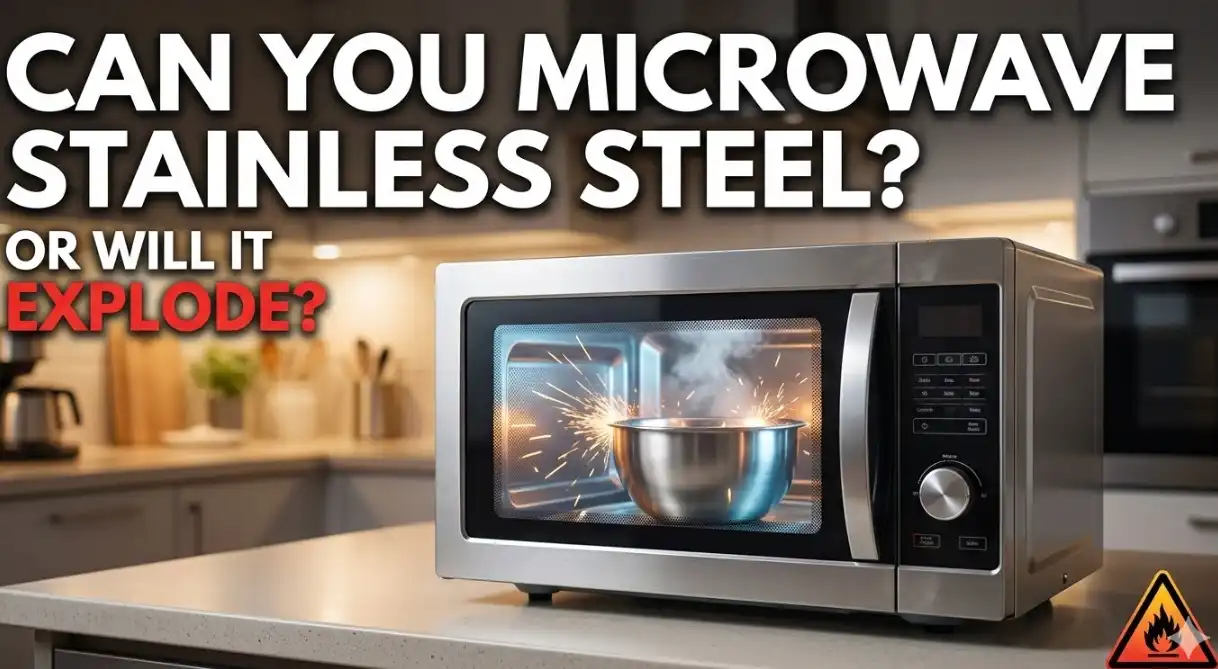
Stainless steel inside a microwave: common mistakes
Assuming “it did not spark” means it is safe
Sparking is a warning sign, not the only failure mode. Metal can block heating or damage parts without producing a visible flash every time.
Using a metal rack from another microwave
Racks are designed for a specific oven cavity. A rack from another model may sit too close to the walls or interfere with the turntable. Use only the rack supplied or approved for your microwave.
Leaving a metal lid on a container
A metal lid can spark or trap steam. Use a cover made for microwave cooking, and vent it according to its instructions.
Heating a sealed stainless steel container
Pressure can build inside a sealed container. This can cause the lid to pop off or the container to rupture when opened.
Believing all plastic is safe
Only use plastic marked for microwave use. Heat-resistant does not always mean microwave-safe.
Relying on a short heating time
A short cycle lowers exposure time but does not remove the risk. A sharp metal edge can spark within seconds.
How to check your microwave’s instructions
Look for the model number on the door frame, control panel, back, or side of the appliance. Then find the owner’s manual on the manufacturer’s official website.
Search the manual for terms such as:
- Metal
- Stainless steel
- Rack
- Browning dish
- Aluminum foil
- Containers
- Microwave-safe
- Arcing
The manual controls the answer for that specific model. Some microwave-convection ovens include metal accessories that are safe in certain cooking modes but not others. A combination oven may allow metal during convection cooking while restricting it during microwave cooking.
Do not generalize from one model to another.

Frequently asked questions
Can stainless steel go in a convection microwave?
It depends on the cooking mode and the manufacturer’s instructions. Some convection microwave ovens allow metal cookware during convection-only cooking, much like a regular oven. The same cookware may be unsafe when the microwave function is active.
Check the manual before using stainless steel.
Can I microwave food in a stainless steel bowl for 30 seconds?
It is still best not to do so unless the bowl is clearly approved for microwave use. A short time does not guarantee safety, and the bowl may prevent even heating.
Can stainless steel foil go in a microwave?
Do not use stainless steel foil. Standard aluminum foil is also allowed only in limited situations on some models, with specific placement and quantity rules. Follow the microwave manual rather than applying a general rule.
Can I put stainless steel in a microwave oven with a metal rack?
Only if the oven maker designed and approved that rack for that model and cooking mode. Do not add extra stainless steel cookware just because the oven already contains an approved rack.
Is a stainless steel microwave safe to use?
Yes. The stainless steel on the outside, and the metal cavity inside, are normal parts of a microwave oven. The appliance is designed to contain and direct microwave energy. Use it according to the manual and do not operate it if the door, seal, or interior is damaged.
Conclusion
You generally cannot put stainless steel cookware, utensils, or travel mugs in a microwave. Metal may spark, block heating, damage the oven, or start a fire. The safe choice is a microwave-safe glass, ceramic, or plastic container.
The main exception is a metal rack or accessory that the microwave manufacturer specifically supplies or approves. If you are unsure, remove the stainless steel item and transfer the food to a labeled microwave-safe dish.

Appliance Review Expert
Lucas Ramirez is a trusted voice at HomeFixGrid.com, known for his clear, practical, and creatively written guides that simplify appliance care for everyday homeowners. With a strong focus on hands-on testing and real-world problem-solving, Lucas brings expert insight into appliance reviews and troubleshooting techniques. Her work empowers readers to confidently maintain, repair, and choose the right appliances for their homes.