Can You Put Wood In A Microwave: Safe Guide And Risks
Usually, no—do not put wood in a microwave unless the maker clearly says it is microwave-safe. Wood can dry out, crack, warp, smoke, or catch fire. This is especially true for dry wood items, thin pieces, wooden utensils, and objects with glue, paint, stain, or metal parts.
A short heating time may not cause a problem, but a microwave can heat wood unevenly. You may not see danger until the wood becomes very hot or starts to burn. For food, use glass, ceramic, or a container labeled microwave-safe instead.
This guide explains when wood may be used, which wood items are risky, and what to do if wood starts to smoke in your microwave.
Is It Safe to Microwave Wood?
Wood is not a generally safe microwave material. The safest rule is simple: microwave wood only when the product instructions specifically allow it.
Microwaves heat water molecules in food and other materials. Wood contains some natural moisture, but the amount varies by type, age, thickness, and dryness. As wood heats, its moisture can turn to steam. That pressure may cause cracks, splits, warping, or sudden damage.
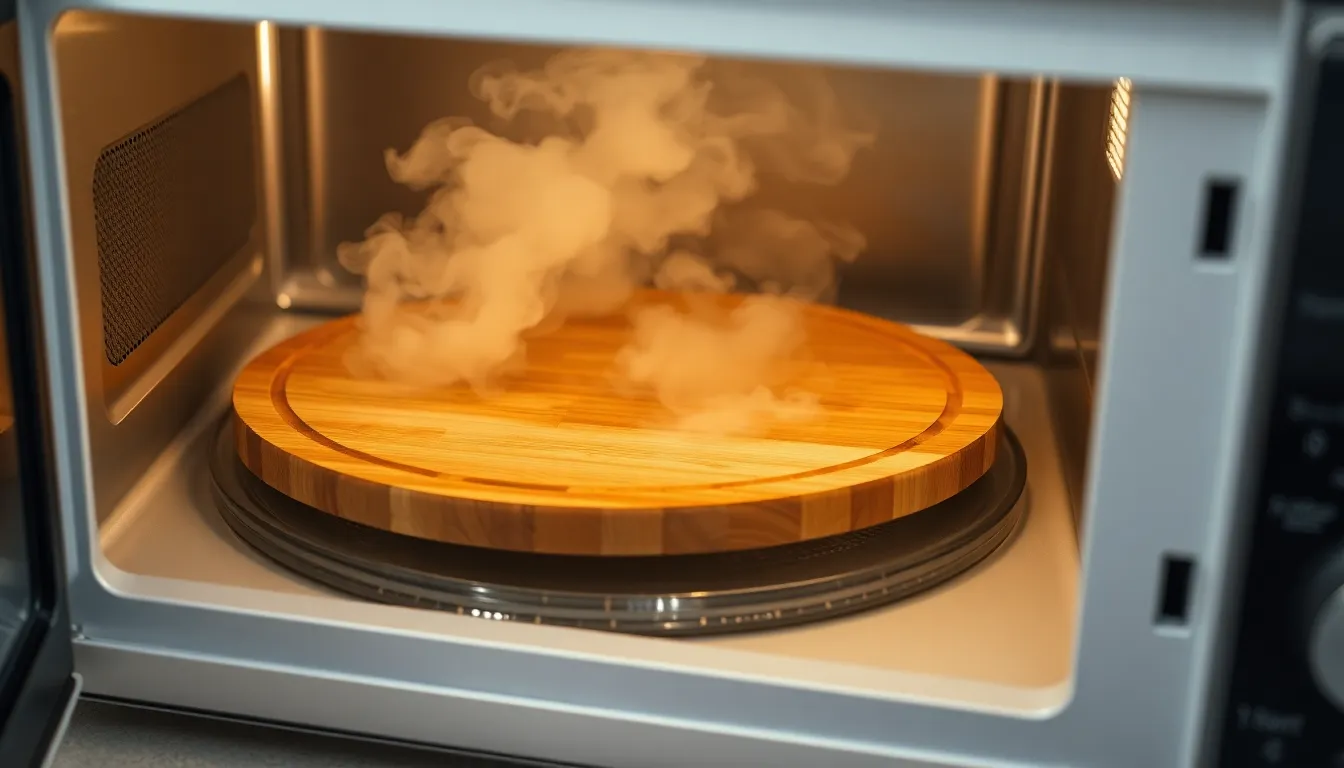
Dry wood has a higher fire risk. A dry wooden item may heat unevenly, especially at thin edges, sharp points, or damaged areas. If it becomes hot enough, it can scorch or ignite.
The U.S. Food and Drug Administration advises users to follow the microwave oven maker’s instructions and use cookware designed for microwave use. The USDA also recommends microwave-safe containers for heating food. These rules matter because a container that looks harmless may still become unsafe when heated.
What happens when wood goes in a microwave?
Wood may:
- Warm slowly or unevenly
- Dry out and shrink
- Crack or split
- Release steam or odors
- Smoke or char
- Damage the microwave if it catches fire
- Transfer finishes, glue, paint, or chemicals to food
The risk depends on the wood item, its moisture level, its finish, and the heating time. A thick, damp wooden bowl is not the same as a dry toothpick or a painted craft stick.

Which Wooden Items Should You Never Microwave?
Do not microwave wood items that are dry, finished, damaged, glued, painted, or made for decoration. These items may burn, release unwanted chemicals, or break apart.
Avoid microwaving:
- Wooden cutting boards
- Wooden spoons and spatulas
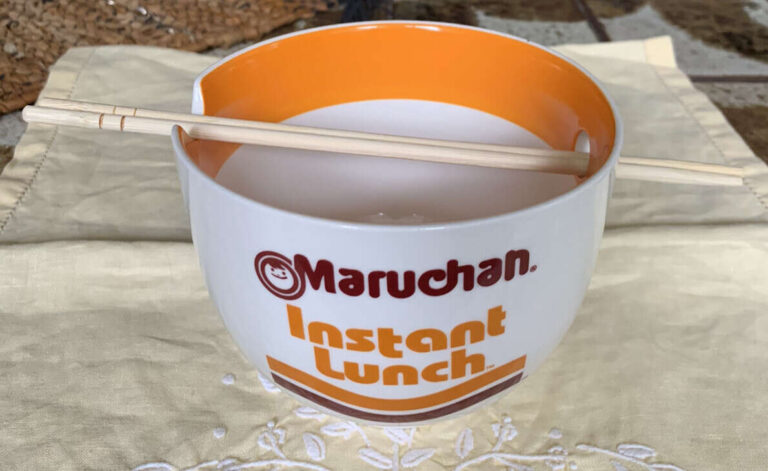
- Chopsticks
- Wooden plates or bowls without a microwave-safe label
- Craft sticks and popsicle sticks
- Wooden toys
- Painted or stained wood
- Varnished or lacquered wood
- Glued wood items
- Bamboo items without clear microwave instructions
- Wooden handles attached to another material
- Skewers or toothpicks for heating food unless the recipe and package instructions allow it
A wooden cutting board may look sturdy, but it can dry and split. Cracks can trap food and moisture. Repeated heating can also shorten the board’s life.
Paint, stain, varnish, and glue create another concern. These materials may soften, smoke, peel, or release odors when heated. A food-safe finish does not automatically mean microwave-safe.
What about bamboo?
Bamboo is a grass, but manufacturers often sell bamboo products like wood products. Many bamboo plates, cups, and fiber dishes are not made for microwave heating. Some contain resins or binders.
Use the label as the deciding factor. If the item does not say it is microwave-safe, move the food to glass or ceramic.

Can You Microwave a Wooden Bowl or Spoon?
A wooden bowl or spoon should stay out of the microwave unless the maker gives clear instructions that it can be used there.
Some wooden bowls are made from a single piece of wood. Others use several pieces joined with glue. Heat and moisture can affect these parts in different ways. The result may be warping, splitting, or joint failure.
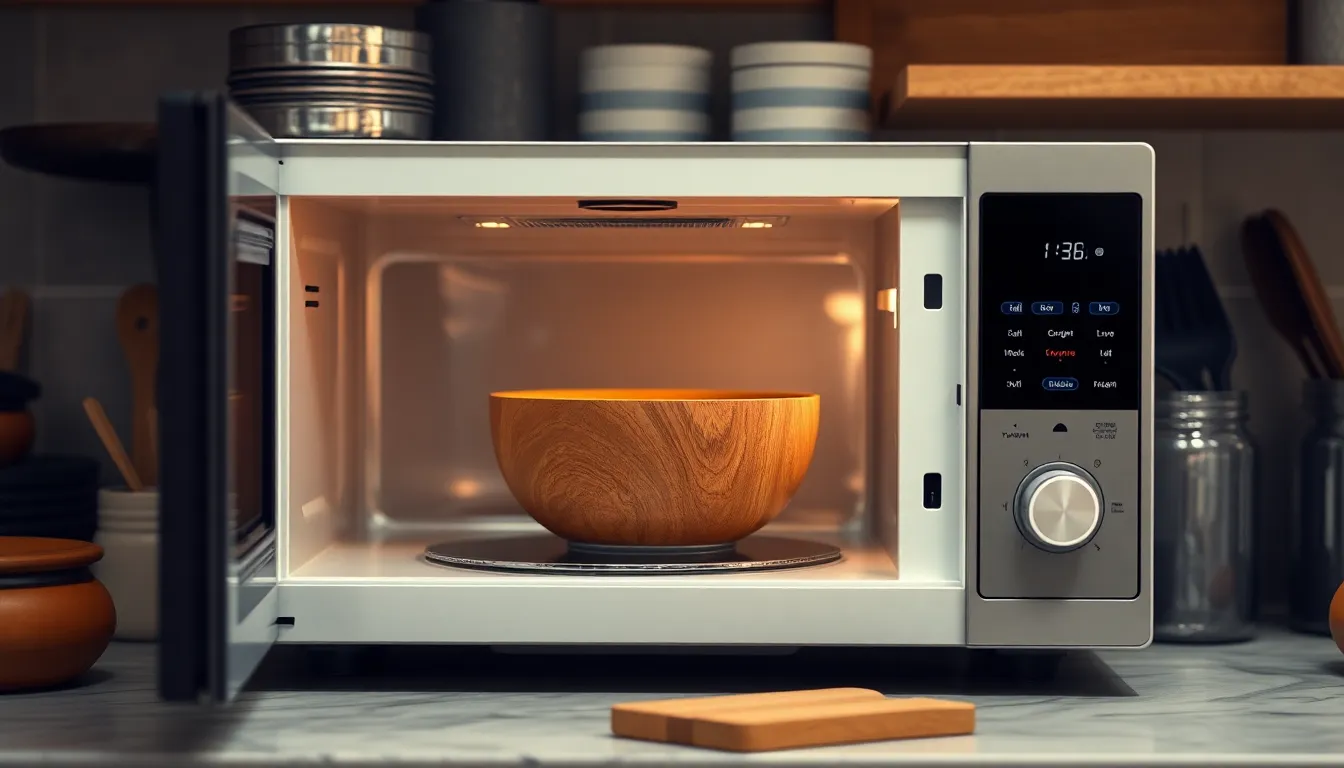
A wooden spoon is also a poor choice for stirring or heating food in a microwave. It may not catch fire during a short cycle, but that does not make it safe for repeated use. Dry wood can become very hot in areas that touch the food or sit near the microwave’s hot spots.
For soup, oatmeal, sauces, or leftovers, transfer the food to:
- Heat-resistant glass
- Plain ceramic marked microwave-safe
- Microwave-safe plastic
- A container sold for microwave cooking
Do not place a wooden spoon in a bowl to “save time” while heating. Remove it first unless the spoon’s instructions specifically permit microwave use.

Can You Microwave Wooden Skewers or Toothpicks?
Wooden skewers and toothpicks can sometimes be used in microwave recipes, but only under controlled conditions. A recipe may use a soaked wooden skewer to hold food in place or a toothpick to secure a rolled item.
This limited use is different from heating a dry wooden object by itself.
If a recipe calls for a wooden skewer:
- Check the recipe and the skewer package instructions.
- Soak the skewer if the directions require it.
- Keep the exposed wood away from the microwave walls.
- Do not use skewers with paint, dye, glue, or metal decorations.
- Use the shortest heating time needed.
- Watch the food while it cooks.
- Stop the microwave if you see smoke, sparks, or charring.
Soaking may reduce the chance of scorching, but it does not make every wooden skewer safe. Never assume that a soaked skewer can run through a long cooking cycle.
Toothpicks can also cause trouble if they become dry or touch a hot spot. Remove them before reheating food when possible.

Can You Microwave Wood With Food on It?
Putting food on a wooden plate or board does not remove the risk. The wood can still heat, dry, crack, or burn.
Moist food may add some protection because it produces steam. However, the exposed parts of the wood can remain dry. A board with a dry edge, thin corner, or crack may heat more quickly than the part under the food.
Do not use food moisture as a safety test. A wooden item may seem fine once, then fail after repeated heating.
Safer choices for common foods
| Food | Safer microwave container |
|---|---|
| Leftovers | Glass or microwave-safe plastic |
| Soup | Microwave-safe glass or ceramic |
| Bread | Microwave-safe plate with a paper towel |
| Oatmeal | Deep microwave-safe bowl |
| Frozen meals | The package tray, if labeled microwave-safe |
| Vegetables | Glass dish with a loose microwave-safe cover |
If the food is already on a wooden board, move it to a microwave-safe dish before heating.
How to Tell if a Wood Product Is Microwave-Safe
Look for clear wording on the bottom of the item, its packaging, or the manufacturer’s care page. Useful wording includes:
- “Microwave-safe”
- “Safe for microwave use”
- A microwave symbol, if the maker explains its meaning
- Specific heating limits or instructions
A label that says “food-safe” is not enough. Food-safe means the material is suitable for contact with food under stated conditions. It does not prove that the item can handle microwave heat.
Likewise, “dishwasher-safe” does not mean “microwave-safe.” Dishwashers use hot water and steam in a very different way from microwave heating.
Do not microwave the item if:
- There is no care information
- The item has cracks or splits
- The finish is peeling
- The product contains glue or metal
- The label says hand-wash only and gives no heating guidance
- The maker warns against heat
- The item is decorative rather than made for food use
When in doubt, use glass or ceramic. Replacing a wooden bowl is cheaper than repairing a microwave or dealing with a kitchen fire.

What Materials Are Safer Than Wood in a Microwave?
Glass and plain ceramic are often the simplest choices for microwave heating. They do not contain the natural oils, moisture differences, or combustible fibers found in wood.
A container should still be labeled microwave-safe or sold for microwave cooking. Some ceramic dishes contain metallic paint or trim. Gold, silver, and metal decorations can spark.
Microwave-safe plastic can work when its label permits it. Do not use foam containers, single-use takeout boxes, or plastic containers that are not marked for microwave use. Heat can cause some plastics to soften or deform.
Never use metal unless the microwave maker and the product instructions specifically allow it. Metal can reflect microwave energy and create sparks, though some microwave systems are designed for limited metal use.

What Should You Do if Wood Starts Smoking in the Microwave?
If wood smokes, chars, sparks, or catches fire, act at once:
- Stop the microwave.
- Keep the door closed if there is a flame inside. Opening the door can add oxygen.
- Unplug the microwave only if you can do so safely.
- Do not use water on a microwave or an electrical fire.
- If the fire continues after the microwave is off, leave the home and call 911 from outside.
- Do not use the microwave again until a qualified technician checks it if it has fire damage, melted parts, or a strong burned odor.
Do not reach into the microwave while the item is still hot. Use heat-resistant gloves only after the situation is under control. If the wood has only warmed and shows no damage, let it cool fully before removing it.
A smoky smell can remain after a small scorch. Clean the microwave according to the manufacturer’s instructions, and inspect the interior for burned coating, cracks, or damage.
Common Mistakes to Avoid
The most common mistake is treating “it worked once” as proof that wood is safe. Microwave safety depends on time, power, moisture, shape, and material. A short test does not guarantee safe repeated use.
Avoid these errors:
- Microwaving dry wood for several minutes
- Heating an empty wooden bowl
- Using painted or varnished wood with food
- Ignoring a cracked cutting board
- Leaving wood near the microwave wall
- Walking away while an untested wood item heats
- Assuming bamboo is automatically microwave-safe
- Using a food-safe item without checking heat instructions
- Reheating food on a wooden serving board
- Continuing to run the microwave after smoke appears
The safest alternative is easy: move the food to a labeled microwave-safe dish.

Quick Decision Guide
Use this guide before putting any wood item in a microwave:
| Question | If the answer is “yes” | Action |
|---|---|---|
| Does the maker say it is microwave-safe? | The product has tested instructions | Follow the exact time and power limits |
| Is it dry, cracked, painted, glued, or varnished? | It has added risk | Do not microwave it |
| Is it a cutting board, spoon, or serving item? | It may not be made for heat | Use glass or ceramic instead |
| Is it a soaked skewer named in a recipe? | Limited use may be intended | Follow the recipe and watch it closely |
| Is there no label or care guide? | Safety is not established | Do not microwave it |
| Does it smoke, spark, or smell burned? | The item is overheating | Stop the microwave and keep the door closed |
FAQs About Microwaving Wood
Can you microwave a wooden takeout container?
Usually, no. Many takeout containers are made from paper, pressed fiber, bamboo, wood, plastic, or mixed materials. Use the container only if its label clearly permits microwave heating. Remove food from an unlabeled container and place it in glass or ceramic.
Can you microwave a wooden cutting board?
It is best not to. A wooden cutting board can dry, warp, split, or scorch. It may also contain glue or a finish that is not intended for microwave heat.
Can you microwave a wooden plate?
Only if the manufacturer specifically labels it microwave-safe and gives care instructions. Otherwise, use a microwave-safe glass, ceramic, or plastic plate.
Can you microwave food wrapped in wood?
Do not heat food wrapped in dry wood unless the product is designed and labeled for microwave use. Wood wrappers, trays, and decorative shells may burn or release unwanted substances.
Can a microwave make wood catch fire?
Yes. A microwave can overheat dry wood, especially during long heating or when the wood has thin edges, cracks, or little moisture. Stop the oven immediately if you see smoke, sparks, or flames.
What is the safest microwave material?
For most home use, labeled microwave-safe glass or ceramic is a strong choice. Microwave-safe plastic may also work when used according to its instructions. Avoid guessing with unlabeled materials.
Final Answer: Should You Put Wood in a Microwave?
In most cases, no. Do not microwave wood unless the product maker clearly says it is safe and provides use limits. Dry, finished, glued, painted, cracked, or decorative wood should stay out of the microwave.
For everyday heating, transfer food to a microwave-safe glass, ceramic, or plastic container. If wood begins to smoke or burn, stop the microwave, keep the door closed, and call 911 if the fire does not stop.
Sources and further reading
- U.S. Food and Drug Administration: Microwave Oven Safety
- USDA Food Safety and Inspection Service: Cooking with Microwave Ovens
- U.S. Fire Administration: Cooking Safety

Appliance Review Expert
Lucas Ramirez is a trusted voice at HomeFixGrid.com, known for his clear, practical, and creatively written guides that simplify appliance care for everyday homeowners. With a strong focus on hands-on testing and real-world problem-solving, Lucas brings expert insight into appliance reviews and troubleshooting techniques. Her work empowers readers to confidently maintain, repair, and choose the right appliances for their homes.