Do I Need A Mattress Foundation: What To Know
You may need a mattress foundation, but not every mattress requires one. In the United States, the right support depends on your mattress type, bed frame, warranty rules, airflow needs, and desired bed height.
A platform bed with strong, closely spaced slats may already act as a foundation. A traditional innerspring mattress may need a box spring or rigid foundation. A foam or hybrid mattress usually needs a firm, flat base with enough support between the slats.
Before you buy anything, check the mattress maker’s support rules. Those rules can affect comfort, sagging, airflow, and warranty coverage.


What Is a Mattress Foundation?
A mattress foundation is the support layer between your mattress and bed frame. It spreads your weight, keeps the mattress level, and helps stop bending or sagging.
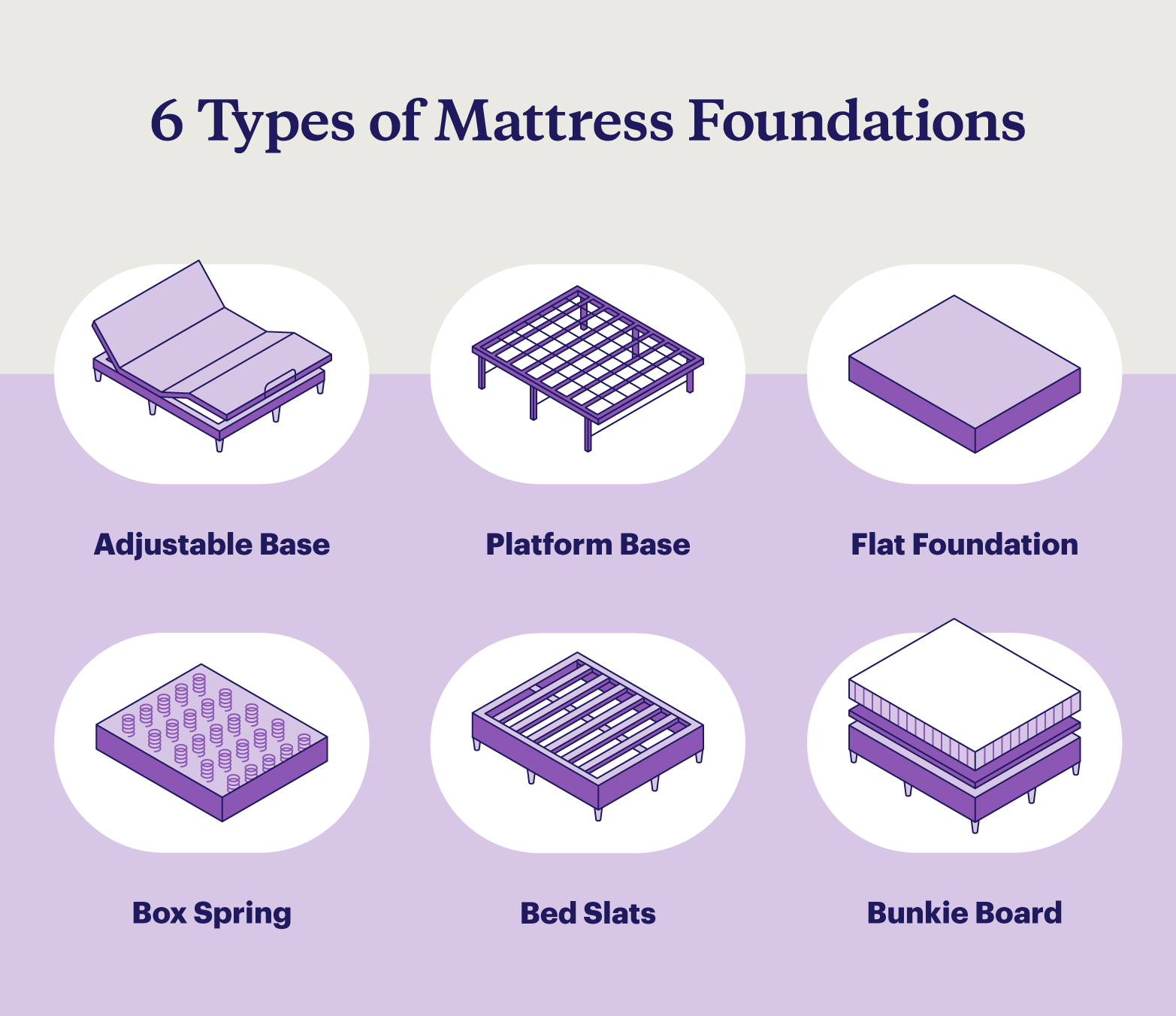
The word foundation can mean several different products:
- Platform bed: A bed frame with a solid deck or slats. It may not need a separate foundation.
- Foundation: A firm, often fabric-covered support base. It usually has a wood or metal frame inside.
- Box spring: A support unit with springs. It was made mainly for older innerspring mattresses.
- Adjustable base: A powered base that raises the head or feet. It must be compatible with the mattress.
- Bunkie board: A thin, firm panel that adds support between a mattress and a frame.
- Bed slats: Wood or metal bars that hold the mattress above the floor.
These terms are not always used in the same way by every U.S. retailer. Read the product specifications instead of relying only on the name.
A foundation is not the same as a bed frame. The frame holds the foundation and may include legs, rails, or a headboard. The foundation supports the mattress.

When Do You Need a Mattress Foundation?
You need a foundation when your bed frame does not provide enough firm, even support for your mattress.
A foundation is often needed in these cases:
- Your mattress sits on a basic metal bed frame.
- Your frame has wide gaps between slats.
- Your current support bends, shifts, or makes noise.
- Your mattress maker requires a specific base.
- You want more height under the mattress.
- You are replacing an old box spring that has worn out.
- Your bed frame has rails but no center support.
- You use a mattress that needs a rigid, non-flexing surface.
A mattress may look flat on a weak frame but still bend between the supports. That repeated bending can cause discomfort and may contribute to early wear.
When You May Not Need One
You may not need a separate foundation if you have:
- A platform bed with a solid top.
- A platform bed with closely spaced, sturdy slats.
- A compatible adjustable base.
- A complete bed system sold with its own support base.
- A strong foundation already built into the bed.
The exact spacing matters. Mattress companies set different limits. Some allow only a few inches between slats, while others allow more. The safe choice is to follow the written requirement for your mattress model.
Does Your Mattress Type Change the Answer?
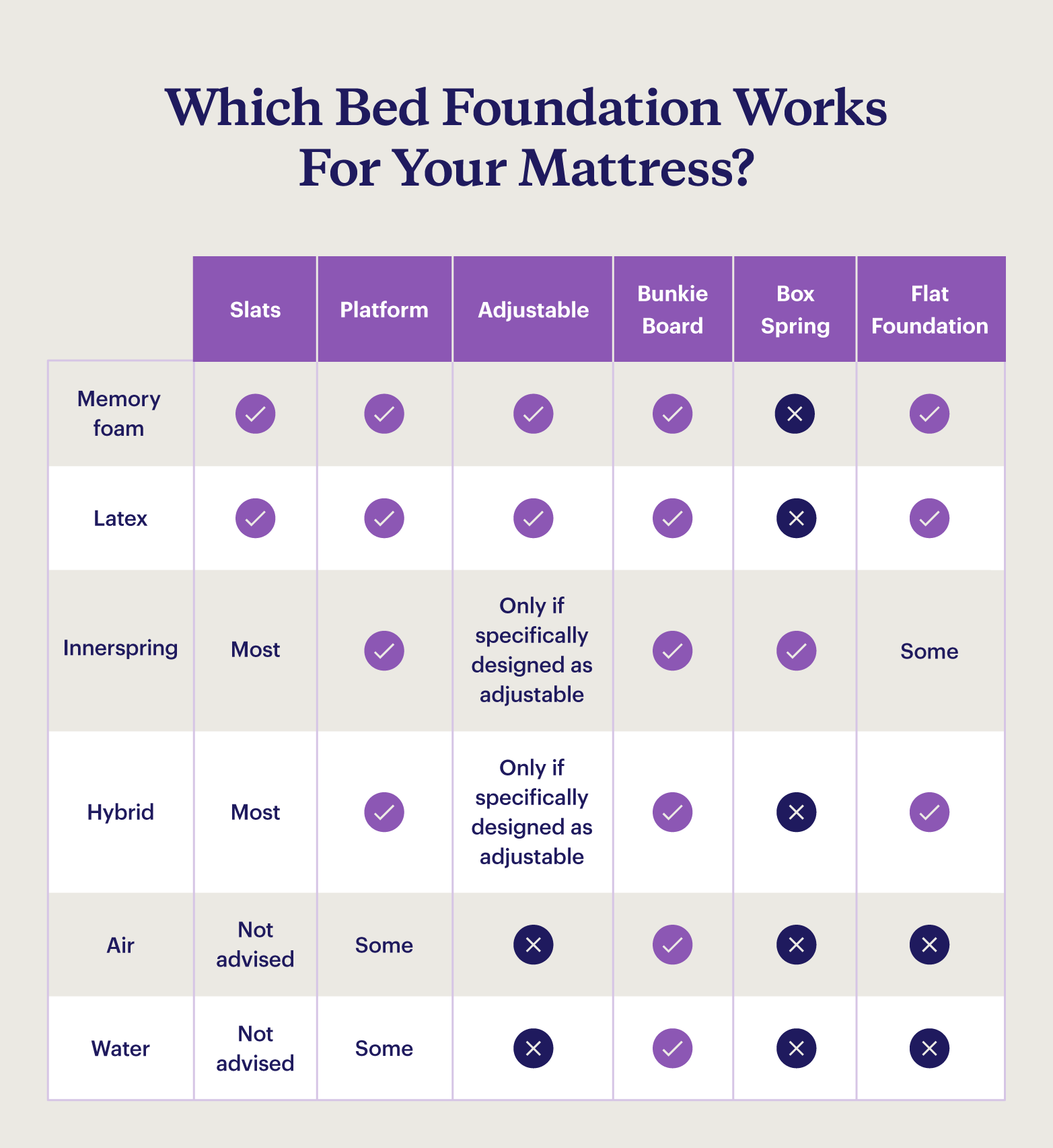
Yes. Mattress construction affects how much support the mattress needs.


| Mattress type | Separate foundation often needed? | Main support concern |
|---|---|---|
| Memory foam | Sometimes | A flat, firm base and proper slat spacing |
| Latex foam | Sometimes | Even support and good airflow |
| Hybrid | Sometimes | Support for the foam layers and coil unit |
| Traditional innerspring | Often, but not always | A stable base that matches the design |
| Pillow-top | Depends on the mattress | Preventing uneven flex and sagging |
| Air or specialty mattress | Follow maker rules | Correct support and system compatibility |
Memory Foam Mattresses
Memory foam usually needs a firm, even surface. A weak box spring or wide slat gaps can let the foam dip between supports.
A platform bed can work well if its slats meet the mattress maker’s spacing and strength limits. A solid base can also work, but it should allow the mattress to release moisture according to the maker’s instructions.
Latex Mattresses
Latex is heavy and flexible. It needs strong, even support. A weak frame may bend under the combined weight of the mattress and sleepers.
Latex can also retain heat or moisture in some room conditions. A base that allows airflow may be useful, especially in a humid bedroom.
Hybrid Mattresses
Hybrid mattresses combine foam with coils. They can be heavy and may need more support than a thin foam mattress.
A hybrid mattress does not automatically require a traditional box spring. It does require a base that can carry its weight without excessive flex.
Innerspring Mattresses
Older innerspring mattresses were often paired with box springs. Some modern innerspring mattresses can rest on a platform bed or rigid foundation.
Do not assume that any box spring will work. Some modern mattresses are designed for a firm base and may not perform well on a highly flexible spring unit.
Can You Put a Mattress Directly on the Floor?
You can place some mattresses on the floor, but it is usually not the best long-term setup.
The floor provides a firm surface. However, it can create other problems:
- Less airflow under the mattress.
- Greater exposure to dust and pests.
- More difficulty getting in and out of bed.
- A higher risk of moisture buildup in humid rooms.
- Possible warranty problems.
- Safety concerns for children, older adults, or people with limited mobility.
If you use a mattress on the floor temporarily, keep the room dry and clean. Lift the mattress regularly so both the floor and mattress can dry and air out.
Check the warranty before using this setup. Some mattress makers require a raised base or prohibit floor use.
How Do You Know if Your Bed Frame Provides Enough Support?
Use this simple check before buying a foundation.
1. Read the Mattress Requirements
Look for these details in the owner’s manual, warranty, or product page:


- Approved foundation types.
- Maximum slat spacing.
- Required center supports.
- Weight limits.
- Whether a box spring is allowed.
- Whether floor use is allowed.
- Requirements for adjustable bases.
The mattress maker’s rules take priority over general advice.
2. Measure the Slat Gaps
Measure the open space between each slat. Do not estimate by sight.
A gap that looks small may still exceed the mattress maker’s limit. Foam can press into gaps over time, especially under heavier areas such as the hips and shoulders.
3. Check for Center Support
A larger bed often needs center support. A queen or king frame may have center rails or legs, but not all frames are built the same way.
Look underneath the bed. The center rail should contact the floor through strong legs or feet. If the rail hangs above the floor, it may not carry much weight.
4. Look for Bending or Movement
Check whether:
- Slats bow downward.
- The frame rocks.
- Screws or bolts are loose.
- The mattress sinks between supports.
- The base squeaks when you move.
- The center rail shifts.
- The frame touches the wall during normal use.
These signs suggest that the current support needs repair or replacement.
5. Consider Total Weight
Add the weight of:
- The mattress.
- All sleepers.
- Bedding.
- Any pets that regularly sleep on the bed.
Compare the total with the frame and foundation weight limits. If no limit is listed, contact the maker instead of guessing.
How to Choose the Right Mattress Foundation
Choose a foundation based on support, fit, height, airflow, and compatibility.
1. Match the Foundation to the Mattress
A foam mattress usually needs a rigid base. An older innerspring mattress may work with a flexible box spring. A hybrid mattress may need a firm foundation that can handle its weight.
Do not use a spring box with a foam mattress unless the mattress manufacturer permits it.
2. Confirm the Size
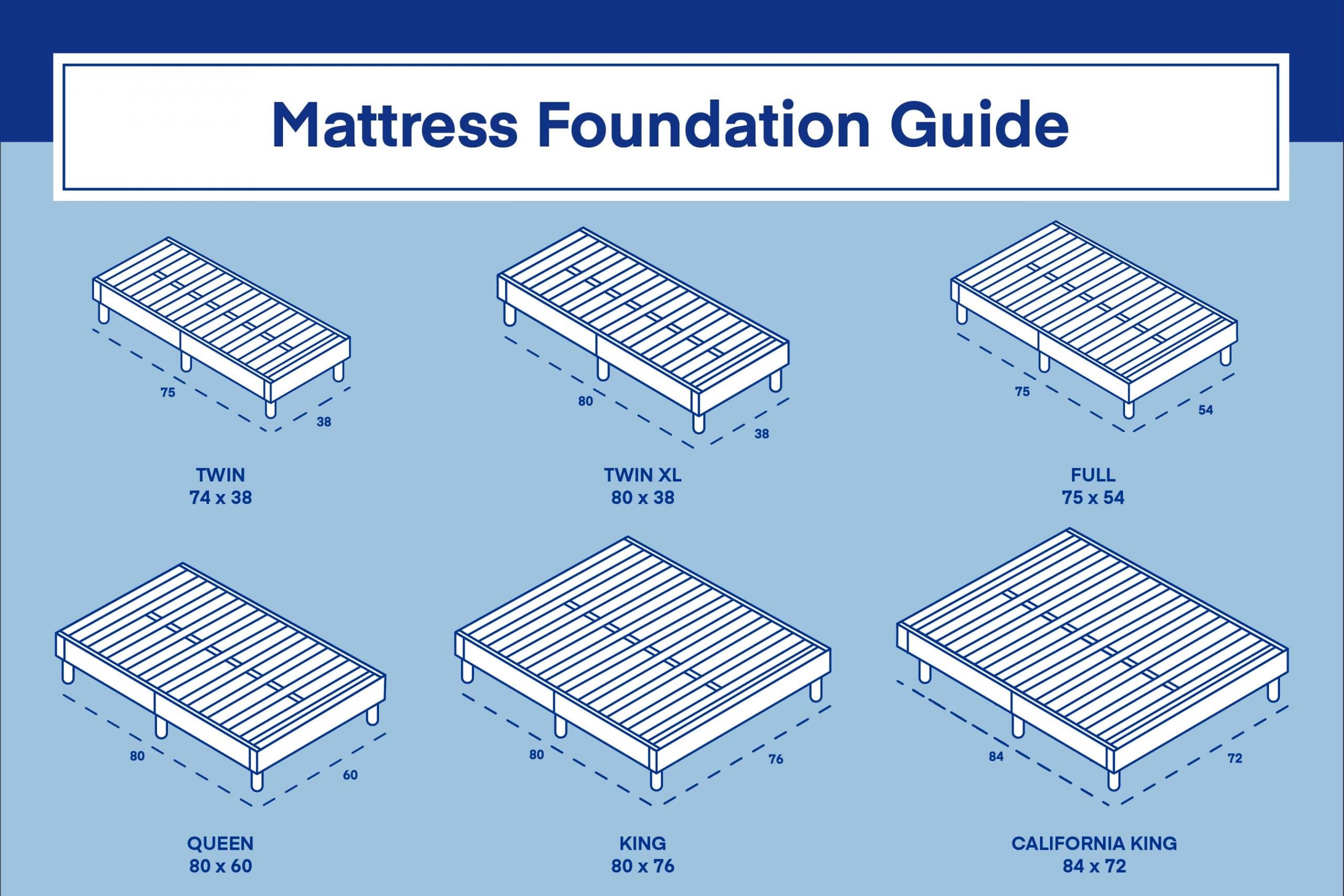
A twin foundation will not support a full-size mattress. The foundation should match the mattress dimensions.
Common U.S. mattress sizes include:


- Twin
- Twin XL
- Full
- Queen
- King
- California king
A split foundation can make delivery easier and may fit through narrow halls. Make sure the split pieces stay aligned and fit the bed frame.
3. Check the Height
A foundation adds height to the bed. A tall foundation may make it hard to sit on the edge or climb into bed.
Measure the combined height of:
- The floor to the top of the bed frame.
- The foundation.
- The mattress.
Leave enough room for nearby furniture, windows, lamps, and headboards.
4. Check Airflow
A solid base can support a mattress well, but limited airflow may allow moisture to collect underneath. This matters more in humid areas and rooms with poor ventilation.
Use the mattress maker’s instructions. Do not drill holes, remove fabric, or change the base unless the maker allows it.
5. Check the Warranty
A mattress warranty may require:
- A specific foundation.
- A certain number of supports.
- A maximum gap between slats.
- A center rail.
- A minimum number of legs.
- A weight limit.
- A clean, dry setup.
A warranty does not automatically prove that a foundation is good for every mattress. It only tells you what that manufacturer requires for coverage.
Foundation Options Compared
The best option depends on the bed frame and mattress, not on the word used in the product name.
| Support option | Best suited for | Advantages | Limits |
|---|---|---|---|
| Platform bed | Many foam, latex, and hybrid mattresses | No separate foundation may be needed | Slat spacing must be correct |
| Rigid foundation | Foam, latex, and many hybrids | Firm and stable | Adds height and cost |
| Box spring | Some traditional innerspring mattresses | Can add bounce and height | May flex too much for some foam beds |
| Bunkie board | Low beds or frames with wide slats | Thin and simple | Must be strong enough for the load |
| Adjustable base | Compatible foam and hybrid mattresses | Allows head or foot elevation | Not every mattress or frame is compatible |
| Floor | Temporary setups | Low cost and firm | Poor airflow and possible warranty issues |
The table gives general guidance, not a substitute for the mattress manual.

What Happens If You Use the Wrong Support?
The wrong support can affect comfort and mattress life.
Possible signs include:
- A dip that appears between slats.
- A ridge or hump in the mattress.
- Uneven body support.
- More back or hip discomfort after sleeping.
- New squeaks or frame movement.
- A mattress that slides.
- Premature wear along the edges.
- Moisture or odor under the mattress.
These signs can have other causes. A mattress may also feel wrong because of its firmness, age, room temperature, or body position.
Start with the base because it is often the easiest part to inspect. Remove the bedding, check the mattress for visible changes, and inspect the frame and slats. Then compare the setup with the mattress maker’s requirements.
Can a Foundation Fix a Sagging Mattress?
A foundation may help only when the support base is the cause of the problem.
A new foundation may improve a mattress that sags between wide slats. It will not usually repair foam or springs that have permanently compressed.
To check the cause:
- Inspect the mattress on a known flat surface.
- Check the frame for bent parts or broken slats.
- Measure the slat spacing.
- Look for a dip with no weight on the mattress.
- Check the mattress warranty and return terms.
If the mattress has a lasting body impression, contact the manufacturer before replacing the foundation. The maker may request photos, measurements, or an inspection.
Do not place plywood over a damaged frame as a permanent fix without checking airflow and warranty rules. Plywood can add weight, reduce ventilation, and hide a structural problem.

Common Mattress Foundation Mistakes
Buying a Foundation Before Checking the Warranty
A foundation may fit the bed but still fail the mattress maker’s support rules. Check the warranty first.
Assuming All Box Springs Are the Same
Some box springs flex. Some foundations are rigid. Some are made only for certain mattresses. Compare the internal design and stated compatibility.
Ignoring Slat Spacing
Wide gaps can let a mattress bend between supports. Measure the gaps rather than relying on the frame’s appearance.
Forgetting the Center Rail
A frame can look strong at the sides but lack support in the middle. This is a common issue with larger bed sizes.
Choosing a Very Tall Foundation
More height is not always better. A tall bed can be hard to use and may not align with a headboard or nightstand.
Using a Foundation That Is Too Weak
The support must carry the mattress and sleepers. A thin or damaged base can fail even if it has the correct dimensions.
Blocking All Airflow
A sealed setup can hold moisture under the mattress. Follow the maker’s ventilation instructions, especially in humid parts of the United States.
A Quick Decision Guide
Use these answers to make a practical choice:
- Do you have a platform bed with approved slats? You may not need a separate foundation.
- Do you have a solid, firm foundation that meets the mattress rules? You likely do not need another support layer.
- Do you have a basic metal frame with no platform? You may need a foundation.
- Do you have wide or weak slats? Repair the frame or add approved support.
- Does the mattress warranty require a foundation? Follow that requirement.
- Is the mattress sagging? Inspect the base before replacing the mattress.
- Are you using an adjustable base? Confirm that both the mattress and frame are compatible.
- Are you placing the mattress on the floor? Treat it as a temporary setup unless the manufacturer approves it.
Key Takeaways
- You do not always need a separate mattress foundation.
- A platform bed may already provide the needed support.
- The mattress maker’s warranty and setup rules should guide your choice.
- Foam, latex, and hybrid mattresses usually need a firm, even base.
- Traditional box springs may work for some innerspring mattresses but not every modern mattress.
- Check slat spacing, center support, weight limits, height, and airflow.
- A foundation can prevent support problems, but it usually cannot repair a permanently sagging mattress.
Frequently Asked Questions
Do I need a box spring with a mattress?
Not always. You may use a platform bed, rigid foundation, or approved adjustable base instead. A box spring is appropriate only when it matches the mattress design and the manufacturer’s requirements.
Can I use a mattress without a bed frame?
You can use some mattresses on the floor, but this may reduce airflow and affect warranty coverage. A proper frame or foundation is usually better for long-term use.
Is a platform bed better than a foundation?
Neither is automatically better. A platform bed can save space and eliminate the need for a separate foundation. A foundation may work better when you already have a traditional bed frame or want extra height.
How long does a mattress foundation last?
There is no single lifespan for every foundation. Its useful life depends on construction, weight, use, and moisture. Replace or repair it when it bends, breaks, shifts, or no longer meets the mattress support rules.
Can I put a foam mattress on a box spring?
Only if the box spring provides the firm, even support required by the foam mattress maker. A flexible box spring may allow the foam to dip or lose support.
What should I do if my mattress and foundation do not match?
Stop using the setup if it bends, shifts, or creates a safety risk. Check the mattress manual, measure the frame, and contact the mattress maker. Choose an approved base rather than guessing.
Final Answer
You need a mattress foundation only when your existing bed frame does not provide the support your mattress requires. If your platform bed has strong, properly spaced slats, a separate foundation may be unnecessary. If you have a basic frame, wide gaps, weak supports, or a warranty requirement, add an approved foundation.
Your next step is simple: find the mattress warranty or setup guide, measure the slat spacing, and inspect the center support. Those three checks will usually tell you whether you need a new foundation.

Appliance Review Expert
Lucas Ramirez is a trusted voice at HomeFixGrid.com, known for his clear, practical, and creatively written guides that simplify appliance care for everyday homeowners. With a strong focus on hands-on testing and real-world problem-solving, Lucas brings expert insight into appliance reviews and troubleshooting techniques. Her work empowers readers to confidently maintain, repair, and choose the right appliances for their homes.