
How To Build A Memory Foam Mattress Foundation: DIY Guide
A memory foam mattress needs a firm, level base with enough support across its full width and length. In most U.S. homes, you can build one with kiln-dried lumber, wood slats, structural screws, and a few basic tools.
The safest design is a low platform foundation. It has a rigid outer frame, closely spaced slats, and center support when the mattress size requires it. Before you cut wood, check your mattress warranty. Some brands set exact rules for slat width, slat spacing, center legs, and airflow.
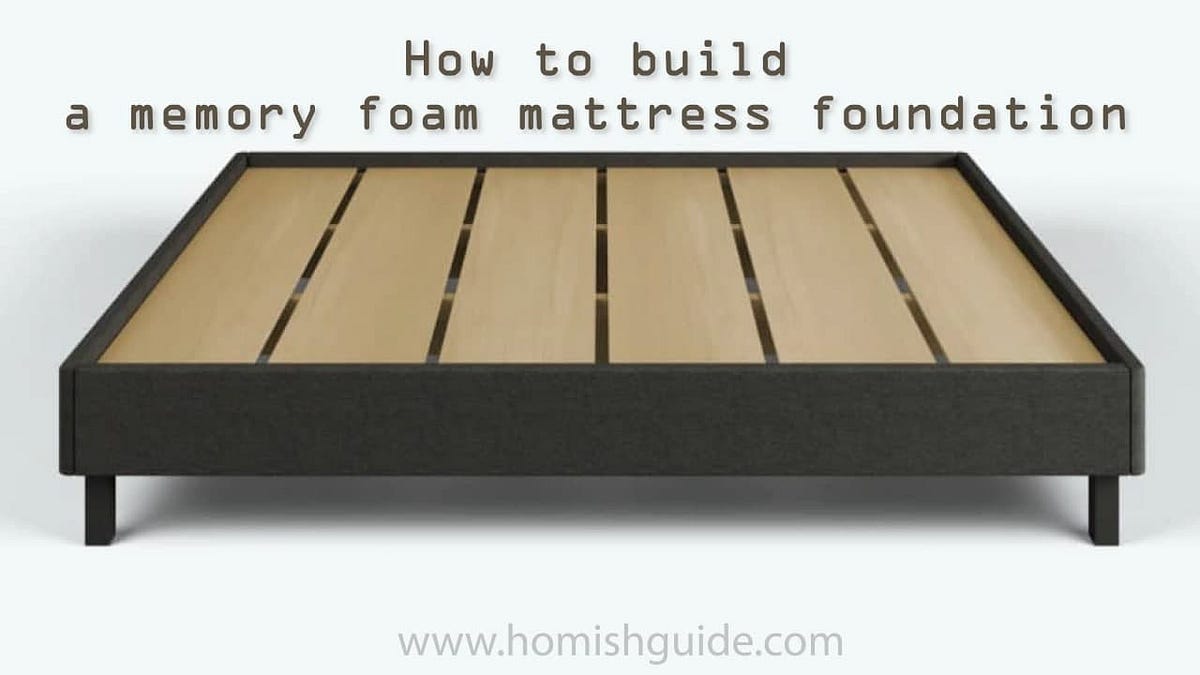
What a Memory Foam Mattress Foundation Does
A foundation supports the mattress, keeps its shape, and spreads body weight over the bed frame. Memory foam does not need the spring action found in a traditional box spring. In fact, a soft or flexible box spring can let the foam sag.


A good foundation should provide:
- A flat, level surface
- Firm support from edge to edge
- Slats close enough to prevent foam from dipping between them
- Strong center support for wider mattresses
- Stable contact with the floor or bed frame
- Some airflow under the mattress
A foundation is not the same as a bed frame. A bed frame may hold the foundation above the floor. The foundation is the part that directly supports the mattress.
Foundation versus box spring
A true box spring usually contains springs or a flexible grid. A platform foundation uses a solid frame and slats. Most memory foam mattresses work best on the second type.
Do not place a memory foam mattress on an old box spring unless the mattress maker says it is suitable. The surface may flex too much, and the mattress may not receive even support.
The key spacing rule
Use the mattress maker’s spacing limit first. If the instructions do not give a number, a gap of about 2 to 3 inches is a cautious design target for many foam mattresses. Do not assume that every memory foam mattress has the same rule.
Some mattresses also require slats that are at least 2.5 or 3 inches wide. Thin slats may meet the spacing rule but still offer too little support.
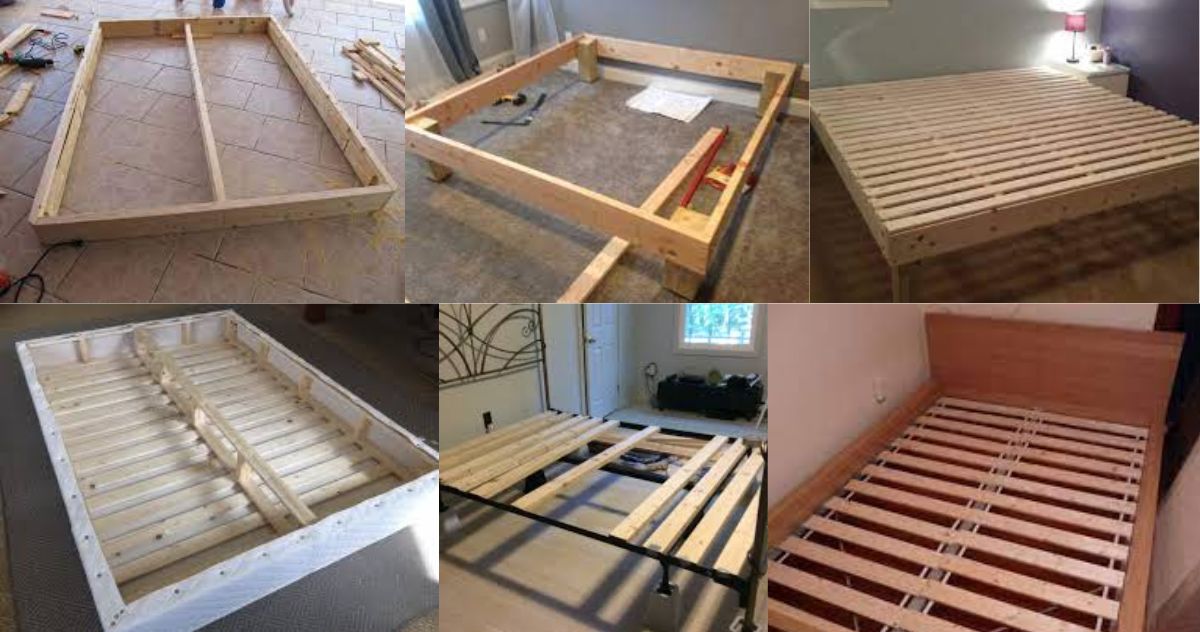
Materials and Tools You Need
Build the foundation from straight, dry lumber. Kiln-dried construction lumber works well for a basic platform, but inspect each board for large cracks, severe twists, or soft spots.
Basic materials
For a queen-size foundation, you will usually need:
- Two long 2-by-4 boards for the side rails
- Two shorter 2-by-4 boards for the head and foot rails
- One 2-by-4 board for a center beam
- One-by-4 boards for the slats
- Wood screws rated for structural use
- Optional wood glue
- Optional rubber or felt pads
- Sandpaper
A “2-by-4” does not measure 2 by 4 inches after drying and milling. Its actual size is usually about 1.5 by 3.5 inches. A “1-by-4” is often about 0.75 by 3.5 inches.
Basic tools
You will need:


- Tape measure
- Pencil
- Carpenter’s square
- Circular saw or miter saw
- Drill and driver bits
- Level
- Clamps, if available
- Stud finder, if attaching the foundation to a wall
- Safety glasses and hearing protection
Wear eye protection when cutting or drilling. Support long boards before cutting them, and keep hands away from the saw blade.
Suggested lumber choices
Use untreated indoor lumber. Do not use pressure-treated wood inside a bedroom. It may contain preservatives that are intended for outdoor use.
Plywood can form a firm platform, but a full sheet may reduce airflow. It can also trap heat and moisture below the mattress. Use plywood only when the mattress maker allows it, and consider drilling ventilation holes according to a sound structural plan.

Measure the Mattress and Plan the Foundation
Measure the mattress itself, not just the label. U.S. mattress sizes have common dimensions, but small differences can occur between brands.
| U.S. mattress size | Common mattress size |
|---|---|
| Twin | 38 by 75 inches |
| Twin XL | 38 by 80 inches |
| Full | 54 by 75 inches |
| Queen | 60 by 80 inches |
| King | 76 by 80 inches |
| California king | 72 by 84 inches |
These are common nominal sizes. Your foundation should not be so large that the mattress slides around. It also should not be smaller than the mattress.
For a simple wood frame, make the outside dimensions close to the mattress dimensions. If the frame will sit inside a separate bed frame, measure the inside opening before cutting. A foundation that fits the mattress may not fit the bed frame.
Plan the slat layout
The slats run from one side rail to the other. Their ends rest on the side rails or on support cleats attached to the rails.
Use this basic calculation:
Number of gaps = usable length ÷ desired gap width
Then choose enough slats to keep each gap within the mattress maker’s limit.
For example, a queen foundation has an inside length close to 80 inches. If you use 3-inch gaps and 3.5-inch-wide slats, you may need about 13 to 15 slats, depending on the exact layout and support points. Measure the real boards and lay out the slats before fastening them.
Do not rely on an estimate alone. Place the slats on the frame, measure each gap, and keep the spacing even.
Plan center support
A center beam is strongly recommended for full, queen, king, and California king foundations. It reduces the span of the slats and helps stop the frame from sagging.
The center beam needs legs or posts that transfer its load to the floor. A beam that floats above the floor does not provide useful support.


For a queen-size foundation, place at least two or three support legs beneath the center beam. A king-size foundation may need two center beams, more legs, or a design specified by the mattress maker.

How to Build the Foundation Step by Step
The process below describes a basic slatted platform foundation. Adjust the plan for your mattress size and the instructions in your warranty.
1. Cut the frame boards
Cut the two side rails to the full outside length of the foundation.
Cut the head and foot rails so they fit between the side rails. If the side rails are 1.5 inches thick, subtract 3 inches from the desired outside width.
For a queen-size foundation with a 60-inch outside width:
- Side rails: 80 inches long
- Head and foot rails: about 57 inches long
- Slats: about 57 inches long, subject to your measured inside width
- Center beam: about 77 inches long, subject to the frame design
These are planning figures, not universal cut sizes. Dry-fit the pieces and measure before making the final cuts.
2. Build the outer rectangle
Place the side rails parallel to each other. Set the head and foot rails between them.
Check each corner with a carpenter’s square. Drive two structural screws through each side rail into the end of each cross rail. Predrill near board ends to reduce splitting.
Add wood glue only if you want a more permanent joint. Glue does not replace screws or other structural fasteners.
3. Check the frame for square
Measure from one corner to the opposite corner. Then measure the other diagonal.
If both diagonal measurements match, the frame is square. If they differ, push the frame until the measurements match before tightening all screws.
A square frame makes the slats easier to place and helps the mattress sit evenly.
4. Add the center beam
Install the center beam from the head rail to the foot rail. Its top should sit level with the top of the side rails.
Fasten it to the head and foot rails with structural screws. Use a center support bracket or another strong connection if the design calls for one.


Do not let the center beam sit lower than the side rails. Low support can leave the middle of the mattress unsupported.
5. Add center-beam legs
Place legs beneath the center beam. The legs should touch the floor firmly when the frame is level.
You can make legs from 2-by-4 lumber or use sturdy furniture legs rated for the expected load. Attach each leg so it cannot slide or twist.
Check the floor before you choose leg lengths. A slightly uneven floor may require adjustable feet or thin, solid shims. Do not use loose stacks of cardboard or soft material.
6. Install the slats
Lay the slats across the frame. Space them evenly, starting at one end.
Each slat should rest securely on both side rails and on the center beam when one is used. Keep the top surfaces flush so the mattress has a smooth plane.
Fasten each slat with screws through the slat into the rail. Use screws short enough that they do not rise above the slat or pass through the rail into a dangerous location.
If you use support cleats instead, attach the cleats level and secure them along both side rails before placing the slats.
7. Sand the wood
Sand sharp corners, splinters, and rough cut ends. Pay close attention to any edge that could touch the mattress cover.
Do not apply a strong-smelling finish unless it is labeled for indoor use and has fully cured. A bare, sanded foundation is often enough.
8. Level and inspect the foundation
Place the foundation where it will be used. Check it from side to side and from head to foot with a level.
Press down on several points. The frame should not rock, twist, or make loud cracking sounds. Tighten loose screws and correct uneven legs before placing the mattress on top.
How to Make Sure the Foundation Supports the Mattress
A successful foundation keeps the mattress flat and stable. It should not bow in the center or allow visible dips between slats.
Use this inspection checklist:
- The frame sits level.
- The corners remain square.
- The foundation does not rock.
- The slats do not slide or roll.
- The gaps meet the mattress maker’s limit.
- The center beam reaches the floor through solid legs.
- No screw head or splinter touches the mattress.
- The mattress rests fully on the foundation.
- The foundation does not move when someone sits near an edge.
Place the mattress on the foundation without bedding. Look across the surface from a low angle. The mattress should lie flat without sharp dips between slats.
If the mattress sags only in the middle, check the center beam and its legs first. If it sags between slats, reduce the gap size or add more slats. If the whole foundation moves, inspect the floor contact and corner joints.
Allow airflow
Memory foam can hold heat. Airflow below the mattress may help moisture escape, especially in a humid room.
Slats provide more ventilation than a solid, unvented sheet. However, airflow does not fix a damp room, a wet mattress, or a foundation placed directly on a cold floor where condensation forms.
Keep the foundation dry. If you notice mildew, a musty smell, or moisture beneath the mattress, remove the mattress and find the source before using it again.
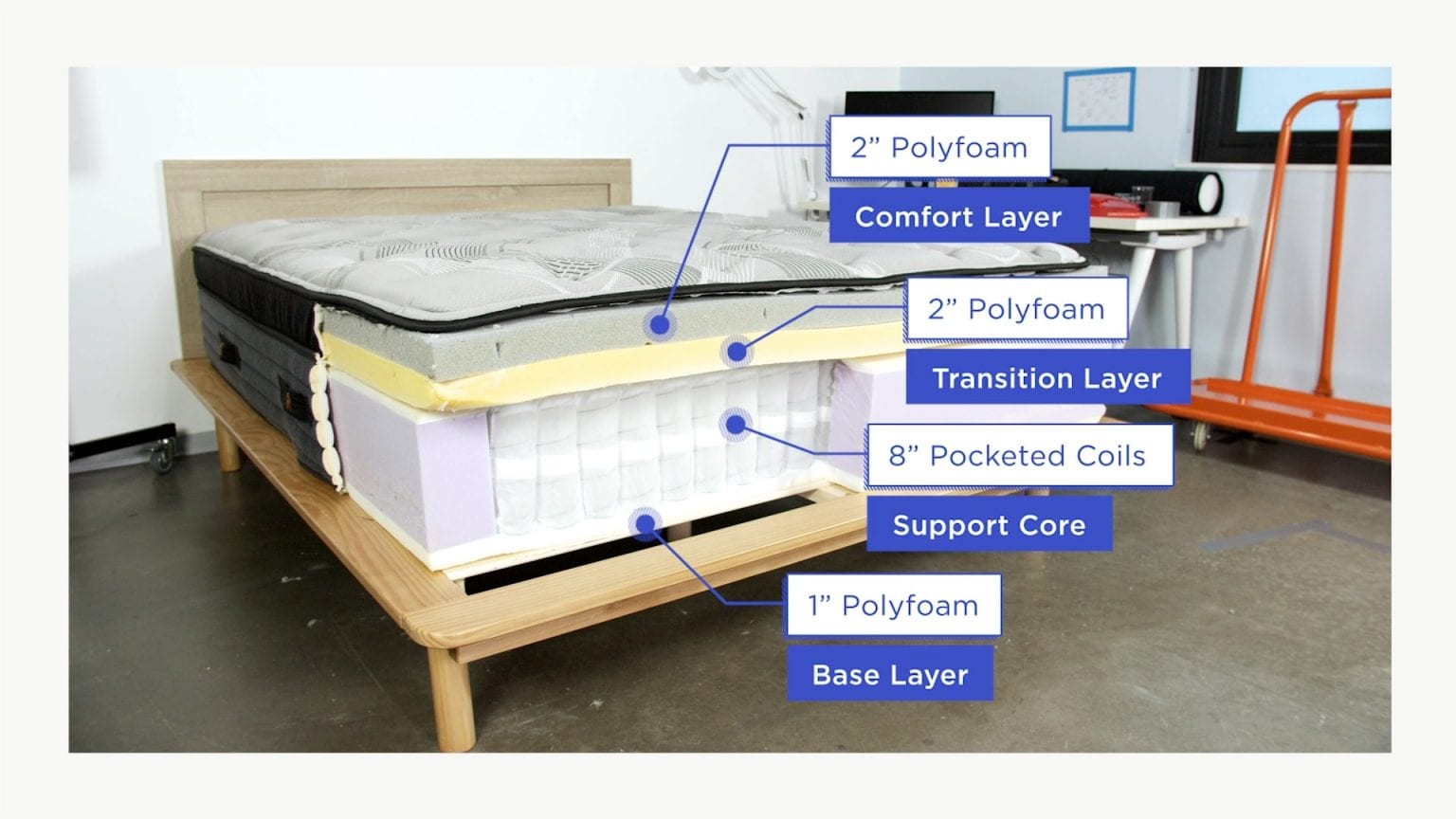
Common Foundation Mistakes to Avoid
The most common mistake is building a frame that looks strong but leaves wide gaps under the foam. The mattress may slowly bend into those gaps, which can affect comfort and support.
Avoid these problems:
Using wide slat gaps
A few large gaps are not the same as many small gaps. Check the exact distance between each slat. Follow the mattress warranty if it requires a smaller maximum gap.
Skipping center legs
A center beam without legs cannot carry its share of the load. Add solid legs that reach the floor.
Using a flexible box spring
A traditional box spring may not give a memory foam mattress the firm, even surface it needs. Use it only when the mattress manufacturer approves it.
Building a frame that is too small
The mattress should not overhang the foundation by more than the manufacturer allows. Unsupported edges can soften or deform over time.
Using weak fasteners
Drywall screws are brittle and are not a good choice for the main frame. Use screws made for structural wood connections.
Ignoring floor and bed-frame limits
The foundation, mattress, sleepers, bedding, and any bed frame all add weight. Check the load rating of a purchased bed frame. For a custom frame, ask a qualified carpenter or engineer if the design must carry unusual loads, such as very heavy equipment or frequent commercial use.
Blocking ventilation without approval
A solid sheet placed under the mattress may change how the mattress handles heat and moisture. Confirm that the design meets the mattress maker’s instructions.
When a Homemade Foundation Is Not the Best Choice
A DIY foundation may not be suitable when the mattress warranty demands a certified base or a specific foundation design. It may also be a poor choice if you do not have safe cutting tools, a level work area, or a way to carry the finished frame.
Buy a ready-made foundation or ask a qualified builder for help when:
- The mattress maker requires a particular base.
- The bed will support unusual weight.
- The foundation will be used in a loft or elevated structure.
- The frame must attach to a wall or another structural system.
- You are unsure how to transfer loads to the floor.
- The finished foundation rocks after repair attempts.
- Wood joints split or pull apart.
- The mattress warranty instructions conflict with your planned design.
Do not modify the mattress cover, remove fire barriers, or cut into the foam. In the United States, mattresses are subject to federal flammability rules, including 16 CFR Part 1633. A homemade foundation should support the mattress without changing the mattress itself.

Cost and Material Planning
The cost depends on local lumber prices, the mattress size, the type of fasteners, and whether you already own the tools.
A small twin platform uses less wood and may not need a center beam. A king foundation needs more slats, more center support, and a stronger layout.
| Foundation size | Main design concern |
|---|---|
| Twin | Keep the frame square and use close slat spacing |
| Twin XL | Match the longer 80-inch mattress length |
| Full | Consider a center beam if the span is wide |
| Queen | Use a center beam with floor support |
| King | Plan for strong center support and more legs |
| California king | Account for the 84-inch length and frame clearance |
Buy a few extra slats if your local boards have knots or warping. Replacing one bad board is easier than rebuilding the frame after the mattress is in use.

Frequently Asked Questions
Can I put a memory foam mattress directly on wood slats?
Yes, if the slats are firm, level, well supported, and spaced within the mattress maker’s limit. The slats should not slide, bow, or leave the mattress edge unsupported.
How far apart should slats be for a memory foam mattress?
Use the spacing stated by the mattress manufacturer. If no limit is available, keeping gaps around 2 to 3 inches is a cautious starting point for many foam mattresses. The exact rule may vary by brand and model.
Does a memory foam mattress need a box spring?
Usually, no. A memory foam mattress generally needs a firm, even platform rather than a flexible box spring. Confirm the requirement in the warranty or setup guide.
Can I use plywood instead of slats?
You may be able to use plywood if the mattress maker allows it. A solid sheet can reduce airflow, so use a design that does not trap moisture and confirm that the sheet is thick and supported enough for the span.
Should a queen-size foundation have a center support?
A center beam with floor-reaching legs is a sound choice for a queen-size platform. It supports the middle of the slats and helps reduce sagging. Follow the mattress maker’s exact foundation rules if they differ.
How high should a memory foam foundation be?
Choose a height that makes the bed easy to enter and leave while leaving room for air movement below. The mattress maker may also specify a minimum or maximum foundation height for use with a headboard, adjustable base, or bed frame.
Key Takeaways
- Build a rigid, level platform rather than a flexible box spring.
- Check the mattress warranty before choosing slat spacing.
- Use strong frame joints and structural screws.
- Add a center beam and floor-reaching legs for wider mattresses.
- Keep slats even, secure, and free of sharp edges.
- Inspect the foundation for movement, sagging, and moisture before regular use.
Conclusion
The best memory foam mattress foundation is firm, square, level, and matched to the mattress maker’s requirements. A simple wood platform with close slats and proper center support can work well in a U.S. bedroom when it is built with care.
Measure twice, dry-fit the frame, test every joint, and place the mattress on the foundation only after the platform feels solid. If the warranty gives different instructions, follow those instructions instead of using a general rule.

Appliance Review Expert
Lucas Ramirez is a trusted voice at HomeFixGrid.com, known for his clear, practical, and creatively written guides that simplify appliance care for everyday homeowners. With a strong focus on hands-on testing and real-world problem-solving, Lucas brings expert insight into appliance reviews and troubleshooting techniques. Her work empowers readers to confidently maintain, repair, and choose the right appliances for their homes.

