
Do People Not Use Box Springs Anymore: What To Know
Most people do not use box springs anymore because modern bed frames and mattresses often provide built-in support.
So, do people not use box springs anymore? In many homes, that is true—but box springs have not vanished. Their usefulness depends on your mattress type, bed frame, desired height, and need for extra support. This guide explains when a box spring still makes sense, when it does not, and how to choose the right foundation without wasting money.

Do people not use box springs anymore?
Many people now use platform beds, slatted frames, adjustable bases, and foundations instead of traditional box springs. These options support today’s mattresses well, especially memory foam, latex, and hybrid models.
However, saying that nobody uses box springs anymore would be inaccurate. A box spring can still work well with some innerspring mattresses. It may also help raise a low bed, improve ease of access, or fit an existing bedroom setup.
The main change is that mattresses have changed. Older innerspring mattresses often needed a flexible box spring beneath them. Modern mattresses often need a firm, stable surface instead.
The phrase “box spring” also causes confusion. Many products sold today as box springs are actually rigid foundations. They may look similar, but they do not flex in the same way as older coil-based box springs.
:max_bytes(150000):strip_icc()/box-spring-vs-foundation-5216460-color-dbcb9f6fa5af484b9cc26f39fc61f54b.PNG)
What is a box spring?
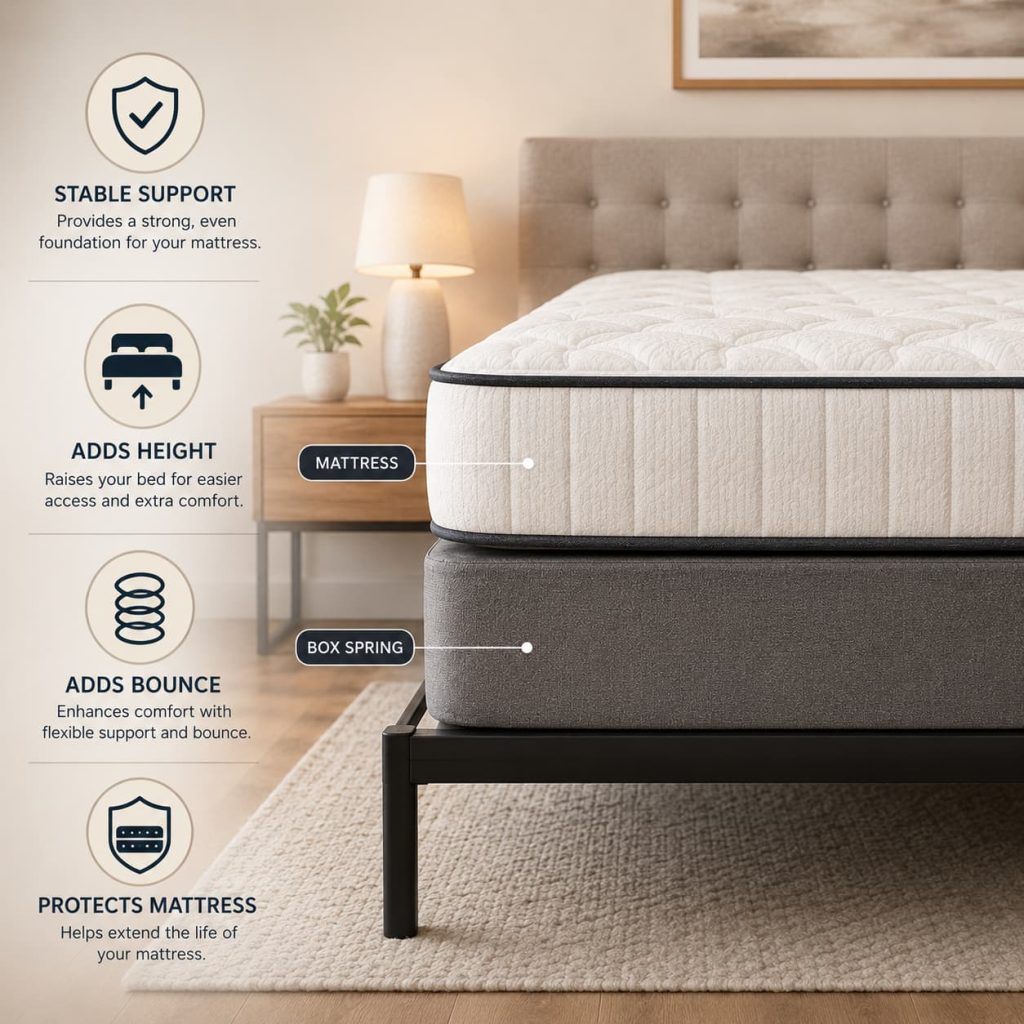
A traditional box spring is a wooden or metal frame covered in fabric. Inside, it usually contains springs or flexible supports. It sits between the mattress and the bed frame.
Its main jobs are to:
• Support the mattress
• Absorb some movement
• Add height to the bed
• Help distribute weight
• Reduce stress on the mattress
Traditional box springs were designed mainly for innerspring mattresses. The springs inside the foundation worked with the coils inside the mattress. Together, they created a responsive and slightly flexible sleep surface.
A modern foundation is different. It normally has a solid frame or closely spaced slats. It offers firm support but little or no bounce.
This difference matters. A memory foam mattress usually needs a stable base. A flexible box spring may allow the foam to bend too much. That can affect comfort and may shorten the mattress’s useful life.
Why have box springs become less common?
There are several reasons people ask, “Do people not use box springs anymore?” The biggest reason is the rise of mattress types that need firm support.
Mattress materials have changed
Memory foam mattresses became popular because they contour to the body. Latex mattresses offer a springy but supportive feel. Hybrid mattresses combine foam with individually wrapped coils.
These designs usually perform best on a firm platform or foundation. They do not need the extra flex found in a traditional box spring.
Platform beds are popular
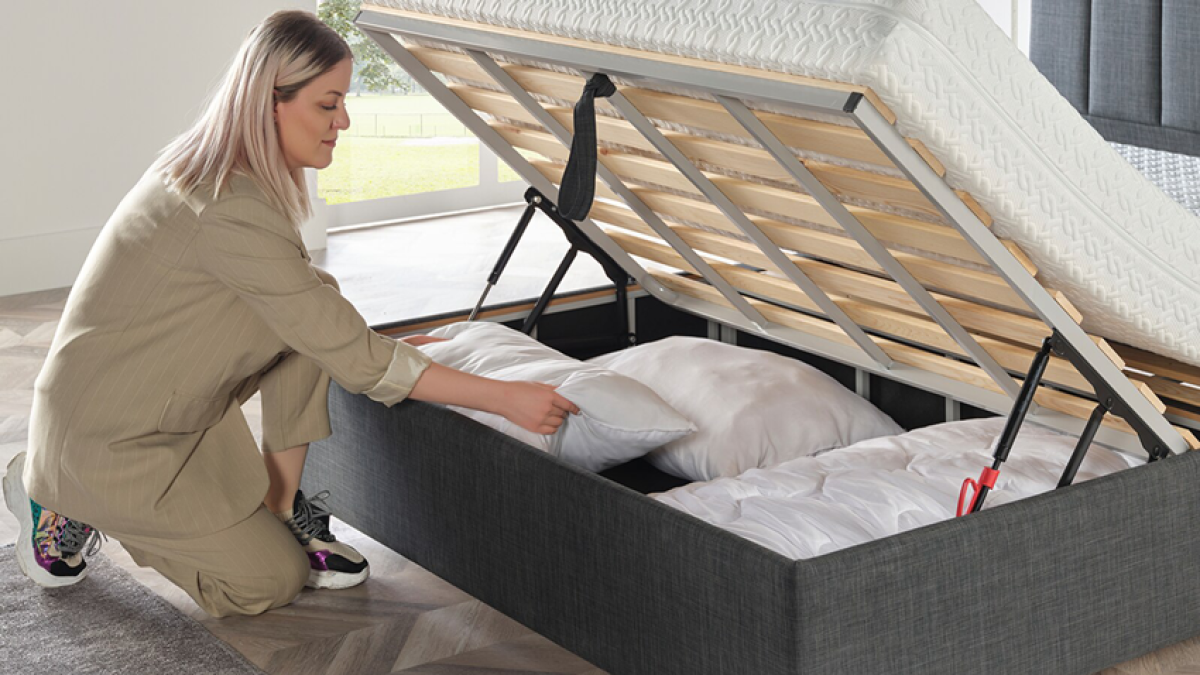
Platform beds support a mattress with a solid deck or wood slats. They often have a clean, modern look and may include drawers below.
Because the support is built into the frame, you do not need to buy a separate box spring. This can lower the total cost and make the bed easier to assemble.
Adjustable bases are widely available
Adjustable bases can raise the head or feet of the mattress. Some include massage settings, wireless controls, and sleep tracking features.
A standard box spring cannot bend with an adjustable base. If you want an adjustable bed, you normally need a compatible mattress and the adjustable base itself.
Bedroom design has changed
Many people now prefer low-profile furniture. A box spring can make a bed sit higher than expected, especially when paired with a thick mattress.
Low platform beds also create a simple, uncluttered look. This style has helped reduce demand for tall bed frames and traditional box springs.
Shipping and setup are easier
Many mattresses now arrive compressed in a box. Buyers often pair them with a simple platform frame or folding foundation.
This setup is easier to move through narrow doors and up stairs. It also avoids the awkward process of carrying a large, rigid box spring.

Do you need a box spring with a modern mattress?
Usually, you do not need a traditional box spring with a modern mattress. But you do need some form of approved support.
A mattress should never sit directly on the floor for long-term use. The floor can trap moisture beneath the mattress. It may also increase exposure to dust and make getting in and out of bed harder.
Most modern mattresses work with one of these options:
• Platform bed with a solid surface
• Slatted bed frame
• Rigid mattress foundation
• Adjustable base
• Bunkie board placed on a suitable frame
Always check the mattress warranty before choosing a base. Manufacturers often set rules for slat spacing, center support, and weight limits.
For example, a mattress may require slats no more than 3 or 4 inches apart. Wider gaps can allow the mattress to sag between the slats. The exact requirement varies by brand and mattress design.
A useful rule is simple: the base should support the mattress evenly from edge to edge. If the mattress bends between supports, the foundation may not be strong enough.

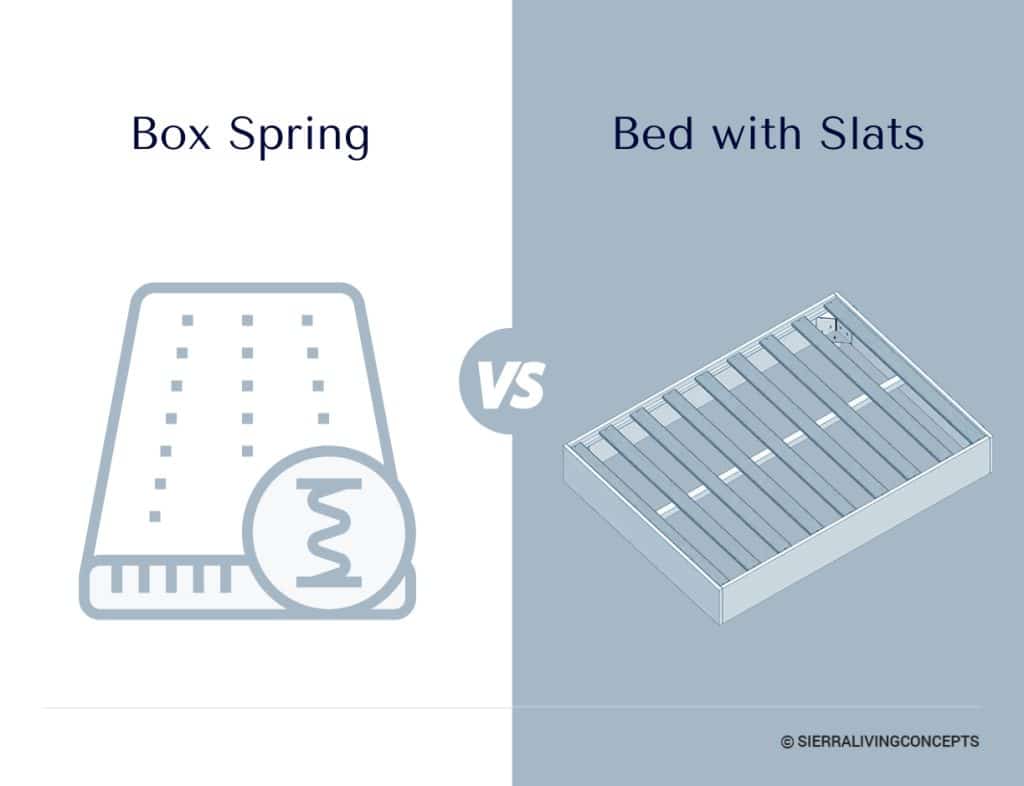
Box spring versus foundation: What is the difference?
The terms are often used as if they mean the same thing, but they describe different designs.
| Feature | Traditional box spring | Modern foundation |
|---|---|---|
| Internal support | Flexible springs or coils | Rigid wood or metal supports |
| Feel | Slightly flexible and bouncy | Firm and stable |
| Best match | Many innerspring mattresses | Foam, latex, hybrid, and some innerspring mattresses |
| Height | Often adds more height | Available in low and standard profiles |
| Compatibility | Depends on mattress design | Usually broad, but must meet warranty rules |
A traditional box spring may feel more lively beneath an innerspring mattress. A foundation usually gives a firmer and more stable feel.
When shopping, read the product details carefully. Some retailers use “box spring” as a general term for any mattress base. Look for words such as “rigid,” “flexible,” “coil,” “slatted,” or “platform.”
If the product contains no actual springs, it is technically closer to a foundation than a traditional box spring. That does not make it inferior. It simply means it provides support in a different way.
When should you still use a box spring?
A box spring can still be a good choice in several situations.
You have a compatible innerspring mattress
Many traditional innerspring mattresses can work with a box spring. The flexible base may complement the mattress and create a familiar feel.
Still, check the mattress label or warranty first. Some newer innerspring mattresses require a firm foundation rather than a flexible box spring.
You want extra bed height
A box spring raises the mattress. This can make it easier to stand up, especially for taller adults or people with limited mobility.
The tradeoff is that a high mattress can become difficult to climb into. Measure the total height of the mattress, foundation, and frame before buying.
You already own a good box spring
If your existing box spring is clean, level, and structurally sound, replacing it may not be necessary. Test it for broken springs, weak edges, warping, or loud squeaks.
A box spring that sags can damage comfort and may create uneven pressure beneath the mattress. Do not keep using one only because it came with an older bed.
You prefer a springier feel
A traditional box spring may add bounce. Some sleepers enjoy that responsive feel, especially with a classic innerspring mattress.
This is a comfort preference, not a universal rule. A foundation may feel better if you prefer a stable surface with less movement.
When should you avoid a box spring?
A traditional box spring may not be the best choice for every mattress or frame.
Avoid it when:
• The mattress warranty requires a rigid foundation
• You have a memory foam mattress that needs stable support
• You use an adjustable bed base
• The box spring is damaged or sagging
• The combined bed height would be unsafe or uncomfortable
• The bed frame cannot support the added weight
• The box spring does not fit the mattress size correctly
A flexible box spring can allow some foam mattresses to bow between support points. Over time, this may create an uneven sleeping surface.
A box spring can also cause alignment problems when paired with a platform bed. For example, placing a box spring on top of a platform frame may raise the mattress too high and reduce headboard clearance.
The safest approach is to match the foundation to the mattress instructions. Do not rely only on general advice from a sales listing.
What are the best alternatives to a box spring?
If you decide not to use a box spring, you have several reliable options.
Platform bed
A platform bed has a built-in support surface. It may use solid panels, wood slats, or metal slats.
It works well with many foam, latex, hybrid, and innerspring mattresses. Check the spacing between slats before buying. Thin slats placed too far apart may not provide enough support.
Mattress foundation
A rigid foundation looks similar to a box spring but usually has a solid frame. It may fold for easier delivery or include a fabric cover.
This is a good choice if you want the height of a box spring but need firmer support.
Bunkie board
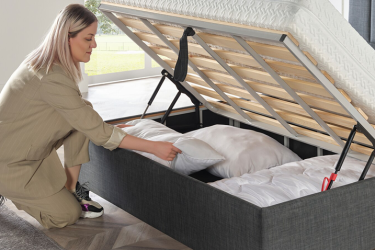
A bunkie board is a thin, firm platform placed under a mattress. It can reduce the gap between slats and add support without raising the mattress very much.
It is useful for bunk beds, low-profile frames, and platform beds with wide slat spacing. Make sure the board can support the mattress and sleeper weight.
Adjustable base
An adjustable base changes the angle of the mattress. It may help people who enjoy elevated legs or an inclined sleeping position.
Not every mattress works with an adjustable base. Look for a mattress labeled as adjustable-base compatible.
Floor setup
Some people place a mattress on the floor. This costs little, but it has drawbacks. Airflow is limited, moisture can collect underneath, and cleaning becomes harder.
If you use this setup temporarily, lift the mattress often to let the underside dry and air out. A proper foundation is usually better for long-term use.
How to choose the right mattress foundation
Choosing a foundation is easier when you follow a clear process.
1. Identify your mattress type
Find out whether your mattress is:
• Memory foam
• Latex
• Hybrid
• Traditional innerspring
• Pillow-top innerspring
The construction affects the support it needs. Foam mattresses usually prefer firm, even support. Some innerspring mattresses can use a flexible box spring.
2. Read the warranty requirements
Look for information about slat spacing, center legs, foundation height, and weight limits. Keep the instructions after purchase.
A mattress warranty may not cover sagging caused by an unsuitable base. This is one of the most common mistakes shoppers make.
3. Measure the bed height
Add the height of the frame, foundation, and mattress. Then consider your room layout and how easily you can get into bed.
A comfortable bed height often lets you sit on the edge with your feet flat on the floor. Personal mobility and leg length matter more than a fixed height rule.
4. Check weight capacity
Include the weight of both sleepers, the mattress, bedding, and any pets that may join you. Choose a frame with a safety margin above that total.
A strong frame should not bend, rock, or creak under normal movement.
5. Check center support
Queen, king, and California king beds often need center rails and center legs. Without them, the middle of the frame may sag.
The support must reach the floor. A center rail that floats above the floor may provide little real support.
6. Consider movement and noise
A rigid foundation may reduce bounce but can still squeak if joints loosen. Slatted frames can be quiet when properly assembled.
Tighten bolts after a few weeks of use. Small shifts often create noise that people mistakenly blame on the mattress.

Common mistakes people make with box springs
The biggest mistake is assuming every mattress works with every box spring. Mattress support is not universal.
Other common errors include:
• Using a damaged or bent foundation
• Ignoring the manufacturer’s slat-spacing rules
• Placing a mattress on a weak metal frame
• Forgetting the weight of two sleepers
• Buying a foundation that is too tall
• Mixing a split box spring with the wrong frame
• Using a traditional box spring under an adjustable mattress setup
• Assuming a mattress on the floor is always harmless
In my experience comparing bed setups, the most noticeable problems come from poor support, not from the lack of a box spring. A mattress can feel uncomfortable when the base flexes, shifts, or leaves unsupported gaps.
One practical lesson is to inspect the whole system. Check the mattress, foundation, frame, legs, slats, and floor. Replacing only the mattress may not solve the problem if the frame is weak.
How to tell if your box spring needs replacing
A box spring may need replacement if it shows clear signs of wear.
Look for:
• Sagging in the center
• Broken or exposed springs
• Bent metal parts
• Cracked wood
• Torn fabric with pests or heavy dust inside
• Loud squeaks during normal movement
• Uneven mattress support
• A tilted or unstable frame
Place a straight edge across the box spring if you suspect sagging. Check it from several angles. A small amount of normal flex differs from a deep, permanent dip.
Also inspect the mattress separately. People often blame the box spring when the mattress itself has worn out. A foundation should feel stable when the mattress is removed.
If the box spring is old but still flat and sturdy, it may remain usable with a compatible mattress. Age alone does not prove that it needs replacement.
Is a box spring better for your back?
A box spring is not automatically better for back health. Comfort depends on the mattress, foundation, body shape, sleeping position, and personal needs.
A stable foundation can help keep the mattress level. That may support a more neutral sleeping position. But a flexible box spring can also feel comfortable with the right innerspring mattress.
Research on sleep surfaces suggests that medium-firm support can improve comfort for many adults with back pain. However, “medium firm” does not feel the same to everyone, and a foundation cannot correct every back problem.
If you have ongoing pain, numbness, or weakness, speak with a qualified health professional. A new box spring is not a substitute for medical advice.
Do people not use box springs anymore? Key takeaways
The answer depends on what you mean by “box spring.”
People use fewer traditional, flexible box springs than they once did. Modern mattresses and bed frames often provide the needed support without one.
Still, do people not use box springs anymore? Yes, some people do, especially those with compatible innerspring mattresses, tall bed frames, or existing box springs in good condition.
Before you buy, focus on support, compatibility, height, and construction. A well-made foundation that matches the mattress is more important than the name printed on the product label.
Frequently Asked Questions About Do People Not Use Box Springs Anymore
Do people still use box springs with innerspring mattresses?
Yes. Many innerspring mattresses can work well with traditional box springs. Check the mattress warranty because some newer innerspring models require a firm foundation instead.
Can you use a memory foam mattress on a box spring?
You can use one only if the box spring provides firm, even support and the mattress maker allows it. A flexible or widely spaced box spring may cause the foam to sag.
Is a foundation the same as a box spring?
Not always. A traditional box spring has flexible springs, while a modern foundation is usually rigid and provides firmer support.
Can you put a mattress directly on the floor?
You can do so for a short time, but it is not ideal for most long-term setups. Poor airflow may lead to moisture, odors, dust, and mold risk beneath the mattress.
How long does a box spring last?
A quality box spring may last about 8 to 10 years, but its condition matters more than its age. Replace it sooner if it sags, breaks, becomes noisy, or no longer supports the mattress evenly.
Do platform beds need box springs?
Usually, they do not. Platform beds generally include built-in slats or a solid deck that supports the mattress directly.
Does a box spring make a bed more comfortable?
It can, especially with a compatible innerspring mattress. Comfort also depends on the mattress firmness, sleeper position, body weight, and condition of the frame.
Can a box spring go on any bed frame?
No. The frame must match the box spring’s size and provide enough support. Larger beds often need center rails and legs to prevent sagging.
Conclusion
Traditional box springs are less common, but they are not obsolete. Many sleepers now choose platform beds, rigid foundations, bunkie boards, or adjustable bases because modern mattresses often need firm and even support.
The right choice depends on your mattress, frame, body, comfort preference, and warranty requirements. Check the support rules, measure the total bed height, and inspect the foundation before making a purchase.
If you are replacing your bed setup, compare compatible foundations instead of assuming you need a box spring. Share your experience or explore trusted mattress and bed-frame guides to find a setup that supports better sleep.

Appliance Review Expert
Lucas Ramirez is a trusted voice at HomeFixGrid.com, known for his clear, practical, and creatively written guides that simplify appliance care for everyday homeowners. With a strong focus on hands-on testing and real-world problem-solving, Lucas brings expert insight into appliance reviews and troubleshooting techniques. Her work empowers readers to confidently maintain, repair, and choose the right appliances for their homes.