How To Cook Ahi Tuna In Air Fryer: Quick Juicy Recipe
Ahi tuna cooks fast in an air fryer. For thick steaks, heat the air fryer to 400°F and cook the tuna for about 5 to 8 minutes, turning once. The exact time depends on the steak’s thickness and your target doneness.
For food safety, the USDA recommends cooking fish to 145°F in the center. Many restaurants serve ahi tuna rare or medium-rare, but undercooked fish carries more risk. If you plan to serve tuna rare, use fish sold for raw preparations, keep it cold, and understand that “sushi-grade” is not a regulated safety term in the United States.
What You Need to Cook Ahi Tuna in an Air Fryer
You need ahi tuna steaks, a little oil, seasoning, and an instant-read thermometer. Fresh or properly thawed frozen tuna both work well.


Ingredients
- 2 ahi tuna steaks, about 1 inch thick
- 1 teaspoon olive oil or avocado oil
- ½ teaspoon kosher salt
- ¼ teaspoon black pepper
- ½ teaspoon garlic powder
- ½ teaspoon sesame seeds, optional
- Lemon wedges, for serving
You can also add soy sauce, sesame oil, ginger, or a small amount of honey. Pat the tuna dry before seasoning. Dry fish browns better and does not steam as much.
Equipment
- Air fryer
- Tongs
- Instant-read food thermometer
- Small bowl
- Paper towels
An instant-read thermometer gives a safer and more reliable result than cooking by time alone. Tuna steaks can vary in thickness, and air fryers do not all heat at the same rate.

How to Cook Ahi Tuna in an Air Fryer
The basic method is simple: dry the tuna, season it, preheat the air fryer, cook the steaks briefly, and check the center temperature.
1. Thaw and dry the tuna
If the tuna is frozen, thaw it in the refrigerator. Do not thaw fish on the kitchen counter.
Pat each steak dry with paper towels. Remove any loose skin or tough dark portions if needed. Leave the steak whole so it stays moist during cooking.
2. Season the steaks
Brush both sides with a thin layer of oil. Sprinkle the tuna with salt, pepper, and garlic powder.
For a simple sesame crust, press sesame seeds onto the outside of the steaks. For a stronger Asian-style flavor, mix the oil with a little soy sauce, ginger, or sesame oil before brushing it on.
Avoid adding too much wet marinade. Excess liquid can prevent browning and may drip into the air fryer basket.
3. Preheat the air fryer
Preheat the air fryer to 400°F for 3 to 5 minutes, if your model requires preheating.
A hot basket helps the tuna begin cooking at once. It also reduces the chance of pale, steamed fish. Lightly oil the basket if sticking is a concern.


4. Place the tuna in the basket
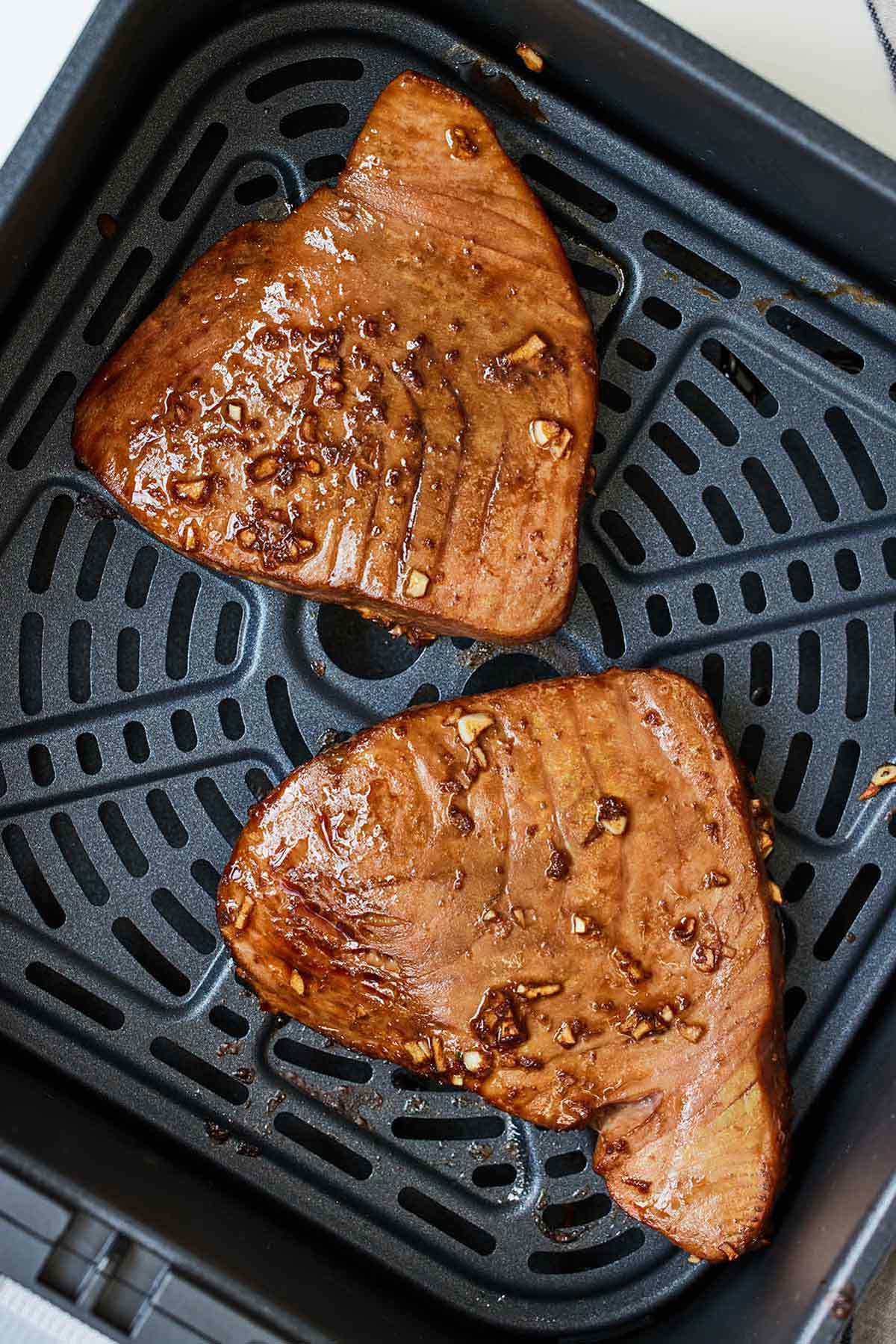
Put the steaks in one layer with space between them. Do not stack or overlap the fish.
Air must move around each steak. Crowding can lead to uneven cooking, especially in smaller basket-style air fryers.
5. Air fry the ahi tuna
Cook at 400°F, turning the steaks halfway through.
Use this table as a starting point:
| Tuna steak thickness | approximate total time at 400°F | Likely result |
|---|---|---|
| ½ inch | 3–5 minutes | Mostly cooked through |
| 1 inch | 5–8 minutes | Medium to well-done, depending on the air fryer |
| 1½ inches | 8–11 minutes | More evenly cooked center |
Start checking early. The outside may look done before the center reaches the temperature you want.
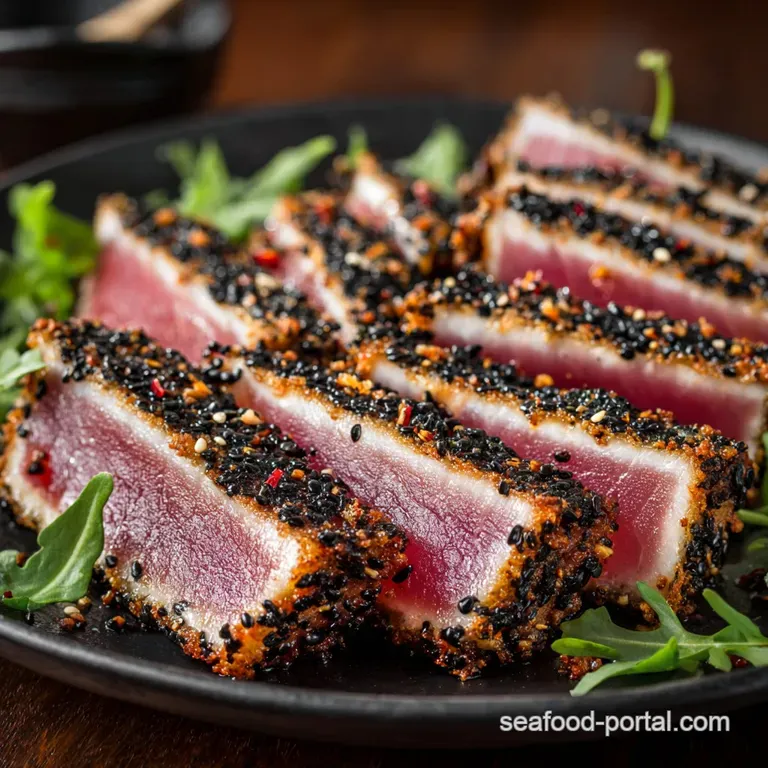
For the USDA-recommended safe endpoint, cook until the thickest part reaches 145°F. The flesh should be opaque and separate easily with a fork.
6. Rest and serve
Move the tuna to a plate and let it rest for about 2 minutes. Resting lets the juices settle, though tuna steaks do not need a long rest.
Slice the tuna across the grain. Serve it with lemon, rice, salad, roasted vegetables, or a dipping sauce.

Ahi Tuna Air Fryer Temperature and Doneness Guide
The best air fryer temperature for ahi tuna is usually 400°F. This heat cooks the surface quickly without requiring a long cooking time.
Doneness depends on both time and internal temperature:
| Desired doneness | What it looks like | Food safety note |
|---|---|---|
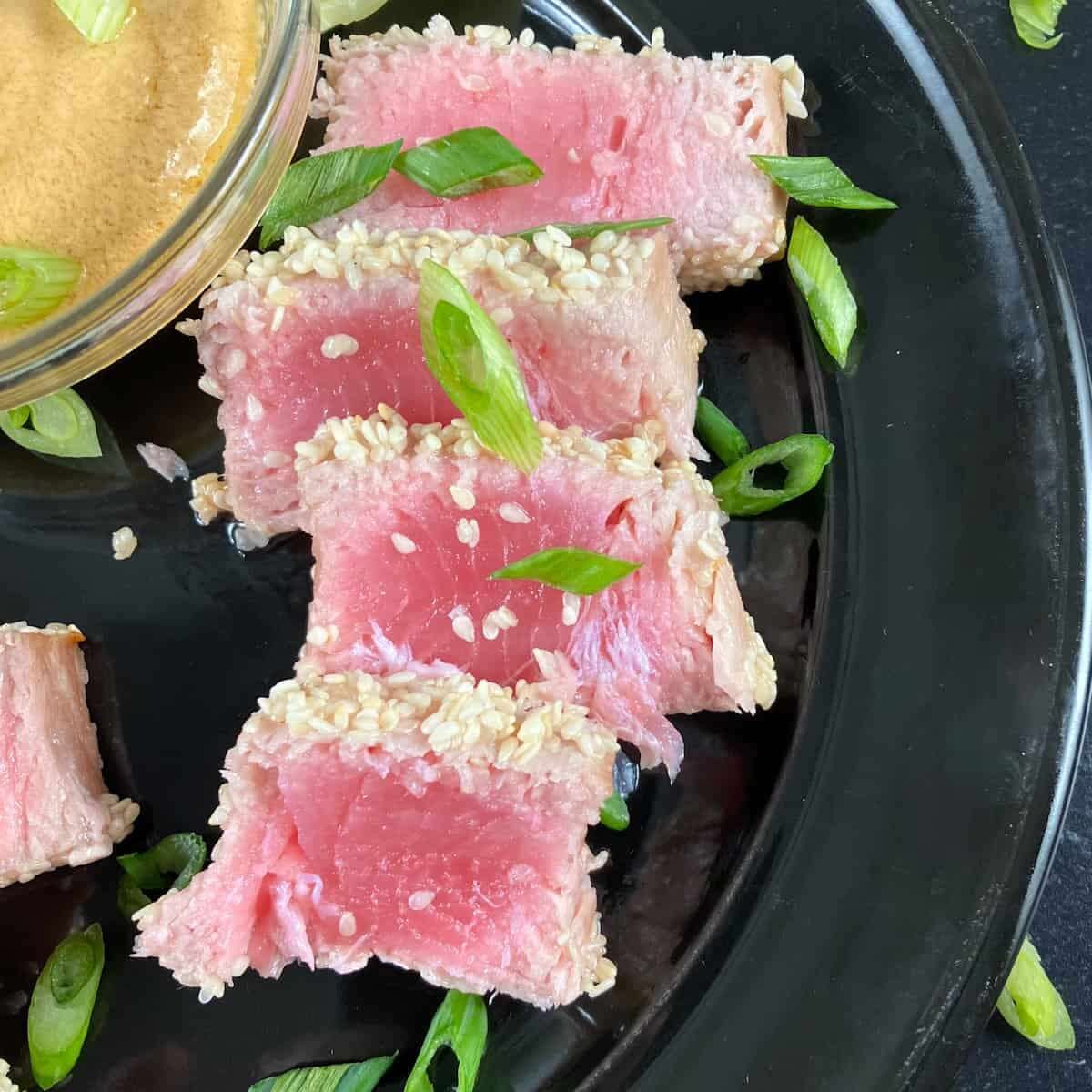
| Rare | Red center and lightly cooked outside | Higher risk because the center remains raw |
| Medium-rare | Warm red or pink center | Still under the USDA fish recommendation |
| Medium | Pink center with a firmer texture | Cook time varies by thickness |
| Well-done | Opaque center and firm flakes | Reaches the USDA recommendation when the center is 145°F |
The color of tuna is not a reliable safety test. A red center does not prove that the fish is safe, and a pale center does not prove that it reached a specific temperature.
Should ahi tuna be cooked rare?
Many people prefer ahi tuna rare because it has a soft texture and clean flavor. However, rare tuna is not fully cooked. The FDA advises higher-risk people, including pregnant people, young children, older adults, and people with weakened immune systems, to avoid raw or undercooked seafood.
If you want rare tuna, buy it from a seller who clearly explains how it was handled and intended for raw consumption. Keep it refrigerated and use it promptly. The term “sushi-grade” may describe a seller’s quality standard, but it is not a formal federal grade that guarantees safety.
Can you cook ahi tuna from frozen?
You can cook tuna from frozen, but thawing first gives better results. Frozen tuna may need several extra minutes, and the outside can become dry before the center warms.


For best texture, thaw the tuna overnight in the refrigerator. If you must cook it from frozen, use a thermometer and expect the cooking time to vary.

How to Prevent Dry Ahi Tuna
Ahi tuna becomes dry when it stays in high heat for too long. Because tuna is lean, it has little fat to protect the flesh during cooking.
Use these steps:
- Choose steaks with an even thickness.
- Pat the surface dry before seasoning.
- Brush on a thin layer of oil.
- Cook at 400°F instead of using a long, low-temperature cook.
- Check the tuna before the suggested end time.
- Remove it as soon as it reaches your target temperature.
- Let it rest briefly before slicing.
A steak that is 1 inch thick may cook much faster in one air fryer than in another. Basket size, heating design, starting temperature, and fish thickness all affect the result.
If the tuna is dry but still safe, shorten the next cooking time. If the outside is burnt while the center is cold, lower the temperature to 375°F and cook for a little longer.

Easy Seasoning Ideas for Air Fryer Ahi Tuna
Ahi tuna has a mild flavor, so simple seasoning works well. Choose a coating based on the meal you plan to serve.
Lemon and herb
Use olive oil, salt, pepper, lemon zest, and dried parsley. Add lemon juice after cooking rather than before. Too much acid in a long marinade can change the texture of the fish.
Sesame and soy
Brush the tuna with a small amount of soy sauce and oil. Add sesame seeds, ginger, and green onion after cooking.
Soy sauce contains a lot of sodium, so reduce or skip the added salt.
Spicy crust
Mix paprika, black pepper, garlic powder, and a small amount of cayenne. This seasoning works well with a cool yogurt sauce or avocado salad.
Honey mustard
Combine a little honey with Dijon mustard and brush on a thin layer before cooking. Watch the tuna closely because sugar can brown quickly at 400°F.

What to Serve With Air Fryer Ahi Tuna
Serve air-fried ahi tuna with foods that add freshness, crunch, or mild flavor.


Good options include:
- Steamed rice or coconut rice
- Cucumber and avocado salad
- Coleslaw
- Roasted asparagus
- Green beans
- Quinoa
- Mango salsa
- Edamame
- Lemon or lime wedges
- Wasabi, ginger, or a light dipping sauce
For a quick bowl, add sliced tuna to rice with cucumber, avocado, shredded cabbage, and a small amount of soy-ginger sauce.
If you serve tuna rare or medium-rare, keep cold side dishes cold and avoid leaving the meal at room temperature for long periods.

Common Air Fryer Ahi Tuna Problems
The tuna is dry
The steak likely cooked too long or was too thin for the selected time. Check it early next time and remove it as soon as it reaches the desired temperature.
A marinade can also cause problems. A sugary or acidic mixture may dry or darken the outside while the inside continues to cook.
The tuna sticks to the basket
Make sure the basket is clean and lightly coated with oil. Drying the tuna before cooking also helps.
Wait until the surface has cooked before turning it. If the fish sticks badly, use a thin silicone liner made for air fryers, but do not block all air circulation.
The outside is pale
The fish may have been wet or the basket may have been crowded. Pat the tuna dry, preheat the air fryer, and leave space around each steak.
A wet marinade can also stop browning. Use a thin coating instead.
The center is too raw
Cook the tuna for another 1 to 2 minutes, then check again. Continue in short intervals to avoid overcooking the outside.
If the fish is thick, lowering the air fryer to 375°F can help the center cook more evenly.
The tuna smells strong or unpleasant
Fresh tuna should have a mild, clean smell. Do not cook or eat tuna that smells sour, strongly fishy, or ammonia-like. When in doubt, discard it.
Cooking cannot reliably make spoiled fish safe.
Ahi Tuna Food Safety Tips
The safest general target is 145°F in the thickest part of the fish, according to USDA guidance. Use a thermometer inserted from the side so the tip reaches the center.
Follow these handling rules:
- Keep raw tuna refrigerated at 40°F or below.
- Wash your hands before and after handling raw fish.
- Use a clean cutting board and utensils.
- Keep raw tuna away from cooked food.
- Do not reuse raw-fish marinade unless you boil it first.
- Refrigerate leftovers within 2 hours, or within 1 hour if the room is above 90°F.
- Store leftovers in a sealed container and use them within 3 to 4 days.
Some tuna species can contain higher levels of mercury. The FDA and EPA publish fish advice for children and people who are pregnant or breastfeeding. Check current federal guidance if you eat tuna often or are serving it to a child.
These safety rules matter more than achieving a particular restaurant-style center color.

Frequently Asked Questions
How long does ahi tuna take in an air fryer?
At 400°F, a 1-inch ahi tuna steak usually takes about 5 to 8 minutes. Thin steaks may take only 3 to 5 minutes, while thick steaks may need 8 to 11 minutes. Use thickness and internal temperature as your guide.
Do you need to flip tuna in an air fryer?
Flipping is not always required, but it helps the steak cook more evenly. Turn the tuna halfway through the cooking time with tongs.
Can you put tuna steak directly in the air fryer?
Yes. Place the seasoned tuna directly in the basket in a single layer. Lightly oil the basket if needed to reduce sticking.
Is ahi tuna the same as yellowfin tuna?
Ahi is a common name used for yellowfin tuna and, in some markets, bigeye tuna. Check the package label or ask the fish seller which species you are buying.
Can you reheat cooked ahi tuna in an air fryer?
Yes, but use low heat and a short time. Heat at about 300°F for 2 to 4 minutes, checking often. Reheating can make tuna dry, so adding it to a warm rice bowl or salad may give a better result.
Final Takeaway
For a fast air fryer ahi tuna dinner, dry and season 1-inch steaks, cook them at 400°F for about 5 to 8 minutes, and turn them halfway through. Check the thickest part with a thermometer rather than relying only on color or time.
Cook the fish to 145°F for the USDA-recommended safe endpoint. If you prefer a rare center, recognize that it is undercooked and carries more risk, especially for people in higher-risk groups. Pair the tuna with rice, vegetables, citrus, or a light sauce and serve it soon after cooking.
Sources
- USDA: Safe Minimum Internal Temperature Chart
- FDA: Selecting and Serving Fresh and Frozen Seafood Safely
- FDA and EPA: Advice About Eating Fish
- USDA: Refrigeration and Food Safety

Appliance Review Expert
Lucas Ramirez is a trusted voice at HomeFixGrid.com, known for his clear, practical, and creatively written guides that simplify appliance care for everyday homeowners. With a strong focus on hands-on testing and real-world problem-solving, Lucas brings expert insight into appliance reviews and troubleshooting techniques. Her work empowers readers to confidently maintain, repair, and choose the right appliances for their homes.