How To Get Burn Smell Out Of Microwave: Easy Fixes
Clean the microwave with steam, baking soda, and fresh air to remove most burn odors safely and quickly.
A burnt smell can linger in a microwave long after the food is gone. Smoke and grease settle on the ceiling, walls, turntable, and air vents, much like campfire odor clings to clothing. This guide explains how to get burn smell out of microwave surfaces, when to use vinegar or baking soda, and when a lasting odor may signal an electrical problem.

Why a Microwave Keeps Smelling Burnt
Burn odors come from more than the burned food itself. Heat can turn food oils, starches, and sauces into a thin layer of residue. That residue sticks to the inside of the microwave and releases odor each time the unit warms up.
The smell may also remain in parts you cannot easily see. Grease can collect near the air vents, under the turntable, around the door seal, or on the small waveguide cover inside the oven.
• Burned popcorn, rice, soup, or pasta
• Food splatters that were heated many times
• Grease buildup on the ceiling or side walls
• A scorched cardboard or plastic container
• A damaged waveguide cover
• An electrical part that overheated
The first step in learning how to get burn smell out of microwave ovens is finding the source. A simple food spill needs cleaning. A smell that resembles burning plastic, wiring, or electronics needs more care.
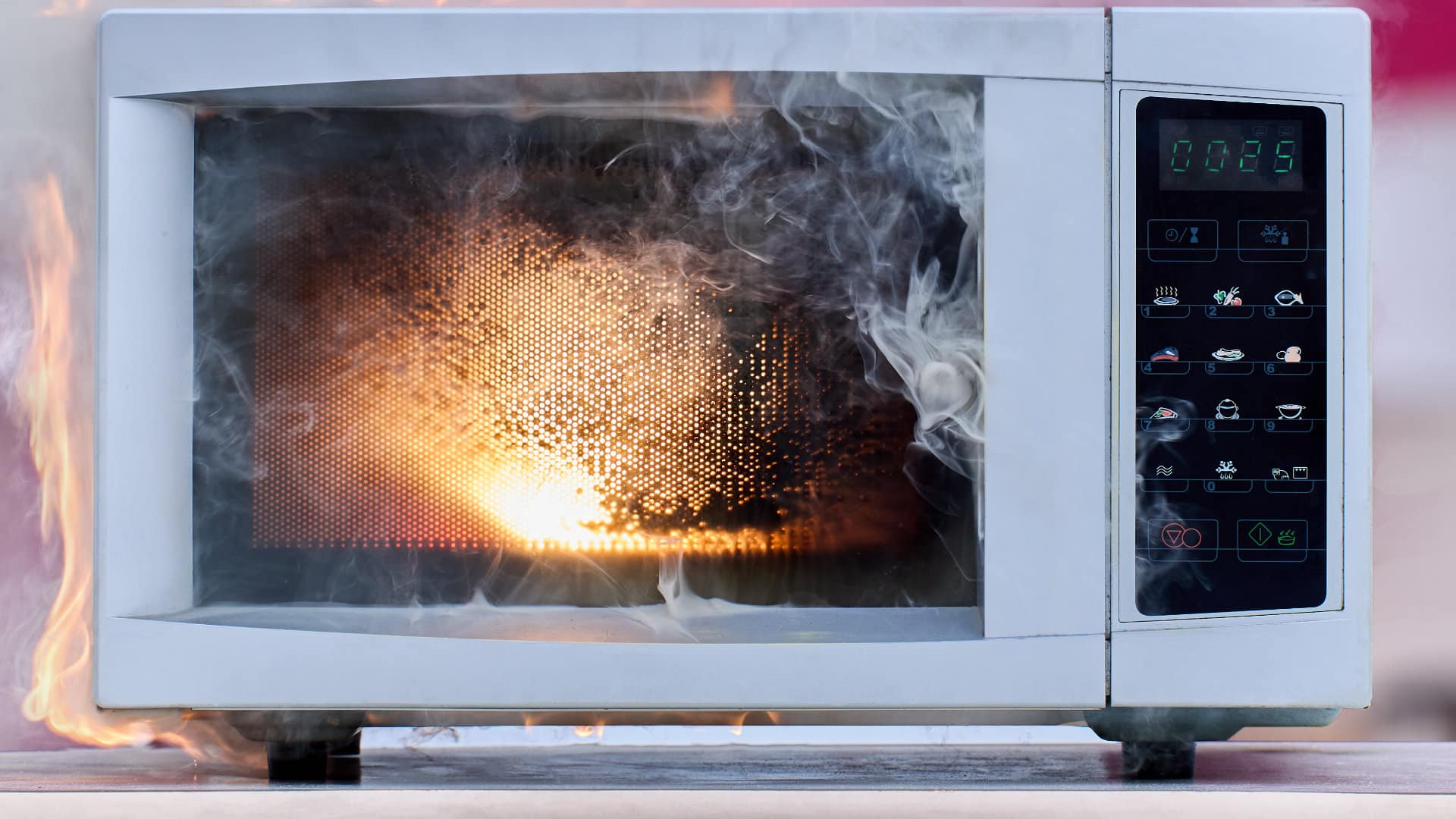
Safety Steps Before Cleaning a Burned Microwave
Unplug the microwave before deep cleaning it. This protects you from accidental operation and reduces the risk of contact with electrical parts.
Never remove the outer cabinet. Microwaves contain high voltage components that may hold a dangerous charge even after the appliance is unplugged. Only a trained appliance technician should inspect those parts.
Before cleaning, check for signs of damage:
• Melted plastic inside the cavity
• Brown, black, or blistered spots
• A cracked or burned waveguide cover
• Sparks during use
• A door that does not close fully
• A humming, buzzing, or popping sound
• A smell of burning wires or plastic
Do not use the microwave if you see these signs. Contact the manufacturer or a qualified repair professional. Cleaning can remove food odor, but it cannot fix damaged wiring or a failed component.
Avoid soaking the control panel, door vents, or openings. Water should stay on the cloth, not inside the appliance. Also avoid steel wool, oven cleaner, bleach, and abrasive powders because they can damage the interior coating or create harmful fumes.

How to Get Burn Smell Out of Microwave Step by Step
The most reliable method combines cleaning, steam, odor absorption, and ventilation. Work in this order so you remove the odor source instead of simply covering it.
1. Remove the Turntable and Accessories
Take out the glass tray, roller ring, and any removable rack. Wash them in warm water with dish soap. If the tray has a strong odor, let it soak for 15 to 20 minutes.
Dry each part fully before replacing it. Food residue under the roller ring can smell worse when the microwave warms up.
2. Wipe Away Loose Residue
Use a damp microfiber cloth to wipe crumbs and visible food from the ceiling, walls, floor, and inside of the door. Use warm water with a small amount of mild dish soap.
Do not scrub hard. A damaged interior coating can lead to rust and may make future cleaning harder.
Pay special attention to:
• The ceiling above the food
• The back wall
• The corners near the door
• The area below the turntable
• The inside edge of the door
• The waveguide cover
3. Steam the Interior With Water
Place 1 cup of water in a microwave safe glass bowl. Heat it for 3 to 5 minutes, or until the water produces steady steam. Let the bowl sit for another 5 minutes with the door closed.
The steam softens dried food and grease. Carefully remove the bowl with oven mitts, then wipe every interior surface with a clean cloth.
Do not heat water until it is completely dry. Never run a microwave empty. Superheated water can also erupt when moved, so handle the bowl slowly and carefully.
4. Use Vinegar for a Strong Food Odor
For a lingering food smell, mix equal parts water and white vinegar in a microwave safe bowl. Heat the mixture for about 3 minutes, then leave it inside for 5 minutes before wiping.
Vinegar helps loosen greasy residue and reduces many food odors. It does not repair burned plastic or electrical damage.
Do not mix vinegar with bleach or other cleaners. Use only plain white vinegar, and ventilate the room if the smell bothers you.
5. Use Baking Soda to Absorb the Odor
After cleaning, place an open bowl of baking soda inside the cool microwave. Leave it overnight with the door closed. Baking soda can absorb leftover food odors that remain after washing.
You can also make a soft paste with baking soda and a little water. Apply it to stubborn food marks, let it sit for 10 minutes, and wipe it away with a damp cloth.
Do not turn on the microwave with a bowl of dry baking soda inside. This step is for odor absorption only.
6. Air Out the Microwave
Leave the door open for several hours after cleaning. Open a nearby window or run the kitchen exhaust fan. Fresh air helps remove odor from the cavity and door gasket.
If the microwave has a removable charcoal filter, check the owner’s manual. Some over-the-range models use filters that collect grease and odor. A dirty filter can make the smell return.
This complete process is usually the best answer to how to get burn smell out of microwave interiors after a food accident.

Best Natural Odor Removers for a Microwave
Different cleaners help with different problems. Water loosens residue, vinegar cuts through some grease, and baking soda absorbs odor. No single product works equally well for every burnt smell.
Lemon and Water
Cut a lemon in half and place it in a bowl with 1 cup of water. Heat it for 2 to 3 minutes, then let the steam sit for 5 minutes.
Lemon leaves a clean scent and helps loosen light food residue. It works best when the odor comes from soup, sauce, or mild grease.
White Vinegar and Water
Vinegar is useful for strong food smells and greasy splatters. Its sharp scent fades as the microwave airs out.
Use a diluted mixture, not undiluted vinegar. Wipe the microwave afterward so acidic moisture does not remain on metal surfaces.
Baking Soda
Baking soda is useful after the main cleaning is complete. It absorbs odor over time instead of adding a new fragrance.
Leave a bowl inside overnight. Replace it if the smell remains after 24 hours.
Activated Charcoal
Activated charcoal can absorb stubborn odors. Place a small amount in a shallow, open container inside the unplugged microwave for one to three days.
Keep charcoal away from children and pets. Do not heat it, and do not use scented charcoal products that may release unwanted chemicals.

How to Remove Burnt Popcorn Smell From a Microwave
Burned popcorn produces a powerful odor because its oils and flavoring can coat the microwave cavity. The smell may remain for days if you only wipe the visible kernels away.
Start by washing the turntable and roller ring. Then steam the microwave with water, wipe the ceiling and back wall, and follow with a diluted vinegar treatment.
For especially strong popcorn odor:
-
Clean the interior with warm, soapy water.
-
Steam 1 cup of water for 3 to 5 minutes.
-
Wipe the surfaces while they are still warm and damp.
-
Leave an open bowl of baking soda inside overnight.
-
Air out the microwave the next day.
Avoid using air freshener sprays inside the microwave. They can leave chemicals on food contact surfaces and may hide the real problem.

How to Remove Burnt Plastic Smell From a Microwave
Burned plastic is more difficult to remove than a food smell. Plastic can melt into the turntable, stick to the oven floor, or leave a chemical odor in the air vents.
Unplug the microwave and allow it to cool. Remove any loose plastic only if it comes away easily. Do not use a knife or metal scraper, since you could damage the interior coating.
If plastic has melted onto the microwave surface, check the owner’s manual before trying to remove it. The manufacturer may recommend a safe method for that model.
Stop using the microwave if:
• The plastic smell remains after cleaning
• You see melted or blistered areas
• The interior coating is damaged
• The microwave sparks
• The smell becomes stronger when the unit runs
A persistent burnt plastic smell may indicate damage beyond the visible spill. In that case, repair or replacement is safer than repeated cleaning.

How to Tell if the Smell Is From Food or an Electrical Fault
Food odors usually become weaker after cleaning and airing out the microwave. An electrical odor often returns as soon as the appliance runs.
A food related smell may have these signs:
• Visible splatter or burned food
• A smell that improves after steam cleaning
• No sparks or unusual sounds
• Normal heating performance
An electrical problem may have these signs:
• Burning wire or melted plastic odor
• Smoke from the vents
• Sparks or flashes
• A loud hum, buzz, or crackle
• The microwave stops heating
• The circuit breaker trips
If the smell returns during operation, unplug the microwave and stop testing it. Do not keep running the appliance to see whether the odor disappears. A qualified technician can check the magnetron, capacitor, wiring, waveguide cover, and other internal parts.
This distinction is one of the most important parts of understanding how to get burn smell out of microwave appliances safely.

Mistakes to Avoid When Cleaning a Microwave
Some popular cleaning tips can damage the appliance or create a safety risk. Simple methods are usually safer than aggressive ones.
Avoid these mistakes:
• Running the microwave empty
• Heating a sealed container
• Using metal scrubbers
• Spraying cleaner into vents
• Pouring water directly inside
• Mixing vinegar with bleach
• Scraping melted plastic with a knife
• Using a commercial oven cleaner
• Covering the smell with perfume or air freshener
• Continuing to use the microwave after sparks or smoke
Also avoid heating citrus peels without water. They can dry out and may burn. Always use a microwave safe bowl and enough water when creating steam.
A clean microwave should have no loose residue, strong chemical odor, or damaged coating. If it does, cleaning has reached its limit.
How to Prevent Burn Smells in the Future
Prevention is easier than removing a stubborn odor. Cover food with a vented microwave lid or a microwave safe paper towel. This reduces splatter while allowing steam to escape.
Use shorter heating times and stir food halfway through. Foods with thick sauces, sugar, or oil can become very hot in small areas. Let them stand for a moment before checking them.
Other helpful habits include:
• Clean spills as soon as the microwave cools
• Wash the turntable each week
• Wipe the ceiling and door regularly
• Use only microwave safe containers
• Never heat plastic that is not labeled for microwave use
• Stay nearby when heating popcorn
• Follow the package cooking time
• Keep vents clear of grease and dust
Popcorn deserves extra attention. Different microwave ovens have different power levels, so the package time may not be exact for your appliance. Stop heating when the popping slows to about two seconds between pops.
When Cleaning Does Not Remove the Smell
If you have cleaned the interior, replaced a dirty filter, and aired out the microwave but the smell remains, inspect the problem further. The odor may be trapped in the door seal, vents, charcoal filter, or waveguide cover.
Do not open the cabinet to investigate. Instead, compare the smell when the microwave is off with the smell after a brief, supervised heating cycle. If the odor returns only when the microwave operates, stop using it and seek professional service.
The age and condition of the appliance also matter. A small countertop microwave may cost less to replace than to repair. However, repair may make sense for a newer or built-in model.
A technician can determine whether the cause is residue, a filter, a damaged waveguide cover, or an internal electrical fault. This is safer and more accurate than guessing.
Frequently Asked Questions About How to Get Burn Smell Out of Microwave
How long does it take to remove a burnt smell from a microwave?
A mild food smell may improve after one steam cleaning and a few hours of ventilation. Strong popcorn or plastic odors may take several days, and some plastic or electrical smells will not go away through cleaning.
Does vinegar remove burnt smells from a microwave?
Diluted white vinegar can reduce food and grease odors by loosening residue. It will not remove the source of an electrical fault or fully repair melted plastic.
Can I use baking soda in a microwave?
You can place an open bowl of baking soda inside a cool, unplugged microwave to absorb odor. Do not heat baking soda or run the microwave with the bowl inside.
Is it safe to use a microwave that smells burnt?
It may be safe if the smell came from spilled food and disappears after cleaning. Stop using the microwave if the odor returns during operation or comes with smoke, sparks, buzzing, or melted parts.
How do I remove burnt popcorn smell from a microwave?
Clean the tray and interior, steam a bowl of water, wipe the surfaces, and leave baking soda inside overnight. Repeat the process if needed, then air out the microwave.
Can lemon get rid of a burnt smell in a microwave?
Lemon and water can freshen the microwave while steam loosens light residue. It works best for food odors, not for burnt plastic or electrical smells.
Conclusion
The safest way to get burn smell out of microwave ovens is to remove the residue first, loosen grease with steam, and absorb the remaining odor with baking soda. Lemon and diluted vinegar can help with food smells, but they cannot solve melted plastic or electrical damage.
Unplug the appliance before deep cleaning, avoid harsh chemicals, and never ignore sparks, smoke, or a burning wire smell. Start with the simple cleaning steps today, and share your experience or explore more appliance care guides for practical kitchen tips.

Appliance Review Expert
Lucas Ramirez is a trusted voice at HomeFixGrid.com, known for his clear, practical, and creatively written guides that simplify appliance care for everyday homeowners. With a strong focus on hands-on testing and real-world problem-solving, Lucas brings expert insight into appliance reviews and troubleshooting techniques. Her work empowers readers to confidently maintain, repair, and choose the right appliances for their homes.