
How To Improve Bed Edge Support: Easy Fixes
If the edge of your bed sags, rolls, or feels weak, check the mattress, foundation, frame, and center support in that order. A strong fix may be as simple as tightening the frame or adding a center beam. If the mattress core has softened, however, a new base will not restore its original edge support.
This guide applies to common U.S. bed sizes, including twin, full, queen, king, and California king. It focuses on mattress edge support, but it also explains how the bed frame and foundation affect the way the edge feels.

What bed edge support means
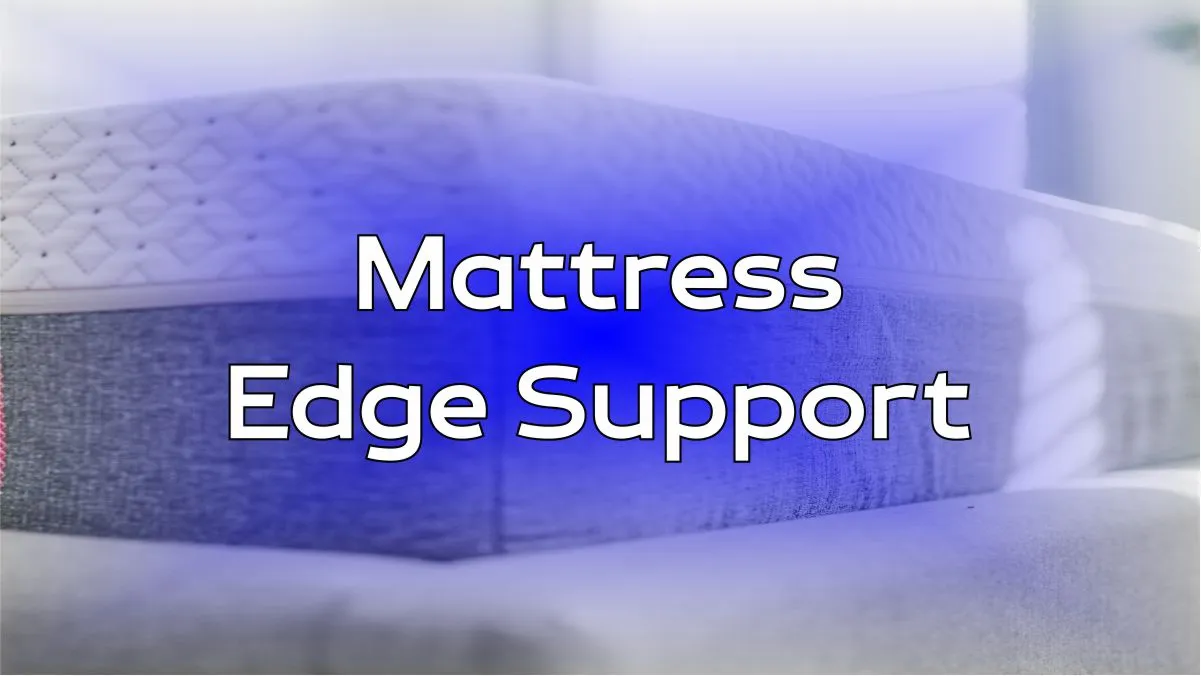
Bed edge support is the ability of the mattress and bed base to hold weight near the perimeter without excessive sinking, sliding, or rolling. It helps when you sit on the side of the bed, sleep near the edge, or get in and out of bed.


Edge support comes from several parts:
- The mattress perimeter: A coil border, firm foam rail, or other reinforced edge.
- The mattress comfort layers: Soft foam or fiber can make an edge feel weaker, even when the support core is sound.
- The foundation: A weak or flexible base can make the whole mattress feel unstable.
- The bed frame: Loose rails, bent parts, or missing hardware can allow the mattress to shift.
- The center support: A center beam and legs help keep a wide frame from bowing under load.
A mattress edge can feel soft without being defective. Some mattresses use thick memory foam or pillow-top layers that compress more at the sides. The key question is whether the dip is temporary or permanent.
Edge softness versus edge collapse
Edge softness means the surface compresses when you sit down but rises again after you stand. This is common with foam comfort layers.
Edge collapse means the edge stays low, slopes toward the side, or feels unstable even when no one is on it. That may point to a worn mattress, damaged edge reinforcement, or poor support below the mattress.
Many mattress brands describe edge performance in different ways. Terms such as “reinforced edge,” “foam encasement,” and “perimeter support” are not always measured in the same way. Do not compare those phrases as if they were a single industry-wide score.
Find the cause before you add support
The fastest way to improve bed edge support is to identify which layer is failing. A new mattress may feel weak on an old foundation, while a worn mattress may feel weak on a perfectly sound frame.
1. Check whether the problem follows the mattress
Remove bedding, pillows, and any mattress topper. Sit on several points along the edge, then press the same points by hand.
Next, rotate the mattress from head to foot if the manufacturer permits it. Do not flip a one-sided mattress unless the care instructions allow it.
- If the weak area moves with the mattress, the mattress may be worn.
- If the same side of the bed still feels weak, inspect the frame and foundation.
- If the mattress feels better on the floor for a short test, the base may be flexing or bowing. Do not use the floor as a permanent base unless the mattress maker approves it.
2. Inspect the foundation
Look for:
- Broken wood or metal parts
- Bent rails
- Sagging fabric or deck panels
- Missing screws or bolts
- Slats that have shifted
- Wide spaces between slats
- A center beam that does not touch the floor
- Support legs that are loose or missing
Check the mattress warranty or setup guide for the approved base type and slat spacing. A mattress can lose support or warranty coverage if it rests on an unsuitable foundation.
3. Check the frame for movement
Push the bed from each side. Listen for creaks and watch for movement at the joints.


Tighten every fastener with the correct tool. Do not rely on a single loose bolt as proof that the whole frame is safe. Examine the rail brackets, corner joints, center beam, and legs.
For a queen, king, or California king bed, pay close attention to the center support. These wider beds place more load on the middle of the frame. A center beam that floats above the floor cannot carry its intended share of the load.
4. Check for uneven flooring
A floor that is not level can make one corner or one side of the frame carry too much weight. Place a level on the frame in several directions. If the frame rocks, use a stable, non-slip shim designed for furniture rather than folded cardboard or loose objects.
Do not raise one corner so far that the frame twists. A small correction is safer than a tall stack of shims.

How to improve the bed frame and foundation
If the mattress is still in good shape, a stronger base often gives the largest improvement. Make changes in this order.
Tighten and reinforce the frame
Start with the original hardware. Replace missing nuts, bolts, or washers with parts that match the frame’s size and design.
If the side rails flex, a replacement rail or approved reinforcement bracket may help. Avoid drilling random holes into a metal frame or cutting wood without knowing where the load travels. A poor modification can move stress to a corner joint or create a sharp hazard.
For a wood platform bed, inspect the screws that connect the slats to the side rails. Slats that slide or bow may need replacement, not just tighter screws.
Add or repair center support
A wide bed needs support under the center area. A useful center-support system normally includes:
- A beam running from head to foot
- One or more legs that reach the floor
- Feet that stay flat and do not slide
- A connection that keeps the beam attached to the frame
The beam should support the foundation, not press hard into the mattress. The legs should reach a firm floor surface. Carpet can compress, so check the bed again after placing weight on it.
Do not add a center leg that lifts the beam and causes the side rails to rise. The goal is even support, not a frame that bows upward.
Replace damaged or weak slats
Slats that are cracked, bowed, or too flexible can make the mattress sag near the edge. Replace them with slats that match the bed maker’s required width, thickness, spacing, and attachment method.
The correct spacing depends on the mattress and foundation design. There is no single safe gap for every mattress. Use the mattress warranty and installation instructions as the controlling source.
If you cannot find the instructions, contact the mattress manufacturer with the exact model and size. A general internet recommendation may not match the support requirements for that mattress.


Use a compatible bunkie board or platform
A bunkie board can create a more even surface when a foundation needs extra support. However, it is not a universal fix.
Before using one, confirm that:
- The mattress maker allows it.
- The board fits the frame without overhanging.
- It does not block needed ventilation.
- It does not raise the mattress into an unsafe position.
- The combined frame, board, foundation, and mattress can support the intended load.
A bunkie board may improve a weak surface, but it will not repair a broken frame or a worn mattress edge.
Avoid improvised supports
Books, loose boards, storage bins, and stacked boxes can shift or break. They can also create pressure points beneath the mattress.
A support should be fixed in place, level, strong enough for the load, and designed for furniture use. If the bed has a metal frame, use a compatible support kit or have a qualified furniture repair professional assess it.
How to improve the mattress edge itself
When the base is sound, the mattress becomes the main suspect. There are a few useful options, but each has limits.
Rotate the mattress if allowed
Rotation can spread wear across areas that receive less use. Follow the maker’s instructions. Some mattresses should not be rotated because their layers are zoned or shaped for one direction.
Rotation may help with uneven surface wear. It will not restore foam that has permanently softened or repair a broken coil border.
Remove or replace a thick topper
A soft topper can make the edge feel less stable by adding another compressible layer. Test the mattress without the topper for one or two nights, if practical.
If the edge improves, the topper—not the mattress support core—may be the main cause. A thinner or firmer topper may reduce the sinking, but any topper changes the feel and height of the bed.
A topper cannot create true structural edge support. It can only change the surface response.
Check for a compressed perimeter
Look at the mattress from the side with no bedding on it. A permanent low strip around the edge, a tilted seam, or a side that no longer returns to shape suggests lasting wear.
You can also place a straightedge across the surface and observe the gap below it. This is a simple check, not a manufacturer-approved defect test. Record photos and measurements before contacting the seller or manufacturer.
Review the warranty
Keep the receipt, model name, purchase date, photos, and a description of the problem. Warranty rules vary by manufacturer and may require a specific foundation.
Some warranties exclude normal softening, body impressions below a stated depth, stains, or damage from an unsupported base. Do not remove the law label or alter the cover before checking the warranty terms.


Choosing between a repair and a replacement
Use the table below to guide the next step. It does not replace the mattress maker’s instructions.
| Symptom | Likely cause | First action | Likely long-term fix |
|---|---|---|---|
| The whole side of the bed moves | Loose or weak frame | Tighten and inspect joints | Repair or replace the frame |
| The center of a queen or king bed sags | Missing center support | Check beam and legs | Add or repair center support |
| The edge dips only when you sit | Soft comfort layers | Test without topper | Accept the feel or replace mattress |
| One mattress corner is low | Uneven floor or damaged base | Level and inspect frame | Repair frame or floor contact |
| The same mattress edge stays low after rotation | Worn perimeter or core | Photograph and measure | Warranty claim or mattress replacement |
| The mattress shifts sideways | Poor fit or slippery base | Check size and surface | Add a compatible non-slip layer |
| The edge feels better on a rigid test surface | Flexible foundation | Inspect slats and deck | Repair or replace foundation |
A repair makes more sense when the frame or foundation is damaged but the mattress has an even, resilient surface. Replacement becomes more reasonable when the mattress has a permanent dip, damaged stitching, exposed components, or a support problem that returns after the base is corrected.
A simple load and support check
Bed capacity is not just the sleeper’s body weight. It may include:
- All people using the bed
- Children or pets
- The mattress
- The foundation
- Bedding
- Any regular movement or impact
Use the lowest capacity listed for the complete system. A frame rated for a certain load does not automatically make an older foundation safe at that same load.
For example, if two sleepers weigh 175 and 210 pounds, the sleeper load is 385 pounds. Add the mattress, foundation, bedding, and any other regular load before comparing the total with the manufacturer’s stated capacity.
This is a planning example, not a universal safety limit. Manufacturers may define capacity differently. Some list a total bed capacity, while others list a per-person or per-side limit.
The edge also experiences leverage. Sitting near the side concentrates force over a small area and can stress the perimeter more than lying flat. That is why a bed may feel stable during sleep but weak when someone sits to put on shoes.
Common mistakes that make edge support worse
Adding legs without checking the beam
Extra legs help only when they make firm contact with the floor and share the load evenly. A poorly placed leg can twist the frame.
Using a soft foundation under a firm mattress
A firm mattress cannot compensate for a base that bends or sags. The mattress may follow the shape of the foundation.
Placing a board under only one side
Partial support creates a hard spot and uneven pressure. Support should cover the intended area evenly.
Ignoring the center of a wide bed
A queen, king, or California king may need a center rail even when the side rails look strong. Check the middle before replacing the mattress.
Treating a topper as a structural repair
A topper can change comfort, but it does not fix a broken rail, missing leg, or collapsed mattress edge.
Exceeding the maker’s instructions
Do not assume that a generic platform, adjustable base, or bunkie board is compatible. Confirm the exact mattress and base combination.
When to stop using the bed and seek help
Stop using the bed until it is repaired if you see a cracked load-bearing rail, a sharp broken part, a collapsing leg, exposed metal, or a frame that may fall.
Ask the manufacturer for support when the bed is under warranty or when the correct slat spacing and base type are unclear. A furniture repair professional can help with a damaged frame, unusual construction, or a heavy bed that is difficult to move safely.
For health concerns, such as pain, numbness, repeated falls, or difficulty getting out of bed, speak with a qualified health professional. A firmer edge may help with transfers, but it does not treat the cause of pain or balance problems.
Frequently asked questions
Does a mattress topper improve edge support?
Usually, no. A topper can make the surface feel firmer or softer, but it does not rebuild a weak mattress perimeter. A thick, soft topper may make edge sinking worse.
Will a bunkie board fix a sagging mattress?
It may improve support from below if the foundation is the problem. It will not repair a mattress with permanent foam softening, broken coils, or a collapsed edge.
Should I add plywood under my mattress?
Only if the mattress manufacturer approves a solid support surface and the material is safe, flat, and properly secured. Plywood can change ventilation, add weight, create sharp edges, and affect a warranty. It is not a universal solution.
How do I know whether the frame or mattress is causing the problem?
Test the mattress on a known-compatible, firm base for a short period and compare the edge. If the same mattress area remains low, the mattress is more likely at fault. If the edge improves, inspect the original frame and foundation.
Can I make a memory foam mattress feel firmer at the edge?
You can reduce extra softness by removing a thick topper and improving the foundation. Room temperature also affects how some foams feel. If the mattress has permanent edge compression, base changes may not restore it.
Do all queen and king beds need a center support?
Many do, but the exact design varies. Follow the frame and foundation instructions. A center beam without floor-contact legs may provide little support.
Conclusion: the best next step
Start with the base, not the mattress label. Tighten the frame, inspect the slats, confirm center support, and check that all legs reach the floor. Then test the mattress without a topper and look for permanent deformation.
If the frame is sound and the edge still stays low, document the problem and check the mattress warranty. Replace the mattress only after ruling out the foundation, because a weak base can make a good mattress feel defective—and can damage a replacement just as quickly.
U.S. reference points
- U.S. Consumer Product Safety Commission: Mattresses and bedding
- Electronic Code of Federal Regulations: 16 CFR Part 1633, flammability standard for mattress sets
- U.S. Consumer Product Safety Commission: Recalls
These sources address mattress safety and regulatory requirements. They do not establish a universal consumer rating for bed edge support, so the mattress and bed-frame manufacturer’s instructions remain essential for compatibility and load limits.

Appliance Review Expert
Lucas Ramirez is a trusted voice at HomeFixGrid.com, known for his clear, practical, and creatively written guides that simplify appliance care for everyday homeowners. With a strong focus on hands-on testing and real-world problem-solving, Lucas brings expert insight into appliance reviews and troubleshooting techniques. Her work empowers readers to confidently maintain, repair, and choose the right appliances for their homes.