
Which Type Of Mattress Is Best For Sleeping: Top Choices
A medium-firm hybrid mattress suits most sleepers by balancing pressure relief, support, airflow, and durability.
Choosing which type of mattress is best for sleeping depends on your body weight, sleep position, comfort needs, and any pain you feel at night. After comparing foam, latex, innerspring, and hybrid designs, one lesson is clear: the “best” mattress is not the same for everyone. This guide explains the key differences so you can make a smart choice without relying on hype.

Which type of mattress is best for sleeping?
For most adults, a medium-firm hybrid mattress is the best all-around choice. It combines supportive coils with a comfort layer of foam or latex. This design can cushion the shoulders and hips while keeping the spine level.
Still, the best mattress for you may differ. A side sleeper often needs more cushioning than a stomach sleeper. A heavier person may need stronger support, while a lighter person may prefer a softer surface.
When asking which type of mattress is best for sleeping, start with these factors:
- Your main sleep position
- Your body weight and shape
- Whether you sleep hot
- Whether you share the bed
- Your budget
- Any back, hip, or shoulder pain
- How much motion you can tolerate from a partner
A mattress should feel like a balanced bridge. It must support your body without creating hard pressure points.
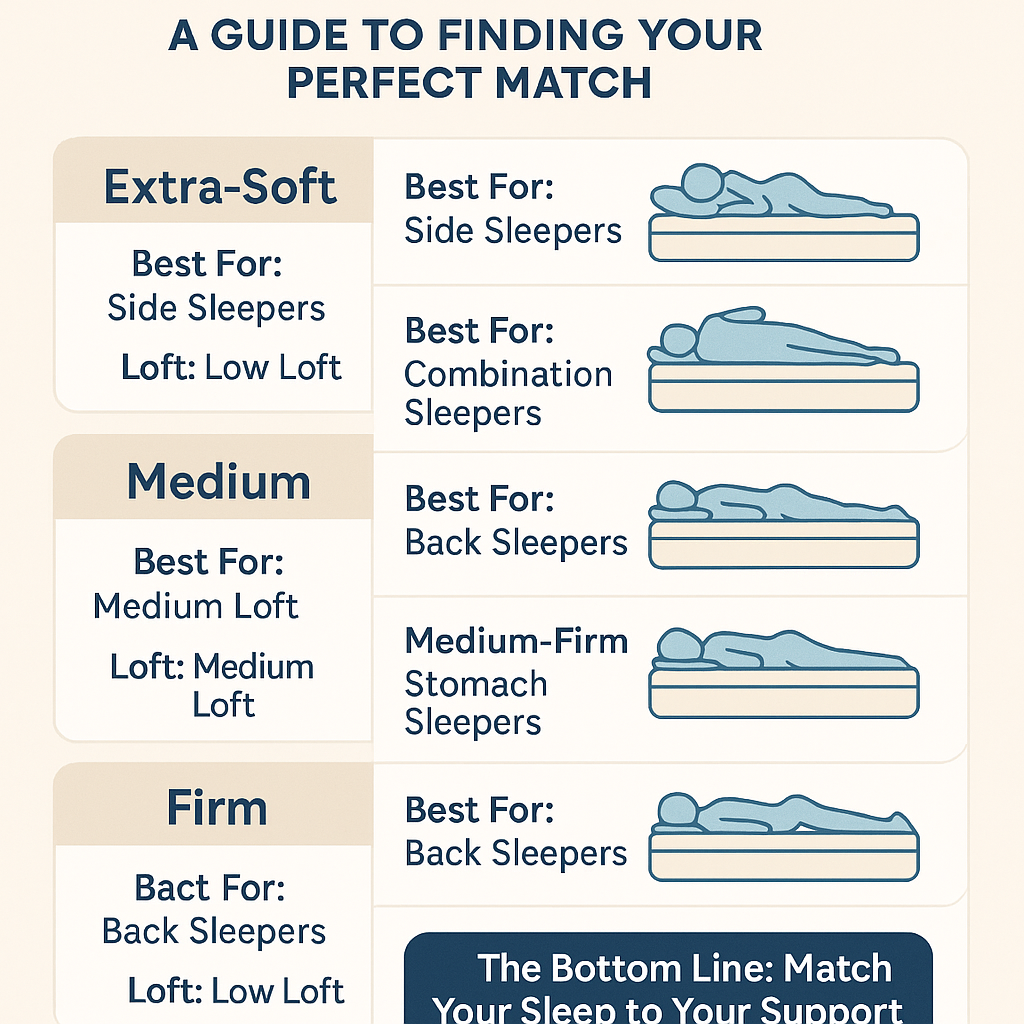
How mattress types compare
Each mattress type has a different feel. Learning these basic differences makes it easier to decide which type of mattress is best for sleeping in your case.
Memory foam mattresses
Memory foam uses pressure-sensitive material that molds around your body. It can reduce motion transfer, which makes it popular with couples.
Benefits include:
- Strong pressure relief
- Very little partner disturbance
- A quiet sleep surface
- Good support for many side sleepers
Limitations include:
- It may trap body heat
- Some people dislike the slow, sinking feel
- Moving or changing positions may feel harder
- Lower-quality foam can soften sooner
A memory foam mattress may suit you if you want a close, cushioned feel. Look for open-cell foam, cooling materials, or a breathable cover if you tend to sleep hot.
Latex mattresses
Latex feels springy and responsive. It supports the body without the deep sink found in some memory foam beds. Natural latex can also resist dust mites and has strong durability.
Benefits include:
- Good airflow
- Easy movement
- Long service life
- A buoyant, supportive feel
- Less heat buildup than many foam beds
Limitations include:
- Higher cost
- More bounce
- A heavier mattress
- A feel that some people find too firm
Latex can be a strong choice for people who want which type of mattress is best for sleeping with a cooler and more responsive surface.
Innerspring mattresses
Innerspring mattresses use metal coils beneath a comfort layer. They often feel firm, bouncy, and cool because air can move through the coil system.
Benefits include:
- Strong airflow
- Firm edge support
- Easy movement
- A lower price in many models
- A familiar traditional feel
Limitations include:
- More motion transfer
- Less pressure relief in basic models
- Possible noise over time
- A thinner comfort layer in some designs
An innerspring mattress may work well for stomach sleepers, hot sleepers, and people who prefer a firm bed. Pocketed coils usually reduce motion better than connected coils.
Hybrid mattresses
Hybrid mattresses combine coils with foam, latex, or both. Many include individually wrapped coils, which can offer a good mix of support and motion control.
Benefits include:
- Strong support
- Better airflow than all-foam beds
- More pressure relief than basic innerspring beds
- Good edge support
- A balanced feel for many sleepers
Limitations include:
- Greater weight
- A higher price
- Possible noise from the coil system
- More difficulty moving the mattress
For many people, a hybrid mattress answers which type of mattress is best for sleeping because it offers a middle ground. It does not always excel in one area, but it performs well across many needs.

The best mattress for each sleep position
Your sleep position affects where your body needs support. It also affects how much pressure your mattress places on your shoulders, hips, knees, and lower back.
Side sleepers
Side sleepers usually need a softer to medium mattress. The mattress must allow the shoulder and hip to sink enough to keep the spine straight.
A very firm bed may press into these areas. That can cause numbness or soreness. Memory foam, latex, and softer hybrids often work well.
Look for:
- Medium-soft to medium firmness
- A thick comfort layer
- Good pressure relief
- A supportive center area
- A pillow that fills the space between your head and the mattress
Back sleepers
Back sleepers often do best on a medium-firm mattress. The bed should support the lower back without pushing the hips too high.
A hybrid or responsive foam mattress may provide the right balance. If your pelvis sinks too far, the mattress may feel unsupportive. If it stays too high, the bed may create pressure in the lower back.
Look for:
- Medium to medium-firm support
- Even weight distribution
- Moderate contouring
- Strong lumbar support
- A stable sleep surface
Stomach sleepers
Stomach sleepers often need a firm mattress. Too much softness may let the hips sink, which can place the spine in an awkward position.
A firm hybrid or innerspring mattress may suit this position. However, firmness alone does not guarantee comfort. The bed still needs enough cushioning to prevent pressure on the ribs and pelvis.
Look for:
- Firm support
- Minimal sink
- Strong center support
- A thin but comfortable top layer
- A low-profile pillow
Combination sleepers
Combination sleepers change positions during the night. They need a mattress that supports different areas without making movement difficult.
Latex and hybrid mattresses often suit this group. Memory foam can work too, but very slow foam may make turning harder.
When deciding which type of mattress is best for sleeping as a combination sleeper, focus on responsiveness, balanced firmness, and edge support.

The right mattress firmness
Firmness describes how soft or hard a mattress feels. It is not the same as support. A soft mattress can support you well, while a firm mattress can still feel unsupportive if it lacks structure.
Most brands use a scale from 1 to 10:
- 1 to 3 feels soft
- 4 to 6 feels medium
- 7 to 10 feels firm
Your body weight changes how firmness feels. A mattress may feel firm to a lighter person but medium to a heavier person. This is why online firmness ratings are useful, but not perfect.
A practical starting point is:
- Lightweight sleepers often prefer a softer feel
- Average-weight sleepers often prefer medium or medium-firm support
- Heavier sleepers often need firmer support and stronger coils
If two people share a bed, a medium-firm mattress is often a useful compromise. A split adjustable base or a mattress with different firmness sides can offer a better fit.

Mattress materials and sleep temperature
If you wake up sweaty, material choice matters. Foam can hold more heat than coils because it limits airflow around the body.
For a cooler sleep, consider:
- Pocketed coils
- Latex
- Breathable cotton or wool covers
- Open-cell or ventilated foam
- A lighter comforter
- A cool bedroom
Gel foam may feel cooler at first, but gel does not guarantee an all-night cooling effect. Room temperature, bedding, clothing, and body heat also play major roles.
In general, hybrid and latex mattresses tend to sleep cooler than dense memory foam. However, a well-designed foam mattress may still work for a hot sleeper if it has good ventilation.

The best mattress for back pain
A mattress cannot cure back pain, but it can affect comfort and sleep quality. Research on mattresses suggests that medium-firm designs may improve comfort and sleep for some people with lower back pain.
The key is neutral alignment. Your spine should stay in a natural position rather than bending sharply at the hips or waist.
A suitable mattress for back pain may offer:
- Medium-firm support
- Gentle pressure relief
- Stable edge support
- Limited sagging
- A flat, even surface
Avoid choosing a very firm mattress simply because you have back pain. A hard surface can increase pressure on the shoulders and hips. Also, avoid a very soft mattress if your hips sink below the rest of your body.
If pain travels down your leg, causes weakness, or continues despite rest, seek medical advice. Mattress shopping should not replace professional care.

What couples should look for
Sharing a bed adds more needs. You may care about motion isolation, edge support, temperature, and firmness compromise.
Memory foam usually blocks motion best. Latex and hybrids offer more bounce but may transfer more movement. Pocketed coils often provide a useful middle ground.
Couples should look for:
- Good motion isolation
- Strong edge support
- Enough surface space
- Neutral firmness
- Breathable materials
- A long sleep trial
A split king mattress can help when partners have very different needs. Each person can choose a separate firmness level while sharing one bed frame.
Mattress durability and value
A mattress is a long-term purchase, so price should not be the only factor. A low-cost mattress may work well, but cheap materials can lose shape sooner.
Durability depends on:
- Foam density
- Coil quality
- Material thickness
- Body weight
- Use by one or two people
- Proper foundation support
- Room humidity and temperature
Latex often lasts longer than lower-density foam. Hybrid mattresses can also last well when they use strong coils and durable comfort materials. Most mattresses need replacement when they sag, cause new discomfort, or no longer support your body.
Do not keep a mattress only because it looks clean. Internal materials can wear out even when the cover appears new.
How to test a mattress before buying
A short showroom visit can help, but it cannot show how a mattress feels after several hours. If possible, choose a mattress with a home sleep trial.
Use this process:
- Check the return policy before buying.
- Confirm the trial period and return fees.
- Lie in your normal sleep position for at least 10 to 15 minutes.
- Notice pressure around your shoulders, hips, and lower back.
- Ask a partner to move while you remain still.
- Check whether you can turn without effort.
- Make sure the mattress fits your foundation.
- Keep the original packaging until you decide.
One common mistake is judging a mattress by its first five minutes. Your body may need time to adjust, especially if your old mattress sagged or felt very soft.
Another mistake is trusting a label such as “orthopedic” without checking the materials. That term does not always tell you how the mattress will feel or perform.
Mattress mistakes to avoid
Many shoppers focus on marketing terms instead of actual construction. A “luxury” label does not guarantee good support, and “cooling” does not mean the mattress will feel cold.
Avoid these mistakes:
- Buying based only on price
- Choosing firmness without considering sleep position
- Ignoring your body weight
- Forgetting the foundation
- Skipping the return policy
- Assuming a taller mattress is better
- Buying a mattress that is too small
- Relying only on online reviews
- Ignoring chemical odors or poor ventilation
- Keeping a sagging mattress too long
Reviews can help, but comfort is personal. A mattress that feels perfect to one person may feel too soft or too firm to another.
A simple mattress buying checklist
Use this checklist when deciding which type of mattress is best for sleeping:
- Pick your main sleep position.
- Choose a firmness range, not just a brand.
- Decide whether you sleep hot.
- Consider motion isolation if you share the bed.
- Check the mattress height and weight.
- Review the materials and coil design.
- Confirm the warranty terms.
- Read the full return policy.
- Measure your room and bed frame.
- Set a budget before shopping.
- Use the sleep trial properly.
- Give your body time to adjust.
A good mattress should support restful sleep without causing pressure, overheating, or repeated waking. It should also fit your room, frame, lifestyle, and budget.
Frequently Asked Questions
Which type of mattress is best for sleeping?
A medium-firm hybrid mattress is a strong choice for many adults because it combines support, pressure relief, airflow, and durability. Your sleep position and body weight may make a softer, firmer, foam, or latex mattress better for you.
Is memory foam or a hybrid mattress better?
Memory foam usually offers better motion isolation and deeper pressure relief. A hybrid mattress often provides better airflow, easier movement, and stronger edge support.
What mattress firmness is best for back pain?
Many people with lower back pain prefer a medium-firm mattress that keeps the spine level. Pain that persists, spreads, or causes weakness should be assessed by a health professional.
Which mattress is best for side sleepers?
Side sleepers often benefit from a medium-soft to medium mattress with good cushioning for the shoulders and hips. Memory foam, latex, and softer hybrids can all work well.
Are firm mattresses better for your back?
Not always. A mattress that is too firm can create pressure at the shoulders and hips, while one that is too soft may let the hips sink too far.
Which mattress type sleeps the coolest?
Latex and innerspring mattresses usually allow more airflow than dense memory foam. Hybrid mattresses can also sleep cool, especially when they use breathable materials and pocketed coils.
How long should a mattress last?
Many mattresses last about 7 to 10 years, but lifespan varies by materials, body weight, use, and care. Replace a mattress when it sags, causes discomfort, or no longer supports you well.
Conclusion
The answer to which type of mattress is best for sleeping depends on your body and sleep habits. For most people, a medium-firm hybrid offers a balanced mix of support, comfort, airflow, and motion control. Side sleepers may prefer more cushioning, while stomach sleepers often need firmer support.
Focus on alignment, pressure relief, temperature, and return terms rather than flashy labels. Take time to test your options, use the sleep trial, and choose a mattress that helps you wake up without pain or stiffness. Compare trusted mattress designs today, and share your sleep needs or mattress experience in the comments.

Appliance Review Expert
Lucas Ramirez is a trusted voice at HomeFixGrid.com, known for his clear, practical, and creatively written guides that simplify appliance care for everyday homeowners. With a strong focus on hands-on testing and real-world problem-solving, Lucas brings expert insight into appliance reviews and troubleshooting techniques. Her work empowers readers to confidently maintain, repair, and choose the right appliances for their homes.
