How To Measure Refrigerator Temperature: Easy Guide
Measure refrigerator temperature with a reliable thermometer placed in the warmest safe spot, then adjust the controls as needed.
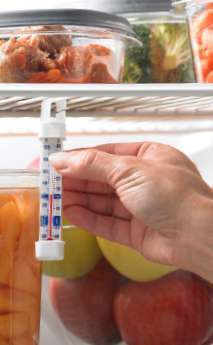
Knowing how to measure refrigerator temperature helps protect food, reduce waste, and spot cooling problems early. The ideal refrigerator is not simply “cold”; it holds a steady temperature in a safe range. This guide explains the best tools, correct placement, testing time, common mistakes, and practical ways to keep your refrigerator at 40°F or below.
Why refrigerator temperature matters
A refrigerator slows the growth of bacteria that can spoil food or cause illness. However, it does not stop bacterial growth completely. The colder the food stays within a safe range, the more time it has before quality and safety decline.
The U.S. Food and Drug Administration recommends keeping a refrigerator at or below 40°F (4°C). The freezer should stay at 0°F (-18°C). These limits help reduce the risk linked to perishable foods such as meat, poultry, seafood, eggs, milk, and leftovers.
Learning how to measure refrigerator temperature also helps you find hidden problems. A refrigerator may feel cold while still having warm areas caused by blocked vents, a weak door seal, overloading, or a failing compressor.
A correct temperature can also save money. Food lasts longer, and the appliance does not need to run constantly to compensate for poor airflow or an incorrect setting.
What you need to measure refrigerator temperature
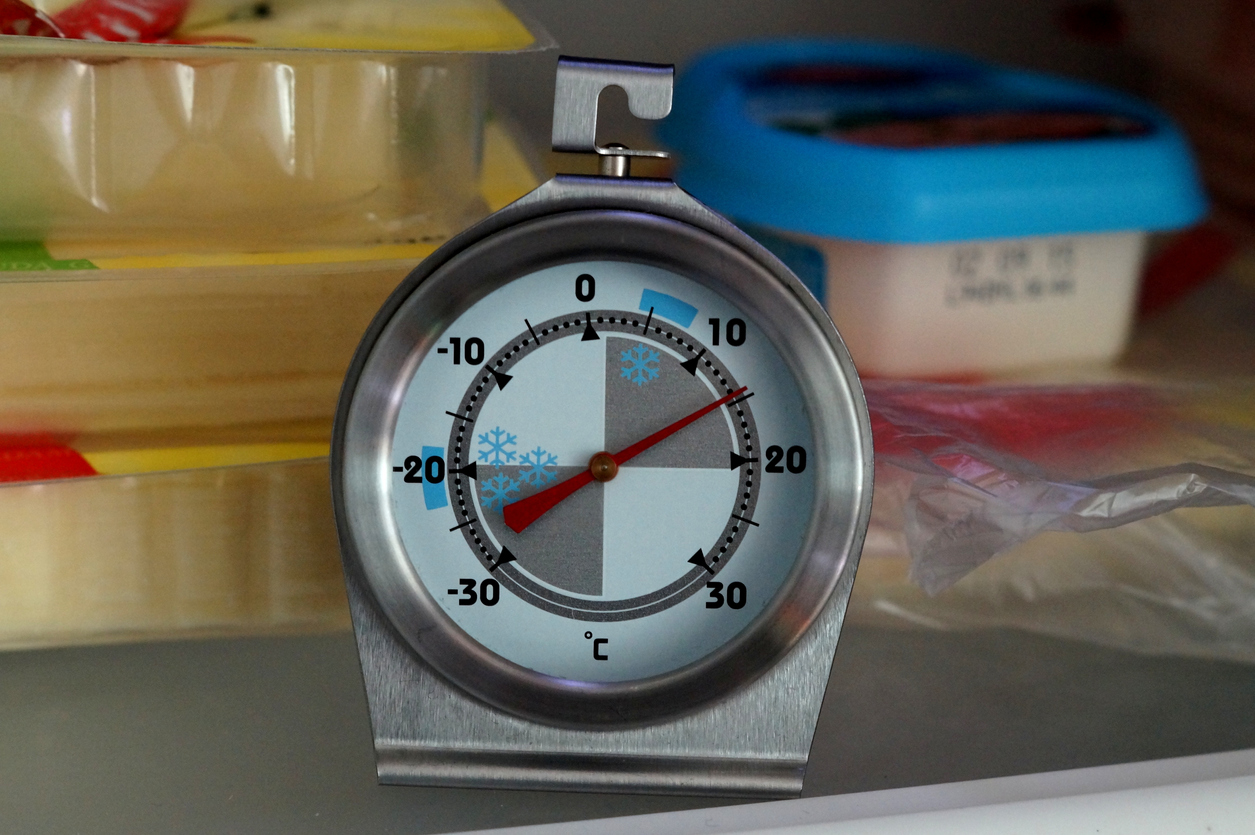
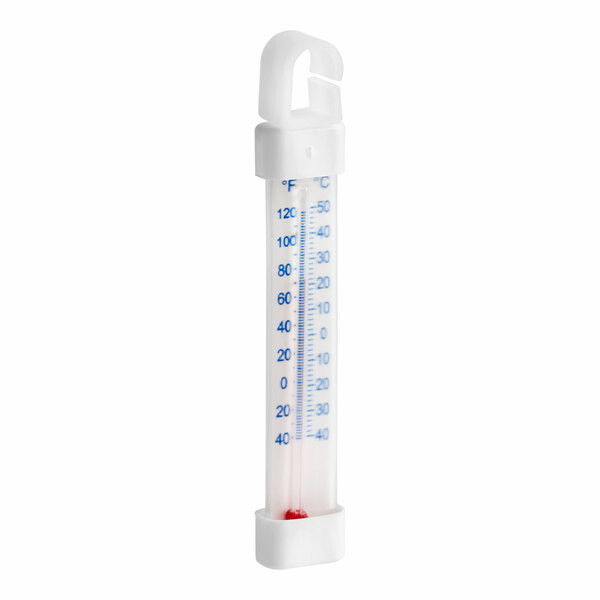
You do not need expensive equipment. A simple appliance thermometer is usually enough for home use.
Choose a thermometer with these features:
• A clear temperature scale that is easy to read
• A range that includes about 30°F to 50°F
• A design made for refrigerators or freezers
• A sturdy case that can handle moisture
• An easy-to-read digital display or dial
Digital thermometers often show small changes more clearly. Some models also record the highest and lowest temperatures. This feature helps you identify temperature swings that happen while you sleep or when the door opens often.
A glass thermometer can work, but handle it with care. If it breaks, clean the area at once and discard nearby uncovered food. Avoid using a cooking thermometer for long-term refrigerator monitoring unless the product instructions allow it.
Do not rely only on the refrigerator display. That display may show the set point rather than the actual temperature inside the cabinet. The air near the sensor may also be colder or warmer than the food on the shelves.
How to measure refrigerator temperature step by step
Follow these steps for a reliable reading:
-
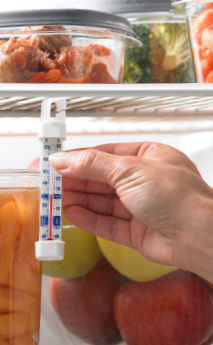
Place an appliance thermometer inside the refrigerator.
-
Put it in a glass of water if the thermometer instructions recommend this method. Water reduces quick swings caused by opening the door.
-
Set the thermometer on the middle shelf. Keep it away from the walls, vents, door bins, and direct contact with food.
-
Close the door and leave the thermometer in place for at least 24 hours.
-
Read the temperature without leaving the door open for long.
-
Record the result and check it again at different times.
-
Adjust the refrigerator setting if the reading is above 40°F.
-
Wait another 12 to 24 hours before checking the new temperature.
The 24-hour wait matters because refrigerators cycle on and off. A reading taken five minutes after changing the dial may not show the true average temperature.
When learning how to measure refrigerator temperature, think of the thermometer as a weather station. One quick reading tells you the weather at one moment. Several readings over a full day tell you the real climate.

Where to place the refrigerator thermometer
Placement can change the result by several degrees. Cold air often settles near the bottom, while warm air may collect near the top or door.
For a general reading, place the thermometer on the middle shelf toward the center of the refrigerator. This area usually reflects the temperature of food stored in the main compartment.
You can also test several areas:
• Middle shelf: Best for a general refrigerator reading
• Top shelf: May be warmer in some models
• Bottom shelf: May be colder, especially near a cooling vent
• Door shelf: Often the warmest location because the door opens frequently
• Crisper drawer: May have a different temperature and humidity level
Do not place the thermometer directly beside a cooling vent. That spot may give an unusually cold result and make the rest of the refrigerator seem safer than it is.
If you store high-risk foods, such as raw chicken or fresh seafood, check the area where those foods sit. Still, use the middle shelf for your main refrigerator temperature test.

The best temperature for a refrigerator
The safest target is usually between 35°F and 38°F (2°C and 3°C). This gives you a safety buffer below the 40°F limit.
A refrigerator set too warm may allow food to spoil sooner. A refrigerator set too cold may freeze lettuce, milk, fruit, and other foods. It may also use more energy.
Use these temperature ranges as a guide:
• 32°F or below: Food may freeze in the refrigerator
• 33°F to 34°F: Very cold and risky for some fresh foods
• 35°F to 38°F: Good target range for most homes
• 39°F to 40°F: Still within the recommended safety limit
• Above 40°F: Too warm for safe long-term storage
Some foods may freeze even when the average refrigerator temperature looks safe. This can happen if the food sits beside a vent or against the back wall. Move delicate foods away from those areas before changing the entire temperature setting.
:max_bytes(150000):strip_icc()/RealSimple_refrigerator-temperature_01_preview-8d2cf36eb6064a3c99ed9e920010ba3c.jpg)
How to adjust refrigerator temperature
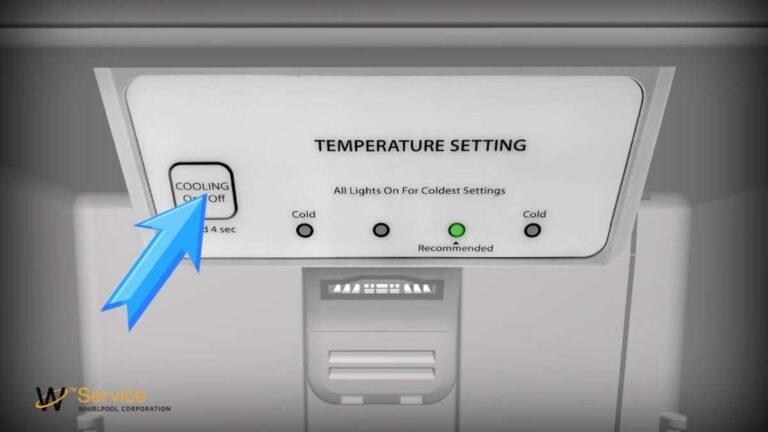
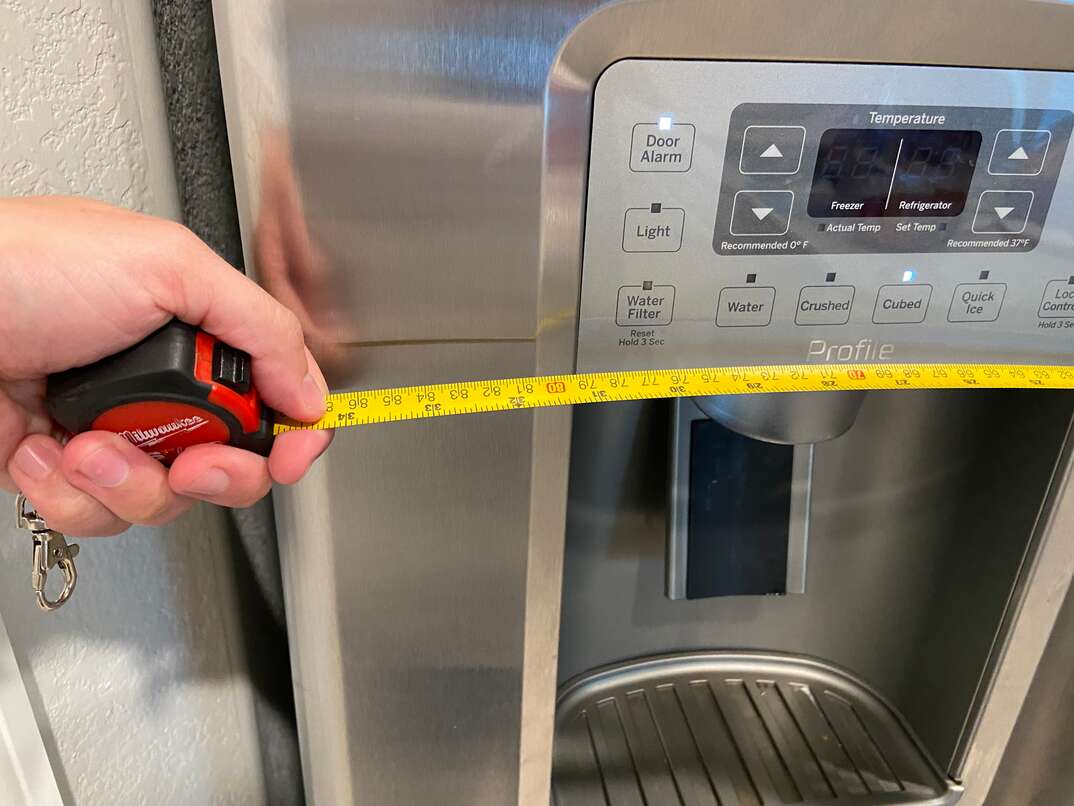
Most refrigerators use a numbered dial or an electronic control panel. On many dial models, a higher number means more cooling, but this is not universal. Check the owner’s manual if you are unsure.
Make small changes rather than turning the control from one extreme to the other. After each adjustment, wait 12 to 24 hours before taking another reading.
Use this process:
• If the temperature is above 40°F, choose a colder setting.
• If food is freezing, choose a warmer setting.
• Keep the doors closed during the testing period.
• Avoid placing hot food inside while testing.
• Leave space around vents so cold air can circulate.
A full refrigerator holds cold well, but an overcrowded refrigerator can block airflow. An almost empty refrigerator may also warm quickly when the door opens. Aim for a balanced load with space between food containers.

How to test refrigerator temperature accurately
Accuracy depends on more than the thermometer. You also need stable conditions.
Before testing, make sure the door closes fully. Check that the rubber gasket is clean and flexible. A simple paper test can help: close the door on a sheet of paper. If the paper slides out with no resistance, the seal may be weak.
Avoid testing right after these events:
• A long power outage
• A large grocery trip
• Loading several warm containers
• Defrosting or cleaning the refrigerator
• Leaving the door open
Wait until the refrigerator has returned to normal operation. Then take readings for at least one full day.
For greater confidence, compare two thermometers. Place them side by side on the same shelf. If their readings differ by more than a few degrees, test each thermometer in a cup of ice water. A correctly made ice-water mixture should be close to 32°F at sea level, though altitude and technique can affect the result.
A thermometer can lose accuracy over time. Replace it if the display becomes unclear, the battery is weak, or its reading seems inconsistent.
Common mistakes when measuring refrigerator temperature
Many inaccurate readings come from simple errors. Avoid these common problems:
• Checking the air immediately after opening the door
• Placing the thermometer in the door
• Touching the thermometer to a cold wall
• Putting it beside a vent
• Checking after only a few minutes
• Trusting the control setting instead of the actual reading
• Using a food thermometer not designed for constant monitoring
• Testing an empty refrigerator and assuming the result represents normal use
Another mistake is checking only once. A refrigerator may be cold in the morning and warm after frequent use during a family gathering. A temperature log gives a more complete picture.
Write down the date, time, temperature, and location. This small habit can show a pattern. For example, a refrigerator that warms every evening may have a door seal problem or too much traffic.

What to do if your refrigerator is too warm
If your thermometer shows more than 40°F, act promptly. First, confirm the reading with a second thermometer or a second test after the door has remained closed.
Then check the following:
• Is the refrigerator door fully closed?
• Are food packages blocking the door?
• Is the gasket dirty, cracked, or loose?
• Are the interior vents blocked?
• Is the refrigerator packed too tightly?
• Is the room unusually hot?
• Is the condenser area dusty, if your model allows cleaning?
Move perishable food to another refrigerator or a cooler with ice if the temperature stays high. Perishable food should not remain above 40°F for more than two hours, or more than one hour when the surrounding temperature is above 90°F.
When in doubt, throw it out. Smell and appearance cannot reliably show whether food is safe. Harmful bacteria may grow without changing the food’s odor, taste, or color.
Contact a qualified appliance technician if the temperature remains high after basic checks. Warning signs include constant running, loud clicking, heavy frost, water leaks, or a refrigerator that never reaches its target temperature.
Refrigerator temperature and food storage
Correct temperature is only one part of food safety. Storage habits matter too.
Keep raw meat, poultry, and seafood in sealed containers on the lowest shelf. This helps prevent juices from dripping onto ready-to-eat foods. Store leftovers in shallow containers so they cool more quickly.
Place milk and other highly perishable foods inside the main compartment rather than in the door. The door has frequent temperature changes and is better for items such as condiments.
Refrigerate leftovers within two hours. Divide large portions into smaller containers. Label food with the date so you can use older items first.
Keep the refrigerator below 40°F, but do not use cold temperature as a reason to store food forever. Food quality declines over time, even when the refrigerator works perfectly. Follow safe storage timelines and discard food that has been stored too long.
How often should you measure refrigerator temperature?
Check the refrigerator temperature at least once a month. Also check it after a power outage, a move, a repair, or a noticeable change in cooling performance.
People with infants, older adults, pregnant household members, or anyone with a weakened immune system may want to check more often. These groups can face a higher risk from foodborne illness.
A temperature alarm can help if you travel often or keep expensive food in the refrigerator. Some smart thermometers send alerts when the temperature rises above a chosen limit. These devices are useful, but they still need correct placement and occasional accuracy checks.
A monthly check takes little time and can prevent a costly surprise. It is one of the simplest maintenance habits in a kitchen.
Frequently Asked Questions About How to Measure Refrigerator Temperature
What is the safest refrigerator temperature?
Keep the refrigerator at 40°F (4°C) or below. A setting between 35°F and 38°F gives most homes a useful safety margin.
Where should I put a refrigerator thermometer?
Place it on the middle shelf near the center of the refrigerator. Keep it away from the door, walls, food packages, and cooling vents.
How long should a thermometer stay in the refrigerator?
Leave the thermometer inside for at least 24 hours for a dependable reading. This allows it to capture normal cooling cycles instead of one brief temperature change.
Can I use a food thermometer to check my refrigerator?
A food thermometer may provide a quick check, but it is not always designed for continuous use. An appliance thermometer is a better choice for monitoring refrigerator temperature over time.
Why is my refrigerator cold but the thermometer reads warm?
The thermometer may be near the door, blocked from cold airflow, or placed in a warm section. A dirty gasket, blocked vent, overloaded shelf, or mechanical problem can also cause uneven cooling.
What should I do if my refrigerator reaches 45°F?
Confirm the reading and keep the door closed while you investigate. If the temperature stays above 40°F, move perishable food to a safe refrigerator or ice-filled cooler and arrange appliance service if needed.
Does a full refrigerator stay colder?
A reasonably full refrigerator can hold its temperature well because cold food helps maintain the chill. However, overfilling can block airflow and create warm areas, so leave space around vents and between containers.
Conclusion
The best way to measure refrigerator temperature is to use a reliable appliance thermometer, place it on the middle shelf, and wait about 24 hours before reading it. Aim for 35°F to 38°F, and keep the refrigerator at or below 40°F for food safety.
Check the temperature at least once a month and after power outages, repairs, or unusual cooling changes. Start today by placing a thermometer in your refrigerator, recording the result, and making one small adjustment if needed. Explore more food safety guides, share this article with your household, or leave a comment about your refrigerator temperature test.

Appliance Review Expert
Lucas Ramirez is a trusted voice at HomeFixGrid.com, known for his clear, practical, and creatively written guides that simplify appliance care for everyday homeowners. With a strong focus on hands-on testing and real-world problem-solving, Lucas brings expert insight into appliance reviews and troubleshooting techniques. Her work empowers readers to confidently maintain, repair, and choose the right appliances for their homes.