How Wide Is A Mini Fridge: Standard Sizes Explained
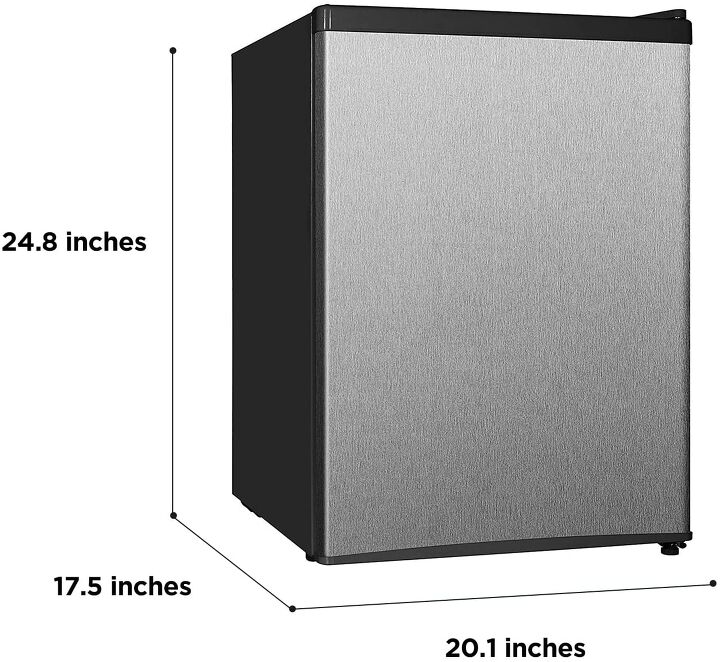
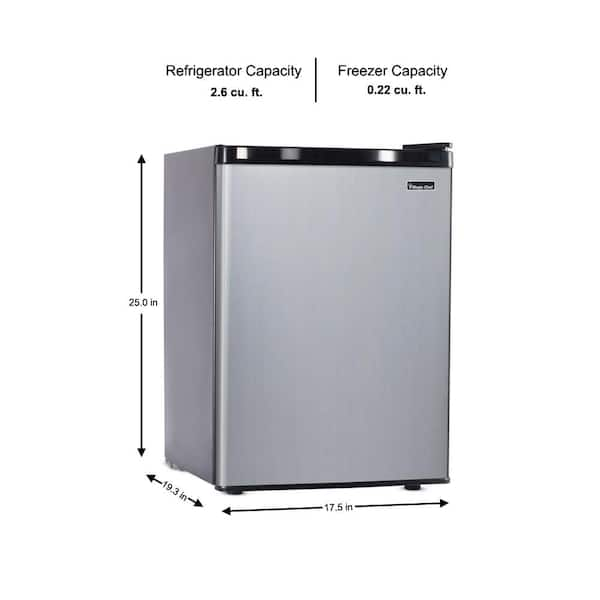
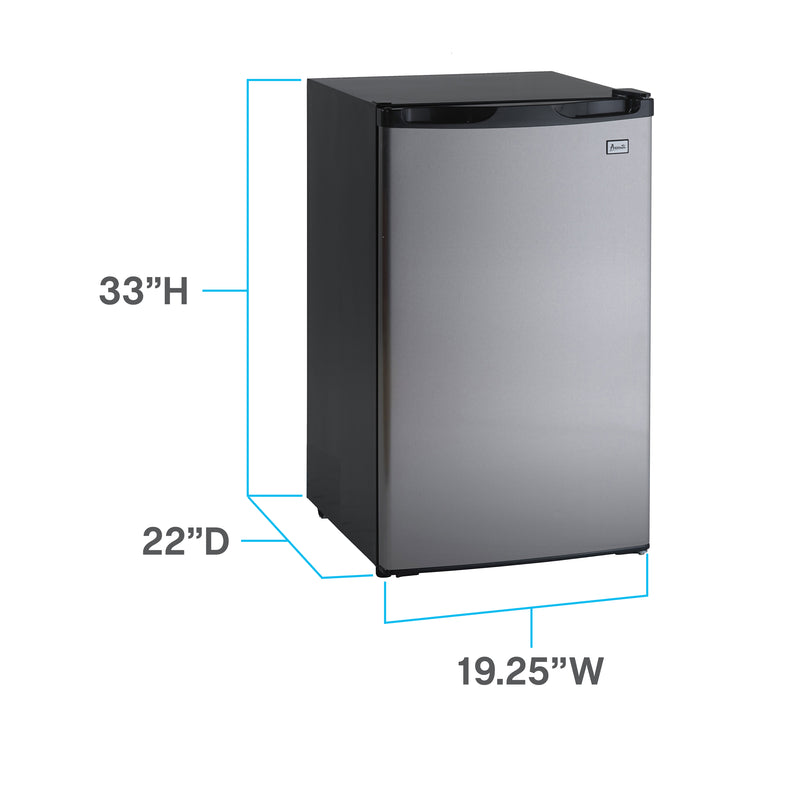
A mini fridge in the United States is usually 17 to 24 inches wide. The most common compact models are about 18 to 20 inches wide, while larger apartment-size units may reach 24 inches.
The exact width depends on the fridge’s storage capacity, door design, cooling system, and intended use. A small dorm fridge may be less than 18 inches wide. A 4.5-cubic-foot compact refrigerator may need about 19 to 22 inches of space.
Before you buy one, check the manufacturer’s listed overall width. Then allow extra room for ventilation, the power cord, the door, and safe opening.


Typical Mini Fridge Widths by Size
Mini fridges come in several size groups. Capacity is measured in cubic feet, while width is measured from the left side of the cabinet to the right side.
| Mini fridge type | Typical capacity | Common width | Common use |
|---|---|---|---|
| Personal mini fridge | 0.5–1.7 cu. ft. | 15–18 inches | Bedroom, office, cosmetics |
| Small dorm fridge | 1.7–2.7 cu. ft. | 17–19 inches | Dorm room, bedroom, home office |
| Standard compact fridge | 2.7–3.3 cu. ft. | 18–20 inches | Snacks, drinks, small food storage |
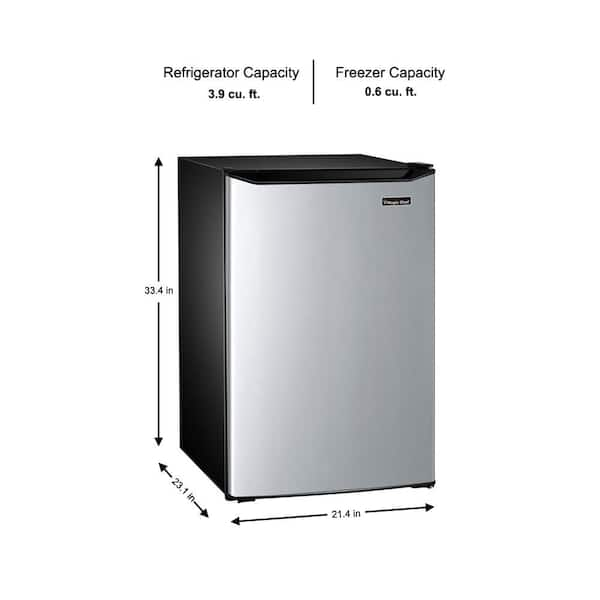
| Larger compact fridge | 3.3–4.5 cu. ft. | 19–22 inches | Apartment, garage, guest room |
| Apartment-size compact fridge | 4.5–6.0 cu. ft. | 22–24 inches | Larger food storage |
These are useful planning ranges, not fixed industry sizes. Two refrigerators with the same capacity can have different widths because one may be taller, deeper, or designed with thicker insulation.
A compact refrigerator with a separate freezer often needs more space than a beverage-only model. Door shelves, compressor placement, and insulation also affect the outside dimensions.
Common width examples
Many popular U.S. mini fridge sizes fall near these measurements:
- 17 inches wide: Very small personal or dorm models
- 18 inches wide: Compact refrigerators for tight spaces
- 19 inches wide: Common for 2.7- to 3.3-cubic-foot units
- 20 inches wide: Larger compact models with more usable storage
- 22 to 24 inches wide: Apartment-size units with larger interiors
Always use the exact product specification for installation. A listed width of 18.5 inches may not fit a space that measures exactly 18.5 inches.
How Wide Is a Mini Fridge in Inches?
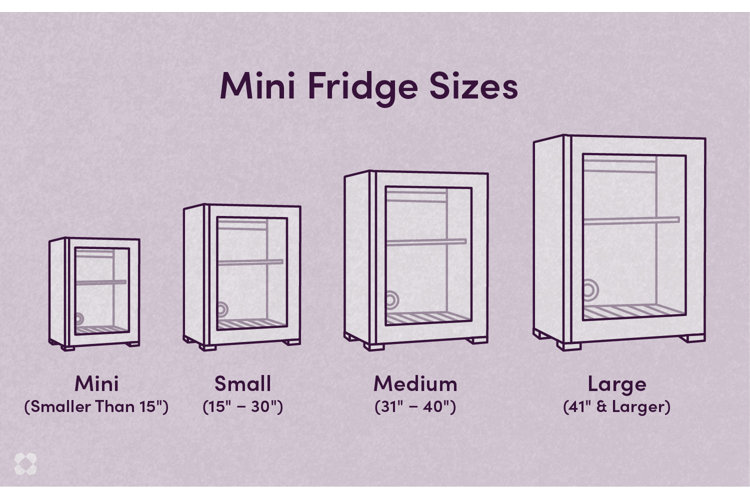
Most buyers looking for a bedroom or dorm mini fridge should plan for about 18 to 20 inches of width. This range covers many common compact refrigerators sold in the United States.
A very small mini fridge may be only 15 to 17 inches wide. These models often hold drinks, snacks, medicine, or a few personal items. They may not include a full freezer section.
A larger mini fridge may be 21 to 24 inches wide. These units usually offer more food storage and may include a separate freezer compartment. They also tend to be deeper and heavier.
Width is not the only size that matters
A fridge can fit the available width and still fail to work well if there is not enough room for:
- Depth: The distance from the front of the door to the back of the cabinet
– Height: The distance from the floor to the top of the fridge - Door swing: The space needed for the door to open
- Ventilation: Air space around the cabinet
- Power access: Room for the plug and cord
For example, a refrigerator that is 19 inches wide may need a 21-inch-wide opening if the manufacturer requires clearance on both sides.


How Much Space Should You Leave Around a Mini Fridge?
Leave the clearance stated in the owner’s manual. If the manual does not give a clear measurement, a practical starting point is to leave at least 1 to 2 inches around the sides and top, with extra room behind the unit when required.
The exact need depends on the design. Some mini fridges release heat through the back. Others use side or front ventilation. A built-in compact refrigerator may be designed for enclosed cabinets, while a freestanding model may not be.
Why ventilation matters
A mini fridge moves heat from inside the cabinet to the surrounding air. The compressor and condenser must release that heat. If the fridge is pushed tightly against a wall or placed in a closed cabinet, heat can build up.
Poor airflow may lead to:
- Longer cooling cycles
- Higher electricity use
- Excess wear on the compressor
- Warm food or drinks
- Reduced service life
Do not assume that a small size means the fridge can sit in any opening. Check the installation instructions for the exact model.
Freestanding and built-in mini fridges are different
A freestanding mini fridge needs open space around its ventilation areas. It is meant to stand on its own.
A built-in or undercounter compact refrigerator may be made for cabinet installation. Its vents may face forward, allowing it to work in a tighter enclosure.
Do not place a freestanding refrigerator inside a cabinet unless the manufacturer approves that setup. The outside width may fit, but the airflow may not.
How to Measure a Space for a Mini Fridge
Measure the space before choosing a model. Do not measure only the shelf or countertop.
Follow these steps:
-
Measure the opening width.
Measure from the left side to the right side at the top, middle, and bottom. Use the smallest measurement. -
Measure the height.
Check the floor, shelf, or countertop to the lowest overhead point. -
Measure the depth.
Measure from the wall to the front edge of the space. Include trim, baseboards, and outlets. -
Check the door swing.
Make sure the door can open without hitting a wall, desk, bed, cabinet, or another appliance. -
Locate the outlet.
Confirm that the cord can reach the outlet without an extension cord. -
Subtract the required clearance.
Compare the available space with the manufacturer’s ventilation and installation instructions.


Example measurement
Suppose a space is 21 inches wide.
A mini fridge that is 19 inches wide may leave only 1 inch on each side. That could be enough for one model but not for another. If the manual calls for 2 inches on each side, the opening should be at least 23 inches wide.
The key calculation is:
Required opening width = refrigerator width + left clearance + right clearance
For example:
19 inches + 2 inches + 2 inches = 23 inches
This calculation is a planning example. Use the product manual for the final requirement.
Does a Mini Fridge Need Extra Width for the Door?
The cabinet width and the door-swing space are separate measurements. A refrigerator may fit between two walls but still be difficult to use if the door cannot open fully.
Check these details before buying:
- Which side the hinges are on
- Whether the door can be reversed
- How far the door extends when open
- Whether shelves or drawers need a fully open door
- Whether the handle adds to the total clearance
- Whether a nearby wall blocks access
Some mini fridges have reversible doors. This can help in a tight room, but door reversal may require tools and careful installation. Follow the manual rather than forcing the hinge assembly.
If the refrigerator will sit next to a wall, place the hinge side away from the wall when possible. This often gives the door more room to open, although the correct choice depends on the model and the room layout.


How Wide Is a Mini Fridge for a Dorm Room?
A dorm-room mini fridge is commonly 17 to 19 inches wide. Many are about 2 to 3 cubic feet, which gives enough space for drinks, snacks, and a small amount of fresh food.
Dorm rules can vary by school and housing provider. Some colleges limit refrigerator size, electrical use, or appliance placement. Check the housing policy before purchasing.
For a dorm room, also consider:
- Noise near the bed
- Door clearance near a desk
- Safe placement on a stable floor
- Access to a grounded wall outlet
- Space above the fridge for ventilation
- Whether a freezer compartment is allowed or useful
Do not place a mini fridge on a soft bed, unstable shelf, or thick carpet that blocks ventilation. Keep the unit level and give the compressor room to operate.

How Wide Is a Mini Fridge for an Office?
An office mini fridge is often 18 to 22 inches wide. A smaller model may work for drinks and lunch items. A larger model may be better for shared use.
For an office, measure the full area around the appliance. A cabinet opening may be wide enough for the fridge but too tight for the door or power cord.
A beverage-only refrigerator can be wider than a small food fridge while offering less flexible storage. Look at the interior layout, not just the outside width.
If several people will use the unit, consider a model with:
- Adjustable shelves
- A larger door bin
- Easy-clean interior surfaces
- A freezer compartment if needed
- A clear temperature control
- Enough space for airflow

Mini Fridge Width Compared With Other Small Refrigerators
“Mini fridge” can describe several different products. Comparing the category helps prevent a poor fit.
| Refrigerator type | Typical width | Main difference |
|---|---|---|
| Personal cooler-style fridge | 10–17 inches | Small capacity; often used for drinks |
| Dorm mini fridge | 17–19 inches | Compact food and drink storage |
| Compact refrigerator | 18–22 inches | More space and stronger food-storage function |
| Beverage refrigerator | 18–24 inches | Designed mainly for cans and bottles |
| Undercounter refrigerator | 23–24 inches | Built for cabinet-height installation |
| Full-size refrigerator | About 30–36 inches or more | Much larger storage capacity |
These ranges can overlap. A 24-inch refrigerator may be marketed as a compact refrigerator, an undercounter unit, or a beverage cooler.
The product name matters less than the listed dimensions and installation instructions. Compare the width, depth, height, capacity, and ventilation design together.

How to Choose the Right Mini Fridge Width
Choose the narrowest model that still meets your storage needs and clearance requirements. A smaller fridge saves space, but it may have less usable room than its outside size suggests.
Use this simple process:
1. Measure the available space
Record the smallest width, height, and depth. Account for baseboards, outlets, trim, and nearby furniture.
2. Decide what you will store
A personal drink fridge needs far less interior room than a refrigerator for meals and fresh food. Write down the items you expect to keep inside.
3. Check the interior layout
Two units with similar outside widths may have different usable storage. A freezer shelf, compressor hump, or thick door can reduce interior space.
4. Read the complete dimension listing
Look for:
- Overall width
- Cabinet width
- Door width
- Width with the door open
- Depth with the handle
- Required side clearance
- Required rear clearance
- Required top clearance
5. Confirm the electrical requirements
Most household mini fridges use a standard U.S. wall outlet, but the exact electrical needs vary. Use the manufacturer’s instructions and avoid overloaded outlets or unsafe extension-cord setups.
6. Leave room for maintenance
You may need to pull the fridge out to clean the condenser area, inspect the cord, or service the unit. A space that is too tight can make basic maintenance difficult.

Common Mini Fridge Sizing Mistakes
The most common mistake is buying a refrigerator based only on its advertised width. The listed width may not show the space needed for ventilation or door movement.
Avoid these errors:
- Measuring the space only once
- Ignoring the depth of the plug
- Forgetting the door handle
- Blocking a rear or side vent
- Assuming every mini fridge fits inside a cabinet
- Placing the unit directly against a wall
- Choosing capacity without checking interior layout
- Using a power strip that is not suitable for the appliance
- Ignoring dorm or workplace appliance rules
A second common mistake is confusing shipping dimensions with product dimensions. Shipping measurements include packaging and are larger. Use the manufacturer’s product or assembled dimensions when planning the installation.
A third mistake is treating “compact” as a standard size. It is a broad product label, not a single width.

Mini Fridge Width and Energy Use
Width alone does not determine energy use. A wider refrigerator often has more interior volume, but efficiency depends on the compressor, insulation, temperature control, freezer design, and operating conditions.
For an apples-to-apples comparison, check the product’s estimated annual energy use and operating cost when that information is available. The U.S. Department of Energy and ENERGY STAR provide appliance efficiency information, but eligibility can vary by product type and model.
Keep the refrigerator away from heat sources such as:
- Direct sunlight
- Ovens and ranges
- Radiators
- Space heaters
- Hot equipment in a garage
A cooler location can help the appliance reject heat more easily. Never lower the thermostat to compensate for poor airflow or an overloaded interior.

Frequently Asked Questions
Is a 20-inch-wide mini fridge common?
Yes. A width near 20 inches is common for larger dorm refrigerators and compact models. Check the exact width because some models may be slightly narrower or wider.
Will a mini fridge fit in a 18-inch space?
Only if the refrigerator is narrower than 18 inches and the installation instructions allow enough clearance. A unit listed as 17.7 inches wide may still need additional side space.
How wide is a mini fridge with a freezer?
Many mini fridges with freezers are about 18 to 22 inches wide. The freezer design, total capacity, and door layout affect the measurement.
Can I put a mini fridge in a cabinet?
Only when the manufacturer approves cabinet installation. Built-in models are designed for enclosed spaces, while many freestanding models need open ventilation around the cabinet.
How much space should I leave beside a mini fridge?
Follow the manual first. If no guidance is available, plan for at least 1 to 2 inches on each side, but confirm the requirement for the exact refrigerator before installation.
Key Takeaways
- Most mini fridges in the United States are 17 to 24 inches wide.
- The most common width is about 18 to 20 inches.
- Small personal units may be only 15 to 17 inches wide.
- Larger compact refrigerators may reach 22 to 24 inches.
- Measure width, height, depth, door swing, and ventilation space.
- Do not place a freestanding mini fridge in a tight cabinet unless the manufacturer allows it.
- Use the exact product dimensions, not a general size label, before buying.
Conclusion
A typical mini fridge is about 18 to 20 inches wide, but the full range is wider. Small personal models may be 15 inches wide, while larger compact refrigerators can measure 22 to 24 inches.
Measure the space at several points, check the model’s full specifications, and leave room for ventilation and the open door. If the space is tight, choose the refrigerator only after confirming its required clearances.

Appliance Review Expert
Lucas Ramirez is a trusted voice at HomeFixGrid.com, known for his clear, practical, and creatively written guides that simplify appliance care for everyday homeowners. With a strong focus on hands-on testing and real-world problem-solving, Lucas brings expert insight into appliance reviews and troubleshooting techniques. Her work empowers readers to confidently maintain, repair, and choose the right appliances for their homes.