Why Does Microwave Chicken Taste Bad: Fixes That Work
Microwave chicken can taste dry, rubbery, bland, or oddly “off” because a microwave heats water in a fast, uneven way. It can also soften crisp skin, push moisture out of lean meat, and make stored flavors more noticeable. This is common with leftover chicken in U.S. home kitchens, especially boneless chicken breast.
The good news is that microwaving is not always the problem. The main causes are the chicken cut, storage time, heating power, container, and reheating method.

The short answer: why microwave chicken tastes bad
Microwave chicken often tastes bad for five main reasons:


- It loses moisture. High heat makes water move out of the meat.
- It heats unevenly. Some areas may be hot while others stay cold.
- Lean meat overcooks quickly. Chicken breast has little fat to protect it.
- Crisp textures turn soft. Steam has nowhere to escape.
- Old or poorly stored leftovers develop stale flavors. Reheating cannot fix spoiled or low-quality chicken.
Microwaves heat food by making water molecules move. This process is quick, but it does not brown food like an oven, skillet, or grill. As a result, reheated chicken can lose the texture and flavor it had when it was first cooked.
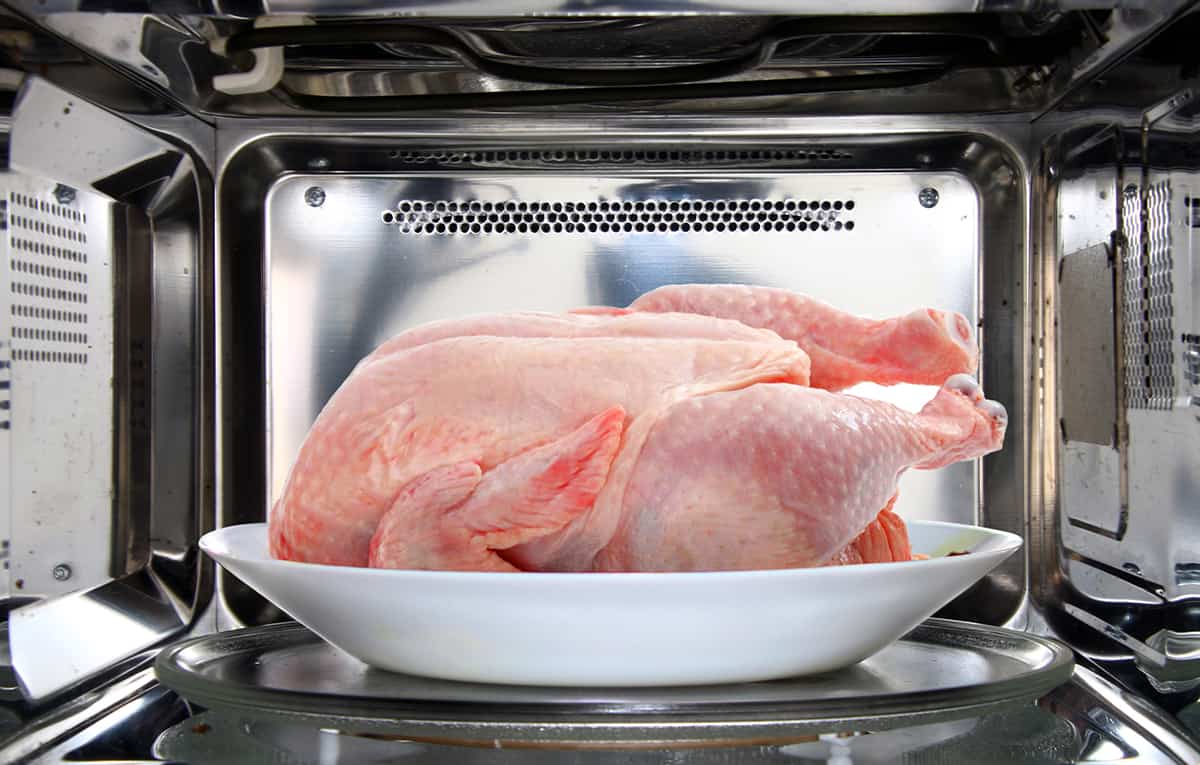
How microwaves change chicken
A microwave does not heat chicken in the same way as a pan or oven. It mainly excites water molecules inside the food. The water becomes heat, and that heat cooks or reheats the chicken.
This creates several problems.
Moisture moves out of the meat
Chicken muscle holds water in a network of protein fibers. When the meat gets hot, those fibers tighten. Tight fibers squeeze out moisture.
In a pan, you can control the heat and add fat or sauce. In a microwave, the inside of the chicken may heat very fast. The result can be dry meat with a firm or rubbery bite.
Heating is uneven
Microwave energy does not spread through food evenly. Thick pieces, bones, dense areas, and cold spots can all affect heating.
A chicken breast may feel hot on the outside but remain cool in the center. If you keep heating it until the center is hot, the outer layers may become tough.
This is why cutting chicken into smaller, even pieces helps. Smaller pieces heat more evenly and need less time.
Microwaves do not create fresh browning
Freshly cooked chicken often tastes good because of browning. Browning creates roasted flavors through chemical reactions on the surface of the meat.
A microwave mostly creates steam. It does not produce the dry surface heat needed for strong browning. Skin, breading, and roasted edges may become soft instead of crisp.


Fat and juices can separate
Chicken contains fat, juices, and proteins. Reheating can cause these parts to separate. The meat may taste greasy in one spot and dry in another.
This effect is more noticeable in chicken with a sauce, cheese, or oily coating. The sauce may become very hot before the meat is fully warmed.

Why chicken breast tastes worse than dark meat
Chicken breast often tastes worse after microwaving because it is lean and low in fat. It has less protection against moisture loss.
Chicken thighs and drumsticks usually reheat better. Their higher fat and connective tissue content can help them stay tender. They may still become dry if overheated, but they often remain more flavorful than breast meat.
| Chicken type | Common microwave result | Best adjustment |
|---|---|---|
| Boneless breast | Dry, firm, or stringy | Add sauce and use short heating cycles |
| Bone-in breast | Uneven heating near the bone | Remove the bone or heat at lower power |
| Chicken thigh | Usually more tender | Cover and add a small amount of liquid |
| Fried chicken | Soft coating | Use an oven, toaster oven, or air fryer |
| Grilled chicken | Dry edges and dull flavor | Slice thinly and reheat with broth or sauce |
| Chicken in soup | Usually reheats well | Stir and check the center temperature |
If you want the best microwave result, use chicken in a moist dish. Tacos, soup, curry, pasta, rice bowls, and casseroles usually reheat better than plain chicken breast.

Could the chicken be spoiled?
A bad taste is not always a texture problem. Sometimes it means the chicken was stored too long or handled poorly.
According to the USDA, cooked chicken leftovers should generally be refrigerated within two hours and used within three to four days when kept at 40°F or below. If the room is above 90°F, such as during a hot U.S. summer day, refrigerate food within one hour.
Throw the chicken away if it has:
- A sour, rotten, or strongly unusual odor
- A slimy or sticky surface
- Mold
- A swollen container
- A taste that seems unsafe or clearly spoiled
- A storage history you cannot trust
Do not taste food to decide whether it is safe. Harmful bacteria may not change the smell, taste, or appearance.
Microwaving also does not make spoiled chicken safe. Heat can kill some bacteria, but it may not remove toxins that formed while food was stored incorrectly.
For food safety, the USDA recommends reheating leftovers to 165°F. Use a food thermometer in the thickest part of the chicken. Let the food stand briefly after heating, because the temperature may continue to rise and even out.
How to reheat chicken in a microwave without drying it out
Use lower power, added moisture, short heating cycles, and a short rest. These steps reduce the chance of dry or rubbery chicken.


1. Cut thick chicken into even pieces
Slice large breasts or thighs into pieces of similar size. Thin slices heat faster and more evenly than a whole thick piece.
If the chicken is already shredded, spread it in a thin layer. Do not leave it in one tall pile.
2. Add a little moisture
Add one or two teaspoons of water, broth, gravy, salsa, or sauce for a small serving. Use more for a larger portion.
The liquid creates steam and replaces some moisture lost during reheating. It does not fully restore dry chicken, but it can make the meat feel softer.
3. Cover the dish
Use a microwave-safe lid or a damp paper towel. Leave a small vent if the lid is not designed for microwave use.
Covering traps steam. This helps prevent the surface from drying out. It also softens coatings, so do not cover fried chicken if crispness matters.
4. Use medium power
Try 50% to 70% power instead of full power. Lower power gives heat more time to spread through the meat.
Microwave power settings vary by model. A “50%” setting may cycle the microwave on and off rather than produce a steady lower heat. This still helps because the food gets short rest periods between bursts.
5. Heat in short intervals
Start with 30 to 45 seconds for one serving. Turn or stir the chicken. Continue in 15- to 30-second intervals until it is hot throughout.
The exact time depends on the amount, shape, starting temperature, and microwave wattage. A 1,000-watt microwave may heat food faster than an older 700-watt model.
6. Let it stand
Rest the chicken for one to two minutes. This allows heat to spread from hot spots into cooler areas.
Check the thickest part with a food thermometer when food safety matters. The target is 165°F.
7. Finish with fresh flavor
Microwaving can flatten flavor. Add a fresh topping after heating, such as:
- Lemon juice
- Salsa
- Hot sauce
- Fresh herbs
- Pickled onions
- Yogurt sauce
- Gravy
- A small amount of olive oil or butter
Acid and fresh herbs can make leftover chicken taste brighter without requiring more cooking.


Best microwave method by chicken type
The best method depends on the dish.
Plain chicken breast
Slice the breast thinly. Add broth or sauce. Cover it and use medium power. Stop heating as soon as the center is hot.
Do not microwave a whole cold breast on high power unless you accept dry edges. The outside will usually overcook before the middle warms.
Chicken with rice
Add one tablespoon of water or broth per serving. Cover the bowl. Stir halfway through heating.
Rice can dry out in the refrigerator. The added liquid helps both the rice and chicken soften.
Chicken soup or stew
Place the food in a deep microwave-safe bowl. Cover it loosely. Stir every 60 seconds.
Thick soups can develop hot spots. Stirring is essential, especially when the soup contains meat, beans, or dense vegetables.
Fried chicken
A microwave is usually the wrong tool if you want crisp skin or breading. It heats the moisture in the coating and makes it soft.
For better texture, use an oven, toaster oven, or air fryer. Heat until the center reaches 165°F. A microwave can still help warm the inside first, but another method should restore the outside texture.
Chicken nuggets or breaded strips
Use a microwave only for speed. Place the pieces in a single layer and heat briefly. For a crisp coating, finish them in an air fryer, toaster oven, or conventional oven.
Follow the package directions for frozen products. Raw or partially cooked chicken products require extra care because the center may remain unsafe.

Why does microwaved chicken taste like a wet dog or sulfur?
A strong sulfur-like, rotten, or animal-like smell can come from spoilage, but not every unusual smell proves that the chicken is unsafe.
Stored chicken can also develop odors from its seasoning, packaging, nearby foods, or oxidation of fats. Plastic containers and strong foods such as onions can affect the smell.
However, do not take risks with meat. If the smell is clearly rotten, sour, or unusually strong, discard the chicken. Do not keep reheating it to “test” the smell.
If the chicken smells normal before heating but develops a mild cooked-meat odor, improve the texture and flavor with sauce, herbs, or a different reheating method. If the odor remains unpleasant, do not eat it.

Common mistakes that make reheated chicken worse
Several habits increase dryness and uneven heating.
Using full power for too long
High power can heat the outside faster than the center. Use medium power and short cycles instead.
Reheating the whole piece
A thick breast or large thigh heats unevenly. Slice it first when possible.
Leaving the chicken uncovered
Uncovered chicken loses moisture to the air inside the microwave. Cover it with a microwave-safe lid or damp paper towel.
Adding too much liquid
A large amount of water can wash out flavor and make the dish soupy. Start with a small amount and add more only if needed.
Reheating several times
Each heating cycle can remove more moisture. Reheat only the amount you plan to eat.
Trusting the timer instead of the temperature
Microwave times are not universal. Wattage, food volume, shape, and starting temperature all change the result. A food thermometer is more reliable than a fixed time.
Covering food with unsafe materials
Use containers labeled microwave-safe. Do not use metal unless the appliance manual specifically allows it. Avoid damaged plastic and containers not intended for microwave heating.

Can you make bad-tasting microwave chicken taste good?
You can improve dry or bland chicken, but you cannot fully restore meat that is spoiled or badly overcooked.
Try one of these fixes:
- Mix shredded chicken with barbecue sauce.
- Add broth and use it in soup.
- Stir it into salsa, beans, and rice.
- Add gravy or a creamy sauce.
- Chop it into a salad with a moist dressing.
- Use it in tacos with lime, cabbage, and hot sauce.
- Add it to pasta with sauce.
- Slice it thinly and place it in a sandwich.
Moisture and strong fresh flavors help most. A small amount of acid, such as lemon juice or vinegar, can reduce a flat or heavy taste. Add it after heating for better flavor.
Do not try to hide a rotten smell with spices. Unsafe chicken should go in the trash.

Microwave chicken troubleshooting table
Use the symptom to find the most likely cause and the best next step.
| Symptom | Likely cause | What to do |
|---|---|---|
| Dry edges, cold center | Heating too fast or too long | Use lower power and shorter cycles |
| Rubber-like texture | Protein fibers tightened | Add sauce and stop heating sooner |
| Bland taste | Flavor loss during storage | Add herbs, acid, salsa, or gravy |
| Wet breading | Steam softened the coating | Use an oven or air fryer |
| Greasy patches | Fat separated during heating | Stir sauce and use lower power |
| Strong sour smell | Possible spoilage | Discard the chicken |
| Hot and cold spots | Uneven food shape | Spread pieces out and turn them |
| Tough skin | Microwave cannot brown well | Finish with dry heat |

FAQ: Why does reheated chicken taste metallic?
A metallic taste may come from seasoning, acidic sauce, old fat, or a reaction with certain cookware. It can also signal that the food has developed an unpleasant stale flavor during storage.
Move the chicken to a glass or ceramic microwave-safe dish. Reheat it with fresh sauce and avoid heating it in damaged or unsuitable containers. If the metallic taste is strong or new, discard the food.
FAQ: Is microwaved chicken safe to eat?
Yes, microwaved chicken can be safe when it was stored correctly and reheated thoroughly. Refrigerate cooked chicken within the recommended time, use it within three to four days, and reheat it to 165°F.
Heating alone cannot make spoiled chicken safe.
FAQ: Why is my chicken chewy after microwaving?
Chewy chicken is usually overcooked. High heat causes the muscle proteins to tighten and lose water. Slice the chicken, add a little liquid, use medium power, and heat it in short bursts.
FAQ: Should I microwave chicken with a paper towel?
A damp paper towel can help keep chicken moist. Use a plain paper towel labeled or understood to be microwave-safe. Do not use foil, metallic paper, or paper with printed designs that may contain metal.
FAQ: Is an oven better than a microwave for leftover chicken?
An oven is usually better for crisp skin, breading, and roasted flavor. A microwave is faster and works well for chicken in soup, sauce, rice, or other moist dishes.
Choose the method based on the texture you want:
- Fast and moist: microwave
- Crisp coating: oven, toaster oven, or air fryer
- Even reheating of a large portion: oven
- Small amount mixed into a dish: microwave
Key takeaways
- Microwave chicken tastes bad mainly because it loses moisture and heats unevenly.
- Chicken breast is more likely to become dry than chicken thighs.
- Use medium power, short intervals, a cover, and a small amount of liquid.
- Reheat leftovers to 165°F and follow safe storage limits.
- A microwave cannot restore crisp skin or breading.
- Discard chicken with a rotten smell, slimy texture, mold, or uncertain storage history.
Conclusion
Microwave chicken tastes bad when fast, uneven heat pushes moisture out of the meat without creating fresh browning. Lean chicken breast suffers the most, while chicken in sauce, soup, or rice usually reheats better.
For a better result, slice the chicken, add a little liquid, cover it, use medium power, and heat it in short bursts. If the chicken smells spoiled or has been stored too long, do not try to save it. Throw it away.
The best next step is simple: use a food thermometer for safety, then choose the heating method that matches the texture you want.

Appliance Review Expert
Lucas Ramirez is a trusted voice at HomeFixGrid.com, known for his clear, practical, and creatively written guides that simplify appliance care for everyday homeowners. With a strong focus on hands-on testing and real-world problem-solving, Lucas brings expert insight into appliance reviews and troubleshooting techniques. Her work empowers readers to confidently maintain, repair, and choose the right appliances for their homes.