What Mattress Is Best For Back Pain: Top Choices
The best mattress for back pain is medium-firm, supportive, pressure-relieving, and suited to your sleep position.
Choosing what mattress is best for back pain is not about finding the hardest bed or the most expensive model. It is about keeping your spine in a neutral line while easing pressure on your hips, shoulders, and lower back. After reviewing sleep research, mattress materials, and common fit problems, I’ll explain how firmness, support, sleep position, body weight, and trial periods affect your choice.
What mattress is best for back pain?
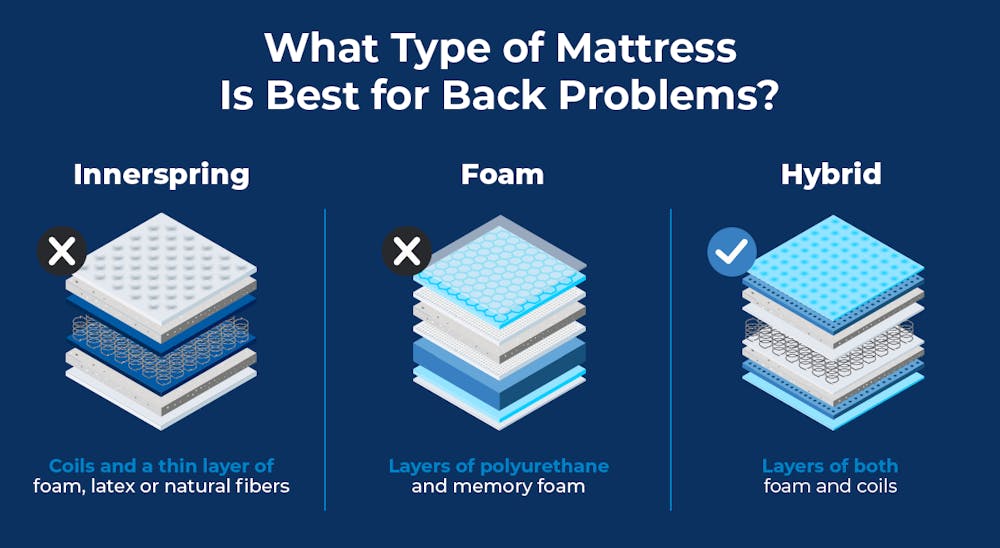
For most people, a medium-firm hybrid mattress is the best starting point for back pain. It usually combines steady coil support with foam or latex comfort, so your body feels cushioned without sinking too far.
A mattress that is too soft can let your hips drop below your shoulders. This may pull the spine out of alignment. A mattress that is too firm can create pressure at the hips and shoulders, especially if you sleep on your side.
Research has found that medium-firm mattresses may improve comfort, sleep quality, and back pain for some adults. However, there is no single mattress that works for every person. Your body shape, weight, sleep position, pain source, and personal comfort all matter.
The best mattress for back pain should offer these features:
• Medium-firm support without feeling hard or stiff
• Enough pressure relief for the shoulders, hips, and lower back
• Strong edge support so you can get in and out of bed with ease
• Stable support that does not sag in the center
• Good motion control if you share the bed
• Breathable materials if you sleep hot
A mattress should feel like a level bridge. It needs to support your full body while allowing softer areas to cushion natural curves.
Why mattress support matters for back pain
Your spine has natural curves. A good mattress supports those curves without forcing them flat or allowing them to bend too far. When the mattress works well, your muscles can relax during sleep instead of working all night to hold your body in place.
Poor support often creates a “hammock” effect. Your heavier areas, such as the pelvis and hips, sink too deeply. The lower back then arches or twists. You may wake with stiffness that improves after you move around.
A very firm mattress can cause a different problem. It may keep your hips from sinking at all, but it can push against the shoulders and ribs. This is common for side sleepers and people with less body weight.
The best mattress for back pain provides balanced support. Support comes from the deeper layers, such as coils or dense foam. Comfort comes from the upper layers, such as memory foam, latex, or soft fiber.
Keep in mind that a mattress cannot cure every type of back pain. Pain may come from a disc problem, arthritis, muscle strain, nerve irritation, or another health issue. If pain travels down your leg, causes numbness or weakness, or follows an injury, seek medical care.

Medium-firm vs. firm mattresses for back pain
Many shoppers assume a firm mattress is best for back pain. This idea became popular because older mattresses often sagged badly. A firm surface seemed like a simple way to prevent the body from sinking.
Modern mattresses offer more precise support. A medium-firm mattress can hold the hips and waist while still cushioning pressure points. This balance is why it often works well for people with lower back pain.
A firm mattress may suit you if:
• You sleep mainly on your back or stomach
• You have a larger body size and need more resistance
• You prefer a solid, less cushioned feel
• You dislike the feeling of sinking into foam
A medium-firm mattress may suit you if:
• You change positions during the night
• You sleep on your side and back
• You often feel pressure on your hips or shoulders
• You want support with a little contouring
Firmness labels are not standardized. One brand’s medium may feel like another brand’s firm. This is why testing the mattress at home is more useful than trusting a label alone.
When people ask what mattress is best for back pain, I suggest starting with medium-firm rather than choosing the hardest option. You can add a thin topper if the surface feels too firm, but fixing a mattress that is too soft is much harder.
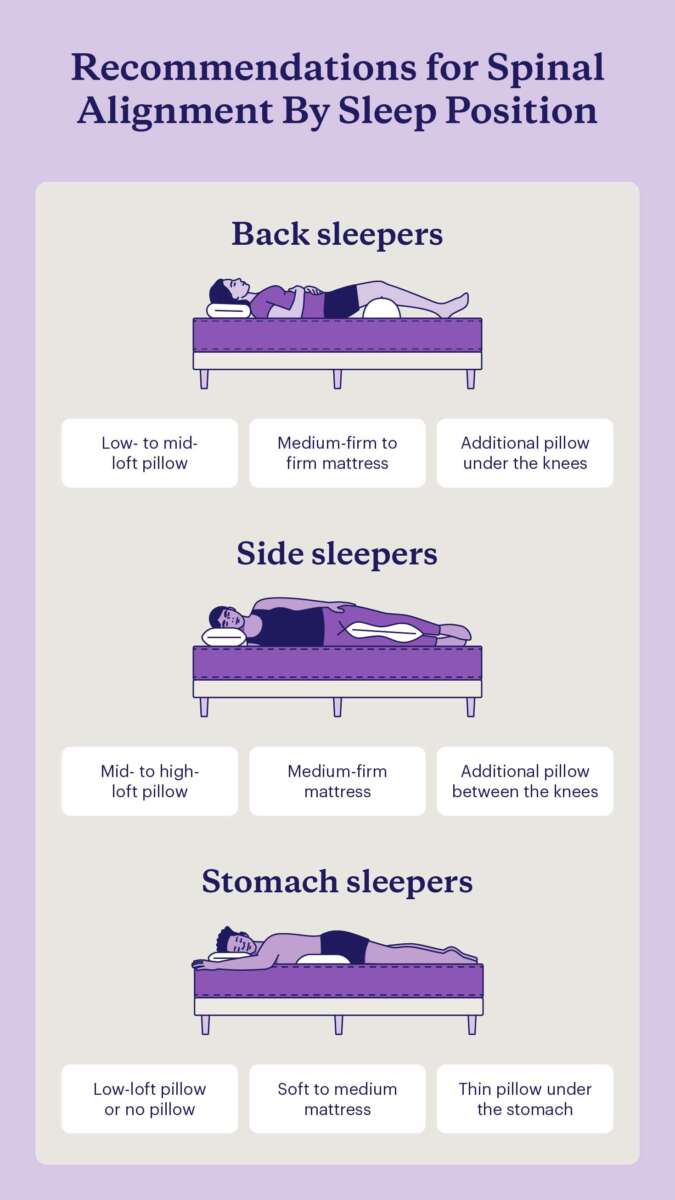
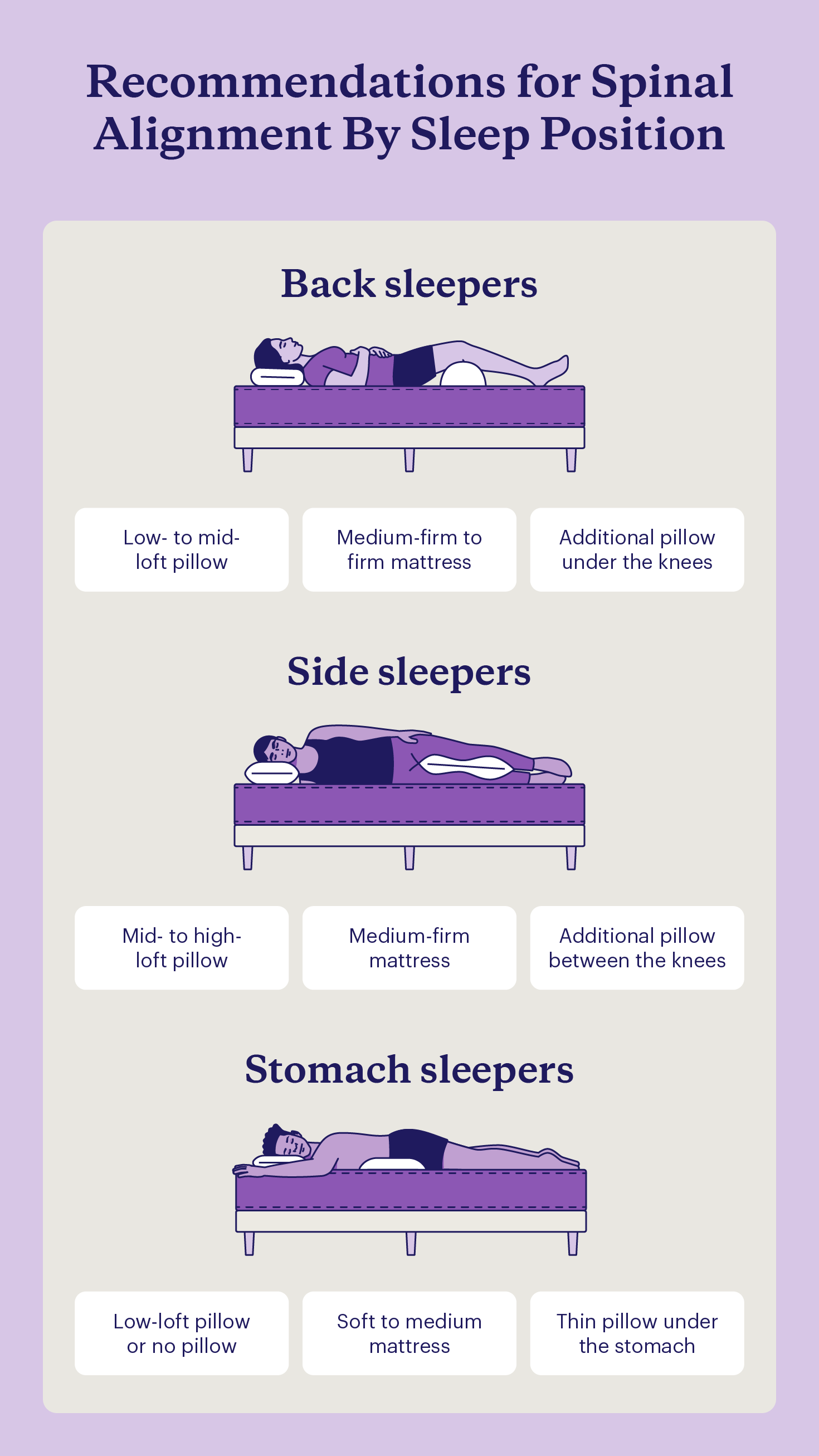
The best mattress for each sleep position
Your sleeping position changes how your weight moves through the mattress. It also changes how much cushioning your shoulders, hips, and knees need.
Back sleepers
Back sleepers usually need even support from head to hips. The mattress should cushion the lower back while stopping the pelvis from sinking too far.
A medium-firm hybrid or foam mattress often works well. Look for gentle contouring around the lower back, but avoid deep sinkage that makes it difficult to turn over.
A small pillow under the knees can also reduce strain on the lower back. Your head pillow should keep your neck level with your chest rather than pushing your chin toward your body.
Side sleepers
Side sleepers place more pressure on the shoulders and hips. A mattress that is too firm may cause numbness, soreness, or pressure pain in these areas.
Side sleepers often do best with a medium or medium-soft comfort layer over a supportive base. Memory foam and latex can cushion the shoulders while keeping the spine aligned.
Place a pillow between your knees. This can reduce twisting through the hips and lower back. If your waist does not touch the mattress, you may need a mattress with more contouring.
Stomach sleepers
Stomach sleeping can increase stress on the lower back because the pelvis may sink while the torso remains higher. It can also force the neck to turn to one side for hours.
If you sleep on your stomach, choose a supportive medium-firm or firm mattress with limited sinkage. A thin pillow, or no pillow, may help keep your neck in a more natural position.
Changing to side or back sleeping may help some people, but comfort matters. A position that prevents sleep is not useful, even if it looks ideal on paper.
Combination sleepers
Combination sleepers move between two or more positions. They need a mattress that responds quickly and does not trap the body.
A hybrid or latex mattress can be a good choice because it offers support, bounce, and easier movement. Medium-firm comfort is often a safe starting point.
The best mattress for back pain for a combination sleeper should support your main sleep position without creating pressure when you turn.

Mattress types that may help back pain
Different mattress designs solve different problems. The best mattress for back pain depends on how each material feels under your body.
Hybrid mattresses
Hybrid mattresses use coils with foam or latex layers. The coils provide support and airflow, while the comfort layers reduce pressure.
A hybrid may be a strong choice for back pain because it offers:
• Stable support for the hips and pelvis
• Better airflow than many all-foam beds
• Easier movement during the night
• Stronger edge support
Choose a hybrid with individually wrapped coils if you want better motion control. Look for a comfort layer thick enough to cushion your pressure points.
Memory foam mattresses
Memory foam closely follows the body. It can reduce pressure around the hips and shoulders and limit movement between partners.
The main risk is excessive sinkage. If the foam is too soft or thick, your hips may drop too low. This can make lower back pain worse and make getting out of bed difficult.
Choose medium-firm memory foam with a strong support core. If you sleep hot, look for ventilated foam, cooling covers, or open-cell designs. Cooling features can help, but no foam mattress stays cool for every sleeper.
Latex mattresses
Latex offers pressure relief with a more buoyant feel. You may feel supported on top of the mattress instead of deeply surrounded by it.
Latex can suit people who want:
• Easy movement
• Strong durability
• Natural resilience
• Less heat buildup than traditional memory foam
Latex mattresses can feel firmer than expected. If you sleep on your side, make sure the upper comfort layer has enough softness for your shoulders and hips.
Innerspring mattresses
Traditional innerspring mattresses can provide a firm, responsive feel. Yet many have thin comfort layers, which may create pressure at the hips and shoulders.
An innerspring mattress may work if you prefer a firm surface and sleep on your back or stomach. For many side sleepers, adding a suitable topper can improve comfort.
Adjustable air beds
Adjustable air beds let you change firmness on each side. Some models also raise the head or legs.
They can help couples with different preferences, but they are often costly. They also require careful adjustment. Too much or too little air can reduce support and cause pressure points.

How to choose the best mattress for back pain
A simple shopping process can prevent an expensive mistake. Start with your needs rather than a brand name or online ranking.
1. Identify your main sleep position
Notice how you fall asleep and how you wake up. If you spend most of the night on your side, you need more shoulder and hip cushioning. If you sleep on your back, focus on even support and moderate contouring.
2. Consider your body weight and shape
Body weight changes how firm a mattress feels. A lighter person may experience a medium mattress as firm. A heavier person may feel the same mattress as soft.
People with wider hips or shoulders may need more targeted pressure relief. People with a straighter body shape may prefer a more even surface.
3. Check the support core
Look for dense foam, durable latex, or a well-built coil unit. The support core should keep your hips from sinking too far.
Sit on the edge and lie in your normal position. If your hips feel lower than your chest, the mattress may be too soft. If your shoulders and hips feel pushed upward, it may be too firm.
4. Review the home trial
A few minutes in a showroom cannot show how a mattress feels after eight hours. Choose a brand with a clear home trial, return policy, and warranty.
Check these details before buying:
• Trial length
• Return shipping costs
• Required break-in period
• Pickup or disposal rules
• Warranty coverage for sagging
• Foundation requirements
5. Give your body time to adjust
A new mattress may feel strange at first. Your body also needs time to adapt to a different level of support.
Try the mattress for several weeks unless it causes sharp pain, numbness, or a clear worsening of symptoms. Keep notes about your morning pain, sleep quality, and comfort in each position.
In my experience writing about sleep products, the most common mistake is judging a mattress after one night. The second most common mistake is ignoring the pillow and bed base. A well-matched pillow and a stable foundation can change how the mattress feels.
Mattress mistakes that can worsen back pain
Even a high-quality mattress can feel wrong when the setup does not match your body. Watch for these common errors.
• Choosing the firmest mattress because of a general claim that “firm is best”
• Buying based only on price or luxury materials
• Ignoring your sleep position
• Using an old, sagging foundation
• Keeping a mattress with visible body impressions
• Using a pillow that bends your neck
• Expecting a mattress to treat a medical condition
• Failing to use the trial period
A sagging mattress is a special concern. If you can see a dip when nobody is lying on it, the support may no longer be even. Rotating the mattress may help only if the manufacturer allows it and the design is two-sided or suitable for rotation.
A mattress topper can improve a surface that feels too firm. It usually cannot repair a weak support core. If the base is sagging, replacing the mattress or foundation is often the better solution.
Your bed frame matters as well. Wide gaps between slats can allow a foam mattress to bend and sag. Follow the manufacturer’s foundation instructions to protect both comfort and warranty coverage.

How to test a mattress for back pain
Use a careful test instead of simply lying down for one minute.
-
Lie on your back for at least 10 minutes.
-
Notice whether your lower back feels supported or strained.
-
Roll onto your side and check whether your spine feels straight.
-
Change positions several times.
-
Check if you can turn without effort.
-
Sit on the edge and stand up.
-
Ask whether you feel pressure in the shoulders, hips, or ribs.
When lying on your back, your waist should feel supported without a large empty gap. When lying on your side, your nose, chest, and belly button should stay in roughly the same line.
At home, place a thin, straight object along your back while lying on your side. Ask someone to check whether your spine looks level rather than bent upward or downward. This is not a medical test, but it can reveal obvious alignment problems.
Also test the mattress in your usual sleep clothes. A mattress may feel different when you wear thick pajamas, use a heavy comforter, or sleep with a partner.

Can a mattress fix back pain?
A mattress may reduce pain linked to poor support, pressure, or awkward spinal alignment. It cannot fix every cause of back pain.
Morning stiffness that improves after movement may relate to your sleep setup, but this symptom is not specific. Persistent pain needs proper evaluation, especially when it affects daily activity or sleep.
Speak with a health professional if you have:
• Numbness or weakness
• Pain that travels below the knee
• Loss of bladder or bowel control
• Fever or unexplained weight loss
• Pain after a serious fall or accident
• Pain that does not improve or keeps getting worse
A physical therapist can also offer advice about sleep position, pillows, exercises, and movement habits. This can be more helpful than changing mattresses repeatedly.
The best mattress for back pain should be part of a larger sleep plan. Regular movement, good lifting habits, appropriate pillows, and medical care may all matter.

Frequently asked questions about what mattress is best for back pain
Is a firm mattress best for back pain?
Not always. A medium-firm mattress often provides a better balance of support and pressure relief, while an overly firm mattress can cause shoulder and hip pressure.
Is memory foam good for back pain?
Memory foam can reduce pressure and support the body well. Choose a medium-firm model with a stable base, because very soft foam may allow the hips to sink too deeply.
Are hybrid mattresses good for back pain?
Yes, many people find hybrids comfortable because coils provide support and foam or latex cushions pressure points. The best choice still depends on firmness, sleep position, body weight, and personal comfort.
What mattress firmness is best for a side sleeper with back pain?
A medium or medium-firm mattress with good cushioning is often a useful starting point. Side sleepers need enough softness for the shoulders and hips while keeping the waist and pelvis supported.
Can a mattress topper help back pain?
A topper may help if your mattress feels too firm and remains structurally sound. It will not usually solve deep sagging or a weak support core.
How long should I test a new mattress?
Use the full home trial when possible, since your body may need time to adjust. Stop testing and seek advice if the mattress causes sharp pain, numbness, or clearly worse symptoms.
Can an old mattress cause back pain?
Yes, an old mattress can lose support and develop sagging. If your pain began after the mattress became uneven, replacing the mattress or foundation may be worth considering.
Conclusion
The best mattress for back pain is usually medium-firm, supportive, and comfortable in your main sleep position. Hybrid, latex, and well-built memory foam mattresses can all work when they keep the spine neutral and relieve pressure.
Do not choose by firmness labels alone. Test the mattress at home, check the return policy, review your pillow and foundation, and give your body time to adjust. Start with your own sleep position and comfort needs, then use trusted health advice if your pain continues.
Take a careful look at your current setup tonight. If it sags, creates pressure, or leaves you stiff each morning, use this guide to compare better options and make a more informed choice.

Appliance Review Expert
Lucas Ramirez is a trusted voice at HomeFixGrid.com, known for his clear, practical, and creatively written guides that simplify appliance care for everyday homeowners. With a strong focus on hands-on testing and real-world problem-solving, Lucas brings expert insight into appliance reviews and troubleshooting techniques. Her work empowers readers to confidently maintain, repair, and choose the right appliances for their homes.