What To Do If Refrigerator Is Not Cooling: Easy Fixes
Introduction
If your refrigerator is not cooling, first check the temperature setting, power supply, blocked air vents, door seal, and condenser area. Many cooling problems come from poor airflow or a dirty coil. Others need a trained appliance technician.
For homes in the United States, keep the refrigerator at 40°F or below and the freezer at 0°F. If food has been above 40°F for more than two hours, discard it. In a hot room above 90°F, the safety limit drops to one hour.
Quick Answer: What Should You Check First?
Follow these checks in order:
- Check that the refrigerator has power.
- Confirm the temperature controls are set correctly.
- Make sure the doors close and seal fully.
- Move food away from the interior air vents.
- Clean dust from the condenser coils if the model allows it.
- Check whether the freezer is cold.
- Listen for the compressor and fans.
- Unplug the refrigerator before cleaning or inspecting parts.
- Call a qualified repair technician if the unit still does not cool.
Do not scrape ice with a knife. Do not open the sealed cooling system. Refrigerant work requires the right tools, training, and certification.
Check the Power Supply
A refrigerator that is completely warm may have a power problem rather than a cooling problem.
Start with these simple checks:
- Make sure the refrigerator plug is fully inserted.
- Test the outlet with a lamp or another small device.
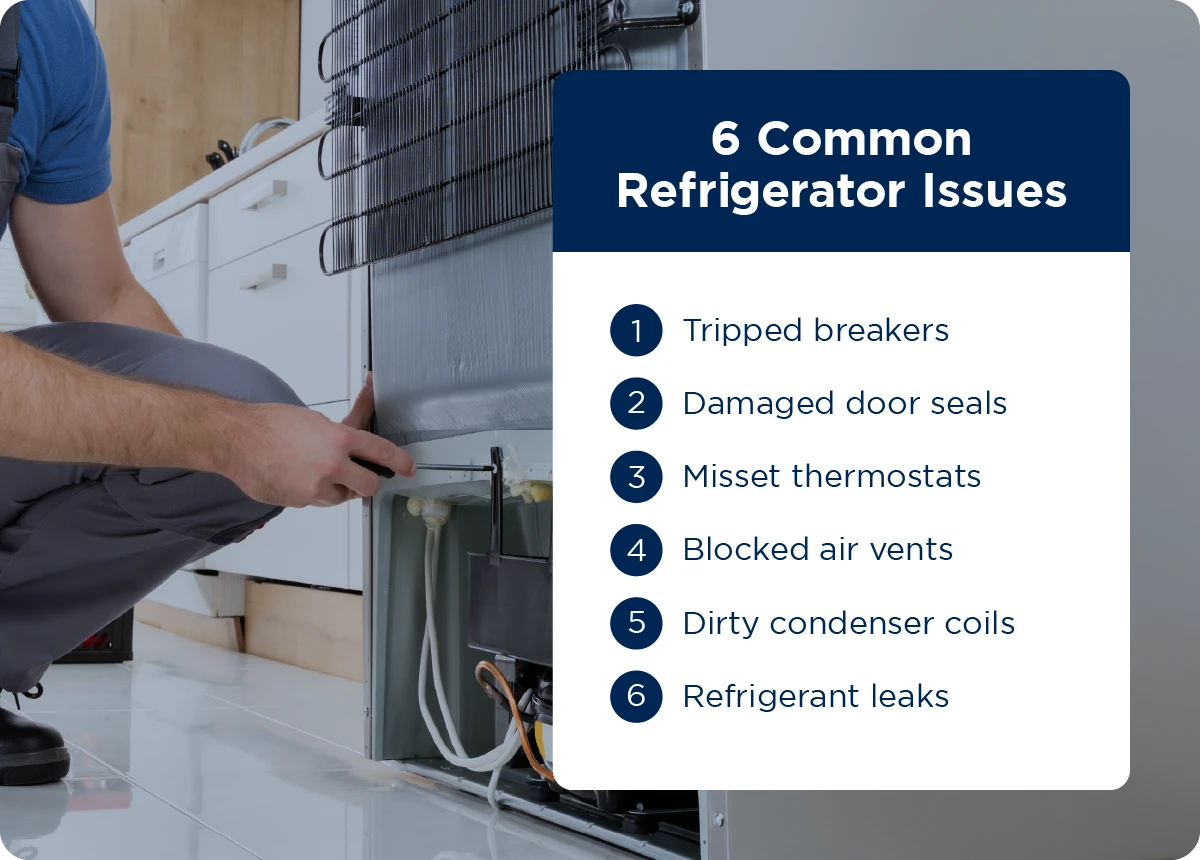
- Check the home circuit breaker.
- Look for a tripped ground-fault circuit interrupter, or GFCI.
- Confirm that the refrigerator is not connected to a switched outlet.
- Check the power cord for cuts, burn marks, or loose wires.
If the outlet does not work, reset the breaker or GFCI once. If it trips again, stop. A repeated trip may point to an electrical fault.
Do not use an extension cord for a refrigerator unless the appliance maker specifically permits it. Many extension cords cannot safely handle the motor’s startup load.
If the interior light works but the refrigerator is warm, power is reaching at least part of the unit. The problem may involve airflow, the fan, the compressor, the thermostat, or the sealed system.
Check the Temperature Settings
A control may have been moved by accident while food was added or shelves were cleaned.
Set the refrigerator control to about 37°F and the freezer to 0°F, unless the owner’s manual gives different instructions. These settings usually provide a safe operating target while keeping food cold.
Then wait. A refrigerator may need several hours to cool after a setting change. After loading a large amount of warm food, it may take about 24 hours to return to its normal temperature.
Use an appliance thermometer rather than relying only on the control display. A display may show the set point, not the actual air temperature.
Place the thermometer in the center of the refrigerator compartment. Do not place it against the wall, door, or a vent. Check it after several hours with the door kept closed as much as possible.
What the Temperature Means
| Refrigerator temperature | Meaning |
|---|---|
| 40°F or below | Food is within the recommended safety range |
| 41°F to 50°F | The refrigerator is too warm; find the cause quickly |
| Above 50°F | Food safety risk rises; follow USDA discard guidance |
| Freezer at 0°F | Recommended storage target |
| Freezer above 32°F | Frozen food may soften or thaw |
A refrigerator that runs too cold may have a different problem. Food freezing in the fresh-food section can indicate blocked airflow, a faulty damper, or a control issue.
Make Sure Air Can Move Inside
Most refrigerators use cold air from the freezer to cool the fresh-food compartment. Vents move that air between the two sections.
Do not pack food tightly against the rear wall or air vents. Leave room for air to move around shelves and containers. Large boxes, trays, and tall bottles can block the return vents.
Check for these signs:
- The freezer is cold, but the refrigerator section is warm.
- Food near the back wall is frozen.
- One shelf is cold while another is warm.
- You hear air movement in the freezer but not in the refrigerator.
- Frost covers an air vent.
Move food away from the vents and wait several hours. If cooling improves, poor airflow was likely part of the problem.
Also check the damper, if your model has one. The damper is a small door that controls cold air entering the refrigerator section. It should not be stuck shut or blocked by ice. Do not force it open.
Inspect the Door Seal and Door Alignment
A damaged or dirty gasket can let warm, moist air enter the refrigerator. The motor then has to run longer, and frost may build up around the vents.
Clean the gasket with warm water and mild dish soap. Dry it well. Look for:
- Tears or cracks
- Flattened sections
- Gaps at the corners
- Loose sections
- A door that sits unevenly
- Containers or shelves stopping the door from closing
Try the paper test. Close the door on a piece of paper. If the paper pulls out with almost no resistance, the gasket may not seal well at that spot. Repeat the test around the full seal.
Do not slam the door. Check that the refrigerator is level and that the door hinges are tight. A door that is too low or too high may prevent a full seal.
Replace a worn gasket with the part listed for your exact model. Universal seals may not fit correctly.
Clean the Condenser Coils Safely
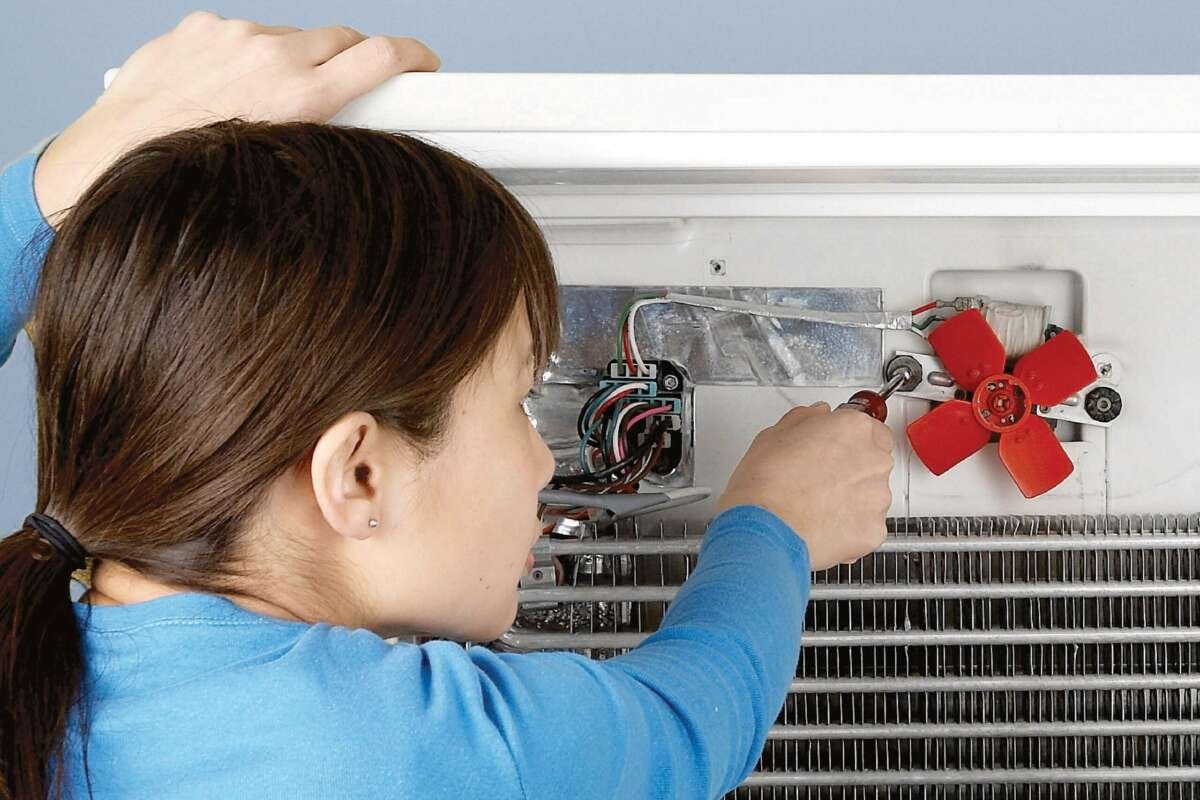
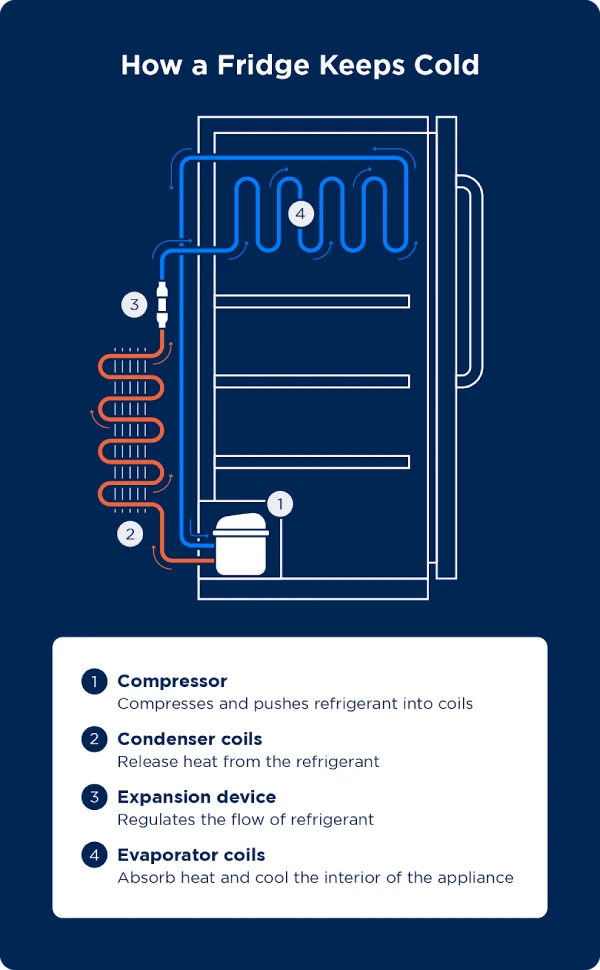
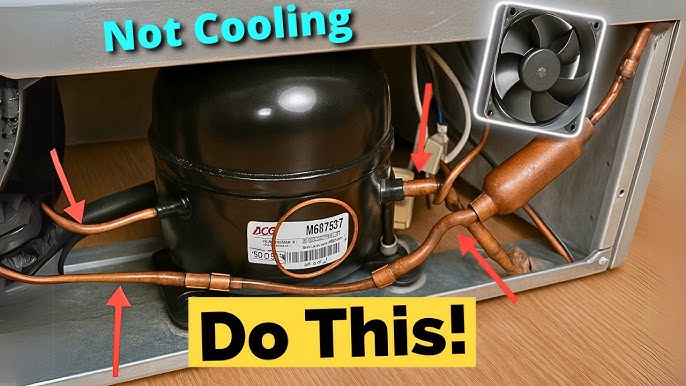
Condenser coils release heat from the refrigerator. Dust, pet hair, and kitchen grease can cover the coils and reduce heat transfer. The refrigerator may then run for long periods without reaching the right temperature.
Before cleaning:
- Unplug the refrigerator.
- Find the coils under the unit or behind a lower access panel.
- Use a refrigerator coil brush or a vacuum with a soft brush attachment.
- Remove dust gently.
- Clean the floor and nearby vents.
- Replace the panel if you removed one.
- Plug the refrigerator back in.
Some newer models have covered coils that do not need routine cleaning. Check the owner’s manual before removing panels.
Do not bend tubing or pull on wires. Do not spray water into the motor, fan, control board, or electrical parts.
After cleaning, the refrigerator may need several hours to show improvement. Coil cleaning will not fix a failed compressor, refrigerant leak, bad fan, or control board.
Check the Freezer for Frost or Ice
A thick layer of frost can block the evaporator coil and stop cold air from moving into the refrigerator section.
Frost may build up because of:
- A door left open
- A weak door gasket
- A failed defrost heater
- A bad defrost sensor or thermostat
- A blocked drain
- A control problem
If the freezer wall has heavy frost across much of its surface, unplug the refrigerator and follow the manual’s defrost instructions. Move food to another freezer or an insulated cooler.
Never use a knife, screwdriver, heat gun, or open flame to remove ice. These tools can puncture the cooling system or damage plastic parts. A hair dryer can also create a shock or fire risk near water, so use only a method approved by the manufacturer.
Manual defrosting may restore cooling for a short time. If frost returns, the defrost system needs diagnosis and repair.

Listen for Fans and the Compressor
Sound can help narrow the cause, but do not remove electrical covers while the refrigerator is plugged in.
A Quiet Refrigerator
A quiet unit may have:
- No power
- A failed control
- A temperature sensor problem
- A compressor that cannot start
- A door switch or control issue
Modern refrigerators can be quiet during part of a normal cycle. Silence alone does not prove a failure.
A Constant Humming Sound
A steady hum may mean the compressor is running. If the inside is still warm, check for blocked airflow, dirty coils, frost, or a fan problem.
Clicking Every Few Minutes
Repeated clicking followed by silence can point to a compressor starting problem or a faulty start device. This repair usually requires a technician.
A Buzzing or Rattling Sound
A loose panel, fan blade, ice buildup, or drain pan may cause a rattle. Unplug the refrigerator before checking for a loose external part.
A Fan That Does Not Run
Many refrigerators have an evaporator fan in the freezer and a condenser fan near the compressor. A failed fan can cause poor cooling and unusual noise.
Do not press door switches or reach near a fan blade unless the manual gives a safe test procedure. A technician can test the fan motor and its wiring.
Use the Symptoms to Find the Likely Cause
The pattern of the problem matters. Use this table as a starting point, not as a final diagnosis.
| Symptom | Possible cause | Best first action |
|---|---|---|
| Both sections are warm | Power issue, dirty coils, compressor, control, or sealed-system fault | Check power, settings, coils, and sounds |
| Freezer is cold but refrigerator is warm | Blocked vent, evaporator fan, damper, or frost buildup | Clear vents and inspect for frost |
| Refrigerator is too cold | Control, damper, sensor, or airflow problem | Check the setting and food placement |
| Heavy frost covers the freezer wall | Defrost system or door-seal issue | Defrost only as the manual permits |
| Motor runs almost all the time | Dirty coils, poor seal, hot room, frost, or low refrigerant | Check seal, coils, airflow, and room conditions |
| Water or ice appears inside | Blocked drain or door-seal problem | Check the drain area and gasket |
| Repeated clicking | Start relay or compressor issue | Unplug and arrange service |
| Refrigerator trips the breaker | Electrical fault or compressor problem | Stop using it and call a qualified professional |
A room that is very hot can make cooling harder. Keep the refrigerator away from ovens, direct sun, and other heat sources. Leave the clearances listed in the owner’s manual so air can move around the cabinet.

Protect Food While You Troubleshoot
Food safety comes before appliance repair.
Keep the refrigerator door closed while you check the cause. A closed refrigerator can hold a safe temperature for about four hours during a power outage, according to USDA guidance. A full freezer stays cold longer than a partly empty one, but the time depends on conditions.
Use a food thermometer when possible. Do not taste food to decide whether it is safe. Harmful bacteria may not change the food’s smell, taste, or appearance.
Discard perishable food that has been above 40°F for more than two hours. In temperatures above 90°F, use the one-hour limit. Perishable foods include:
- Meat and poultry
- Fish and shellfish
- Eggs
- Milk and soft dairy foods
- Cooked leftovers
- Cut fruit and vegetables
- Deli foods
Frozen food that still contains ice crystals may often be refrozen, although quality may drop. If food has fully thawed and stayed above 40°F for too long, discard it.
When in doubt, throw it out. The cost of spoiled food is lower than the risk of foodborne illness.

When to Call a Refrigerator Repair Technician
Call a qualified appliance technician when basic checks do not restore cooling or when the refrigerator shows a serious fault.
Arrange service if:
- The compressor clicks but does not start.
- The refrigerator trips the breaker.
- You smell burning plastic or see melted wiring.
- The sealed system may have a refrigerant leak.
- The compressor is very hot and the refrigerator remains warm.
- Frost returns soon after a complete manual defrost.
- A fan or motor needs replacement.
- The control board or sensor may be faulty.
- The refrigerator is under warranty.
Unplug the appliance if you smell burning, see smoke, hear loud electrical arcing, or find a damaged power cord. If there is an active fire, leave the area and call 911.
Do not puncture refrigerant tubing. Do not add refrigerant yourself. A sealed-system repair can involve refrigerant recovery, leak testing, vacuum work, and charging. Those tasks should be handled by a trained professional who follows applicable US requirements.
Before calling, record:
- Brand and model number
- Approximate age
- Refrigerator and freezer temperatures
- Whether the freezer is cold
- Whether frost is present
- Sounds from the unit
- Recent power outages or moves
- What checks you already completed
This information can reduce diagnostic time.

Should You Repair or Replace the Refrigerator?
Repair may make sense when the refrigerator is fairly new, under warranty, or has a limited problem such as a gasket, fan, or sensor.
Replacement may be worth considering when the unit is older and needs a compressor or sealed-system repair. Compare the repair estimate with the cost of a suitable replacement, expected energy use, and the value of the current appliance.
Do not replace a refrigerator based only on one warm day or a dirty coil. First rule out simple causes. A technician can confirm whether the failure involves a major sealed component.
Check the model’s warranty before authorizing work. Some warranties cover parts but not labor. A sealed-system warranty may also have different terms from a general appliance warranty.

Common Mistakes to Avoid
Avoid these common troubleshooting errors:
- Changing the control repeatedly: This can hide the real problem and delay cooling.
- Overloading the refrigerator: Packed shelves block air movement.
- Using a sharp tool on ice: A punctured cooling line can ruin the appliance.
- Ignoring the door gasket: A small gap can create frost and long run times.
- Testing live electrical parts: This can cause shock or injury.
- Adding food before the unit is cold: Warm food raises the internal temperature.
- Trusting smell alone: Unsafe food may look and smell normal.
- Running the refrigerator with a damaged cord: Replace the cord or seek professional service.
- Assuming a full freezer proves the refrigerator works: The two compartments may use separate fans, vents, and controls.
The safest approach is to start with external checks, unplug the appliance before cleaning, and stop when a repair requires electrical or sealed-system work.

Key Takeaways
- Check power, settings, door seals, vents, coils, and frost first.
- Use a thermometer. Keep the refrigerator at 40°F or below and the freezer at 0°F.
- A cold freezer with a warm refrigerator often points to an airflow, fan, damper, or frost problem.
- Heavy frost may return if the defrost system has failed.
- Never use a knife or flame to remove ice.
- Discard perishable food that has been above 40°F too long.
- Call a technician for electrical faults, compressor problems, refrigerant issues, or repeat frost buildup.
Frequently Asked Questions
Why is my refrigerator warm but the freezer is cold?
The most likely causes are blocked air vents, a failed evaporator fan, a stuck damper, or frost covering the evaporator coil. Move food away from vents and check for heavy frost. If the problem remains, arrange service.
How long should I wait after adjusting the temperature?
Give the refrigerator several hours to respond. After adding a large amount of warm food or after a full defrost, allow about 24 hours for the unit to stabilize. Keep the doors closed during this time.
Can dirty coils make a refrigerator stop cooling?
Yes. Dust-covered coils cannot release heat as well. The refrigerator may run longer and still stay warm. Clean accessible coils only after unplugging the appliance and following the owner’s manual.
Is it safe to eat food from a refrigerator that stopped cooling?
Use time and temperature, not smell or taste. Discard perishable food that stayed above 40°F for more than two hours, or more than one hour when the room was above 90°F. When the time is unknown, discard the food.
Should I unplug a refrigerator that is not cooling?
Unplug it if you smell burning, see damaged wiring, hear electrical arcing, or if the breaker keeps tripping. For ordinary troubleshooting, unplug it before cleaning coils or inspecting accessible parts. Keep food cold in another refrigerator or cooler.
Why is my refrigerator running but not getting cold?
Possible causes include dirty coils, blocked airflow, a failed fan, frost buildup, a weak door seal, a compressor problem, or a sealed-system fault. Start with the safe external checks. If those fail, a technician should test the appliance.
Conclusion
When a refrigerator is not cooling, begin with the simplest safe checks: power, settings, door seals, vents, coils, and frost. Use an appliance thermometer and protect perishable food while you troubleshoot.
If both sections stay warm, the compressor repeatedly clicks, the breaker trips, or frost returns after defrosting, stop and call a qualified refrigerator repair technician.

Appliance Review Expert
Lucas Ramirez is a trusted voice at HomeFixGrid.com, known for his clear, practical, and creatively written guides that simplify appliance care for everyday homeowners. With a strong focus on hands-on testing and real-world problem-solving, Lucas brings expert insight into appliance reviews and troubleshooting techniques. Her work empowers readers to confidently maintain, repair, and choose the right appliances for their homes.