
How Large A Refrigerator Do I Need: Find Your Ideal Size
For most U.S. households, plan on 4 to 6 cubic feet of refrigerator space per adult. That means a two-person home often needs about 10 to 14 cubic feet, while a family of four may need 18 to 24 cubic feet.
That range is only a starting point. The right refrigerator size also depends on how often you shop, how much fresh food you store, whether you freeze meals, and how much space your kitchen can safely fit. A large refrigerator is not useful if its doors hit a wall or it cannot pass through your front door.
This guide explains how to choose refrigerator capacity in cubic feet, measure your kitchen, compare refrigerator styles, and avoid common sizing mistakes in a U.S. home.


The quick answer: refrigerator size by household
A practical starting point is 4 to 6 cubic feet per adult, including both the fresh-food and freezer sections.
Use this table as a planning guide:
| Household size | Suggested total refrigerator capacity | Best fit |
|---|---|---|
| One adult | 8–12 cu. ft. | Light shopping and few frozen foods |
| Two adults | 10–16 cu. ft. | Weekly shopping with moderate storage |
| Three people | 14–20 cu. ft. | Regular fresh-food storage |
| Four people | 18–24 cu. ft. | Typical family use |
| Five or more | 22– treinta cu. ft. | Large shopping trips and bulk storage |
The numbers are estimates, not a strict rule. A couple that buys groceries once every two weeks may need more space than a family that shops several times a week. Likewise, a household that stores frozen meat, prepared meals, or garden produce may need extra freezer capacity.
Most full-size refrigerators sold in the United States range from about 18 to treinta cubic feet. The advertised capacity includes the refrigerator compartment and the freezer compartment, so a 22-cubic-foot model does not provide 22 cubic feet of fresh-food space.
For many families of four, a 20- to 25-cubic-foot refrigerator is a useful target if the kitchen has enough room. A smaller model may work well when the household shops often or has a separate chest freezer.
How to calculate the refrigerator capacity you need
Start with the number of people in your home, then adjust for shopping habits and food storage. This gives a better result than choosing a refrigerator by appearance alone.
Step 1: Count regular users
Count adults, older children, and anyone who stores a large amount of food in the refrigerator. Young children may add less demand, but teenagers often use as much space as adults.
As a starting estimate:
- One adult: 4 to 6 cubic feet
- Two adults: 8 to 12 cubic feet
- Each additional regular user: 4 to 6 cubic feet
Then add or subtract space based on the way your household buys and stores food.
Step 2: Adjust for shopping frequency
Shopping habits can change the answer by several cubic feet.


Choose the lower end of the range if you:
- Shop every few days
- Buy mostly fresh food
- Eat many meals away from home
- Use a separate freezer
- Cook small meals
Choose the higher end if you:
- Shop once a week or less
- Buy drinks and large packages
- Store leftovers often
- Cook several meals in advance
- Buy meat or produce in bulk
- Keep food for a large family gathering
Step 3: Separate fresh-food and freezer needs
Total capacity can hide an important difference: freezer size.
A top-freezer refrigerator may devote around one-quarter of its space to frozen food. A French-door model often has a wide fresh-food section with a bottom freezer. A side-by-side model splits the cabinet vertically, which gives easy access to both sections but may offer less width for large trays.
Consider a refrigerator with a larger freezer if you store:
- Frozen meats
- Ice cream and frozen snacks
- Meal-prep containers
- Frozen garden produce
- Bulk purchases
- Breast milk or specialty foods
If your freezer is usually full while the fresh-food section is half empty, buying a larger refrigerator may not solve the real problem. You may need a different refrigerator layout or a separate freezer.
A simple planning formula
Use this formula for a first estimate:
Number of regular users × 4 to 6 cubic feet = starting capacity
For example, a family of four could begin with:
4 people × 4 to 6 cubic feet = 16 to 24 cubic feet
Then increase the target if the family shops in bulk or stores many leftovers. Reduce it if the family shops several times per week and has little freezer demand.
This calculation is an estimate for planning. It does not account for the refrigerator’s usable shelf layout, door bins, drawers, or ice maker.

What refrigerator size fits different lifestyles?
The best refrigerator size depends on what you store, not just how many people live in the home.
Light shoppers and small households
A refrigerator between 8 and 14 cubic feet may work for one or two people who shop often. This size can also suit an apartment, office, guest suite, or small kitchen.


Check the interior layout carefully. Some compact refrigerators have a large freezer box that leaves little room for fresh food. Others have limited shelf depth, which may make it hard to store tall bottles or meal containers.
Average weekly shoppers
A refrigerator between 16 and 22 cubic feet often fits one to three people with moderate storage needs. This range can work well when the household cooks at home but does not buy large amounts of food at once.
A top-freezer model may provide more usable space for the price. A bottom-freezer design places fresh foods at eye level and can be convenient for people who use the refrigerator section more often.
Families of four
A refrigerator between 20 and 25 cubic feet is a common starting point for a family of four. Choose the higher end when the family stores large containers, packed lunches, leftovers, and drinks.
Measure the shelves before buying. A refrigerator may have enough total capacity but lack a shelf wide enough for a pizza box, roasting pan, or large serving tray.
Large families and bulk shoppers
Households with five or more regular users may need 24 to 30 cubic feet or more. This is especially true for people who buy warehouse-sized packages or prepare meals in advance.
Before choosing the largest model that fits, consider whether the kitchen floor, electrical outlet, door clearance, and delivery path can handle it. A large French-door refrigerator may require more open space in front of the cabinet than its width suggests.
Homes with a separate freezer
A separate upright or chest freezer reduces the amount of freezer space needed in the main refrigerator. In that case, you may be able to choose a refrigerator based mainly on fresh-food demand.
Do not assume a separate freezer solves every storage problem. You still need enough refrigerator space for milk, produce, eggs, prepared foods, and items that should not be frozen.
How much refrigerator space do you need for common foods?
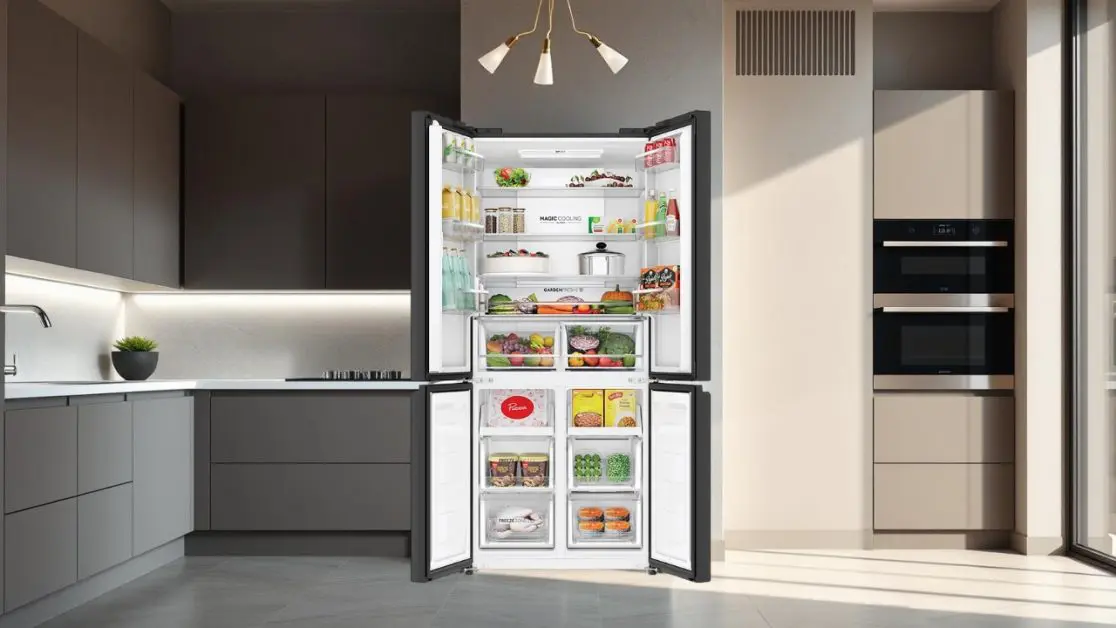
Capacity is only part of the decision. Interior shape affects how much food you can actually use.
A refrigerator with deep shelves may hold more by volume, but food can get lost in the back. A wide refrigerator may fit platters and sheet pans better. Narrow shelves may make it easier to see small items.
Think about the items you store most often:
| Common storage need | Feature that may help |
|---|---|
| Gallon milk jugs | Tall door bins or adjustable shelves |
| Large leftovers | Wide shelves and removable bins |
| Pizza boxes | Wide interior compartment |
| Fresh produce | Two or more humidity-controlled drawers |
| Frozen meals | Wide freezer drawers or adjustable shelves |
| Tall bottles | Adjustable door bins |
| Party trays | Full-width fresh-food shelves |
| Baby food or small containers | Shallow shelves and easy visibility |
A refrigerator’s listed capacity is measured under a standard method, but the space available for your food will vary. Ice makers, water filters, lighting, drawers, shelves, and freezer dividers take up room.
Look at interior photos and product dimensions. When possible, visit a showroom with a tape measure. Open the doors, pull out the drawers, and check whether you can reach food at the back.


Which refrigerator style gives you the most useful space?
Refrigerator style affects both capacity and access. Compare the layout, not only the cubic-foot number.
Top-freezer refrigerators
Top-freezer models usually provide a straightforward layout and often offer good storage for their outside size. They can be a strong choice for small kitchens and budget-focused buyers.
The freezer is at eye level, while the fresh-food section is below it. If you use fresh food more often, you may bend more often to reach lower shelves.
Bottom-freezer refrigerators
Bottom-freezer models put fresh food higher and frozen food lower. This layout can make everyday refrigerator items easier to reach.
The freezer often uses a drawer or pull-out basket. Check whether the drawer has enough width for the frozen foods you buy. A narrow or deep drawer can waste space if items pile up.
Side-by-side refrigerators
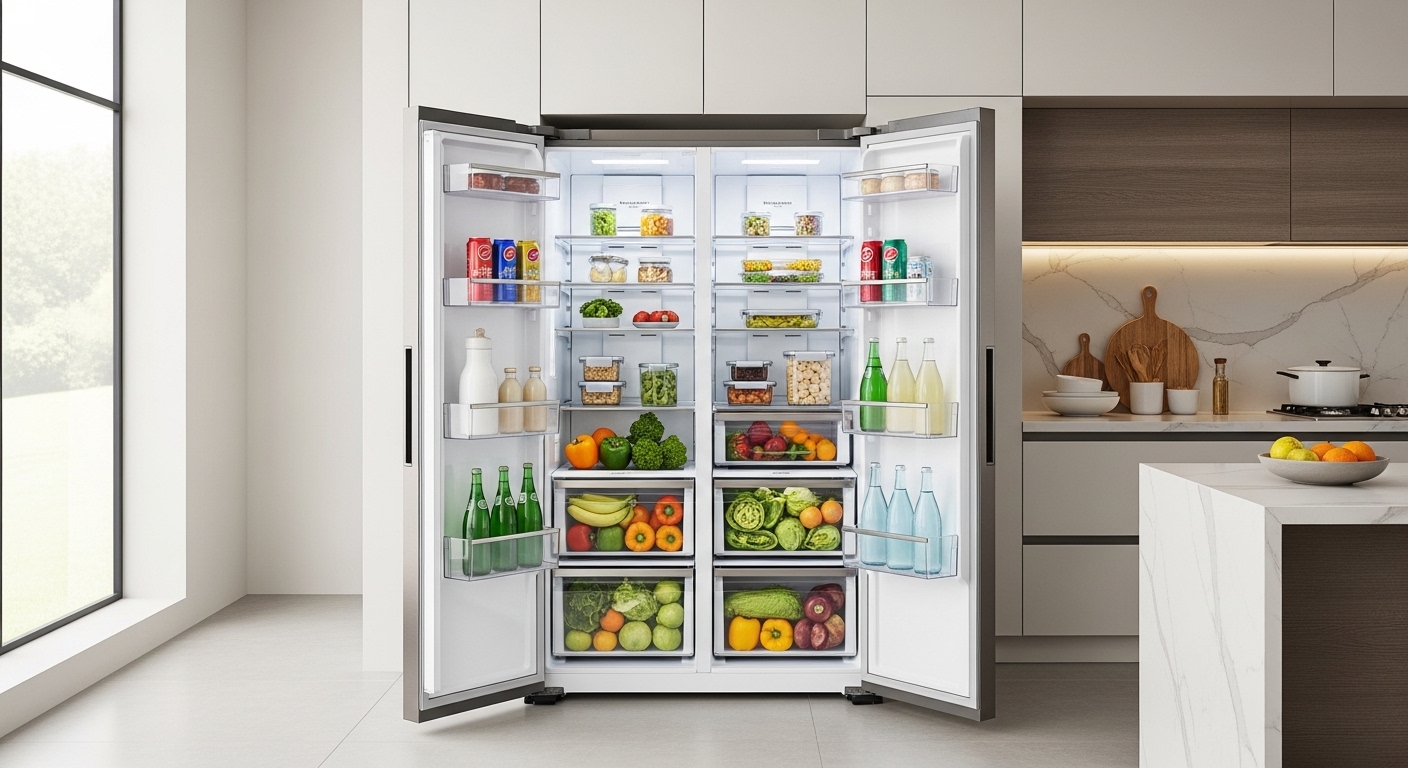
Side-by-side models provide a tall refrigerator section and a tall freezer section. The narrow doors can work well in kitchens with limited door-swing space.
The trade-off is width. Large trays, wide containers, and sheet pans may not fit easily. Side-by-side models can suit households that want equal access to frozen and fresh food but may frustrate people who store wide items.
French-door refrigerators
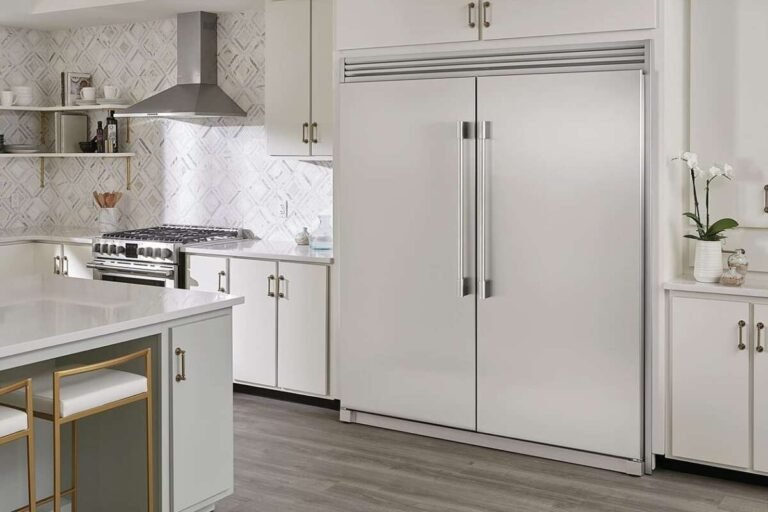
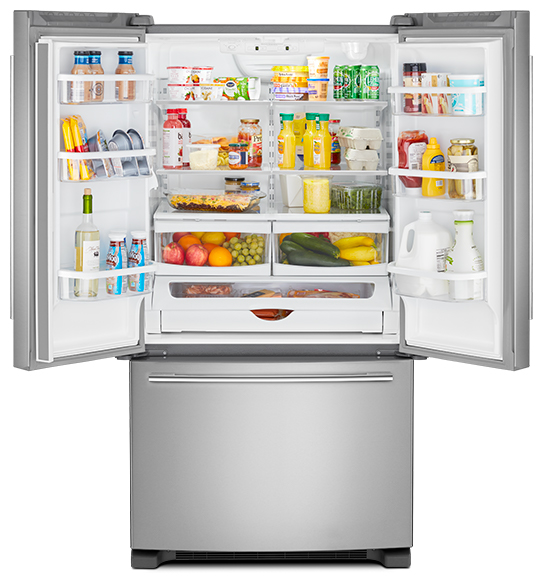
French-door models place two fresh-food doors above a bottom freezer. They often provide wide shelf space for platters and large containers.
The two doors reduce the swing width, but the refrigerator still needs clearance for both doors and the freezer drawer. Ice and water systems can also reduce interior capacity and add parts that may need service.
Compact and apartment refrigerators
Compact models can fit small spaces, but their stated capacity may include a relatively large freezer compartment or a small internal ice box. Measure the usable shelves and confirm that the model can hold the food you buy.
For a studio apartment or office, a compact refrigerator may be enough. For a main family kitchen, it may become crowded quickly.
How to measure your kitchen before buying
Measure the opening, not just the old refrigerator. A new model may fit the cabinet space but fail at the door, hallway, or delivery entrance.
Record these measurements:
- Opening width: Measure at the top, middle, and bottom.
- Opening height: Measure from the floor to the lowest cabinet or trim.
- Opening depth: Measure from the back wall to the front edge of the counter or cabinets.
- Ceiling height: Check the path used to move the refrigerator into place.
- Door and drawer clearance: Measure the space needed to open each door and drawer.
- Delivery path: Measure exterior doors, halls, turns, stairs, and elevator openings.
Use the smallest opening measurement when comparing models. Floors and cabinets are not always perfectly level or square.
Allow for installation clearance
Refrigerators need space for doors, ventilation, leveling, and service. The exact requirement depends on the model, so follow the installation guide for the refrigerator you choose.
Do not treat a listed product depth as the full installed depth. A refrigerator may have:
- Cabinet depth
- Door depth
- Handle depth
- Water-line space
- Rear clearance
- Airflow space
A counter-depth refrigerator usually has a shallower cabinet than a standard-depth model, but its doors and handles can still extend past the counter. Counter-depth does not mean flush with the cabinets.
Check the door swing
A refrigerator can fit the opening and still be unusable if the door cannot open far enough.
Check whether:
- The hinge needs space beside a wall
- The door can open wide enough to remove shelves
- The freezer drawer can pull out fully
- Nearby cabinets block the handle
- The refrigerator door can be reversed, if needed
Some models use fixed hinges or require a minimum wall clearance. Read the installation instructions before ordering.
Check the floor and outlet
A full refrigerator is heavy. The floor should support the appliance, and the unit should sit level so the doors close correctly.
Use the electrical connection specified by the manufacturer. Do not use an extension cord unless the installation instructions specifically permit it. If the refrigerator needs a water line for an ice maker or dispenser, have the connection installed according to local code and the manufacturer’s instructions.

Standard refrigerator dimensions in U.S. kitchens
Many full-size refrigerators are about 30 to 36 inches wide, but width alone does not tell you the capacity or fit.
Common planning ranges include:
- Width: about 28 to 36 inches
- Height: about 65 to ко a little over 70 inches
- Depth: about 29 to 36 inches before handles and doors
These are broad ranges, not guaranteed dimensions. A 36-inch refrigerator may have a different height or depth than another 36-inch model.
The cabinet opening may also be designed for a specific refrigerator size. Older homes, apartments, and manufactured homes may have tighter openings. Measure before shopping instead of assuming a “standard” model will fit.
If you are replacing a built-in or an unusually shallow refrigerator, check whether the new model needs custom trim, ventilation, or a different water connection. Built-in refrigerators often use different dimensions and installation requirements than freestanding models.
Refrigerator size and energy use
A larger refrigerator may use more electricity, but size is not the only factor. Efficiency depends on the model, design, insulation, features, temperature settings, and usage.
When comparing models, look for the yellow EnergyGuide label. The label estimates annual energy use and operating cost under a standard test method. The estimate helps compare models, but your actual cost will vary with local electricity rates and household use.
The U.S. Department of Energy sets appliance efficiency standards, while ENERGY STAR identifies qualifying products that meet its efficiency criteria. You can compare current guidance at:
A refrigerator that is too large may waste space and energy. One that is too small may force you to open the door more often, overfill shelves, or use a second appliance. Choose the smallest capacity that comfortably handles your normal food load.
Common refrigerator sizing mistakes
The most common mistake is buying by exterior width alone. Capacity, interior layout, clearance, and delivery access all matter.
Avoid these errors:
Buying the largest model that fits the opening
The biggest refrigerator may leave little room for ventilation or door movement. It may also make the kitchen feel cramped.
Confusing total capacity with fresh-food capacity
A 24-cubic-foot refrigerator may devote a large share of its space to the freezer. Check the fresh-food and freezer capacities separately.
Ignoring shelves and drawers
A refrigerator can have a high capacity but poor usable space. Look for shelf width, shelf depth, drawer position, and door-bin design.
Forgetting handles and doors
Product listings often show cabinet dimensions separately from depth with handles. Use the complete installation dimensions.
Skipping the delivery route
Measure the front door, porch steps, hallways, turns, and stairs. Remove doors only if the manufacturer or delivery provider allows it and the work can be done safely.
Overlooking water and power connections
Ice makers and dispensers may need a water line and a suitable electrical outlet. A water connection can leak if installed poorly. If you are unsure, use a qualified appliance installer or plumber.
Assuming more freezer space is always better
A large freezer can be helpful, but it can also reduce fresh-food space and make small items hard to find. Match the freezer layout to the foods you actually buy.
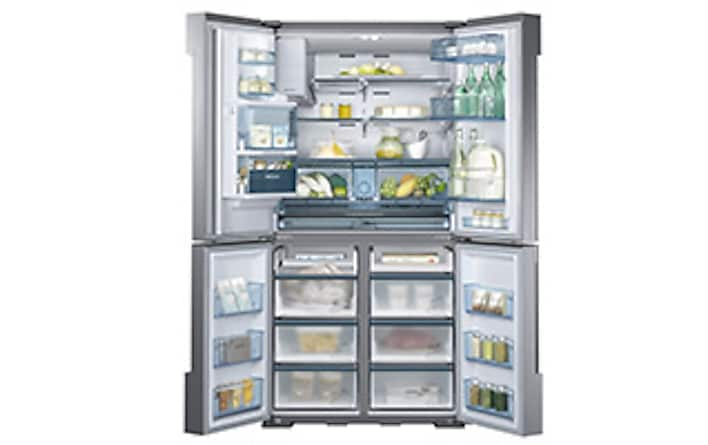
How full should a refrigerator be?
A refrigerator works best when food is not packed so tightly that air cannot move around it. At the same time, an almost empty refrigerator may have less stored thermal mass and may require more careful organization.
Keep vents clear and follow the manufacturer’s loading guidance. Do not block cold-air outlets with containers or bags.
For food safety, the U.S. Food and Drug Administration recommends keeping the refrigerator at 40°F or below and the freezer at 0°F. Use an appliance thermometer if you need to verify the temperature, because the dial setting alone may not show the actual internal temperature.
The FDA also recommends refrigerating perishable foods within two hours, or within one hour when temperatures are above 90°F. See the FDA refrigerator and freezer storage chart for storage guidance.
Capacity does not replace safe food handling. A refrigerator that is large enough can still be unsafe if it is too warm, overfilled, or used to store food past its safe limit.

Key takeaways
- Plan on 4 to 6 cubic feet per regular user as a starting point.
- A family of four will often fit a 20- to 25-cubic-foot refrigerator, depending on shopping habits.
- Choose more space if you shop in bulk, freeze meals, or store many leftovers.
- Check freezer capacity separately from total capacity.
- Measure the opening, doors, drawers, handles, ceiling, and delivery path.
- Follow the manufacturer’s clearance and installation instructions.
- Compare EnergyGuide information and current ENERGY STAR guidance.
- Choose the smallest refrigerator that comfortably fits your food and your kitchen.
FAQs
Is a 20-cubic-foot refrigerator big enough for a family of four?
It can be. A 20-cubic-foot refrigerator may suit a family of four that shops weekly, cooks moderate amounts, and does not store much frozen food. A family that buys in bulk or prepares many meals may need closer to 24 or 25 cubic feet.
Is a 22-cubic-foot refrigerator large enough for two people?
Usually, yes. For two people, 22 cubic feet may provide generous storage. It may be useful if you shop infrequently, keep many drinks, store leftovers, or freeze prepared meals. If you shop several times a week, a smaller refrigerator may work just as well.
What refrigerator size is best for a small apartment?
Many small apartments work well with a refrigerator between 10 and 18 cubic feet, but the kitchen opening should decide the maximum size. Measure the doorway, cabinets, depth, and door swing before choosing a model.
Do I need a larger refrigerator if I have a separate freezer?
Not necessarily. A separate freezer reduces the freezer space needed in the main refrigerator. You can focus the main refrigerator size on fresh food, drinks, leftovers, and items used each day.
Is a counter-depth refrigerator smaller inside?
Often, yes. Counter-depth refrigerators usually have less cabinet depth than standard-depth models, so their total capacity may be lower. They can fit a shallow kitchen better, but compare the listed fresh-food and freezer capacities before buying.
How much clearance does a refrigerator need?
The required clearance varies by model and installation type. Follow the installation guide for the exact refrigerator. Check rear ventilation, side clearance, top clearance, door opening, and freezer-drawer movement rather than relying on a general rule.
Conclusion: choose capacity and fit together
The right refrigerator size is the smallest model that gives your household enough usable space without crowding the kitchen. Begin with 4 to 6 cubic feet per regular user, then adjust for shopping frequency, freezer use, leftovers, bulk food, and entertaining.
Before you buy, compare the interior layout and measure the full installation path. Confirm the model’s width, height, depth, door swing, clearances, electrical needs, and water connection. If the refrigerator fits both your food habits and your kitchen, the cubic-foot number becomes much more meaningful.

Appliance Review Expert
Lucas Ramirez is a trusted voice at HomeFixGrid.com, known for his clear, practical, and creatively written guides that simplify appliance care for everyday homeowners. With a strong focus on hands-on testing and real-world problem-solving, Lucas brings expert insight into appliance reviews and troubleshooting techniques. Her work empowers readers to confidently maintain, repair, and choose the right appliances for their homes.