What Is Garage Ready Freezer: Explained Simply
Introduction
A garage-ready freezer is a freezer built to work in the wider temperature swings common in U.S. garages. It can keep food frozen in places where a standard indoor freezer may struggle, such as an unheated garage in Minnesota or a hot garage in Arizona.
The term does not mean the freezer can work safely in every garage or outdoor space. It means the model has been designed and tested for a stated range of room temperatures. That range varies by brand and model.
Before you buy one, check the owner’s manual or product sheet. Look for the words “garage ready,” “garage rated,” or a listed ambient temperature range. A garage-ready freezer should also hold food at 0°F (-18°C) or colder during normal use, which is the storage temperature recommended by the U.S. Department of Agriculture (USDA).

What Does “Garage Ready” Mean on a Freezer?
A garage-ready freezer is designed to operate in a less controlled space than an indoor kitchen or basement. The freezer may have controls, insulation, sensors, and a compressor system that can better handle cold winters and hot summers.
Most indoor freezers work best in a moderate room temperature. A garage may be far colder or hotter. In winter, the room may fall below the freezer’s normal operating range. In summer, heat can make the compressor run for long periods.
The key point is simple:
“Garage ready” describes the freezer’s approved room-temperature range. It does not mean the freezer is weatherproof or suitable for outdoor use.
There is no single U.S. government standard that gives every freezer the same “garage-ready” rating. Manufacturers use the term for models that meet their own design and testing limits. Always check the exact model documentation.
Garage-ready versus standard freezer
| Feature | Garage-ready freezer | Standard indoor freezer |
|---|---|---|
| Intended location | Garage, basement, or other variable-temperature space | Heated indoor room |
| Cold-room performance | Often designed for colder ambient temperatures | May stop cycling normally when the room is very cold |
| Hot-room performance | Often designed for higher ambient temperatures | May run longer or lose efficiency in high heat |
| Temperature range | Listed by the manufacturer | Often narrower or not clearly listed |
| Outdoor use | Usually not approved | Not approved |
| Best next step | Read the manual before installation | Keep it in a conditioned room |
Some garage-ready models include a built-in heater or a control system that helps the freezer operate in a cold room. Other models rely on insulation and compressor design. The feature set differs, so the label alone is not enough.
How Does a Garage-Ready Freezer Work?
A garage-ready freezer manages temperature changes through its compressor, insulation, thermostat, and control system. These parts work together to keep the storage space near 0°F.
In a hot garage
When the garage is hot, the freezer must release more heat into the room. A garage-ready model may have:
- Better insulation
- A compressor designed for a wider operating range
- A thermostat that can respond to high room temperatures
- More space around the condenser or heat-release area
- A fan or other cooling feature, depending on the model
A hot garage still affects energy use. The freezer may run more often, and the compressor may wear more quickly if heat cannot escape.
In a cold garage
Very cold weather creates a different problem. A freezer does not cool the same way a heater warms a room. If the room is already cold, the thermostat may not call for cooling often enough.
That can cause the compressor to run less than expected. Some freezer compartments may then rise above 0°F, even though the room itself feels cold.
A garage-ready design may address this with a heater, a sensor, or special controls. But the freezer still has a lower operating limit. If the manual says the unit should stay above 0°F, do not place it in a garage that regularly falls below that temperature.

What Temperature Can a Garage-Ready Freezer Handle?
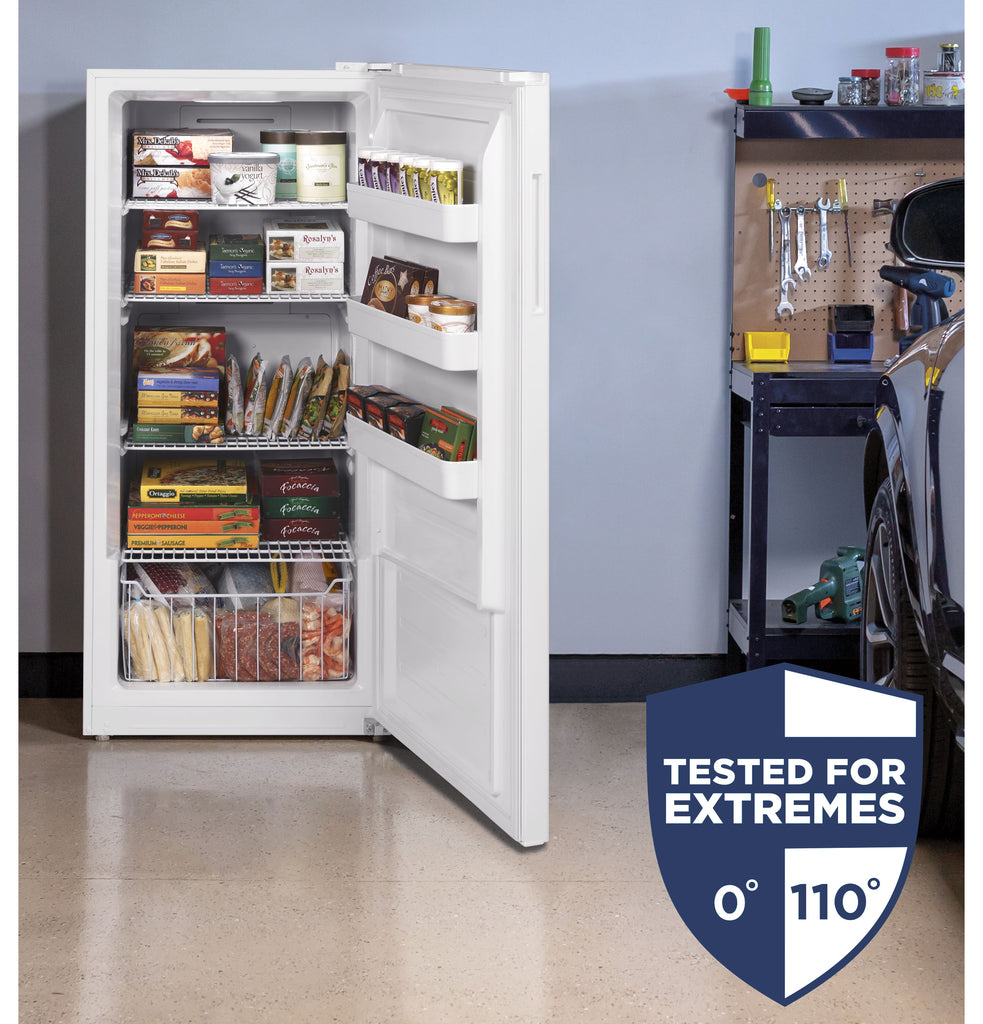
The correct temperature range depends on the model. Many U.S. garage-ready freezers list a working range that extends from around 0°F to around 110°F, but this is not universal. Some models have narrower limits.
Treat the listed range as a firm operating boundary, not a suggestion. A freezer rated for 0°F to 110°F may not work correctly at -10°F or 115°F.
Check these three temperatures
-
The room temperature
Measure the coldest and hottest conditions near the freezer. -
The freezer temperature
Use a freezer thermometer. The control dial number does not always equal the actual internal temperature. -
The manufacturer’s approved range
Use the manual for the exact model. Do not rely only on a store listing.
The USDA recommends keeping a freezer at 0°F or below. If the freezer stays warmer than that, food quality may decline faster. A rise in temperature can also signal a mechanical or electrical problem.
A simple garage temperature check
Before installation, place a room thermometer in the planned location. Check it during the coldest and hottest parts of the year if possible.
A short test during mild weather is not enough. A garage that feels comfortable in October may become too hot in July or too cold in January.
Can You Put Any Freezer in a Garage?
No. A standard freezer may work in a garage with mild temperatures, but that does not make it garage ready.
A freezer can run for years without trouble in one climate and fail to hold a safe temperature in another. The risk is higher when the garage is unheated, poorly insulated, or exposed to direct sun.
Before placing a freezer in a garage, confirm that:
- The manual allows garage or unconditioned-space use.
- The room stays within the listed temperature range.
- The floor is level and strong enough for the appliance.
- The outlet is grounded and close enough for the power cord.
- The unit has the required clearance on all sides.
- The area stays dry and does not flood.
- The door can open fully.
- The location does not block a vehicle door, walkway, or emergency path.
Do not place a freezer outside under a roof or patio unless the manufacturer clearly approves outdoor use. A garage-ready freezer is not automatically resistant to rain, snow, humidity, insects, or direct weather exposure.

How to Set Up a Freezer in a U.S. Garage
Correct placement can help a garage freezer work better and use less energy.
1. Choose a stable location
Place the freezer on a solid, level floor. Concrete is common in U.S. garages, but it can transfer cold and moisture to the appliance.
Keep the freezer away from:
- Direct sunlight
- Space heaters
- Water heaters
- Hot vehicle exhaust
- Garage doors with large air gaps
- Areas that may flood
- Flammable liquids and chemicals
Follow the clearance distances in the manual. The freezer needs room to release heat.
2. Use a suitable electrical outlet
Plug the freezer into a properly grounded wall outlet. Avoid extension cords and power strips unless the manufacturer specifically permits them.
A freezer should have a dedicated, correctly rated circuit when required by the installation instructions or local electrical rules. If the outlet is loose, damaged, ungrounded, or shared with heavy equipment, ask a qualified electrician to inspect it.
Do not remove the ground prong. Do not use an adapter that defeats grounding.
3. Let the freezer settle
If the freezer was transported on its side, place it upright for the time stated in the manual before turning it on. This allows compressor oil to settle.
The waiting period varies by manufacturer and transport position. The owner’s manual takes priority.
4. Cool the empty freezer first
Turn the freezer on and allow it to reach 0°F before loading it with food. A freezer thermometer gives a better answer than the control setting.
Adding a large amount of warm food at once can raise the internal temperature. Load food in smaller batches when possible.
5. Keep the door closed
Every door opening lets warm, moist air enter. That can increase frost and force the compressor to work harder.
Group similar foods together. Use baskets or bins in an upright freezer so you can find items quickly.
Does a Garage-Ready Freezer Use More Electricity?
It can. Energy use depends on the freezer’s size, insulation, age, temperature setting, room temperature, door openings, and condition.
A hot garage usually increases run time. A freezer may also use more energy if it has poor door seals, heavy frost, blocked airflow, or a dirty condenser area.
The U.S. Department of Energy recommends comparing the EnergyGuide label when shopping for appliances. The label provides an estimated yearly energy cost based on standard assumptions. Your cost may differ because garage temperatures are less stable than indoor temperatures.
Ways to reduce energy use
- Keep the freezer out of direct sun.
- Maintain the manufacturer’s clearance.
- Check the door gasket for gaps.
- Defrost the unit when frost reaches the level stated in the manual.
- Keep the freezer reasonably full, but do not block vents.
- Let hot food cool before freezing it.
- Avoid frequent door openings.
- Clean accessible coils or vents as the manual directs.
Do not cover the freezer with blankets during cold weather. This can block airflow and create a fire or overheating risk.
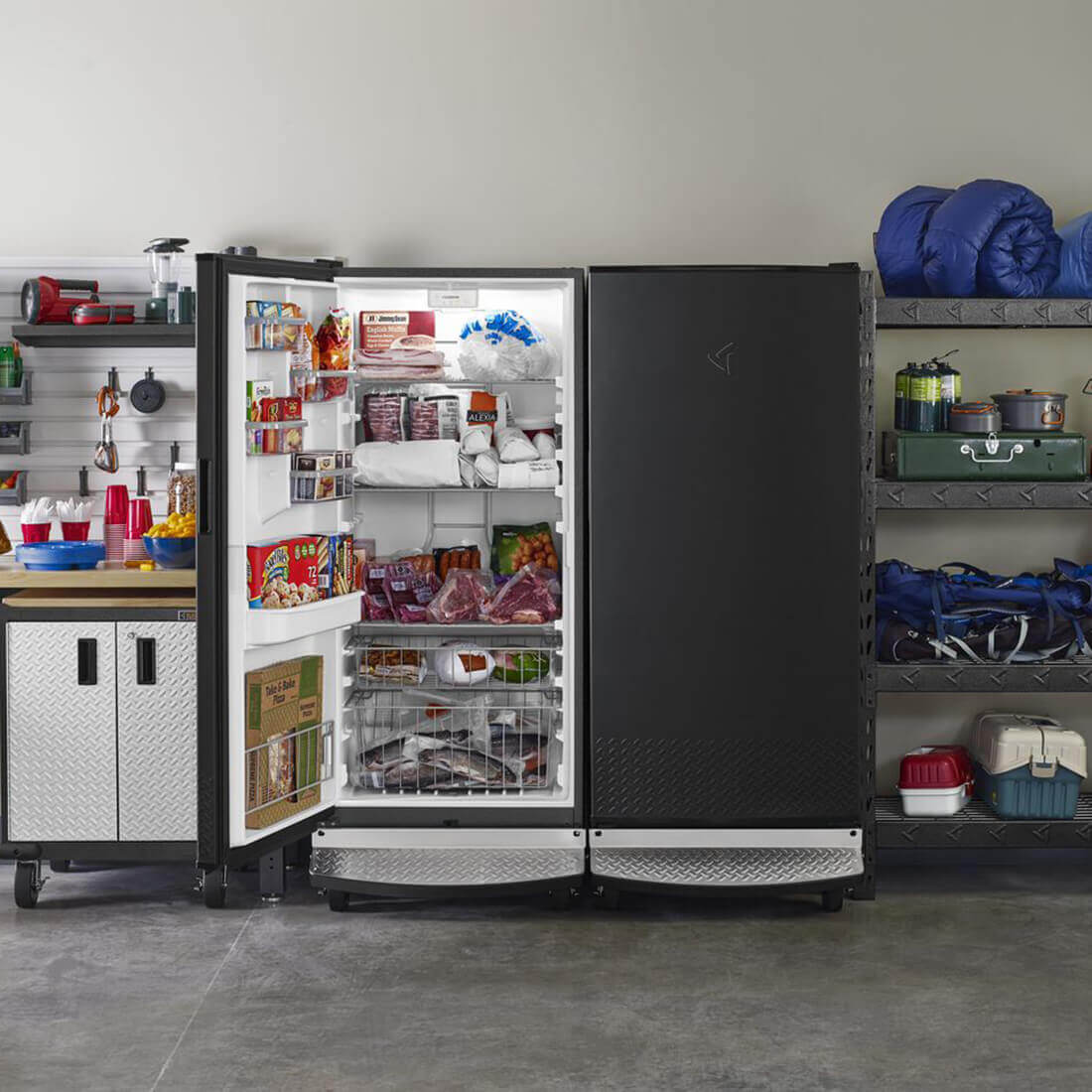
Chest Freezer or Upright Freezer for a Garage?
Both types can work in a garage when the specific model is rated for that location. The best choice depends on space, access, and how often you use frozen food.
| Freezer type | Main strengths | Main limits |
|---|---|---|
| Chest freezer | Often holds cold well during a power outage because cold air stays inside | Takes more floor space and can be harder to organize |
| Upright freezer | Easier to arrange and access | Door openings release cold air quickly |
| Manual-defrost model | Often costs less to buy and may use less energy | Needs periodic defrosting |
| Frost-free model | More convenient | May cost more and use more energy |
A chest freezer can be useful for long-term storage. An upright model may suit a family that needs quick access to smaller items.
Measure the space before buying. Include room for the lid or door to open. Also check the path from the delivery truck to the garage. A freezer that fits the final space may not fit through a narrow doorway.
Common Problems With a Garage Freezer
A freezer that is not working correctly may show clear signs. Check the simple and safe causes first.
The freezer is warm
Possible causes include:
- Loss of power
- A tripped breaker
- A door left open
- A damaged gasket
- Blocked air vents
- Too much warm food added at once
- Room temperature outside the approved range
- A failed compressor, fan, thermostat, or control board
Check the outlet and breaker without opening electrical panels. Confirm that the door closes and that the freezer has adequate clearance.
Use a freezer thermometer. If the unit cannot return to 0°F, move food to a working freezer if you can. Perishable food safety depends on time and temperature, not just whether food still feels cold.
The freezer runs constantly
A freezer may run longer during a hot garage day. It may also run more after loading food.
If constant running continues, check the door seal, frost buildup, airflow, clearance, and room temperature. If those checks do not help, arrange appliance service.
The freezer stops running in winter
A standard model may stop cycling when the garage becomes very cold. A garage-ready model may still have a lower temperature limit.
Check the manual before adding a heater or changing the controls. Do not install an aftermarket heater unless the manufacturer provides approved instructions. An unapproved modification can create a fire risk and may void the warranty.
Frost builds up quickly
Some frost is normal in a manual-defrost freezer. Heavy frost can result from:
- A door that does not seal
- Frequent door openings
- Warm or uncovered food
- High humidity
- A damaged gasket
Unplug the freezer before defrosting it, unless the manual gives another safe method. Never chip ice with a knife or use an open flame.

What Should You Avoid Storing in a Garage Freezer?
A freezer is not a substitute for safe food handling. Keep food in sealed packages, label it with dates, and follow USDA storage guidance.
Avoid storing food in a damaged freezer or one that cannot maintain 0°F. Do not keep food in a freezer that is exposed to flooding, leaks, gasoline fumes, or other contamination.
Do not store chemicals, paint, fuel, or cleaning products in the freezer. A food freezer should be used only for its intended purpose.
Also avoid overloading the unit. Packed food can block vents and stop cold air from moving. Follow the loading instructions in the manual.
How to Choose a Garage-Ready Freezer
Use this short checklist before buying:
-
Verify the temperature range.
Find the minimum and maximum room temperatures in the manual or official product specifications. -
Check the freezer’s target temperature.
It should be capable of maintaining 0°F or colder under normal conditions. -
Measure the space.
Check width, height, depth, door swing, lid clearance, and delivery access. -
Compare energy information.
Review the EnergyGuide label and remember that a hot garage can raise actual use. -
Choose the right layout.
Pick a chest freezer for bulk storage or an upright freezer for easier organization. -
Review power requirements.
Confirm voltage, outlet type, circuit needs, and cord instructions. -
Read the warranty limits.
Some warranties may exclude use outside approved temperatures or in unapproved locations.
The best garage freezer is not simply the largest or cheapest model. It is the model whose operating range matches your garage, whose size fits your space, and whose controls you can use safely.

FAQs About Garage-Ready Freezers
Can I put a freezer in an unheated garage?
Yes, if the freezer is approved for the temperature range in that garage. Check the exact model manual. A standard freezer may not maintain a safe internal temperature during extreme cold or heat.
Will a garage-ready freezer work below 0°F?
Not always. The room-temperature limit is model-specific. If the garage can fall below the listed minimum, the freezer may not operate correctly.
Can a garage-ready freezer be used outside?
Usually no. Garage-ready means the freezer can handle a range of indoor ambient temperatures. It does not make the freezer waterproof or weatherproof.
Should I use a freezer alarm?
A freezer alarm can help warn you about a power failure or rising temperature. It is useful in a garage because temperature changes may go unnoticed. Choose one designed for freezer temperatures and test it after installation.
Can I run a garage freezer on an extension cord?
Only if the manufacturer permits it and the cord meets the stated requirements. A direct connection to a properly grounded wall outlet is usually safer. Never use a damaged, undersized, or overloaded cord.
How cold should a garage freezer be?
The freezer should maintain an internal temperature of 0°F or below. The garage itself must stay within the operating range listed by the manufacturer.
Final Answer: Is a Garage-Ready Freezer Worth It?
A garage-ready freezer is a practical choice for many U.S. homes with limited kitchen or basement space. Its design helps it handle wider temperature changes than a typical indoor freezer.
The label is not a guarantee for every climate. Check the model’s approved ambient range, keep the unit dry and level, provide proper airflow, and monitor the internal temperature with a freezer thermometer.
Your next step: measure the garage’s likely temperature range and compare it with the exact freezer manual before you buy or install the appliance.

Appliance Review Expert
Lucas Ramirez is a trusted voice at HomeFixGrid.com, known for his clear, practical, and creatively written guides that simplify appliance care for everyday homeowners. With a strong focus on hands-on testing and real-world problem-solving, Lucas brings expert insight into appliance reviews and troubleshooting techniques. Her work empowers readers to confidently maintain, repair, and choose the right appliances for their homes.