How Cold Is A Home Freezer: Ideal Temperature Guide
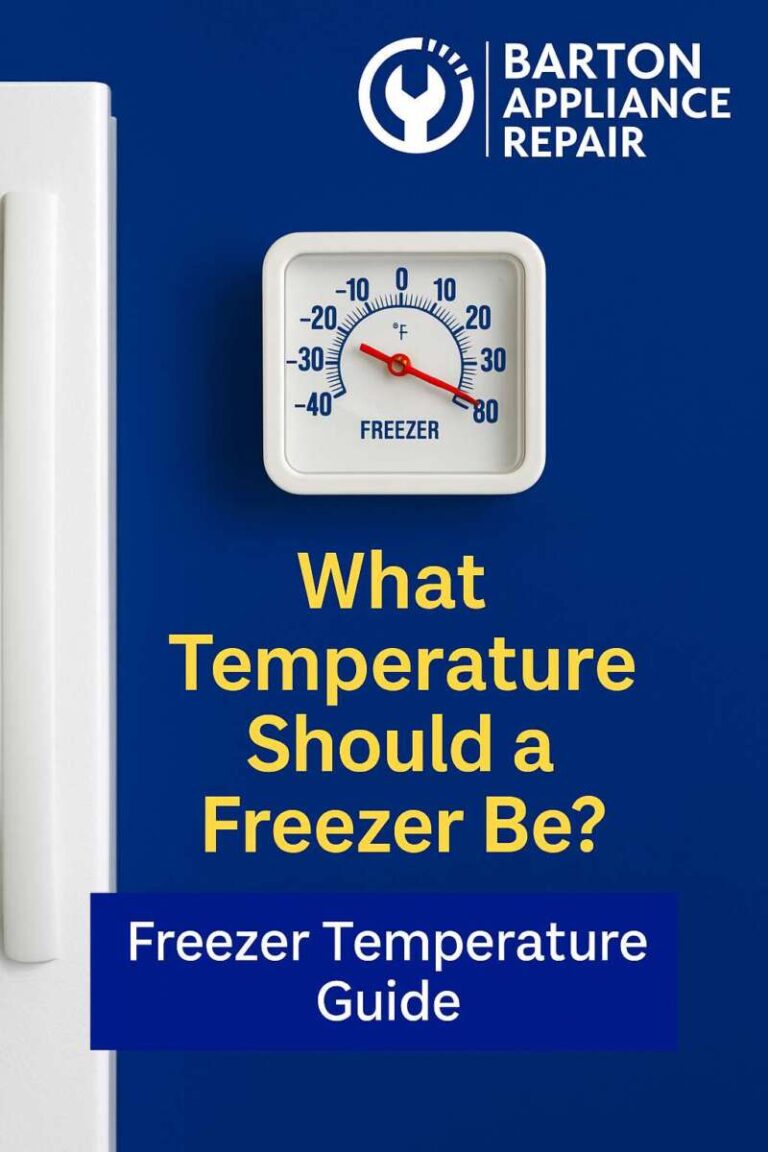
A home freezer should be kept at 0°F (-18°C) or colder. This is the standard temperature recommended by the U.S. Department of Agriculture (USDA) for storing frozen food safely and maintaining good quality.
Many home freezers cycle between slightly warmer and colder temperatures. That is normal. The key is to keep the freezer’s actual temperature close to 0°F, not simply trust the number on the control dial. An inexpensive freezer thermometer can show whether the compartment is cold enough.
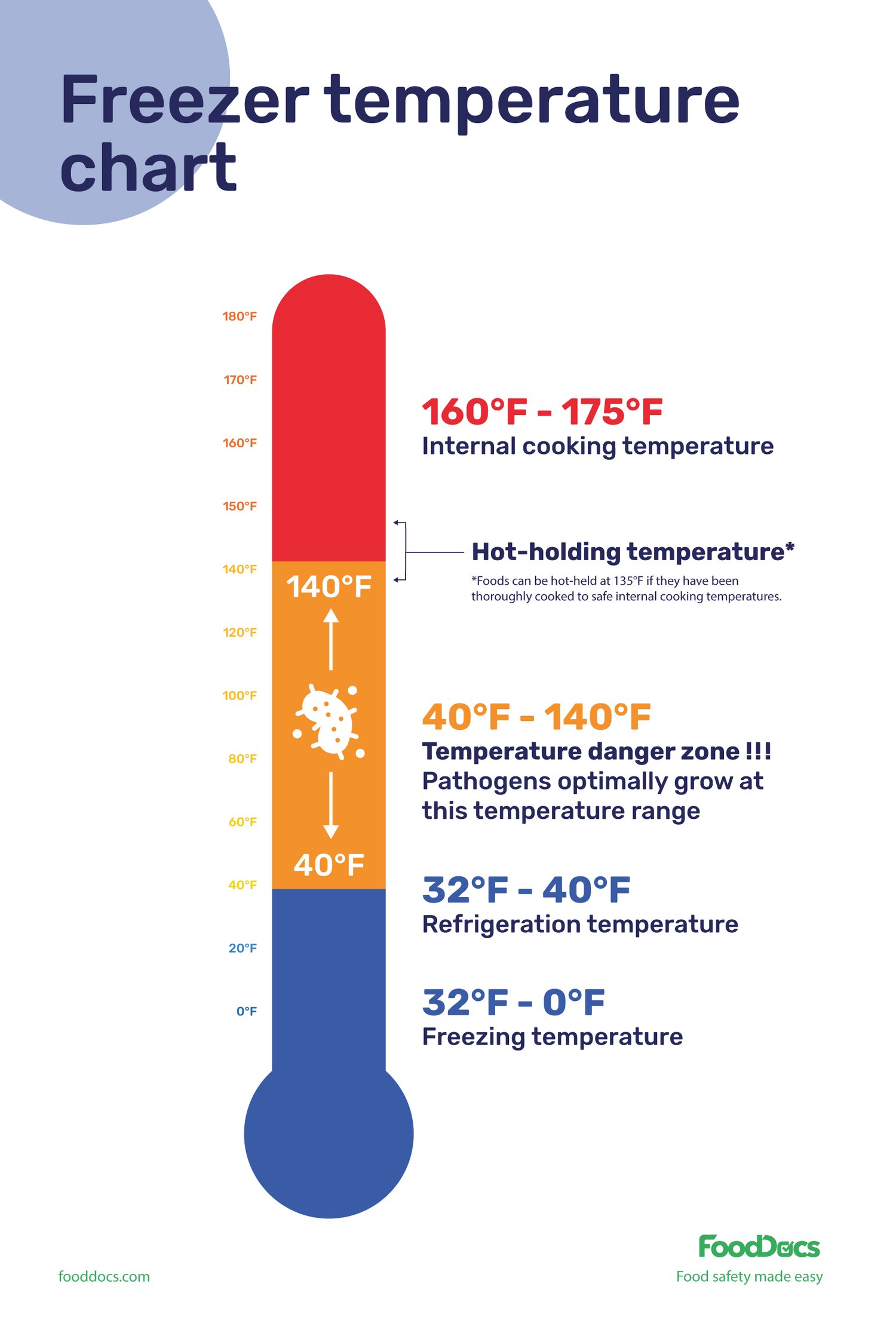
What temperature should a home freezer be?
A home freezer should maintain an internal temperature of 0°F (-18°C) or below.


This applies to:
- Stand-alone upright freezers
- Chest freezers
- Freezer compartments attached to refrigerators
- Garage-ready freezers, when used within their stated temperature range
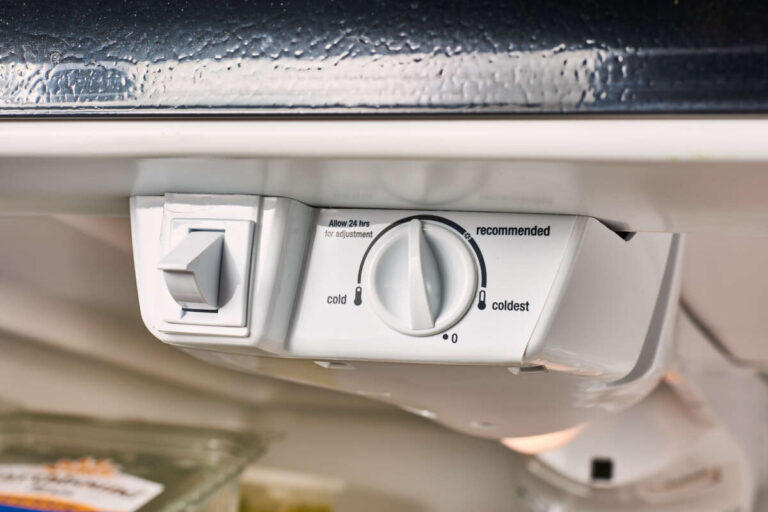
The 0°F target is not the same as the lowest setting on every appliance. A dial marked from 1 to 5, for example, does not mean 5°F. It usually represents cooling power, and the exact temperature depends on the model.
A freezer may become colder than 0°F for part of its cooling cycle and warmer when the compressor stops. Small changes are normal. A sustained temperature above 0°F, however, can reduce food quality and may allow some foods to soften or partially thaw.
Freezer temperature in Celsius
| Temperature | Meaning |
|---|---|
| 0°F | Recommended freezer temperature |
| -18°C | Same temperature as 0°F |
| 10°F (-12°C) | Too warm for the usual target |
| 32°F (0°C) | Water freezes at this point, but the freezer is far too warm |
| 40°F (4°C) and above | Food safety concerns increase if food remains here for too long |
The freezing point of water is 32°F, but a freezer must be much colder than that. Frozen food needs a stable, very cold environment to stay solid and retain its quality.

Why does a freezer need to be 0°F?
Keeping a freezer at 0°F slows the growth of microorganisms and slows chemical changes that damage food. Freezing does not sterilize food, and it does not kill every harmful microorganism. Instead, it pauses or greatly slows their activity while the food remains frozen.
When food thaws, microorganisms can become active again. That is why temperature control matters during freezer storage, power failures, and food transport.
A temperature of 0°F also helps limit:
- Ice crystal growth
- Texture changes
- Moisture loss
- Rancid flavors from oxidation
- Freezer burn
- Repeated thawing and refreezing
Food stored continuously at 0°F or below can remain safe for a very long time. The USDA notes that frozen food kept properly at 0°F remains safe indefinitely, although its taste, texture, color, and overall quality can decline over time.
Does colder always mean better?
Not always. A colder setting can help protect food quality, but it may also use more electricity. Extremely cold temperatures can also make some foods harder to scoop, cut, or serve.
The practical goal is simple: set the freezer to reach 0°F, then verify the temperature with a thermometer. There is usually no need to chase much lower temperatures unless the appliance manual recommends it or the freezer has a specific use.


How to check your freezer temperature
the most reliable way to check a home freezer is to use an appliance thermometer designed for low temperatures.
Follow these steps:
- Place the thermometer inside the freezer. Put it near the center, between frozen packages. Do not place it directly against the wall or door.
- Keep the door closed. Opening the door can briefly change the air temperature.
- Wait several hours. For a useful reading, leave the thermometer in place for about 24 hours.
- Read the temperature. The target is 0°F (-18°C) or colder.
- Adjust the control if needed. Make small changes instead of turning the dial from one extreme to the other.
- Wait again before checking. Give the freezer several hours to respond to the change.
A thermometer placed in open air can show quick swings. Food temperature changes more slowly because frozen food acts like a cold mass. For that reason, a reading between packages is often more useful than a brief reading taken immediately after opening the door.
Where should the thermometer go?
Place the thermometer:
- Near the center of the freezer
- Away from the door
- Away from the cooling vent
- Between food packages rather than on a shelf edge
If the freezer has several zones, check more than one area. The door is often warmer than the back or center because it is exposed to room air each time it opens.
What if the freezer thermometer reads above 0°F?
First, check whether the door has been opened often or whether warm food was recently added. A temporary rise may correct itself.
If the reading stays above 0°F, check these common causes:
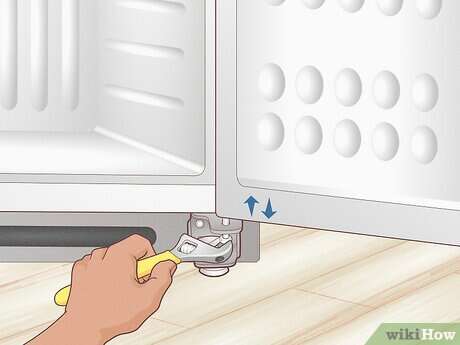
- The door is not sealing tightly.
- The freezer is packed so full that air cannot move.
- The freezer is nearly empty and has little frozen mass to hold the cold.
- Frost is blocking vents or the evaporator area.
- The condenser coils are dirty, if the model has accessible coils.
- The appliance is in a hot garage or near a heat source.
- The temperature control is set too warm.
- The freezer has a mechanical or electrical problem.
Do not remove built-in panels or handle electrical parts unless the manufacturer specifically permits it. Unplug the appliance before cleaning accessible parts, and follow the owner’s manual.

What affects freezer temperature?
The displayed temperature can change because of the freezer’s load, location, airflow, and door use. Understanding these factors helps you decide whether a reading is normal or signals a problem.
Door openings
Each door opening lets warm, moist room air enter. Frequent openings can raise the temperature and create frost. A freezer used often may need more time to return to 0°F.
Keep the door closed as much as possible. Organize common items where they are easy to reach, and check that packages do not block the door gasket.
Food load
A full freezer usually holds its temperature better than an almost empty one because frozen food stores cold energy. However, overpacking can block vents and prevent cold air from circulating.
Leave enough space for the airflow pattern described in the appliance manual. Do not tightly press packages against interior vents.


Warm food
Adding a large amount of warm food can temporarily raise the freezer temperature. Divide food into smaller, shallow packages when appropriate so it freezes more quickly.
Do not place steaming-hot food directly into a crowded freezer. Let it cool safely first, then freeze it promptly. For perishable food, do not leave it at room temperature for extended periods while waiting for it to cool.
Room temperature
A freezer in a hot garage may work harder than one inside an air-conditioned kitchen. Some models are not designed for extreme outdoor temperature changes.
Check the manual for the appliance’s acceptable room-temperature range. “Garage-ready” is a model feature, not a universal property of every freezer.
Frost and airflow
A thick layer of frost can reduce usable space and interfere with airflow. If frost builds up beyond the amount allowed by the manual, use the manufacturer’s defrost procedure.
Never chip away frost with a knife or other sharp tool. You could puncture a refrigerant line or damage the appliance.

How cold is a refrigerator freezer?
A freezer compartment inside a refrigerator should also aim for 0°F (-18°C).
In practice, small refrigerator freezers may show more temperature variation than stand-alone freezers. They often share cooling systems with the refrigerator section, and their temperature can change when the refrigerator door opens or when the appliance runs a defrost cycle.
Use a thermometer to check the actual temperature. If the freezer stays above 0°F, make sure:
- The refrigerator is not set unusually warm.
- Air vents between sections are not blocked.
- The freezer door closes completely.
- Food is not packed against the rear wall or vents.
- The door gasket is clean and flexible.
- The appliance has enough space around it for ventilation.
A refrigerator freezer that cannot maintain 0°F may need service, especially if it also makes unusual noises, leaks water, builds heavy frost, or runs nearly all the time.

Is food safe if the freezer gets warmer than 0°F?
Food may still be safe if the freezer briefly rises above 0°F and the food remains frozen or still contains ice crystals. Safety depends on how warm the food became and how long it stayed warm.
Check the food rather than relying only on the air-temperature reading:
- Still solidly frozen: It is generally safe to keep, although quality may be affected.
- Partly thawed but still very cold: It may often be refrozen or cooked, depending on the food and how long it was warm.
- Fully thawed and warm: Treat it as a perishable food and follow USDA discard guidance.
- Unusual odor, leaking juices, or a damaged package: Handle with care and consider discarding it.
Never taste food to decide whether it is safe. Harmful bacteria may not change the food’s smell, appearance, or taste.


For a power outage, the USDA advises keeping the freezer door closed. A full freezer can usually hold a safe temperature for about 48 hours, while a half-full freezer can usually hold it for about 24 hours, provided the door remains closed. These are general estimates, not guarantees. The actual time varies with room temperature, freezer condition, food load, and how often the door opens.
Use a food thermometer when possible. If you are unsure about a perishable item, discard it rather than taking a food-poisoning risk.

Freezer temperature and food quality
Food can remain safe while its quality declines. This difference explains why frozen food may be edible but dry, tough, pale, or stale.
Freezer burn
Freezer burn appears as dry, grayish, white, or leathery patches. It happens when moisture leaves the food’s surface and the exposed area becomes dehydrated.
Freezer burn is generally a quality problem, not a sign that the food is poisonous. You can trim affected areas after thawing if the remaining food looks and smells normal. Good packaging helps prevent it.
Use:
- Airtight freezer containers
- Heavy-duty freezer bags
- Moisture-resistant wrap
- Minimal air inside bags
- Clear labels with the freezing date
Ice crystals
Large ice crystals often indicate slow freezing or temperature changes. They can damage the structure of meat, vegetables, fruit, and prepared meals.
Keep the freezer at 0°F or colder, avoid repeated thawing and refreezing, and freeze food in portions that will be used at one time.
Storage time
The USDA’s freezer storage charts focus mainly on quality limits. A food may remain safe longer than the suggested quality period if it stays continuously frozen, but its texture and flavor may suffer.
Label food with the date it went into the freezer. Use older items first, and discard food that has an uncertain history after a long outage or major thaw.

Common freezer temperature mistakes
Several habits can make a freezer seem colder or warmer than it really is.
Trusting the dial number
A setting of “3” or “5” is not a temperature reading. Use a thermometer to verify the actual internal temperature.
Checking immediately after changing the setting
Freezers need time to cool the food and the interior surfaces. Wait several hours, then check again.
Measuring only near the door
The door area is often warmer than the center. A door reading may not represent the temperature around the stored food.
Blocking the vents
Packages pressed against vents can restrict airflow. Follow the spacing guidance in the manual.
Leaving the door slightly open
A package, drawer, or ice buildup can prevent a full seal. Check the gasket and inspect the entire door edge.
Using a kitchen thermometer that is not rated for freezers
Some cooking thermometers do not provide reliable readings at 0°F. Use a thermometer made for freezer temperatures.
Assuming frozen means safe forever
Freezing stops microbial growth but does not remove all risks. Food can become unsafe before freezing, during thawing, or after a long period at warmer temperatures.

Quick freezer temperature guide
| Situation | What to do |
|---|---|
| Freezer reads 0°F or below | Keep the setting and monitor it periodically |
| Freezer reads 1–5°F | Make a small adjustment if this reading remains steady |
| Freezer reads above 5°F for hours | Check the door, vents, load, frost, and room temperature |
| Food is still hard and frozen | Keep it frozen and check the appliance |
| Food has ice crystals but partly thawed | Refreeze or cook promptly if it stayed safely cold |
| Food is fully thawed and warm | Follow USDA food-safety guidance; when uncertain, discard it |
| Freezer has lost power | Keep the door closed and check food temperature before saving items |
The deciding factor is not one brief air-temperature reading. It is the freezer’s sustained temperature and the condition of the food.

Frequently asked questions
Is -10°F better than 0°F for a home freezer?
Usually, 0°F is enough for safe long-term frozen storage. A lower setting may preserve quality in some cases, but it can use more electricity and is not needed for most households. Follow the appliance manual if it gives a different operating range.
Can a freezer be too cold?
A freezer can be colder than necessary, but normal household freezers are not usually damaged simply because they reach temperatures below 0°F. The main trade-off is higher energy use and food that is harder to serve. If the freezer runs constantly or develops unusual frost, investigate the cause.
Why is my freezer cold but not freezing food solid?
Possible causes include a weak cooling system, blocked airflow, a faulty door seal, warm food loads, or a temperature reading taken in the wrong place. Check the temperature with a freezer thermometer and confirm that the door closes fully. If the freezer stays above 0°F, contact the manufacturer or a qualified appliance technician.
How long does it take a freezer to reach 0°F?
A new or recently unplugged freezer may need several hours to reach its target temperature. The exact time depends on the model, room temperature, food load, and whether food is already frozen. Check the owner’s manual and verify the temperature with a thermometer rather than relying on elapsed time.
Should I keep a freezer full or empty?
A reasonably full freezer tends to hold cold better, but it still needs space for air to circulate. If the freezer is nearly empty, sealed containers of water can add thermal mass, but do not block vents or overfill the compartment.
Conclusion
The correct temperature for a home freezer is 0°F (-18°C) or colder. Check that temperature with a freezer thermometer, keep the door sealed, allow air to circulate, and monitor the appliance after power outages or temperature changes.
If your freezer cannot stay near 0°F, start with the door seal, vents, frost, food load, and room temperature. If those checks do not solve the problem, stop storing valuable perishable food in the appliance until it is repaired or replaced.

Appliance Review Expert
Lucas Ramirez is a trusted voice at HomeFixGrid.com, known for his clear, practical, and creatively written guides that simplify appliance care for everyday homeowners. With a strong focus on hands-on testing and real-world problem-solving, Lucas brings expert insight into appliance reviews and troubleshooting techniques. Her work empowers readers to confidently maintain, repair, and choose the right appliances for their homes.