What To Do When The Refrigerator Stops Working: Quick Fixes
If your refrigerator stops working, keep the doors closed, check the power, and protect the food first. A closed refrigerator keeps food cold for about four hours. Move perishable food to a cooler with ice if the refrigerator will not cool soon. Then check the outlet, breaker, temperature controls, vents, and coils. Call a qualified appliance technician if the unit still does not cool or shows signs of an electrical or sealed-system fault.
This guide applies to homes in the United States. It follows food-safety guidance from the U.S. Food and Drug Administration and the U.S. Department of Agriculture.

Act quickly: protect the food first
The safest first step is to keep the refrigerator and freezer doors closed. Each opening lets warm air in and shortens the time that food stays safe.
Use this basic plan:
- Do not open the doors unless needed.
- Check the refrigerator temperature with an appliance thermometer if you have one.
- Move food to a clean cooler packed with ice if the refrigerator has been warm for several hours.
- Keep raw meat, poultry, seafood, eggs, dairy, and cut produce cold.
- Do not taste food to decide whether it is safe.
The refrigerator should stay at 40°F or below. A freezer should stay at 0°F or below for best long-term storage.
If perishable food has been above 40°F for two hours or more, discard it. If the room temperature is above 90°F, such as during a hot summer day, use a one-hour limit. These limits apply to foods such as meat, poultry, fish, eggs, milk, soft cheese, leftovers, cooked food, and cut fruit.
A power outage may not spoil everything at once. An unopened refrigerator can usually keep food cold for about four hours. A full freezer may hold a safe temperature for about 48 hours, while a half-full freezer may last about 24 hours, if the door stays closed.
What to move to a cooler
Prioritize foods that spoil quickly:
- Meat, poultry, fish, and deli meat
- Milk, cream, yogurt, and soft cheese
- Eggs
- Cooked leftovers
- Prepared salads
- Cut fruit and vegetables
- Infant formula
- Opened containers that require refrigeration
Whole, uncut fruits and vegetables, bread, hard cheese, butter, and unopened shelf-stable foods may not need the same urgent action. When in doubt, follow the food label and USDA guidance.

Check the refrigerator power supply
A refrigerator that appears dead may have a simple power problem. Check the power source before removing panels or calling for repair.
Follow these steps in order:
-
Look inside the refrigerator.
If the light, display, or water dispenser works, the appliance may have power but a cooling problem. -
Check the wall outlet.
Plug in a lamp or another small device. If the test device also fails, the outlet may be off. -
Check the circuit breaker.
A tripped breaker may sit between the “on” and “off” positions. Move it fully to “off,” then back to “on” once. -
Check for a GFCI reset.
Some kitchen outlets are protected by a ground-fault circuit interrupter. Press the reset button if the outlet has one or if another nearby outlet controls the circuit. -
Inspect the power cord.
Look for cuts, crushed areas, melted plastic, or burn marks. Do not use the refrigerator if the cord or plug is damaged. -
Check the controls.
The temperature setting may have been changed, or the appliance may be in vacation, showroom, or cooling-off mode.
Do not repeatedly reset a breaker that trips again. That can point to an electrical fault. Unplug the refrigerator and arrange professional service if you smell burning, see sparks, hear buzzing from the outlet, or find heat or damage around the plug.
If the refrigerator has power, wait several minutes after restoring power. Some models delay the compressor start to protect the system.

Troubleshoot a refrigerator that has power but is not cooling
If the lights work but the food is warm, start with airflow and settings. These checks are useful because blocked air can make a working refrigerator seem broken.
1. Confirm the temperature setting
Set the refrigerator section near 37°F and the freezer near 0°F, unless the owner’s manual gives different instructions. Do not turn the control to its coldest setting as a first response. That may freeze food near the vents without fixing the cause.
Allow several hours for a large temperature change. A fully warm refrigerator may need about 24 hours to return to a stable temperature after repair or power restoration.
2. Look for blocked air vents
Cold air moves from the freezer to the refrigerator in many models. Food can block the vents and stop that air from circulating.
Move containers away from vents on the back wall and near the top or sides. Do not pack food tightly against the rear wall. Leave space around air openings so cold air can travel through the cabinet.
3. Check the door seal
Close the door on a sheet of paper. If the paper pulls out with little resistance, the gasket may not seal well.
Clean the gasket with mild soap and warm water. Check for:
- Cracks or tears
- Hardened sections
- Food or dirt on the seal
- A shelf or drawer holding the door open
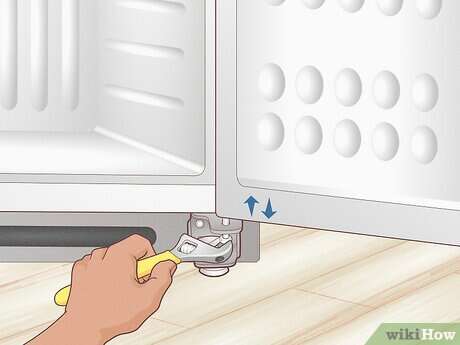
- A refrigerator that is not level
A weak seal lets warm, moist air enter. That can cause frost, long run times, and poor cooling.
4. Inspect frost buildup
A thick layer of frost on the freezer’s back wall can block airflow. This often points to a defrost-system problem, a door-seal problem, or a door that was left open.
Do not chip at the ice with a knife or sharp tool. You could puncture a refrigerant line or damage the cabinet.
If the manual allows it, unplug the refrigerator and let the ice melt with the doors open. Protect the floor from water. Do not use an open flame. A hair dryer can create shock, fire, or plastic-damage risks around water, so avoid using one unless the manufacturer specifically permits it and the appliance is fully disconnected and the method is safe.
Manual defrosting may restore cooling for a short time, but repeated frost means the underlying fault needs repair.
5. Clean accessible condenser coils
Dusty condenser coils can reduce heat release and make the compressor run longer. Some refrigerators have coils under the unit, behind a lower grille, or on the back.
Before cleaning:
- Unplug the refrigerator.
- Remove the grille only if the manual allows it.
- Use a refrigerator coil brush or a vacuum with care.
- Keep water away from electrical parts.
- Replace the grille and restore power.
Some newer models have covered coils that should not be cleaned by the owner. Follow the manual rather than forcing access.
6. Listen for unusual sounds
Sound can provide a clue:
| Symptom | Possible cause |
|---|---|
| No sound and no cooling | Power problem, control fault, or compressor-start problem |
| Clicking every few minutes | Start relay, compressor, or control issue |
| Fan runs but the cabinet stays warm | Airflow, frost, compressor, or sealed-system issue |
| Loud buzzing or grinding | Fan, compressor, ice, or vibration problem |
| Water dripping inside | Clogged drain, heavy frost, or door-seal problem |
| Refrigerator runs constantly | Warm room, dirty coils, poor seal, blocked vents, or cooling-system fault |
These signs do not identify a failed part by themselves. A technician may need to test voltage, fan motors, temperature sensors, relays, and refrigerant-system pressure.

Match the symptom to the likely cause
The symptom helps decide whether you can make a safe basic check or need service.
The refrigerator is completely dead
Possible causes include:
- Tripped breaker
- Failed outlet or GFCI
- Loose or damaged power cord
- Cooling-off mode
- Failed electronic control
- Internal wiring or component fault
Start with the outlet and breaker. Do not remove the back cover unless you have the training and the manual supports that work.
The freezer is cold but the refrigerator section is warm
This often relates to airflow. Check the vents, evaporator fan sound, frost buildup, and food placement.
A failed damper, fan, temperature sensor, or defrost component may also cause this pattern. If clearing vents does not help, arrange repair.
The refrigerator is cold but the freezer is warm
Check whether the freezer door seals and whether the freezer has a heavy frost layer. A blocked evaporator, fan problem, or cooling-system fault may be involved.
Do not assume that adding more refrigerant will solve the problem. Refrigerant systems are sealed. A leak requires proper diagnosis and repair by a qualified technician.
The refrigerator is leaking water
First identify where the water starts:
- Inside the refrigerator: A blocked defrost drain may be causing water to collect.
- Under the crisper drawers: The drain or drain pan may be involved.
- At the ice maker or water dispenser: Check the supply line and fittings.
- Under the appliance: Inspect the drain pan, hose, and level.
Turn off the water supply if a water line is leaking. Unplug the refrigerator if water is reaching electrical parts.
The refrigerator is too cold
Check the control setting and food placement. Food against a rear vent may freeze even when the average temperature is normal.
A failed damper, sensor, or control can also cause excess cooling. Use a thermometer instead of relying only on the control number or how food feels.

When should you repair or replace the refrigerator?
Repair is usually the better first step when the problem is limited to a gasket, fan, sensor, relay, drain, or blocked airflow. Replacement may make more sense when the appliance has repeated major failures, severe cabinet damage, or a costly compressor or sealed-system problem.
Before approving work, ask the technician:
- What part failed?
- What test confirmed the failure?
- Is the refrigerant system involved?
- What is the total repair price?
- What warranty covers the repair?
- Is the part available for this model?
- Could another component fail soon because of the same issue?
Find the model and serial number before calling. It is often inside the refrigerator compartment, on the door frame, or behind a lower drawer.
Use an appliance technician who is properly qualified for the work. Refrigerant handling and electrical diagnosis can require specialized tools and legal certifications. Do not bypass safety switches, cut sealed-system lines, or work on live electrical parts.
If the refrigerator is under warranty, contact the manufacturer or authorized service provider before paying for a repair. Unauthorized work may affect warranty coverage.
Common mistakes to avoid
Several quick fixes can create more risk or hide the real fault.
- Do not keep opening the door to check the food. Use a thermometer or move food to a cooler.
- Do not taste questionable food. Harmful bacteria may not change the smell, taste, or appearance.
- Do not use a knife to remove freezer ice. It can puncture a refrigerant line.
- Do not pour boiling water inside the freezer. Rapid heat can damage plastic and create burns.
- Do not repeatedly reset a tripped breaker. A recurring trip needs electrical diagnosis.
- Do not block vents with food. Cold air must circulate.
- Do not use a space heater near the refrigerator. It can damage the appliance and create a fire risk.
- Do not add refrigerant yourself. A sealed-system fault needs trained service.
- Do not assume the light proves the refrigerator is cooling. The light may work even when the compressor or fan does not.
If you smell smoke, see melted wiring, or feel heat at the plug, disconnect power only if you can do so safely. If there is fire or active sparking, leave the area and call 911.

How to prevent another refrigerator failure
Simple care can reduce avoidable cooling problems:
- Keep the doors closed as much as possible.
- Clean accessible coils according to the owner’s manual.
- Keep vents clear.
- Check the door gasket from time to time.
- Keep the refrigerator at 40°F or below.
- Keep the freezer at 0°F or below.
- Avoid placing hot food directly against interior vents.
- Leave enough space around the appliance for the required ventilation.
- Replace water filters on the schedule in the manual.
- Keep a refrigerator thermometer on hand.
- Know where the refrigerator’s breaker and water shutoff are located.
A thermometer is especially useful because a refrigerator can feel cool while still being too warm for safe food storage.
Frequently asked questions
How long can food stay in a refrigerator without power?
The FDA says an unopened refrigerator can keep food cold for about four hours. After that, move perishable food to a cooler with ice or another working refrigerator. A full freezer may hold a safe temperature for about 48 hours if it remains closed; a half-full freezer may last about 24 hours.
Should I unplug a refrigerator that is not cooling?
Unplug it before cleaning coils, inspecting accessible parts, or handling water near the appliance. If it has burning smells, sparks, a damaged cord, or repeated breaker trips, leave it unplugged and call a qualified technician.
Why is my refrigerator warm but the freezer cold?
The most common basic checks are blocked vents, heavy frost, a failed evaporator fan, or a stuck air damper. Clear food from the vents and look for frost. If the problem continues, service may be needed.
Can I refreeze food after the refrigerator stops working?
Food that still contains ice crystals or has stayed at 40°F or below may be refrozen, though quality may decline. Discard perishable food that has been above 40°F for two hours or more, or one hour when the room is above 90°F.
How long should I wait after fixing the refrigerator?
Give the refrigerator several hours to cool and about 24 hours to reach a stable temperature after a major warm-up. Keep the doors closed during that time and use an appliance thermometer to confirm the temperature.
Conclusion
When a refrigerator stops working, protect the food before troubleshooting the appliance. Keep the doors closed, check power safely, confirm the controls, clear vents, inspect frost and seals, and clean accessible coils only with the power disconnected.
Discard food that has stayed too warm for too long. If the refrigerator still does not cool, trips the breaker, leaks near electrical parts, or shows unusual compressor or fan sounds, stop testing and call a qualified appliance technician.

Appliance Review Expert
Lucas Ramirez is a trusted voice at HomeFixGrid.com, known for his clear, practical, and creatively written guides that simplify appliance care for everyday homeowners. With a strong focus on hands-on testing and real-world problem-solving, Lucas brings expert insight into appliance reviews and troubleshooting techniques. Her work empowers readers to confidently maintain, repair, and choose the right appliances for their homes.