What Size Refrigerator For Family Of 4: Find The Right Fit
For most families of four in the United States, a refrigerator with 20 to 24 cubic feet of total storage is a practical fit. Choose closer to 20–22 cubic feet if you shop often and have a small kitchen. Choose 23–25 cubic feet if you buy in bulk, store large leftovers, or want more freezer space.
A common planning rule is 4 to 6 cubic feet per person. For four people, that gives a broad range of 16 to 24 cubic feet. In real homes, the best choice also depends on your shopping habits, kitchen space, freezer needs, and the refrigerator’s layout.

How Many Cubic Feet Does a Family of 4 Need?
A family of four usually needs 18 to 24 cubic feet, with 20 to 22 cubic feet serving as a useful middle range.
Here is a simple guide:
| Household needs | Suggested refrigerator size |
|---|---|
| Shops several times each week | 18–20 cu. ft. |
| Typical weekly grocery trips | 20–22 cu. ft. |
| Stores many fresh foods and leftovers | 22–24 cu. ft. |
| Buys meat or frozen food in bulk | 24–28 cu. ft. |
| Needs extra freezer storage | 24 cu. ft. or larger, or a separate freezer |
The term cubic feet describes the refrigerator’s total interior volume. It usually includes both the refrigerator compartment and the freezer compartment.
A 22-cubic-foot model does not provide 22 cubic feet of fresh-food space. Part of that volume belongs to the freezer, ice maker, drawers, shelves, and door bins.
A simple size calculation
Use this starting formula:
Number of people × 4 to 6 cubic feet = estimated total capacity
For a family of four:
- 4 × 4 = 16 cubic feet
- 4 × 5 = 20 cubic feet
- 4 × 6 = 24 cubic feet
The result is a range, not a rule. A family that shops daily may be comfortable with 18 cubic feet. A family that cooks large meals and freezes food may need 24 cubic feet or more.
What most families should choose
For many U.S. households, these sizes work well:
- 18–20 cu. ft.: Good for light shoppers, smaller kitchens, or families with another freezer.
- 20–22 cu. ft.: A balanced choice for normal weekly shopping.
- 23–25 cu. ft.: Better for bulk shopping, large containers, and frequent leftovers.
- 26 cu. ft. or more: Useful when freezer space and storage volume matter more than compact size.
Larger is not always better. A refrigerator that is too large can waste kitchen space, cost more to buy, and use more energy. It may also encourage food to sit unused in the back.

What Changes the Right Refrigerator Size?
Your shopping pattern matters more than the number of people in your home. Two families of four can need very different refrigerators.
Choose more capacity if you:
- Shop once a week or less
- Buy warehouse-club packs
- Store large drink containers
- Cook meals ahead
- Keep many leftovers
- Buy fresh produce in large amounts
- Freeze meat, bread, or prepared food
- Need space for school lunches
- Host meals often
- Have teenagers who eat more at home
A large family may need more space even when the refrigerator is not full every day. Containers, food packaging, and large bottles can use space quickly.
Choose less capacity if you:
- Shop two or more times per week
- Eat many meals outside the home
- Use a separate chest or upright freezer
- Have a narrow kitchen
- Prefer fresh food over frozen food
- Live alone part of the week
- Store few drinks or leftovers
The goal is not to fill every shelf. The goal is to keep food cold, visible, and easy to reach.
How much freezer space does a family of four need?
Many families need more freezer space than a standard refrigerator provides. A refrigerator with 20 to 24 cubic feet of total capacity may have only about 5 to 8 cubic feet in the freezer, depending on its design.
You may need more freezer room if you:
- Freeze meat in bulk
- Store frozen vegetables and fruit
- Make frozen meals
- Keep ice cream and other treats
- Freeze garden produce
- Buy frozen food during sales
A separate freezer can solve this problem. It may let you choose a smaller refrigerator while still storing bulk food. However, a second appliance needs floor space, power, and regular cleaning.
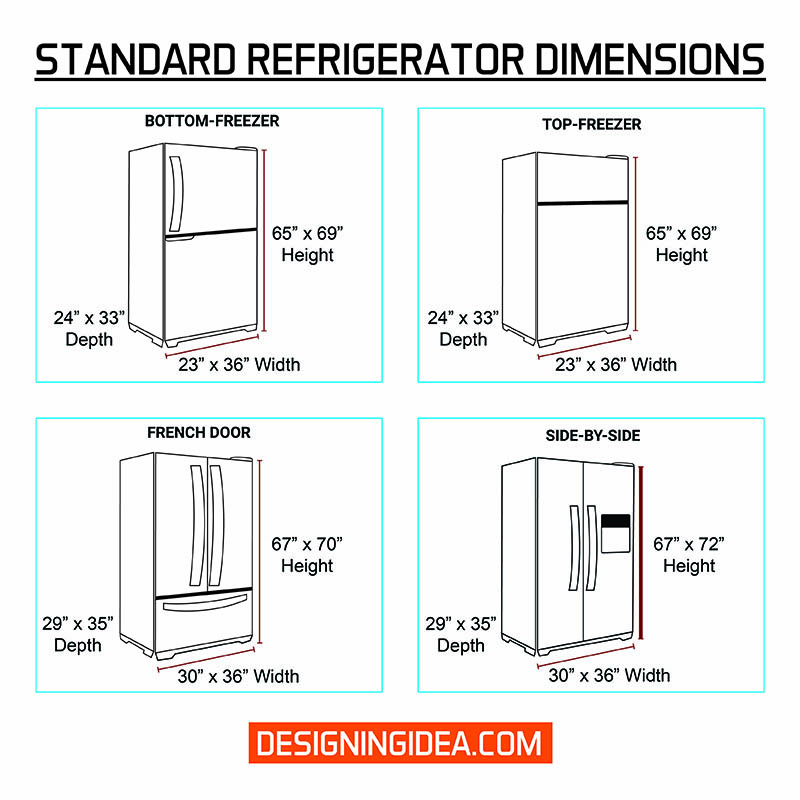
Which Refrigerator Style Is Best for a Family of Four?
The refrigerator style changes how much usable space you get. Two models with the same listed capacity may feel very different inside.
French-door refrigerator
A French-door refrigerator has two doors for the fresh-food section and a freezer drawer below.
Best for: Families that want wide shelves and easy access to fresh food.
Advantages include:
- Wide space for trays and serving dishes
- Eye-level fresh-food storage
- Large lower freezer drawer
- Less need to swing open one wide door
Possible limits include:
- Freezer items can stack in a deep drawer
- The ice maker may take up shelf or door space
- The refrigerator may need a wide opening
A French-door model between 22 and 25 cubic feet is a common fit for a family of four.
Side-by-side refrigerator
A side-by-side model places the freezer beside the fresh-food section.
Best for: Kitchens with limited door-swing space and families that want easy freezer access.
Advantages include:
- Narrow doors
- Easy access to both compartments
- Often includes an outside water and ice dispenser
- Good vertical storage
The main trade-off is width. Each compartment is narrow, so a large pizza box, roasting pan, or wide platter may not fit.
Top-freezer refrigerator
A top-freezer model places the freezer above the fresh-food section.
Best for: Buyers who want a simple, often lower-cost layout.
Advantages include:
- Good use of interior space
- Easy-to-reach freezer
- Fewer complex parts in many designs
- Often fits smaller kitchens
The fresh-food section sits lower, so you may bend more often. Capacity between 18 and 21 cubic feet can work for a family of four that shops often.
Bottom-freezer refrigerator
A bottom-freezer model puts the freezer below the fresh-food section.
Best for: Families that use fresh food more often than frozen food.
Fresh foods stay at a convenient height. The freezer may be a drawer or a door-style compartment. A drawer can hold large packages but may make it harder to find items underneath.
Compact and counter-depth models
A counter-depth refrigerator sits closer to the front of your kitchen cabinets. It can create a cleaner look and improve walking space.
The trade-off is usually less interior depth and less total storage. A counter-depth refrigerator may need to be 24 cubic feet or larger to feel as roomy as a deeper standard model.
Do not compare capacity alone. Compare:
- Fresh-food capacity
- Freezer capacity
- Shelf width
- Shelf depth
- Door-bin space
- Drawer size
- Ice-maker location

How to Measure Your Kitchen Before Buying
Measure the opening before you shop. A refrigerator that fits the product listing may not fit your home once doors, handles, and ventilation space are included.
Measure the width
Measure the opening at the:
- Top
- Middle
- Bottom
Use the smallest measurement. Walls and cabinets are not always perfectly square.
Then check the manufacturer’s required side clearance. Some models need space beside the hinges so the doors can open fully.
Measure the height
Measure from the floor to the lowest cabinet, trim piece, or shelf above the refrigerator.
Check whether the listed height includes:
- Hinges
- Door caps
- Adjustable feet
- Top trim
- A required air gap
A refrigerator that fits tightly may be difficult to level or service.
Measure the depth
Measure from the back wall to the front edge of the counter or cabinet.
Then account for:
- Door thickness
- Handles
- Water connections
- Power cord
- Air clearance
- Door swing
A standard-depth refrigerator often extends past the cabinets. That may be normal, but confirm that it will not block a walkway.
Measure the delivery path
Measure every tight point between the entry door and the kitchen:
- Exterior doors
- Hallways
- Stairways
- Interior doors
- Turns
- Cabinet openings
Ask the retailer or delivery company about door removal. Some refrigerators can fit through a narrow opening only after the doors are removed.
Check the door swing
The refrigerator needs room for the doors or drawers to open. Make sure the open door will not hit:
- A wall
- An island
- Another appliance
- A cabinet handle
- A doorway
A side-by-side model may need less swing space than a French-door model, but it still needs room for the doors and handles.

How to Compare Refrigerator Capacity Correctly
The advertised cubic-foot number is only the first comparison. Layout determines how much food you can actually use.
Compare freezer capacity
A family that stores frozen food should compare the freezer number, not just total capacity.
For example:
- Model A: 22 cu. ft. total, 7 cu. ft. freezer
- Model B: 24 cu. ft. total, 5 cu. ft. freezer
Model A may be better for a family that freezes food. Model B may provide more fresh-food space.
Look at shelf width
A narrow shelf can make a refrigerator feel small even when the total capacity looks large.
Check whether it can hold:
- A full-size pizza box
- A roasting pan
- A large meal-prep container
- Gallon-size containers
- Tall bottles
In the United States, many families store gallon jugs, large drink bottles, and wide food containers. Door-bin design matters more than many buyers expect.
Check the usable depth
Deep shelves hold more food, but they can also hide items. A shelf that is too deep may lead to forgotten leftovers and wasted produce.
Adjustable shelves can help. Look for a layout that lets you keep small items near the front and tall items in a clear section.
Account for the ice maker
Ice makers take up space. Some occupy part of the freezer. Others sit in the door or fresh-food compartment.
An in-door ice maker may increase usable freezer space, but it can reduce door-bin capacity. Compare the actual layout if you keep many bottles or condiments.
Do not treat water dispensers as free features
Door dispensers add convenience, but they use interior space and add parts that may need cleaning or repair. They can also limit shelf placement.
Choose a dispenser when you will use it often. Skip it when storage space and simple design matter more.

Recommended Refrigerator Sizes by Family Shopping Style
This table gives a more useful answer than household size alone.
| Shopping style | Recommended size for four people | Why |
|---|---|---|
| Frequent small trips | 18–20 cu. ft. | Food moves through the refrigerator quickly |
| One main weekly trip | 20–22 cu. ft. | Offers a balance of fresh and frozen storage |
| Bulk shopping | 23–25 cu. ft. | Holds larger packages and extra food |
| Meal prep and leftovers | 22–25 cu. ft. | Needs room for containers and trays |
| Heavy freezer use | 24–28 cu. ft. | Provides more freezer space |
| Small kitchen | 18–21 cu. ft. | Easier to fit and move through the home |
| Separate freezer available | 18–22 cu. ft. | The second appliance supplies extra frozen storage |
These are planning ranges, not guarantees. A family’s food choices can matter more than its size.
Example: a family that shops weekly
Imagine two adults and two children who shop once each week. They keep milk, fresh produce, lunch items, leftovers, and a moderate amount of frozen food.
A 20- to 22-cubic-foot refrigerator will often provide a reasonable balance. A French-door or bottom-freezer layout may make fresh food easier to reach.
Example: a family that buys in bulk
Now imagine a family that buys meat, frozen meals, drinks, and snacks in large packs. They also prepare meals ahead.
A 24- to 28-cubic-foot refrigerator may work better. If the kitchen cannot fit that size, a 20- to 22-cubic-foot refrigerator plus a separate freezer may be more practical.
Example: a family with a narrow kitchen
A family may have enough food needs for 24 cubic feet but only a 33-inch opening. In that case, width and door clearance set the limit.
A narrower refrigerator with a smart layout may work better than a large model that blocks cabinets or cannot open fully.

Refrigerator Temperature and Food-Safety Basics
Capacity does not protect food if the refrigerator is too warm. The U.S. Food and Drug Administration recommends keeping the refrigerator at 40°F or below and the freezer at 0°F.
Use an appliance thermometer if you are unsure of the actual temperature. The number on a control panel may not show the temperature in every part of the compartment.
Follow these basic habits:
- Do not pack the refrigerator so tightly that cold air cannot move.
- Keep raw meat in a sealed container on a lower shelf.
- Cool large amounts of food in shallow containers.
- Refrigerate perishable food within two hours, or within one hour when the room is above 90°F.
- Use leftovers within three to four days, according to USDA guidance.
- Clean spills promptly.
- Keep the door closed as much as possible.
A very full refrigerator can block airflow. A nearly empty refrigerator may lose cold faster when the door opens. Good organization helps the appliance maintain a stable temperature.

Common Mistakes When Choosing a Refrigerator
Buying by total capacity alone
A 25-cubic-foot refrigerator may have a small freezer, narrow shelves, or a large ice maker. Review the compartment sizes and interior photos.
Ignoring the kitchen opening
Measure the space, then check the installation guide. Do not rely only on the refrigerator’s headline dimensions.
Forgetting the delivery route
The refrigerator must enter the home. Measure doors, halls, turns, and stairs before ordering.
Choosing a model that is too deep
Extra depth can make food hard to see and may block walkways. Counter-depth models may solve this, but they often provide less storage.
Overlooking door clearance
A refrigerator may fit when closed but fail when the doors open. Check hinge clearance and nearby walls.
Assuming more capacity means better value
A bigger model costs more and may use more energy. It also takes more floor space. Buy the capacity your household can use.
Packing food against vents
Keep air vents clear. Blocked vents can cause uneven cooling and warm spots.
Placing the refrigerator too close to heat
Avoid placing it next to a range or in direct sunlight when possible. Heat around the appliance can make cooling harder.
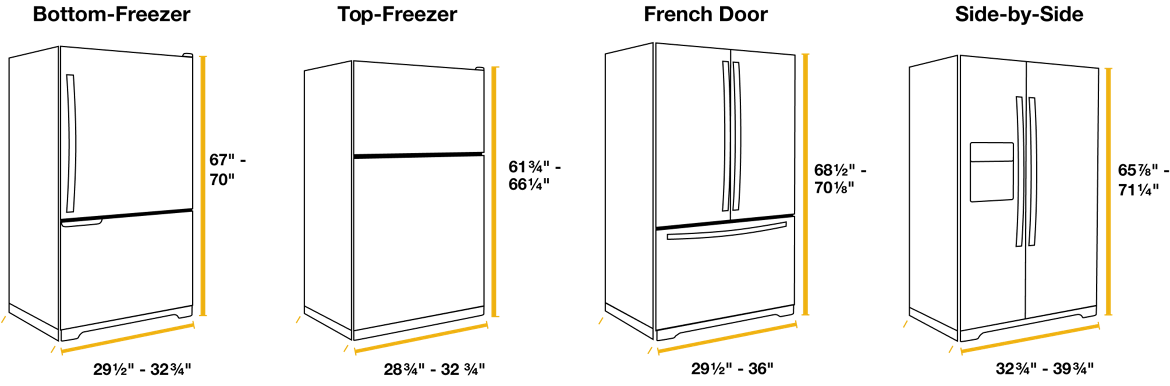
What Size Refrigerator Fits a 36-Inch Opening?
A 36-inch kitchen opening often fits a full-size French-door, side-by-side, or bottom-freezer refrigerator. Many models designed for this space offer about 22 to 28 cubic feet.
Still, do not assume every “36-inch” model will fit. Product width may be close to 36 inches, and the required side clearance may be smaller than the opening allows.
Check:
- Exact case width
- Hinge width
- Required side clearance
- Door-open width
- Height with hinges
- Rear clearance
- Water-line location
For a family of four, a 22- to 25-cubic-foot refrigerator is often a useful target for a 36-inch opening. Choose a larger model only if the kitchen and delivery path can handle it.

Is a 20-Cubic-Foot Refrigerator Big Enough for Four People?
Yes, a 20-cubic-foot refrigerator can be large enough for a family of four. It is most suitable for households that shop regularly, use moderate freezer space, and do not store many bulk packages.
It may feel small if you buy large quantities of drinks, meat, frozen food, or prepared meals. In that case, consider a 22- to 25-cubic-foot model or add a separate freezer.
The interior layout can matter more than the two-cubic-foot difference between models.
Is a 25-Cubic-Foot Refrigerator Too Big for a Family of Four?
No. A 25-cubic-foot refrigerator can be useful for a family of four that shops weekly, cooks at home, stores leftovers, or buys in bulk.
It may be too large for a small kitchen or for people who eat out often. Extra space also does not replace good organization. Food can still become hidden and spoil.
Should a Family of Four Choose French-Door or Side-by-Side?
Choose a French-door refrigerator when you want wide fresh-food shelves and a large lower freezer. Choose a side-by-side refrigerator when narrow doors and easy freezer access matter more.
The better style depends on the food you store. Wide pans and pizza boxes favor French-door models. Tall frozen items and narrow walkways may favor side-by-side models.
How Much Space Should You Leave Around a Refrigerator?
Use the clearance listed in the installation instructions for the exact model. The required space varies by design and manufacturer.
Do not guess based on a general rule. Clearance may be needed at the sides, top, and rear for ventilation, door movement, leveling, and service access.
Does a Counter-Depth Refrigerator Hold Less Food?
Often, yes. Counter-depth models usually have less front-to-back depth than standard-depth models. They may offer a cleaner fit but less total storage.
Some counter-depth refrigerators compensate with more width. Compare the listed capacity, shelf width, freezer size, and door-bin space before choosing.
How Can I Tell if My Current Refrigerator Is Too Small?
Your refrigerator may be too small if:
- Food blocks the vents
- You cannot safely store leftovers
- Fresh food is pushed into the door
- The freezer stays packed with no airflow
- You regularly use coolers or extra storage
- You cannot keep foods in safe temperature zones
If the problem is poor organization rather than capacity, adjustable bins and clear containers may help. If every shelf is full after each normal shopping trip, more capacity is likely justified.

Final Recommendation
For most families of four in the United States, start with a 20- to 24-cubic-foot refrigerator.
Choose:
- 20–22 cu. ft. for typical weekly shopping
- 23–25 cu. ft. for bulk shopping, meal prep, and many leftovers
- 24 cu. ft. or more when freezer space is a major need
- 18–20 cu. ft. when you shop often or have a separate freezer
Before buying, measure the kitchen opening, delivery path, door swing, and required clearance. Then compare fresh-food capacity, freezer capacity, and interior layout—not just the total cubic-foot number.

Appliance Review Expert
Lucas Ramirez is a trusted voice at HomeFixGrid.com, known for his clear, practical, and creatively written guides that simplify appliance care for everyday homeowners. With a strong focus on hands-on testing and real-world problem-solving, Lucas brings expert insight into appliance reviews and troubleshooting techniques. Her work empowers readers to confidently maintain, repair, and choose the right appliances for their homes.