Do You Need Box Springs For A Mattress: Complete Guide
No, you do not always need box springs for a mattress; your mattress type and bed frame decide.
The answer to “do you need box springs for a mattress” depends on the mattress design, the frame, and the support the manufacturer requires. This guide explains when a box spring helps, when it can cause problems, and which support system gives your mattress a longer, more comfortable life.
What Is a Box Spring?
A box spring is a mattress foundation with a firm wooden or metal frame. Traditional models use steel coils covered with fabric. Modern versions may use solid or flexible slats instead of coils.
Box springs sit between the mattress and the bed frame. They lift the mattress, improve airflow, and add support. Some also absorb small amounts of movement when you get in or out of bed.
However, a box spring is not the same as every mattress foundation. The words are often used in the same way, but their designs can differ.
A true box spring usually has:
• A wood or metal frame
• Springs or a rigid support grid
• A fabric cover
• A height-boosting design
• A flat surface for a mattress
A foundation usually has solid panels or closely spaced slats. It offers firm support but often has little or no spring. This difference matters because many foam and hybrid mattresses need a firm, stable base.

Do You Need Box Springs for a Mattress?
You may need a box spring if you have an innerspring mattress and a compatible bed frame. You may not need one if you own a memory foam, latex, or hybrid mattress that already has a suitable foundation.
Use this simple guide:
• Innerspring mattress: A box spring may work well, especially with a traditional metal frame.
• Memory foam mattress: Usually needs a solid foundation or closely spaced slats.
• Latex mattress: Often needs firm, even support with little flex.
• Hybrid mattress: Usually needs a strong foundation or platform bed.
• Adjustable mattress: Needs a compatible adjustable base, not a standard box spring.
• Pillow-top mattress: The extra cushioning does not decide the support system. Check the base requirements.
The most reliable answer comes from the mattress warranty and care guide. Manufacturers often list the maximum space allowed between slats. If the gaps are too wide, the mattress may sag, lose support, or suffer warranty problems.
When people ask, “do you need box springs for a mattress,” they often mean, “What should go under my mattress?” The right answer is not always a box spring. It is a support base that keeps the mattress level and well supported.

When a Box Spring Is a Good Choice
A box spring can be a smart choice for certain beds. It works best when the mattress and frame are designed to use one together.
Traditional Innerspring Mattresses
Older innerspring mattresses often pair well with box springs. The spring unit below the mattress can add comfort and reduce stress on the mattress coils.
Many classic bedroom sets use this combination:
- Metal bed frame
- Box spring
- Innerspring mattress
This setup also raises the sleeping surface. That can make it easier to get in and out of bed, especially for taller adults or people with limited mobility.
Metal Bed Frames
Some metal bed frames have a wide open center. They may hold a box spring but cannot support a mattress by themselves. In this case, placing a mattress directly on the frame can cause bending or sagging.
Check whether the frame includes:
• Center rails
• Center legs
• Crossbars
• A support surface for the full mattress
A box spring can bridge the open space. Still, the box spring must be strong enough for the mattress and the people using the bed.
When You Want Extra Height
A box spring adds height without replacing the bed frame. More height can offer practical benefits:
• Easier access for people with stiff knees
• More room under the bed
• Better clearance for storage
• A traditional bedroom look
Height is not always better, though. A tall mattress on a tall box spring may make the bed difficult to enter. As a general comfort check, sit on the edge. Your feet should rest easily on the floor, and your knees should form a comfortable angle.
When the Manufacturer Requires One
Some mattresses are built for use with a box spring. Using another base may affect support and warranty coverage. Always read the product instructions before changing the setup.

When You Do Not Need a Box Spring
Many modern mattresses do not need box springs. They need a strong, level foundation instead.
Memory Foam Mattresses
Memory foam mattresses usually perform best on a solid platform or firm slats. The base should not bend under the mattress.
Wide gaps between slats can allow the foam to dip into empty spaces. Over time, this may create uneven wear. It can also make the bed feel softer in some areas and firmer in others.
Many foam mattress makers recommend slats spaced about 2 to 3 inches apart. The exact limit varies, so check the mattress instructions before use.
Latex Mattresses
Latex mattresses are heavy and flexible. They need steady support across the entire surface.
A strong platform bed, solid foundation, or closely spaced slats usually works well. A weak or widely spaced frame may allow the latex to bow between supports.
Latex also needs airflow. A solid base can work, but ventilation holes or a breathable foundation may help reduce trapped moisture.
Hybrid Mattresses
Hybrid mattresses combine foam comfort layers with coils. Their weight can be considerable, so they need a sturdy base.
A standard box spring may not provide the firm, even support a hybrid mattress needs. A modern foundation or platform bed is often a better option.
Adjustable Beds
Adjustable mattresses need an adjustable base that bends at the head and foot. A regular box spring cannot move in the required way.
Do not place an adjustable mattress on a fixed box spring unless the manufacturer clearly approves it. The mattress may not flex properly, and the base could become damaged.

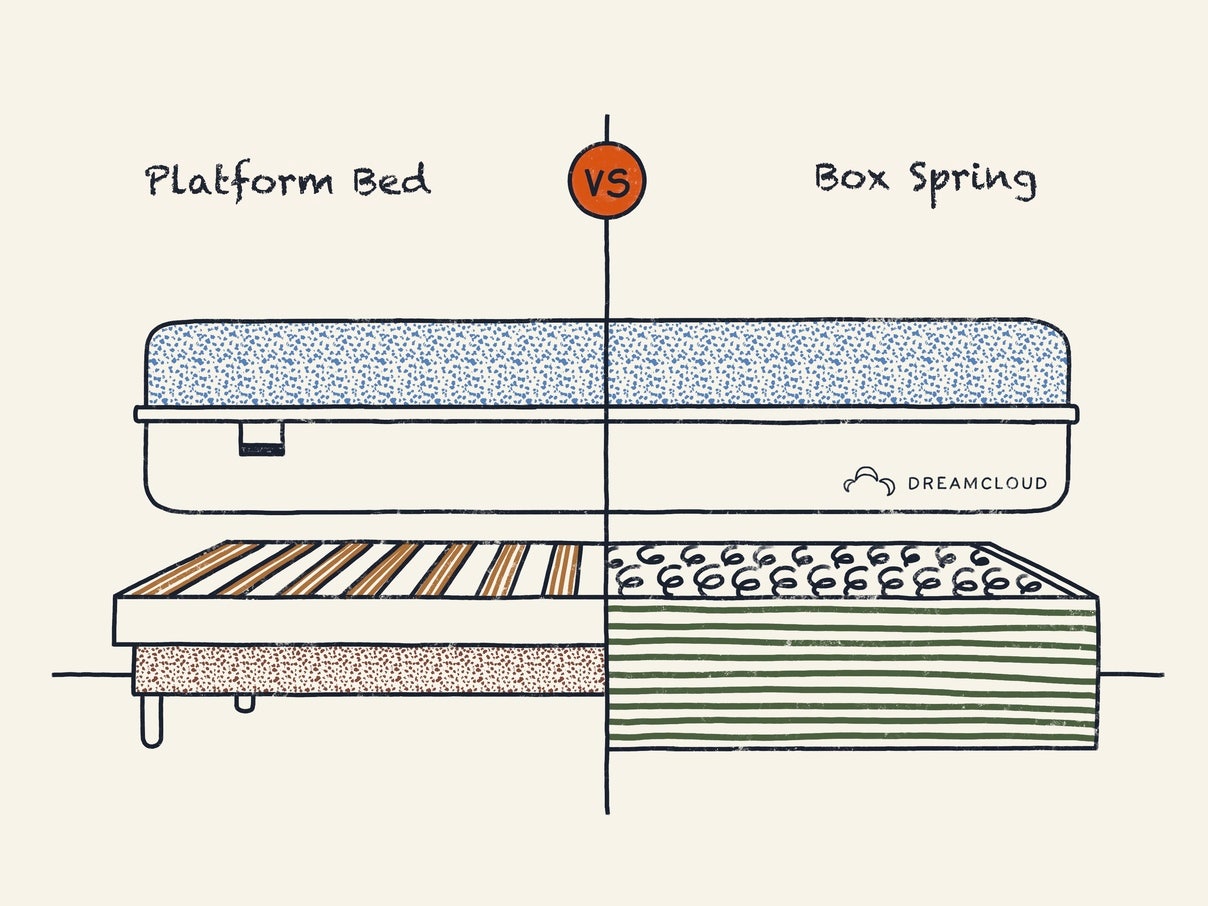
Box Spring vs. Foundation vs. Platform Bed
Understanding the main support types makes the choice easier.
Box Spring
A box spring usually contains springs or a flexible support structure. It is often paired with an innerspring mattress.
Advantages include:
• Adds height
• May improve movement isolation
• Works well with many traditional mattresses
• Fits classic bed frames
Limitations include:
• May not offer enough firmness for foam mattresses
• Can wear out before the mattress
• May add unnecessary height
• Some models are not designed for heavy hybrid mattresses
Mattress Foundation
A foundation has a solid or rigid support structure. It may look like a box spring but usually provides less flex.
Advantages include:
• Strong support for foam and hybrid mattresses
• Even weight distribution
• Often compatible with modern mattress designs
• Available in low and high profiles
Limitations include:
• Usually costs more than a basic metal frame
• May be heavy to move
• Can add height to an already tall mattress
Platform Bed
A platform bed has a built-in support surface. It may use solid panels, wood slats, or metal slats.
Advantages include:
• No separate box spring required
• Clean, modern appearance
• Good support for many mattress types
• Fewer parts to assemble
Limitations include:
• Slat spacing may not fit every mattress
• Some designs offer little under-bed storage
• Weak frames may squeak or sag
The best choice depends on your mattress, body weight, frame design, room height, and budget. There is no single support base that suits every sleeper.

How to Check if Your Bed Frame Needs a Box Spring
Before buying a box spring, inspect the bed frame. A few simple checks can prevent damage and wasted money.
Check the Support Surface
Remove the mattress and look at the frame. Does it have a full support surface, or only narrow rails?
A frame may need a box spring if it has:
• Two side rails with no center support
• Large open spaces
• No center legs
• A frame designed for a traditional mattress set
A platform bed usually does not need a box spring. It should have strong slats or a solid deck that supports the mattress from edge to edge.
Measure the Slat Gaps
Measure the distance between each slat. Do not estimate by sight.
If the gaps are too wide, add more slats or use a foundation approved by the mattress maker. A bunkie board can also help, but it must be strong enough and properly ventilated for the mattress.
Check the Weight Rating
Add the weight of:
• The mattress
• All sleepers
• Pets
• Bedding
• Any regular movement on the bed
Then compare the total with the frame and foundation weight limits. A bed can look strong but still fail under repeated load.
Look for Center Support
Queen and king beds often need center rails and center legs. Without them, the frame may bow in the middle.
This is one of the most common answers to the question, “do you need box springs for a mattress?” A box spring cannot fix every weak frame. The full system must support the mattress correctly.
Can You Put a Mattress Directly on the Floor?
You can place some mattresses on the floor, but it is not always a good long-term setup.
The floor gives firm support, but it can restrict airflow beneath the mattress. Moisture from body heat and normal indoor humidity may collect under the mattress. In damp rooms, this can increase the risk of mildew.
A floor setup also creates other concerns:
• More dust near the sleeping surface
• Greater exposure to insects
• Harder access for older adults
• Less air circulation
• Possible warranty restrictions
• A colder sleep surface in some rooms
If you use a mattress on the floor, lift and air it out from time to time. Keep the floor dry and clean. Still, a proper foundation is usually the safer choice for daily use.

How Box Springs Affect Mattress Feel
Your support base can change how a mattress feels. It does not change the mattress materials, but it changes how those materials respond.
A flexible box spring may make the bed feel slightly softer. A rigid platform may make the same mattress feel firmer and more stable.
The base may affect:
• Pressure relief
• Edge support
• Motion transfer
• Ease of movement
• Mattress firmness
• Noise during movement
For example, a soft foam mattress on flexible support may feel too unstable. A firm innerspring mattress on a rigid platform may feel more supportive but less springy.
If your mattress feels wrong, do not assume the mattress is the only problem. The foundation may be adding too much flex or failing to support key areas.
Signs You Are Using the Wrong Support
Your mattress or bed may show clear signs of poor support.
Watch for these problems:
• A dip in the center of the mattress
• Uneven firmness across the bed
• New squeaks or popping sounds
• Slats bending or breaking
• A mattress edge that collapses
• A frame that rocks or shifts
• Back discomfort that began after a base change
A mattress can also sag because of age, poor materials, or normal wear. The foundation is only one possible cause.
To test the base, place the mattress on a firm, level surface for a short period. If the feel changes noticeably, the original foundation may be part of the problem. Do not use this test as a permanent floor setup.
How to Choose the Right Foundation
Choosing a base becomes easier when you follow a clear process.
- Identify your mattress type. Check whether it is foam, latex, hybrid, innerspring, or adjustable.
- Read the support requirements. Look for slat spacing, foundation height, weight limits, and warranty rules.
- Measure the mattress. Confirm the size before buying a frame or foundation.
- Check the frame. Look for center rails, legs, crossbars, and a level surface.
- Consider the height. Add the mattress thickness to the foundation height.
- Confirm the weight capacity. Include sleepers, bedding, pets, and movement.
- Think about airflow. Choose a design that allows moisture to escape.
- Check noise and movement. A well-built foundation should stay stable and quiet.
- Review the return policy. Comfort can change when the support base changes.
A good foundation should feel like a quiet floor beneath the mattress. It should not bend, twist, or create weak spots.
Common Box Spring Mistakes to Avoid
Many support problems come from simple setup mistakes.
Buying by Size Alone
A queen box spring fits a queen mattress, but that does not mean it is compatible. The mattress type and support needs matter just as much as the size.
Using Wide Slat Gaps
Wide gaps can damage foam and latex mattresses. They may also void the warranty.
Placing a Heavy Mattress on a Weak Base
Hybrid and latex mattresses can be heavy. A lightweight base may bend or break under the load.
Ignoring the Center of the Bed
The middle needs support, especially on queen, king, and California king frames. Center legs should touch the floor and remain level.
Adding a Board Without Airflow
A solid board can improve firmness, but it may trap moisture. If you use one, check the mattress instructions and allow proper ventilation.
Keeping an Old Box Spring
Box springs wear out. Coils can weaken, wood can crack, and the frame can lose its shape. A mattress may still have useful life even when its old foundation does not.
Assuming More Height Means More Comfort
A tall bed may look impressive but feel awkward. Consider your height, mobility, sheets, and room design before adding a thick box spring.
How Long Does a Box Spring Last?
A box spring often lasts about 8 to 10 years, but its life depends on construction, use, weight, and care. A low-cost model may wear out sooner. A well-built foundation may last longer.
Replace or inspect it when:
• The frame is cracked
• Springs make loud noises
• The surface is no longer level
• The fabric is torn and exposes internal parts
• The base sags
• Center support no longer stays firm
• The mattress feels uneven
A useful test is to place a straight edge across the foundation. Large dips or raised areas suggest a support problem.
Do not judge the foundation only by appearance. Some internal damage is not visible until the mattress begins to feel uneven.
Do You Need a Box Spring for an Older Mattress?
Older mattresses often work well with box springs, but age alone does not decide the answer. The mattress construction and the bed frame still matter.
An older innerspring mattress may need a flexible box spring. An older foam mattress may need a firm foundation. If you no longer have the care guide, contact the manufacturer or use a strong, closely spaced support system that matches the mattress design.
Also consider the mattress condition. If it has a deep body impression, broken coils, or lasting discomfort, a new box spring will not restore it. A foundation can support a good mattress, but it cannot reverse worn-out comfort materials.
Personal Lessons From Mattress Setup Problems
One of the most common setup mistakes is treating the box spring as a universal part. A shopper buys a new mattress, keeps an old foundation, and then wonders why the bed feels uneven.
A better approach is to inspect the entire system at the same time. Look at the mattress, foundation, frame, slats, center support, and total weight capacity.
Another practical lesson is to measure before shopping. A foundation that adds 9 inches of height can make a 13-inch mattress feel much taller than expected. In a small bedroom, that can affect nightstands, sheets, and how easily you climb into bed.
The safest habit is simple: follow the mattress maker’s support instructions first. General advice helps, but the product warranty and design provide the final word.
Frequently Asked Questions About Do You Need Box Springs for a Mattress
Do you need box springs for a memory foam mattress?
Usually, no. Memory foam mattresses typically need a firm foundation, platform bed, or closely spaced slats rather than a flexible traditional box spring.
Can you put a mattress directly on a bed frame?
Yes, if the frame has enough support across the full mattress surface. Check the slat spacing, center rails, center legs, and the mattress manufacturer’s requirements first.
Can a box spring ruin a mattress?
It can if it bends, sags, or has gaps that do not support the mattress. An incompatible box spring may cause uneven wear and could affect the mattress warranty.
Do hybrid mattresses need box springs?
Most hybrid mattresses do not need traditional box springs. They usually need a sturdy foundation or platform with close slat spacing and enough weight capacity.
Are box springs still necessary?
Box springs are still useful for some innerspring mattresses and traditional bed frames. They are not necessary for every mattress, especially many foam, latex, hybrid, and adjustable models.
How do I know if my box spring is bad?
Look for sagging, broken parts, loud noises, uneven support, or a frame that no longer stays level. If the mattress feels different in different areas, inspect the box spring and frame.
Can you use a bunkie board instead of a box spring?
A bunkie board can replace a box spring when it provides enough support for the mattress and frame. Check its weight rating and make sure it does not block needed ventilation.
Conclusion
Do you need box springs for a mattress? Sometimes, but not always. Traditional innerspring mattresses and open metal frames may benefit from one, while memory foam, latex, hybrid, and adjustable mattresses often need a firm foundation or specialized base.
Start by checking your mattress instructions, then inspect the frame, slat gaps, center support, height, and weight rating. A well-matched foundation protects your mattress, improves comfort, and helps prevent premature sagging.
Before your next mattress purchase, measure the full setup and confirm compatibility. Share your mattress type and bed frame details in the comments, or explore more sleep guides to create a stronger, more comfortable bed.

Appliance Review Expert
Lucas Ramirez is a trusted voice at HomeFixGrid.com, known for his clear, practical, and creatively written guides that simplify appliance care for everyday homeowners. With a strong focus on hands-on testing and real-world problem-solving, Lucas brings expert insight into appliance reviews and troubleshooting techniques. Her work empowers readers to confidently maintain, repair, and choose the right appliances for their homes.