How Deep Is A Pillow Top Mattress: Ideal Depth Guide
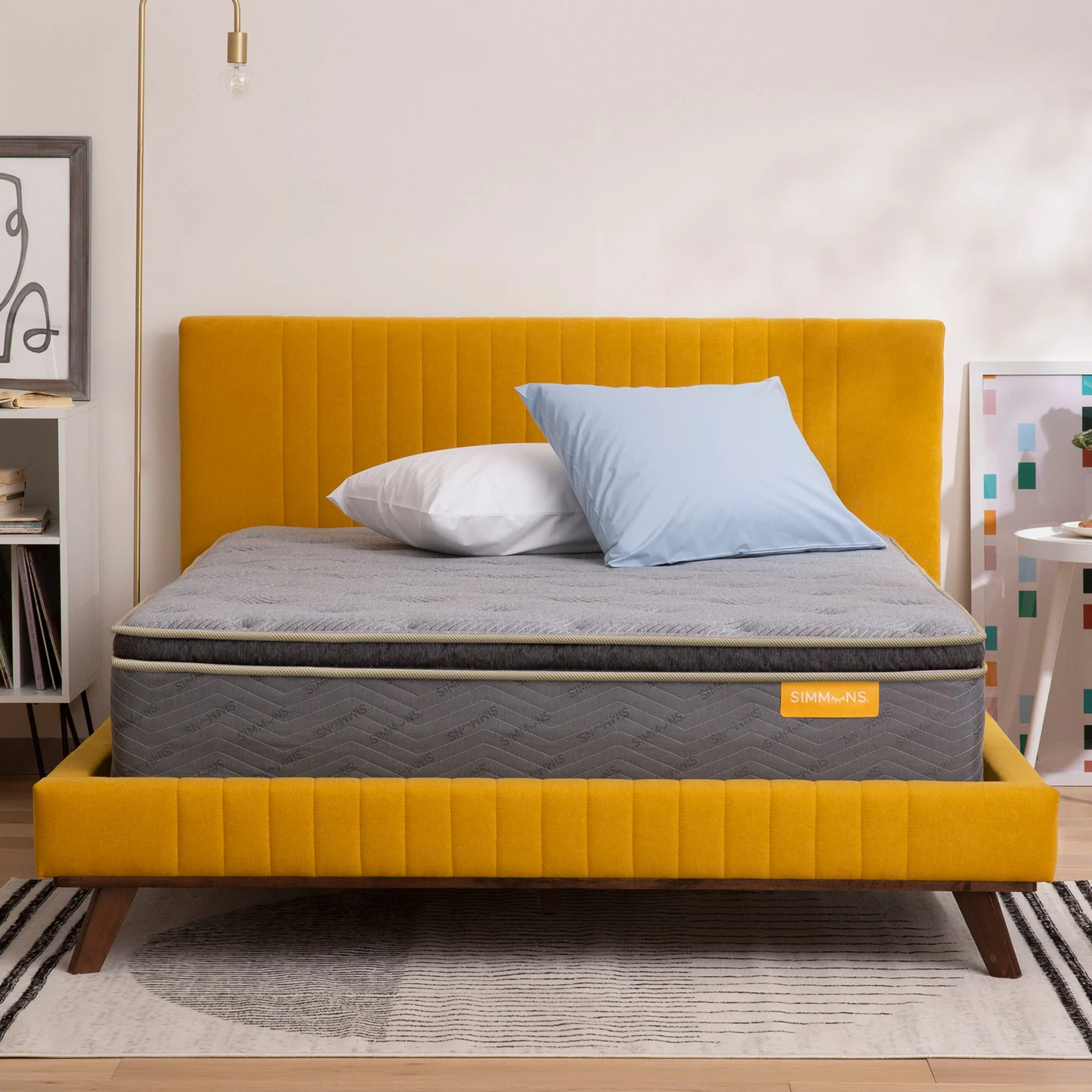
A pillow top mattress is usually 12 to 18 inches deep, including its comfort layers.
Knowing how deep is a pillow top mattress helps you choose the right sheets, bed frame, and support system. After comparing mattress builds and testing how thick comfort layers affect sleep, I’ve found that total height varies by brand, materials, and design. This guide explains the typical measurements, what creates that extra depth, and how to measure one correctly.
How deep is a pillow top mattress?
Most pillow top mattresses are 12 to 18 inches deep. Some compact models measure about 10 inches, while plush luxury models may reach 20 inches or more.
The word “depth” means the mattress height from its bottom edge to its highest sleeping surface. It includes every layer, such as:
• The support core
• Foam or latex transition layers
• The quilted cover
• The pillow top comfort layer
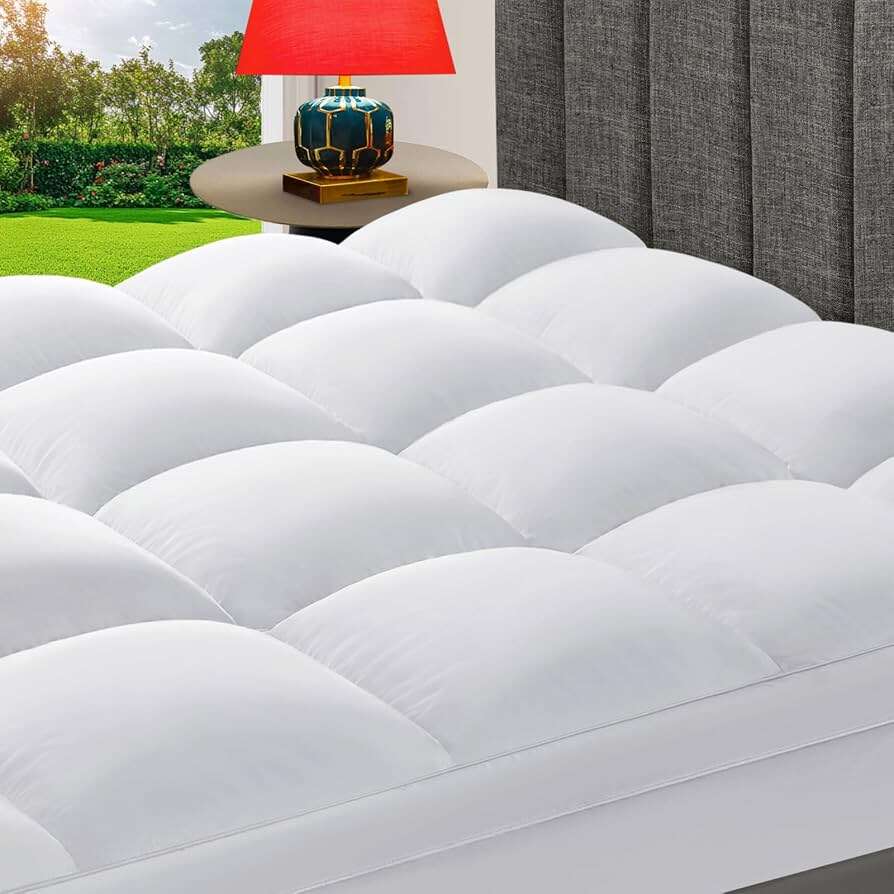
A pillow top is usually an extra layer sewn onto the mattress surface. This layer may contain memory foam, latex, fiberfill, wool, or soft upholstery foam. It gives the mattress a fuller, softer appearance than a standard tight-top model.
Here is a general guide:
| Mattress type | Common depth |
|---|---|
| Low-profile pillow top | 10 to 12 inches |
| Standard pillow top | 12 to 16 inches |
| Thick luxury pillow top | 16 to 20 inches |
| Extra-plush specialty model | More than 20 inches |
The exact answer to how deep is a pillow top mattress depends on the model. Always check the manufacturer’s listed height before buying sheets or a bed frame.

What makes a pillow top mattress so thick?
A pillow top mattress is deep because it combines a support base with one or more thick comfort layers. Think of it like a layered cake: the bottom provides structure, while the top creates softness and pressure relief.
Most pillow top mattresses include these parts:
Support core
The support core is the main body of the mattress. In an innerspring model, it contains steel coils. In an all-foam model, it uses high-density foam. In a hybrid mattress, it combines coils with foam or latex.
This section often measures 7 to 10 inches. It controls much of the mattress’s support, edge strength, and motion response.
Comfort layers
Above the support core, the mattress may include memory foam, latex, polyfoam, wool, or fiber padding. These materials shape how the bed feels.
A comfort system may add 2 to 5 inches to the mattress depth. Thick foam can make the bed feel soft, but thickness alone does not tell you whether the mattress will feel supportive.
Pillow top layer
The pillow top is the visibly plush section stitched to the mattress surface. It commonly measures 2 to 4 inches, although some luxury models use thicker padding.
This layer can compress over time. As a result, how deep is a pillow top mattress may change slightly after months or years of use, especially in the areas where you sleep most often.
Quilted cover
The cover may add another half inch to 1.5 inches. It can contain cotton, polyester, wool, foam, or other fibers.
A thick quilted cover may feel soft at first touch, but it does not always provide the same pressure relief as a deep foam layer underneath.

Typical pillow top mattress depths by construction
Not all pillow top mattresses are built the same way. Two models with the same listed height can feel very different because their internal materials vary.
Innerspring pillow top mattresses
Innerspring pillow tops often measure 12 to 16 inches. Their coil system gives the mattress a responsive feel, while the pillow top adds cushioning.
These mattresses may feel cooler than dense memory foam because air can move through the coil space. However, the pillow top can soften faster if it uses low-density foam or loose fiberfill.
Hybrid pillow top mattresses
Hybrid pillow top mattresses often measure 13 to 18 inches. They usually combine pocketed coils with memory foam, latex, or other comfort materials.
They can offer a balanced feel. The coils provide lift, while the thick top layer cushions shoulders and hips. Because hybrids have more layers, they are often taller and heavier than basic mattresses.
All-foam pillow top mattresses
All-foam models commonly range from 10 to 16 inches. Memory foam can create a deep, hugging feel without requiring a very tall mattress.
Foam density matters more than height in many cases. A 12-inch mattress with high-quality foam may last longer and feel more supportive than an 18-inch mattress filled with soft, low-density materials.
Latex pillow top mattresses
Latex pillow tops often measure 12 to 16 inches. Latex has a springy feel and usually makes it easier to change positions than traditional memory foam.
Natural latex is also heavier than many foam types. Make sure the bed frame can support the total weight of the mattress and sleepers.
Pillow top versus Euro top: does the depth differ?
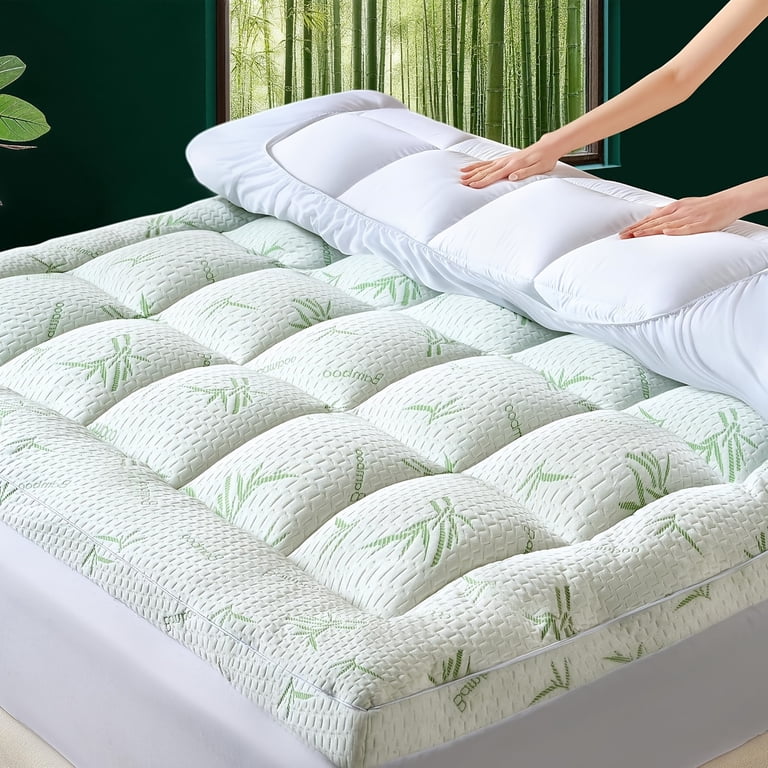
A pillow top has a separate, rounded layer sewn onto the mattress. It often looks like a soft cushion placed on top. A Euro top is sewn more tightly to the mattress edges, creating a flatter, cleaner profile.
Both designs can have similar depths. For example, a pillow top may measure 14 inches, while a Euro top from another brand may also measure 14 inches.
The design affects appearance and feel more than the final height. In my mattress comparisons, the biggest practical difference was often edge shape. Euro tops tended to look neater at the sides, while pillow tops appeared more visibly plush.
Consider these differences:
• Pillow tops often feel softer at the surface.
• Euro tops may have a more even edge and a firmer perimeter.
• Both can use foam, latex, fiber, wool, or combinations of materials.
• Neither design automatically guarantees better durability.
• The material quality matters more than the label.
When asking how deep is a pillow top mattress, check the product specifications rather than relying on the name. “Pillow top” describes the surface design, not one fixed mattress height.

How to measure a pillow top mattress correctly
Measuring your mattress takes only a few minutes, but the method matters. A wrong measurement can lead to loose sheets, an unstable setup, or a bed that sits too high.
Follow these steps:
- Remove all bedding, mattress pads, and toppers.
- Place the mattress on its foundation or bed frame.
- Put a straight board, ruler, or level across the highest point.
- Measure from the bottom of the mattress to the underside of the straight edge.
- Measure in several locations, including the center and both sides.
- Record the tallest measurement.
Do not press down on the pillow top while measuring. Compression will make the mattress seem shorter than it is.
If the pillow top has a sloped edge, measure from the center sleeping surface. Also check the manufacturer’s height because advertised dimensions may differ slightly from your home measurement.
A mattress protector or topper adds extra height. If your mattress is 15 inches deep and your protector adds 1 inch, your fitted sheet should fit at least 16 inches. A little extra room is helpful.
How mattress depth affects sheets and bedding
Mattress depth affects more than appearance. It determines whether fitted sheets stay secure and how high your sleeping surface sits.
Standard fitted sheets often fit mattresses up to 14 inches deep. Deep-pocket sheets may fit mattresses from 15 to 18 inches. Extra-deep sheets may fit mattresses that are 18 inches or taller.
Before buying sheets, add the height of every layer:
• Mattress depth
• Mattress protector
• Mattress topper
• Electric blanket or quilted pad
For example, imagine a 14-inch pillow top mattress with a 2-inch topper and a 1-inch protector. Your total height is about 17 inches. In that case, a sheet designed for a 14-inch mattress may pop off during the night.
Look for fitted sheets with a pocket range that includes your full setup. Elastic around the entire sheet is usually more secure than elastic only at the corners.
A tall mattress can also make it harder to get into bed. A useful rule is to keep the top of the mattress near knee height, although personal comfort and mobility needs matter more than a strict measurement.

Does a deeper pillow top mattress provide better comfort?
Not always. A deeper mattress may offer more cushioning, but thickness does not equal quality or proper support.
A 16-inch pillow top may feel too soft for some stomach sleepers. A 12-inch model may provide better spinal alignment if it has a strong support core and suitable firmness.
Your sleep position matters:
• Side sleepers often benefit from enough cushioning for the shoulders and hips.
• Back sleepers usually need balanced cushioning and steady lumbar support.
• Stomach sleepers often need a firmer surface to limit midsection sinking.
• Combination sleepers may prefer responsive foam or latex for easier movement.
Body weight also changes how depth feels. A heavier sleeper may compress a soft pillow top more deeply. A lighter sleeper may rest closer to the surface and experience a firmer feel.
One lesson I’ve seen repeatedly in mattress testing is that shoppers often focus on the tallest model in the showroom. That can be a mistake. A taller mattress may use extra padding, but the right choice depends on firmness, support, pressure relief, and material quality.

Benefits and drawbacks of a deep pillow top mattress
A deep pillow top can be comfortable and attractive, but it is not ideal for every sleeper or bedroom.
Benefits
• More surface cushioning for pressure-sensitive areas
• A plush, cozy feel
• More room for layered comfort materials
• Good support options in hybrid and innerspring designs
• A higher sleep surface that may be easier for some adults to use
Drawbacks
• Deep sheets may cost more than standard sheets.
• The mattress may be heavy and difficult to rotate.
• A tall bed can be harder for children or shorter adults to use.
• Soft materials may develop body impressions.
• Thick foam can retain more heat in some designs.
• Extra height may not fit well with a tall frame or headboard.
Body impressions are not always a defect. Soft materials naturally compress where people sleep. However, large or uncomfortable dips may suggest poor material quality or an unsuitable support base.
Check the warranty terms before buying. Some warranties cover visible sagging only after it reaches a specific depth. That limit varies by brand and model.

Choosing the right pillow top mattress depth
Start with your current bed height. Measure from the floor to the top of your existing mattress. Then consider the height of the frame, foundation, protector, and any topper.
A practical selection process looks like this:
- Choose your preferred firmness and sleep position.
- Compare the mattress’s full height.
- Check the pillow top material and thickness.
- Confirm the required sheet pocket depth.
- Verify the foundation requirements.
- Review the weight limit and warranty.
- Check the return period before purchase.
A mattress that measures 18 inches may need a strong platform or foundation with close-set slats. Some manufacturers require a specific base to protect the warranty.
Avoid stacking a thick topper on a very thick pillow top unless you have tested the setup. Too many soft layers can make movement harder and may reduce spinal support.
If you share a bed, consider both sleepers. A plush pillow top can feel wonderful to one person but cause another sleeper to sink too far. A medium or medium-firm hybrid often offers a more balanced compromise.

Does a pillow top mattress need a special bed frame?
Most pillow top mattresses do not need a special frame, but they do need proper support. The exact requirements depend on the manufacturer.
A platform bed, box foundation, adjustable base, or slatted frame may work if it meets the mattress specifications. Slats should be close enough together to prevent sagging. Many manufacturers recommend gaps of 2 to 3 inches, but always follow the product instructions.
The frame must also support the combined weight of:
• The mattress
• The foundation
• The sleepers
• Bedding and accessories
Check the inside width and length of the frame as well. A standard queen pillow top mattress is usually about 60 by 80 inches, but small variations occur.
A tall mattress can make a standard headboard look too short. It can also cover more of a footboard. Measure the full setup before buying bedroom furniture.
How to protect the depth and shape of a pillow top mattress
Good care can help a pillow top maintain its comfort and shape. Start with a breathable, properly fitted mattress protector.
Use these care tips:
• Rotate the mattress if the manufacturer allows it.
• Do not fold or bend it unless the product instructions permit this.
• Use the recommended foundation.
• Avoid jumping on the bed.
• Keep liquids away from the pillow top.
• Air out new bedding in a well-ventilated room.
• Inspect the surface for uneven wear every few months.
Many modern mattresses are designed for rotation rather than flipping. Never flip a one-sided pillow top unless the manufacturer specifically says it is reversible.
If you notice a deep dip, measure it with a straight edge. Record the date and take clear photos. This information can help if you need to make a warranty claim.
The best way to preserve how deep is a pillow top mattress is to protect the comfort layer from moisture, excess heat, and uneven support.
Frequently Asked Questions
How deep is a pillow top mattress on average?
A pillow top mattress is usually 12 to 18 inches deep. Some smaller models measure 10 to 12 inches, while extra-plush designs may exceed 18 inches.
Is a 14-inch mattress considered a pillow top mattress?
Yes, a 14-inch mattress can be a pillow top mattress. The height alone does not define the design; the mattress must have a separate cushioned layer sewn onto its surface.
Are pillow top mattresses deeper than regular mattresses?
Often, yes, because they include an added comfort layer. However, some regular mattresses are also 14 to 18 inches deep, so the construction matters more than the total height.
What sheet depth do I need for a pillow top mattress?
Measure the mattress along with the protector and topper. A 15-inch pillow top setup usually needs deep-pocket sheets that fit at least 15 inches, with extra room for easier fitting.
Can a pillow top mattress be too deep?
Yes. A very deep mattress can make the bed too high, require special sheets, and become harder to move. It may also feel too soft if much of its height comes from low-density comfort material.
Does a thicker pillow top mattress last longer?
Not necessarily. Durability depends on material quality, foam density, coil construction, support, and care. A thinner mattress made with strong materials may outlast a thicker mattress with soft, low-density padding.
Can I use a mattress topper on a pillow top mattress?
You can, but it may not be necessary. Adding a topper to an already soft pillow top can cause excessive sinking, heat buildup, or poor spinal alignment.
Conclusion
A pillow top mattress is commonly 12 to 18 inches deep, but its true height depends on the support core, comfort layers, cover, and pillow top design. A taller mattress may provide more cushioning, yet depth alone does not determine comfort, support, or durability.
Before buying, measure your full bed setup, choose sheets with the right pocket depth, confirm foundation support, and compare materials rather than height alone. Use these steps to find a pillow top mattress that fits your room, sleep style, and comfort needs, then explore trusted mattress guides or share your own experience in the comments.

Appliance Review Expert
Lucas Ramirez is a trusted voice at HomeFixGrid.com, known for his clear, practical, and creatively written guides that simplify appliance care for everyday homeowners. With a strong focus on hands-on testing and real-world problem-solving, Lucas brings expert insight into appliance reviews and troubleshooting techniques. Her work empowers readers to confidently maintain, repair, and choose the right appliances for their homes.