How To Cook Butternut Squash In Air Fryer: Easy Recipe
Cook butternut squash in an air fryer at 400°F for 18 to 25 minutes until tender and lightly browned.
Learning how to cook butternut squash in air fryer is simple once you control the cube size, oil, and cooking time. This method gives the squash caramelized edges and a soft center without heating the oven. After testing different temperatures and cuts, I have found that small, even cubes produce the best results for weeknight meals, salads, soups, and side dishes.

Why Cook Butternut Squash in an Air Fryer?
Air frying uses fast, moving heat to roast food with little oil. Butternut squash works especially well because its natural sugars brown as it cooks. The outside becomes golden, while the inside turns soft and creamy.
Compared with oven roasting, an air fryer usually heats faster and cooks a smaller batch more quickly. It also creates crisp edges without requiring a large baking sheet.
Learning how to cook butternut squash in air fryer can save time on busy nights. You can use fresh squash or frozen squash, though fresh cubes usually brown more evenly.
The air fryer is also useful when you want:
• A quick vegetable side dish
• A healthy snack with warm spices
• A topping for grain bowls and salads
• A filling for tacos, wraps, or quesadillas
• A simple ingredient for soup or mash

Ingredients You Need
The basic recipe needs only a few ingredients. The most important part is cutting the squash into pieces that are close in size.
Basic ingredients
• 1 medium butternut squash, peeled and cut into 1-inch cubes
• 1 to 2 tablespoons olive oil or avocado oil
• ½ teaspoon kosher salt
• ¼ teaspoon black pepper
• ½ teaspoon garlic powder, optional
• ½ teaspoon smoked paprika, optional
You can also add dried thyme, rosemary, cinnamon, chili powder, or pumpkin pie spice. Use savory spices for dinner and sweet spices for breakfast bowls or desserts.
Avoid adding maple syrup or honey at the start of cooking if you want crisp edges. Sugar can darken quickly in the air fryer. Add sweeteners during the last few minutes or drizzle them over the cooked squash.

How to Prepare Butternut Squash
Before learning how to cook butternut squash in air fryer, prepare the squash with care. A whole butternut squash can be hard to cut, so use a stable cutting board and a sharp chef’s knife.
Step-by-step preparation
-
Wash and dry the squash.
-
Cut off the top stem and bottom end.
-
Stand the squash upright and carefully remove the skin in strips.
-
Cut the squash in half lengthwise.
-
Scoop out the seeds and stringy pulp.
-
Cut the flesh into 1-inch cubes.
-
Pat the cubes dry with a clean towel.
Drying matters. Extra moisture creates steam, and steam keeps the surface soft. A dry surface helps the oil and heat create better browning.
For a faster option, buy pre-cut butternut squash from the produce section. Check the cubes before cooking and cut large pieces in half so they cook at the same rate.

How to Cook Butternut Squash in Air Fryer
This is the most reliable method for fresh butternut squash cubes.
Directions
-
Preheat the air fryer to 400°F for 3 to 5 minutes if your model recommends preheating.
-
Place the squash cubes in a bowl.
-
Add the oil, salt, pepper, and chosen spices.
-
Toss until each cube has a light coating.
-
Put the squash in the air fryer basket in one layer.
-
Cook for 10 minutes.
-
Shake the basket or turn the pieces with tongs.
-
Continue cooking for 8 to 15 minutes.
-
Check for tenderness with a fork.
The total cooking time is usually 18 to 25 minutes. Smaller cubes may finish in 15 to 18 minutes. Large cubes may need 25 to 30 minutes.
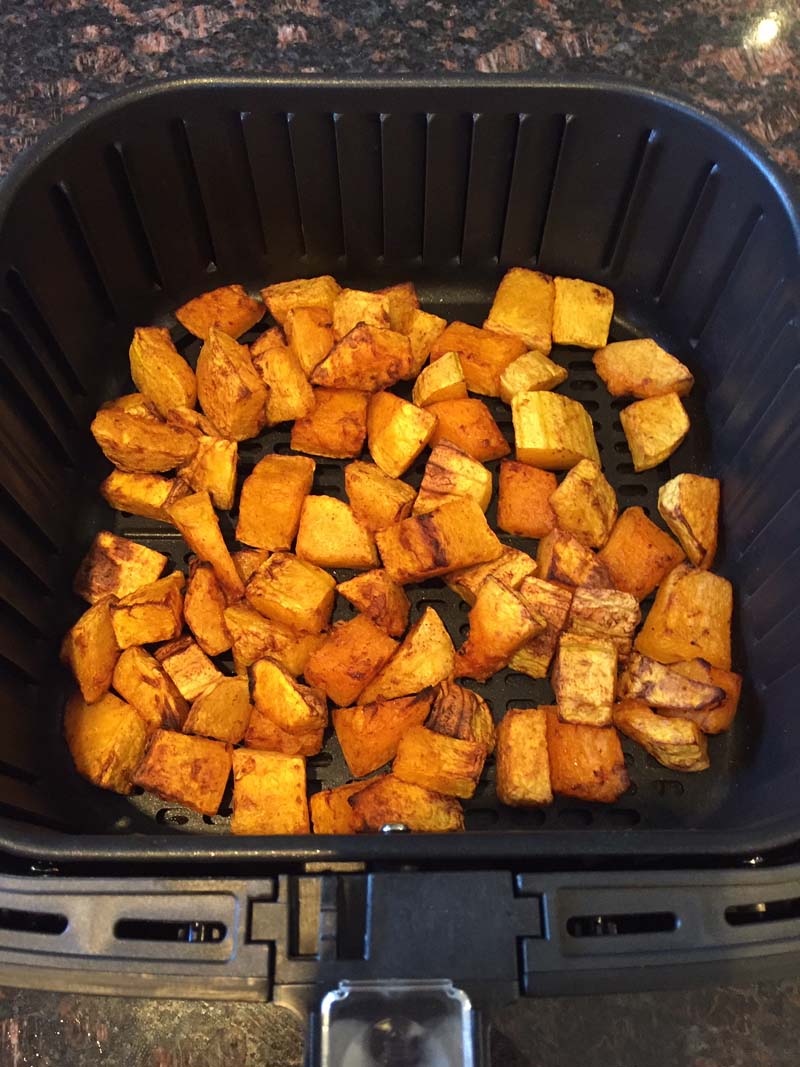
The squash is ready when a fork slides into the center with little resistance. For extra browning, cook it for 2 to 3 more minutes, but watch closely near the end.
Do not overcrowd the basket. Too many cubes trap moisture and lead to steamed squash. If needed, cook in two batches.

Best Air Fryer Temperature and Cooking Time
The ideal temperature depends on the size of the squash and the type of air fryer. Most models cook well at 375°F to 400°F.
| Squash size | Temperature | Approximate time |
|---|---|---|
| ½-inch cubes | 390°F | 12 to 17 minutes |
| 1-inch cubes | 400°F | 18 to 25 minutes |
| 1½-inch cubes | 375°F to 400°F | 25 to 30 minutes |
| Thin slices | 375°F | 12 to 18 minutes |
Cooking time can vary because air fryer baskets, heating elements, and fan speeds differ. The first time you make the recipe, start checking five minutes before the expected finish.
When learning how to cook butternut squash in air fryer, use tenderness as the final test rather than relying only on the clock. A browned cube can still be firm inside.

Tips for Tender Centers and Crisp Edges
A few small choices make a major difference in the final texture.
• Cut evenly sized cubes so small pieces do not burn before large pieces soften.
• Use just enough oil to coat the squash. Too much oil can make it greasy.
• Leave space between pieces when possible.
• Shake the basket halfway through cooking.
• Pat fresh squash dry before seasoning.
• Avoid adding wet sauces until the squash is cooked.
• Do not line the basket with a solid sheet that blocks air movement.
• Cook frozen squash in a single layer and expect a slightly softer surface.
In my own air fryer tests, the most common mistake was filling the basket too high. The squash cooked through, but it lacked the roasted edges people want. A smaller batch gave a much better result.
Another lesson is to season lightly at first. Salt draws out moisture, so a heavy coating before cooking can make the squash less crisp. You can always add more salt after cooking.
How to Cook Frozen Butternut Squash in Air Fryer
Frozen butternut squash is convenient and does not need to thaw first. Thawing can release water and make the pieces soft before they begin to brown.
To cook frozen squash:
-
Preheat the air fryer to 400°F.
-
Add the frozen squash directly to the basket.
-
Cook for 8 minutes.
-
Shake the basket.
-
Add oil and seasonings if the pieces are still dry enough to coat.
-
Continue cooking for 10 to 15 minutes.
Frozen squash may need 18 to 25 minutes in total. The pieces may not become as crisp as fresh squash, but they can still develop good color and flavor.
For the best frozen results, avoid stacking the pieces. If ice has collected on the squash, shake off loose crystals before cooking.

Flavor Ideas for Air-Fried Butternut Squash
Once you know how to cook butternut squash in air fryer, you can change the flavor with simple seasonings.
Savory herb squash
Toss the cubes with olive oil, salt, pepper, garlic powder, and dried thyme. Finish with grated Parmesan and chopped parsley.
Sweet maple squash
Cook the squash with salt and a little cinnamon. During the last 2 minutes, add 1 teaspoon of maple syrup and toss carefully.
Spicy squash
Use olive oil, chili powder, smoked paprika, cumin, and a pinch of cayenne. Serve with lime juice and plain Greek yogurt.
Mediterranean squash
Season with oregano, garlic, black pepper, and lemon zest. Add crumbled feta after cooking.
Cinnamon breakfast squash
Use cinnamon, a pinch of salt, and a small amount of maple syrup after cooking. Serve with oatmeal, yogurt, or toasted pecans.
For children, keep the seasoning mild and let them choose a topping. A little butter, cinnamon, or Parmesan can make vegetables more inviting without hiding their natural flavor.
Ways to Serve Air-Fried Butternut Squash
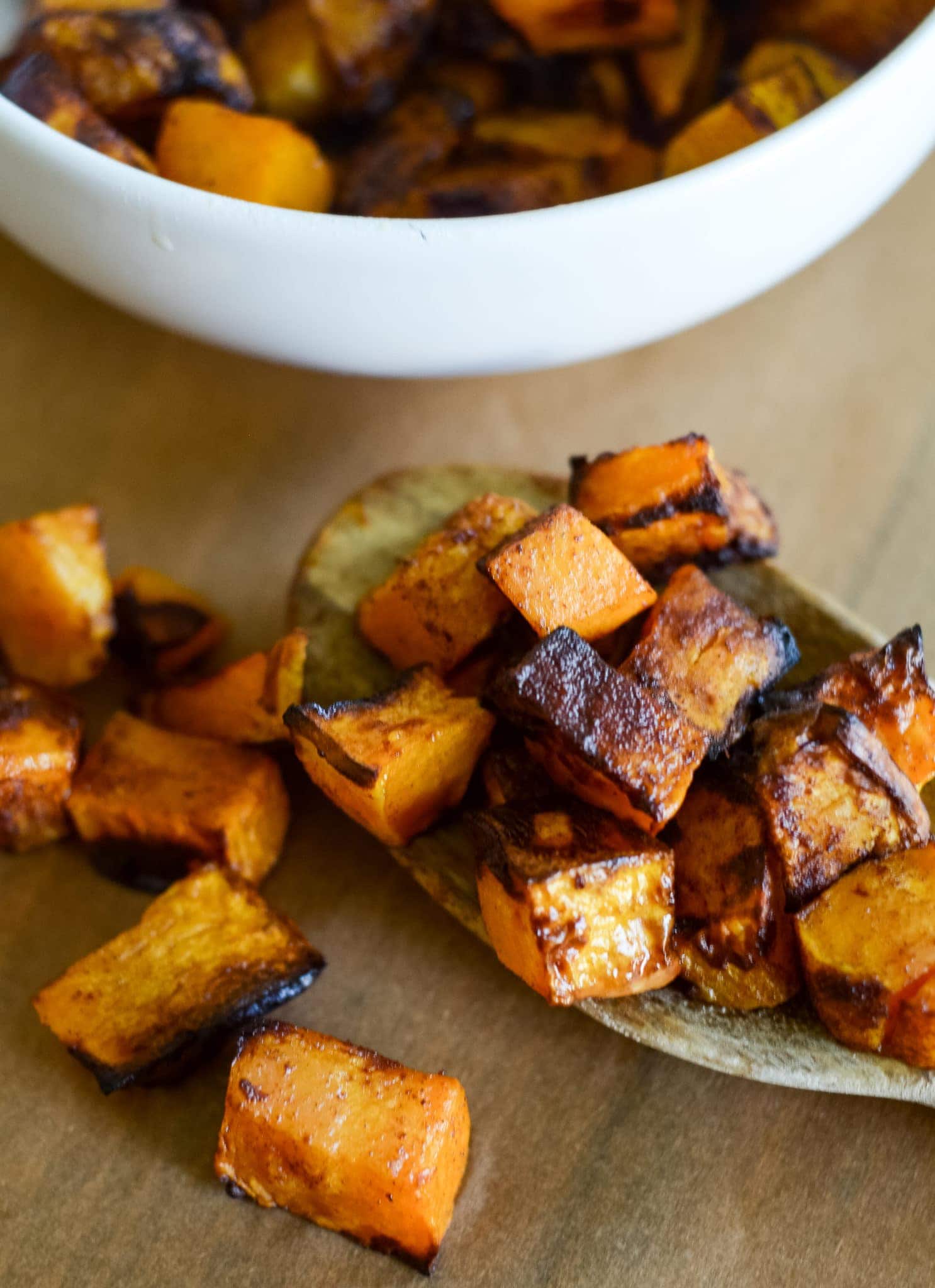
Air-fried squash can be served as a side dish, but it also works in full meals.
Try it with:
• Roast chicken, turkey, or pork
• Black beans and brown rice
• Quinoa and leafy greens
• Pasta with sage and browned butter
• Warm grain bowls
• Tacos with avocado and salsa
• Eggs and toast
• Lentil soup
• Feta, cranberries, and walnuts
For a quick lunch, place the squash over arugula with chickpeas, pumpkin seeds, and a lemon dressing. The warm cubes soften the greens and add a mild sweetness.
You can also blend cooked squash into soup or mash it with butter. If you plan to puree it, cook the cubes until very tender rather than stopping at the first sign of browning.
Common Mistakes to Avoid
Even a simple recipe can fail when a few details are missed.
Overcrowding the basket
A crowded basket blocks air circulation. The squash cooks slowly and may become soft instead of browned.
Cutting uneven pieces
Small pieces can burn while large pieces remain firm. Aim for cubes that are close to 1 inch.
Using too much oil
Butternut squash needs only a light coating. Excess oil does not guarantee crispness and can make the surface heavy.
Adding sugar too early
Maple syrup, brown sugar, and honey can burn before the squash is tender. Add them near the end.
Skipping the halfway shake
Moving the cubes exposes new surfaces to the hot air. This helps with even browning.
Trusting the cooking time blindly
Air fryers vary. Use a fork to test the center, especially when trying a new model.
Storage and Reheating
Let cooked squash cool before storing it. Place it in a covered container and refrigerate it within two hours. The USDA advises keeping cooked leftovers refrigerated and using them within 3 to 4 days.
To reheat, place the squash in the air fryer at 350°F for 3 to 6 minutes. Shake once during reheating. This method restores more texture than microwaving, although the squash may be softer than when freshly cooked.
You can also freeze cooked squash. Spread it on a tray first, freeze until firm, and then transfer it to a freezer-safe container. Use frozen cooked squash in soups, sauces, and mashed dishes for the best texture.
Nutrition and Food Safety Notes
Butternut squash provides fiber, potassium, vitamin C, and carotenoids, including beta-carotene. Its exact nutrition depends on portion size and added oil.
A 1-cup serving of plain cooked butternut squash is relatively low in calories, but oil, butter, cheese, and sweeteners increase the total. If you are watching calories, measure the oil rather than pouring it freely.
Wash the squash before cutting, even if you plan to peel it. Keep raw produce away from ready-to-eat foods, and wash your hands and tools after handling it.
The squash should be soft enough to eat safely, but food safety is not the only reason to test it. Firm centers also create an unpleasant, undercooked texture.
Frequently Asked Questions
How long does it take to cook butternut squash in an air fryer?
One-inch cubes usually take 18 to 25 minutes at 400°F. Smaller pieces cook faster, while large pieces may need up to 30 minutes.
Do you need to peel butternut squash before air frying?
Peeling is recommended for cubed butternut squash because the skin is tough. If you cut the squash into wedges, you can leave the skin on and remove it after cooking.
Should you soak butternut squash before air frying?
No, soaking is not needed. Patting the squash dry is more helpful because excess moisture can prevent browning.
Can you air fry butternut squash without oil?
Yes, but the squash may brown less and taste slightly drier. A small amount of oil improves seasoning, color, and surface texture.
Why is my air-fried butternut squash not crispy?
The basket may be overcrowded, or the squash may have been wet. Use a single layer, dry the cubes well, and shake the basket halfway through cooking.
Can you cook whole butternut squash in an air fryer?
Yes, but it takes longer than cubes. Pierce the squash, cook it at about 375°F until tender, and let it cool before cutting; exact time depends on its size and your air fryer.
Conclusion
Learning how to cook butternut squash in air fryer takes only a few basic steps: cut the squash evenly, dry it well, use a light coating of oil, and cook it at about 400°F until tender. A single-layer arrangement and a halfway shake help create the golden edges that make air-fried squash so appealing.
Start with savory herbs, warm spices, or a little maple syrup added near the end. Try the method with fresh or frozen squash, then adjust the time for your air fryer. Make a batch this week, serve it with your favorite meal, and share your best seasoning combination in the comments.

Appliance Review Expert
Lucas Ramirez is a trusted voice at HomeFixGrid.com, known for his clear, practical, and creatively written guides that simplify appliance care for everyday homeowners. With a strong focus on hands-on testing and real-world problem-solving, Lucas brings expert insight into appliance reviews and troubleshooting techniques. Her work empowers readers to confidently maintain, repair, and choose the right appliances for their homes.