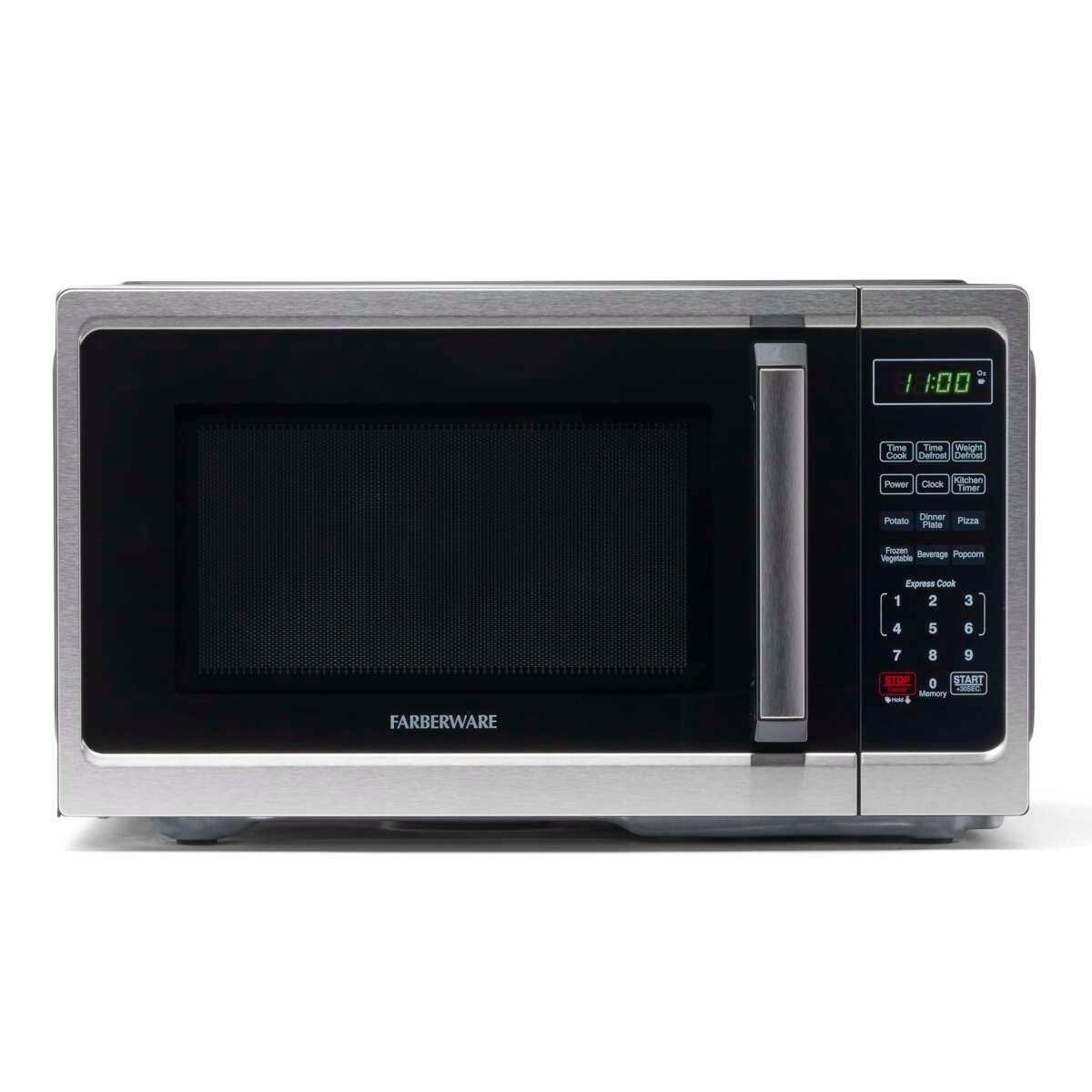
Is Farberware Microwave A Good Brand: Honest Review
If you need a low-cost countertop microwave in the United States, Farberware can be a good brand for basic daily use. Its microwaves usually offer simple controls, common preset buttons, and compact sizes at budget prices.
The trade-off is that Farberware is not usually the first choice for premium build quality, advanced cooking control, or long-term heavy use. Product quality can also vary by model. The right question is not only “Is Farberware a good microwave brand?” but also “Is this specific Farberware model a good fit for my kitchen?”

Quick answer: Is Farberware a good microwave brand?
Farberware microwaves are a reasonable choice for many U.S. homes, dorm rooms, offices, apartments, and guest spaces. They work well for common tasks such as:


- Heating leftovers
- Reheating coffee or soup
- Cooking frozen meals
- Making popcorn
- Defrosting food
- Warming small portions
They are less appealing if you want very even heating, premium controls, a quiet door, a larger cooking area, or a microwave built for frequent commercial-style use.
Farberware microwave pros and cons
| Advantages | Limitations |
|---|---|
| Often priced for budget shoppers | Build quality may not match premium brands |
| Easy controls on many models | Features vary by model |
| Compact options for small kitchens | Small models may not fit large plates |
| Common presets and a kitchen timer | Preset results may vary by food and portion |
| Many models are simple to operate | Warranty and support depend on the exact model |
| Suitable for basic reheating | Not every model offers advanced power control |
Bottom line: Farberware is a decent value brand for basic microwave use, but buyers should check the exact model, wattage, interior size, warranty, and return policy before purchasing.
What makes Farberware microwaves different?
Farberware microwaves mainly compete in the budget and lower mid-range countertop market. They are designed for convenience rather than luxury features.
Most models use a standard magnetron system. A magnetron creates microwave energy that excites water molecules in food. The food then heats from this energy, though it does not always heat evenly.
Farberware sells several types of countertop microwaves. The exact lineup changes over time, but common options include:
- Compact microwaves for dorms and small apartments
- Mid-size microwaves for everyday family use
- Stainless-steel-look or black-finish models
- Microwaves with digital touch controls
- Models with dial or keypad controls
- Units with preset programs for popcorn, potato, beverage, or frozen food
A brand name alone does not tell you how well a microwave will perform. The model number matters more. Two Farberware microwaves may have different wattage, cavity space, door design, noise levels, control layouts, and warranty terms.
Brand name versus product quality
Farberware has a long history in American cookware and kitchen products. However, a familiar brand name does not guarantee that every appliance has the same manufacturer, design, or quality level.
Many kitchen brands use licensing arrangements or sell products made by different appliance partners. For that reason, check the following for the exact microwave:
- The model number
- The user manual
- The manufacturer or importer listed on the product label
- The warranty terms
- The return policy from the seller
- Customer support information
This is more useful than judging the entire brand from one review or one older model.

How well do Farberware microwaves work?
Farberware microwaves generally perform well for routine reheating and simple cooking. Their performance depends on power, food type, container shape, portion size, and how well you arrange the food.


A microwave with more watts usually heats food faster. However, wattage is not the only factor. A well-designed 900-watt microwave may heat some foods more evenly than a poorly designed 1,100-watt model.
Wattage and cooking speed
Many countertop microwaves sold in the U.S. fall within the 700- to 1,200-watt range. A lower-wattage Farberware model may need more time than the instructions on a frozen meal package.
Use package directions as a starting point, then adjust the time. Stir or rotate food when possible. Let food stand for a short period after heating so heat can spread through the center.
For example, a 700-watt microwave may require more time than a package’s instructions written for a 1,100-watt unit. Do not simply add a large amount of time at once. Heat in short steps to reduce the chance of dry edges or overheated spots.
Even heating
Uneven heating is common with countertop microwaves, including budget models. It happens because microwave energy does not always spread evenly through food.
You can improve results by:
- Spreading food in a ring around the plate
- Putting thicker pieces near the outside
- Covering food with a microwave-safe lid or vented cover
- Stirring halfway through heating
- Rotating the plate if the microwave does not do so
- Letting food rest before eating
- Checking the center of dense foods
A turntable helps move food through different energy zones. It does not guarantee perfectly even heating.
Preset buttons
Preset buttons can save time, but they are not exact cooking programs. A “popcorn” or “potato” button cannot know the food’s brand, size, starting temperature, or moisture level.
Use presets as a guide. Stop the microwave if food begins to burn, pop aggressively, smoke, or dry out. Stay nearby when using a preset for the first time.
Noise and door feel
Budget microwaves may produce more fan noise, button noise, or vibration than higher-priced models. A small amount of humming is normal during operation.
A louder sound is not automatically a safety problem. Stop using the microwave if you hear arcing, buzzing that changes sharply, grinding, or repeated snapping. Also stop if the door does not close firmly or appears damaged.

Are Farberware microwaves reliable?
Farberware microwaves can be reliable for light or moderate household use, but there is not enough public evidence to claim that every model has a specific service life or failure rate.
Reliability depends on several factors:
- The exact model
- How often you use it
- Whether you run it empty
- Whether the vents stay clear
- How carefully you clean it
- Whether you overload the cavity
- The quality of the electrical outlet
- The condition of the door and seals
A microwave used twice a day to warm food has a different workload from one used many times each day by a large family.


What customer reviews can and cannot tell you
Customer reviews may reveal patterns such as:
- Difficult controls
- A weak door latch
- Uneven heating
- Early failure
- Excessive noise
- A dim display
- A poor manual
- A confusing warranty process
However, reviews have limits. They usually do not control for usage, shipping damage, electrical conditions, or how long the product was used. A few reviews cannot establish a brand-wide failure rate.
Look for repeated comments about the same model. Give more weight to reviews that explain the purchase date, use pattern, problem, and attempted solution.
Warranty and repair considerations
Before buying, confirm:
- The length of the limited warranty
- Which parts are covered
- Whether labor is included
- Whether shipping is your responsibility
- How to start a claim
- Whether service is available in your U.S. location
- Whether the seller or brand handles the claim
A budget microwave may cost less than the time and shipping required for a repair. If the unit fails during the return period, a return or replacement may be simpler than a warranty claim.
Do not open or repair a microwave yourself. Even after unplugging it, internal components can hold dangerous electrical charges. Use the manufacturer’s service process or a qualified appliance technician.

Is Farberware better than other microwave brands?
Farberware may be better than another brand for one buyer and worse for another. Price, size, controls, warranty, and cooking needs matter more than the logo alone.
The comparison below shows the usual buying position of common microwave categories. It is not a claim that every model in one brand is identical.
| Buyer need | Farberware may fit | Consider another type if you need |
|---|---|---|
| Low purchase price | A simple countertop unit | Premium materials or advanced controls |
| Small kitchen | Compact capacity | Space for large plates or casserole dishes |
| Basic reheating | Straightforward buttons | Very precise cooking programs |
| Occasional use | A budget model can be practical | Heavy daily use for many people |
| Easy replacement | A widely sold countertop unit | Long-term parts and repair support |
| Simple frozen meals | Standard microwave power | Specialized convection or air-fry cooking |
Farberware versus premium brands
Premium microwave brands may offer:
- Better-feeling doors and controls
- More consistent heating
- Quieter operation
- Stronger fit and finish
- Sensor cooking
- Inverter power systems on some models
- Better service networks
These features can be useful, but they raise the price. A premium microwave is not automatically worth the extra money if you only reheat leftovers a few times each week.
Farberware versus other budget brands
In the budget category, compare the exact specifications instead of assuming one brand is best. Check the following side by side:
- Rated cooking power
- Interior dimensions
- Exterior dimensions
- Turntable diameter
- Door opening direction
- Control layout
- Child-lock function
- Sensor cooking
- Warranty
- Return period
- Replacement cost
The least expensive microwave is not always the cheapest choice if it does not fit your plates or fails outside the return window.

What should you check before buying a Farberware microwave?
Check fit, power, controls, electrical needs, and warranty before you buy. These details prevent many common complaints.


1. Measure the available space
Measure the counter space from side to side, front to back, and top to bottom. Leave the clearance listed in the manual. Do not place a microwave where vents are blocked.
Also measure the area in front of the door. A microwave may fit on the counter but still be awkward to open.
2. Check the interior size
Exterior dimensions do not tell you whether your dinner plate will fit. Check the turntable diameter and cavity dimensions.
A compact unit may be fine for a mug, bowl, or small plate. It may not fit a large family-size plate or rectangular baking dish.
3. Choose enough power
For occasional reheating, a lower-wattage model may be adequate. For frequent cooking, a higher-wattage unit can reduce heating time.
Do not compare wattage without checking the manual or product label. Some listings show input power, while cooking instructions usually refer to output power.
4. Review the controls
A simple keypad may be easier for some users than a touchscreen. Look for:
- One-touch time buttons
- A clear display
- A quick-start button
- A cancel or stop button
- A kitchen timer
- A child lock
- An easy-to-read manual
If more than one person will use the microwave, simple controls may matter more than a long list of presets.
5. Check the electrical setup
Use a properly grounded U.S. outlet. Avoid using an extension cord unless the manual specifically allows it and the cord meets the required rating.
Do not share a weak outlet with several high-power appliances. If the circuit trips, stop using the microwave until the electrical issue is understood.
6. Read the return policy
A microwave can arrive with shipping damage that is not clear until you open the door or run the unit. Keep the box and packaging until you know the microwave works correctly.
Test the turntable, door, controls, light, fan, and heating function during the return period.

How to use a Farberware microwave safely
Safe use starts with the manual and the container. The U.S. Food and Drug Administration says microwave ovens must meet federal safety standards, but users still need to follow the appliance instructions.
Use containers labeled microwave-safe. Avoid metal unless the manual specifically allows a particular accessory. Never use foil, metal trim, twist ties, or dishes with metallic paint.
Follow these basic rules:
- Never run the microwave empty.
- Do not heat sealed containers.
- Loosen lids before heating.
- Use care with hot liquids.
- Stir food and test the temperature before eating.
- Keep the door, latch, and seal clean.
- Do not use a microwave with a damaged door.
- Keep vents clear.
- Supervise children.
- Do not heat eggs in their shells.
- Do not dry clothing or other non-food items in the microwave.
Why empty operation is risky
Microwave energy needs food or liquid to absorb it. If the oven runs empty, energy can reflect inside the cavity. This may damage the magnetron or other parts.
If you accidentally run the microwave empty for a few seconds, stop it and inspect the unit. Do not keep using it if you notice smoke, sparks, a burning smell, or unusual noise.
How to avoid overheated water
Water can become hotter than its visible boiling point in a microwave. It may erupt when you move the cup or add a spoon, tea bag, or drink mix.
Heat liquids in short intervals. Stir carefully. Let the container stand before moving it, and use a potholder.
The FDA provides consumer guidance on microwave oven safety at FDA.gov.
Food safety matters too
A microwave can leave cold spots in thick or dense food. For meat, poultry, eggs, and leftovers, stir or rotate the food and check that it reaches a safe internal temperature with a food thermometer.
The U.S. Department of Agriculture provides microwave reheating and food safety guidance at FoodSafety.gov.
Common Farberware microwave problems and fixes
Many problems have simple causes, but some require service or replacement. Start with the safest checks.
The microwave does not turn on
Check:
- Whether the plug is fully inserted
- Whether the outlet works with another appliance
- Whether a circuit breaker has tripped
- Whether the door closes fully
- Whether the control lock is active
- Whether the timer or clock setup is complete
Do not remove the outer cover. If the outlet and breaker work but the microwave remains dead, contact the manufacturer or a qualified technician.
The microwave runs but does not heat
Possible causes include:
- A door that is not fully closed
- A failed internal component
- Incorrect operation
- A damaged control system
- A power problem
Place a microwave-safe cup of water inside and run the unit briefly. If the water stays cold, stop using the microwave and seek service. Do not repeatedly test a suspected fault.
Sparks appear inside
Stop the microwave at once. Check for:
- Metal utensils
- Foil
- Metallic trim on dishes
- Food buildup
- A damaged waveguide cover
- A cracked or burned interior surface
Never continue using the unit while it sparks. If removing the food and cleaning the cavity does not solve the issue, contact service.
The turntable does not rotate
Check that:
- The glass tray sits correctly
- The roller ring is in place
- Food is not blocking movement
- The bottom track is clean
- The turntable function is enabled, if the model allows it
Some microwaves can heat without a rotating tray, but food may heat less evenly. Follow the manual for your model.
The buttons do not respond
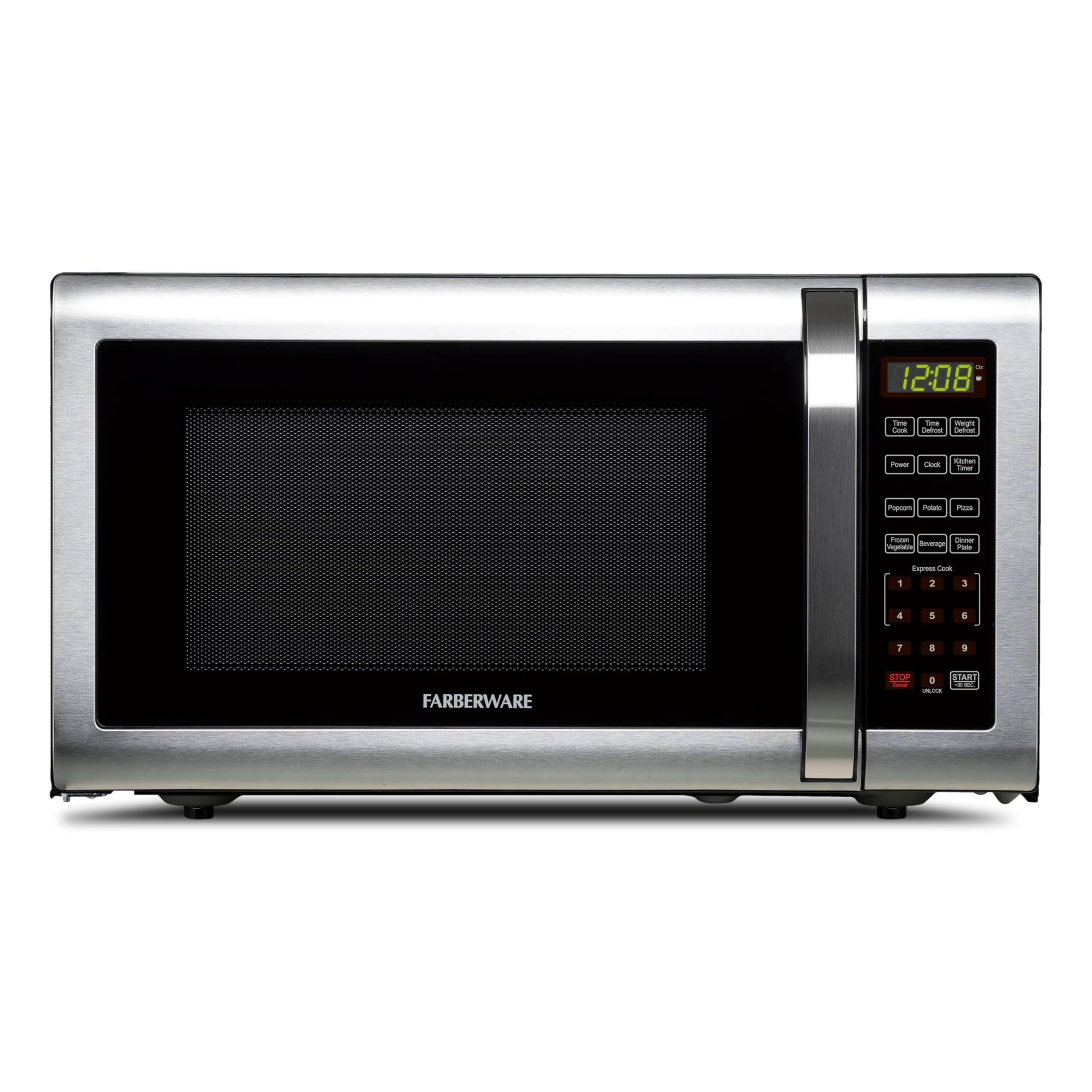
The child lock may be active. Look for a lock icon or read the manual for the correct button combination.
If the display works but some buttons fail, unplugging and reconnecting the unit may help only if the manual permits it. Do not use a microwave with melted buttons, a damaged cord, or signs of liquid entry.

Farberware microwave buying checklist
Use this checklist before you place an order:
- The microwave fits the counter and has proper ventilation space.
- The turntable fits your usual plate.
- The wattage suits your cooking habits.
- The controls are easy for everyone in the home.
- The door opens without hitting a wall or cabinet.
- The outlet and circuit can support the appliance.
- The model has a manual available online.
- The warranty is clear.
- The return period is long enough to test the unit.
- The seller is known and provides customer support.
- The product has no damaged packaging or door.
- You understand which containers are microwave-safe.
Who should buy a Farberware microwave?
Farberware may be a good fit if you want:
- An affordable countertop microwave
- Basic reheating and defrosting
- A compact appliance
- Simple controls
- A microwave for occasional use
- A replacement unit without premium features
Who should choose another microwave?
Consider another brand or a higher-tier model if you need:
- Very heavy daily use
- A large cooking cavity
- Commercial-level durability
- Advanced sensor or inverter cooking
- The quietest possible operation
- Strong local repair support
- A built-in or over-the-range installation
Farberware countertop models should not be treated as direct replacements for built-in or over-the-range microwaves. Those installations have different ventilation, electrical, and mounting requirements.

Frequently asked questions
Are Farberware microwaves made in the USA?
Do not assume that a Farberware microwave is made in the United States. Manufacturing location can vary by model and production period. Check the product label, package, or official manual for the exact unit.
How long do Farberware microwaves last?
There is no reliable brand-wide lifespan that applies to every Farberware model. A microwave’s service life depends on its design, usage, care, electrical conditions, and maintenance.
A unit used lightly may last much longer than one used many times each day. Replace it if the door, latch, cord, cavity, or controls are damaged.
Are Farberware microwaves safe?
A Farberware microwave should be safe when it is intact and used according to its manual. Do not use one with a damaged door, failed latch, severe rust, exposed wiring, repeated arcing, or smoke.
Safety standards do not mean a user can ignore damaged parts or unsafe containers.
Are Farberware microwaves good for dorm rooms?
A compact Farberware microwave can work well in a dorm if the school permits personal microwaves and the electrical setup supports it. Check campus rules first.
Choose a model that fits the available space, uses simple controls, and has a power level suitable for the room’s circuit.
Is Farberware better than Black+Decker or Toshiba?
No brand is always better. Compare the exact models for wattage, cavity size, controls, warranty, reviews, and return terms.
A Farberware model may offer better value for a specific sale or size. A Toshiba or Black+Decker model may be a better fit if it offers controls, dimensions, or support that suit your needs more closely.
Final verdict: Should you buy a Farberware microwave?
Farberware is a good enough brand for many U.S. shoppers who want a low-cost microwave for normal countertop use. It is strongest when price, compact size, and simple operation matter most.
It is not the clearest choice for buyers who want premium construction, advanced cooking control, or a microwave for intense daily use. Before buying, compare the exact model’s wattage, interior size, warranty, safety features, and return policy.
Best next step: choose two or three Farberware models that fit your space, then compare their manuals and specifications with one similar microwave from another brand. That quick check will tell you more than the Farberware name alone.

Appliance Review Expert
Lucas Ramirez is a trusted voice at HomeFixGrid.com, known for his clear, practical, and creatively written guides that simplify appliance care for everyday homeowners. With a strong focus on hands-on testing and real-world problem-solving, Lucas brings expert insight into appliance reviews and troubleshooting techniques. Her work empowers readers to confidently maintain, repair, and choose the right appliances for their homes.