Why Does My Refrigerator Leak Water: Causes & Fixes
Introduction
A refrigerator that leaks water is common in U.S. homes, especially models with an ice maker, water dispenser, or automatic defrost system. The water may come from a blocked defrost drain, a loose supply line, a damaged door seal, or an ice maker problem.
The safest first step is to find where the water starts. Water under the front may have a different cause than water inside the refrigerator or behind the unit. Unplug the refrigerator before removing panels, and shut off the household water supply if the leak involves the ice maker or dispenser line.
Most leaks are simple to correct. But a cracked water line, damaged drain pan, electrical fault, or refrigerant-system problem may require a qualified appliance technician.

The Most Common Reasons a Refrigerator Leaks Water
A leaking refrigerator usually has a drainage, water-supply, temperature, or door-seal problem. The leak location gives the best clue.
| Where you see water | Likely causes |
|---|---|
| Inside the refrigerator | Blocked defrost drain, poor leveling, damaged door gasket |
| Under the crisper drawers | Frozen or clogged drain opening |
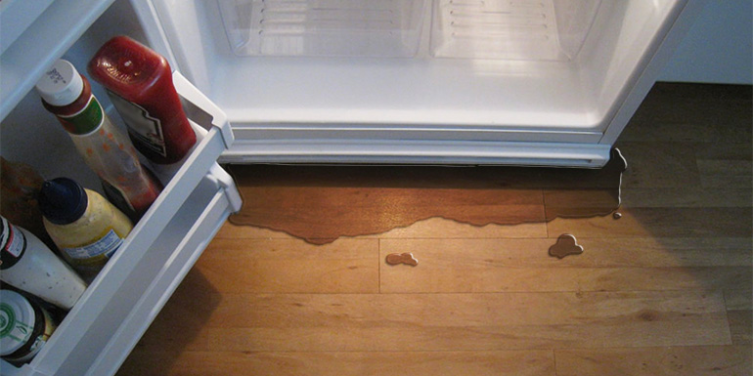
| On the kitchen floor in front | Drain pan, door seal, supply line, or excessive condensation |
| Behind the refrigerator | Loose water line, cracked filter housing, drain pan, or ice maker valve |
| Under the freezer | Frozen defrost drain or blocked drain tube |
| Around the water dispenser | Loose fitting, damaged tubing, or trapped air after filter replacement |
| Near the ice maker | Frozen fill tube, defective inlet valve, or ice spilling from the tray |
The leak may be intermittent. A refrigerator can collect water during an automatic defrost cycle and release it hours later. That is why the puddle may appear even when no one has used the water dispenser.
1. A clogged or frozen defrost drain
The defrost system melts frost from the evaporator coil. That water should flow through a drain hole and tube into a pan beneath the refrigerator, where it evaporates.
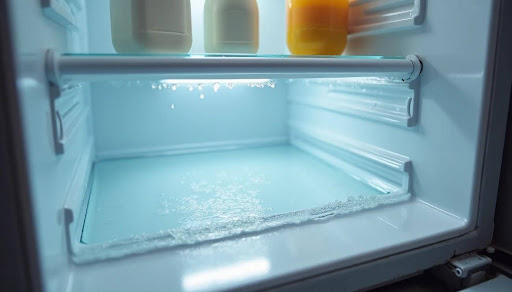
Food particles, ice, or frost can block the drain. When this happens, meltwater backs up and freezes under the freezer floor or flows into the fresh-food compartment.
This is one of the most common reasons for water under crisper drawers or beneath a freezer drawer.
2. A leaking water supply line
Refrigerators with ice makers and dispensers use a small water line. Depending on the model, the line may run through the wall, under the floor, or behind the refrigerator.
A connection can loosen when the refrigerator moves. Plastic tubing can also split with age. Copper tubing may kink or develop a pinhole leak.
Check the full line, including:
- The shutoff valve on the wall
- The connection at the refrigerator
- The water filter housing
- The tubing near the floor
- Any push-fit or compression fittings
3. A damaged water filter or filter housing
A filter that is not fully seated can leak each time the dispenser operates. A worn filter seal, cracked filter cap, or damaged housing can cause a slow leak that runs down the back wall.
Many refrigerators also leak briefly after a filter change because air remains in the line. A short purge, as described in the owner’s manual, may solve that problem. Continuous leaking is not normal.
4. An ice maker or inlet valve problem
The ice maker may leak if its fill tube freezes, its tray overfills, or the water inlet valve does not close fully.
Water may also splash into the ice bucket when cubes are ejected. If the ice bucket is full or incorrectly positioned, meltwater can spill into the freezer.
5. A poor door seal or unlevel refrigerator
A door gasket that does not seal lets warm, moist air enter. That moisture can form frost, melt, and collect inside the refrigerator.
A refrigerator that is not level can also prevent doors from closing correctly. Most units are designed with a slight backward tilt so the doors close by themselves, but the exact adjustment varies by model.
6. A cracked or overflowing drain pan
The drain pan sits below the refrigerator and collects defrost water. It may be difficult to see without removing a lower grille or access panel.
A pan can crack, shift, or overflow if the refrigerator is not level or if excess water enters it. Do not force the pan out. Some models require a service procedure to access it.

How to Find the Source of the Leak
Find the starting point before cleaning or repairing anything. A puddle often travels across the floor, so the wettest area may not be the original source.
Step 1: Protect the floor and food
Move food away from the wet area. Wipe up standing water to reduce slip and floor damage.
If water is near an outlet, power cord, or electrical component, do not touch the plug while standing in water. Turn off power at the circuit breaker if you can do so safely, or call an electrician.
Keep perishable food cold. The U.S. Food and Drug Administration recommends keeping a refrigerator at or below 40°F (4°C). If the refrigerator loses power or cannot maintain a safe temperature, follow FDA food-safety guidance before keeping the food.
Step 2: Check the water supply
If the refrigerator has an ice maker or dispenser, close the water shutoff valve. The valve is often under the sink, behind the refrigerator, or in a nearby cabinet.
Dry the tubing and fittings. Open the valve briefly while watching for new moisture. A fresh bead of water identifies the leaking connection or line.
Do not keep using the dispenser if water sprays, drips from a fitting, or runs behind the refrigerator.
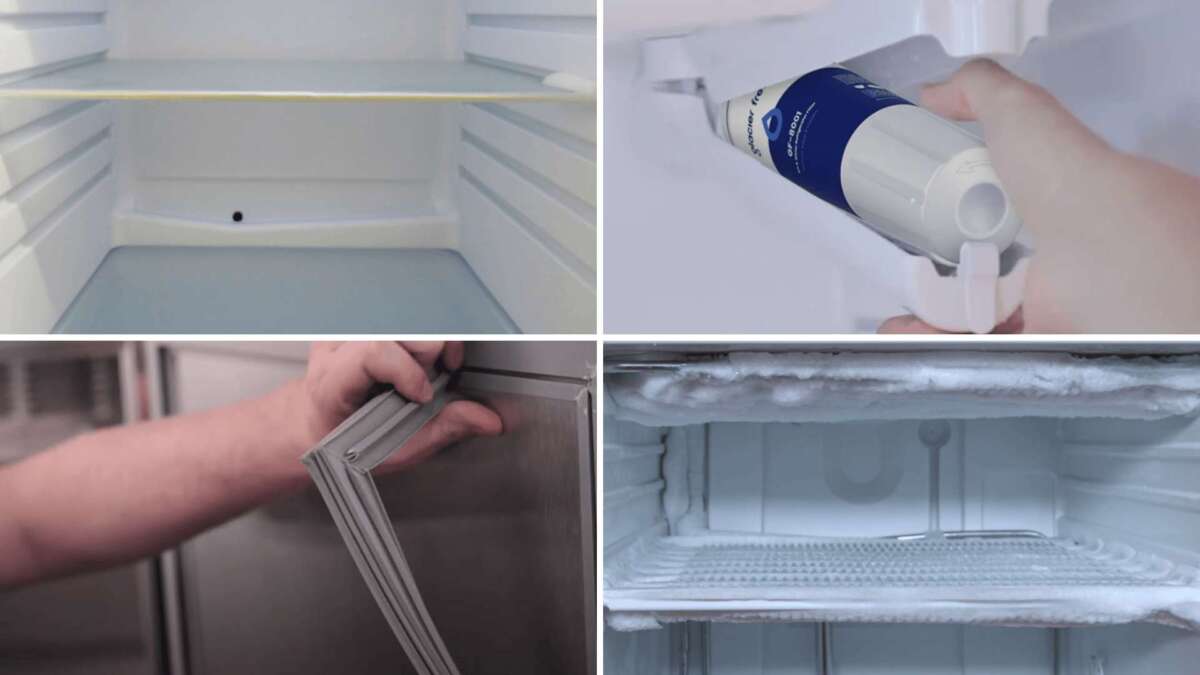
Step 3: Inspect the inside
Look at:
- The rear wall of the freezer
- The floor of the freezer
- The area below the crisper drawers
- The defrost drain opening
- The water filter and filter housing
- The door gasket
Heavy frost on the rear freezer wall can point to a defrost or airflow problem. Water or ice directly below the freezer drain points more strongly to a clogged drain.
Step 4: Check the door seal
Close the door on a thin sheet of paper. Pull gently. If the paper slides out with almost no resistance at several points, the gasket may not seal well.
This test is only a rough check. A gasket can look intact but still fail to seal because the door is misaligned, a shelf is blocking closure, or the gasket has hardened.
Step 5: Inspect underneath and behind the unit
Use a flashlight. Look for:
- A wet drain pan
- Water at the rear connection
- A kinked supply line
- Ice near the ice maker
- Rust or staining
- Water trails on the cabinet
Avoid pulling a heavy refrigerator alone. A damaged floor or disconnected water line can make the problem worse.
How to Fix a Refrigerator That Is Leaking Water
The correct repair depends on the source. Start with low-risk steps and stop if the repair requires sealed-system work, electrical testing, or major disassembly.
Fix a blocked defrost drain
If the owner’s manual identifies an accessible drain, you can try this basic process:
- Unplug the refrigerator.
- Remove food and drawers near the affected area.
- Allow visible ice to melt naturally, or use a container of warm water.
- Clear loose debris around the drain opening.
- Wipe up the water.
- Restore power and watch for new water during the next defrost cycle.
Never use a knife, screwdriver, heat gun, or open flame to remove ice. A sharp tool can puncture a concealed evaporator or drain tube. High heat can damage plastic parts, wiring, or insulation.
Do not pour boiling water into a plastic drain system. Use only the method approved in the manual. If the drain freezes again, the refrigerator may have an airflow, defrost, or insulation problem that needs service.
Fix a loose or leaking water line
For a visible external connection:
- Shut off the water supply.
- Unplug the refrigerator if the connection is close to electrical parts.
- Dry the fitting.
- Tighten a compression fitting only as much as the manufacturer specifies.
- Replace damaged tubing rather than patching it with tape.
- Turn the water back on slowly.
- Check the connection for several minutes.
Do not overtighten plastic fittings. Too much force can damage the threads or crush the tubing.
If the line runs inside a wall, floor, or refrigerator cabinet, do not cut into it without model-specific instructions. A hidden leak can damage cabinets, subflooring, and drywall.
Fix a leaking water filter
Remove and reinstall the filter according to the manual. Make sure the filter is the correct type and is fully locked in place.
If the filter housing leaks after correct installation, inspect the O-ring or seal. A cracked housing usually needs replacement. Do not operate the dispenser until the leak stops.
After installing a new filter, flush the amount of water stated in the owner’s manual. This removes air and loose carbon particles. If water continues to leak, the problem is likely more than trapped air.
Fix an ice maker leak
Check whether the ice maker is:
- Overfilled
- Misaligned
- Producing oversized or fused ice
- Leaking from its fill tube
- Dumping ice outside the bucket
Turn off the ice maker if it continues to leak. Many models use a shutoff arm or a control on the display. This stops new ice production, but it may not stop a leak in the household water line. Close the water shutoff valve if water continues to enter the unit.
An inlet valve, fill tube, or internal ice maker assembly may need replacement. These parts differ by model, so use the exact model number when ordering parts.
Correct a door-seal or leveling problem
Clean the door gasket with mild soap and water. Remove crumbs or sticky residue from the gasket and cabinet surface.
If the gasket is torn, brittle, or permanently bent, replace it with the correct model part. Warm water can sometimes help a slightly distorted gasket regain its shape, but do not use a heat gun.
Check that shelves and drawers are not pushing against the door. Then adjust the leveling feet according to the manual. A small adjustment may help the door close, but it will not fix a damaged hinge or warped cabinet.

When a Refrigerator Leak Needs Professional Repair
Call an appliance technician when the leak continues after basic checks, returns soon after clearing the drain, or comes from an inaccessible area.
Professional service is especially appropriate when:
- Water is entering electrical components.
- The leak comes from inside the cabinet.
- The evaporator or sealed refrigeration system may be damaged.
- The drain repeatedly freezes.
- The compressor area is wet.
- A copper line inside the wall is leaking.
- The refrigerator makes unusual electrical sounds.
- The unit cannot hold a safe temperature.
- You smell burning insulation or see melted wiring.
Do not puncture refrigeration tubing or attempt to add refrigerant. Refrigerant work requires specialized tools and training. In the United States, technicians who service equipment containing regulated refrigerants may need EPA Section 608 certification, depending on the work and equipment.
Check the warranty before ordering parts. A repair attempt by an unauthorized person may affect warranty coverage, and some manufacturers require specific service procedures.

How to Prevent Future Refrigerator Leaks
Regular checks can reduce the chance of another leak.
- Replace the water filter at the interval stated in the manual.
- Inspect the supply line when cleaning behind the refrigerator.
- Keep food away from the freezer’s rear wall and drain opening.
- Close doors fully and avoid overloading shelves.
- Clean the door gasket with mild soap.
- Keep the refrigerator level according to the manufacturer’s instructions.
- Do not force drawers or shelves into place.
- Check for frost buildup instead of repeatedly chipping away ice.
- Leave enough clearance for airflow as specified by the manual.
- Clean spills quickly so they do not hide a slow leak.
If the refrigerator leaks again in the same place, treat the repeat leak as a clue. A recurring frozen drain, for example, may signal a failed defrost heater, sensor, fan, or insulation issue rather than a simple clog.
Key Takeaways
A leaking refrigerator most often has a blocked defrost drain, loose water line, filter problem, ice maker fault, poor door seal, or damaged drain pan.
Start by locating the source. Check the inside, water connections, filter, door gasket, freezer drain, and area beneath the refrigerator.
Unplug the refrigerator before removing panels. Shut off the water supply if the leak involves the dispenser or ice maker. Avoid sharp tools and high heat around frozen components.
If water reaches electrical parts, the leak returns, or the refrigerator cannot stay at or below 40°F, arrange professional service.
Frequently Asked Questions
Why is my refrigerator leaking water inside?
A blocked or frozen defrost drain is the most common cause. Water from the automatic defrost cycle cannot reach the drain pan, so it backs up inside the freezer or under the crisper drawers. A poor door seal can also create excess frost and water.
Why is my refrigerator leaking water onto the floor?
A leaking water line, filter housing, ice maker valve, drain pan, or blocked defrost drain can put water on the floor. Trace the water to its highest or wettest point instead of assuming the puddle marks the source.
Can I use a hair dryer to thaw a frozen refrigerator drain?
It is safer not to use a hair dryer. Water and electricity create a shock risk, and high heat can damage plastic, wiring, insulation, or refrigerator parts. Use the thawing method in the owner’s manual, or call a technician.
Why does my refrigerator leak after I change the water filter?
The filter may not be fully seated, the seal may be damaged, or the filter may be incorrect for the model. Air can also remain in the line after replacement, but ongoing leaking usually points to an installation or seal problem.
Is a leaking refrigerator dangerous?
It can be. Water near outlets or electrical parts may create a shock or fire hazard. A leak can also damage flooring and cabinets, and warm food may become unsafe. Shut off water and power safely, then seek service when the source is not obvious.
Conclusion
To answer “why does my refrigerator leak water,” first identify where the water begins. A leak inside often points to a blocked defrost drain or door-seal issue. A leak behind the unit more often involves the supply line, filter, ice maker, valve, or drain pan.
Dry the area, protect nearby electrical components, shut off the water when needed, and follow the refrigerator’s model-specific manual. If the leak repeats or involves hidden tubing, wiring, refrigerant parts, or food-safety concerns, use a qualified appliance technician rather than forcing a risky repair.

Appliance Review Expert
Lucas Ramirez is a trusted voice at HomeFixGrid.com, known for his clear, practical, and creatively written guides that simplify appliance care for everyday homeowners. With a strong focus on hands-on testing and real-world problem-solving, Lucas brings expert insight into appliance reviews and troubleshooting techniques. Her work empowers readers to confidently maintain, repair, and choose the right appliances for their homes.