Why Does My Refrigerator Make A Popping Sound: Causes & Fixes
A refrigerator may make a popping sound because its plastic parts, shelves, or interior liner expand and contract as the temperature changes. In many U.S. homes, an occasional pop is normal, especially during cooling, defrost, or ice-making cycles. A loud pop with leaking water, poor cooling, burning smells, or repeated electrical noise needs attention.
Introduction
Most refrigerators are not silent. They click, hum, buzz, hiss, crack, and sometimes pop as the compressor, fans, ice maker, and defrost system work. A single pop from a refrigerator in a U.S. kitchen does not automatically mean the appliance is failing.
The key clues are when the sound occurs, how often it happens, where it comes from, and whether the refrigerator still works normally. This guide explains the common causes, safe checks you can make, and the signs that call for a qualified appliance technician.


Why Does a Refrigerator Make a Popping Sound?
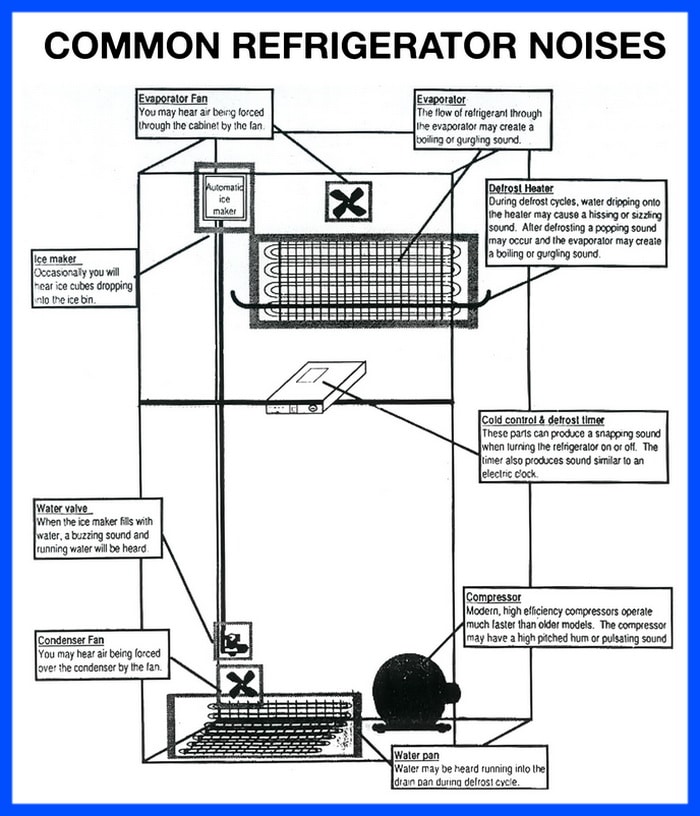
A refrigerator usually makes a popping sound when materials or components change temperature and move slightly. The sound can also come from the ice maker, defrost system, compressor, or refrigerant lines.
1. Plastic parts expand and contract
This is the most common reason for a harmless refrigerator popping noise.
When the refrigerator cools, its plastic liner, shelves, drawers, and air ducts contract. When the parts warm during a defrost cycle, they expand. The movement may release stored tension with a sharp pop or crack.
You may hear this:
- Shortly after the compressor starts
- When the compressor stops
- During or after an automatic defrost cycle
- From the back wall or inside the freezer
- More often after installing a new refrigerator
This sound can seem loud because the thin plastic liner acts like a small drum. It may echo through the metal cabinet.
2. The ice maker is filling or releasing ice
An automatic ice maker can create several sounds that people describe as popping:
- A small pop when ice cubes break loose from the mold
- A click when the ice maker starts a harvest cycle
- A thump when cubes fall into the bin
- A snap when the water valve opens or closes
These sounds are usually normal if the ice maker completes its cycle and does not leak.
If the sound occurs near the ice maker and the ice bin is empty, check that the water supply is open and the ice maker is switched on. Do not force the ejector fingers by hand.
3. The defrost system is operating
Frost-free refrigerators periodically melt frost from the evaporator coil. During this cycle, the defrost heater warms nearby metal and plastic parts.
That temperature change can cause:
- Popping
- Cracking
- Ticking
- A brief sizzling sound when water reaches the heater
A small amount of water dripping onto a hot defrost heater can be normal. However, water on the floor, heavy ice buildup, or a refrigerator that stays warm suggests a problem with the drain, heater, sensor, or control system.


4. Refrigerant lines change pressure and temperature
Refrigerant moves through narrow tubes inside the refrigerator. As the compressor starts and stops, pressure changes in the system. The tubing can shift slightly against brackets, insulation, or the cabinet.
This may cause a pop, click, or light knock.
A short sound during startup or shutdown is often harmless. A repeated loud bang, vibration, or grinding sound is more concerning, especially if cooling has declined.
5. The compressor starts or stops
The compressor is the motor that circulates refrigerant. It may make a click when its electrical relay starts the motor. The cabinet can also flex slightly when the compressor turns on or off.
A normal compressor cycle may include:
- A click
- A low hum
- A brief vibration
- A soft stop or click
A hard repeated click every few minutes may mean the compressor is trying and failing to start. That problem requires service, particularly if the refrigerator is warming.
6. The refrigerator is not level
A refrigerator that leans or rocks can place tension on its cabinet, doors, shelves, or drain pan. As the compressor or fan vibrates, the appliance may pop or knock.
Check whether:
- The cabinet rocks when you press a corner
- The doors swing open or shut on their own
- The sound changes when you gently steady the unit
- The refrigerator touches a wall or cabinet
Do not pull a full refrigerator away from the wall by yourself. Large appliances can be heavy and may tip.
7. A shelf, drawer, or food container is shifting
Sometimes the refrigerator is not the source of the sound. A glass shelf, storage bin, bottle, or container may move as the cabinet vibrates.
Look for:
- Bottles touching one another
- A drawer rubbing against the wall
- A shelf that is not seated in its supports
- Food touching the rear interior panel
- A loose drip pan under or behind the appliance
Move items only after checking that they are not blocking air vents. Do not pack the refrigerator tightly enough to restrict air flow.
Is a Popping Sound Normal or a Sign of a Problem?
An occasional soft pop is usually normal when the refrigerator cools, defrosts, or makes ice. The sound becomes more concerning when it is loud, frequent, new, or linked to another change in performance.
Use this guide:


| What you notice | Likely cause | What to do |
|---|---|---|
| One or two pops during cooling | Plastic or metal changing temperature | Monitor the refrigerator |
| Pop after the compressor stops | Cabinet or refrigerant tubing movement | Usually normal if cooling is steady |
| Pop during ice making | Ice release or water valve action | Check for leaks and proper ice production |
| Crackling during defrost | Frost or water contacting the defrost heater | Usually normal; watch for excess ice or water |
| Repeated click-pop every few minutes | Compressor start problem or relay issue | Arrange service if the refrigerator is warm |
| Loud bang with shaking | Loose panel, fan, compressor mount, or tubing | Unplug only if safe and seek service |
| Pop with a burning smell | Electrical fault or overheated part | Turn off power and seek urgent service |
| Pop with water on the floor | Drain, valve, ice maker, or defrost problem | Shut off the water supply if needed and inspect |
| Pop with poor cooling | Mechanical, electrical, or sealed-system issue | Protect food and contact a technician |
A refrigerator can make a normal sound and still have a separate problem. For example, a pop during defrost may be harmless, while food warming at the same time may indicate a failing fan or control.
Food safety comes first
If the refrigerator is not cooling well, check the food rather than relying on the sound. The U.S. Food and Drug Administration recommends keeping a refrigerator at or below 40°F (4°C) and a freezer at 0°F (-18°C).
Use an appliance thermometer when possible. If perishable food has been above 40°F for too long, follow FDA food safety guidance instead of tasting the food to decide whether it is safe.

How to Troubleshoot a Refrigerator Popping Sound
Start with simple observations. Do not remove electrical covers, sealed-system parts, or refrigerant lines unless you are a trained appliance professional.
Step 1: Identify when the pop occurs
Listen for a pattern over several cooling cycles.
Ask:
- Does it happen when the compressor starts?
- Does it happen when the compressor stops?
- Does it occur during ice making?
- Does it happen after the door has been opened?
- Does it occur every few hours, as defrost begins?
- Does it happen when the refrigerator door or freezer door moves?
The timing often narrows the cause more quickly than the volume of the sound.
Step 2: Locate the sound
Stand safely near the refrigerator and listen from different sides.
The sound may come from:
- Inside the freezer: evaporator area, ice maker, or interior liner
- Behind the refrigerator: compressor, fan, tubing, or drain pan
- Under the refrigerator: leveling feet, pan, or fan
- Near the door: hinges, bins, ice dispenser, or door liner
Do not place your hands near a moving fan. Do not reach behind the refrigerator while it is operating.
Step 3: Check temperature and cooling
Confirm that the refrigerator and freezer are cold enough. A household refrigerator should generally stay at or below 40°F, while the freezer should stay at 0°F.
Look for:
- Soft or melting ice cream
- Food that feels warmer than usual
- Frost covering the rear freezer panel
- A compressor that runs constantly
- A fan that never runs or makes a scraping sound
- A temperature alarm or error code
A pop without cooling trouble is less urgent than a pop combined with rising temperature.
Step 4: Check for blocked air flow
Food packages can touch the rear wall or block vents. This can cause uneven temperatures and make fans work harder.


Move items away from:
- Interior air vents
- The evaporator cover
- The ice maker assembly
- The door’s air channel, if the model has one
Follow the spacing instructions in your owner’s manual. Refrigerator layouts differ by model.
Step 5: Inspect the ice maker and water supply
If the sound occurs during ice production:
- Check the ice bin for stuck cubes.
- Look for water around the ice maker.
- Inspect the water line behind the refrigerator.
- Confirm that the shutoff valve is fully open.
- Check whether the ice maker is overfilling or not filling.
Do not remove the rear access panel to test a water valve unless the manual specifically permits it and the appliance is disconnected from power.
Step 6: Check whether the refrigerator is level
Place a small level on a stable shelf, if available. Check that the unit does not rock.
Use the leveling method in the owner’s manual. Many refrigerators need a slight backward tilt so the doors close properly, but the correct adjustment depends on the design.
Do not place wood, cardboard, or loose objects under the appliance as a permanent fix.
Step 7: Clean only accessible areas
Dust on the condenser area can increase heat and make the refrigerator run longer. Some modern refrigerators have covered condensers and should not be opened.
Before cleaning:
- Unplug the refrigerator if the manual requires it
- Keep water away from electrical parts
- Use a soft brush or vacuum attachment
- Do not bend refrigerant tubing
- Do not remove sealed panels
The U.S. Department of Energy’s refrigerator guidance can help with general maintenance and energy use.
Step 8: Record the pattern
Write down the time, location, and conditions when the sound occurs. A short phone recording may help a technician, but never place the phone or your hand near moving or energized parts.
Record whether the sound is:
- A single pop
- A repeated click-pop
- A crackle
- A bang
- A pop followed by a hum
- A pop followed by silence

When Should You Call a Refrigerator Repair Technician?
Call for service when the popping sound is paired with a safety risk or a change in refrigerator performance.
Seek prompt service if you notice:
- The refrigerator is above 40°F and cannot recover
- The freezer is thawing
- The compressor repeatedly clicks but does not run
- A fan scrapes, stalls, or sounds like it is hitting ice
- Water is leaking onto the floor
- The cabinet gives an electric shock
- The power cord or outlet is hot
- You smell burning plastic or wiring
- The sound is a loud bang rather than a light pop
- The noise began after a power surge or electrical event
If you smell smoke or burning, disconnect power only if you can do so without touching a damaged cord or standing in water. Otherwise, turn off the circuit at the electrical panel if it is safe and contact a qualified professional.
Do not attempt to repair a refrigerant leak. Refrigerant systems require specialized tools and training. Do not puncture ice, bend tubing, bypass safety switches, or replace electrical components without the correct model-specific instructions.
Check your warranty before paying for repair
Look at the refrigerator’s model and serial number. These are often located inside the fresh-food compartment, on a side wall, or near the door frame.
Then check:
- The owner’s manual
- The manufacturer’s warranty terms
- Any extended service plan
- Whether a licensed or authorized technician is required
A new refrigerator may make normal expansion sounds during its first days of use. If the sound is unusually loud or cooling is poor, report it while warranty coverage applies.

Common Mistakes to Avoid
Do not assume every loud sound is dangerous
A loud sound can still come from harmless plastic movement. Diagnose it by timing and related symptoms rather than volume alone.
Do not ignore a repeated clicking sound
A repeating click may mean the compressor cannot start. If the refrigerator is warm, move perishable food to a safe cold location and arrange service.
Do not remove the freezer’s rear panel to melt ice
Using a knife, hair dryer, heat gun, or other tool can damage the liner, wiring, or refrigerant system. If frost blocks the evaporator, use the manufacturer’s instructions or call for service.
Do not overload the refrigerator
Heavy items can stress shelves and drawers. Crowding can also block vents and create uneven cooling, which may lead to longer run times and more noise.
Do not spray cleaner into vents or controls
Moisture can reach electrical parts. Apply cleaner to a cloth instead, and follow the manual’s cleaning instructions.

Frequently Asked Questions
Is it normal for a refrigerator to pop at night?
Yes. The sound may seem louder at night because the room is quiet. Temperature changes, defrost cycles, and compressor operation can occur at any time. If cooling remains normal and there are no leaks or burning smells, an occasional pop is usually not a problem.
Why does my refrigerator pop when the door closes?
Closing the door changes air pressure inside the compartment. The liner, vents, gaskets, or nearby plastic parts may flex and make a pop. A damaged gasket, misaligned door, or loose shelf can also contribute.
Why does my refrigerator pop when the compressor turns off?
The compressor and refrigerant lines cool and change pressure when the cycle ends. Nearby tubing and cabinet materials may shift slightly. A soft pop is usually normal, but repeated loud clicks with poor cooling need service.
Can a refrigerator pop because of ice buildup?
Yes. Ice can expand, crack, or shift inside the freezer. Frost can also contact a fan and create scraping or popping sounds. Heavy frost on the rear freezer wall is not normal and may point to a defrost or door-seal problem.
Should I unplug a refrigerator that is making a popping sound?
Do not unplug it for a minor occasional pop if it is cooling normally. Disconnect power if you smell burning, see smoke, hear electrical arcing, or find a damaged cord. If the refrigerator is warm, protect the food first and follow the manufacturer’s service instructions.
Why does my new refrigerator make popping noises?
New refrigerators often make sounds as their cabinet, liners, tubing, and insulation settle through repeated cooling cycles. Review the sound section of the owner’s manual. Contact the retailer or manufacturer if the noise is extreme, constant, or linked to poor cooling.
Conclusion: What to Do Next
An occasional refrigerator popping sound is often caused by normal temperature changes, the ice maker, defrost system, or refrigerant tubing. Start by identifying when and where the sound occurs, then check temperature, cooling, leaks, ice buildup, and leveling.
If the refrigerator stays cold and the sound is brief, monitor it. If the pop comes with repeated clicking, poor cooling, water, burning odor, electrical problems, or a loud bang, stop troubleshooting and arrange qualified service.

Appliance Review Expert
Lucas Ramirez is a trusted voice at HomeFixGrid.com, known for his clear, practical, and creatively written guides that simplify appliance care for everyday homeowners. With a strong focus on hands-on testing and real-world problem-solving, Lucas brings expert insight into appliance reviews and troubleshooting techniques. Her work empowers readers to confidently maintain, repair, and choose the right appliances for their homes.