Do You Need A Box Spring With A Hybrid Mattress: Yes Or No
Usually, you do not need a box spring with a hybrid mattress if your bed base offers firm, even support.
Choosing the right foundation can affect comfort, mattress life, warranty coverage, and bed height. This guide explains do you need a box spring with a hybrid mattress, which bases work best, and how to avoid common setup mistakes.
Do You Need a Box Spring With a Hybrid Mattress?
Do you need a box spring with a hybrid mattress? In most cases, no. A hybrid mattress can rest on several supportive surfaces, including a platform bed, slatted foundation, bunkie board, or adjustable base.
A hybrid mattress combines foam layers with pocketed coils or another coil system. The coils need a stable base beneath them. They do not always need the flexible springs found in a traditional box spring.
The key question is not whether the base is called a box spring. The key question is whether it gives the mattress enough support without bending, sagging, or allowing the coils to shift.
A suitable foundation should provide:
• Even support across the full mattress
• Strong center support for queen, king, and California king beds
• Slats that are close enough together
• Good airflow beneath the mattress
• A weight limit that covers both sleepers and the mattress
• A flat surface without broken or loose parts
In my experience helping people compare mattress setups, most problems blamed on a hybrid mattress actually come from a weak foundation. A sturdy hybrid placed on a poor base may feel soft, uneven, or noisy.

How Hybrid Mattresses Differ From Traditional Mattresses
A hybrid mattress has at least two main comfort systems. The top usually contains foam, latex, or fiber padding. Beneath that layer sits a coil support core.
The foam shapes your body and cushions pressure points. The coils add lift, airflow, edge support, and a firmer feel. This design makes hybrids versatile, but it also means the mattress needs a base that supports the entire coil unit.
A traditional innerspring mattress may work with a matching box spring because both parts were designed to move together. Many modern hybrids are designed for a firm foundation instead. Placing one on an old, flexible box spring can change the feel of the mattress.
This is why do you need a box spring with a hybrid mattress has no single answer for every home. The answer depends on the mattress design, the foundation type, the spacing between slats, and the maker’s warranty rules.
Always check the care guide before setting up the mattress. Some brands allow a box spring. Others require a nonflexing foundation or a specific slat spacing.

Foundations That Work With a Hybrid Mattress
Several types of bed bases can support a hybrid mattress well. Each has different benefits.
Platform beds
A platform bed has a solid deck or a set of sturdy slats. It often does not need a separate box spring.
Platform beds are popular because they provide a clean look and can reduce the total cost of a bed setup. If the slats are strong and properly spaced, they can support most hybrid mattresses.
Slatted foundations
Slatted bases use wood or metal slats across the frame. They allow air to move below the mattress and can keep the bed lighter than a solid platform.
Check the space between slats. Many mattress makers require gaps of no more than 2 to 3 inches, but the exact rule varies. A few hybrid mattresses need closer spacing, especially those with softer foam near the bottom.
Bunkie boards
A bunkie board is a thin, firm panel that rests on a bed frame. It can make widely spaced slats more supportive.
A bunkie board may help when your frame is strong but its slats are too far apart. It can also lower the mattress height compared with using a tall box spring.
Adjustable bases
Many hybrid mattresses work with adjustable bases, but not all do. The mattress must be flexible enough to bend without damaging its coil system.
Look for the words “adjustable-base compatible” in the product details. Use the recommended weight limit and keep the mattress flat during setup.
Foundation made by the mattress brand
A matching foundation is often the safest choice for warranty protection. It may cost more, but it removes much of the guesswork.
The best base is usually the one that meets the mattress maker’s support rules, not always the one with the most familiar name.

When a Box Spring Can Work
A box spring may work with a hybrid mattress if it is firm, level, and approved by the mattress maker. Modern box springs often contain a rigid frame with closely spaced support bars. These are different from older box springs with flexible coils.
Before using one, inspect its condition. Look for sagging fabric, bent supports, broken wood, loose parts, or a soft center.
A box spring may be useful when:
• You already own a strong, modern box spring
• You want extra bed height
• The box spring meets the mattress warranty rules
• The support surface is flat and does not flex too much
• The frame has proper center support
Traditional box springs are more questionable. Their flexible springs can cause a hybrid mattress to dip between support points. They may also change the way the mattress responds when you move or sit near the edge.
Do you need a box spring with a hybrid mattress if you want more height? Not necessarily. A low-profile foundation, bed risers, or taller platform legs may provide height without adding too much flex.
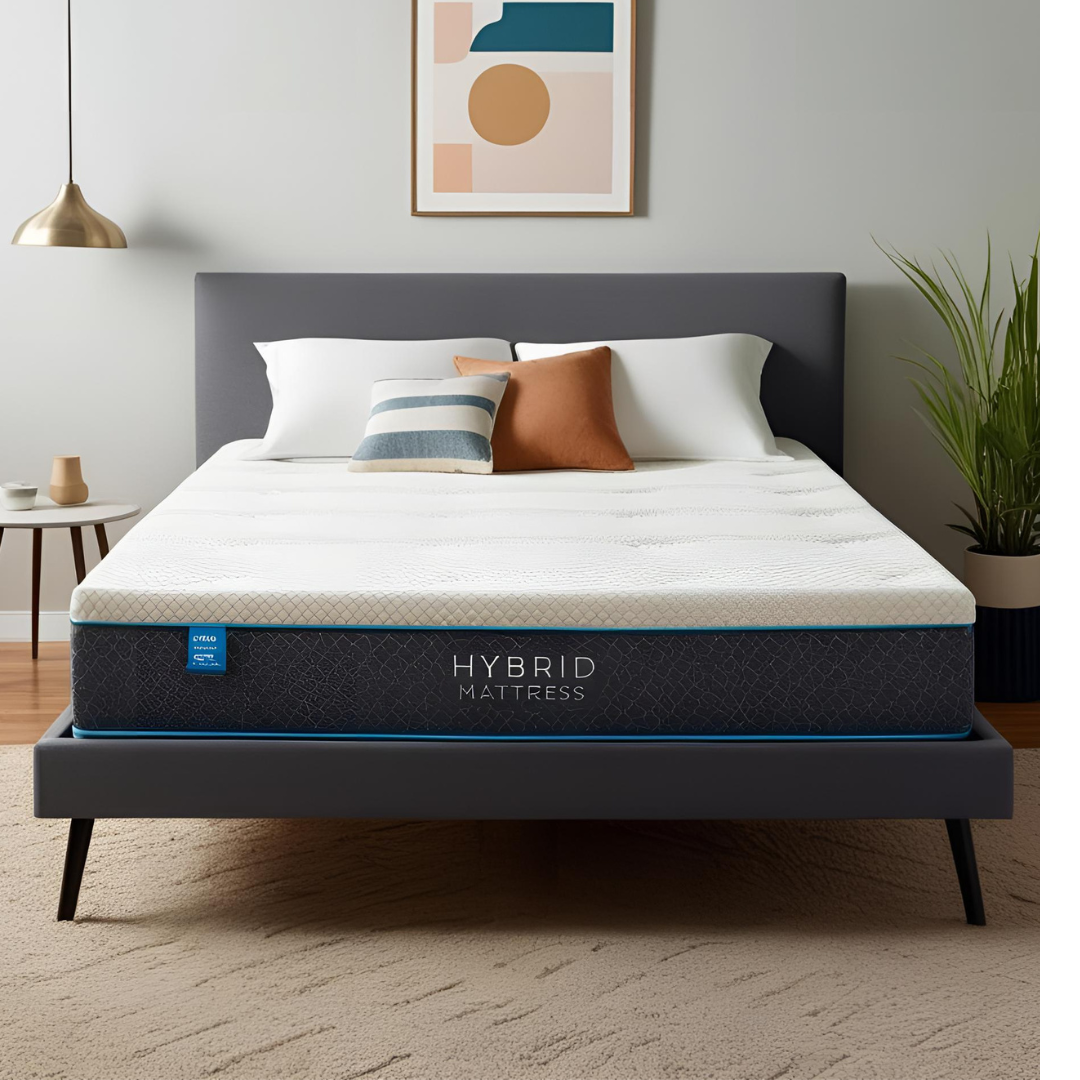
When a Box Spring Is Not the Best Choice
A traditional box spring may not be suitable for a hybrid mattress. This is especially true when it has old coil springs, weak wood, or large gaps between its support points.
A poor base can lead to several problems:
• Uneven sleeping comfort
• Visible dips in the mattress
• Extra motion transfer
• Squeaking or creaking
• Premature wear
• Reduced edge support
• Possible warranty problems
The risk is higher for heavier sleepers, couples, and people who sit on the edge of the bed often. These actions place more pressure on the support system.
One mistake I often see is placing a new mattress on an old box spring without checking the center support. The bed may look fine at first. After several months, the middle can weaken and create a valley under the mattress.
If your current base feels soft when you press on it, or if it makes noise when you move, replace it or add a properly rated foundation.

How to Check Your Bed Frame
You can inspect your current setup in a few minutes. This simple check may prevent discomfort and protect your mattress investment.
-
Remove the old mattress and bedding.
-
Look for broken, bent, or bowed slats.
-
Measure the gap between each slat.
-
Check for a center beam on queen, king, and California king frames.
-
Confirm that the center beam touches the floor through strong legs.
-
Review the frame’s weight rating.
-
Check that the top surface is level.
-
Compare the frame with the mattress maker’s foundation requirements.
A queen or king frame often needs center support because the wider span can flex under load. Without that support, even a good mattress may sag in the middle.
Do you need a box spring with a hybrid mattress when your frame has wide slat gaps? You may need a bunkie board, extra slats, or a new foundation. Do not place cardboard or thin plywood under the mattress as a long-term fix. These materials can restrict airflow and may not provide safe structural support.

How Foundation Type Affects Comfort
Your mattress foundation can change how the bed feels. A rigid base usually makes a hybrid feel slightly firmer and more stable. A flexible base may create more bounce and allow deeper sinking.
Neither feel is automatically better. Your ideal choice depends on your body weight, sleep position, and comfort preference.
Side sleepers often prefer cushioning at the shoulder and hip. A firm, even foundation lets the comfort layers do their job without creating extra dips.
Back and stomach sleepers often need steady support through the middle of the body. A strong base can help keep the mattress from bending under the hips.
Couples may benefit from a firm foundation because it can improve stability and reduce unwanted movement. Still, motion transfer depends mostly on the mattress design and its foam layers.
Do you need a box spring with a hybrid mattress to make it softer? No. A box spring does not reliably soften a mattress in a controlled way. If the mattress feels too firm, a compatible topper is usually a better option.

Mattress Height, Airflow, and Appearance
A box spring raises the mattress, which can make getting in and out of bed easier. This may help older adults, people with joint pain, or anyone who prefers a taller bed.
However, too much height can make the bed awkward. A thick hybrid mattress on a tall box spring may also leave little room for a headboard, nightstand, or ceiling fan.
Airflow is another factor. A solid foundation can support a mattress well, but some designs allow less ventilation than slats. Moisture can build up in warm or humid rooms, especially when bedding is heavy and airflow is poor.
A slatted base often offers better ventilation. The slats must still be close enough and strong enough to prevent the mattress from bending between them.
If you live in a humid area, leave space around the bed when possible. Use breathable bedding and follow the maker’s care instructions. A hybrid mattress should not be placed directly on the floor for long-term use.

Warranty Rules You Should Not Ignore
Foundation requirements are more than fine print. They can affect whether a warranty claim is accepted.
Many mattress warranties require:
• A specific type of foundation
• A flat, supportive surface
• Slats with a maximum gap
• Center support on larger bed sizes
• Proper weight distribution
• Protection from moisture and damage
The exact rules vary by brand. Some companies accept a box spring, while others require a rigid platform or foundation. Some also require proof that the base meets their specifications.
Take a photo of your foundation before setup. Keep the receipt and product details. These small steps can help if you need customer service later.
Do you need a box spring with a hybrid mattress under the warranty rules? The only reliable answer comes from your mattress documentation or the manufacturer’s support team. If the instructions conflict with a salesperson’s advice, follow the written warranty terms.
Common Setup Mistakes to Avoid
A new hybrid mattress can perform poorly when the setup is rushed. Avoid these common errors:
• Using slats with gaps that are too wide
• Keeping a damaged box spring
• Skipping the center legs on a large frame
• Placing the mattress on an uneven floor
• Using a foundation below its weight limit
• Covering a damp mattress with bedding
• Folding a mattress that is not designed to fold
• Adding a board that blocks needed airflow
• Assuming every box spring works with every hybrid
Let the mattress expand for the time listed in the setup guide. Some mattresses feel unusual during the first few days as the foam expands and the materials adjust.
Rotate the mattress only if the maker recommends it. Many hybrids are not designed to be flipped. Flipping one can place the comfort layers on the bottom and cause discomfort.
If the mattress develops a dip, inspect the foundation first. Put a straightedge across the base and check for sagging. A weak foundation can create symptoms that look like a mattress defect.
A Simple Buying Guide
If you are buying a new foundation, use this process.
-
Read the mattress warranty and setup guide.
-
Identify the mattress size and total weight.
-
Choose a foundation with a suitable weight rating.
-
Confirm the required slat spacing.
-
Check for center support on larger sizes.
-
Decide whether you want a low, standard, or high bed.
-
Consider airflow and room humidity.
-
Confirm that the foundation fits your frame.
-
Measure doorways and stairs before delivery.
-
Test the complete setup for noise and movement.
A sturdy platform bed is often the simplest choice. A matching foundation is usually the lowest-risk choice for warranty coverage. A bunkie board can solve spacing problems when the existing frame is otherwise strong.
Do you need a box spring with a hybrid mattress when buying a complete bedroom set? Maybe. Ask whether the included base is rigid or flexible, and request the support specifications in writing.
Frequently Asked Questions
Can you put a hybrid mattress directly on a box spring?
Yes, if the box spring is firm, level, and approved by the mattress maker. Older flexible box springs may not provide the stable support that a modern hybrid mattress needs.
Can a hybrid mattress go on slats?
Yes, most hybrid mattresses can rest on slats when the slats are strong and close enough together. Check the required spacing because some brands allow only small gaps.
Is a platform bed better than a box spring for a hybrid mattress?
A platform bed is often a good choice because it provides firm, even support and may improve airflow. A box spring can also work when it meets the mattress manufacturer’s requirements.
Do you need a box spring with a hybrid mattress on a metal bed frame?
You may not need one if the metal frame has a solid support deck or properly spaced slats. If the frame has wide gaps, add a compatible foundation or bunkie board.
Can a hybrid mattress go on the floor?
It can rest on the floor temporarily, but long-term floor use may reduce airflow and expose the mattress to moisture, dust, and pests. A proper foundation is safer for support, ventilation, and ease of use.
Does a box spring make a hybrid mattress softer?
It may change the feel, especially if it flexes, but it does not reliably make the mattress softer. A compatible mattress topper is a more controlled way to add cushioning.
How often should you replace a box spring?
Replace a box spring when it sags, squeaks, breaks, or no longer meets the mattress requirements. Its age matters less than its condition and ability to provide even support.
Conclusion
Do you need a box spring with a hybrid mattress? Usually, you do not. A sturdy platform, slatted foundation, bunkie board, or compatible adjustable base can work just as well, and sometimes better.
Focus on firm support, correct slat spacing, center reinforcement, airflow, weight capacity, and warranty rules. If your current box spring is old or flexible, replacing it may protect both your comfort and your mattress.
Check the mattress guide before setup, inspect your bed frame, and choose the foundation that matches the manufacturer’s specifications. Share your foundation type or explore more mattress care guides to make your sleep setup work better.

Appliance Review Expert
Lucas Ramirez is a trusted voice at HomeFixGrid.com, known for his clear, practical, and creatively written guides that simplify appliance care for everyday homeowners. With a strong focus on hands-on testing and real-world problem-solving, Lucas brings expert insight into appliance reviews and troubleshooting techniques. Her work empowers readers to confidently maintain, repair, and choose the right appliances for their homes.