How Big Is A 20 Cubic Foot Refrigerator: Size Guide
A 20 cubic foot refrigerator has about 20 cubic feet of total interior storage, or roughly 566 liters. In the United States, a refrigerator this size often measures about 30 to 33 inches wide, 66 to 70 inches tall, and 30 to 34 inches deep.
The exact size depends on the style, brand, ice maker, door design, and whether the listed depth includes the handles. Always check the product specification sheet before you buy or move one.
A 20 cubic foot refrigerator is usually large enough for a small family, a couple who cooks often, or a household that wants more storage than a compact refrigerator provides.


What Does 20 Cubic Feet Mean in a Refrigerator?
Twenty cubic feet describes the refrigerator’s total rated interior volume. It usually combines the fresh-food section and the freezer section.
For example, a refrigerator may have:
- About 14 to 15 cubic feet of refrigerator space
- About 5 to 6 cubic feet of freezer space
- A total capacity close to 20 cubic feet
The number does not describe the refrigerator’s outside size. Two refrigerators can both hold 20 cubic feet but have different exterior dimensions.
A French-door refrigerator may be wider and shorter than a top-freezer model. A slim refrigerator may be taller and deeper. Shelves, drawers, door bins, ice makers, and interior walls also reduce the space you can use for large items.
How much can 20 cubic feet hold?
A 20 cubic foot refrigerator can commonly hold food for about three to four people, although shopping habits matter more than the number alone.
It may fit:
- Several gallons of milk or other drinks
- Fresh fruit and vegetables for the week
- Leftovers and meal-prep containers
- Standard food packages
- Frozen meat, vegetables, and prepared meals
- A small number of large serving dishes
The refrigerator may feel smaller if you store wide trays, large drink containers, bulk packages, or frozen food for several weeks at a time.
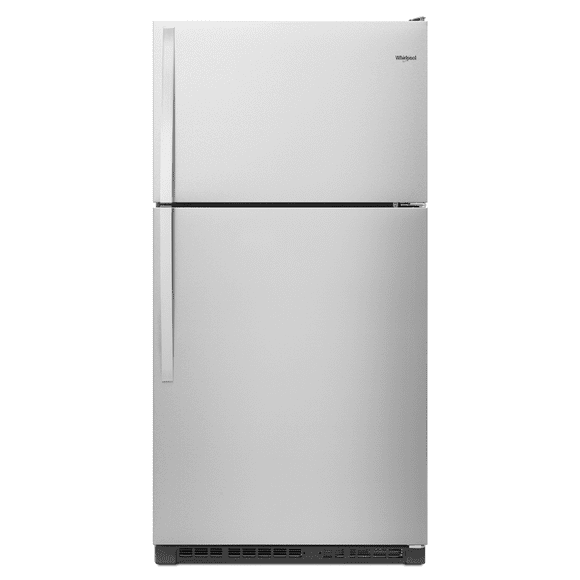
Typical Dimensions of a 20 Cubic Foot Refrigerator
A typical 20 cubic foot refrigerator is around 30 to 33 inches wide and 66 to 70 inches high. Depth often falls between 30 and 34 inches, but counter-depth models may be shallower.
The table below shows common size ranges. These are planning ranges, not guaranteed dimensions for every model.
| Refrigerator measurement | Common range for a 20 cu. ft. model |
|---|---|
| Width | 30–33 inches |
| Height | 66–70 inches |
| Depth, excluding handles | 30–34 inches |
| Depth, including handles | 32–36 inches or more |
| Fresh-food capacity | About 14–15 cu. ft. |
| Freezer capacity | About 5–6 cu. ft. |
Some models fall outside these ranges. A refrigerator with an external water dispenser may be deeper. A counter-depth model may be less deep but often has less interior capacity or more limited shelf depth.


For comparison, Frigidaire lists a 20.4 cubic foot top-freezer refrigerator with a width of about 30 inches and a height of about 66 inches. GE models near 20 cubic feet can be wider or deeper, depending on the design. These examples show why capacity alone cannot tell you whether a refrigerator will fit your kitchen.

How Much Space Do You Need Around a 20 Cubic Foot Refrigerator?
You need more space than the refrigerator’s listed width, height, and depth. Most refrigerators require room for ventilation, door movement, leveling, and service access.
Before ordering, check the manufacturer’s installation instructions. The required clearance varies by model, but a useful planning method is to measure these areas:
-
Opening width
Measure the narrowest point between cabinets, walls, or panels. -
Opening height
Measure from the floor to the lowest cabinet, trim, or countertop above the refrigerator. -
Opening depth
Measure from the back wall to the front edge of the cabinet or countertop. -
Side clearance
Leave the amount listed by the manufacturer. The door may need extra room to open fully. -
Top clearance
Include space for ventilation and for lifting the refrigerator into place. -
Rear clearance
Allow room for the power cord, water line, and airflow.
A 32-inch-wide refrigerator may not fit in a 32-inch opening if the installation instructions require extra side clearance. Hinges and doors can also extend beyond the cabinet body.
Do refrigerators need ventilation space?
Yes. Refrigerators release heat through coils or other components. If the unit is pushed tightly against a wall or cabinet, airflow may be reduced. That can make the refrigerator work harder and may interfere with normal operation.
The correct clearance depends on the model. ENERGY STAR recommends following the manufacturer’s installation instructions and measuring the available space before purchase. The product manual is more reliable than a general rule because refrigerator designs differ.

How Wide Is a 20 Cubic Foot Refrigerator?
Most 20 cubic foot refrigerators are about 30 to 33 inches wide. Top-freezer models often sit near the narrower end of that range. French-door and side-by-side models may be wider.


A wider refrigerator can offer easier access to shelves and produce drawers. However, width alone does not guarantee more usable space. Door bins, thick insulation, an ice maker, and the shape of the interior affect how much food fits.
If your kitchen opening is close to 30 inches, look for a model with a listed width below 30 inches and confirm the required clearance. A refrigerator marketed as “30 inches wide” may measure slightly more than 30 inches at its widest point.
How Tall Is a 20 Cubic Foot Refrigerator?
A 20 cubic foot refrigerator is commonly 66 to 70 inches tall. Some models are taller because they use a narrow cabinet to provide the same capacity.
Measure the height in more than one place if your floor is uneven. Also check for:
- Upper cabinets
- Crown molding
- A soffit
- Trim around the opening
- Adjustable leveling feet
- Top hinges
- The height needed to tilt the refrigerator during installation
A refrigerator may fit when standing upright but fail during delivery if it must be tilted through a doorway. Delivery companies often need additional clearance to move the appliance safely.
How Deep Is a 20 Cubic Foot Refrigerator?
Most standard-depth 20 cubic foot refrigerators are approximately 30 to 34 inches deep without the handles. With handles and the required rear space, the total projection can be closer to 34 to 36 inches.
A standard-depth refrigerator may extend beyond the front of your kitchen counters. That is normal, but it can affect walking space and the way the doors open.
A counter-depth refrigerator usually sits closer to the cabinet line. It may look more built in, but the interior layout may be different. Counter-depth does not always mean shallow in every measurement, and the listed capacity may be lower than that of a standard-depth model.

Is a 20 Cubic Foot Refrigerator Big Enough for a Family?
A 20 cubic foot refrigerator is often suitable for a household of two to four people. It may work for more people if they shop often and store little frozen food. It may feel too small for a large family that buys in bulk.
Use your current refrigerator as the best comparison. Ask these questions:
- Do shelves often look full?
- Do large containers fit without rearranging food?
- Do you freeze bulk meat or meals?
- Do you need space for drinks?
- Do you shop once a week or several times a week?
- Do you store food for children, guests, or special diets?
A general planning estimate sometimes used in appliance shopping is about 4 to 6 cubic feet per person, but this is only a starting point. A household that relies on frozen food may need more freezer capacity, while a household that eats fresh food may need more refrigerator space.
Capacity guide by household size
| Household | Often suitable refrigerator size |
|---|---|
| One person | 10–18 cu. ft. |
| Two people | 14–20 cu. ft. |
| Three to four people | 18–24 cu. ft. |
| Five or more people | 24 cu. ft. and up |
These ranges are not strict rules. A 20 cubic foot refrigerator can work well for four people with frequent grocery trips. It may not work well for two people who buy warehouse-size packages.

How Does a 20 Cubic Foot Refrigerator Compare With Other Sizes?
A 20 cubic foot refrigerator sits in the middle of the common full-size range.


| Refrigerator size | Typical use |
|---|---|
| 10–14 cu. ft. | Apartment, office, guest space, or one-person household |
| 15–18 cu. ft. | Small household or limited kitchen |
| 19–22 cu. ft. | Small to medium household |
| 23–28 cu. ft. | Larger family or bulk shoppers |
| 29 cu. ft. or more | Large household, frequent entertaining, or high storage needs |
The layout matters as much as the total capacity. A 20 cubic foot top-freezer refrigerator may provide more usable shelf width than a 20 cubic foot side-by-side model. A French-door design may fit wide platters more easily but place frozen food in drawers that are harder to organize.
Choose based on the foods you store, not only the number printed on the label.
Can a 20 Cubic Foot Refrigerator Fit Through a Doorway?
It can fit through many standard U.S. doorways, but the refrigerator’s packaged size may be much larger than its cabinet size. A common interior doorway is about 30 to 36 inches wide, but trim, hinges, railings, and corners can reduce the usable path.
Measure the entire delivery route before purchase:
- Front door opening
- Doorway height
- Hallway width
- Sharp turns
- Stairways
- Elevator doors
- Garage or basement entry
- Final kitchen opening
Check whether the refrigerator doors, handles, and hinges can be removed. Do not remove parts unless the installation instructions permit it or a qualified delivery technician performs the work. Disconnect water and power before moving an installed refrigerator.
Keep the refrigerator upright as much as possible. If it must be placed on its side, follow the manufacturer’s instructions for standing time before connecting power. The required time differs by model and compressor design.
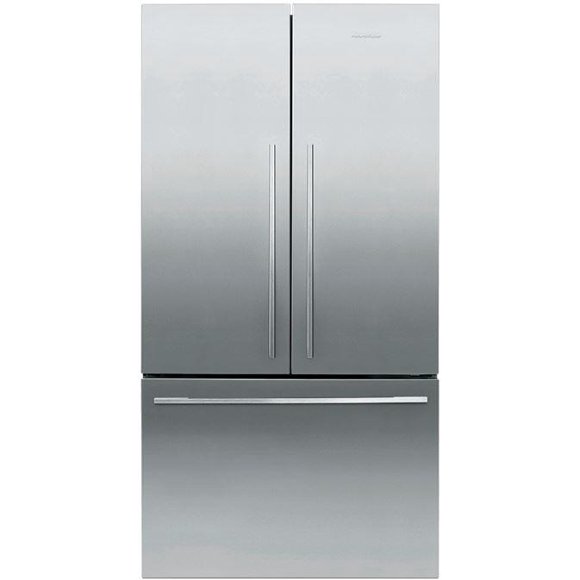
How to Measure for a 20 Cubic Foot Refrigerator
Use a tape measure and record the smallest measurement at each point. Do not rely on an old appliance’s size unless the new model has the same design.
Measurement checklist
- Measure the opening width at the top, middle, and bottom.
- Measure the opening height on the left, center, and right.
- Measure the depth from the back wall to the front edge of the cabinets.
- Measure the path from the delivery entrance to the kitchen.
- Check nearby walls and cabinets where the doors will swing.
- Add the manufacturer’s required clearances.
- Confirm the product’s width at its widest point.
- Confirm whether the depth includes handles and doors.
- Check the location of the electrical outlet.
- Check whether a water connection is required.
The smallest measurement controls the decision. A single narrow spot can prevent installation even when the main opening seems large enough.
Example measurement
Suppose your opening is:
- 32 inches wide
- 68 inches high
- 34 inches deep
A refrigerator that measures 31.5 inches wide, 67 inches high, and 33 inches deep may still not fit if the manufacturer requires more clearance or if the doors need extra swing space. The installation guide must confirm the final fit.

What Fits Inside a 20 Cubic Foot Refrigerator?
A 20 cubic foot refrigerator can hold a normal weekly grocery load, but organization makes a major difference. Air must circulate around food, and shelves cannot safely hold items that exceed their weight limits.
A practical layout may include:
- Upper shelves for ready-to-eat food and leftovers
- Lower shelves for raw meat in sealed containers
- Crisper drawers for produce
- Door bins for items that tolerate temperature changes
- Freezer shelves for small packages
- Freezer drawers or bins for larger frozen foods
Do not pack the refrigerator so tightly that cold air cannot move. The U.S. Food and Drug Administration recommends keeping the refrigerator at 40°F or below and the freezer at 0°F. Use an appliance thermometer if you need to verify the actual temperature.
The door is usually the warmest part of the refrigerator. Store items that need the most stable temperature on interior shelves instead of relying on the door bins.
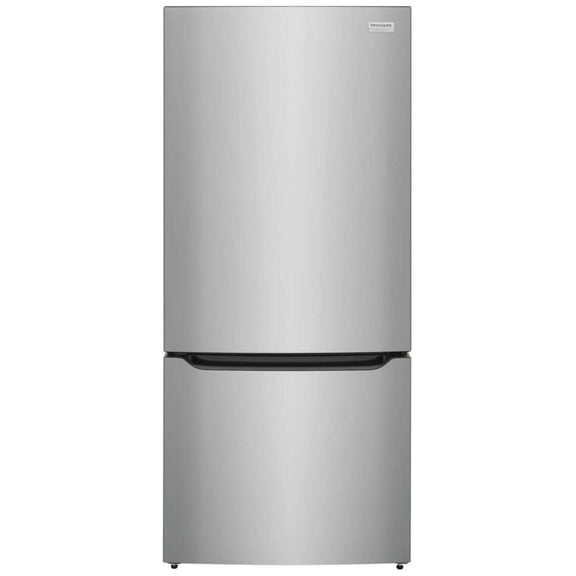
Common Mistakes When Buying a 20 Cubic Foot Refrigerator
The most common mistake is treating the capacity number as the complete size measurement. Capacity tells you about interior volume, not the space the appliance will occupy.
Avoid these errors:
- Measuring only the cabinet opening
- Ignoring door and handle depth
- Forgetting top hinges
- Skipping the delivery path
- Assuming every 20 cubic foot model has the same dimensions
- Treating advertised capacity as usable shelf space
- Forgetting freezer capacity
- Overlooking water-line or electrical requirements
- Ignoring door-swing direction
- Failing to check the installation manual
Another common mistake is choosing a refrigerator that fits the opening but blocks a nearby drawer, wall, or walkway. Open the doors on the specification drawing and check the full swing before ordering.

Quick Buying Checklist
Before buying a 20 cubic foot refrigerator, confirm all of the following:
- Capacity: About 20 cubic feet total
- Width: Fits the opening with required side clearance
- Height: Fits below cabinets, trim, or soffits
- Depth: Fits without blocking a walkway
- Door swing: Opens far enough for drawers and shelves
- Freezer size: Matches your frozen-food needs
- Delivery route: Clear from the entrance to the kitchen
- Power: Outlet location and voltage match the model
- Water supply: Required only if the ice maker or dispenser needs it
- Manual: Installation instructions reviewed before purchase
- Temperature: Refrigerator can maintain 40°F or below and freezer 0°F
The safest next step is to compare your measurements with the exact manufacturer specification sheet, not a general size chart.

Frequently Asked Questions
Is a 20 cubic foot refrigerator considered full size?
Yes. A 20 cubic foot refrigerator is generally a full-size household refrigerator, although it is smaller than many large French-door models. It commonly suits one to four people, depending on shopping and storage habits.
How many people can a 20 cubic foot refrigerator serve?
It can often serve two to four people. The right size depends on how often you shop, how much food you freeze, and whether you buy large packages.
Is 20 cubic feet enough for a family of four?
It can be enough for a family of four that shops weekly and does not store large amounts of frozen food. A larger refrigerator may be better if you buy in bulk, prepare many meals ahead, or need more freezer space.
How many inches wide is a 20 cubic foot refrigerator?
Many models are about 30 to 33 inches wide. Always confirm the exact width because some 20 cubic foot refrigerators are wider, especially French-door and side-by-side models.
Does a 20 cubic foot refrigerator fit in a 30-inch opening?
Some models may fit, but only if their actual width and required clearance allow it. A model listed as 30 inches wide may not fit a 30-inch opening once installation tolerances, hinges, and door movement are considered.
What is the difference between standard-depth and counter-depth?
Standard-depth refrigerators usually extend farther past the kitchen counters but may provide more interior space. Counter-depth models sit closer to the cabinets, but they may have less capacity or shallower shelves.
Final Answer
A 20 cubic foot refrigerator is usually about 30–33 inches wide, 66–70 inches tall, and 30–34 inches deep, excluding some handles and required installation space. It provides about 566 liters of total interior capacity and often works well for a household of two to four people.
The exact model matters more than the capacity label. Measure the kitchen opening, the delivery path, door swing, and required clearances before you order.

Appliance Review Expert
Lucas Ramirez is a trusted voice at HomeFixGrid.com, known for his clear, practical, and creatively written guides that simplify appliance care for everyday homeowners. With a strong focus on hands-on testing and real-world problem-solving, Lucas brings expert insight into appliance reviews and troubleshooting techniques. Her work empowers readers to confidently maintain, repair, and choose the right appliances for their homes.