Why Is My Refrigerator Not Cold Enough: Quick Fixes
A refrigerator that is not cold enough may have a simple cause, such as a blocked air vent, a dirty condenser coil, or a door that does not seal. It may also have a failed fan, thermostat, start relay, or sealed cooling system.
For food safety in the United States, the refrigerator should stay at 40°F or below, and the freezer should stay at 0°F. Use a separate appliance thermometer to check the temperature. The built-in display may show the set temperature rather than the actual temperature inside the food compartment.
Start with the safest, easiest checks. Confirm the temperature, inspect the door seal, improve airflow, and clean accessible dust. If the refrigerator remains above 40°F, protect the food and arrange service.
How cold should a refrigerator be?
A refrigerator should be 40°F or colder, according to the U.S. Food and Drug Administration. A setting near 37°F gives the appliance some room for normal temperature changes when the door opens.
The freezer should stay at 0°F. These targets apply to common household refrigerators in the United States.
A refrigerator can feel cool while still being too warm for safe food storage. Your hand is not a reliable thermometer. Place an appliance thermometer in the center of the refrigerator, not in the door, and leave it there for several hours before checking it.
Temperature targets
| Area | Recommended temperature |
|---|---|
| Refrigerator | 40°F or below |
| Common refrigerator setting | About 37°F |
| Freezer | 0°F |
| Food safety danger point | Above 40°F for too long |
The FDA says perishable food should not remain above 40°F for more than 2 hours. If the air temperature is above 90°F, such as during a hot summer day or power outage, the limit is 1 hour. When in doubt about meat, poultry, seafood, eggs, dairy, or leftovers, discard the food rather than taste-testing it.

Why is my refrigerator not cold enough?
The most common reasons are poor airflow, a door seal problem, dirty condenser coils, incorrect settings, heavy frost, or a failed cooling part.
Use the freezer temperature as a clue:
| What you notice | Likely causes |
|---|---|
| Refrigerator warm and freezer warm | Power issue, control problem, compressor, start relay, or sealed-system fault |
| Refrigerator warm but freezer cold | Evaporator fan, damper, airflow blockage, or control problem |
| Freezer cold but refrigerator has little airflow | Blocked vent, frozen evaporator, failed fan, or stuck damper |
| Both sections warm and the motor is silent | Power, thermostat, electronic control, or start-component problem |
| Refrigerator runs almost all the time | Dirty coils, poor door seal, hot room, blocked airflow, frost, or refrigerant-system fault |
| Food freezes in the refrigerator | Setting too cold, blocked air outlet, faulty sensor, or food placed against a cold wall |
| Water or ice appears inside | Clogged defrost drain, blocked ice maker line, or door-seal problem |
This table helps narrow the problem, but it cannot identify a failed part with certainty. Refrigerator designs differ by brand and model. Check the owner’s manual before removing covers or testing components.
What to check first
Work through these checks in order. They do not require opening the sealed refrigeration system.
1. Confirm that the refrigerator has power
Check whether the interior light, display, and control panel work. Make sure the power cord is fully inserted into the outlet.
If the outlet has a reset button, check whether it has tripped. Also inspect the home’s circuit breaker. Do not use an extension cord unless the manufacturer specifically permits it. Large appliances should normally use a properly grounded outlet.
If the refrigerator has no power, do not keep resetting a breaker that trips again. A repeated trip can signal an electrical fault. Contact a qualified appliance technician or electrician.
2. Check the temperature setting
Someone may have changed the setting while cleaning the control panel. Vacation mode, showroom mode, or a power-saving mode may also affect cooling on some models.
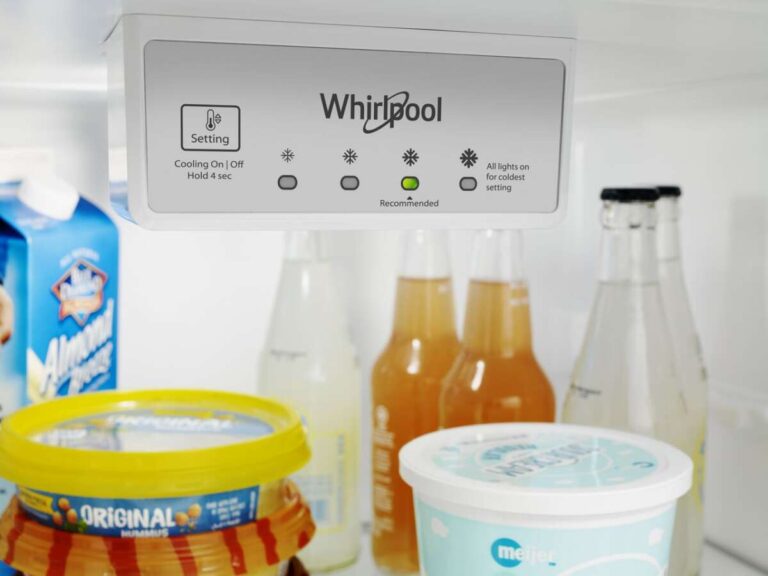
Set the refrigerator to the manufacturer’s recommended setting. Avoid turning the control to the coldest possible setting as a first fix. That may freeze food without solving the underlying problem.
After changing the setting, allow time for the temperature to stabilize. A refrigerator may need several hours, and a heavily loaded or recently opened appliance may need about 24 hours.
3. Look for blocked vents
Cold air often moves from the freezer into the refrigerator through vents. Food containers, bags, or large cartons can block those openings.
Move food away from the vents. Leave space between items so air can circulate. Do not pack the refrigerator so tightly that cold air cannot reach the center shelves.
A blocked vent can create two opposite symptoms: warm food in one area and frozen food near the air outlet.
4. Inspect the door gasket
The gasket is the flexible seal around the door. It should sit flat against the cabinet with no gaps, tears, or sections pulled loose.
Clean crumbs and sticky residue from the gasket and the surface it touches. Close the door on a sheet of paper. If the paper slides out with little resistance in several places, the seal may be weak.
Also check whether the refrigerator is level. A door that sits too low or does not close on its own can allow warm, moist air to enter. Remove heavy items from the door if they prevent it from closing fully.
5. Check the room and clearance
A refrigerator may struggle in a very hot room, near a stove, or in direct sunlight. Keep the cabinet away from heat sources and follow the clearance limits in the owner’s manual.
Do not push the appliance tightly against the wall if the manual requires space around it. The refrigerator must release heat from its condenser area. Poor clearance can increase run time and reduce cooling.
Could dirty coils make a refrigerator warm?
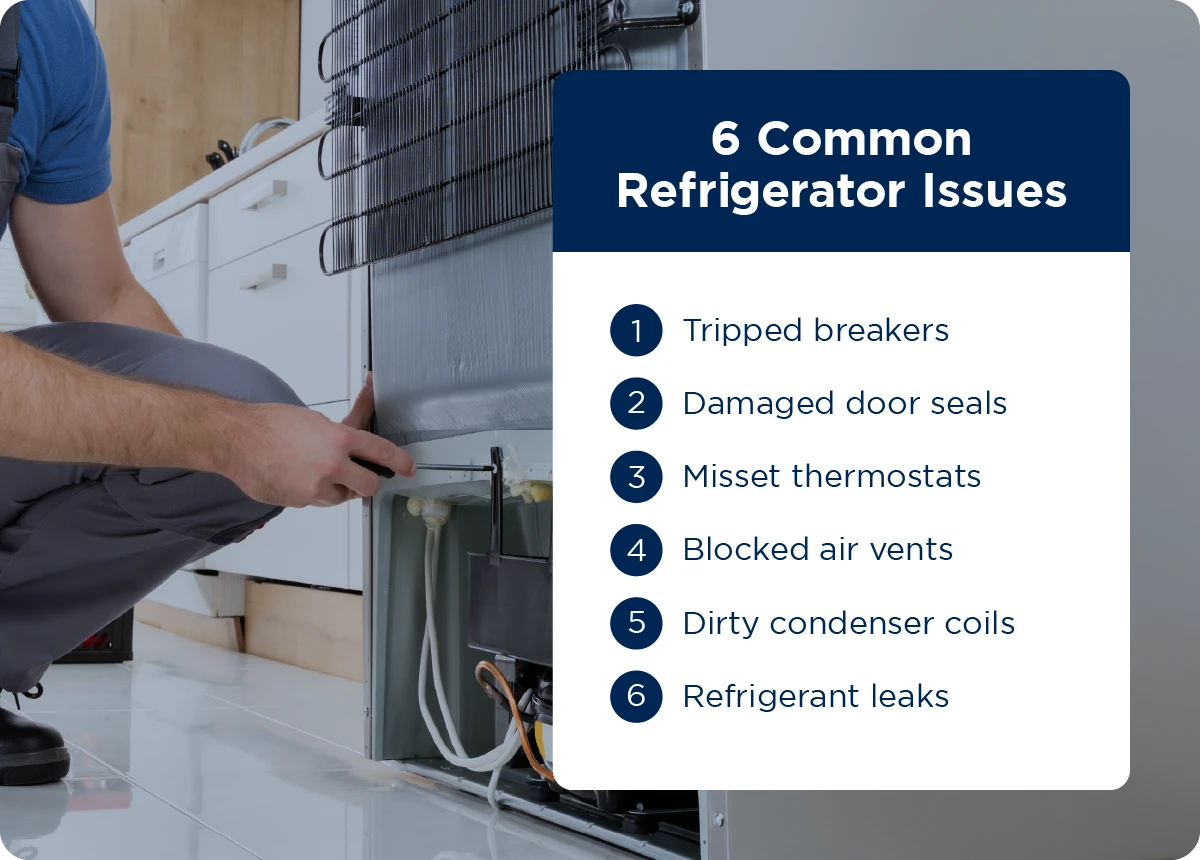
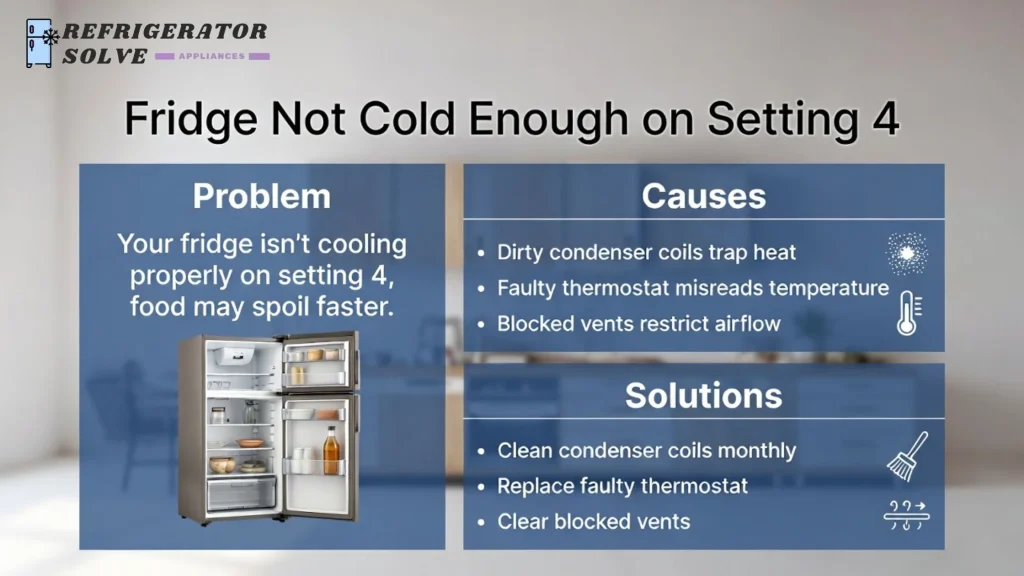
Yes. Dust on the condenser coils can reduce the refrigerator’s ability to release heat. The compressor may then run longer while the interior remains warmer than normal.
Coil location varies. Some refrigerators have coils behind a lower grille. Others place them underneath or at the back. Newer models may have covered coils that need little routine cleaning.
Before cleaning:
- Unplug the refrigerator or switch off the correct circuit.
- Keep fingers, tools, and clothing away from fans and moving parts.
- Use a refrigerator coil brush or a vacuum with a suitable attachment.
- Clean loose dust without bending tubing or damaging wiring.
- Replace the grille, restore power, and check the temperature later.
Do not spray water or household cleaner into the motor, fan, controls, or electrical parts. If you cannot reach the coils safely, follow the manual or call for service.
Coil cleaning may help when dust is the cause. It will not repair a failed compressor, fan motor, thermostat, or refrigerant leak.

What if there is frost or ice inside?
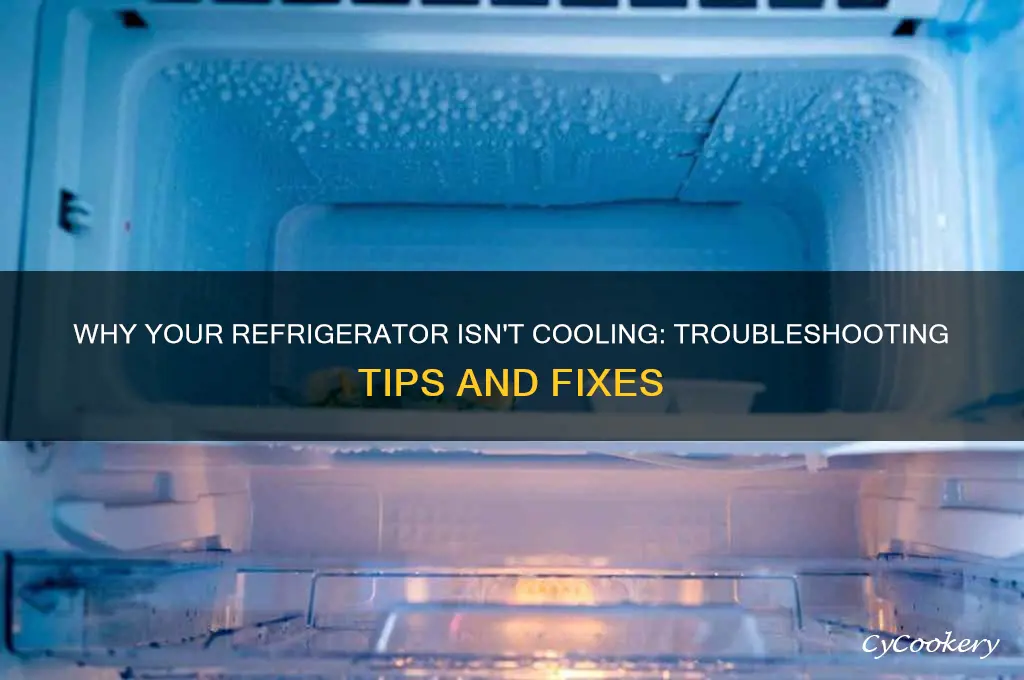
A thick layer of frost on the freezer’s rear wall can block airflow and signal a defrost problem. Common causes include a failed defrost heater, sensor, timer, control board, or a door that has been left open.
You may notice:
- A refrigerator section that is warm while the freezer still seems cold
- Little or no air coming from the refrigerator vents
- Heavy snow-like frost on the freezer’s back panel
- A fan sound that changes or stops
- Water after the ice melts
Do not chip ice with a knife or another sharp tool. You could puncture an evaporator coil, which can turn a small problem into a major repair.
If the owner’s manual allows a manual defrost, unplug the refrigerator and protect the floor from meltwater. Keep the doors open and let the ice melt naturally. Never use a hair dryer near standing water or plastic parts.
Manual defrosting may restore airflow for a short time, but repeated frost means the defrost system or door seal needs diagnosis. A service technician may need to test the heater, sensor, wiring, and control.
How do I tell if a fan or damper is failing?
Air movement can reveal where the problem is, but a quiet refrigerator does not always have a failed fan. Some fans stop when a door opens, and some models use different control patterns.
With the refrigerator running, listen for a fan or motor sound. On many models, pressing the door switch may allow the evaporator fan to run, but do this only if the manual permits it. Keep hands away from the fan.
You can also feel for cold air at the refrigerator vent. No airflow may point to:
- A frozen evaporator
- A blocked vent
- A failed evaporator fan
- A stuck air damper
- A control or sensor problem
The condenser fan, usually near the compressor, helps move heat away from the appliance. If it does not run when it should, the refrigerator may become hot and run constantly. Do not reach into the fan area while the unit has power.
Fan motors, dampers, and control boards often require model-specific diagnosis. Avoid replacing a part based only on a noise or a single symptom.

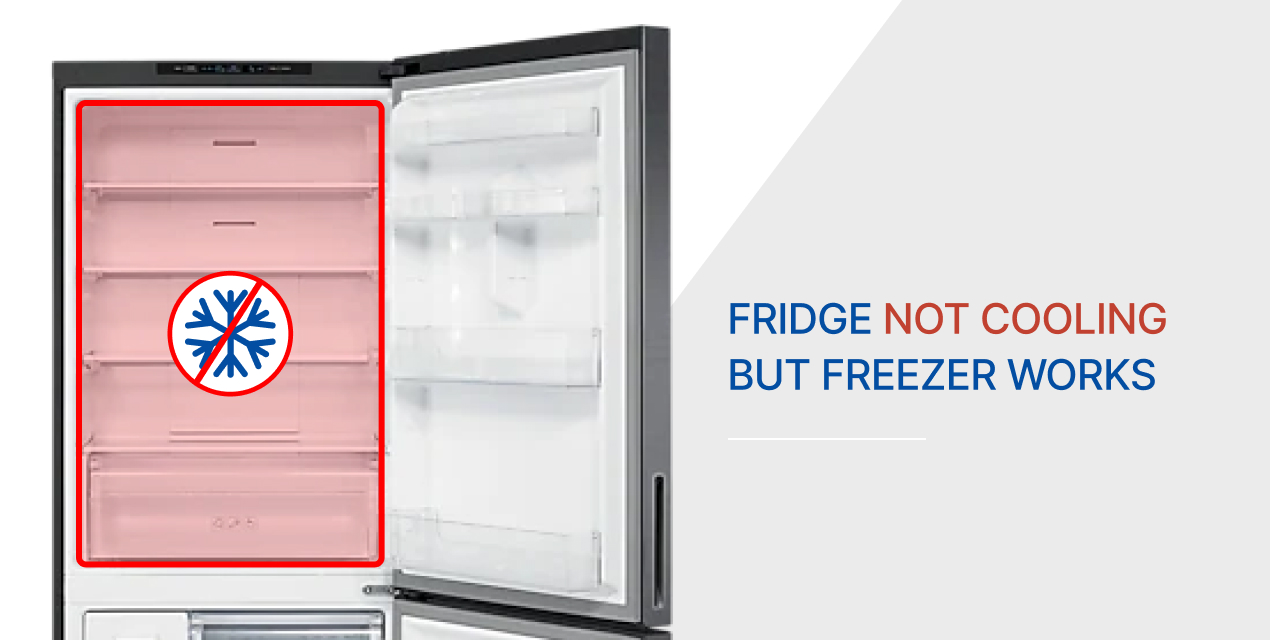
Why is my refrigerator warm but the freezer cold?
This pattern often points to an airflow problem. The freezer makes the cold air, and a fan or damper moves some of that air into the refrigerator compartment.
Check the following:
- Clear food from the refrigerator and freezer vents.
- Look for heavy frost on the freezer’s inner rear wall.
- Listen for the evaporator fan.
- Check whether the damper opening is blocked by ice or food.
- Confirm that the door seals close fully.
If the freezer is at 0°F but the refrigerator stays above 40°F, do not assume the compressor is the problem. The compressor may be working normally while air cannot move into the fresh-food section.
Some models use separate cooling systems. In those appliances, the same symptom can have a different cause. The model number and service manual matter.

Why is my refrigerator warm after a power outage or move?
A power outage can stop cooling long enough for food temperatures to rise. After power returns, the refrigerator may also need time to cool back down, especially if the doors were opened often.
Keep the doors closed as much as possible. Check the refrigerator temperature with an appliance thermometer. Follow FDA guidance for food that has been above 40°F too long.
After moving a refrigerator, the unit may need to stand upright before it runs. The exact wait time depends on how it was transported and the manufacturer’s instructions. If the refrigerator was laid on its side, do not guess. Check the manual or contact the manufacturer before powering it on.
A refrigerator that still does not cool after several hours may have a damaged fan, wiring issue, compressor problem, or sealed-system fault.

What food should you save or discard?
Food safety comes before repair. If the refrigerator has been above 40°F for an uncertain length of time, use the USDA Food Safety and Inspection Service guidance.
As a general rule:
- Discard perishable food left above 40°F for more than 2 hours.
- Use a 1-hour limit when the surrounding temperature is above 90°F.
- Do not rely on smell, appearance, or taste to prove that food is safe.
- Move food to a working refrigerator or a cooler with ice if possible.
- Keep the cooler at 40°F or below and limit how often it is opened.
Foods that commonly require caution include meat, poultry, seafood, eggs, milk, soft cheese, cooked leftovers, cut fruit, and prepared salads.
When the appliance is repaired, clean spills and check the temperature with a thermometer before restocking it fully.

When should I call a refrigerator repair technician?
Call for professional help when basic checks do not restore safe cooling, or when the repair involves electrical parts, refrigerant, or sealed-system components.
Arrange service if:
- The refrigerator stays above 40°F after the setting, airflow, seal, and coil checks.
- The compressor runs constantly but the cabinet remains warm.
- You hear repeated clicking, buzzing, or hard starting.
- A fan does not run when the model’s normal cycle calls for it.
- Frost returns soon after defrosting.
- You see oil-like residue near refrigeration tubing.
- The circuit breaker trips repeatedly.
- The compressor is extremely hot or the appliance smells burnt.
Do not puncture tubing, add refrigerant, bypass a safety switch, or remove electrical covers unless you are qualified and the manual specifically supports the work. Refrigerant and electrical repairs require the right tools and training.
Before booking service, record the brand, model number, symptom, temperature readings, unusual sounds, and recent events such as a move or power outage. This can shorten diagnosis time.
Common mistakes that make cooling worse
Several quick fixes can create new problems:
- Turning the control to the coldest setting: This may freeze food near the vent without fixing airflow.
- Packing the refrigerator tightly: Cold air cannot move through a crowded cabinet.
- Blocking the freezer vents: The refrigerator section may warm even while the freezer stays cold.
- Using a knife to remove frost: A sharp tool can damage the evaporator coil.
- Using a hair dryer near water: This creates an electric shock and fire risk.
- Ignoring the door gasket: A small gap can admit warm, moist air all day.
- Trusting the display alone: The display may show the set point, not the food temperature.
- Keeping unsafe food to avoid waste: Foodborne illness can cost more than replacing the food.
Frequently asked questions
How long does it take for a refrigerator to get cold?
A refrigerator may need several hours to recover after a large load, long door opening, or power interruption. Allow up to about 24 hours for full stabilization, depending on the model and conditions. Use a thermometer rather than judging by touch.
Can an empty refrigerator cause it to be too warm?
An empty refrigerator has less thermal mass, so its temperature can change faster when the door opens. However, an empty cabinet should still reach the correct temperature. Do not fill it tightly just to make it colder; maintain clear airflow.
Why is my refrigerator freezing food?
The setting may be too cold, food may be touching a cold wall or vent, or the temperature sensor or damper may be faulty. Move food away from vents, check the setting, and measure the temperature. If the refrigerator is below the target despite a normal setting, request service.
Is it safe to run a refrigerator after cleaning the coils?
Yes, after cleaning is complete and all tools, covers, and grilles are back in place. Unplug the appliance before cleaning accessible coils. Keep water and cleaning products away from electrical parts.
Should I repair or replace an older refrigerator?
The answer depends on the repair cost, appliance age, energy use, condition, and warranty. A simple gasket or fan repair may be worthwhile. A compressor or sealed-system repair can cost more and needs a model-specific estimate. Compare the repair quote with the cost of a properly sized, efficient replacement.
Conclusion
When a refrigerator is not cold enough, begin with a thermometer and the 40°F safety target. Then check power, settings, vents, the door seal, room clearance, and accessible condenser dust.
If the freezer is cold but the refrigerator is warm, focus on airflow, frost, fans, and the damper. If both sections are warm, or the unit clicks, trips a breaker, or runs constantly, professional diagnosis is safer.
Protect perishable food first. If simple checks do not bring the refrigerator back to 40°F or below, stop guessing and schedule qualified service.

Appliance Review Expert
Lucas Ramirez is a trusted voice at HomeFixGrid.com, known for his clear, practical, and creatively written guides that simplify appliance care for everyday homeowners. With a strong focus on hands-on testing and real-world problem-solving, Lucas brings expert insight into appliance reviews and troubleshooting techniques. Her work empowers readers to confidently maintain, repair, and choose the right appliances for their homes.