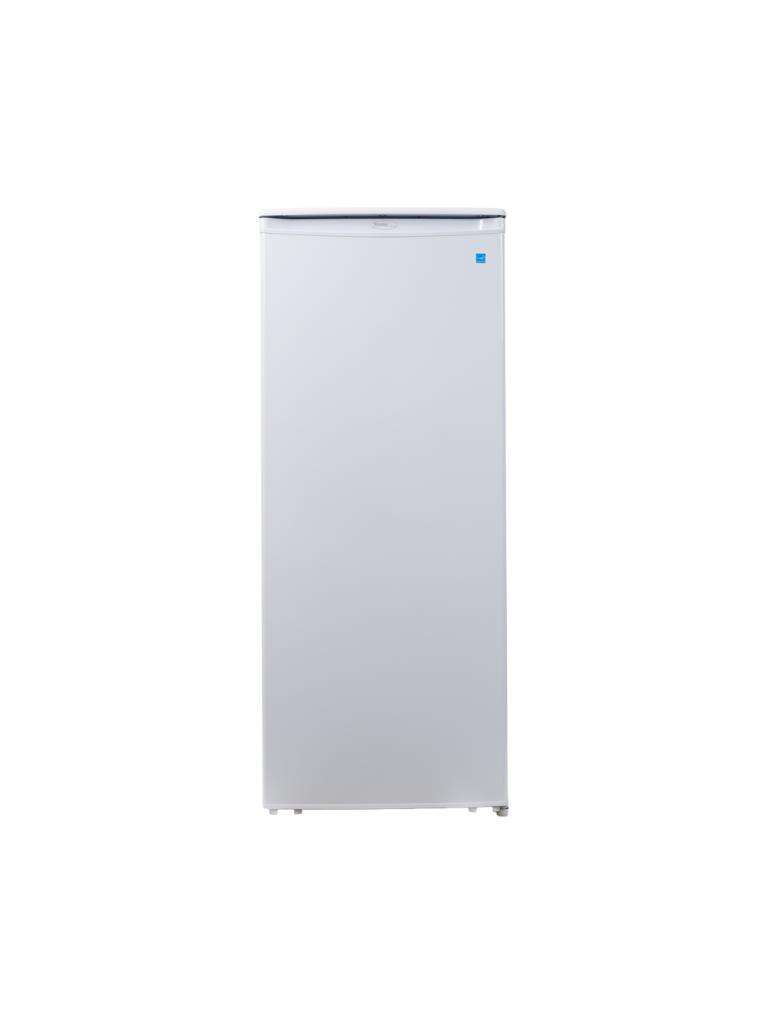
How Tall Is A Normal Refrigerator: Standard Height Guide
A normal full-size refrigerator in the United States is usually 65 to 70 inches tall. Most common models measure about 68 inches high, but the exact height depends on the style.
A top-freezer refrigerator may be shorter than a French-door model. A built-in refrigerator may be taller. Always check the full product dimensions before you buy, and allow extra space above the unit for hinges, airflow, and installation.

Standard Refrigerator Heights by Type
The refrigerator style has the biggest effect on height. The table below shows common height ranges for full-size models sold in the U.S.
| Refrigerator type | Common height range | Typical width |
|---|---|---|
| Top-freezer | 60–69 inches | 28–33 inches |
| Bottom-freezer | 67–70 inches | 29–33 inches |
| French-door | 67–70 inches | 30–36 inches |
| Side-by-side | 65–71 inches | 30–36 inches |
| Counter-depth | 67–71 inches | 30–36 inches |
| Built-in | 80–84 inches | 36–48 inches |
| Compact refrigerator | 20–36 inches | 18–24 inches |
| Undercounter refrigerator | 32–35 inches | 23–24 inches |
These are practical ranges, not fixed industry standards. A specific refrigerator may fall outside them.
Top-freezer refrigerators
Top-freezer models often stand 60 to 69 inches tall. They are commonly shorter than French-door refrigerators, which can make them a good fit beneath low cabinets.
Their freezer sits above the fresh-food section. This design often provides a large amount of usable space for its overall size.
Bottom-freezer refrigerators
Bottom-freezer refrigerators are often 67 to 70 inches tall. The freezer is placed below the refrigerator compartment, so the main food section sits higher.
This style can be easier to use if you want daily foods near eye level. Its taller cabinet may not fit under older or low kitchen cabinets.
French-door refrigerators
French-door refrigerators commonly measure 67 to 70 inches high. Some models are taller when you include the top hinge or door cover.
They usually have two fresh-food doors above a lower freezer drawer. Door width and clearance matter as much as height, especially in a narrow kitchen.
Side-by-side refrigerators
Side-by-side models are often 65 to 71 inches tall. Their freezer and refrigerator sections run from top to bottom.
They may fit some spaces that are too narrow for wide French-door doors. However, each compartment is usually narrower, which can limit storage for wide trays and pizza boxes.
Compact and undercounter refrigerators
A compact refrigerator may be 20 to 36 inches tall. An undercounter model is usually close to 34 inches high, so it can align with a standard kitchen counter.
Compact units vary more than full-size refrigerators. Measure the intended space instead of relying on a general range.

What Does “Refrigerator Height” Include?
“Refrigerator height” can mean the cabinet height, the height with the doors, or the maximum height with the hinge. These measurements are not always the same.
A specification sheet may list:
- Case height: The height of the refrigerator cabinet.
- Height without hinge: The cabinet and doors, excluding the top hinge.
- Height with hinge: The highest point when the hinge cover is included.
- Height with leveling legs: The full installed height after adjustment.
- Height with doors open: The space needed for the doors or freezer drawer to operate.
For installation, use the maximum height listed by the manufacturer. If the specifications show both “height to top of case” and “height to top of door,” use the larger number when checking the opening.
A refrigerator that is 68 inches tall at the cabinet may need more than 69 inches of vertical space after the hinge and leveling legs are included.

How Much Space Should You Leave Above a Refrigerator?
Most refrigerators need some space above the unit, but the exact requirement depends on the model. Many manufacturers call for a small clearance at the top, while others allow a nearly enclosed fit.
Check the installation guide for the exact model. As a general planning rule, leaving at least 1 inch above the highest part gives you a useful starting point, but it does not replace the manufacturer’s instructions.
Extra space may be needed for:
- Top hinges
- Door adjustment
– Air movement - Leveling the refrigerator
- Removing the refrigerator later
- Cabinets that extend over the opening
Do not assume that an empty space above the refrigerator is only decorative. A tight opening can make installation harder and may prevent the doors from opening fully.
Can a refrigerator touch the cabinet above it?
Some models are designed for close cabinet installation. Others need more space around the top, sides, or back.
The answer depends on the refrigerator’s installation instructions. A cabinet that touches the hinge or blocks the door can cause poor operation, scratches, or difficulty removing the unit.

How to Measure for a New Refrigerator
Measure the opening before you compare refrigerator models. A product that fits the height may still fail because it is too wide, too deep, or unable to open inside the space.
1. Measure the opening height
Use a tape measure to check the distance from the floor to the lowest point of the cabinet above.
Measure at the:
- Left side
- Center
- Right side
Older floors and cabinets may not be level. Use the shortest measurement as your maximum available height.
2. Measure the width
Measure the opening at the top, middle, and bottom. Use the narrowest measurement.
Leave room for the manufacturer’s required side clearance. Some refrigerators also need space beside the hinges so the doors can open without hitting the wall.
3. Measure the depth
Measure from the back wall to the front edge of the counter or cabinets. Check for baseboards, outlets, water lines, and gas or heating vents.
Compare this space with both the refrigerator cabinet depth and the total depth with doors and handles.
4. Check the delivery path
Measure every part of the route, including:
- Exterior doors
- Hallways
- Doorways
- Stairways
- Elevator doors
- Tight turns
A refrigerator can fit the kitchen opening but fail to fit through the front door.
5. Read the installation guide
Use the manufacturer’s installation dimensions rather than the rounded dimensions on a store page. Look for the required clearance at the top, sides, and rear.

How Tall Should a Refrigerator Be for Standard Cabinets?
A typical U.S. kitchen has cabinets and counters built around common dimensions, but refrigerator openings are not fully standardized. Many openings are planned for a refrigerator around 68 to 70 inches tall, yet the available height can vary by home.
Older homes may have lower cabinets or uneven floors. A cabinet above the refrigerator may also reduce the opening by several inches.
For a space with a low upper cabinet, a top-freezer refrigerator may fit better than a French-door or bottom-freezer model. For a wide, open space, a taller model may offer more storage, but only if the installation clearance works.
Do not measure the old refrigerator alone. A new model may have a taller hinge, adjustable feet, or a different door design.

Refrigerator Height: Cabinet Depth vs. Counter Depth
Counter-depth refrigerators are not always shorter than standard-depth refrigerators. “Counter-depth” mainly describes how far the refrigerator extends into the kitchen, not how tall it is.
A counter-depth model may still be about 67 to 71 inches high. Its cabinet is usually shallower, while the doors and handles may extend beyond the counter.
The main trade-off is:
- Standard depth: More interior storage, but the refrigerator may project farther into the room.
- Counter depth: A more aligned appearance, but often less cabinet depth and storage space.
- Built-in: A taller, more integrated design, but it usually requires a special opening and a larger budget.
Choose the height based on the opening first. Then compare depth, width, storage, and door clearance.

What If Your Refrigerator Is Too Tall?
If a refrigerator is too tall for the opening, do not force it into place. The hinge may press against the cabinet, the doors may not align, and the unit may be difficult to remove.
Possible solutions include:
- Choose a shorter refrigerator.
- Remove a removable cabinet trim piece, if the cabinet design allows it.
- Adjust the refrigerator’s leveling feet, but only within the range stated by the manufacturer.
- Have a qualified cabinet professional modify the opening.
- Consider a counter-depth or top-freezer model with a lower height.
Do not cut cabinets or alter walls around wiring, plumbing, or structural parts without checking what is behind them. If the refrigerator opening is part of a built-in cabinet system, a cabinet professional can confirm what may be changed safely.

What If the Refrigerator Fits but the Doors Do Not Open?
Height is only one part of a successful installation. A refrigerator can fit under the cabinet and still fail if the doors hit a wall or cannot open far enough.
Check the manufacturer’s required door-opening space. You may need extra room for:
- Opening crisper drawers
- Removing refrigerator shelves
- Pulling out a freezer drawer
- Opening both French doors
- Accessing a water filter
- Cleaning behind the unit
A wall beside the refrigerator is a common problem. The door may need to swing beyond the front edge of the cabinet before the drawers can open.

Refrigerator Height Examples
The following examples show how to compare a refrigerator with an opening.
Example 1: A 68-inch refrigerator
Suppose the opening measures 69 inches at its shortest point. The refrigerator’s listed height with hinge is 68⅝ inches.
That leaves only ⅜ inch of space. The model may fit, but there may not be enough room to level it or adjust the doors. Check the installation guide before treating this as a safe fit.
Example 2: A 70-inch refrigerator
Suppose the opening measures 70 inches, but the refrigerator’s maximum height is 70¼ inches.
It does not fit as listed. Do not rely on removing the leveling feet unless the manufacturer specifically permits that method. A shorter model is usually the safer choice.
Example 3: Uneven flooring
Suppose the left side of the opening measures 69½ inches and the right side measures 70 inches. Use 69½ inches as the available height.
The refrigerator must fit at the lowest point. A level floor or a cabinet adjustment may be needed if the available height is too close.

Common Mistakes When Measuring Refrigerator Height
The most common mistake is measuring only the refrigerator cabinet and ignoring the hinge. Other errors can cause problems even when the height measurement looks correct.
Avoid these mistakes:
- Measuring only one point in the opening
- Ignoring adjustable leveling feet
- Forgetting the top hinge
- Measuring the old refrigerator instead of the opening
- Treating a rounded store dimension as exact
- Forgetting baseboards or floor trim
- Ignoring the delivery path
- Assuming counter-depth means shorter
- Failing to check door swing
- Leaving no space for service or removal
Write down the opening’s smallest height, width, and depth. Then compare those numbers with the manufacturer’s full installation dimensions.

Key Takeaways
- A normal full-size refrigerator in the U.S. is usually 65 to 70 inches tall.
- About 68 inches is a common height for many household models.
- Top-freezer models are often shorter than French-door and bottom-freezer models.
- Built-in refrigerators can be much taller, often around 80 to 84 inches.
- Compact refrigerators may be only 20 to 36 inches tall.
- Measure the opening at several points.
- Use the model’s maximum height, including the hinge and leveling feet.
- Check door clearance, rear clearance, and the delivery path before ordering.
Frequently Asked Questions
Is 70 inches tall for a refrigerator?
No. A 70-inch refrigerator is tall but still common for many French-door, bottom-freezer, and counter-depth models. It may not fit under a low cabinet, so measure the opening first.
How tall is a refrigerator without the hinge?
The cabinet height without the hinge varies by model. Many full-size refrigerators are roughly 65 to 69 inches without the top hinge, but you must use the manufacturer’s exact specification.
How tall is a standard refrigerator with the doors?
The door height is usually close to the cabinet height. The hinge cover or other top parts may extend higher. Check the listed “height with hinge” or “maximum height” for the correct installation measurement.
Will a 68-inch refrigerator fit in a 68-inch opening?
It may not. The listed height may exclude the hinge, leveling feet, or required clearance. A true 68-inch opening leaves no practical adjustment room for a refrigerator that reaches 68 inches.
What refrigerator is best for a low opening?
A top-freezer refrigerator is often the easiest full-size option for a low opening because many models are shorter. Compact and undercounter models may work for smaller storage needs. Always compare the exact dimensions.
Do refrigerators need space above them?
Many do, but the required amount varies. Follow the manufacturer’s installation guide. Space may be needed for airflow, hinge movement, leveling, and future removal.
Conclusion
A normal refrigerator in an American home is usually about 65 to 70 inches tall, with 68 inches being a useful planning estimate. The style, hinge design, leveling feet, and installation requirements can change the final measurement.
Before buying, measure the opening at its shortest point and compare it with the refrigerator’s maximum listed height. Then check width, depth, door swing, ventilation, and the delivery route. That simple check can prevent an expensive refrigerator from becoming a return or remodeling problem.

Appliance Review Expert
Lucas Ramirez is a trusted voice at HomeFixGrid.com, known for his clear, practical, and creatively written guides that simplify appliance care for everyday homeowners. With a strong focus on hands-on testing and real-world problem-solving, Lucas brings expert insight into appliance reviews and troubleshooting techniques. Her work empowers readers to confidently maintain, repair, and choose the right appliances for their homes.