How To Check Temperature Of Fridge: Easy Guide
For households in the United States, the safest refrigerator temperature is 40°F (4°C) or below. The freezer should stay at 0°F (-18°C). The most reliable way to check your fridge is to place an appliance thermometer inside, wait long enough for a stable reading, and then adjust the temperature control if needed.
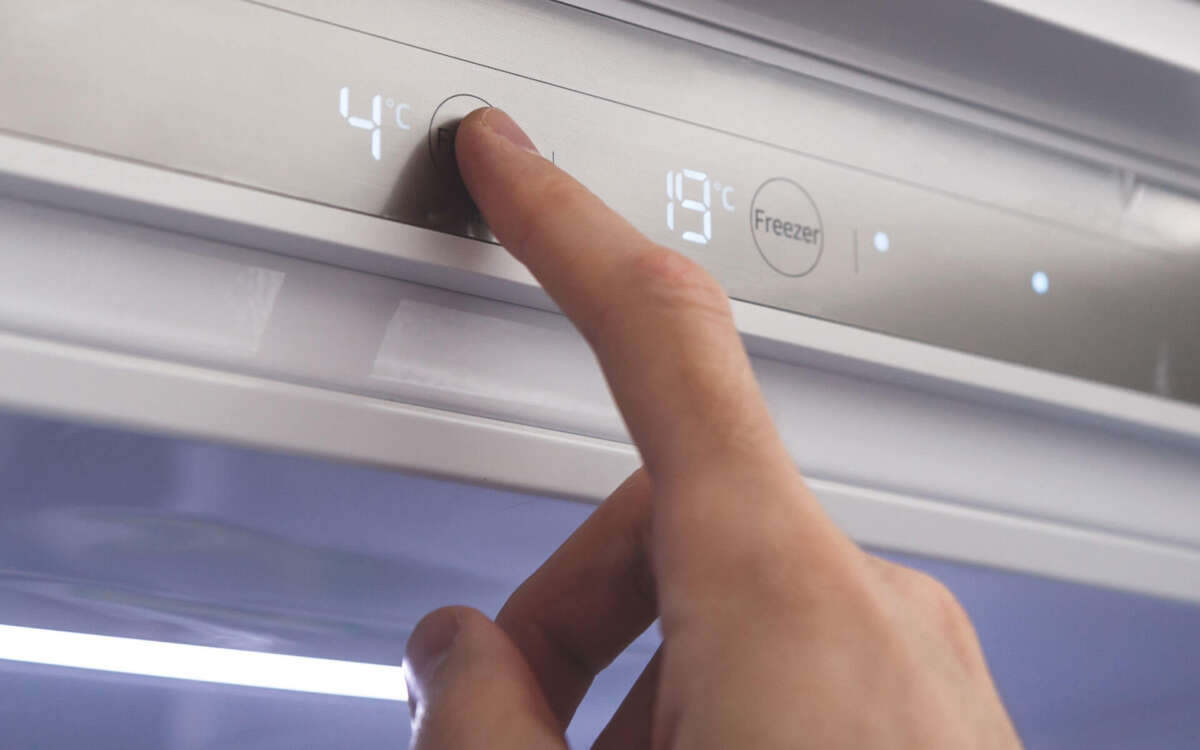
Your fridge may display a number or have a dial marked from 1 to 5. Those settings do not always show the actual temperature. A separate refrigerator thermometer gives you a much clearer answer.

What temperature should a refrigerator be?
A refrigerator should stay at 40°F or below, according to the U.S. Department of Agriculture. Keeping food colder than 40°F slows the growth of bacteria that can cause foodborne illness.
A good household target is 37°F. This gives you a small safety buffer without making most foods so cold that they freeze.
Use these temperature targets:
| Appliance | Recommended temperature |
|---|---|
| Refrigerator | 40°F or below |
| Practical fridge target | About 37°F |
| Freezer | 0°F |
| Cold-water ice mixture | About 32°F at sea level |
The “danger zone” for perishable food is generally 40°F to 140°F. Food can become unsafe if it stays in this range for too long. The refrigerator does not need to reach freezing temperature, and setting it too cold may freeze lettuce, milk, eggs, or food near the back wall.
A fridge thermometer checks the air around your food. Food itself can have a different temperature, especially after you place warm leftovers inside. That is why the reading may change after loading the refrigerator.

What you need to check the fridge temperature
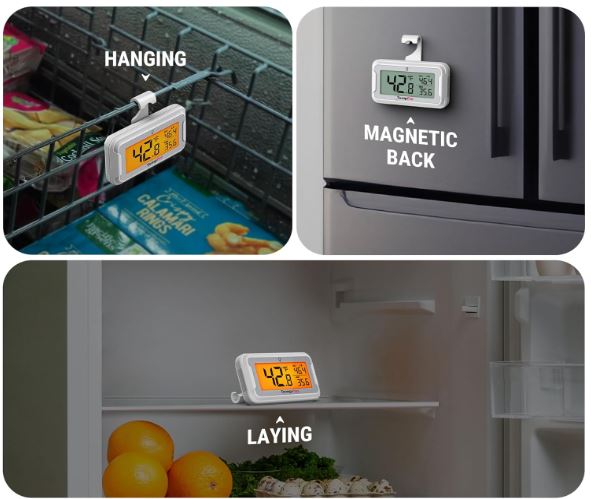
You need a refrigerator or appliance thermometer. Choose one that is easy to read and designed for temperatures below room temperature.
You may use:
- A dial refrigerator thermometer
- A digital appliance thermometer
- A wireless thermometer with a probe
- A built-in temperature display, used as a guide rather than the only test
A thermometer made for an oven may not be accurate at refrigerator temperatures. A regular indoor room thermometer may also give an unreliable reading.
Before testing, check that:
- The refrigerator has power.
- The door closes fully.
- The fridge is not unusually empty or packed tight.
- The temperature control has not just been changed.
- The thermometer is clean and working.
- The refrigerator has been running for several hours.
If you have a digital thermometer, replace weak batteries before testing. A low battery can cause a blank, delayed, or inaccurate display.
How to check the temperature of a fridge
Follow these steps for a useful reading.
1. Place the thermometer in the center of the fridge
Put the thermometer on a middle shelf. Keep it away from:
- The door
- The back wall
- The floor of the refrigerator
- The air vent
- Direct contact with food or the shelf
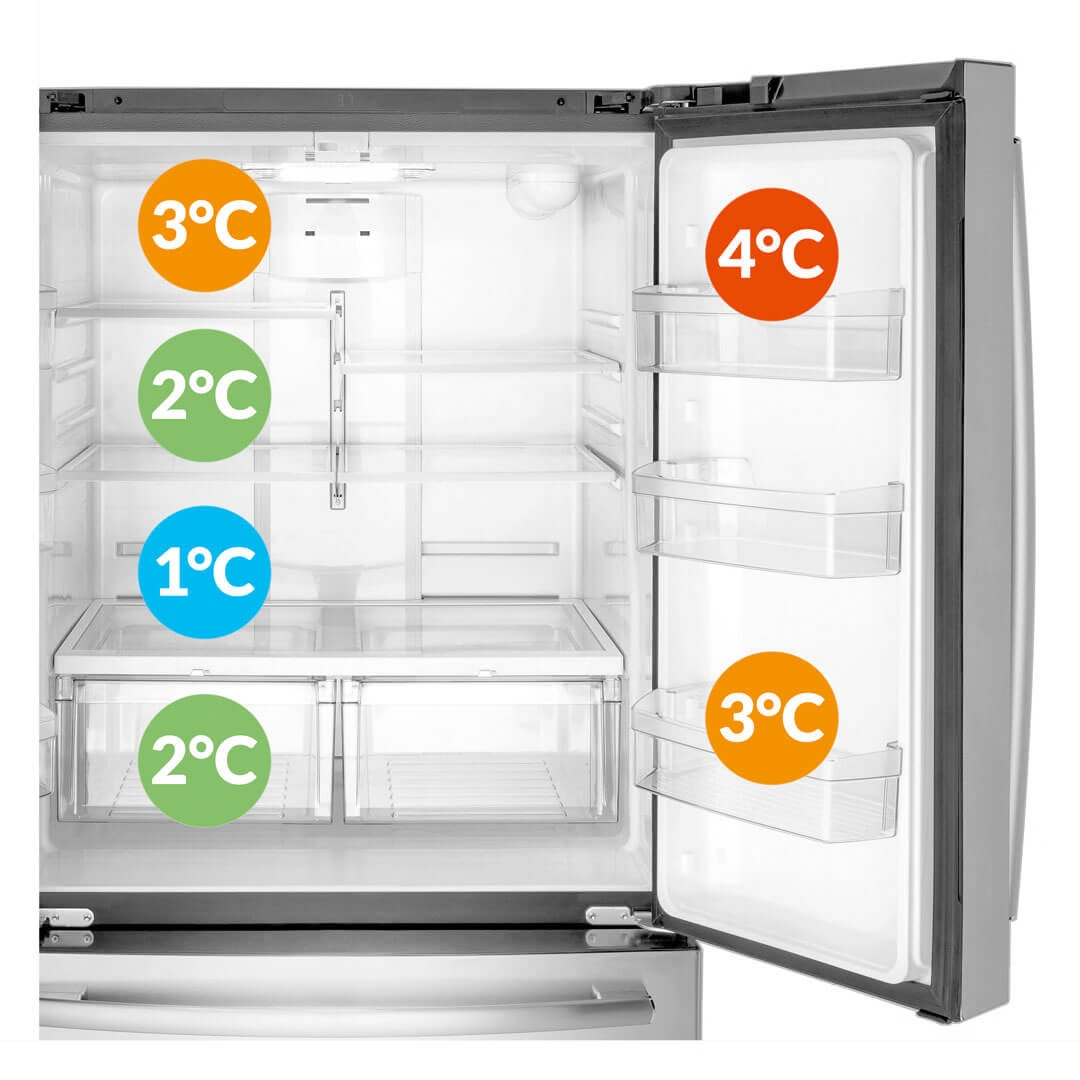
The door is often warmer because it is exposed to room air each time you open it. The back wall may be colder and can give a reading that does not represent most of the refrigerator.
2. Leave the door closed
Close the refrigerator door and avoid opening it during the test. frequent opening lets warm air in and makes the reading less useful.
Leave the thermometer in place for at least 8 hours. An overnight test is often more practical. Some thermometers reach a stable reading sooner, but a longer period helps account for the refrigerator’s cooling cycle.
3. Read the temperature
Check the thermometer without leaving the door open for long.
- 40°F or below: The temperature meets the basic food-safety target.
- About 37°F: The fridge has a useful cold buffer.
- Above 40°F: Adjust the refrigerator and test again.
- Below 32°F: Food may freeze, so the fridge may be set too cold or have an airflow problem.
Do not judge the temperature from one quick reading taken after opening the door. Refrigerators cycle on and off, so the temperature naturally rises and falls within a small range.
4. Adjust the control slowly
If the temperature is too warm, make a small adjustment. Wait about 24 hours before checking again unless the owner’s manual gives different instructions.
Some controls work in the opposite way people expect:
- A higher number may mean colder.
- A higher number may mean more cooling time.
- A digital control may show the set point, not the actual air temperature.
Read the label or manual before making a large change. Marking the original setting with a small piece of removable tape can help you return to it if needed.
5. Test again
Place the thermometer back in the same spot and repeat the test. The refrigerator is ready when it stays at or below 40°F without freezing food.
If the fridge remains warm after a full day, move to the troubleshooting steps below.
Where should you place a refrigerator thermometer?
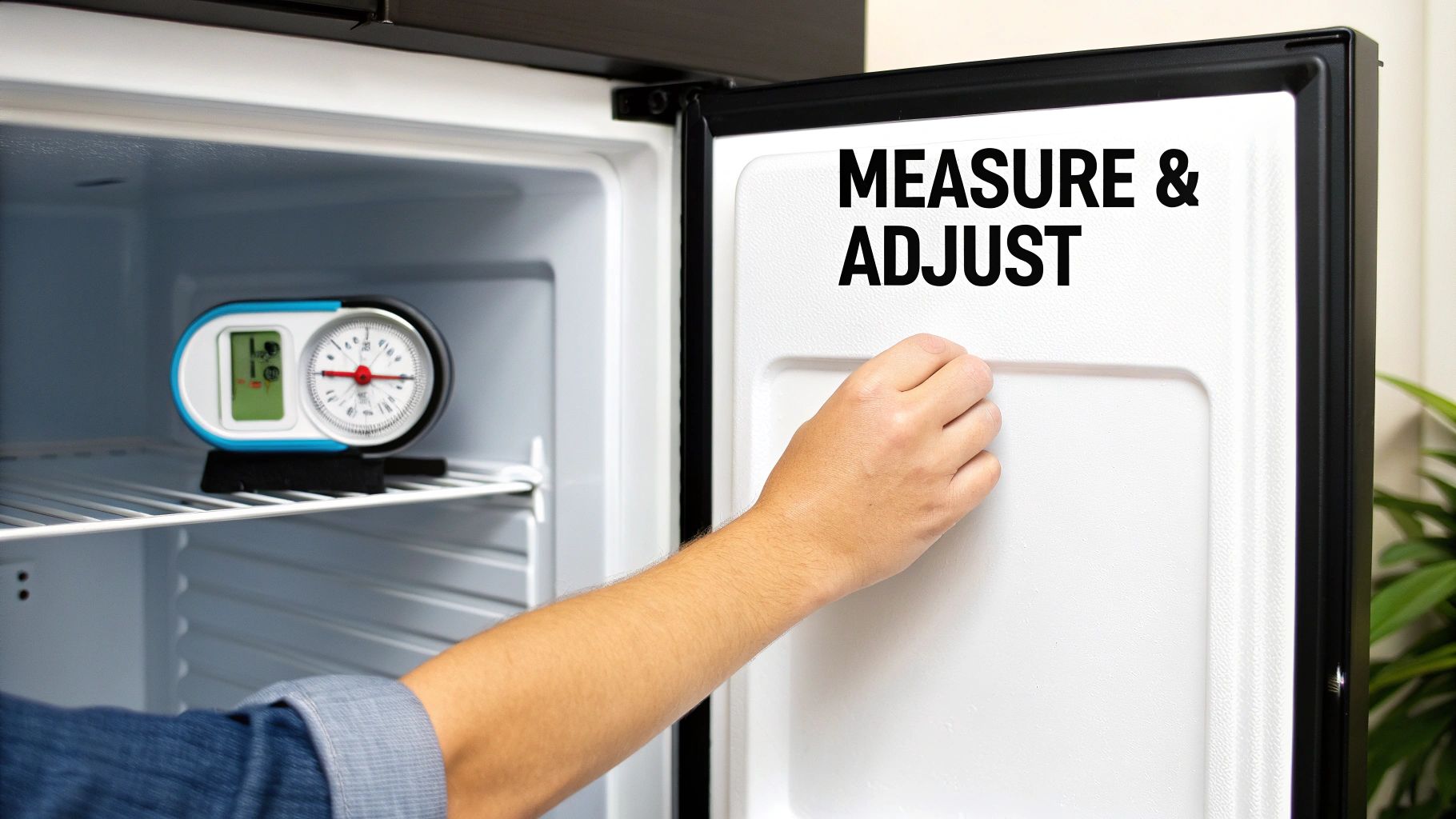
The best place is usually the middle shelf toward the center of the refrigerator. This location gives a more useful general reading than the door or back wall.
For a more complete check, use two thermometers:
- Place one in the middle of the refrigerator.
- Place another near the warmest area, often the door shelf.
- Compare the readings after several hours.
A large difference may point to poor airflow, overpacking, a damaged door seal, or a cooling problem.
You can also check specific foods with a clean food thermometer. This is useful for leftovers, prepared foods, or items you suspect may have become too warm. Food temperature can differ from air temperature, so use the food reading when deciding whether a particular item is safe.
Do not place a glass thermometer where it can break over food. Use a thermometer made for appliance or food use and follow its instructions.

How to check a fridge temperature without a thermometer
You cannot accurately confirm a refrigerator temperature by touch. Food may feel cold even when the fridge is warmer than 40°F.
You can use indirect signs to find a problem, but they are not a substitute for a thermometer. Warning signs include:
- Milk spoils sooner than expected.
- Meat or dairy products feel unusually warm.
- Condensation collects inside the refrigerator.
- The fridge runs almost constantly.
- Food freezes on several shelves.
- The temperature changes sharply from one day to the next.
Ice in a cup does not prove that the refrigerator is cold enough. A freezer that can make ice may still be too warm for long-term food storage.
If you do not have a thermometer, buy or borrow an appliance thermometer before relying on the fridge for perishable food. Until you confirm the temperature, be careful with meat, poultry, seafood, eggs, milk, cooked leftovers, and other foods that need refrigeration.

What to do if the refrigerator is too warm
If the thermometer reads above 40°F, first check the simple causes.
Check the door seal
Close the door on a sheet of paper. If the paper slides out with little resistance, the gasket may not seal well. Clean the seal with warm, soapy water and inspect it for cracks, gaps, or warping.
A bad seal lets warm room air enter. It can also make the compressor run more often.
Check the airflow
Do not block the vents with containers or bags. Cold air needs to move through the cabinet. Leave a little space between food and the back wall and avoid packing the shelves tightly.
Some refrigerators have separate cooling zones. Keep food in the areas recommended by the owner’s manual.
Check the location
A refrigerator may struggle if it sits:
- Next to a hot oven
- In direct sunlight
- In an unheated garage during extreme weather
- Too close to a wall
- Without enough space for ventilation
Follow the clearance requirements in the manual. Dust on condenser coils can also reduce cooling on some models, but unplug the appliance before cleaning accessible coils and follow the manufacturer’s safety instructions.
Check the contents
A nearly empty refrigerator may warm faster when the door opens. A packed refrigerator may block airflow. Store food so air can circulate, but do not leave large empty spaces if the manual recommends a fuller cabinet.
Never put a large amount of hot food into the fridge at once. Divide leftovers into shallow containers so they cool more quickly. The USDA advises refrigerating perishable food within two hours, or within one hour when the air temperature is above 90°F.
Check the temperature again
After making one change, close the door and wait several hours. For a major adjustment, wait about 24 hours. Changing many things at once makes it harder to identify the cause.
If the refrigerator stays above 40°F, food safety becomes the first concern. Perishable food that has been above 40°F for more than two hours may need to be discarded. When in doubt, consult the USDA FoodKeeper tool or discard the food.

What to do if the fridge is too cold
A refrigerator that reads below 32°F may freeze food. Start by lowering the cooling setting slightly, then wait and test again.
Also check whether food is touching:
- The back wall
- A cold-air vent
- The floor of the refrigerator
- A container of frozen food
Some locations are colder than the rest of the cabinet. Move sensitive foods, such as leafy greens and fresh produce, toward the center of the fridge.
If the temperature remains below freezing even after you adjust the control, the issue may involve a thermostat, damper, sensor, or control board. These parts vary by model. Check the owner’s manual before removing panels or attempting a repair.
Unplug the refrigerator before any cleaning or service that requires access to electrical parts. Do not bypass a safety device or work on sealed refrigeration components yourself.

How long does it take a refrigerator to reach the right temperature?
A refrigerator usually needs several hours to show a stable temperature after you first plug it in or make a large adjustment. A full cabinet may take longer than an empty one.
Use this general approach:
- After plugging in: Follow the manufacturer’s waiting time before adding perishable food.
- After a small setting change: Wait several hours, then recheck.
- After a large setting change: Wait about 24 hours.
- After adding warm food: Expect a temporary rise.
The most useful test is not the first reading. It is a stable reading taken after the refrigerator has had time to complete several cooling cycles.

Common mistakes when checking refrigerator temperature
Avoid these errors:
Checking only the display
A built-in display may show the set temperature, not the temperature at the shelf where food sits. Use an independent appliance thermometer when accuracy matters.
Measuring near the door
The door area warms each time you open the refrigerator. It does not represent the coldest or average area inside.
Checking too soon
A reading taken right after changing the dial may not reflect the final temperature.
Touching the back wall
The back wall can be colder than the rest of the cabinet. Food near it may freeze even when the middle shelf is at a safe temperature.
Assuming a cold feeling means safe food
Your hand cannot measure temperature accurately. Food can feel cold and still be warmer than 40°F.
Making large control changes
A large change can freeze food or make the temperature swing. Adjust gradually and retest.
Ignoring the freezer
Check the freezer separately. It should stay at 0°F for safe long-term storage and good food quality. A refrigerator can be cold enough while the freezer still has a problem, or the reverse.
Key takeaways
- Keep the refrigerator at 40°F or below.
- Aim for about 37°F to allow a small safety margin.
- Keep the freezer at 0°F.
- Use an appliance thermometer rather than relying on touch or a control dial.
- Place the thermometer on a middle shelf, away from the door, vents, and back wall.
- Leave the door closed during the test.
- Wait several hours, or overnight, for a stable reading.
- Adjust the setting gradually and retest after about 24 hours.
- Discard perishable food that has been above 40°F for too long.
Frequently asked questions
How often should I check my refrigerator temperature?
Check it at least once a month and whenever the refrigerator has lost power, been moved, made unusual noises, or shown signs of warming. Check more often if the appliance is old or the temperature changes often.
Is 42°F safe for a refrigerator?
The recommended refrigerator limit is 40°F or below. A brief reading of 42°F may occur during a cooling cycle or after the door opens, but a stable reading above 40°F needs attention. Check the temperature again after keeping the door closed.
Why is my fridge cold but my food is warm?
The thermometer may be in a colder area, or airflow may be blocked. Check the middle shelf, move the thermometer away from the back wall and vents, and make sure containers do not block air circulation.
Why does food freeze in my refrigerator?
Food may be touching the back wall or a cold-air vent. The temperature setting may also be too low, or a thermostat or airflow component may be malfunctioning. Move the food first, then check the temperature again.
Can I use a meat thermometer to check my refrigerator?
Some digital food thermometers can measure refrigerator temperatures, but they are less convenient for long-term monitoring. A refrigerator or appliance thermometer is usually better because it can remain inside for several hours.
What should I do if the fridge stays above 40°F?
Check the door seal, airflow, ventilation, condenser area, and temperature setting. Keep perishable food cold in another working refrigerator or a cooler with ice. If the appliance still will not hold 40°F or below, contact the manufacturer or a qualified appliance technician.
Conclusion
The simplest reliable method is to place an appliance thermometer on the middle shelf, keep the door closed, and check the reading after several hours. Keep the refrigerator at 40°F or below, with about 37°F as a practical target, and keep the freezer at 0°F.
If the temperature stays too warm or food keeps freezing after basic adjustments, stop relying on the appliance for perishable food and arrange a professional inspection. Small temperature checks can prevent food waste and reduce the risk of foodborne illness.
Sources
- USDA: Refrigeration and Food Safety
- FoodSafety.gov: Cold Food Storage Chart
- FDA: Refrigerator and Freezer Storage Chart
- USDA: Keep Food Safe During Power Outages

Appliance Review Expert
Lucas Ramirez is a trusted voice at HomeFixGrid.com, known for his clear, practical, and creatively written guides that simplify appliance care for everyday homeowners. With a strong focus on hands-on testing and real-world problem-solving, Lucas brings expert insight into appliance reviews and troubleshooting techniques. Her work empowers readers to confidently maintain, repair, and choose the right appliances for their homes.