How To Make Microwavable Tanghulu: Easy Recipe
Tanghulu is fruit covered in a thin, crisp shell of cooked sugar. You can make it in a U.S. home kitchen with a microwave, a microwave-safe glass cup, and a few simple ingredients. The key is to dry the fruit well and heat the sugar syrup until it reaches the hard-crack stage.
This microwave method works best for small batches. It is fast, but the syrup becomes extremely hot and can cause serious burns. Keep children and pets away, use heat-safe tools, and never touch the hot coating with your fingers.
What Is Tanghulu?
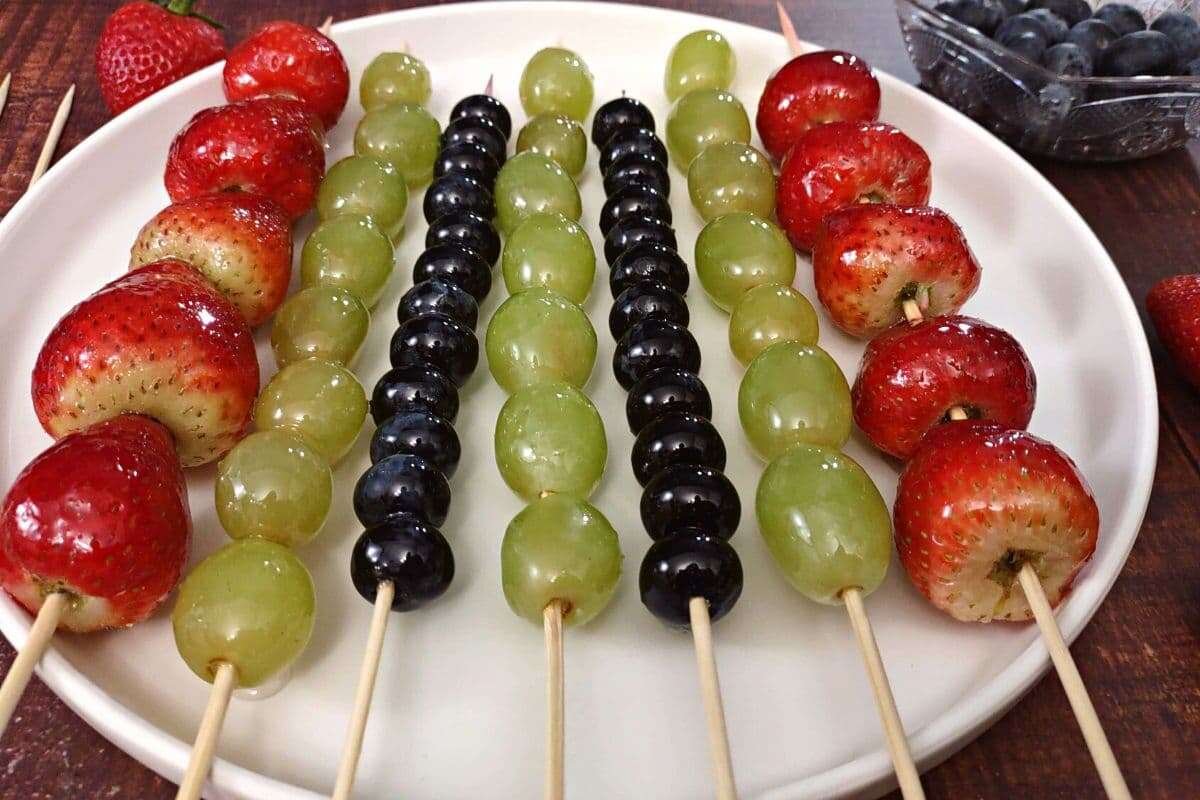
Tanghulu is a Chinese snack made with fruit dipped in a clear sugar shell. Hawthorn berries are traditional, but strawberries, grapes, blueberries, mandarin segments, and small apple pieces also work well.
The candy coating must cool into a hard, glass-like layer. This happens when the syrup reaches about 300–310°F, known as the hard-crack stage. If the syrup is too cool, the coating stays sticky. If it is too dark or overheated, it may taste bitter.


You do not need a special tanghulu maker. A microwave-safe glass measuring cup, a thermometer, and parchment paper are enough.

Ingredients and Tools
For about 10 to 15 small fruit pieces, gather:
Ingredients
- 1 cup granulated white sugar
- ¼ cup water
- 1 tablespoon light corn syrup, optional
- 10 to 15 small pieces of fruit
Corn syrup is optional, but it can help reduce sugar crystals. If you do not have it, use only sugar and water.
Tools
- Microwave-safe glass measuring cup or bowl with a handle
- Wooden skewers or sturdy food-safe sticks
- Candy thermometer or instant-read thermometer
- Parchment paper or a silicone baking mat
- Paper towels
- Heat-safe gloves or oven mitts
- Small bowl of ice water for testing, if you do not have a thermometer
Use a tall container rather than a shallow bowl. The syrup can bubble as it heats, and a taller container gives it more room.
Do not place wooden skewers, metal picks, or fruit into the microwave with the syrup. Cook the syrup first, then dip the fruit.

How to Make Microwavable Tanghulu
Follow these steps in order. The fruit should be ready before you cook the syrup because the hard-crack syrup sets quickly.
1. Wash and dry the fruit
Rinse the fruit under cool running water. The U.S. Food and Drug Administration recommends washing produce under running water and not using soap or detergent.
Dry every piece very well with paper towels. Let the fruit sit for a few minutes if it still feels damp.
Water is the main enemy of a crisp candy shell. Even a thin film of moisture can make the coating slide off or turn sticky.


2. Prepare the fruit skewers
Thread the fruit onto wooden skewers. Leave enough bare stick at the bottom for holding.
Do not pack too many pieces onto one skewer. Two or three small pieces are easier to coat than a large cluster. For grapes and strawberries, check that no juice is leaking from cuts or bruises.
Set the skewers on parchment paper while you make the syrup.
3. Mix the sugar and water
add the sugar and water to a microwave-safe glass measuring cup. Add the corn syrup if you are using it.
Stir only until the sugar is wet. Try to remove dry patches from the bottom before heating. Once the mixture begins to boil, avoid stirring it. Stirring can spread sugar crystals along the sides of the cup.
If sugar crystals form on the sides, wipe them away with a damp pastry brush before cooking, or cover the cup loosely for the first minute so steam can wash them down.
4. Microwave the syrup
Microwave the uncovered cup on high power for about 2½ to 3½ minutes. The exact time depends on your microwave’s wattage, the size of the batch, and the shape of the container.
Start checking after 2½ minutes. If the syrup has not reached the hard-crack stage, continue in 15- to 20-second bursts.
The syrup should bubble strongly and become clear to pale golden. Use a heat-safe thermometer to check the center of the syrup. Stop heating when it reaches 300–310°F.
Do not lean over the cup. Hot sugar can bubble suddenly, and steam can burn your face or hands.
5. Test the syrup if you do not have a thermometer
Drop a small amount of syrup into a bowl of ice water. Let it cool for a few seconds, then remove it.
The syrup is ready when it forms a hard piece that snaps cleanly. If it bends, feels soft, or sticks to your teeth, microwave it for another 15 to 20 seconds and test again.
Do not taste the hot syrup. Even a tiny drop can cause a severe mouth burn.
6. Dip the fruit
Tilt the measuring cup carefully. Roll one fruit skewer through the syrup, covering the fruit with a thin layer.
Let excess syrup drip back into the cup for a few seconds. Do not swirl the fruit for a long time. A thin coat gives tanghulu its clean crunch and helps prevent large sugar drips.


Place the coated skewer on parchment paper. Repeat with the remaining fruit.
If the syrup becomes too thick while you work, microwave it for 5 to 10 seconds. Stir gently only if needed, and check the temperature before dipping again.
7. Let the coating harden
The shell should set at room temperature in about 5 to 10 minutes. It should look clear or slightly golden and feel hard when tapped lightly with a clean utensil.
Serve tanghulu soon after it sets. Moisture from the fruit will slowly soften the sugar shell, especially in a warm or humid room.

How to Know If the Tanghulu Worked
Successful tanghulu has a thin shell that:
- Looks clear or lightly golden
- Feels smooth rather than grainy
- Hardens within several minutes
- Cracks when you bite it
- Does not slide off the fruit
- Does not stick heavily to your teeth
The fruit should remain whole and dry under the coating. Small bubbles are not usually a problem, but a cloudy or rough shell often means the sugar crystallized.
The best texture comes from eating the candy shortly after it cools. Store-bought tanghulu may use controlled conditions to slow moisture absorption, but homemade tanghulu is more sensitive to humidity.

Microwave Timing Guide
Microwave ovens vary widely. Use temperature and texture as your main guides rather than relying on one exact cooking time.
| Microwave power | Starting time for 1 cup sugar and ¼ cup water | What to do |
|---|---|---|
| 700–900 watts | About 3½ to 4½ minutes | Check often near the end |
| 1,000–1,200 watts | About 2½ to 3½ minutes | Begin testing at 2½ minutes |
| 1,300 watts or higher | About 2 to 3 minutes | Use short bursts to prevent burning |
These times are estimates, not fixed rules. A narrow glass cup may heat differently from a wide bowl. The batch may also keep rising in temperature for a short time after you remove it from the microwave.
For the most reliable result, use a thermometer and remove the syrup at 300–310°F.

Common Problems and Fixes
The coating stays sticky
Likely cause: The syrup did not reach the hard-crack stage, or the fruit was damp.
Fix: Reheat the syrup in short bursts until it reaches 300–310°F. Dry the fruit more carefully next time. Humid weather can also make a finished sugar shell soften quickly.


The coating turns cloudy or grainy
Likely cause: The sugar crystallized.
This can happen when the syrup is stirred after boiling, when sugar crystals remain on the sides of the cup, or when the batch cools unevenly.
Fix: Do not stir the syrup once it begins boiling. Use a clean container, avoid scraping the sides, and consider adding 1 tablespoon of corn syrup to the next batch.
The syrup burns
Likely cause: The syrup was heated too long or the microwave is powerful.
Burned syrup usually turns dark brown and smells bitter.
Fix: Discard it after it cools. Do not pour hot syrup down a drain, because it can harden inside the pipe. Let it cool fully in the container, then remove the solid candy carefully.
The coating slides off
Likely cause: The fruit had water, juice, wax, or a soft surface.
Fix: Wash and dry the fruit well. Avoid overripe fruit and cut fruit with exposed juice. Whole grapes and firm strawberries usually hold the coating better than wet fruit pieces.
The syrup hardens before you finish
Likely cause: The batch is small, the room is cool, or the syrup cooled in the cup.
Fix: Microwave it for 5 to 10 seconds. Watch it closely, because a small amount of syrup can overheat quickly.
The sugar shell is too thick
Likely cause: The fruit was dipped too slowly or coated more than once.
Fix: Dip quickly, let the extra syrup drip off, and use one thin layer. A tall, narrow cup can make dipping easier.

Safety Rules for Hot Sugar
Hot sugar syrup is more dangerous than ordinary boiling water because it clings to skin and continues transferring heat.
Follow these rules:
- Use a heat-safe glass container with a handle.
- Keep your face away from the cup while opening the microwave.
- Wear oven mitts when moving the syrup.
- Do not let children dip fruit.
- Never touch the syrup to check its temperature.
- Keep the cup away from the edge of the counter.
- Do not use a plastic container unless its instructions specifically allow very hot sugar syrup.
- Do not put skewers or metal tools in the microwave.
- If hot syrup touches skin, cool the area under clean, cool running water and seek medical care for serious burns. Do not pull hardened candy from the skin.
Use only a small batch. Larger amounts are harder to control and can heat unevenly.

Which Fruits Work Best?
Firm, dry fruit gives the most reliable result.
| Fruit | How well it works | Preparation |
|---|---|---|
| Green or red grapes | Very well | Use whole, dry grapes |
| Strawberries | Very well | Choose firm berries and dry the leaves |
| Blueberries | Well | Use firm berries without broken skin |
| Mandarin segments | Fairly well | Pat dry and remove excess juice |
| Apple pieces | Well | Use firm pieces and dry the cut surface |
| Watermelon | Poorly | Too much water makes the shell soften |
| Very ripe peaches | Poorly | Soft flesh and juice make dipping difficult |
Whole fruit usually performs better than cut fruit because it releases less moisture. If you use cut fruit, pat the cut side dry just before dipping.

How to Store Tanghulu
Tanghulu is best served the same day. The sugar shell pulls moisture from the air and from the fruit, so it may lose its crunch over time.
If you need to hold it for a short period, keep it uncovered at cool room temperature in a dry place. Do not place it in the refrigerator unless necessary. Refrigerator humidity can make the coating sticky.
Do not seal warm tanghulu in an airtight container. Trapped condensation can soften the shell faster.
Discard fruit that smells fermented, leaks, or shows signs of spoilage. Sugar does not make old fruit safe to eat.

Frequently Asked Questions
Can I make tanghulu without corn syrup?
Yes. Sugar and water are enough. Corn syrup is optional and may help limit crystallization, but it does not replace the need for dry fruit or correct heating.
Can I use honey instead of sugar?
Honey changes the flavor and water content of the syrup. It can also brown more quickly. For a clear, crisp shell, granulated sugar is the more predictable choice.
Why does my tanghulu melt?
The shell may melt because the syrup was undercooked, the fruit was wet, or the air is humid. Tanghulu also softens naturally as moisture moves from the fruit into the sugar shell.
Can I make tanghulu in advance?
You can make it a few hours ahead, but the texture is usually best soon after the coating hardens. Keep it at room temperature in a dry place.
Is a candy thermometer required?
No, but it makes the process more consistent. Without one, use the ice-water test and look for a hard piece that snaps cleanly.
Can I reheat leftover tanghulu?
Reheating coated fruit is not recommended. The fruit may release water, and the sugar can heat unevenly. Make a fresh small batch instead.
Final Takeaway
To make microwavable tanghulu, coat dry fruit with sugar syrup heated to 300–310°F, then let the thin shell harden on parchment. Use short microwave bursts, avoid stirring after boiling, and handle the syrup as a serious burn hazard.
For your first batch, choose grapes or firm strawberries. Make only a few skewers, use a thermometer if possible, and eat the tanghulu soon after it sets for the best crackly texture.

Appliance Review Expert
Lucas Ramirez is a trusted voice at HomeFixGrid.com, known for his clear, practical, and creatively written guides that simplify appliance care for everyday homeowners. With a strong focus on hands-on testing and real-world problem-solving, Lucas brings expert insight into appliance reviews and troubleshooting techniques. Her work empowers readers to confidently maintain, repair, and choose the right appliances for their homes.