How To Troubleshoot A Fridge: Easy Fixes That Work
A fridge that is warm, noisy, leaking, or not making ice often has a simple cause. Start with the power supply, temperature settings, door seal, airflow, and condenser area. These checks solve many problems without taking the appliance apart.
For food safety in the United States, keep the refrigerator at 40°F or below and the freezer at 0°F. Use an appliance thermometer rather than relying only on the display. If perishable food has stayed above 40°F for more than two hours, or above 90°F for more than one hour, discard it according to USDA guidance.
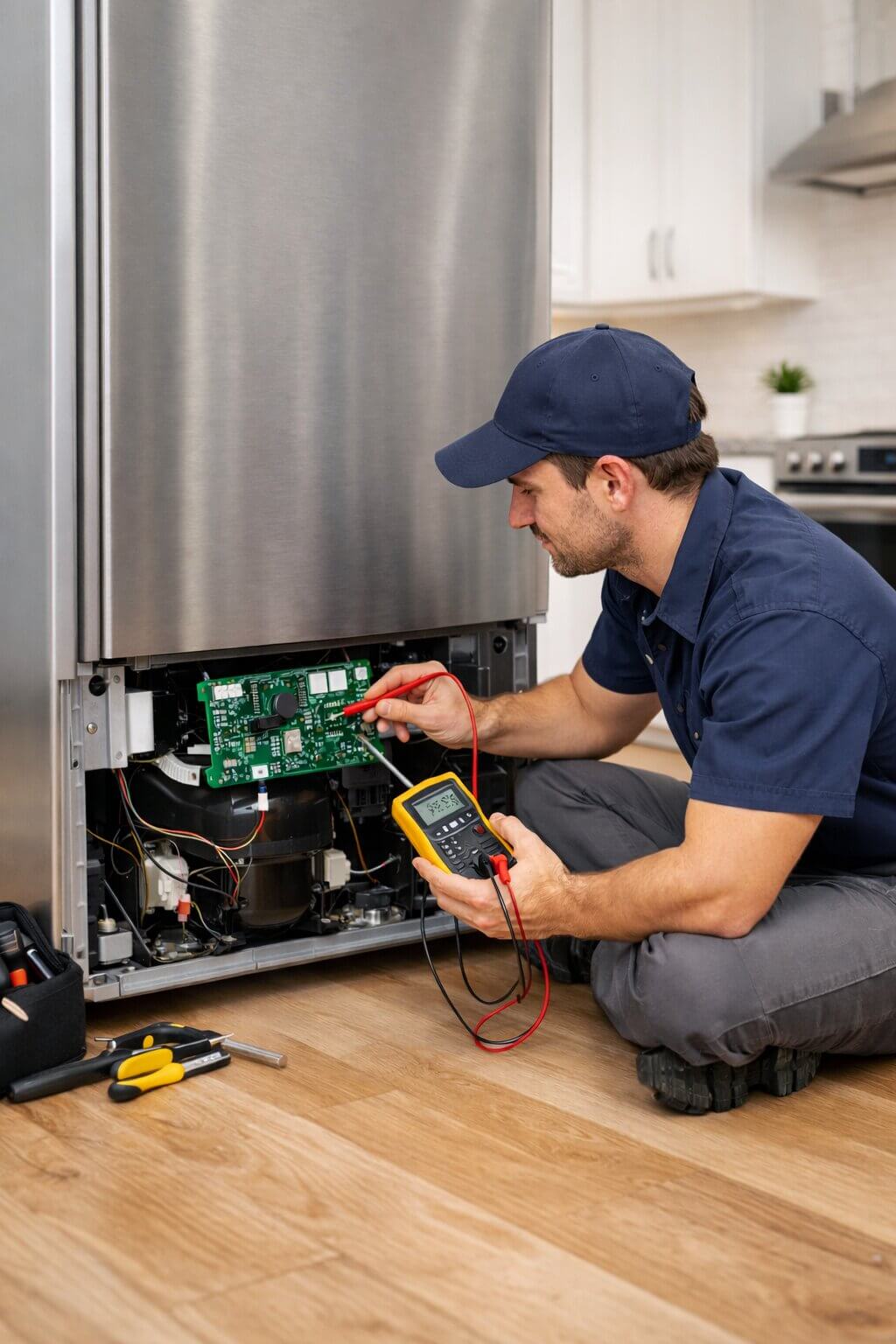
Before You Troubleshoot the Fridge
Prepare a flashlight, a small level, mild dish soap, warm water, a soft cloth, and an appliance thermometer. You may also need a vacuum with a brush attachment. Have the refrigerator’s model number nearby so you can check the correct manual.


Before cleaning or inspecting any part:
- Unplug the refrigerator when the task involves coils, fans, panels, or electrical parts.
- Do not remove sealed-system parts.
- Do not cut, bend, or puncture refrigerant lines.
- Keep water away from outlets, controls, lights, and wiring.
- Do not use a knife or sharp tool to remove ice.
- Do not bypass a safety switch or thermostat.
- Ask a qualified appliance technician to handle electrical, refrigerant, compressor, or sealed-system repairs.
A refrigerator may take 12 to 24 hours to reach a stable temperature after a major setting change, power loss, or large load of warm food. Check the manual for the exact recovery time for your model.
A Quick Troubleshooting Sequence
Follow these checks in order. They begin with simple causes and move toward repairs that need tools or professional help.
1. Check the power
Confirm that the refrigerator is firmly plugged in. Test the outlet with a lamp or another small device. Check the home circuit breaker and any ground-fault circuit interrupter, or GFCI, that may protect the outlet.
Do not use an extension cord unless the manufacturer specifically allows it. Many refrigerators need a grounded, dedicated outlet. A loose plug, tripped breaker, or failed outlet can make the fridge appear completely dead.
If the interior light is off, the display is dark, and the compressor is silent, power is the first thing to check.
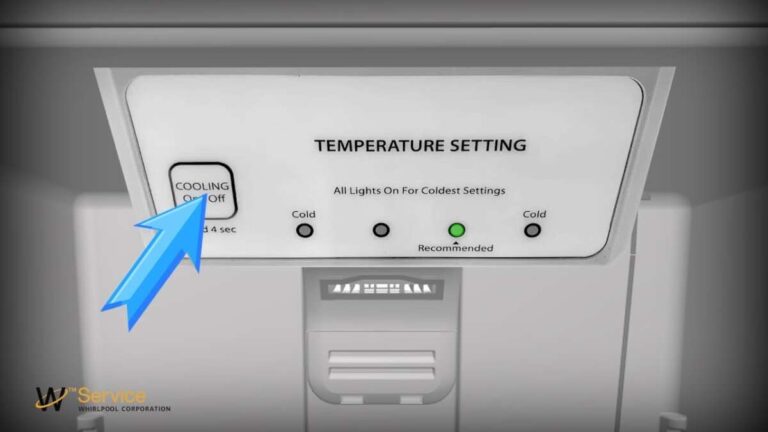
2. Check the control settings
Make sure the refrigerator is not in:
- Demo mode
- Vacation mode
- Sabbath mode
- Cooling-off mode
- A showroom or display setting
Some models still show lights and sounds while cooling is disabled. Check the control panel and owner’s manual for the correct reset method.
Set the refrigerator to about 37°F and the freezer to 0°F unless the manual gives different instructions. Wait several hours before judging the result.
3. Look for blocked airflow
Cold air must move from the freezer through vents into the refrigerator compartment. Do not pack food against the rear wall or cover the vents with containers.


Leave space around air outlets. Tall containers, bags, and large boxes can block the path. If the freezer is cold but the refrigerator section is warm, blocked airflow, a stuck damper, or an evaporator fan problem may be involved.
4. Inspect the door seal
close the door on a sheet of paper. If the paper pulls out with little resistance, the gasket may be dirty, warped, or damaged.
Clean the seal with warm water and mild dish soap. Dry it well. Check that shelves, drawers, and food packages are not preventing the door from closing.
A leaking gasket lets warm, moist air enter. That can cause frost, poor cooling, high energy use, and water near the door.
5. Check the condenser area
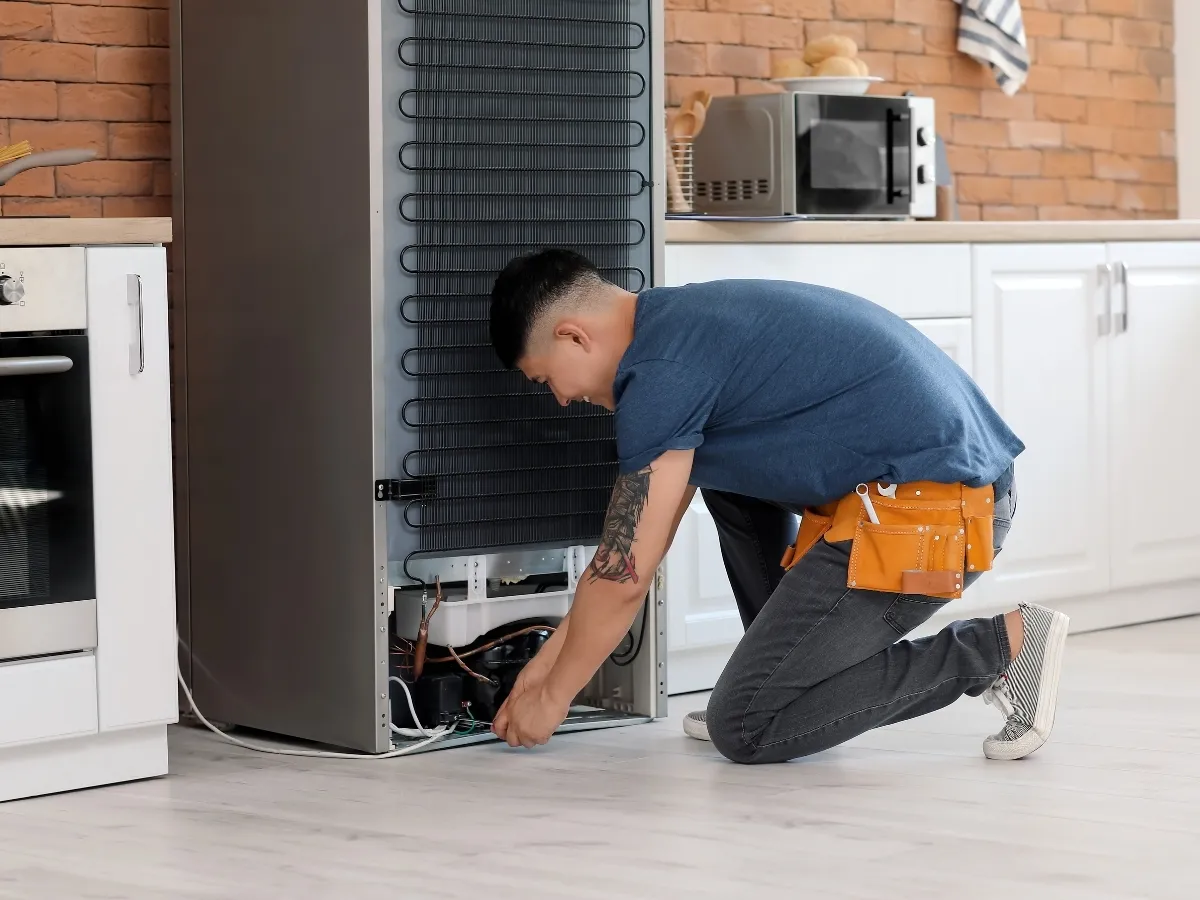
The condenser releases heat from the refrigerator. On some models, the coils sit behind a lower front grille. On others, they are beneath the cabinet or behind a rear panel.
Unplug the refrigerator before cleaning. Use a soft brush or vacuum to remove dust and pet hair. Do not bend the coils or damage nearby wires.
Some newer refrigerators have hidden coils and need little user cleaning. Check the manual before removing a cover.
6. Measure the temperature
Place an appliance thermometer in the center of the refrigerator, not in the door. Leave it for several hours before reading it.
A display may show the set point rather than the actual air temperature. A thermometer gives a better view of food safety and cooling performance.
7. Listen and observe
A normal refrigerator may hum, click, buzz, drip, or make cracking sounds as it runs and defrosts. The key question is whether the sound is new, constant, or linked to a cooling problem.
Notice whether:
- The compressor runs constantly.
- The fan starts and stops.
- The refrigerator clicks but does not start.
- The noise changes when the door opens.
- Frost covers the freezer’s rear wall.
- Water appears under drawers or on the floor.
These details help identify the likely cause.
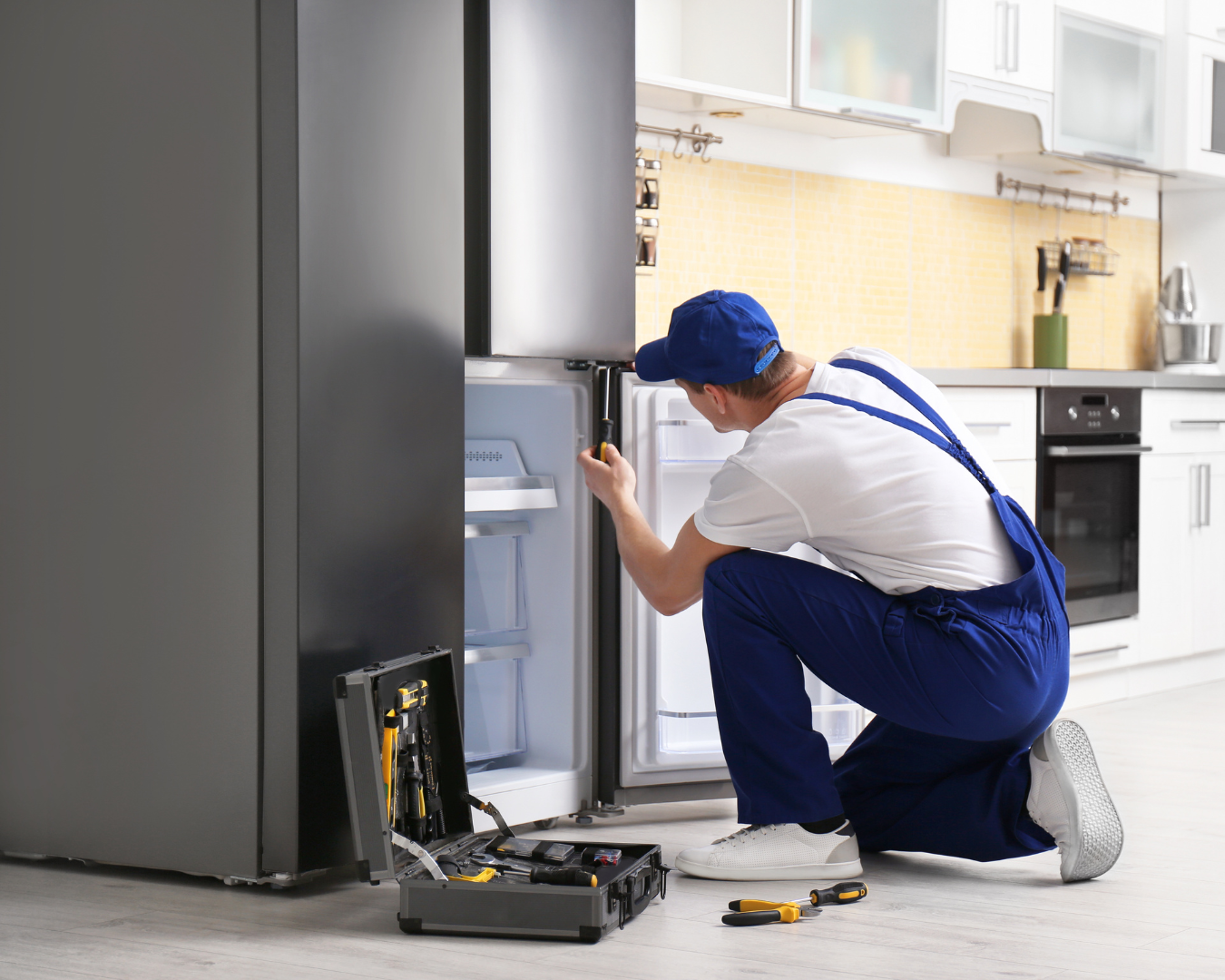
Fridge Troubleshooting by Symptom
The table below gives a starting point. Several faults can create the same symptom, so use the checks in the right-hand column before replacing a part.
| Symptom | Common causes | First checks |
|---|---|---|
| Fridge has no power | Outlet, plug, breaker, control setting | Test the outlet and check cooling-off or demo mode |
| Fridge is warm but light works | Blocked vent, dirty coils, fan problem, door leak | Check airflow, gasket, temperature, and condenser area |
| Freezer is cold but fridge is warm | Blocked air passage, ice buildup, damper, evaporator fan | Clear vents and inspect for heavy frost |
| Freezer is warm too | Power issue, dirty condenser, compressor or sealed-system fault | Check settings, airflow, coils, and unusual noises |
| Too much frost in freezer | Door leak, blocked vent, defrost fault | Check gasket and frost pattern |
| Water inside fridge | Blocked drain, spilled liquid, door leak | Inspect the drain opening and level |
| Water under fridge | Defrost drain, drain pan, supply line, filter housing | Find the water’s source before cleaning |
| Fridge runs constantly | Warm room, dirty coils, door leak, low airflow | Check the room, gasket, coils, and vents |
| Fridge is too cold | Low setting, blocked sensor, food near cold-air outlet | Adjust setting and move food away from vents |
| Ice maker does not work | Ice maker off, water supply problem, frozen fill tube | Check the shutoff valve, filter, and ice setting |
| Fridge is noisy | Fan contact, vibration, ice, uneven cabinet | Level the unit and locate the sound |
| Bad smell remains | Spilled food, drain, drip pan, spoiled contents | Remove food and clean hidden areas |
When the refrigerator is warm
First check the set point, power, door seal, airflow, and condenser area. Make sure the doors close fully and that warm food has not filled the cabinet.


If the freezer is also warm, the problem may affect the main cooling system. If the freezer is cold but the refrigerator is warm, focus on air movement between the two compartments.
A refrigerator that runs for a long time in a hot kitchen may be working normally. However, constant operation combined with a temperature above 40°F needs attention.
When the freezer is cold but the fridge is warm
This pattern often points to poor airflow. Check for food blocking the vents and listen for the evaporator fan. On many models, that fan runs when the freezer door switch is pressed, but the test method varies.
Heavy frost on the freezer’s back wall can also block air. It may point to a defrost-system problem, not just a need to chip away the ice. A full manual defrost may restore airflow for a short time, but repeated frost means the underlying fault remains.
When the refrigerator is too cold
Move food away from the rear wall and cold-air outlet. Check whether the control is set too low. Some foods freeze when placed near the damper or in the back of the refrigerator.
If the temperature stays below the setting, a sensor, damper, or control problem may exist. Do not adjust hidden controls unless the manual gives clear instructions.
When the fridge runs constantly
Long run times are common after loading groceries, opening the doors often, or placing the refrigerator in a hot room. They can also result from a dirty condenser, poor door seal, blocked airflow, or a failing cooling system.
Clean the gasket and condenser area first. Then measure the temperature. If the refrigerator cannot reach 40°F or below, stop treating the sound as a minor annoyance and arrange service.

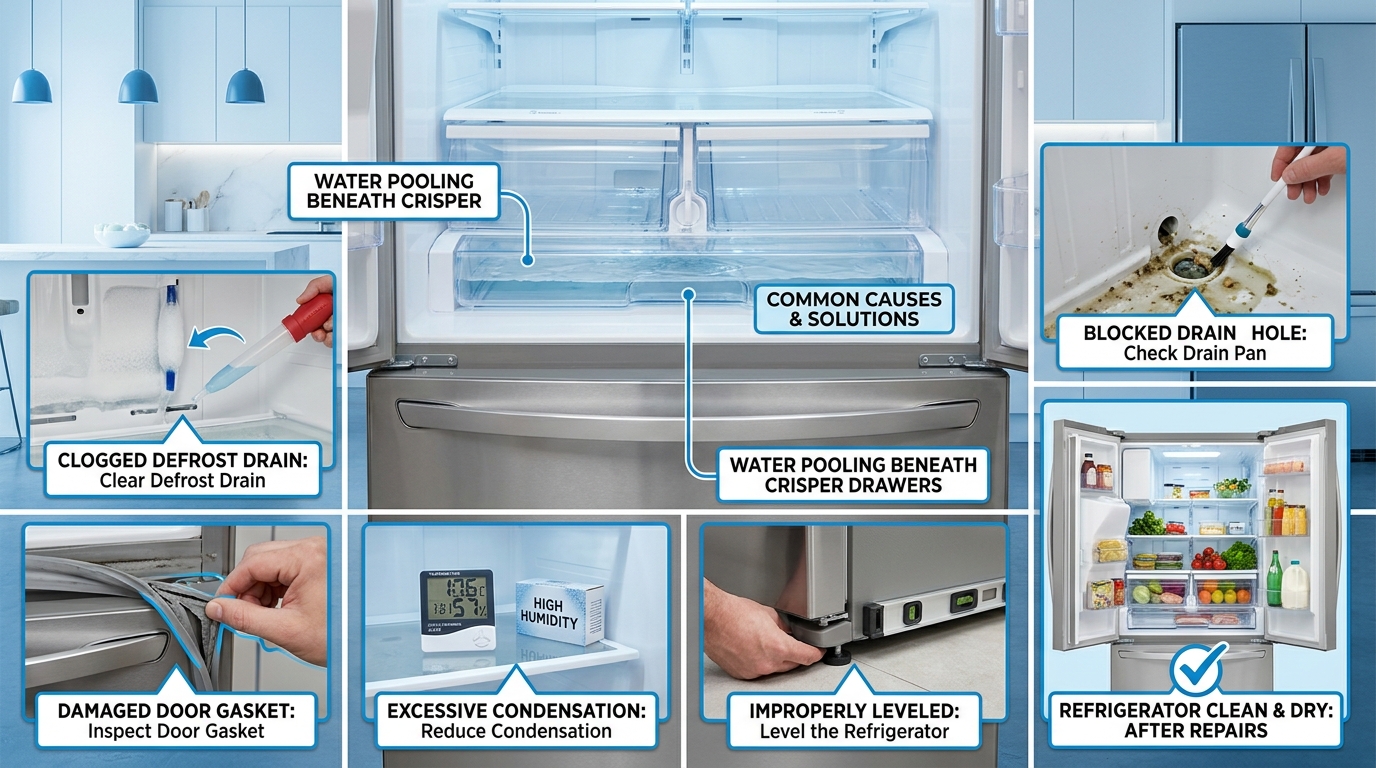
How to Troubleshoot Water Leaks
Find the source before wiping up the water. Water can travel under drawers and across the floor, so its location may not match the place where it began.
Water inside the refrigerator
A blocked defrost drain is a common cause. During normal defrost, water should flow through a drain opening into a pan beneath the appliance. Food particles or ice can block that path.
Remove food from the area and look for the drain opening, usually near the rear wall or beneath the evaporator cover. Follow the manual’s cleaning instructions. Do not force a wire or sharp tool into the drain.
Also check for spilled liquids, a door that does not close, and food touching the rear wall.
Water under the refrigerator
Possible sources include:
- A blocked or frozen defrost drain
- A cracked drain pan
- A loose water supply line
- A leaking filter housing
- A damaged ice maker fill tube
- Excess condensation in a humid room
Turn off the water supply if the leak comes from an ice maker or dispenser line. Unplug the refrigerator if water is approaching an electrical outlet. A technician should inspect leaks that continue after the supply is off.


Water around the ice dispenser
Check the filter, filter cap, water line, and ice chute. A filter that is not seated correctly can leak after replacement. A small amount of frost or clumping may also prevent the chute from closing.
Use only the filter type listed for the model. Filter shapes and connections are not universal.

How to Troubleshoot an Ice Maker or Water Dispenser
Start by checking whether the refrigerator has water and power. Make sure the ice maker is switched on and that the shutoff arm or electronic control is in the correct position.
Then check these items:
- Confirm that the household water valve is open.
- Inspect the supply tube for kinks.
- Check whether the water filter is clogged or overdue for replacement.
- Make sure the filter is installed fully.
- Look for a frozen fill tube.
- Check the freezer temperature.
- Test the dispenser with a glass while watching for leaks.
A new filter can reduce water flow if it is clogged, installed incorrectly, or not flushed as the manual directs. A low freezer temperature does not guarantee that the ice maker will work if the water inlet valve or control system has failed.
Do not use a sharp object to clear a frozen fill tube. If the tube freezes again, the inlet valve, door wiring, control, or temperature conditions may need professional diagnosis.

How to Troubleshoot Fridge Noises
Some refrigerator sounds are part of normal operation. The compressor may hum, fans may run, water may enter the ice maker, and the cabinet may crack or pop as materials expand and contract.
A new or harsh sound deserves closer attention. Use the sound’s timing and location as clues:
- Rattling: The refrigerator may touch a wall, cabinet, or pipe.
- Vibration: The unit may not be level, or a drain pan may be loose.
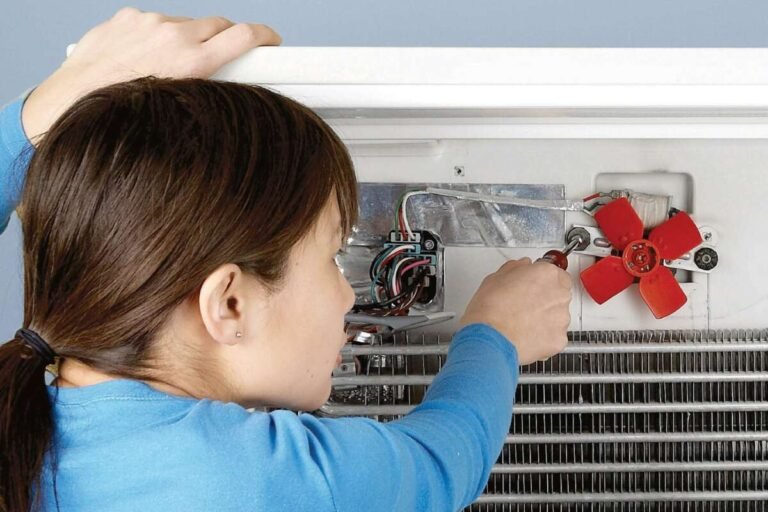
- Scraping: A fan blade may touch ice or a damaged cover.
- Clicking: A control may be starting a cycle, or a compressor may be struggling to start.
- Loud humming: A fan or compressor may be working hard.
- Gurgling: Refrigerant movement or defrost water may cause the sound.
Pull the refrigerator slightly away from the wall if the manual permits it. Check that it stands level and that nothing rests against the cabinet. Unplug the unit before inspecting a fan or removing a panel.
If a repeated click is followed by no cooling, or a scraping sound occurs with heavy frost, arrange service rather than repeatedly restarting the appliance.

When to Call a Refrigerator Repair Technician
Call a qualified technician when basic checks do not solve the issue or when the fault involves sealed or electrical parts.
Professional service is the safer choice if:
- The compressor will not start.
- The refrigerator repeatedly trips the breaker.
- A burning smell or melted wire is present.
- Refrigerant lines are damaged.
- Oil appears near the tubing.
- The unit stays above 40°F.
- Frost returns quickly after defrosting.
- The compressor runs but the freezer cannot get cold.
- A leak reaches an outlet or wiring.
- The refrigerator has a sealed-system or compressor error code.
Do not remove refrigerant, recharge the system, or replace a compressor as a do-it-yourself task. Refrigerant work requires the right equipment and training. It can also affect the appliance warranty.
Before requesting service, record the model number, temperature readings, error codes, sounds, and steps already tried. This can reduce repeat testing.

Food Safety While Troubleshooting
Move perishable food to a working refrigerator or a cooler with ice if the appliance is not maintaining a safe temperature. Keep the cooler at 40°F or below when possible.
Do not taste food to decide whether it is safe. Food can look and smell normal while still being unsafe. The USDA refrigerator and freezer storage chart provides storage guidance for common foods.
Keep the refrigerator door closed during an outage or diagnosis. A full, closed refrigerator can hold a safe temperature longer than an open one, but the actual time depends on room conditions, food load, and door openings.
After repairs, verify the temperature with an appliance thermometer. A working light or quiet compressor does not prove that food is being kept cold enough.

Common Troubleshooting Mistakes to Avoid
Changing many controls at once
Change one setting, then wait long enough to measure the result. Adjusting several controls at once makes it hard to identify the cause.
Blocking the vents with food
Cold air needs a clear path. Do not pack every shelf tightly or press food against the rear wall.
Chipping away freezer ice
A knife, screwdriver, or ice pick can puncture a refrigerant line. Use the manufacturer’s defrost method, or call for service when frost returns.
Replacing parts without a diagnosis
A fan, sensor, thermostat, and control board can create similar symptoms. Check the manual and test the system before buying parts.
Ignoring the door gasket
A small gap can cause frost and long run times. Clean the gasket first, then check its fit with the paper test.
Assuming a display temperature is exact
The display may show a target setting rather than the temperature of the food. Confirm performance with an appliance thermometer.

FAQ
How long should I wait after adjusting a refrigerator temperature?
Wait several hours before checking, and allow up to 24 hours for a full cabinet to stabilize after a large change or heavy loading. Use an appliance thermometer to confirm the result.
Why is my refrigerator warm but the freezer works?
Blocked vents, heavy frost, a failed evaporator fan, or a stuck air damper can stop cold air from reaching the refrigerator section. Check airflow and frost first.
Can dirty coils make a refrigerator stop cooling?
Yes. Dust and pet hair can reduce heat release and make the refrigerator run longer. Unplug the appliance and clean accessible condenser areas as the manual directs.
Why does my refrigerator have frost on the back wall?
A small amount of frost may occur during normal operation, but thick or quickly returning frost can block airflow and suggest a door leak or defrost-system problem.
Should I unplug a refrigerator that is making a strange noise?
Unplug it if you smell burning, see damaged wiring, hear harsh scraping, or suspect water has reached electrical parts. For less urgent sounds, note the noise and check the manual before arranging service.
Final Checklist
Use this order when troubleshooting a fridge:
- Check the outlet, plug, breaker, and cooling mode.
- Confirm the temperature settings.
- Measure the actual temperature.
- Clear vents and improve airflow.
- Clean and inspect the door gasket.
- Check accessible condenser areas.
- Look for frost, leaks, error codes, and unusual sounds.
- Protect perishable food if the temperature exceeds 40°F.
- Call a qualified technician for electrical, compressor, refrigerant, or repeated defrost problems.
Start with the safest, simplest checks. If the refrigerator still cannot stay at 40°F or below, stop relying on trial and error and arrange repair.

Appliance Review Expert
Lucas Ramirez is a trusted voice at HomeFixGrid.com, known for his clear, practical, and creatively written guides that simplify appliance care for everyday homeowners. With a strong focus on hands-on testing and real-world problem-solving, Lucas brings expert insight into appliance reviews and troubleshooting techniques. Her work empowers readers to confidently maintain, repair, and choose the right appliances for their homes.