What Is Platform Vs Box Spring: Key Differences
Introduction
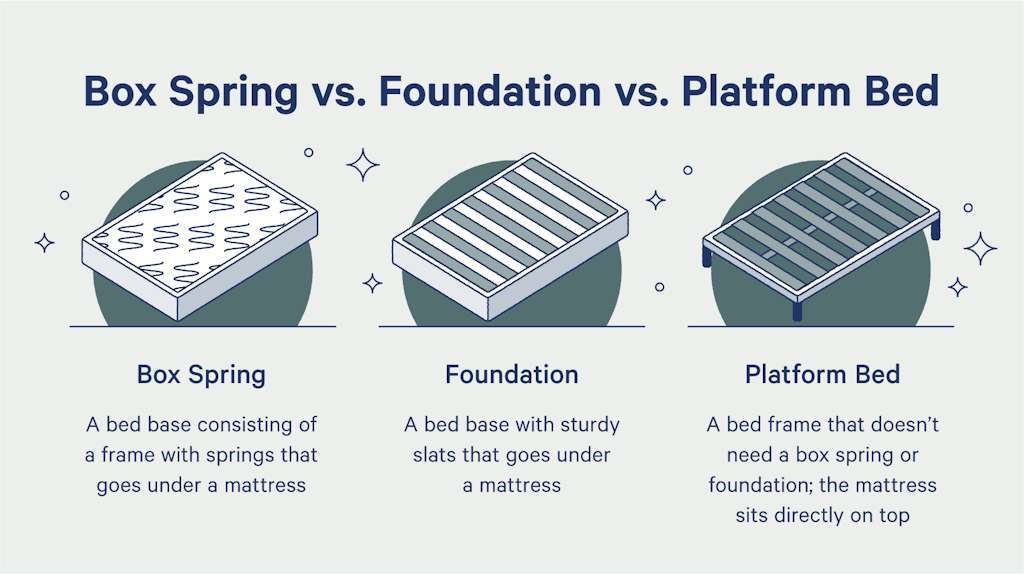
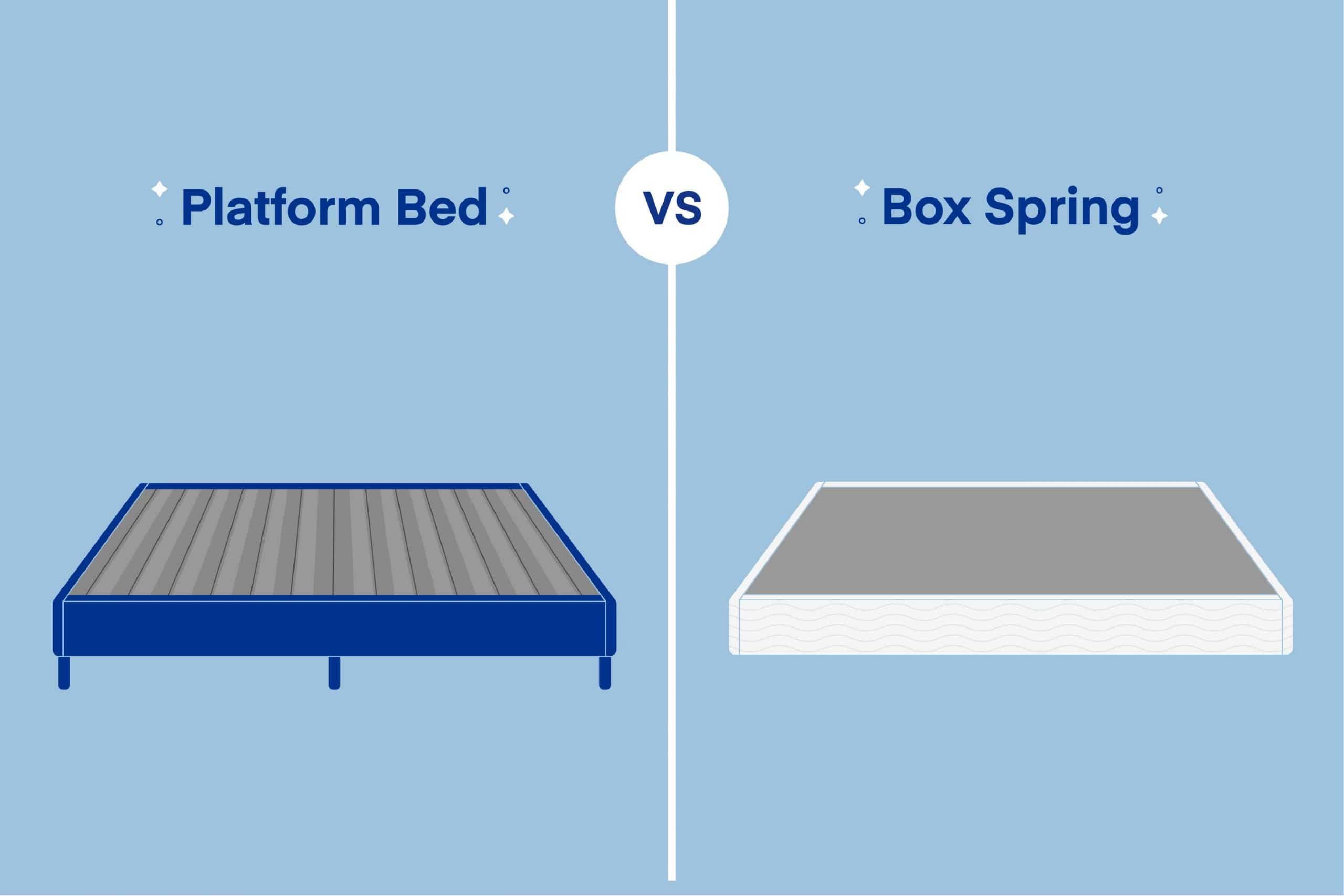
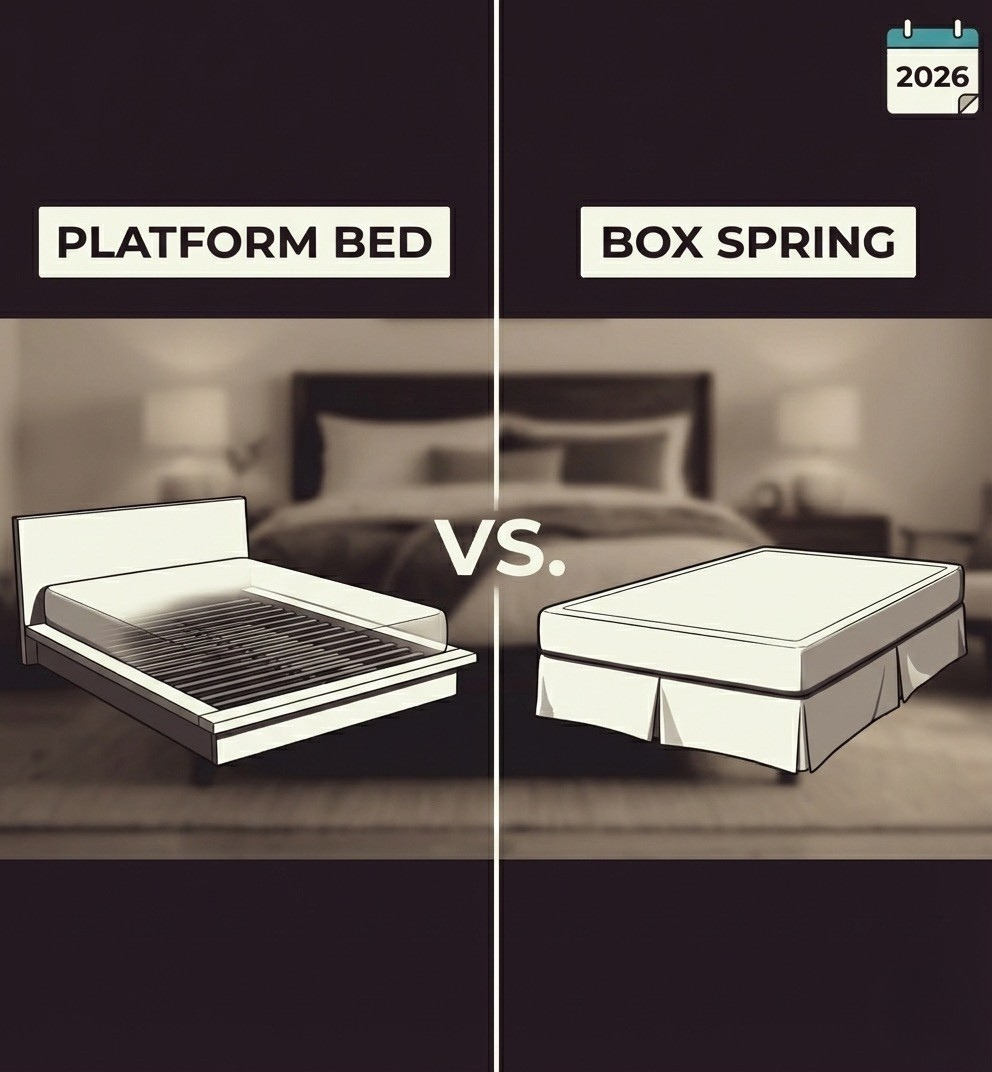
In the United States, a platform bed and a box spring are two different ways to support a mattress. A platform bed is usually a complete bed frame with built-in slats or a solid deck. A box spring is a separate mattress foundation that sits on a bed frame or another support base.
The main choice comes down to your mattress type, preferred bed height, storage needs, room style, and budget. A platform bed often needs no extra foundation. A box spring may be useful when you want more height or when your mattress manufacturer requires one.
Quick answer: Platform bed vs. box spring
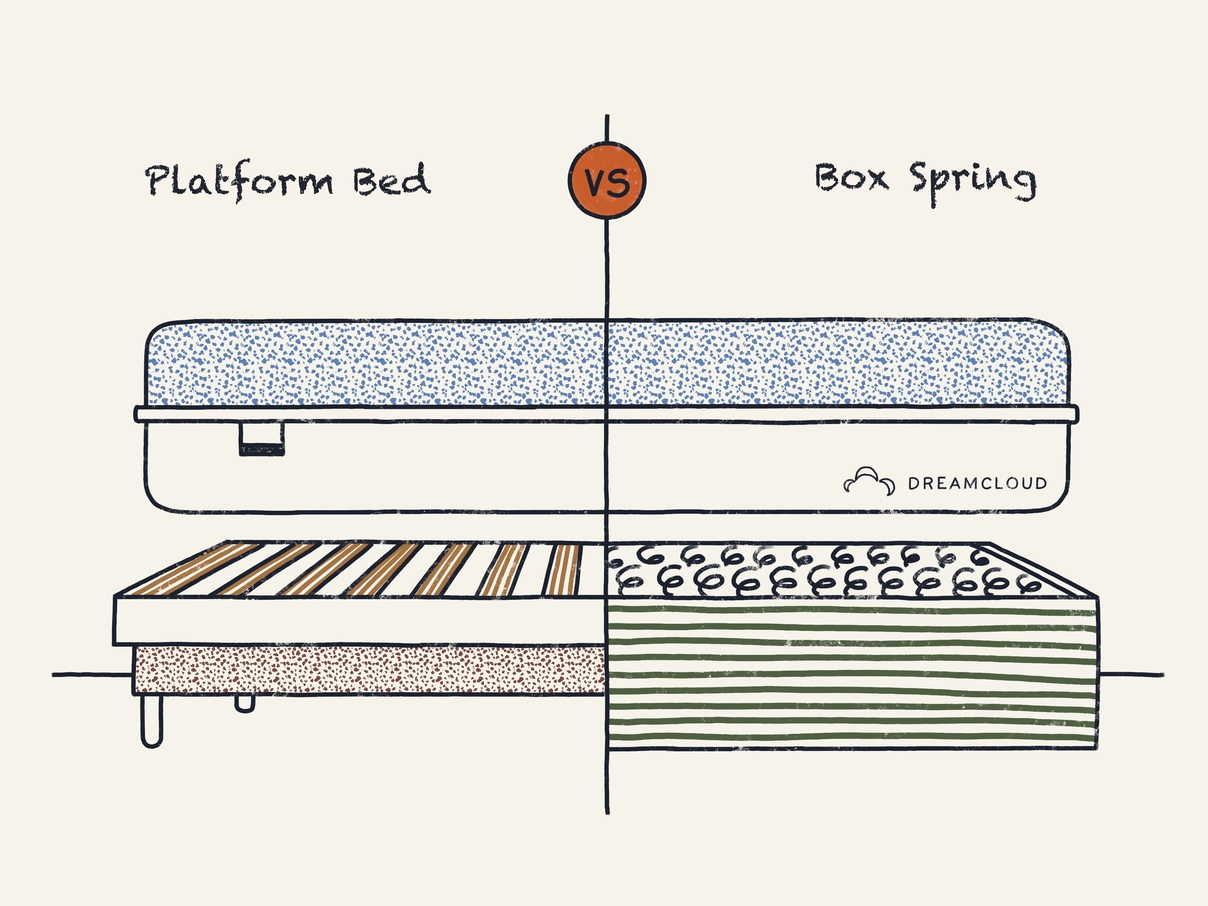
A platform bed supports the mattress with built-in slats, panels, or a solid surface. It acts as both the bed frame and the mattress support.
A box spring is a separate support unit. It traditionally used coil springs inside a fabric-covered wooden frame, but many modern products sold as “box springs” are actually rigid foundations with wood, metal, or fabric parts and few or no springs.
Here is the basic difference:
| Feature | Platform bed | Box spring |
|---|---|---|
| What it is | A bed frame with mattress support built in | A separate mattress foundation |
| Needs another base? | Usually no | Usually yes, unless placed directly on a suitable floor or frame |
| Mattress height | Often lower | Usually raises the mattress |
| Works with foam mattresses? | Usually, if slats are properly spaced | Only if the foundation is approved for that mattress |
| Storage | May include drawers or open space | Usually offers no storage |
| Setup | One main bed structure | Foundation plus frame or base |
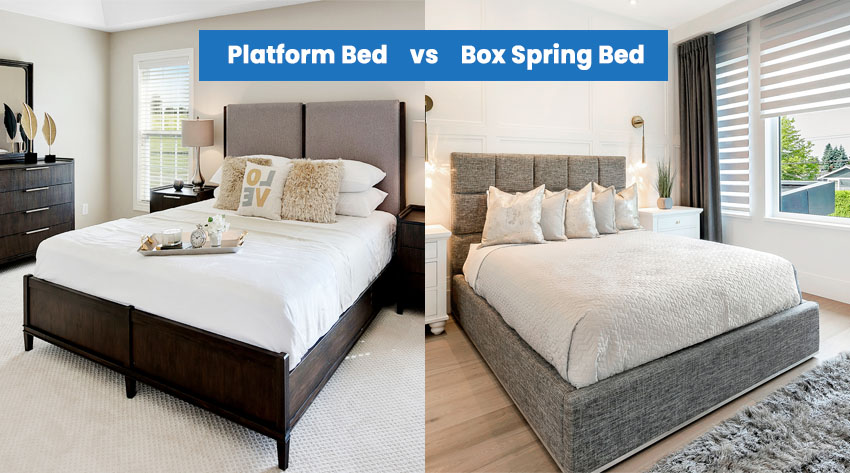
| Typical look | Modern, low-profile, or wood-framed | Traditional raised bed |
The right choice is not automatically the one that lasts longer. The mattress manufacturer’s support requirements matter more than the name of the base.
What is a platform bed?
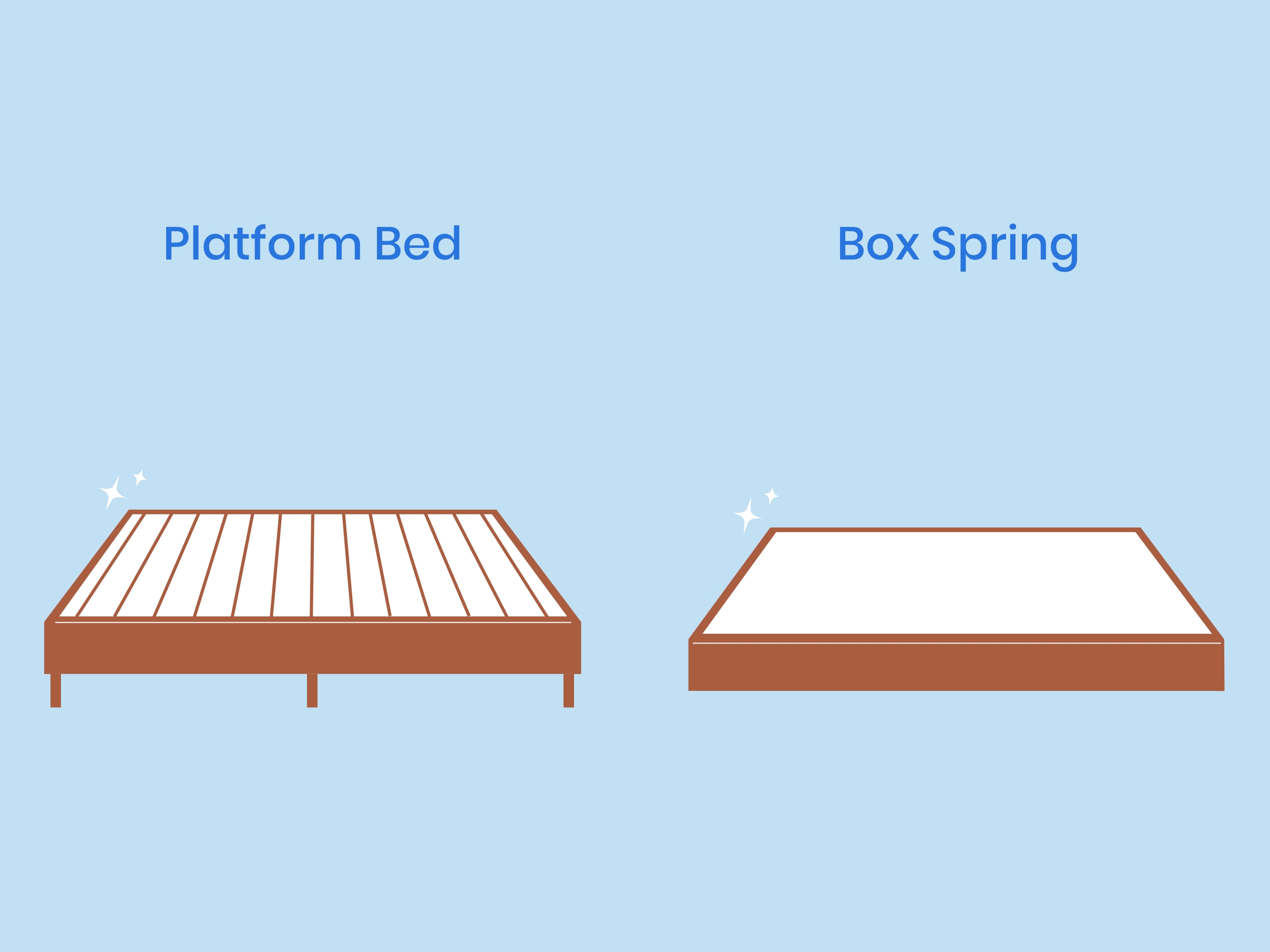
A platform bed is a bed frame with a built-in mattress support surface. That surface may consist of wood slats, metal slats, a solid panel, or a combination of parts.
Because the support is built into the frame, a platform bed normally does not need a box spring. The mattress rests directly on the platform.
Common platform bed designs
Platform beds come in several forms:
- Slatted platform beds: Use rows of wood or metal slats.
- Solid-platform beds: Use a flat panel or deck beneath the mattress.
- Storage platform beds: Add drawers, lift-up compartments, or shelves.
- Low-profile platform beds: Place the mattress close to the floor.
- Legged platform beds: Raise the mattress with legs and leave open space underneath.
A platform bed can be made from wood, metal, upholstered panels, or a mix of materials. Its appearance does not determine whether it will support a mattress correctly. The spacing and strength of its support system do.
Advantages of a platform bed
A platform bed may be a good fit if you want:
- A simple setup with fewer parts
- A modern or low-profile look
- Storage below the bed
- Direct support for a foam or hybrid mattress
– No need to buy a separate foundation - A stable frame with fewer components to assemble
Platform beds can also reduce the total height of the bed. That may help in small rooms or make it easier to get in and out of bed.
Possible drawbacks
A platform bed is not automatically suitable for every mattress. Problems can occur when:
- Slats are too far apart
- Slats bend under the mattress
- The center of the frame lacks support
- The frame does not support the mattress edges
- The platform has a flexible surface that does not match the mattress requirements
- The frame’s weight limit is too low
A platform bed may also feel too low if you prefer a tall bed or have trouble bending your knees.
What is a box spring?
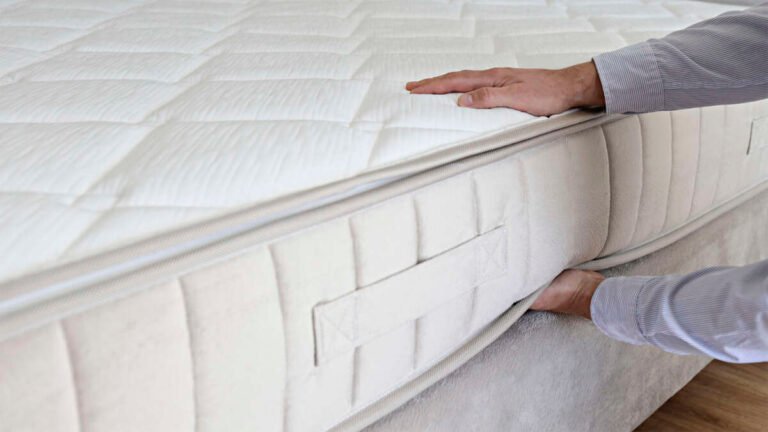
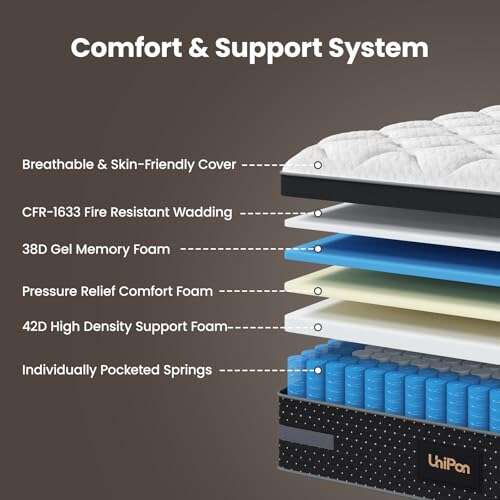
A box spring is a mattress support unit designed to sit below a mattress. Traditional box springs contained coil springs. The coils added some flex and helped distribute weight across the support frame.
Today, the term box spring is often used for several different products. A modern “box spring” may contain metal grid supports, wood slats, a rigid panel, or a mix of materials. Some products are more accurately called foundations.
That difference matters because a true spring box and a rigid foundation may perform differently under a mattress.
Box spring vs. foundation
The words are often used as synonyms, but they are not always the same.
- A traditional box spring generally uses springs or coils.
- A foundation usually uses a firm, non-flexing support structure.
- A bunkie board is a thin, firm panel designed to add support without much height.
- A bed frame is the structure that holds the foundation or mattress.
A manufacturer may require a specific type. For example, one mattress may work on a firm foundation but not on a flexible spring base. Another may allow a box spring only when the spacing and weight rating meet its specifications.
Advantages of a box spring
A box spring or foundation may suit you if you want:
- More height from the floor
- A traditional bed setup
- A separate support unit that can be replaced without replacing the frame
- Compatibility with a mattress designed for that type of base
- A softer or more flexible feel, when the mattress maker allows it
A taller setup can make it easier for some people to sit down or stand up. It can also create more usable space under the bed.
Possible drawbacks
A box spring can be a poor choice when:
- The mattress requires a rigid base
- The box spring is old, damaged, or sagging
- The combined height makes the bed difficult to use
- The frame lacks center support
- The foundation is too small or too large
- The foundation’s weight limit is lower than the mattress and sleeper load
A box spring also adds another component. That can mean more weight, more movement between parts, and more work when moving the bed.

Can you use a mattress on a platform bed?
Yes, in many cases. A mattress can sit directly on a platform bed when the platform provides the support required by the mattress manufacturer.
Before placing the mattress on the frame, check four details.
1. Check the slat spacing
Many mattresses require slats to be no more than a certain distance apart. The exact limit differs by mattress brand and model. Foam mattresses often need closer spacing than some traditional innerspring mattresses.
Do not guess. Look at the mattress warranty, setup guide, or support page. If the document says the slats must be no more than 3 inches apart, a frame with 5-inch gaps may not meet the requirement.
2. Check the center support
A queen or king platform bed often needs a center rail and legs that reach the floor. Without center support, the frame may bow or twist.
A wide mattress also needs support across its full length and width. A few outer rails may not be enough.
3. Check the weight limit
Add the weight of:
- The mattress
- The sleepers
- Bedding
- Any pets or children who may use the bed
Stay within the platform bed’s stated capacity. If the manufacturer gives separate limits for the frame and slats, follow the lower limit.
4. Check ventilation and moisture
A platform bed with open slats allows more airflow under the mattress. A solid deck may allow less airflow. This is not always a problem, but a damp room, a mattress placed directly on the floor, or poor ventilation can increase the risk of moisture buildup.
Keep the mattress dry and follow the manufacturer’s care instructions.
Can you use a box spring on a platform bed?
Usually, you can place a box spring on a platform bed, but that does not mean you should.
A platform bed is already designed to support a mattress. Adding a box spring can raise the mattress and change the bed’s stability. The combined structure may also exceed the frame’s height or weight limits.
Before adding one, confirm:
- The platform bed can hold the box spring’s weight.
- The box spring fits inside the frame or rests securely on it.
- The box spring does not slide.
- The total height remains practical.
- The mattress warranty allows that foundation.
- The platform’s manufacturer does not prohibit an added foundation.
If the platform bed has a solid deck, the box spring may also block airflow below the mattress. A box spring is not necessary simply because a bed has a platform frame.
Which is better for memory foam, latex, and hybrid mattresses?
For most foam and hybrid mattresses, a firm platform bed or approved rigid foundation is often the safer starting point. The exact answer depends on the mattress model.
Memory foam mattresses
Memory foam mattresses usually need even, firm support. A platform bed can work well when its slats are close enough and its center support is strong.
A traditional flexible box spring may not be suitable if it allows the mattress to bend between the coils. That can affect comfort and may conflict with the mattress warranty.
Latex mattresses
Latex mattresses also need consistent support. Slatted platforms are often used with latex beds, but the slats must not be too far apart. A solid foundation may also work if the mattress maker permits it.
Hybrid mattresses
Hybrid mattresses combine foam with coils. Some work on platform beds, while others need a specific foundation. The coil unit does not mean the mattress can sit on any old box spring.
Traditional innerspring mattresses
Many traditional innerspring mattresses were sold with box springs. However, modern innerspring mattresses may also work on platform beds or rigid foundations.
The safest rule is simple: match the base to the mattress instructions, not to the mattress category alone.
Which option is best for your needs?
Use this decision guide:
| Your priority | Usually the better starting point |
|---|---|
| Fewer parts | Platform bed |
| Low bed height | Platform bed |
| Built-in storage | Platform bed |
| Traditional tall bed | Box spring and compatible frame |
| Existing box spring | A frame made to hold it |
| Foam mattress | Firm platform or approved foundation |
| Adjustable height | Separate frame and foundation system |
| Easy replacement of the support base | Separate foundation |
| Minimal floor space | Low platform bed |
| Need to avoid bending low | Higher foundation setup |
These are starting points, not universal rules. A mattress warranty can change the recommendation.
Choose a platform bed when:
- You want an all-in-one bed frame.
- Your mattress needs firm, even support.
- You prefer a lower profile.
- You want drawers or open storage.
- You do not already own a compatible box spring.
Choose a box spring or foundation when:
- You already have a matching bed frame.
- You prefer a taller mattress height.
- Your mattress maker approves that support.
- You want to replace the support unit without replacing the decorative frame.
- You need a traditional bedroom setup.

How high should a bed be?
There is no single correct bed height. A practical height lets you sit on the edge with your feet on the floor and stand without excessive strain.
The total bed height includes:
frame height + foundation height + mattress height
For example, this hypothetical setup would measure:
- 12-inch frame
- 9-inch foundation
- 11-inch mattress
12 + 9 + 11 = 32 inches total height
Mattress thickness can vary, so measure your actual mattress rather than relying on a product label. Bedding such as thick toppers can add several more inches.
A low platform bed may look clean but can be harder to use for someone with limited mobility. A tall box spring setup may provide easier access but can feel too high in a small room or for shorter sleepers.
Common mistakes to avoid
Buying by name alone
“Box spring” does not always mean the product contains springs. Read the construction details and compatibility rules.
Ignoring the mattress warranty
Some warranties require a certain slat gap, center support system, or foundation type. Using the wrong base may affect warranty coverage.
Using widely spaced slats
Wide gaps can allow parts of the mattress to sag between supports. This is especially concerning with flexible foam materials.
Forgetting the center legs
A queen, king, or California king frame often needs center support that reaches the floor. A center rail without legs may not carry enough load.
Placing a mattress directly on the floor
A mattress on the floor may have little airflow and can be harder to keep dry and clean. It may also place the mattress outside the manufacturer’s approved support setup.
Combining too many parts
A frame, box spring, bunkie board, and mattress may create excessive height. It can also make the setup unstable if the parts were not designed to work together.
Keeping a damaged foundation
Replace a foundation if it has broken slats, bent metal, loose joints, severe sagging, or visible damage. Do not repair a structural support with a temporary object that can shift during use.
How to tell if your current support is failing
A support problem may show up as:
- A sagging mattress
- New dips or uneven areas
- Creaking or shifting
- A frame that rocks
- Broken or bowed slats
- A center rail that no longer touches the floor
- The mattress sliding during sleep
- Uneven wear on one side of the bed
First, remove the bedding and inspect the frame, foundation, and mattress separately. Tighten loose hardware only if the manufacturer allows it. Replace damaged structural parts rather than placing boards or boxes under the mattress as a long-term fix.
If the mattress sags while the support is flat and intact, the mattress may be worn. If the mattress looks normal on the floor but sags on the frame, the support system may be the cause. Do not use the floor as a permanent test base unless the manufacturer permits it.
Key takeaways
- A platform bed is a bed frame with built-in mattress support.
- A box spring is a separate foundation that usually sits on a bed frame.
- Modern products called box springs may contain few or no springs.
- Platform beds often work well with foam and hybrid mattresses when slat spacing and center support meet the mattress requirements.
- A box spring can add height but may not suit every mattress.
- Check the mattress warranty, slat spacing, center support, and weight limit before choosing.
- Do not assume that every platform bed or box spring is compatible with every mattress.
FAQs
Is a platform bed better than a box spring?
Neither is better for every sleeper. A platform bed is often simpler and may work well with a mattress that needs firm, even support. A box spring or foundation may be better if you want extra height or already own a compatible traditional frame.
Do you need a box spring with a platform bed?
Usually, no. A platform bed normally includes the support a mattress needs. Adding a box spring may be unnecessary and can make the bed too high unless the frame and mattress manufacturers approve the combination.
Can a box spring ruin a mattress?
It can cause problems if it is damaged, too flexible, poorly supported, or not approved for the mattress. A foundation that bends or sags may create uneven support and discomfort.
Can you put a mattress directly on a platform bed?
Yes, if the platform has enough support. Check the required slat spacing, center support, edge support, ventilation guidance, and total weight rating before placing the mattress on it.
Do all mattresses need a foundation?
No. Many mattresses can rest on a suitable platform bed. Others need a particular foundation to maintain support and warranty coverage. The mattress manufacturer’s instructions control.
Conclusion
The difference between a platform bed and a box spring is mainly structural. A platform bed combines the frame and mattress support in one unit. A box spring is a separate foundation that usually works with a compatible bed frame.
Choose the platform bed when you want fewer parts, a lower profile, or built-in storage. Choose a box spring or foundation when you need more height, prefer a traditional setup, or already have a frame designed for it. Before buying, confirm the mattress support rules, slat spacing, center support, and weight limit.

Appliance Review Expert
Lucas Ramirez is a trusted voice at HomeFixGrid.com, known for his clear, practical, and creatively written guides that simplify appliance care for everyday homeowners. With a strong focus on hands-on testing and real-world problem-solving, Lucas brings expert insight into appliance reviews and troubleshooting techniques. Her work empowers readers to confidently maintain, repair, and choose the right appliances for their homes.