Average Refrigerator Temperature: Safe Range Guide
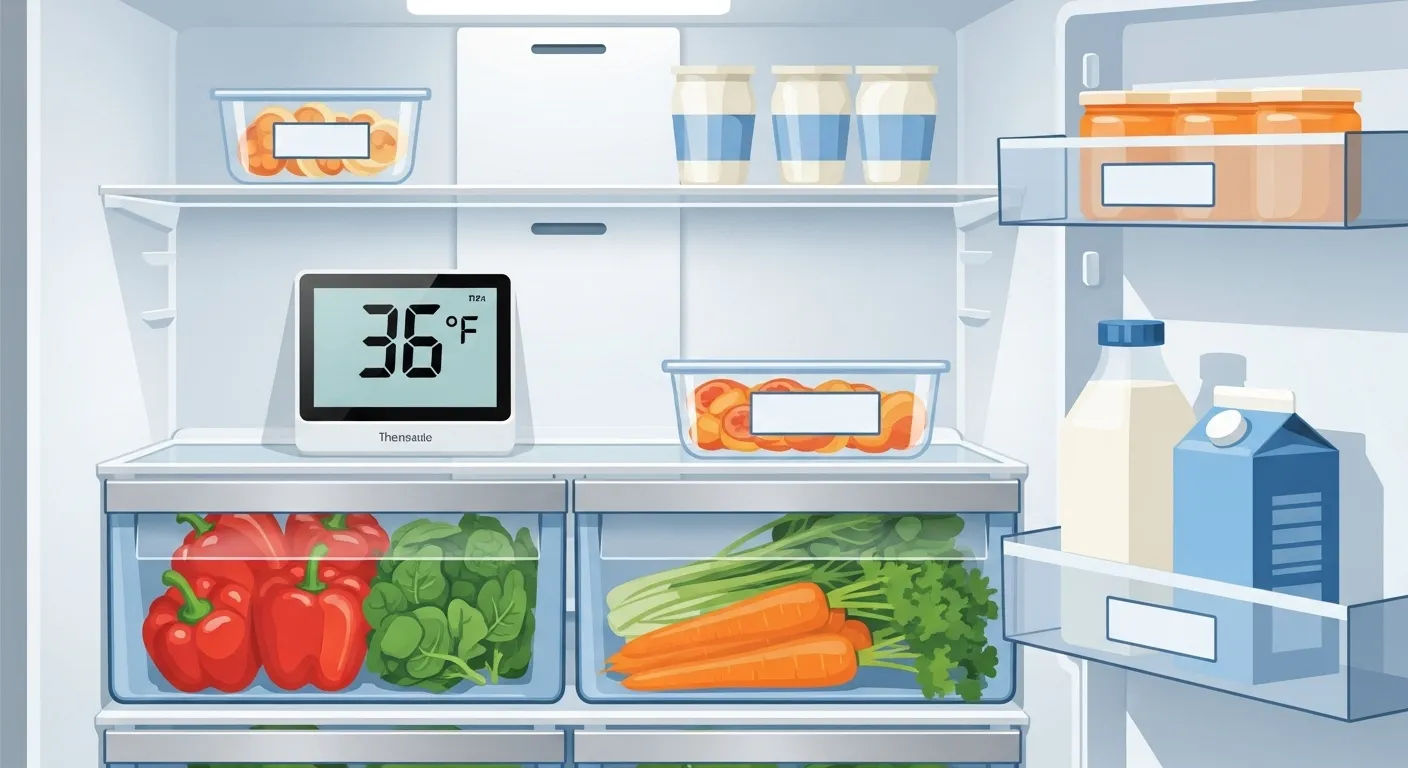
In the United States, the average refrigerator temperature is about 37°F (3°C). That is a practical target for keeping food cold without freezing most fresh items.
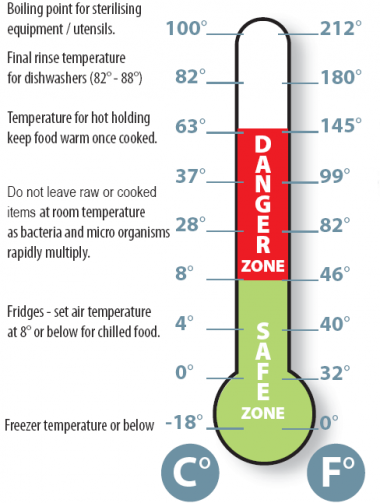
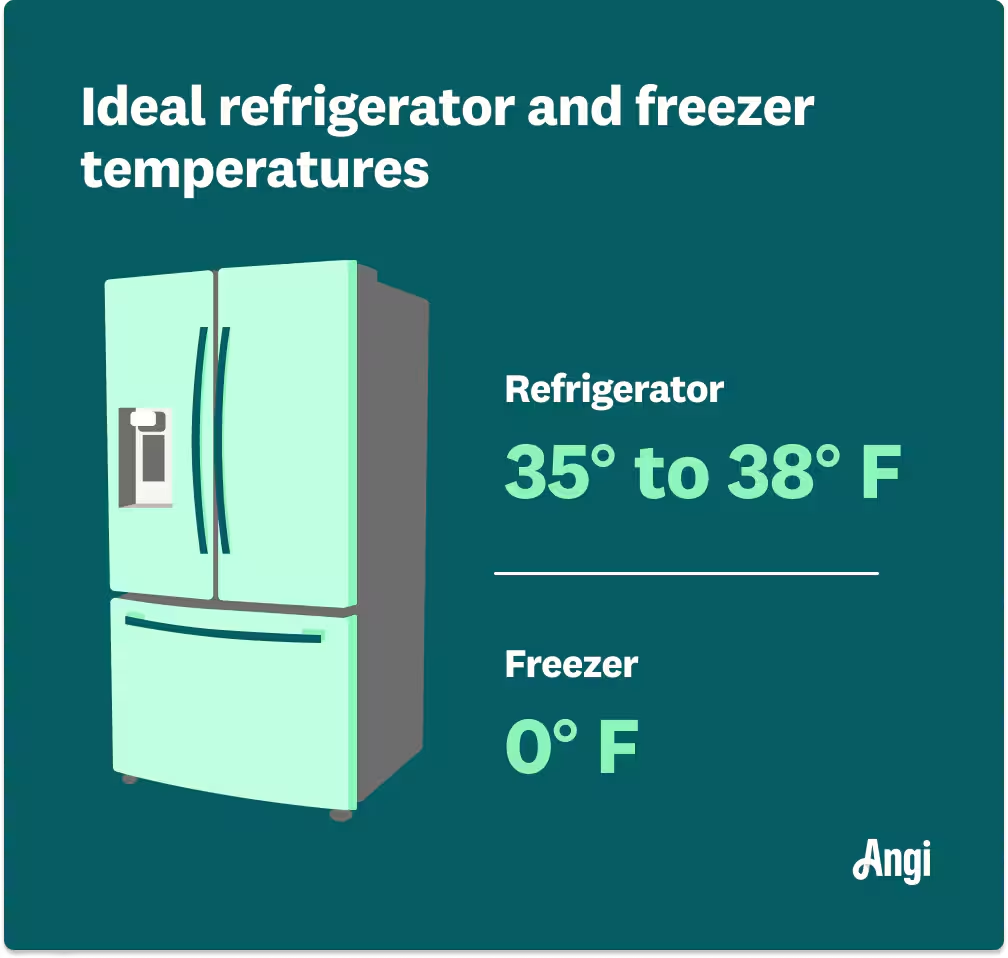
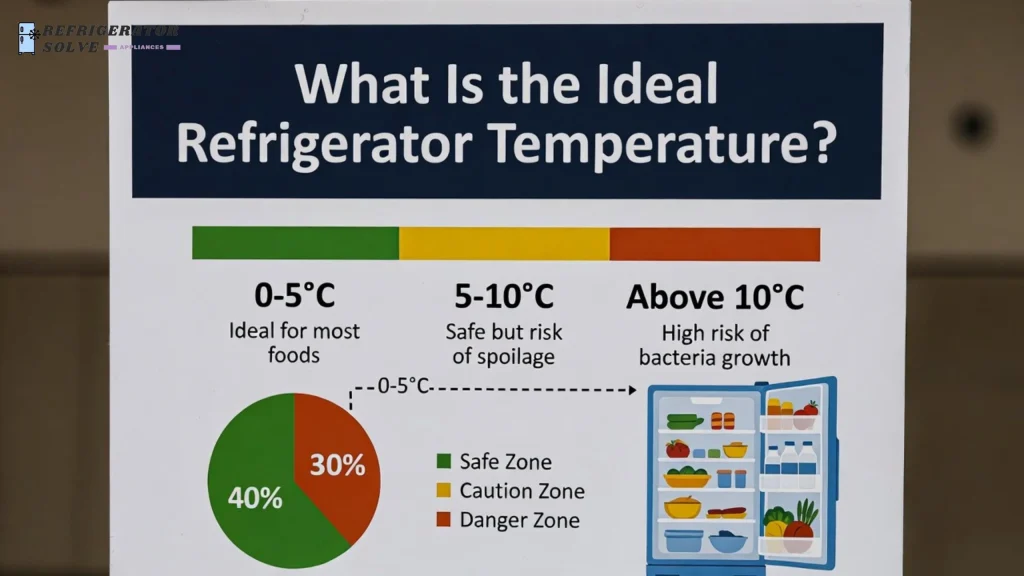
The key safety limit is more important than the average: the refrigerator should stay at 40°F (4°C) or below, according to the USDA. Many refrigerators work well when set between 35°F and 38°F.
Your refrigerator may not hold one exact temperature at all times. It cycles on and off, and the door shelves, drawers, and back wall can each have different temperatures.

What temperature should a refrigerator be?
Set the refrigerator control near 37°F, then check the actual temperature with an appliance thermometer. A setting number on the control dial does not always match the real temperature inside the cabinet.
Use these ranges as a guide:
| Refrigerator temperature | What it means |
|---|---|
| 32°F or below | Food and drinks may freeze |
| 33°F to 34°F | Very cold; some produce may freeze |
| 35°F to 38°F | Good operating range for most refrigerators |
| 37°F | Useful target for many homes |
| 39°F to 40°F | Still within the food-safety limit, but close to the maximum |
| Above 40°F | Food may enter the bacterial growth danger zone |
The 40°F limit is a safety ceiling, not the ideal setting. A refrigerator that often reaches 40°F has little room for warm food, frequent door opening, or a temporary power loss.
A target near 37°F gives you a small buffer. It also helps avoid the freezing that can occur when the control is set too low.
Why the temperature changes
A refrigerator uses a cooling cycle. The compressor runs, cold air moves through the cabinet, and the compressor later stops. As a result, the temperature rises and falls instead of staying fixed.
Temperature can also change because of:
- How often the door opens
- How full the refrigerator is
- Where food is placed
- The room temperature
- Blocked air vents
- Warm food placed inside
- A damaged door gasket
- Frost or ice around the cooling system
- A failing thermostat, fan, or compressor
A short-term change is normal. A repeated reading above 40°F is not something to ignore.

How to measure your refrigerator’s real temperature
The most reliable method is to use a refrigerator or appliance thermometer. Do not rely only on the display or dial setting.
Follow these steps:
- Place the thermometer in a glass of water.
- Put the glass on a middle shelf, away from the door and the back wall.
- Leave it in place for at least 24 hours.
- Check the reading before opening the door in the morning.
- Repeat the test in another area if the reading seems unusual.
The glass of water helps measure the temperature of the food environment rather than a brief burst of cold air. A thermometer placed beside an air vent may show a colder reading than the food itself.
How to adjust the control
If the temperature is above 40°F, lower the control slightly. Wait about 24 hours, then measure again. Refrigerators need time to reach a stable temperature.
If food is freezing, raise the temperature slightly. Also check whether food is touching the rear wall or sitting directly over a cold-air outlet.
Some models use a numbered dial, such as 1 through 5 or 1 through 7. On many models, a higher number means more cooling, not a warmer temperature. The meaning varies, so check the owner’s manual if possible.
Where is the coldest part of a refrigerator?
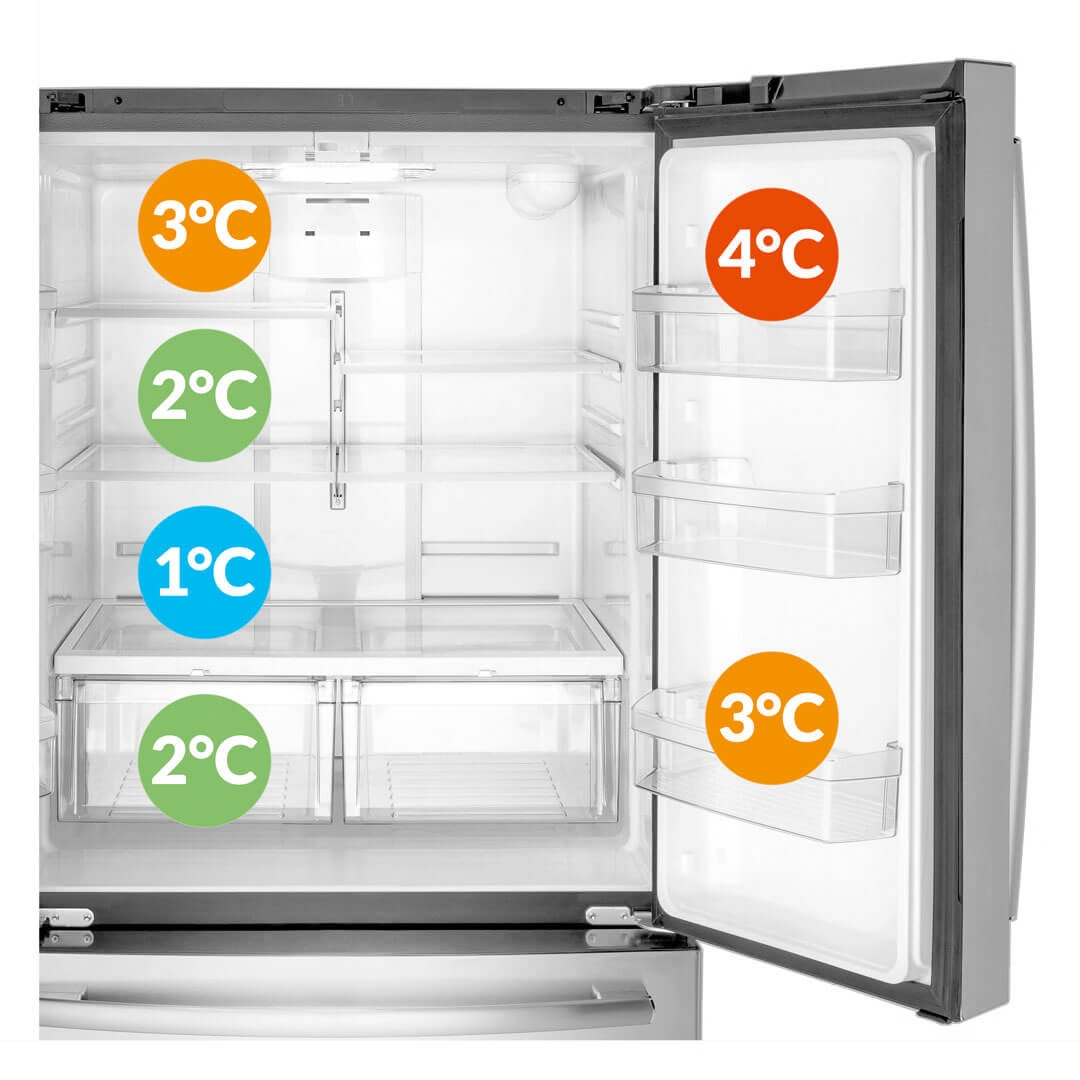
The coldest area is often near the back wall, bottom shelf, or cold-air outlet, but the exact location depends on the design. The door is usually the warmest area because it receives warm air every time you open it.
Use the main areas this way:
- Top shelves: Ready-to-eat foods, leftovers, and drinks
- Middle shelves: Dairy products and packaged foods
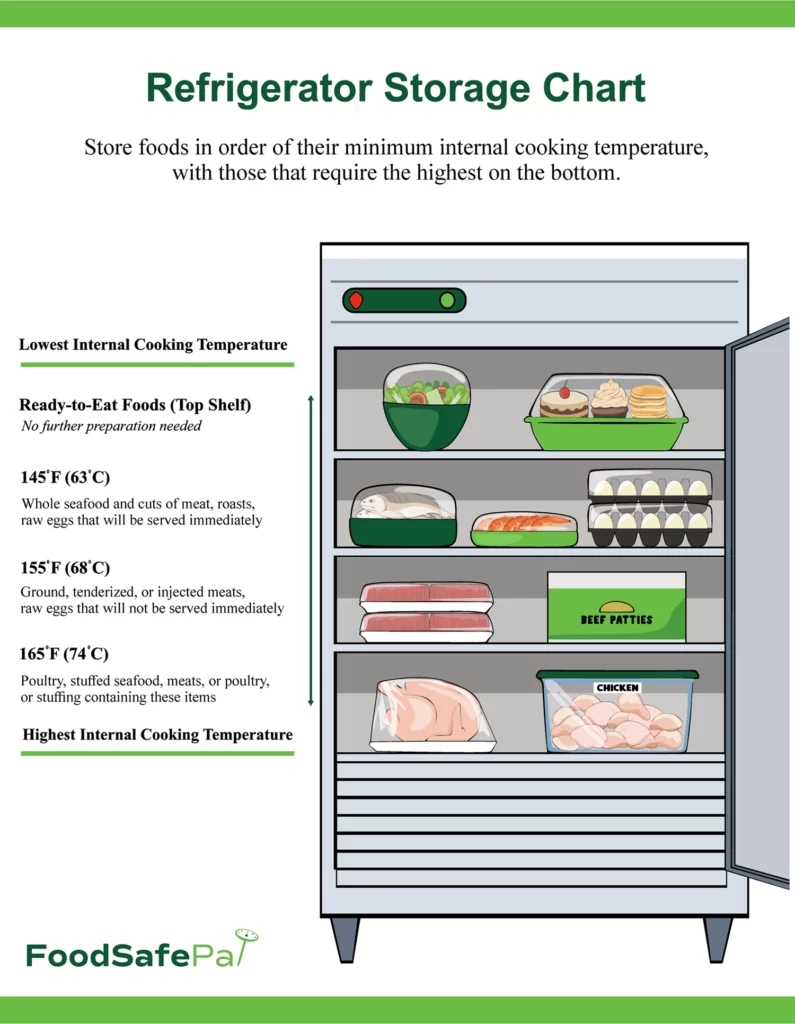
- Bottom shelf: Raw meat, poultry, and seafood in sealed containers
- Crisper drawers: Fruits and vegetables
- Door shelves: Condiments and foods that tolerate temperature changes
Keep raw meat, poultry, and seafood on the bottom shelf. This reduces the chance that leaking juices will contaminate food below.
Do not store milk or raw meat in the door just because the shelf is convenient. The door temperature can rise more than the temperature in the main compartment.
Does a full refrigerator stay colder?
A reasonably full refrigerator often holds its temperature better than an almost empty one. Cold food helps absorb some of the warm air that enters when the door opens.
However, overpacking creates a different problem. It can block vents and stop cold air from circulating. Leave space around vents and avoid pressing food against the back wall.
The goal is not maximum fullness. The goal is steady airflow with enough stored food to provide thermal stability.

Why a refrigerator may feel cold but still be unsafe
Cold air does not prove that food is being held at a safe temperature. Your hand is not a useful thermometer, and a refrigerator can have cold and warm zones at the same time.
A refrigerator may feel cold while the temperature near the door rises above 40°F. It may also cool the back wall to near freezing while the center remains warmer.
Watch for these warning signs:
- The thermometer stays above 40°F
- Milk spoils sooner than expected
- Food feels barely cool
- The compressor runs constantly
- The unit makes unusual clicking or buzzing sounds
- Ice or frost blocks an air vent
- Water collects inside
- The door seal looks loose or cracked
- The temperature changes sharply from day to day
Check the simple causes first. Make sure the door closes fully, the vents are open, and the refrigerator is not next to a stove, oven, radiator, or strong heat source.
If the temperature remains unsafe after these checks, move perishable food to another working refrigerator or a cooler with ice. A qualified appliance technician may need to inspect the thermostat, fan, sealed cooling system, or control board.
What happens if a refrigerator gets too warm?
Food safety becomes a concern when perishable food stays above 40°F for too long. The USDA describes the range from 40°F to 140°F as the “Danger Zone,” where bacteria can grow quickly.
If the refrigerator has been warm, use time and temperature to decide what to do:
- If food has been above 40°F for less than two hours, refrigerate it promptly if it still looks and smells normal.
- If food has been above 40°F for more than two hours, discard many perishable items.
- If the surrounding temperature was above 90°F, the time limit is generally one hour.
- When in doubt, throw out high-risk food rather than tasting it.
Do not use smell, appearance, or taste as a safety test. Harmful bacteria may not change the food’s smell or appearance.
High-risk foods include:
- Meat and poultry
- Fish and shellfish
- Eggs
- Milk and soft dairy foods
- Cooked leftovers
- Cut fruit and vegetables
- Deli salads
- Cooked rice, pasta, and potatoes
For a detailed power-outage decision, follow the USDA’s food safety guidance for emergencies.
What happens if a refrigerator gets too cold?
A refrigerator set too cold can freeze food, damage produce, and waste energy. Foods with high water content are especially vulnerable.
Common signs include:
- Lettuce or leafy greens becoming limp after thawing
- Milk developing ice crystals
- Eggs freezing near the back wall
- Drinks freezing in the main compartment
- Fruits becoming watery or soft after thawing
- Ice forming around vents or on the rear wall
Move sensitive food away from the back wall and raise the temperature slightly. Avoid placing food directly in front of a cold-air outlet.
If food freezes even when the refrigerator is set near 37°F, the problem may involve a stuck damper, faulty thermostat, blocked airflow, or a sensor issue. The owner’s manual may list model-specific troubleshooting steps.
Refrigerator temperature by food storage area
Different foods benefit from different parts of the refrigerator. The best location depends on both temperature and the risk of cross-contamination.
| Food | Recommended location | Reason |
|---|---|---|
| Raw chicken or meat | Bottom shelf in a sealed container | Prevents leaks onto other food |
| Milk | Main shelf, not the door | More stable and colder than the door |
| Eggs | Original carton on a shelf | Protects eggs and reduces temperature swings |
| Fruits | Crisper drawer | Helps manage moisture |
| Vegetables | Crisper drawer | Helps reduce drying |
| Leftovers | Covered containers on a main shelf | Easy to see and keep away from raw food |
| Condiments | Door shelf | Usually tolerate warmer swings |
| Fish and shellfish | Bottom shelf; use quickly | High spoilage risk |
Follow the storage times in USDA guidance rather than assuming cold storage makes food last indefinitely. A refrigerator slows bacterial growth; it does not stop it.

How to keep a refrigerator at the right temperature
Small habits can help a refrigerator hold a steadier temperature:
- Keep the setting near 37°F. Confirm it with a thermometer.
- Limit long door openings. Decide what you need before opening the door.
- Let hot food cool briefly before storing it. Do not leave it out for hours.
- Divide large amounts of food into shallow containers. This helps food cool faster.
- Keep vents clear. Cold air must circulate.
- Clean the door gasket. A dirty or damaged seal can let warm air enter.
- Avoid overloading the shelves. Crowding blocks airflow.
- Keep the refrigerator away from heat. Heat makes the compressor work harder.
- Clean coils when the manual permits it. Dust can reduce cooling performance.
- Use a thermometer after a power outage or repair. The display may not show the temperature of the food.
When to call for service
Arrange appliance service if the refrigerator remains above 40°F after basic checks, freezes food at a normal setting, or shows signs of a failing cooling system.
Move perishable food first. Food safety should come before diagnosing the appliance.
Refrigerator temperature during a power outage
A closed refrigerator can usually keep food cold for about four hours, according to the USDA, although the exact time depends on the room temperature, how full the unit is, and how often the door opens.
During an outage:
- Keep the door closed.
- Do not repeatedly check the food.
- Use a refrigerator thermometer if available.
- Move food to a cooler with ice if the outage may last.
- Discard perishable food that has been above 40°F for too long.
- Never taste food to decide whether it is safe.
A full freezer lasts longer than a refrigerator, but that does not mean frozen food is safe forever after thawing. Check the food’s temperature and condition, and follow USDA emergency guidance.
Frequently asked questions
Is 35°F too cold for a refrigerator?
Not always. A setting of 35°F can keep food safely cold, but some foods near the back wall may freeze. A target near 37°F is often a better balance between food safety and freeze protection.
Is 40°F cold enough for a refrigerator?
Yes, 40°F is the maximum safe refrigerator temperature recommended by the USDA. It is better to set the refrigerator lower, such as near 37°F, so normal temperature swings do not push food above the safety limit.
Should milk go in the refrigerator door?
Usually, no. Store milk on an interior shelf, where the temperature tends to be more stable. Use the door for condiments and other foods that are less sensitive to temperature changes.
How long does it take a refrigerator to get cold?
A new or recently unplugged refrigerator may need about 24 hours to reach a stable temperature. Check the appliance thermometer rather than relying on elapsed time alone.
Can I put hot food in the refrigerator?
Yes, but divide a large amount into shallow containers so it cools quickly. Leaving hot food at room temperature for too long creates a food-safety risk. Do not wait several hours before refrigerating leftovers.
What temperature should a freezer be?
The recommended freezer temperature is 0°F (-18°C). Use a separate freezer thermometer if you need to confirm it.
The bottom line
The average refrigerator temperature is about 37°F, but the important safety rule is to keep the refrigerator at 40°F or below. Set the control near 37°F, measure the real temperature with an appliance thermometer, and allow about 24 hours after each adjustment.
Keep raw meat on the bottom shelf, avoid blocking vents, and treat a warm refrigerator as a food-safety problem—not just an appliance problem.
Evidence used
- USDA Food Safety and Inspection Service: Refrigeration and Food Safety
- USDA: Keep Food Safe During Power Outages
- U.S. Food and Drug Administration: Refrigerator and Freezer Storage Chart

Appliance Review Expert
Lucas Ramirez is a trusted voice at HomeFixGrid.com, known for his clear, practical, and creatively written guides that simplify appliance care for everyday homeowners. With a strong focus on hands-on testing and real-world problem-solving, Lucas brings expert insight into appliance reviews and troubleshooting techniques. Her work empowers readers to confidently maintain, repair, and choose the right appliances for their homes.