How To Remove Tomato Stains From Microwaved Plastic: Easy Fix
In U.S. kitchens, tomato sauce can leave orange-red marks on plastic food containers after just one microwave meal. The stain often looks permanent, but it usually is not. Start with dish soap and hot water, then use a baking soda paste. For stubborn marks, a small amount of 3% hydrogen peroxide or indirect sunlight may help.
The key is to remove the oily tomato film without scratching or damaging the plastic. Do not use abrasive pads, acetone, or mixed cleaning chemicals.

Why Tomato Sauce Stains Plastic
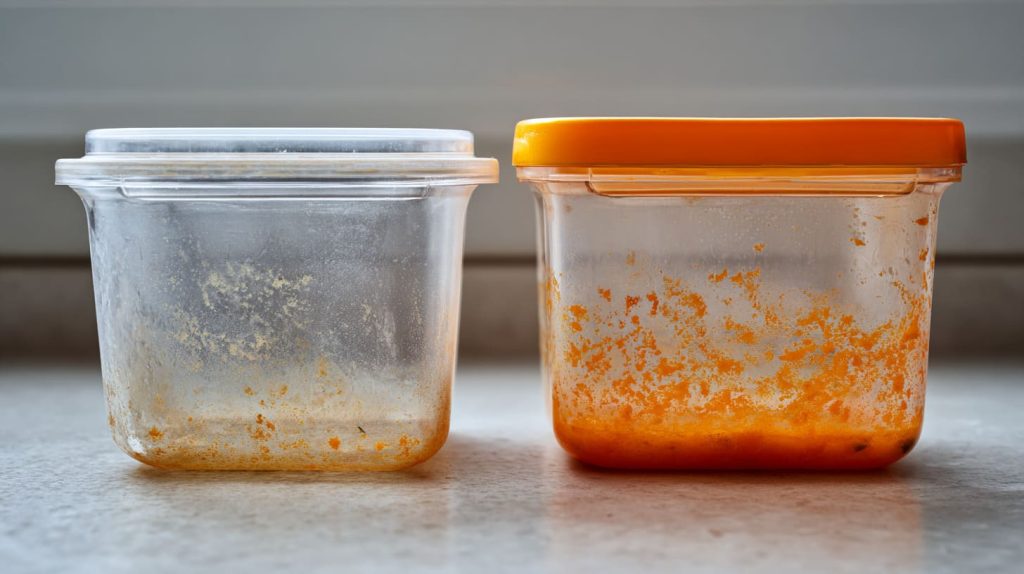
Tomato stains come mainly from lycopene, the red pigment in tomatoes. Tomato sauces also contain oil. Heat from the microwave can make the oil more fluid and help the pigment cling to tiny scratches or pores in plastic.


This is why a plastic container may look clean after washing but still have a red or orange tint. The mark is often a cosmetic stain, not leftover food. However, greasy residue can still hold food smells and make the container feel dirty.
Clear and light-colored plastic shows tomato stains most clearly. Older containers are also more likely to stain because repeated use can leave fine scratches on the surface.
What You Need Before Cleaning
Gather these supplies:
- Dish soap that cuts grease
- Hot tap water
- A soft sponge or microfiber cloth
- Baking soda
- A small bowl
- A clean towel
- Optional: 3% hydrogen peroxide
- Optional: a sunny window or outdoor spot
Check the container before cleaning. Look for:
- Deep scratches
- Cracks
- Warping
- A melted or rough surface
- A strong odor that remains after washing
- A label that says the container is not microwave-safe
If the plastic has melted, warped, cracked, or become brittle, replace it. Cleaning will not restore its original strength. The U.S. Department of Agriculture advises using containers designed for microwave heating and following the maker’s instructions for reheating food.

The Best Method: Dish Soap and a Baking Soda Paste
For most tomato stains, use this method first. It is gentle, inexpensive, and less likely to scratch the container than a rough scrub pad.
Step 1: Remove any food residue
Scrape out all remaining sauce with a soft spatula or paper towel. Do not rub hard. Thick sauce can spread the stain over a larger area.
Step 2: Wash with hot water and dish soap
Add hot tap water and several drops of grease-cutting dish soap to the container. Let it sit for 5 to 10 minutes.
Use a soft sponge to wash the inside, lid, rim, and corners. Rinse well. Hot tap water is enough; you do not need boiling water.


Step 3: Make a baking soda paste
Mix:
- 2 tablespoons of baking soda
- About 1 teaspoon of water
Add water slowly until the mixture has the texture of toothpaste. A thick paste stays on the stained area and gives the baking soda time to loosen oily residue.
Step 4: Apply the paste
Spread the paste over the stain. Leave it for 10 to 15 minutes.
Gently wipe the container with a soft sponge or cloth. Use small, light strokes. Avoid scouring powder, steel wool, and rough scrubbers because they can create scratches that trap future stains.
Step 5: Rinse and dry
Rinse the container completely with warm water. Dry it with a clean towel or let it air-dry with the lid off.
If the stain has faded but remains visible, repeat the process once. Several gentle treatments are safer than one aggressive scrub.
How to Remove a Stubborn Tomato Stain
If soap and baking soda do not work, try one of these next steps.
Option 1: Use 3% hydrogen peroxide
Use ordinary 3% hydrogen peroxide, the strength commonly sold for household first aid. Do not use hair developer or a stronger salon product.
- Wash and rinse the container first.
- Pour enough hydrogen peroxide to cover the stained area.
- Let it sit for 10 to 20 minutes.
- Wipe gently with a soft sponge.
- Wash with dish soap.
- Rinse very well before using the container for food.
Test a small hidden area first. Hydrogen peroxide can lighten some colors and may affect printed designs. Keep it away from children and pets, and follow the product label.
Hydrogen peroxide is not a guaranteed stain remover. It may help with discoloration, but it will not repair scratches, cloudiness, or heat damage.
Option 2: Use indirect sunlight
After washing, place the open container in bright sunlight for several hours. A sunny window works if outdoor conditions are not suitable.
Light may fade some tomato discoloration over time. This method is slow and works best on light-colored plastic. Do not leave the container outside where dirt, insects, or extreme heat can contaminate or deform it.
Sunlight is an optional finishing step, not a substitute for washing. The container must be clean before you place it in the sun.
Option 3: Try a dishwasher cycle
If the container is labeled dishwasher-safe, place it on the top rack. High heat can warp some plastics, so check the manufacturer’s instructions first.


A dishwasher may remove grease better than hand washing, but it may not remove pigment already embedded in scratched plastic. Do not use the dishwasher simply because the container has a microwave-safe label. Microwave-safe and dishwasher-safe are different claims.

Quick Decision Guide
Use the least harsh method that matches the condition of the container.
| Container condition | Best first choice | Avoid |
|---|---|---|
| Fresh tomato sauce | Dish soap and hot water | Letting sauce dry |
| Light orange film | Baking soda paste | Hard scrubbing |
| Old, stubborn discoloration | 3% hydrogen peroxide test | Strong bleach or solvents |
| Scratched plastic | Gentle hand washing | Abrasive pads |
| Warped or melted plastic | Replace the container | Reheating it again |
| Printed or colored plastic | Soap, then spot-test | Peroxide without testing |
| Dishwasher-safe container | Top-rack dishwasher cycle | Assuming every plastic is dishwasher-safe |
The main trade-off is simple: stronger cleaning may remove more color, but it also raises the chance of fading, scratching, or damaging the plastic.

What Not to Use on Tomato-Stained Plastic
Some popular cleaning tricks can cause more harm than the stain.
Do not use acetone or nail polish remover
Acetone can damage or soften certain plastics. It may leave a cloudy surface, cause cracking, or make the container unsuitable for food use.
Do not scrub with steel wool
Steel wool and rough scouring pads can create deep scratches. Those scratches collect oil, pigment, and food residue later.
Do not microwave cleaning chemicals
Never microwave bleach, hydrogen peroxide, dish soap, or other cleaning products. Heating chemicals in plastic can create fumes, damage the container, or cause splashing and burns.
Do not mix cleaners
Never mix hydrogen peroxide with bleach, vinegar, ammonia, or other cleaners. Use one product at a time, rinse the container, and then choose another method only if needed.
Do not pour boiling water into unknown plastic
Sudden heat can warp some containers. Use hot tap water unless the manufacturer specifically permits higher temperatures.
Do not use a melamine sponge aggressively
A melamine sponge can act like a very fine abrasive. It may remove a mark, but it can also dull or scratch some plastic surfaces. If you use one, test a small area and apply very light pressure.

How to Prevent Tomato Stains in Plastic Containers
Prevention is easier than removing a set-in stain.
Choose glass for tomato-based foods
Glass containers do not absorb tomato pigment in the same way plastic can. They are often the better choice for marinara, chili, curry, salsa, and other oily foods.


Glass can still become hot in a microwave, so use oven mitts and follow the container maker’s instructions. Do not move hot glass onto a cold or wet surface, where thermal shock may cause breakage.
Spray or lightly oil the container
A thin coating of cooking spray may reduce direct contact between sauce and plastic. Use only a small amount. Extra oil can make cleaning harder.
Wash the container soon after eating
Do not let tomato sauce dry inside the container. Prompt washing gives oil and pigment less time to cling to the surface.
Do not overheat the food
Follow the food and container instructions. Cover the food loosely to reduce splatter, and stir during reheating when appropriate. Avoid heating an empty plastic container.
Replace heavily scratched plastic
Scratches make future staining more likely and can make the container harder to clean. If the surface is deeply scratched, cloudy, cracked, or warped, replacing it is the practical choice.

Is Stained Plastic Still Safe to Use?
A tomato stain alone does not automatically mean that the plastic is unsafe. If the container is intact, labeled for its intended use, and cleans fully without a greasy film or lingering spoiled-food odor, the color change is usually cosmetic.
Replace the container if it has:
- Cracks or splits
- Melted or warped areas
- A rough, peeling, or damaged surface
- Deep scratches
- A persistent rancid or spoiled odor
- A lid that no longer fits correctly
- Signs that the plastic is breaking down
Do not microwave plastic unless the container is specifically marked or documented as microwave-safe. The U.S. Food and Drug Administration explains that food-contact materials are evaluated for their intended uses, so the label and manufacturer’s instructions matter.
A container that is safe for microwave use may not be safe for an oven, stovetop, broiler, or dishwasher. Each use has different heat and chemical conditions.

Troubleshooting: Why the Stain Will Not Come Off
If the stain remains, identify the cause before using a stronger cleaner.
The surface feels smooth, but the color remains
The pigment may have bonded to or colored the plastic surface. Try one more baking soda treatment or a spot-tested 3% hydrogen peroxide treatment.
The surface feels rough or scratched
The stain may be trapped in scratches. Cleaning may lighten it but cannot restore the surface. Stop using abrasive tools and consider replacing the container.
The plastic is cloudy or warped
This points to heat damage rather than a simple tomato stain. Do not keep microwaving the container. Replacement is safer than trying to polish or chemically treat it.
The container still smells after washing
Wash it again with dish soap and hot water. You can also fill it with a baking soda solution, let it sit for several hours, and rinse it well.
If a spoiled, rancid, or chemical odor remains, discard the container. Do not cover the smell with fragrance or cleaner.
The lid is stained but the base is not
Lids often have softer plastic, seals, or textured areas that hold oil. Clean the lid separately, and check whether its gasket or vent can be removed according to the manufacturer’s instructions.

Key Takeaways
- Start with hot water, dish soap, and a soft sponge.
- Use a thick baking soda paste for leftover tomato discoloration.
- For stubborn marks, spot-test 3% hydrogen peroxide and rinse well.
- Never use acetone, steel wool, boiling water on unknown plastic, or mixed cleaners.
- Replace plastic that is cracked, melted, warped, deeply scratched, or persistently smelly.
- Use glass when storing or reheating tomato-heavy foods to prevent future stains.
FAQs
Can I put a tomato-stained plastic container in the microwave again?
Only if the container is still intact and clearly labeled microwave-safe. A stain alone does not change its microwave rating, but warping, cracks, melting, or deep scratches are reasons to replace it.
Does vinegar remove tomato stains from plastic?
Vinegar may help with odors and mineral residue, but it is not the best choice for oily tomato pigment. Dish soap and baking soda are usually more useful for this specific stain.
Can baking soda scratch plastic?
Baking soda is relatively mild, but rubbing it with strong pressure can dull some surfaces. Use a wet paste and a soft sponge. Do not scrub with a dry powder.
Will bleach remove tomato stains from plastic?
Bleach may lighten some stains, but it can damage certain plastics and creates a chemical safety risk if mixed with other cleaners. It is not needed for an ordinary tomato stain. If a manufacturer specifically permits diluted bleach for that container, follow the label exactly and rinse thoroughly.
How long should I leave baking soda on the stain?
Leave the paste on for about 10 to 15 minutes. A longer wait is not always better. If the stain remains, rinse, inspect the surface, and repeat once rather than scrubbing harder.
Conclusion
To remove tomato stains from microwaved plastic, wash the container with hot water and grease-cutting dish soap first. Apply a baking soda paste, wipe gently, and rinse well. For a stubborn mark, test 3% hydrogen peroxide or use indirect sunlight after cleaning.
If the plastic is damaged, deeply scratched, warped, or still smells bad, replace it. For future tomato meals, glass storage containers can save time and prevent the same orange-red stain from returning.

Appliance Review Expert
Lucas Ramirez is a trusted voice at HomeFixGrid.com, known for his clear, practical, and creatively written guides that simplify appliance care for everyday homeowners. With a strong focus on hands-on testing and real-world problem-solving, Lucas brings expert insight into appliance reviews and troubleshooting techniques. Her work empowers readers to confidently maintain, repair, and choose the right appliances for their homes.