Why Refrigerator Is Not Cold: Quick Fixes That Work
A refrigerator that is not cold can spoil food fast. In a U.S. home, first check the temperature with an appliance thermometer. The refrigerator should stay at 40°F or below, and the freezer should stay near 0°F, according to the U.S. Food and Drug Administration (FDA). If the unit has power but still feels warm, blocked air flow, dirty coils, frost, a bad fan, or a failed cooling part may be to blame.
Start with simple and safe checks. Confirm that the refrigerator is plugged in, the controls are set correctly, the doors close well, and the vents are clear. Do not eat food that has stayed above 40°F for too long.

What to Check First When a Refrigerator Is Not Cold
Check the power, controls, doors, air vents, and temperature before removing any parts. These checks take only a few minutes and can solve many cooling problems.


1. Confirm that the refrigerator has power
Open the door and look for the interior light. Then listen for a soft hum from the compressor or fan.
If there is no light or sound:
- Check that the power cord is fully plugged in.
- Test the outlet with a lamp or another small device.
- Check the circuit breaker.
- Make sure the refrigerator is not connected to a switched outlet.
- Look for a tripped ground-fault circuit interrupter, or GFCI, nearby.
Do not use an extension cord unless the refrigerator maker specifically allows it. A refrigerator needs a stable power supply.
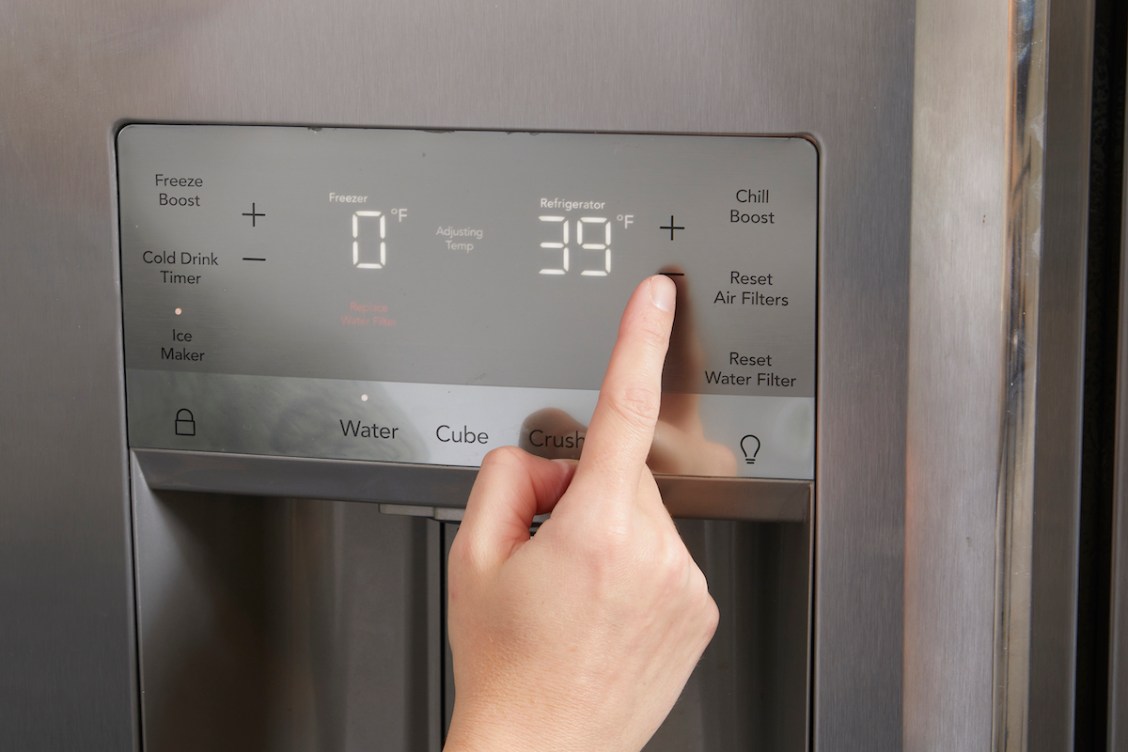
2. Check the temperature controls
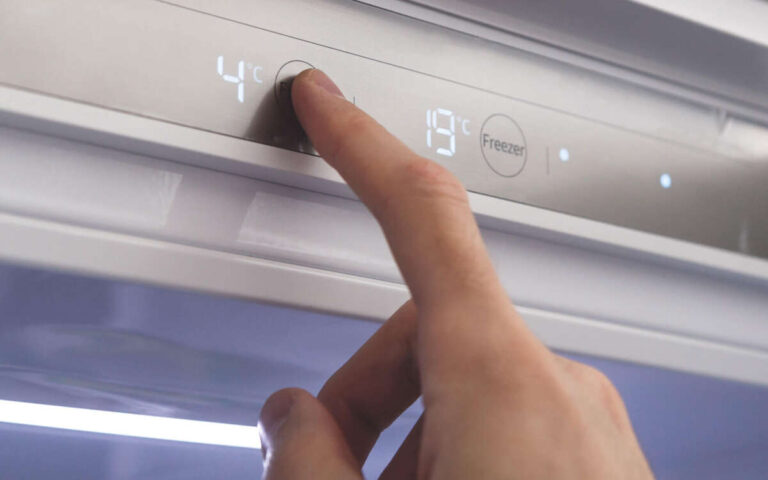
Someone may have changed the control by mistake. A control marked with a higher number does not always mean a colder setting. Some models use numbers, while others use a digital temperature value.
Set the refrigerator to the maker’s recommended setting. If no manual is available, use a middle setting as a starting point. Wait several hours before judging the result. Cooling changes are not instant.
Do not set the controls to the coldest setting as a first step. This may cause food to freeze near the back wall and may not fix a failing part.
3. Make sure the doors close fully
A door that stays open lets warm, moist air enter. Check for:
- A food container blocking the door
- A cracked or loose door shelf
- A dirty or damaged gasket
- A refrigerator that is not level
- A drawer that is not fully closed
Place a sheet of paper between the gasket and the cabinet. Close the door and pull the paper. Some resistance is normal. If the paper slides out with little resistance in several areas, the gasket may not seal well.
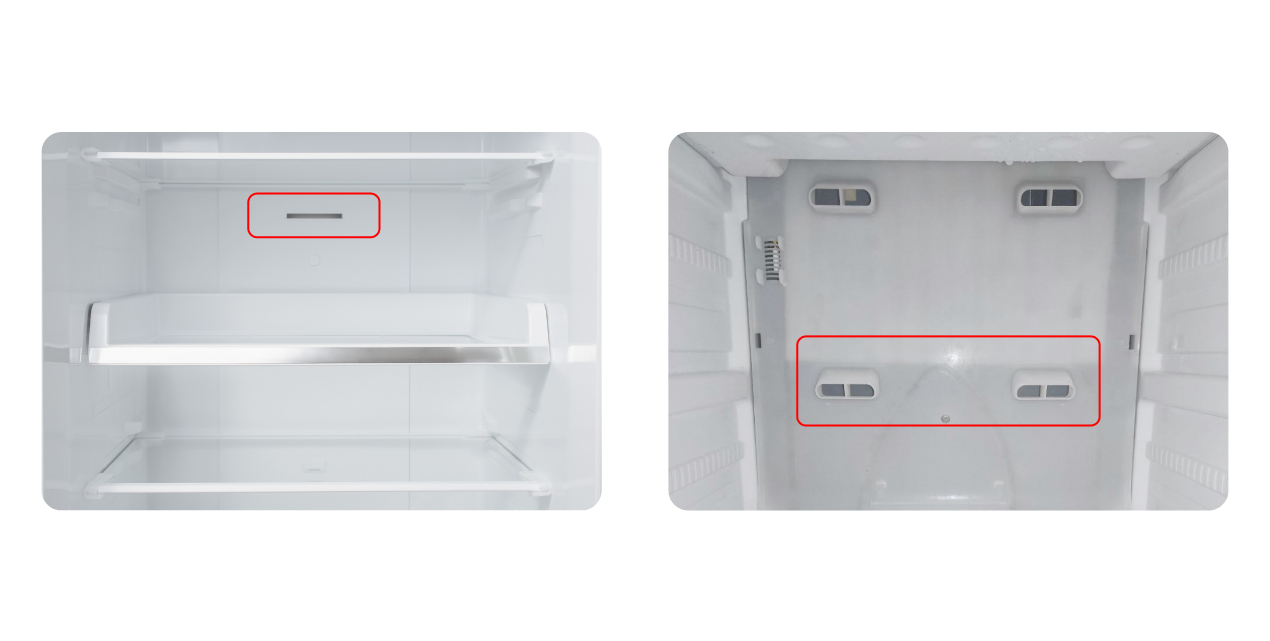
4. Look for blocked air vents
Most refrigerators move cold air from the freezer into the fresh-food section. Food that blocks the vents can make one area warm while another area stays cold.
Keep food away from the vents on the back wall and between compartments. Do not pack the refrigerator tightly enough to stop air movement. At the same time, an almost empty refrigerator may change temperature more quickly.
5. Give the refrigerator time after loading
A large load of warm food can raise the inside temperature. The same can happen after a power outage or a long door opening.


Move highly perishable food to another working refrigerator or an insulated cooler with ice. Then allow the refrigerator several hours to cool. A temperature check is more useful than the feel of one item or one shelf.
Common Reasons a Refrigerator Is Not Cooling
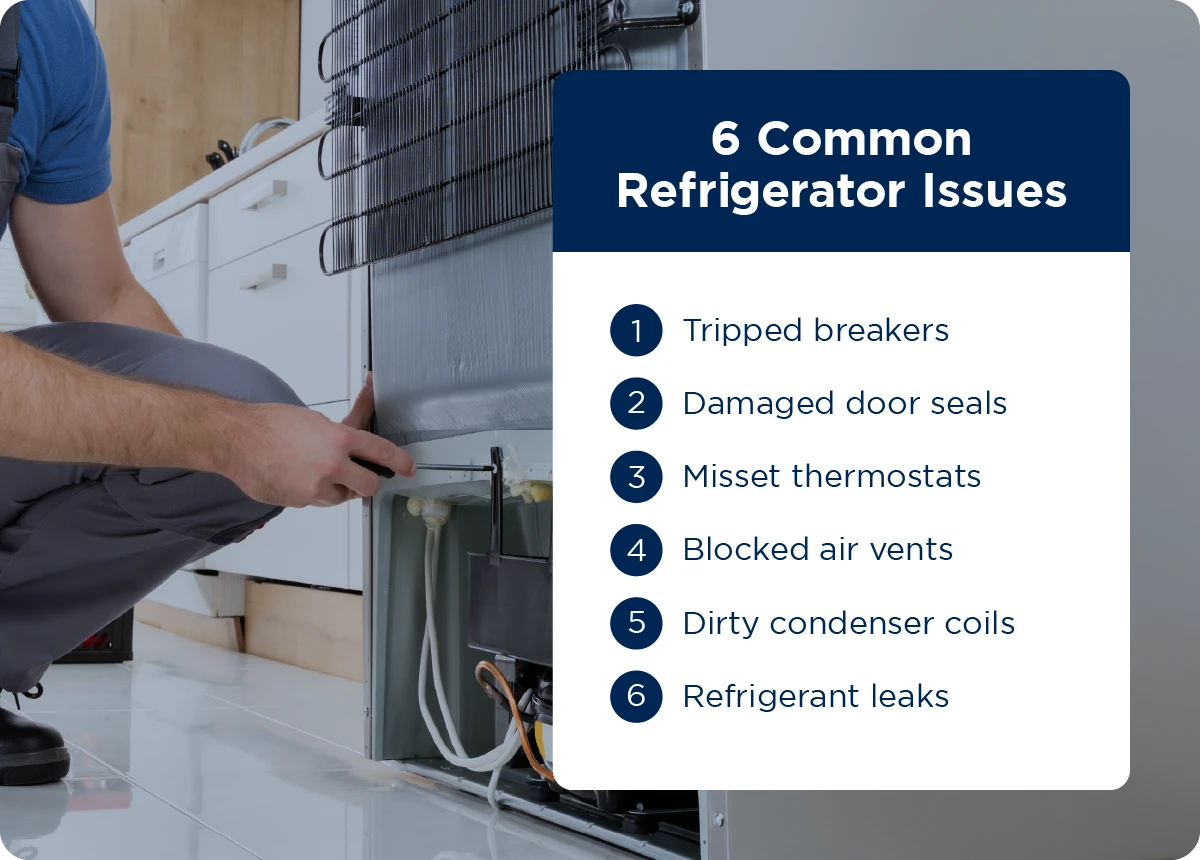
The most common causes are poor air flow, excess frost, dirty condenser parts, a weak door seal, or a failed fan. The symptoms can help narrow the cause.
| Symptom | Possible cause | What you can safely check |
|---|---|---|
| Freezer is cold, refrigerator is warm | Blocked vent, evaporator fan issue, or air damper problem | Clear vents and listen for a fan |
| Refrigerator and freezer are both warm | Power issue, dirty condenser, failed fan, start relay, or compressor problem | Check power and airflow around the cabinet |
| Heavy frost covers the freezer wall | Defrost system problem or door leak | Unplug and arrange service; do not chip ice |
| Food freezes in the refrigerator | Control setting, blocked vent, or sensor problem | Move food from the back wall and check the setting |
| Motor runs often but food stays warm | Dirty condenser, poor door seal, low airflow, or sealed-system fault | Check coils, clearance, and gasket |
| Water or ice appears near the floor | Clogged drain or blocked defrost drain | Clean only the accessible drain described in the manual |
The freezer is cold, but the refrigerator is warm
This is a common pattern. In many models, the freezer makes the cold air. A fan and air passage then send some of that air to the refrigerator section.
Possible causes include:
- Food blocking the air passage
- Ice covering the evaporator coil
- A failed evaporator fan
- A stuck air damper
- A temperature sensor problem
- A control board fault
Open the freezer and listen for a fan. The fan may stop when the door switch is open, so press the switch only if the manual permits it. Keep fingers and tools away from moving parts.
If the freezer wall has a thick, even coat of frost, the evaporator coil may be iced over. This often points to a defrost problem rather than a simple temperature setting.
Both sections are warm
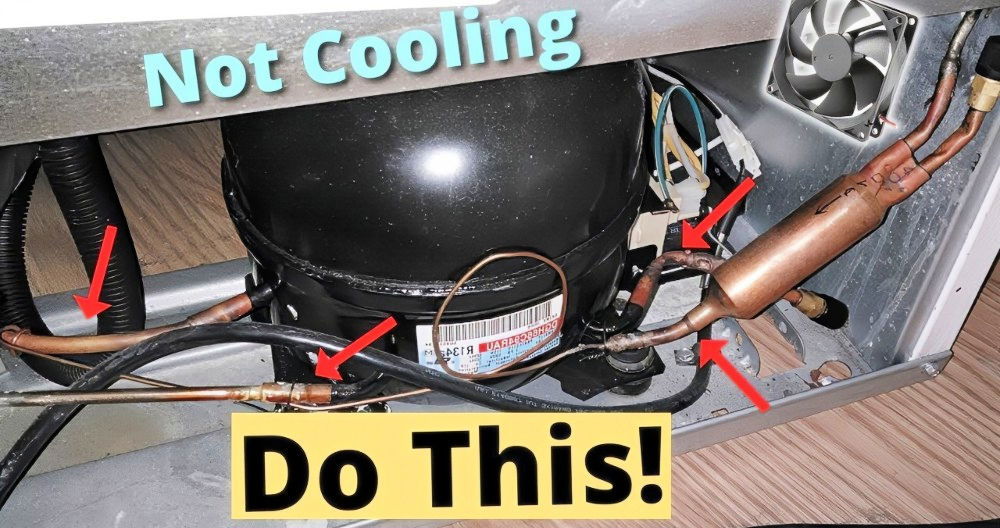
When both sections are warm, check power and the condenser area first. The condenser releases heat from the refrigerator. If dust blocks the condenser or a fan cannot move air, the unit may run poorly.
Other possible causes include:
- A failed condenser fan
- A bad start relay
- A sealed-system leak
- A weak compressor
- A control failure
- Very little clearance around the cabinet
Some refrigerators have coils under the cabinet. Others have them at the back. Follow the owner’s manual before cleaning.
The refrigerator is too cold
A refrigerator that freezes food has a different problem. Check whether food touches the back wall or sits near a cold-air vent. Then check the temperature setting.
If the control is correct and food still freezes, the air damper, sensor, or control system may be faulty. Do not assume that a colder refrigerator is safer. Frozen lettuce and milk can signal poor temperature control.
How to Fix Basic Refrigerator Cooling Problems
Unplug the refrigerator before cleaning near fans, coils, or electrical parts. Never remove a cover or test a live circuit unless you are trained and have the correct tools.
Clean the condenser area
Dust on the condenser can reduce heat release. To clean it:


- Read the owner’s manual for the coil location.
- Unplug the refrigerator.
- Remove the lower grille or rear access panel only if the manual allows it.
- Use a refrigerator coil brush or a soft brush.
- Vacuum loose dust from the floor and nearby parts.
- Replace the grille or panel.
- Plug the refrigerator back in.
Do not bend tubing or pull on wires. Do not spray water into the cabinet or motor area.
Cleaning may help when the refrigerator runs for long periods, feels hot near the sides, or struggles in a warm kitchen. It will not repair a failed compressor or a refrigerant leak.
Clear the vents and improve air flow
Move containers away from vents. Leave room for cold air to travel between shelves. Do not cover vents with foil, bags, or large trays.
Keep the outside of the refrigerator away from heat sources when possible. A stove, direct sunlight, or poor clearance can make cooling harder. Use the clearances listed in the manual because they vary by model.
Check and clean the door gasket
Wipe the gasket with warm water and mild dish soap. Dry it fully. Remove crumbs and sticky food from the cabinet surface where the gasket touches.
A gasket that is torn, loose, or badly misshaped may need replacement. A replacement part must match the refrigerator model. Do not glue a damaged gasket in place.
Defrost safely
If ice blocks the freezer’s rear panel or air vents, unplug the refrigerator and move food to a safe cooler. Let the ice melt with the doors open.
Never use a knife, chisel, heat gun, or hair dryer to remove ice. These tools can damage the liner, wiring, or sealed cooling system. Water near electrical parts also creates a shock risk.
Manual defrosting may restore cooling for a short time, but thick frost that returns means the defrost system needs diagnosis.
When to Call an Appliance Repair Professional
Call for service when basic checks do not restore cooling, or when the refrigerator shows signs of an electrical or sealed-system fault.
A professional should inspect the appliance if:
- The compressor clicks but does not start.
- The refrigerator hums, clicks, and stops again.
- A fan does not run after safe checks.
- Frost returns soon after a full defrost.
- The compressor runs almost nonstop while temperatures remain high.
- You see damaged wires, burned parts, or an oily residue.
- The appliance trips the breaker.
- The cabinet has a refrigerant leak or sealed-system problem.
Refrigerant work requires special tools and training. Do not puncture tubing or try to add refrigerant yourself. The refrigerant type and repair rules depend on the model and its date of manufacture.
Unplug the refrigerator and seek urgent help if you smell burning, see smoke, hear arcing, or find a hot or damaged power cord. Do not keep using an appliance that presents an electrical hazard.
Repair or replace?
Repair may make sense when the refrigerator is fairly new, the cabinet is in good shape, and the fault is a gasket, fan, sensor, or relay. Replacement may be more practical when the unit is old and needs a compressor or sealed-system repair.


Ask for a written estimate. Include the model number, the symptoms, and the steps already tried. A repair estimate is more useful when the technician knows whether the freezer is cold, whether frost is present, and how long the problem has lasted.

How to Protect Food While the Refrigerator Is Warm
Food safety comes before troubleshooting. Use a refrigerator thermometer rather than touch, smell, or appearance.
The FDA recommends keeping a refrigerator at 40°F or below and a freezer at 0°F. The USDA advises discarding perishable food that has been above 40°F for more than 2 hours, or more than 1 hour when the surrounding temperature is above 90°F.
Perishable foods include:
- Meat and poultry
- Fish and shellfish
- Eggs
- Milk and soft cheese
- Cooked leftovers
- Cut fruit and vegetables
- Deli meat
- Foods made with cream or custard
When in doubt, throw it out. Food can be unsafe even when it looks and smells normal.
If the freezer still contains hard-frozen food or ice crystals, it may remain safe to refreeze, although texture can change. Follow USDA guidance for the specific food when possible.

A Simple Refrigerator Troubleshooting Order
Use this order to avoid wasting time or creating a safety risk:
- Check the temperature with a thermometer.
- Check the outlet, cord, breaker, and interior light.
- Confirm the control setting.
- Check that both doors close and seal.
- Clear food from the air vents.
- Look for heavy frost on the freezer’s inside rear wall.
- Check for dust near the condenser area.
- Listen for the evaporator and condenser fans.
- Unplug the appliance before cleaning or defrosting.
- Call for service if the problem returns or involves electrical parts.
Record the temperature after each major step. This helps show whether the refrigerator is improving. A working refrigerator should return to a safe range after the cause is corrected, but the exact time depends on the model, room temperature, food load, and door use.
Key Takeaways
- A refrigerator should stay at 40°F or below.
- Check power, controls, door seals, vents, frost, and condenser dust first.
- A cold freezer with a warm refrigerator often points to an air-flow problem.
- Heavy frost may signal a failed defrost system.
- Do not chip ice or handle refrigerant tubing.
- Discard perishable food that stayed above 40°F for too long.
- Call a qualified appliance technician for electrical, compressor, fan, or sealed-system faults.
Frequently Asked Questions
Why is my refrigerator warm but the freezer cold?
The refrigerator may not be receiving enough cold air from the freezer. Blocked vents, heavy frost, a failed evaporator fan, or a stuck air damper can cause this pattern. Clear the vents and check for frost first. If the problem remains, service may be needed.
How long should I wait after changing the refrigerator temperature?
Give the refrigerator several hours before judging the change. Avoid opening the doors often during that time. Use an appliance thermometer because food temperature and shelf temperature can differ.
Can a dirty condenser coil make a refrigerator stop cooling?
Yes. Dust can reduce heat release and make the compressor work harder. Cleaning the condenser may help, but it will not fix a failed fan, compressor, relay, or sealed cooling system.
Should I unplug a refrigerator that is not cooling?
Unplug it before cleaning coils, touching fans, removing an access panel, or defrosting ice. If the refrigerator trips the breaker, smells hot, sparks, or has a damaged cord, leave it unplugged and arrange professional service.
Why does my refrigerator keep getting frost?
Frost may form when warm, moist air enters through a weak door seal. A thick layer that returns after defrosting can also indicate a failed defrost heater, sensor, timer, or control board. Do not remove the ice with a sharp tool.
Is food safe if the refrigerator was warm overnight?
It depends on the actual temperature and time. Perishable food held above 40°F for more than 2 hours should be discarded. If you do not know how warm it became, use the safer choice and discard high-risk food.
Conclusion
When a refrigerator is not cold, start with the simplest checks: power, settings, door seals, vents, frost, and condenser airflow. Measure the temperature instead of relying on touch. If basic steps fail, or if the problem involves a fan, compressor, wiring, or refrigerant system, stop and call a qualified appliance repair professional.
For food safety guidance, consult the FDA refrigerator and freezer storage guidance and the USDA Food Safety and Inspection Service.

Appliance Review Expert
Lucas Ramirez is a trusted voice at HomeFixGrid.com, known for his clear, practical, and creatively written guides that simplify appliance care for everyday homeowners. With a strong focus on hands-on testing and real-world problem-solving, Lucas brings expert insight into appliance reviews and troubleshooting techniques. Her work empowers readers to confidently maintain, repair, and choose the right appliances for their homes.